Catalog of British Columbiana and Pacific Northwest Americana
Encyclopedia Cascadia Catalog contains book titles of mostly non-fiction Pacific Northwest Coast of North America Titles (primarially British Columbia, Idaho, Oregon and Washington State) in an easy-to-understand title catalog. If you see a link with this badge ONLINE CIRC it means that there is an online institution that provides free access to that title. In some cases there may be more than one institution hosting the title digitally.
| Catalog Title | Published |
|---|---|
|
Roads less traveled in South-Central Oregon a guide to back roads and special places by Steve Arndt 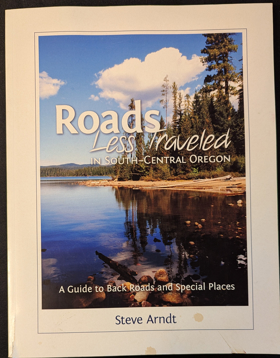
From the clear water of Crater Lake to the desolate desert valleys near the California and Nevada borders, South-Central Oregon is a region of cinder cones, ancient forests and rugged living. Roads Less Traveled in South-Central Oregon leads modern explorers on nearly 900 miles of routes and explains what they'll find along the way. vi, 103 pages : illustrations, maps ; 28 cm CIRC [ 1 ]
|
2013 |
|
Stories from Riffe, Wash. by Buddy Rose 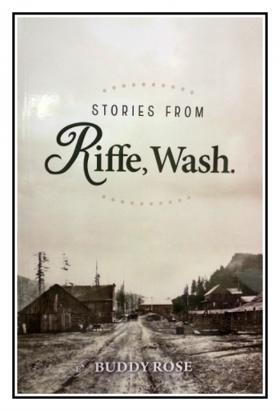
IN EARLY 1968, the gates of City of Tacoma's Mossyrock Dam on the Cowlitz River in Lewis County, Washington closed and the 23.5 mile long reservoir be- hind the dam began to fill, inundating the former town sites of Riffe, Nesika and Kosmos. Thus ended the short-lived history of a fertile valley that had first been settled in the 1880s and 1890s; mostly by people from Appalachia who came west looking for a better life. The town of Riffe was named after one of those early settlers, Floyd Riffe, who came to the area from West Virginia in 1893 with a group of about 60 people. Riffe established a post office, named after him, that would eventually serve about 1,500 people until they were all forced to sell their homes and land and leave the valley so the City of Tacoma could build their dam. Stories from Riffe, Wash, is a collection of narratives that recalls some of those peo- ple, how they lived and died, and what it was like in the valley that now lies deep beneath the waters of Riffe Lake. --From Backcover ix, 150 pages : illustrations ; 23 cm CIRC [ 1 ]
|
2013 |
|
Cascadia the life and breath of the world by Frank Steward and Trevor Carolan, Editors 
An anthology of poems, oratory and prose on the Cascadia region xv, 223 pages : illustrations ; 26 cm. CIRC [ 1 ]
|
2013 |
|
Lewis and Clark among the Nez Perce strangers in the Land of the Nimiipuu by Allen Pinkham, Steven Ross Evans , Frederick E. Hoxie 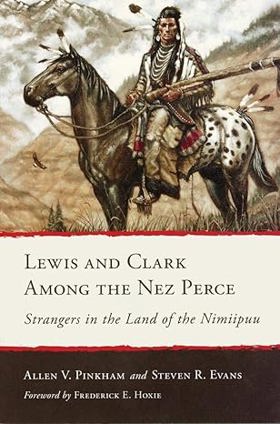
"Lewis and Clark Among the Nez Perce is a generous and careful re-evaluation of what we all thought we knew about Lewis and Clark west of the Bitterroot Mountains. It is also a template for a series of tribal histories of the Lewis and Clark expedition that will be inspired by this book. Incidents we thought we knew backwards and forwards suddenly take on a new light when the historical lens is reversed, and the reader begins to understand what the extended visit of Lewis and Clark meant to their hosts--approximately four months of daily interchange with a community of Indians the white visitors regarded as especially friendly, hospitable, and helpful to the success of the expedition"-- Publisher's description xx, 299 pages : illustrations, maps ; 24 cm CIRC [ 0 ]
|
2013 |
|
They called me number one secrets and survival at an Indian residential school by Bev Sellars , Bill Wilson, Wendy C. Wickwire 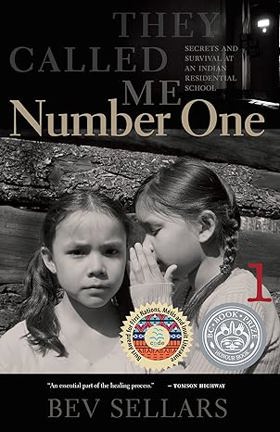
Like most Native children forced by law to attend schools across Canada and the United States, Sellars and other students of St. Joseph's Mission were allowed home only for two months in the summer and for two weeks at Christmas. The rest of the year they lived, worked, and studied at the school. St. Joseph's Mission is the site of the controversial and well-publicized sex-related offenses of Bishop Hubert O'Connor, which took place during Sellars's student days, between 1962 and 1967, when O'Connor was the school principal. After the school's closure, those who had been forced to attend came from surrounding reserves and smashed windows, tore doors and cabinets from the wall, and broke anything that could be broken. Overnight their anger turned a site of shameful memory into a pile of rubble. In this frank and poignant memoir, Sellars breaks her silence about the institution's lasting effects, and eloquently articulates her own path to healing xx, 227 pages : illustrations, map, portraits ; 22 cm. CIRC [ 0 ]
|
2013 |
|
Reasons to go outside a Seattle parks project by James Mitchell , Jackson Quall (Author, Photographer) 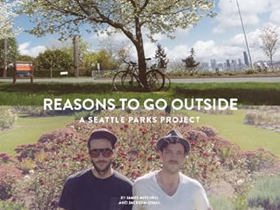
A collection of photographs taken at each of Seattle's 334 parks. Includes a brief history of Seattle parks, location and size of each park, and comments on the photographs. Our names are James and Jackson. In October of 2009 we made the decision to visit and take a photograph at every park in our hometown of Seattle, Washington; a city known for its natural beauty best observed through its exceptional park system. The basic idea was to include ourselves and the rainbow colored park sign that welcomes you to each park in each photograph to more or less "prove" we were there. It ended up taking us 3 years and 8 months to visit every one. We rode our bicycles to 207 of the parks and were able to include 187 different people in the project: some old friends, new friends, acquaintances, strangers, animals and even the Mayor of Seattle. 255 pages : color illustrations ; 23 x 31 cm CIRC [ 1 ]
|
2014 |
|
Port Alberni more than just a mill town by Jan Peterson 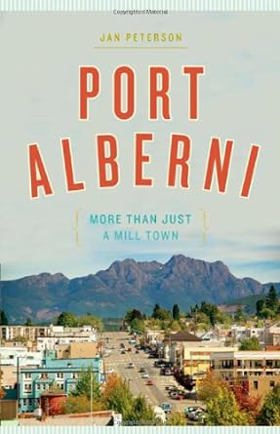
Any community that has ever been labelled a mill town carries both the promise of prosperity and the constant threat of collapse, its fortune hinging on a single industry whose performance is as much related to the whims of a global economy as it is to the abundance of a key natural resource. The people of Port Alberni, located deep in Vancouver Islands Alberni Valley, know all too well the highs and lows that come with such a label. Jan Peterson, who lived in Port Alberni for two of the towns most tumultuous decades and worked as a reporter for the Alberni Valley Times, describes how the towns people persevered through three decades of boom and bust, developed a vibrant arts and sporting community, and strived to make life better under any circumstances. From the prosperous 1970s, when Port Alberni earned the reputation of forestry capital of Canada, to the decline of the industry in the 1980s, when economic uncertainty signalled a need for diversification, to the environmental protests in nearby Clayoquot Sound, which polarized the community, Port Alberni tells the story of Port Alberni from a perspective that is rarely heard. Through fascinating interviews and meticulous historical research, Peterson captures the heart and soul of a town so often defined by dollars and cents. 264 pages, 16 unnumbered pages of plates : illustrations, maps, portraits ; 22 cm. CIRC [ 1 ]
|
2014 |
|
The elusive Mr. Pond the soldier, fur trader and explorer who opened the Northwest by Barry M. Gough 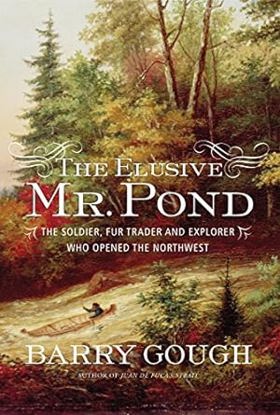
Sir Alexander Mackenzie is known to schoolchildren as a great Canadian explorer who gave his name to the country’s longest river, but hardly anyone could name the man who mentored Mackenzie and mapped much of northwestern Canada before him. Soldier, fur trader and explorer Peter Pond, the subject of this long overdue book, is a man whose legend has been forgotten in favor of those who came after him. Much of Pond’s life is shadowed in mystery. Historian Barry Gough uses Pond’s surviving memoirs, explorers’ journals, letters written by acquaintances of Pond, publications in London magazines and many other sources to track and reconstruct the life of one of the last of the tough, old-style explorers who ventured into the wilderness with little more than a strong instinct for survival and helped shape the modern world. xxv, 230 pages : illustrations, maps, portraits ; 24 cm CIRC [ 1 ]
|
2014 |
|
Idaho's place a new history of the Gem State by Adam M. Sowards , University of Idaho Program in Pacific Northwest Studies 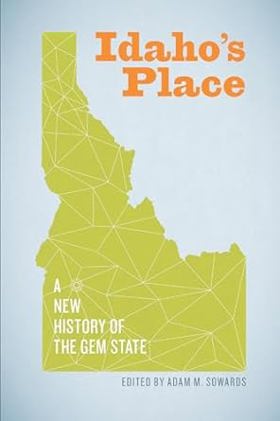
Idaho's Place is an anthology of the most current and original writing on Gem State history. From the state's indigenous roots and early environmental battles to recent political and social events, these essays provide much-needed context for understanding Idaho's important role in the development of the American West. Through a creative approach that combines explorations of concepts such as politics, gender, and race with the oral histories of Idaho residents - the very people who lived and made state history - this unique collection sheds new light on the state's surprisingly contentious past. Readers, whether they are longtime residents or newcomers, tourists or seasonal dwellers, policy makers or historians, will be treated to a rich narrative in which the many threads of Idaho's history entwine to produce a complete tapestry of this beautiful and complex Western state. ix, 310 pages : illustrations, maps ; 24 cm CIRC [ 1 ]
|
2014 |
|
Tracing footsteps Jefferson County, Washington by Pam McCollum Clise 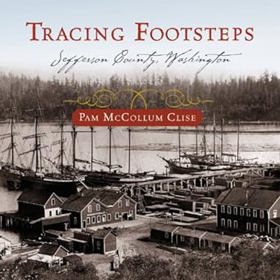
From rich natural resources to free land to hard work and imaginative solutions. This is the story of one small county and what it took to make it strong. Stories of the hopeful, adventurous, opportunistic, and salt of the earth people that have made Jefferson County, Washington what it is today. By following footsteps from the past, starting with the tribes that inhabited this area for thousands of years, to Capt. George Vancouver's exploration in 1792, and on to the early European and east coast settlers, we are able to find the conditions under which decisions were made and actions taken. By unfolding the lives of the people that made it happen, it is possible to see more clearly how the richness of today's community was been handed down from those who came before us. 475 pages : illustrations ; 22 cm CIRC [ 1 ]
|
2014 |
|
The boys in the boat nine Americans and their epic quest for gold at the 1936 Berlin Olympics by Daniel James Brown 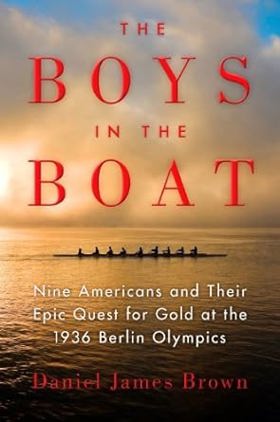
"For readers of Unbroken, out of the depths of the Depression comes an irresistible story about beating the odds and finding hope in the most desperate of times--the improbable, intimate account of how nine working-class boys from the American West showed the world at the 1936 Olympics in Berlin what true grit really meant. It was an unlikely quest from the start. With a team composed of the sons of loggers, shipyard workers, and farmers, the University of Washington's eight-oar crew team was never expected to defeat the elite teams of the East Coast and Great Britain, yet they did, going on to shock the world by defeating the German team rowing for Adolf Hitler. The emotional heart of the tale lies with Joe Rantz, a teenager without family or prospects, who rows not only to regain his shattered self-regard but also to find a real place for himself in the world. Drawing on the boys' own journals and vivid memories of a once-in-a-lifetime shared dream, Brown has created an unforgettable portrait of an era, a celebration of a remarkable achievement, and a chronicle of one extraordinary young man's personal quest." -- Publisher's description 403, 13 pages : illustrations, portraits ; 22 cm CIRC [ 1 ]
|
2014 |
|
This is Portland by Alexander Barrett 
A firsthand look at one of the world’s most livable cities, this fun take on the guidebook genre explores the atmosphere of Portland, Oregon, versus detailing its landmarks and restaurants. It both explains and embraces how beautiful and ridiculous Portland life can be, and includes essays on everything from the rain and bicycling to beards and tater tots. With its approachable and often hilarious tone, this book is perfect for anyone who wants to learn more about the city that is earning its way onto more and more top cities lists each year. 62 pages : illustrations, map CIRC [ 1 ]
|
2014 |
|
Coos County agriculture a short history by Bill Mast 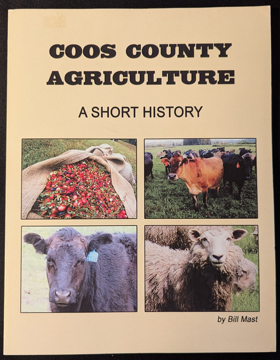
Coos County began the transition from a hunter-gatherer to an agrarian society with the first permanent white settlement in 1853. This book is an attempt to document the next 160 years of that process. The first agriculture in Coos County consisted of subsistence farms marketing their surplus production to logging camps and mining operations. As the farm economy grew, an export market to San Francisco developed. By the late 19th century, shipments of cheese, butter, cattle, hogs, sheep, wool, leather, apples, and potatoes sailed from Coos Bay and the Coquille River. In later decades, blackberries, loganberries, cranberries, and various vegetable crops joined the shipments. Coos County ranked third out of Oregon's 36 counties for apple production and near the top for dairy products by 1910. 87 pages : illustrations (1 color) ; 28 cm CIRC [ 1 ]
|
2014 |
|
Turning down the sound travel escapes in Washington's small towns by Foster Church 
In his new travelogue, Foster Church guides adventurers--lifelong residents of the Northwest and visitors alike--to the small communities beyond the state's well-known urban center. Once inside these small towns, local flavors abound. Church reveals how each community's unique character informs its hospitality and culture: In Morton, the abandoned Roxy movie theater was re-opened to host lectures and live performances. In the town of Palouse, a once-lonesome farming community in the Washington wheat country is now home to antiques shops and art galleries, and in Pomeroy, a pioneering legacy is celebrated in a lively annual festival. With maps, photographs, and recommendations for more than thirty-five towns in all corners of the state, Turning Down the Sound vastly expands the resources available for readers and travelers keen on encountering what Church calls American tourism's last frontier: its small towns 190 pages : illustrations ; 22 cm CIRC [ 0 ]
|
2014 |
|
Blood and sweat over the railway tracks Chinese labourers constructing the Canadian Pacific Railway (1880-1885) by Lily Chow , Chinese Canadian Historical Society of British Columbia (Issuing body) 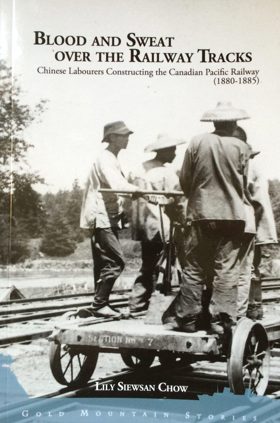
This is a recollection of an important historical event, the Canadian Pacific Railway construction which employed thousands of Chinese labourers to build the transcontinental railway linking this country from coast to coast. In her writing, Chow reveals the reasons for constructing the railway, why and how the Chinese labourers were recruited and transported from Guangdong to various construction sites in British Columbia. She illustrates the difficult and dangerous tasks that the Chinese labourers had to perform bearing testimonies to the challenges, hardships, struggles, and endurance of these workers. Despite the hard labour, these men displayed excellent work ethic, and were diligent and dependable people. Included are some poems and verses by a several Chinese labourers and their family members to show their anguish, anxiety, and longing - human feelings and emotions that had been repressed. This book is a testament to remarkable endeavour, generous spirit, sacrifices and contributions of the Chinese labourers that helped build the CPR. xvii, 116 pages : illustrations, maps, portraits, charts ; 23 cm. CIRC [ 0 ]
|
2014 |
|
Victoria then & now postcards from the past by Nick Russell 
Published in 2014 by heritage researcher and photographer Nick Russell, Victoria Then & Now: Postcards from the Past pairs vintage turn-of-the-century postcards with contemporary photographs to document the physical transformation of British Columbia’s capital city. The volume features side-by-side visual comparisons of prominent local landmarks alongside meticulous historical research detailing the changing streetscapes, businesses, and architecture of early Victoria. Beyond architectural changes, Russell digs into the personal micro-histories of the original senders and recipients inscribed on the cards, transforming a standard visual history into an intimate narrative of everyday human connection. A keen insight drawn from the text is how early postcards functioned as the social media and tourism marketing engines of their day; by intentionally packaging sanitized, picturesque views of colonial progress for cheap postal circulation, these historical artifacts actively manufactured a romanticized civic identity for an expanding Pacific Northwest 80 pages : colour illustrations, 1 colour map ; 14 x 22 cm CIRC [ 0 ]
|
2014 |
|
Wood, water & grass Meek Cutoff of 1845 by James H. Hambleton , Theona J. Hambleton , Stafford J. Hazelett, Caxton Press (Caldwell, Idaho) (Issuing body), Caxton Printers (Printer) 
Researchers James H. and Theona J. Hambleton relate the history of the Meek Cutoff through the words of the diarists that lived through the ordeal. Included in the book are 53 USGS Quadrangle maps showing the actual trail location and many color photos of the remains of the trail itself xiv, 192 pages : illustrations (chiefly color), color maps ; 28 cm CIRC [ 0 ]
|
2014 |
|
Defending Idaho's natural heritage by Ken Robison 
Idaho is rich in natural treasure with more than 100 named mountain ranges, surging rivers, deep canyons, abundant wildlife, seagoing fish, vast forests and picturesque lakes. Throughout the 20th Century many in Idaho saw the state's natural heritage threatened. Early in the 20th Century the state's club women campaigned for a Sawtooth National Park. In the 1930s, a hunting enthusiast named Harry Shellworth led a movement to establish a primitive area in central Idaho. A forester named Bob Marshall persuaded the Forest Service to designate an even larger primitive area north of the Salmon River. Despite these efforts Idaho suffered huge losses of fish and wildlife habitat. Beginning in 1954, sportsmen fought back by sponsoring an initiative to curb dredge mining damage and opposing dams on the Clearwater River and on the Snake River below the mouth of the Salmon. Still to come were intense struggles to stop a proposed open pit mine in the White Clouds, retain a free flowing Snake River in Hells Canyon and protect the Salmon River Wilderness. All of these battles were fought with the intent of preserving the land and the history that make up Idaho's natural heritage. The stories of the various conservation efforts are collected in this book 351 pages : illustrations ; 23 cm CIRC [ 0 ]
|
2014 |
|
British Columbia waters the explorations of Vancouver and the Spanish by Richard W. Blumenthal 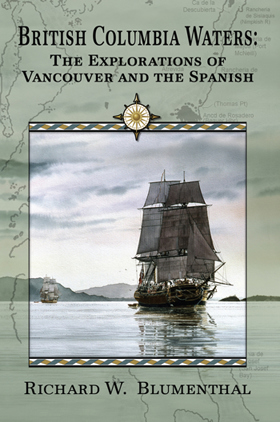
British Columbia Waters: The Explorations of Vancouver and the Spanish is a continuation of the author’s previous narratives which included the original source material from the earliest maritime exploration in the Pacific Northwest. The author’s first two books traced the visits by the Spanish and George Vancouver to inland Washington waters. These books included transcriptions of the actual journals of our earliest explorers. This follow-up book resumes the saga and follows Vancouver and the Spanish in 1792 through British Columbia waters while they complete their circumnavigation of Vancouver Island. It contains the journals of George Vancouver, Alcala Galiano and Cayetano Valdéz and four of Vancouver’s men. These journals provide the first European descriptions and observations of our inland waters as well as the First Nations encountered while they rowed their longboats through previously uncharted territory. Complete with all of their charts, this is a fascinating read directly from the men who made our early history. 288 pages : illustrations, maps ; 23 cm CIRC [ 0 ]
|
2014 |
|
The next tsunami living on a restless coast by Bonnie Henderson 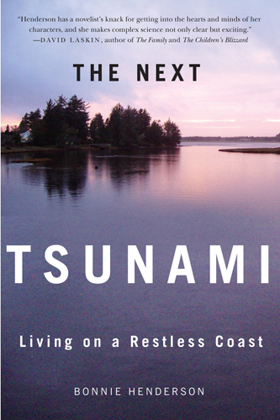
On a March evening in 1964, ten-year-old Tom Horning awoke near midnight to find his yard transformed. A tsunami triggered by Alaska’s momentous Good Friday earthquake had wreaked havoc in his Seaside, Oregon, neighborhood. It was, as far as anyone knew, the Pacific Northwest coast’s first-ever tsunami. More than twenty years passed before geologists discovered that it was neither Seaside’s first nor worst tsunami. In fact, massive tsunamis strike the Pacific coast every few hundred years, triggered not by distant temblors but by huge quakes less than one hundred miles off the Northwest coast. Not until the late 1990s would scientists use evidence like tree rings and centuries-old warehouse records from Japan to fix the date, hour, and magnitude of the Pacific Northwest coast’s last megathrust earthquake: 9 p.m., January 26, 1700, magnitude 9.0—one of the largest quakes the world has known. When the next one strikes—this year or hundreds of years from now—the tsunami it generates is likely to be the most devastating natural disaster in the history of the United States. In The Next Tsunami, Bonnie Henderson shares the stories of scientists like meteorologist Alfred Wegener, who formulated his theory of continental drift while gazing at ice floes calving from Greenland glaciers, and geologist Brian Atwater, who paddled his dented aluminum canoe up muddy coastal streams looking for layers of peat sandwiched among sand and silt. The story begins and ends with Tom Horning, who grew up to be a geologist and return to his family home at the mouth of the river in Seaside—arguably the Northwest community with the most to lose from what scientist Atwater predicts will be an “apocalyptic” disaster. No one in Seaside understands earthquake and tsunami science—and the politics and complicated psychology of living in a tsunami zone—better than Horning. Henderson’s compelling story of how scientists came to understand the Cascadia Subduction Zone and how ordinary people cope with that knowledge is essential reading for anyone interested in the charged intersection of science, human nature, and public policy. 322 pages : illustrations ; 23 cm CIRC [ 0 ]
|
2014 |
|
Field guide to the sedges of the Pacific Northwest by Barbara L. Wilson , Richard E. Brainerd , Danna Lytjen , Bruce Newhouse , Nick Otting , Carex Working Group 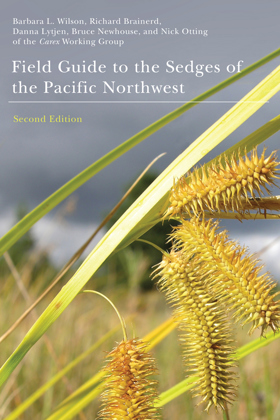
"Field Guide to the Sedges of the Pacific Northwest" is an illustrated guide to all 169 species, subspecies, and varieties in the genus "Carex" that grow in the wild in Oregon and Washington. Most of these species are found throughout the Pacific Northwest and California. This updated second edition includes eight additional species documented in the region since the guide was first published, along with an improved identification key, updated nomenclature and taxonomy, revised range maps, and improved illustrations. Sedges can be difficult to identify, with differences between species based on small, technical characters. This comprehensive guide contains identification keys, descriptions, more than 650 color photographs, and distribution maps for each species, providing users with helpful tools and tips for identifying the plants in this challenging group. Information about sedge ecology, habitat, management and restoration, ethnobotanical uses, and propagation enhances the guide's utility."Field Guide to the Sedges of the Pacific Northwest" provides an invaluable resource for botanists, land managers, restoration ecologists, and plant enthusiasts. And, as the genus "Carex" becomes increasingly important amongst landscapers, nurseries, and gardeners, the guide will serve as a handy tool for choosing Northwest natives for the garden 432 pages : color illustrations ; 23 cm CIRC [ 0 ]
|
2014 |
|
To win the Indian heart music at Chemawa Indian School by Melissa Parkhurst 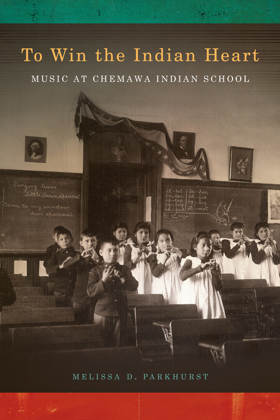
"Since 1879, Indian children from all regions of the United States have entered federal boarding schools - institutions designed to assimilate them into mainstream society. Chemawa Indian School in western Oregon, one of the nation's oldest and the longest still in continuous operation, is an emblem of a system that has intimately impacted countless lives and communities. In To Win the Indian Heart: Music at Chemawa Indian School, Melissa Parkhurst records the history of the school's musical life. She explores the crucial role music was meant to play in the total transformation of Indian children, and the cultural recovery and resiliency it often inspired instead. Parkhurst chronicles the complex ways in which students, families, faculty, and administrators employed music, both as a tool for assimilation and, conversely, as a vehicle for student resistance - a subject long overlooked in literature on Indian education and the assimilation campaign. Combining oral histories of Chemawa alumni with archival records of campus life, the book examines the prominent forms of music making at Chemawa - school band, choirs, private lessons, pageants, dance, garage bands, and powwows. Parkhurst traces the trajectory of federal Indian policy, highlighting students' creative responses and the ways in which music reveals the inherent contradictions in the U.S. government's assimilation practices."--Back cover 236 pages : illustrations ; 23 cm. CIRC [ 0 ]
|
2014 |
|
The nude beach notebook by Barbara J. Scot 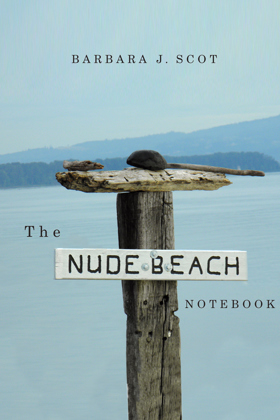
"In this engaging new memoir, a loose sequel to her earlier Prairie Reunion, Barbara J. Scot explores her reluctance and longing to reconnect with a much-loved brother, lost to alcoholism for thirty years. Scot uses long, meditative walks on the 'clothing optional' beach of the idyllic Sauvie Island near Portland, Oregon, to explore family responsibility, time' passage, and faith. She weaves entries from her notebook--a record of the island's wildlife, descriptions of the "Odd Ones" she encounters on the beach, and stories about the native people who once lived on the river--with the main narrative, tracing her search for her brother, her close friendship with a fellow writer, and daily life on the moorage. Scot considers the uses of fiction and non-fiction in memory as well as in writing, the brevity and beauty of human existence, and the inscrutable, enduring mystery of death"--Provided by publisher 198 pages ; 23 cm CIRC [ 0 ]
|
2014 |
|
Salmon is everything community-based theatre in the Klamath watershed by Theresa J. May 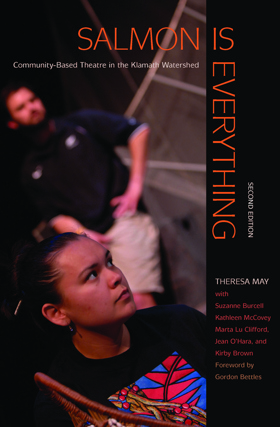
After a devastating fish kill on the Klamath River, tribal members and theatre artist Theresa May developed a play to give voice to the central spiritual and cultural role of salmon in tribal life. Salmon Is Everything presents the script of that play, along with essays by artists and collaborators that illuminate the process of creating and performing theatre on Native and environmental issues. This revised and expanded second edition includes a new introduction by the author, and new chapters by Kirby Brown and Marta Lu Clifford. xvi, 174 pages : illustrations, map ; 23 cm. CIRC [ 0 ]
|
2014 |
|
Geology of the San Juan Islands by Edwin H. Brown 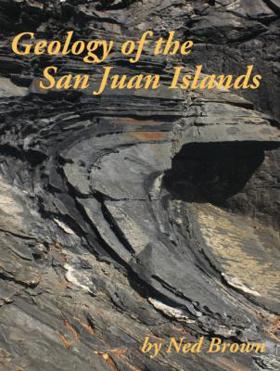
Nestled in the heart of the Salish Sea lie the picturesque San Juan Islands, an archipelago molded by eons of tectonic and glacial activity. Over the course of his nearly five-decade career, WWU geology professor Ned Brown has led countless research teams to decode this complex terrestrial heritage. In Geology of the San Juan Islands, Brown provides detailed, approachable, full color photos and diagrams to illuminate the complexities of these iconic islands. Author Ned Brown is an Emeritus Professor of geology at Western Washington University. He was raised in Minnesota, and went on to receive higher education at Dartmouth College, University of Otago, and U.C. Berkeley. He came to Bellingham in 1966, attracted by the landscape and mountain-building geology. In his nearly five-decade career, Ned, together with students, traversed and sampled much of the bedrock in the Cascades, San Juan Islands, and southern British Columbia Coast Mountains. This lifetime work is the basis for numerous student theses, and professional reports. 99 pages : illustrations (chiefly color), maps ; 28 cm CIRC [ 1 ]
|
2014 |