Catalog of British Columbiana and Pacific Northwest Americana
Encyclopedia Cascadia Catalog contains book titles of mostly non-fiction Pacific Northwest Coast of North America Titles (primarially British Columbia, Idaho, Oregon and Washington State) in an easy-to-understand title catalog. If you see a link with this badge ONLINE CIRC it means that there is an online institution that provides free access to that title. In some cases there may be more than one institution hosting the title digitally.
| Catalog Title | Published |
|---|---|
|
Colonization of Vancouver's Island by Hudson's Bay Company Ltd. 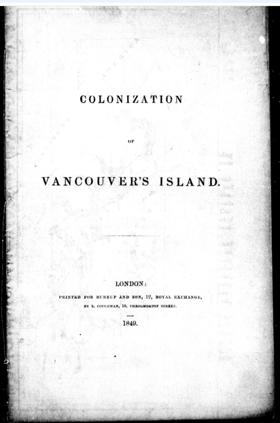
"Written to encourage emigrants to obtain land from the Hudson's Bay Company for settlement, the work outlines conditions of land purchase and quotes published sources as to the suitability of Vancouver Island for colonization." -- Lowther, B. J., & Laing, M. (1968). A bibliography of British Columbia: Laying the foundations, 1849-1899. Victoria, BC: University of Victoria, p. 2. 28 pages map 22 cm ONLINE CIRC [ 1 ]
|
1849 |
|
Collegiate architecture and landscape in the west Willamette University, 1842-2012 by William F. Willingham , Hallie Ford Museum of Art (Publisher), Willamette University (Publisher) 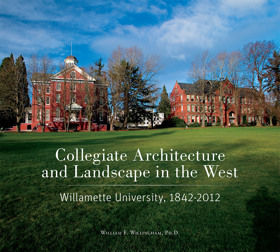
In the story of how campus architecture evolved in the nation, and in microcosm at Willamette University speciƯfically, we see a rich reflection of our society and of education in general. We see how the building of a campus not only reflects the educational aims and culture of a period, but also impacts the future educational missions of an institution. From the wood-framed Oregon Institute through the creation of the LEED Gold CertiƯfied Ford Hall, the captivating details behind the formation of today's beautiful campus show how intricately the physical plant is intertwined with the work, the institutional mission, the Ưfinances, and the individuals who shaped the progress of the University.0While there is plenty to satisfy those with an architectural bent, there is much here for the general reader as well. Generations of people come to life, people from whom we are separated not only by time, but by 'the times'. And yet, in their humanity and deep commitment, we can catch glimpses of who we are today. Willamette University literally inhabits the visions of those who came before. We also see that in a very real way, the challenges, disappointments, and triumphs of people who no longer walk these grounds are built into the Willamette physical plant. Once one has been through this journey, the reader will never look at the built environment of Willamette, or of any campus, in the same way again 234 pages : illustrations (chiefly color), maps (some color), portraits, plans ; 23 x 26 cm CIRC [ 0 ]
|
2019 |
|
Collared politics and personalities in Oregon's wolf country by Aimee Lyn Eaton 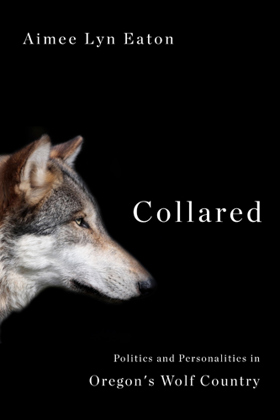
“Just as the humans involved in the wolf debate deserve to be seen as individuals, not stereotypes, so do the wolves. They are not the boogeyman, or storybook monsters aiming to prey upon the young and old. They aren’t cuddly pets or religious icons. They are Canis lupus. Wolves.” —from the Introduction. Teeming with the tension and passion that accompany one of North America’s most controversial apex predators, Collared tracks the events that unfolded when wolves from the reintroduced population of the northern Rocky Mountains dispersed west across state lines into Oregon. In a forthright and personal style, Aimee Lyn Eaton takes readers from meeting rooms in the state capitol to ranching communities in the rural northeast corner of the state. Using on-the-ground inquiry, field interviews, and in-depth research, she shares the story of how wolves returned to Oregon and the repercussions of their presence in the state. Collared: Politics and Personalities in Oregon’s Wolf Country introduces readers to the biologists, ranchers, conservationists, state employees, and lawyers on the front lines, encouraging a deeper, multifaceted understanding of the controversial and storied presence of wolves in Oregon. 135 pages : map ; 23 cm CIRC [ 0 ]
|
2013 |
|
Colfax 100 plus by Edith E. Erickson
|
1981 |
|
Cohassett Beach chronicles World War II in the Pacific Northwest by Kathy Hogan, Klancy Clark De Nevers, Lucy Hart 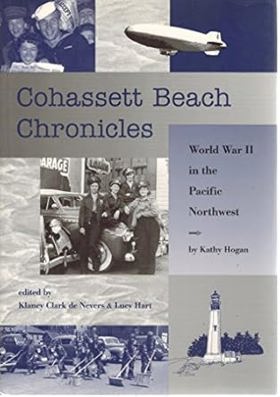
In 1940, the Grays Harbor Post in Aberdeen, Washington, introduced its readers to "The Kitchen Critic," a new column chronicling life in nearby Cohassett Beach. Within a year the U.S. was at war, and columnist Kathy Hogan's weekly dispatches turned to soldiers, rationing, and the barbed wire that lined the sand dunes around her weathered cottage. 50 years later, Kathy Hogan's writings provide a window onto how one Pacific Northwest community responded to World War II. Cohassett Beach Chronicles, a collection of Hogan's columns from the war years, offers a remarkable social history of the war at home. The attack on Pearl Harbor brought U.S. troops to Cohassett Beach and to towns up and down the West Coast. With wit and perception, Hogan writes of civilians valiantly coping with this friendly occupation and wartime scarcity. Her neighbors — loggers, commercial fishermen, Finnish cranberry farmers — learn to live with blackouts, blimps, and a ban on beachcombing. Hogan's weekly descriptions of life on the home front capture America's wartime mood. Together, her columns document the war's tremendous impact at home, from the internment of Japanese Americans and the spread of government regulations to the changing role of women. They also reveal that in spite of the war effort life, in many ways, continued as it always had. There was still time to pick blackberries, gossip at the local tavern, and attend the occasional Friday night dance. As children, the editors spent summers in the Cohassett Beach cottages that still, in the late 1940s, bore scars of the Army's occupation. xxx, 290 pages : illustrations, maps ; 27 cm CIRC [ 0 ]
|
1995 |
|
Coastal exploration of Washington by Robert Ballard Whitebrook, Henry R. Wagner (Writer of introduction) 
History of the English and Spanish maritime explorations of the Northwest coast of America xxv, 146 pages : illustrations, maps ; 24 cm CIRC [ 1 ]
|
1959 |
|
Coast Salish their art, culture and legends by Reg Ashwell
Discusses the origins and culture of the Coast Salish Indians 86 pages : illustrations ; 22 cm CIRC [ 1 ]
|
1978 |
|
Coast country a history of southwest Washington by Lucile Saunders McDonald 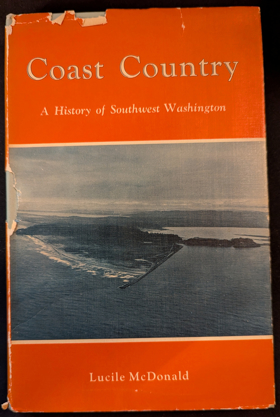
v, 184 pages, 24 unnumbered pages of plates : illustrations, map (on lining paper) ; 23 cm CIRC [ 1 ]
|
1966 |
|
Coal wars unions, strikes, and violence in depression-era central Washington by David Bullock 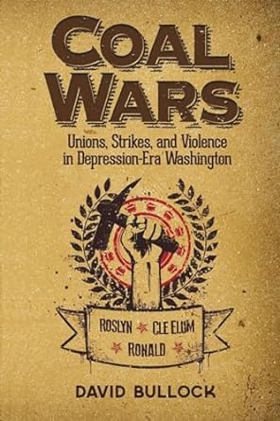
Strikes were a way of life for central Washington coal miners and their families, but Tuesday, April 3, 1934, was different. This time, people were afraid. Wives and mothers pelted cars with rocks, rotten eggs, and cow pies. They cursed and assaulted anyone who dared to cross their picket line. On a normal shift, the striking laborers spent ten or more hours at the workplace. Dressing, preparing lights and equipment, and traveling into the mine shaft--as much as an hour each way--were all done on their own time. The miners and their families wanted safer working conditions, fair wages, and a six-hour workday. So when leaders of their national union, the United Mine Workers of America, seemed indifferent to their concerns, some local members created a new organization, the Western Miners Union of America, and decided to strike. But this time, conflicting union alliances turned residents of Roslyn, Cle Elem, and Ronald against each other, and the heated, violent battle left deep and lasting scars. A refreshingly balanced account, Coal Wars captures the drama surrounding a dual union movement in the 1930s American West while portraying the region's melting pot of working families and the sociopolitical impacts of New Deal policies. Author David Bullock witnessed the bitter emotions first hand. His grandfather, a Roslyn miner, lived through the events depicted in Coal Wars. vii, 211 pages : illustrations, maps ; 23 cm CIRC [ 1 ]
|
2014 |
|
Coal towns in the Cascades a centennial history of Roslyn and Cle Elum, Washington by John C. Shideler 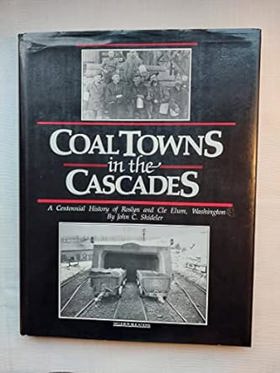
From Coal Mine to Recreational In the early 1880s, the Northern Pacific Railroad discovered coal in Roslyn, Washington. By 1886, mining coal in Roslyn became the company's top priority. The coal mines attracted a diverse workforce from across America and Europe. Each group, along with their hopes and dreams for a better life, brought their own culture, cuisine and customs, many of which are still in evidence today.Coal mining operations ceased in 1963. After more than 63 million tons of coal had been mind from the Roslyn coal field, Roslyn became a town with no industry. Over time, Seattlites, seeking sunny skies and fresh mountain air stimulated an increased demand for recreational property. As people began to discover the great natural beauty of the areas close to Seattle, tourism began to grow. People became enchanted with the area's history and its four-season recreational opportunities.The resort community of Suncadia was created on a 6,300-acre piece of property, southwest of Roslyn, which includes Mines No. 9 and No. 10. Suncadia is owned by subsidiaries of JELD-WEN, PacTrust and Lowe Enterprises. The goal of Suncadia LLC was to develop a four-season destination resort, while preserving the beauty and history of the land. An important component of the resort is the Rope Rider golf course, so named as a tribute to the coal miners, who precariously balanced themselves on the coal cars that maneuvered the steep slopes of the mine shafts. The enduring legacy of the Rope Riders is woven into the design, architecture and personality of the Roper Rider Clubhouse. [8], 151 pages : illustrations, chart, portraits; 29 cm CIRC [ 1 ]
|
1986 |
|
Closing time prohibition, rum-runners, and border wars by Daniel Francis 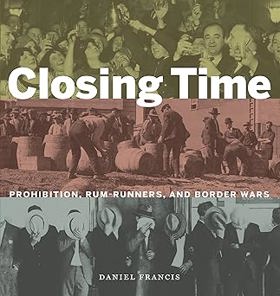
Canadians have long associated Prohibition with the colorful history of the Jazz Age in the United States. But even before the American ban that was in place from 1920 to 1933, Canada initiated its own Prohibition. The so-called Cold Water Army was led by zealots and prudes preaching hellfire and damnation, but also by committed social reformers who recognized the ill effects of excessive drinking. In March 1918, the federal government banned the manufacture and importation of liquor. For the next 21 months, Canada was as dry as any law could make it, which admittedly was not very dry. Closing Time tells the story of this fascinating attempt to control the social habits of Canadian citizens. It began as a popular crusade to cleanse society of a widespread evil, but instead became an opportunity for larceny, profit, and violence on a grand scale. 186 pages : illustrations (some colour), maps, portraits ; 24 cm. CIRC [ 0 ]
|
2014 |
|
Clifford Gleason the promise of paint by Roger Hull , Clifford Gleason (Artist), Hallie Ford Museum of Art (Host institution) 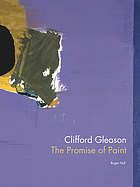
Clifford Gleason (1913-1978), who grew up in Salem and spent his adult life in both Salem and Portland, was a talented and highly original artist whose work remains of keen interest to a small and loyal group of collectors and artists but whose accomplishments are less generally known than those of other Oregon mid-century artists. Clifford Gleason: The Promise of Paint' serves as both an introduction and a definitive study of an 'artist's artist,' who until now has not received the sustained attention that he and his work are due. It traces his career from the 1930s until the last months of his difficult life-difficult because of alcoholism, near poverty, and homosexuality in a repressive era. In paint, Gleason found the only realm in which he felt competent, confident, and successful; paint offered the promise of accomplishment.0Roger Hull's knowledgeable text offers a chronological study combining biography, analysis of Gleason's artworks, and assessment of his place within the broader context of contemporary and Pacific Northwest art.0Published in conjunction with an exhibition at the Hallie Ford Museum of Art at Willamette University, this richly illustrated monograph examines Gleason's identity as a modern artist as he responded to the rapid changes in artistic modernism from the late 1930s, when he studied with Louis Bunce at the Salem Federal Art Center, to the 1970s, when he rethought the legacy of Abstract Expressionism in works that are unique to him, visually beautiful and poetically expressive. Exhibition: Hallie Ford Museum of Art, Salem, USA (20.08-31.10.2020) 95 pages : illustrations (chiefly color) ; 32 cm CIRC [ 0 ]
|
2020 |
|
Clearwater steam, steel, & spirit by Carole Simon-Smolinski, Anne Weatherill (Illustrator) 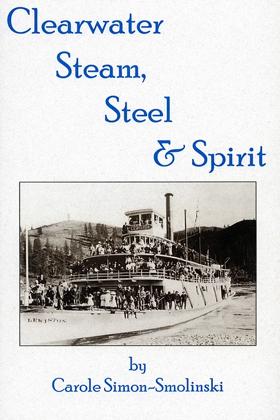
The era of stern-wheel steamboats on the Clearwater River, Idaho, speaks of a quieter time. Sometimes we long to return to that age. Railroads, which played such an important part in the development of that region, are now as much a part of the past as the steamers. Nostalgia carries our thoughts back to those years as well, when time moved slower in a more peaceful setting. But looking back distorts reality. Stern-wheelers and railroad trains moved clocks rapidly forward, catching the wilderness of North Central Idaho up with the modern times of early 20th century America. They played an important role in the development of the Clearwater Country, just as the pioneer spirit left its important legacy. They must not be forgotten. - author v, 101, [1] pages + [1] page advertisement : illustrations, map, portraits ; 14 x 19 cm CIRC [ 1 ]
|
1984 |
|
Clearwater country! the travelers' historical and recreational guide, Lewiston, Idaho--Missoula, Montana by Borg Hendrickson, Linwood Laughy 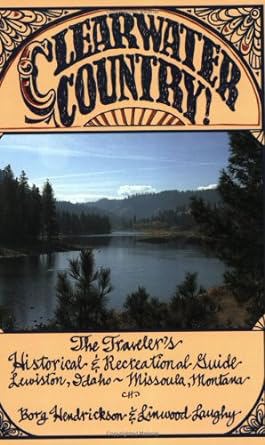
Few special places lie hidden in America, left much as they have been for centuries. Among them are the mountains, meadows, forests and streams of Clearwater Country. Here can be found the entire saga of the American west - from missionaries to miners, settlers to soldiers, outlaws and vigilantes, generals and war chiefs and more. The reader can follow in the footsteps of explorers Meriwether Lewis, William Clark and Sacagawea; missionaries Henry and Eliza Spalding; Nez Perce Chiefs Twisted Hair, Lawyer, Looking Glass and Joseph; General O.O. Howard; outlaw Henry Plummer - and dozens of other figures who wove the rich tapestry of Clearwater Country's historical past. This book will also help you discover Clearwater Country's wild and beautiful natural world - its flora and fauna, streams and rivers, beaches and hot springs, campgrounds and hiking trails. In addition to the historical and recreation guides, six additional chapters provide background information for! armchair historians and present or future visitors. The book includes maps, historical photos and original artwork. iv, 230 pages : illustrations, maps ; 22 cm CIRC [ 1 ]
|
1999 |
|
Clatsop County, Oregon a history by Emma Gene Miller
This book includes myths and legends of the Indians; historic anecdotes, and the story of lumbering and industrial growth 291 pages : illustrations ; 22 cm CIRC [ 1 ]
|
1958 |
|
Clackamas County historical, 1966-1967 history of Willamette Falls by Clackamas County Historical Society
|
1967 |
|
Civil government of Idaho for the use of schools by Clinton Emmett Rose
Authored by prominent educator Clinton Emmett Rose, Civil Government of Idaho for the Use of Schools served as a foundational civic textbook designed to instruct early 20th-century students on the structural mechanisms of their newly established state. The volume systematically details the constitutional framework, legislative processes, and local administrative duties that governed Idaho, translating complex legal statutes into standardized classroom lessons. Through its pedagogical focus on civic duty and institutional mechanics, the book aimed to mold the children of frontier settlers and diverse immigrants into a unified, patriotic citizenry. A keen insight drawn from the work is how progressive-era public education functioned as a powerful instrument of state legitimization; by teaching Idaho’s legal and political frameworks as the absolute, unquestionable culmination of civilized order, early textbooks actively normalized settler-colonial authority for the next generation while completely erasing the pre-existing Indigenous governance structures that the new state had so recently displaced. 151 pages ; 19 cm ONLINE CIRC [ 2 ] CIRC [ 1 ]
|
1912 |
|
City of dreams a guide to Port Townsend by Peter Simpson, Robin Biffle 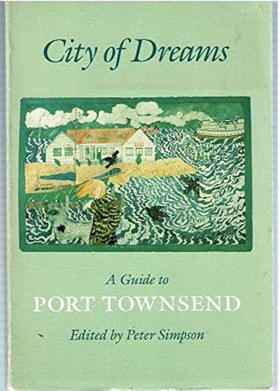
City of Dreams: A Guide to Port Townsend, edited by Peter Simpson in collaboration with Robin Biffle and other local writers, is a 1986 regional history and cultural guide published by Bay Press. The book explores the vibrant heritage of this prominent Olympic Peninsula seaport, famously nicknamed the "City of Dreams" due to early pioneer speculation that it would become the largest harbor on the West Coast. Blending local history, architectural appreciation, and community lore, the volume chronicles Port Townsend's boom-and-bust economic cycles, its preservation of late 19th-century Victorian architecture, and its enduring maritime traditions. Ultimately, it serves as an engaging and comprehensive resource for understanding the historical forces and distinct cultural identity that shaped one of Washington's most picturesque and architecturally significant coastal cities. 330 pages : illustrations, maps ; 24 cm CIRC [ 1 ]
|
1986 |
|
City limits walking Portland's boundary by David Oates 
"I walked all the way around Portland, along the invisible line called the Urban Growth Boundary. Where the dotted line followed rivers--the Sandy, the Clackamas, the Willamette, the Columbia--I went in a kayak. But it was mostly just a long walk on city streets and rural two-lanes… I journeyed intermittently for two years and two months." Portland's Urban Growth Boundary (UGB) was designed to hold the bursting metropolitan area in check while protecting Willamette Valley orchards and fields from sprawling suburbia. Since the inception of growth boundaries as a key component of Oregon's progressive land-use system in the 1970s, Portland has evolved into one of the nation's most successful and distinctive cities. David Oates traveled the 260-mile boundary that defines Portland to discover how the UGB has contributed to that success. City Limits is his engaging and thought-provoking record of the journey. From conversations with the people he encounters on his walks, Oates comes to view the UGB as a long-running experiment in community control over development. But in recent years, the growth boundary has come under fire from developers, property rights advocates, and other critics. Just after Oates completed his walks, a statewide vote gutted Oregon's land-use laws. Oates explores these issues of community and conflict on the UGB in the company of various individuals he sometimes invites along for the day's walk--artists, writers, urban planners, environmentalists, developers, a politician, a wine grape grower. Reflecting Oates's belief in the power of community and collaboration, many of their thoughts and writings about the experience are included in the book. 125 pages : map ; 23 cm CIRC [ 0 ]
|
2006 |
|
Circling north by Charles Lillard
|
1988 |
|
Chuckanut chronicles by Robert B. Thomas
|
1971 |
|
Chiru sakura = falling cherry blossoms a mother and daughter's journey through racism, internment and oppression by Grace Eiko Thomson , Meg Yamamoto 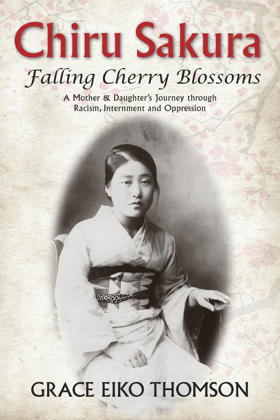
"At eight years old, Grace Eiko Nishikihama was forcibly removed from her Vancouver home and interned with her parents and siblings in the BC Interior. Chiru Sakura--Falling Cherry Blossoms is a moving and politically outspoken memoir written by Grace, now a grandmother, with passages from a journal kept by her late mother, Sawae Nishikihama. An educated woman, Sawae married a naturalized Canadian man and immigrated to Canada in 1930. They came with great hopes and dreams of what Canada could offer them. However, within just a little more than a decade after settling happily in Paueru Gai (Powell Street) area, her dreams, and those of her husband's, were completely shattered. It was 1942 and more than 22,000 Japanese Canadians on the West Coast were interned and had their belongings, property and homes confiscated, and then sold off by the Government of Canada. After the war ended, restrictions on Japanese Canadians' movement continued for another four years and the Government ordered anyone of Japanese ancestry to move 'east of the Rockies,' or be deported to Japan. There was nothing on the West Coast to return to, so the Nishikihama family moved first to rural Manitoba and, when government restrictions were lifted, later to Winnipeg. At eighty-four years of age, Sawae began writing her memories for her children, ensuring they would know their family's story. While translating her mother's journal, Grace began to add her own experiences alongside her mother's, exploring how generational trauma can endure, and how differently she and her mother interpreted those years of struggle. Despite her years spent studying art and working as a gallery director and curator, translating her mother's writings, and her country's perceived efforts to simply move on from a dark period in Canada's history, Grace continues to seek an understanding of her past, while facing both sexism and racism. As an advocate for reconciliation, she openly shares her story with the next generations; throughout, Grace returns to her mother's teachings of hope and resilience symbolized in the cherry blossoms around what was once their home."-- Provided by publisher 198 pages : illustrations, portraits (black and white) ; 23 cm CIRC [ 0 ]
|
2021 |
|
Chinuk Wawa kakwa nsayka ulman-tilixam laska munk-kemteks nsayka = as our elders teach us to speak it by Chinuk Wawa Dictionary Project (Compiler), Confederated Tribes of the Grand Ronde Community of Oregon (Publisher) 
Chinuk Wawa (also known as Jargon and Chinook Jargon) is a hybrid lingua franca consisting of simplified Chinookan, combined with contributions from Nuuchahnulth (Nootkan), Canadian French, English, and other languages. It originated on the lower Columbia River, where it once was the predominant medium of intertribal and interethnic communication. Even after English came into general use on the lower Columbia, Chinuk Wawa survived for generations in families and communities shaped by the meeting of the region's historically diverse tribes and races. This Chinuk Wawa dictionary is based primarily on records from one such community, the Confederated Tribes of Grand Ronde, Oregon, where Chinuk Wawa is taught as a community heritage language. 494 pages : illustrations, maps ; 25 cm CIRC [ 0 ]
|
2012 |
|
Chinookan peoples of the lower Columbia by Robert T. Boyd , Kenneth M. Ames , Tony A. Johnson 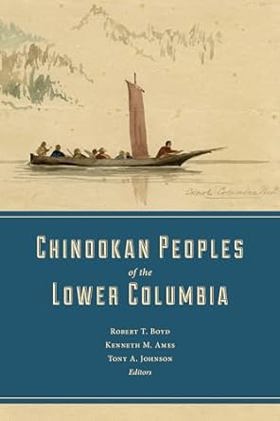
"Chinookan peoples have lived on the Lower Columbia River for millennia. Today they are one of the most significant Native groups in the Pacific Northwest, although the Chinook Tribe is still unrecognized by the United States government. In Chinookan Peoples of the Lower Columbia, scholars provide a deep and wide-ranging picture of the landscape and resources of the Chinookan homeland and the history and culture of a people over time, from 10,000 years ago to the present. They draw on research by archaeologists, ethnologists, scientists, and historians, inspired in part by the discovery of several Chinookan village sites, particularly Cathlapotle, a village on the Columbia River floodplain near the Portland-Vancouver metropolitan area. Their accumulated scholarship, along with contributions by members of the Chinook and related tribes, introduces readers to Chinookan history and culture in rich and sometimes surprising ways."--Back covers xix, 419 pages, 18 unnumbered pages of plates : illustrations, maps, portraits ; 23 cm CIRC [ 1 ]
|
2015 |
|
Chinook texts by Franz Boas, Charles Cultee 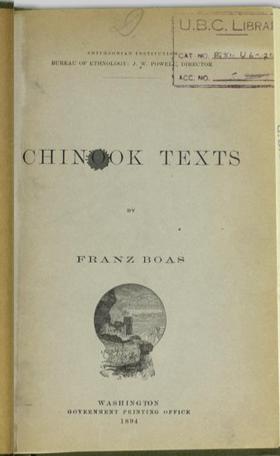
Published in 1894, Chinook Texts is a foundational ethnolinguistic work compiled by anthropologist Franz Boas, who meticulously transcribed the myths, historical narratives, and cultural traditions of the Lower Chinook people directly from Charles Cultee, one of the last living fluent speakers. A keen insight drawn from the text is how the urgency of Boas's "salvage anthropology" highlights the devastating impact of colonization, demonstrating how the preservation of an entire linguistic system ultimately relied on the extraordinary memory of a single indigenous informant. By presenting the original phonetically transcribed Chinookan dialect alongside literal English translations, the volume rigorously documents the complex grammatical syntax and nuanced worldview of the lower Columbia River tribes. Consequently, the book stands not merely as a collection of regional folklore, but as an indispensable archival record that permanently secured the heritage of a vanishing Pacific Northwest civilization. 1 preliminary leaf, 278 pages, 2 leaves of plates : portraits ; 24 cm ONLINE CIRC [ 1 ]
|
1894 |