Catalog of British Columbiana and Pacific Northwest Americana
Encyclopedia Cascadia Catalog contains book titles of mostly non-fiction Pacific Northwest Coast of North America Titles (primarially British Columbia, Idaho, Oregon and Washington State) in an easy-to-understand title catalog. If you see a link with this badge ONLINE CIRC it means that there is an online institution that provides free access to that title. In some cases there may be more than one institution hosting the title digitally.
| Catalog Title | Published |
|---|---|
|
British Columbia place names by Mark Thorburn 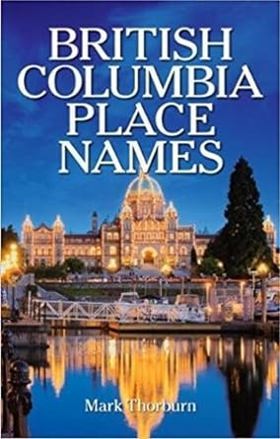
Whether the names come from the First Nations peoples, the English and Spanish explorers who sailed along BC's coast, or the fur traders, gold prospectors and settlers, the stories behind the place names reveal much about the places themselves and the history of the province: - Babine Lake takes its name from the French word for large lip and refers to the former practice of the local First Nations people of inserting half-inch pieces of wood or bone between the teeth and lower lips of their women - Barkerville was named for Billy Barker, a gold prospector from the Cariboo Gold Rush Days who struck it rich but later died in poverty - In 1920, the residents of Harper's Camp voted almost unanimously in favour of changing their community's name to Horsefly in honour of that pesky insect that visits every summer - Lulu Island, on which the city of Richmond sits, was named for 16-year old American actress Lulu Sweet who won the hearts of a detachment of Royal Engineers - Squamish is an anglicization of the Squamish people's name for themselves, the Skwxwú7mesh, the word means mother of the wind and many refer to the steady wind that blows off Howe Sound into the city - Vancouver's famous clothing-optional Wreck Beach was named after three ships that were sunk off its shores in 1928 to create a breakwater for a log-storage site - Tête Jaune Cache is French for Yellow Head's hiding place and refers to the yellow-haired Pierre Bostonais, an Iroquois Métis fur trapper and trader who worked as a guide for the North West and Hudson's Bay companies. 336 pages : portrait ; 21 cm CIRC [ 1 ]
|
2009 |
|
British Columbia place names by George Philip Vernon Akrigg, Helen Brown Manning Akrigg 
British Columbia Place Names by the distinguished historical research team of George Philip Vernon (G.P.V.) Akrigg and Helen B. Akrigg is a definitive toponymic reference work—with a significantly expanded and widely cited edition published in 1986—that catalogs the origins of the province's geographic names. The book meticulously documents the fascinating stories and linguistic roots behind the naming of British Columbia's cities, towns, rivers, mountains, and coastal features. It traces these designations through various eras of the region's past, highlighting Indigenous terminology, the navigational records of early Spanish and British maritime explorers, and the legacies of fur traders, gold rush prospectors, and pioneer settlers. Ultimately, it serves as an indispensable and highly engaging resource for regional historians, genealogists, and geographers, offering a unique linguistic lens through which to explore the complex cultural and colonial heritage of Canada's Pacific coast. 195p CIRC [ 1 ]
|
1986 |
|
British Columbia place names by G. P. V. Akrigg, Helen B. Akrigg 
Elephant Crossing. Houdini Needles. Miniskirt, Tickletoeteaser Tower, and Why Not Mountain. These are just some of the many names of places, rivers, mountains, and lakes that you will come across in the newest edition of British Columbia Place Names. This classic which, in its various editions, has sold over 29,000 copies, covers about 2,500 geographical features, cities, towns, and smaller communities in the province. The book abounds with fascinating historical facts, stories, and remarkable characters involved with the names of towns, cities, rivers, lakes, mountains, and islands. The selection was determined by the geographical importance of the feature as well as story of the naming. In the introduction the authors deal with the stages by which B.C. acquired its place names, the history of research into those names, and the categories into which they fall. The latter range from the honorific and commemorative to the comic and disrespectful. Aboriginal names receive particular attention. The location of each place is clearly indicated and the text is accompanied by detailed maps. Brief biographical accounts of persons with places named after them as well as an abundance of anecdotes make this a fascinating book for browsers and an invaluable resource for historians. xxv, 304 pages : maps ; 24 cm CIRC [ 1 ]
|
1997 |
|
British Columbia in the balance 1846-1871 by Jean Barman 
"Esteemed historian Jean Barman brings new insights on the seemingly disparate events that converged to lay the foundation of the present-day province. By examining newly accessible private correspondence exchanged with the Colonial Office in London, Barman pieces together the chain of events that caused the distant colony of British Columbia to join the Canadian Confederation as opposed to the very real possibility of becoming one or more American states. Following the division of the Pacific Northwest between Britain and the United States in 1846, it took British Columbia just a quarter of a century to be transformed from a largely Indigenous territory in 1871, into a province of the recently formed Canada Confederation. In this detailed exploration of colonial politics, including fur trader and politician James Douglas's governance and the critical role played by the many unions between white settlers and and Indigenous women, Barman expertly weaves together seemingly disparate events that converged to lay the foundations of today's Canadian province."-- Provided by publisher 319 pages : illustrations, map ; 24 cm CIRC [ 0 ]
|
2022 |
|
British Columbia from the earliest times to the present by E. O. S. Scholefield, F. W. Howay
Co-authored by Provincial Librarian E. O. S. Scholefield and historian F. W. Howay, British Columbia from the Earliest Times to the Present is a monumental four-volume history detailing the province's evolution from Indigenous territories and fur-trade outposts into a modernized Canadian province. The exhaustive 1914 work extensively chronicles the era of maritime exploration, the monopoly of the Hudson’s Bay Company, and the chaotic gold rushes that forced the rapid implementation of British colonial administration. In keeping with the era's subscription-based publishing model, the historical narrative is heavily supplemented with flattering biographical sketches of prominent local patriarchs, effectively celebrating the region's industrial and political development as a triumph of Anglo-Saxon enterprise. A keen insight drawn from the work is how the collaboration between the state's chief archivist and a sitting judge served to officially institutionalize a legalistic justification for colonial expansion; by framing the province's history as an orderly, bureaucratic progression from corporate rule to British law, the authors deliberately obscured the unceded nature of First Nations land behind a veneer of inevitable constitutional progress. 4 volumes frontispieces, plates, portraits, maps, facsimiles 27 cm ONLINE CIRC [ 4 ]
|
1914 |
|
British Columbia coast names by John T. Walbran 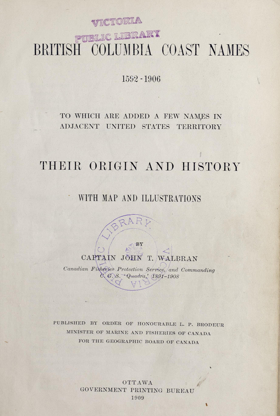
During his years as captain of the Canadian government steapship Quadra, John T. Walbran became fascinated with the BC coast and set to work on his classic British Columbia Coast Names, which was published in 1909 546 pages, plates : 1 folded map ONLINE CIRC [ 1 ] CIRC [ 1 ]
|
1909 |
|
British Columbia chronicle, 1788-1846 adventures by sea and land by G. P. V. Akrigg, Helen B. Akrigg
A chronological overview of B.C. history from 1778-1846 as a continuous narrative. Deals with the major explorers, early fur trade, and etc xv, 429 pages, 12 unnumbered leaves of plates : illustrations, maps, portraits ; 23 cm CIRC [ 1 ]
|
1975 |
|
British Columbia and the United States the north Pacific slope from fur trade to aviation by H. F. Angus , F. W. Howay, W. N. Sage 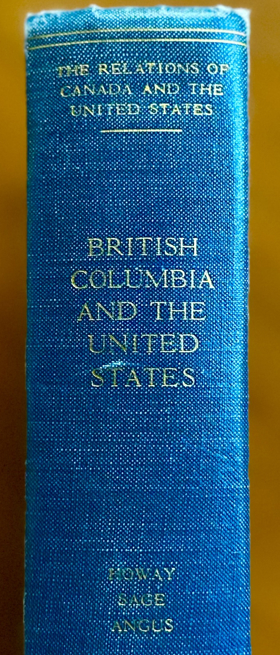
The region dealt with contains those parts of North Pacific Slope where British interests have prevailed. Before the year 1846 this included the valley of the Columbia River, and also, in a sense, the Snake River Country. The backbone of the narrative, which extends from the early maritime fur-trade days of the eighteenth century down to the present, is largely economic in character. xv, 408 pages illustrations (maps) 25 cm CIRC [ 0 ]
|
1942 |
|
British Columbia and Sir James Douglas, K.C.B. (1803-1877) by Charles A. Banks
|
1954 |
|
British Columbia a new historical atlas by Derek Hayes 
British Columbia was among the last temperate places on Earth to appear on the map of the world, a function of its position-remote from Europe. When gold was finally discovered in quantity in 1858, leading to the gold rush that created British Columbia as a new colony, the interior was mostly unknown except for the routes blazed by the fur traders seeking the "soft gold" that characterized the exploration of much of Canada. The efforts of the explorers, the fur traders, the gold seekers, and the railway builders all involved the production of maps that showed what they had found, the routes and the settlements, the plans and the strategies that developed the province into what we know today. In British Columbia: A New Historical Atlas, acclaimed map historian Derek Hayes has curated nearly a thousand maps the majority of which have never been published before along with concise text, and extensive captions. Added to numerous other illustrations, the result is a geographically visual history, a unique and fascinating viewpoint on our province's past. 1 atlas (368 pages) : illustrations (some color), maps (some color) ; 35 cm CIRC [ 1 ]
|
2012 |
|
British Columbia a natural history by Richard J. Cannings, Sydney G. Cannings 
A comprehensive review of the physical and natural environments of the Province, written for interested laypersons, describing the natural history of BC by ecological region. Also discusses threatened ecosystems, climate change and introduced species 310 pages : illustrations (some color) ; 27 cm CIRC [ 1 ]
|
1996 |
|
British Columbia a history by Margaret A. Ormsby
|
1976 |
|
British Columbia land of promises by Patricia Roy, John Herd Thompson 
"For more than two centuries, people from around the world have been irresistibly drawn to British Columbia. Some have sought to make their fortunes in furs, or gold, or lumber, some have dreamt of establishing utopian communities, many others have hoped simply to find a steady job, or a piece of land to farm and raise a family on. At times BC has lived up to the most extravagant expectations. But at times it has not, and in either case the costs have often been high, especially for the region's First Nations. In British Columbia: Land of Promises Patricia E. Roy and John Herd Thompson trace the social, economic, and political history of the province through a lively narrative and a wealth of carefully annotated illustrations, including maps, paintings, photographs, and cartoons."--Jacket 216 pages, 10 unnumbered pages of plates : illustrations (some color), maps (some color), portraits (some color) ; 24 cm CIRC [ 1 ]
|
2005 |
|
British Columbia an illustrated history by Geoff Molyneux 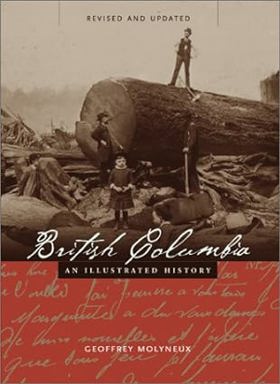
This history of British Columbia celebrates an enigmatic and beautiful frontier. At the same time, author Geoffrey Molyneux delivers barbs about the corrupt politicians and bizarre development plans that have threatened to compromise this majestic region. With over 100 photographs and excerpts from writers Douglas Coupland and Terry Glavin, this book provides a short but engaging history of Canada's westernmost province 174 pages : illustrations, maps ; 23 cm CIRC [ 1 ]
|
2002 |
|
Bringing Indians to the book by Albert Furtwangler 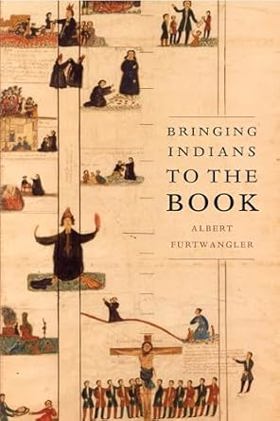
In 1831 a delegation of Northwest Indians reportedly made the arduous journey from the shores of the Pacific to the banks of the Missouri in order to visit the famous explorer William Clark. This delegation came, however, not on civic matters but on a religious quest, hoping, or so the reports ran, to discover the truth about the white men's religion. The story of this meeting inspired a drive to send missionaries to the Northwest. Reading accounts of these souls ripe for conversion, the missionaries expected a warmer welcome than they received, and they recorded their subsequent disappointments and frustrations in their extensive journals, letters, and stories. Bringing Indians to the Book recounts the experiences of these missionaries and of the explorers on the Lewis and Clark Expedition who preceded them. Though they differed greatly in methods and aims, missionaries and explorers shared a crucial underlying cultural characteristic: they were resolutely literate, carrying books not only in their baggage but also in their most commonplace thoughts and habits, and they came west in order to meet, and attempt to change, groups of people who for thousands of years had passed on their memories, learning, and values through words not written, but spoken or sung aloud. It was inevitable that, in this meeting of literate and oral societies, ironies and misunderstandings would abound. A skilled writer with a keen ear for language, Albert Furtwangler traces the ways in which literacy blinded those Euro-American invaders, even as he reminds us that such bookishness is also our own. xii, 226 pages, 8 unnumbered pages of plates : illustrations, map ; 23 cm CIRC [ 0 ]
|
2005 |
|
Bright seas, pioneer spirits a history of the Sunshine Coast by Betty Keller, Rosella M. Leslie 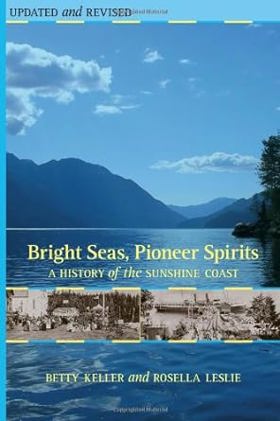
For well over a century, the bright seas of the Sunshine Coast have been attracting visitors to the waterfront resorts, fishing lodges and beaches that rest between Howe Sound and the spectacular Princess Louisa Inlet. These coastal hotspots and communities were settled by a few courageous and daring pioneers whose names are still familiar today: Gibsons, Roberts, Whitaker, Donley, Silvey, Griffiths. Bright Seas, Pioneer Spirits tells the stories of the homesteaders, loggers, prospectors and fishermen who carved out a living on the treacherous mountainside that rises straight out of the inlets. These men and women came with nothing in their pockets and founded logging empires, shingle mills and sawmills, launched fish canneries, a glue factory and even a well-known jam factory, and scaled the mountainsides to start copper and gold mines. They travelled and traded by boat, long before coastal roads were built in the 1950s, and their pioneering spirits still ride the bright seas of the Sunshine Coast today. 245 p. : ill., map, ports. ; 23 cm. CIRC [ 1 ]
|
2009 |
|
Brief presence Spain's activity on America's northwest coast, 1774-1796 by Tomas Bartroli 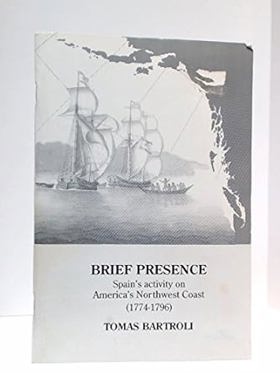
Authored by historian Tomás Bartroli, Brief Presence: Spain's Activity on America's Northwest Coast, 1774–1796 chronicles Spain's aggressive late-18th-century maritime expeditions and territorial assertions along the Pacific Northwest coast. The book details pioneering voyages led by explorers like Juan Pérez, Bruno de Heceta, and Salvador Fidalgo who mapped uncharted waters, established short-lived outposts like Fort San Miguel, and traded with Indigenous nations in a desperate bid to secure the region against British and Russian encroachment. Drawing heavily from Spanish naval archives and primary logs, the text illuminates the logistical hurdles and geopolitical anxieties that characterized Madrid's fleeting imperial footprint in the North Pacific. A keen insight drawn from the work is how imperial overextension doomed Spain's Pacific ambitions; by trying to police a vast, distant coastline with limited supply lines and sparse settlers, the Spanish crown ultimately transformed its maritime explorations into an expensive reconnaissance mission that inadvertently paved the way for British and American dominance. 62 pages : illustrations ; 22 cm CIRC [ 1 ]
|
1991 |
|
Bridging a great divide the battle for the Columbia River Gorge by Kathie Durbin 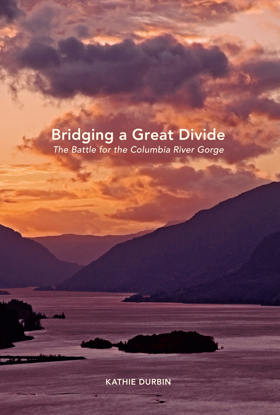
In 1986, the Columbia River Gorge National Scenic Area Act set into motion one of the great land-use experiments of modern times. The act struck a compromise between protection of a singular Western landscape-the majestic Gorge carved by Ice Age floods, which today divides Washington and Oregon-and encouragement of compatible economic development in communities on both sides of the river. In Bridging a Great Divide, environmental journalist Kathie Durbin draws on interviews, correspondence, and extensive research to detail what's happened in the Gorge since the act's passage. Sweeping change has altered the Gorge's landscape: upscale tourism and outdoor recreation, gentrification, the end of logging in national forests, the closing of aluminum plants, wind farms, and a population explosion in the metropolitan area to its west. In this insightful and revealing history, Durbin suggests that the story of the Columbia River Gorge National Scenic Area is the story of the Pacific Northwest in microcosm, as the region shifts from a natural resource-based economy to one based on recreation, technology, and quality of life. Book jacket xiii, 312 pages : illustrations ; 23 cm CIRC [ 0 ]
|
2013 |
|
Bridge River gold by Emma Ritchie De Hullu, Evelyn E. Cunningham
|
1967 |
|
Brewmasters & Brewery Creek a history of craft beer in Vancouver, then and now by Noëlle Phillips 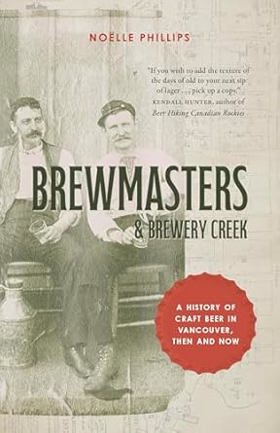
Few would dispute that these days Vancouver is a prime craft beer destination, with over 70 breweries in the greater Vancouver area and 35+ in Vancouver proper. Beer has shaped the city’s culture, and in turn, Vancouver’s idiosyncratic identity has also shaped its craft beer. But how did it all begin? In this rigorously researched deep dive into the history of craft beer in Vancouver, beer historian and enthusiast Noëlle Phillips follows independent brewing from the city’s inception in 1886 to the onset of prohibition in 1917 and, hopping over the “big beer” period of 1920–1980, delves into the explosion of micro, small-batch and craft breweries that dot the city’s neighbourhoods today. She traces the smaller, lesser-known breweries, brewers, and owners through archival materials, newspaper accounts, and personal interviews. Along the way she uncovers stories and details that have been largely unknown even to local beer writers and aficionados. Illustrated with photos, original newspaper clippings, and maps, with stops into basement archives and sunlit tap rooms, Brewmasters and Brewery Creek is an inviting and exciting addition to books on the city’s history that will appeal to beer-lovers and history buffs alike. 398 pages : illustrations ; 22 cm CIRC [ 0 ]
|
2024 |
|
Breaking ground the Lower Elwha Klallam Tribe and the unearthing of Tse-whit-zen village by Lynda Mapes 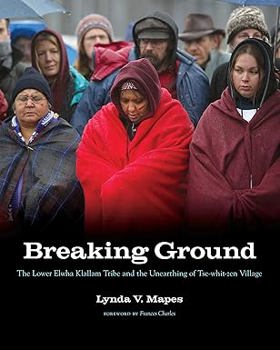
In 2003, a backhoe operator hired by the state of Washington to work on the Port Angeles waterfront discovered what a larger world would soon learn. The place chosen to dig a massive dry dock was atop one of the largest and oldest Indian village sites ever found in the region. Yet the state continued its project, disturbing hundreds of burials and unearthing more than 10,000 artifacts at Tse-whit-zen village, the heart of the long-buried homeland of the Klallam people. Excitement at the archaeological find of a generation gave way to anguish as tribal members working alongside state construction workers encountered more and more human remains, including many intact burials. Finally, tribal members said the words that stopped the project: "Enough is enough." Soon after, Lower Elwha Klallam Tribe chairwoman Frances Charles asked the state to walk away from more than $70 million in public money already spent on the project and find a new site. The state, in an unprecedented and controversial decision that reverberated around the nation, agreed. In search of the story behind the story, Seattle Times reporter Lynda V. Mapes spent more than a year interviewing tribal members, archaeologists, historians, city and state officials, and local residents and business leaders. Her account begins with the history of Tse-whit-zen village, and the nineteenth- and twentieth-century impacts of contact, forced assimilation, and industrialization. She then engages all the voices involved in the dry dock controversy to explore how the site was chosen, and how the decisions were made first to proceed and then to abandon the project, as well as the aftermath and implications of those controversial choices. This beautifully crafted and compassionate account, illustrated with nearly 100 photographs, illuminates the collective amnesia that led to the choice of the Port Angeles construction site. "You have to know your past in order to build your future," Charles says, recounting the words of tribal elders. Breaking Ground takes that teaching to heart, demonstrating that the lessons of Tse-whit-zen are teachings from which we all may benefit. 1 volume : illustrations (colour) CIRC [ 0 ]
|
2015 |
|
Breaking chains slavery on trial in the Oregon Territory by R. Gregory Nokes 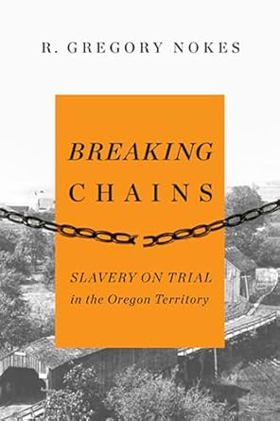
When they were brought to Oregon in 1844, Missouri slaves Robin and Polly Holmes and their children were promised freedom in exchange for helping develop their owner’s Willamette Valley farm. However, slaveholder Nathaniel Ford, an influential settler and legislator, kept them in bondage until 1850, even then refusing to free their children. Holmes took his former master to court and, in the face of enormous odds, won the case in 1853. In Breaking Chains, R. Gregory Nokes tells the story of the only slavery case ever adjudicated in Oregon courts—Holmes v. Ford. Drawing on the court record of this landmark case, Nokes offers an intimate account of the relationship between a slave and his master from the slave’s point of view. He also explores the experiences of other slaves in early Oregon, examining attitudes toward race and revealing contradictions in the state’s history. Oregon was the only free state admitted to the union with a voter-approved constitutional clause banning African Americans and, despite the prohibition against slavery, many in Oregon tolerated it, and supported politicians who were pro-slavery, including Oregon’s first territorial governor. Told against the background of the national controversy over slavery, Breaking Chains sheds light on a somber part of Pacific Northwest history, bringing the story of slavery in Oregon to a broader audience. xvi, 224 pages : illustrations ; 23 cm CIRC [ 0 ]
|
2013 |
|
Brains for breakfast growing up German in America by Susan Baumgartner, Claudia McGehee 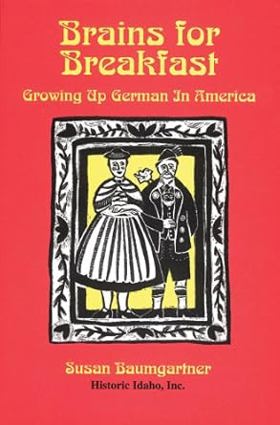
This book offers information for German Americans who know little about their own heritage and a vivid picture of northern Idaho farm life from the 1880s through the 1990s. Trace the progression of history through generations of Baumgartners, sharing family tragedies and joys. 159 pages : illustrations ; 22 cm CIRC [ 0 ]
|
1994 |
|
Boyhood among the woolies growing up on a Basque sheep ranch by Richard W. Etulain 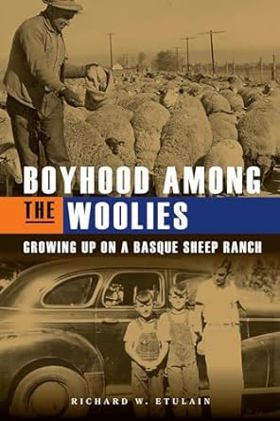
Like many Pacific Northwest sheepherders, Sebastian Etulain emigrated from Europe's Basque country. He arrived in Yakima, Washington, in May 1921, convinced that hard work could overcome a lack of formal education and other obstacles. That became his doctrine, and he advanced to ranch owner before marrying Mary Gillard Foster in 1936. The Etulain sheep ranch lay among the rock ridges, coulees, hills, and grasslands twenty miles east of Ritzville in eastern Washington. Isolated and sprawling across nearly ten thousand acres, it included a sturdy ranch house surrounded by hay barns, a water pump house, corrals, and pens for sheep, goats, dogs, and pigs. The spread also had a milking parlor and creamery as well as a blacksmith shop. The Etulains adopted seasonal rhythms: for part of the year, their pasture grasses provided sufficient fodder, and in the summer, they herded most of their animals up to mountains near St. Maries, Idaho. But in winter, the sheep and cattle needed purchased feed, and plenty of it. Sebastian's three sons reveled in a magical upbringing on the ranch-despite the demanding work. In Boyhood Among the Woolies, his youngest son, Richard, reveals the family's story, a rare look at life on an early eastern Washington sheep ranch. He recounts endless chores, lambing season, sheep shearing, efforts to keep animals safe, and fighting one of the greatest dangers-grass fires. He also describes family activities, relationships with hired staff, favorite dogs, brotherly pranks and shenanigans, schooling and church in Ritzville, Basque history, and more. xii, 151 pages : illustrations, maps ; 23 cm CIRC [ 0 ]
|
2023 |
|
Boxing the compass a life of seafaring, music, and pilgrimage by Michael L. Hadley 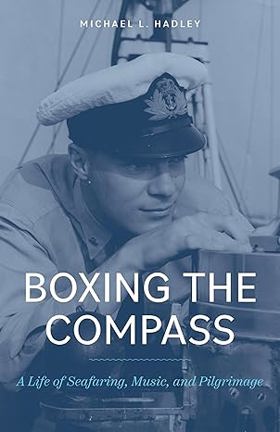
"An award-winning historian and mariner takes readers on an engrossing international journey of self-discovery that explores timely themes of human conflict, ethics, and reconciliation. A member of the so-called Silent Generation, Michael Hadley has a great deal to say in his twilight years. Opening with his Depression-era childhood on a lonely lighthouse on the west coast of Vancouver Island, this remarkably nuanced memoir spans decades, countries, and oceans. Hadley's reflections move through his years growing up in wartime Vancouver in the 1940s, his concert tours on the British vaudeville stage in the 1950s, and his early teaching career in Manitoba in the 1960s. He shares his naval service on both coasts and on the Great Lakes, and his professional experience in Germany, where unexpected friendships with former submariners trigger an interest in how countries deal with difficult wartime pasts. Human conflict, ethics, and multi-faith engagement in criminal justice reform and Restorative Justice shape Hadley's understandings of reconciliation, taking him on prison visits across Canada, the UK, and Uganda. Whether examining ancient historical sites and battlegrounds, navigating at sea, or riding camels in the desert, he seeks universal patterns of human experience. At once a deeply personal chronicle of a fascinating life and a measured, mature reflection on some of the most cataclysmic events of the past century, Boxing the Compass is an unforgettable journey that will leave readers reflecting on the experiences that affect us all."-- Provided by publisher 306 pages, 16 unnumbered pages of plates : illustrations ; 22 cm CIRC [ 0 ]
|
2024 |