Catalog of British Columbiana and Pacific Northwest Americana
Encyclopedia Cascadia Catalog contains book titles of mostly non-fiction Pacific Northwest Coast of North America Titles (primarially British Columbia, Idaho, Oregon and Washington State) in an easy-to-understand title catalog. If you see a link with this badge ONLINE CIRC it means that there is an online institution that provides free access to that title. In some cases there may be more than one institution hosting the title digitally.
| Catalog Title | Published |
|---|---|
|
The U.S. Forest Service in the Pacific Northwest a history by Gerald W. Williams, United States Forest Service Pacific Northwest Region 
The Northwest has been at the forefront of forest management and research in the United States for more than one hundred years. In The U.S. Forest Service in the Pacific Northwest, Gerald Williams provides an historical overview of the part the Forest Service has played in managing the Northwest’s forests. Emphasizing changes in management policy over the years, Williams discusses the establishment of the national forests in the region, grazing on public land, the Great Depression, World War II, and the rise of multiple-use management policies. He draws on extensive documentation of the post-war development boom to explore its effects on forests and Forest Service workers. Presenting such controversial issues as roadless areas and wilderness designation, timber harvesting, forest planning, ecosystems, and spotted owls, Williams demonstrates the impact of 1970s environmental laws on national forest management. The book is rich in photographs, many drawn from the Gerald W. Williams Collection, Oregon State University Archives. Extensive appendices provide detailed data about Pacific Northwest forests. Chronicling a century of the agency’s management of almost 25 million acres of national forests and grasslands for the people of the United States, The U.S. Forest Service in the Pacific Northwest is a welcome and overdue resource. This work was completed through the collaborative efforts of the author and the Pacific Northwest Forest Service Association, with support from the U. S. Forest Service. x, 416 pages : illustrations, maps ; 23 cm CIRC [ 0 ]
|
2009 |
|
The troubled life of Peter Burnett Oregon pioneer and first Governor of California by R. Gregory Nokes 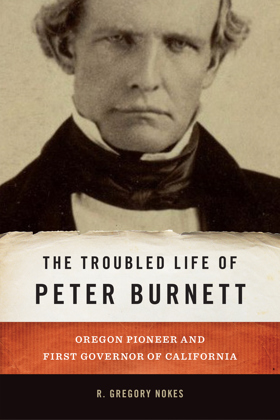
"Few people in the nineteenth-century American West could boast the achievements of Peter Burnett. He helped organize the first major wagon train to the Oregon Country. He served on Oregon's first elected government and was Oregon's first supreme court judge. He opened a wagon road from Oregon to California. He worked with the young John Sutter to develop the new city of Sacramento. Within a year of arriving in California, voters overwhelmingly elected him as the first US governor. He also won appointment to the California Supreme Court. It was one heck of a resume. Yet with the exception of the wagon road to California, in none of these roles was Burnett considered successful or well remembered. Indeed, he resigned from many of his most important positions, including the governorship, where he was widely perceived a failure. Burnett's weakness was that he refused to take advice from others. He insisted on marching to his own drum, even when it led to some terrible decisions. A former slaveholder, he could never seem to get beyond his single-minded goal of banning blacks and other minorities from the West. The Troubled Life of Peter Burnett is the first full-length biography of this complicated character. Historians, scholars, and general readers with an interest in Western history will welcome R. Gregory Nokes' accessible and deeply researched account."-- Provided by publisher xi, 270 pages : illustrations, map ; 23 cm CIRC [ 0 ]
|
2018 |
|
The trees grew tall by John B. Miller 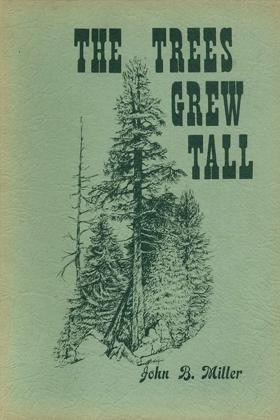
The history of Bovill, Idaho, from its early days into the 1930s, written by John B. Miller. Miller was born on a Latah County homestead near Bovill and was a University of Idaho graduate with a degree in geology. xi, 214 pages : illustrations, maps, portraits ; 24 cm CIRC [ 1 ]
|
1972 |
|
The trees are speaking dispatches from the salmon forests by Lynda Mapes 
Ancient and carbon-rich, old-growth forests play an irreplaceable role in the environment. Their complex ecosystems clean the air, purify the water, cool the planet, and teem with life. In a time of climate catastrophe, old-growth and other natural forests face existential threats caused by humans—and their survival is crucial to ours. In a bicoastal journey, environmental journalist Lynda V. Mapes connects the present and future of Pacific Northwest forests to the hard-logged legacy forests of the northeastern United States. Beginning in Oregon and Washington, where old growth supports, and is supported by, the region’s salmon, we meet Jerry Franklin, who led scientists in recognizing and studying the distinctiveness of these majestic spaces. From there, we journey to Vancouver Island, where Indigenous activists and scientists strive to preserve the health of Nuu-chah-nulth traditional homelands amid continued clearcutting. On the East Coast, we see the corduroy patterns of lands that have been logged for generations, leaving industrial carnage along formerly life-filled waterways. Mapes interviews Penobscot elders and scientists whose new practices are restoring the fish runs, as well as loggers using new technologies to harvest more sustainably. With vibrant storytelling supported by science and traditional ecological knowledge, Mapes invites readers to understand the world where trees are kin, not commodities. The Trees Are Speaking is essential reading for those with a deep interest in environmental stewardship, Indigenous land rights, and the urgent challenges posed by climate change. pages cm CIRC [ 0 ]
|
2025 |
|
The Trail blazer history of the development of southeastern Idaho by Daughters of the Pioneers
|
1976 |
|
The Tower on Top of Mount Constitution by Rolf Eriksen 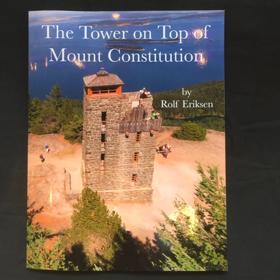
Mount Constitution is a dramatic mountain crowning Orcas Island in the central Salish Sea. On the very tip of the mountain is a 60 foot Medieval stone tower. From its dramatic vantage point it looks south beyond Mount Rainer and the Olympic Peninsula, east to Mount Baker and the Cascades, west over Vancouver Island, and North beyond the city of Vancouver and the southern ranges of Canada. The tower was built in the Great Depression by the Civilian Conservation Corps (CCC) when young men relocated to camps across the United States and built things. Many useful and many romantic ideals, often both. The CCC built a beautiful romantic tower in a stunning location on the top of a mountain on an Emerald Isle in the Salish Sea. That tower still stands proud today and hosts a million visitors a year. Some visit it regularly like a secular church. Rolf Eriksen has been intimately involved with Orcas Island, Mount Constitution and the CCC tower over many years since the 1950’s. He has rebuilt parts of it and surveys it with a loving eye every week. The tower and that mountain are a part of Rolf and he is a part of them. This book is Rolf ’s story of the tower and a scrapbook of collected images. 94 pages : illustrations (some color) ; 22 cm CIRC [ 0 ]
|
2022 |
|
The Tillamook a created forest comes of age by Gail Wells 
Debates over the fate of ancient forests have been commonplace in the Pacific West for decades. The Tillamook takes up the question of younger forests, exploring the creation of a managed forest and what its story reveals about the historic and future role of second-growth forests. It was Oregon's most notorious conflagration-a series of four major fires that struck the Tillamook forest beginning in 1933 and recurred with bizarre regularity through 1951. The fires burned 355,000 acres of virgin forest and became collectively known as the Tillamook Burn. In this engaging history, Gail Wells recounts the story of these famous fires and the cooperative efforts of foresters and ordinary citizens-including thousands of schoolchildren-to get young trees growing again on the burned landscape. It became one of the largest forest rehabilitation efforts ever, resulting in a created forest that promised "timber forever." Now a state forest, the Tillamook is coming of age at a time when attitudes toward forests have changed and "timber forever" is no longer the guiding principle. In contemplating the Tillamook's fate, Wells traces the historic roots of competing perspectives on forest use and examines the contemporary debate over forest issues. She sees the future of second-growth forests as holding the possibility of a workable synthesis, "a truly stable, sustainable, and humane relationship with our forests." In a new epilogue, Wells updates the story of the Tillamook five years after her book was first published, and explains why the fate of the forest remains uncertain. viii, 184 pages : illustrations, maps ; 23 cm. CIRC [ 0 ]
|
1999 |
|
The Thompson Indians of British Columbia by James Alexander Teit, Franz Boas 
The following description of the Thompson Indians is based on two manuscripts prepared by Mr. James Teit, - the one a description of the Upper Thompson Indians, written in 1895; the other a description of the Lower Thompson Indians, written in 1897 as a result of work done by Mr. Teit for the Jesup North Pacific Expedition. pages 163-392. illustrations (including map) plates XIV-XX. 36 cm ONLINE CIRC [ 1 ]
|
1900 |
|
The tanoak tree an environmental history of a Pacific Coast hardwood by Frederica Bowcutt 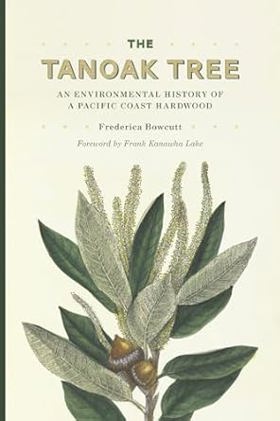
Tanoak (Notholithocarpus densiflorus) is a resilient and common hardwood tree native to California and southwestern Oregon. People’s radically different perceptions of it have ranged from treasured food plant to cash crop to trash tree. Having studied the patterns of tanoak use and abuse for nearly twenty years, botanist Frederica Bowcutt uncovers a complex history of cultural, sociopolitical, and economic factors affecting the tree’s fate. Still valued by indigenous communities for its nutritious acorn nut, the tree has also been a source of raw resources for a variety of industries since white settlement of western North America. Despite ongoing protests, tanoaks are now commonly killed with herbicides in industrial forests in favor of more commercially valuable coast redwood and Douglas-fir. As one nontoxic alternative, many foresters and communities promote locally controlled, third-party certified sustainable hardwood production using tanoak, which doesn’t depend on clearcutting and herbicide use. Today tanoaks are experiencing massive die-offs due to sudden oak death, an introduced disease. Bowcutt examines the complex set of factors that set the stage for the tree’s current ecological crisis. The end of the book focuses on hopeful changes including reintroduction of low-intensity burning to reduce conifer competition for tanoaks, emerging disease resistance in some trees, and new partnerships among tanoak defenders, including botanists, foresters, Native Americans, and plant pathologists. xvi, 219 pages : illustrations, maps ; 24 cm CIRC [ 0 ]
|
2015 |
|
The Sunshine Coast from Gibsons to Powell River by Howard White 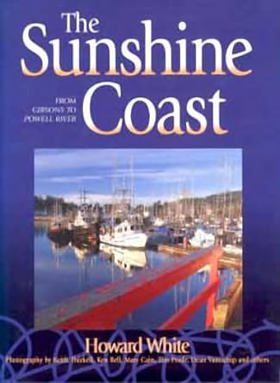
British Columbia's Sunshine Coast is a sublimely scenic 160-kilometre stretch of waterfront between Howe Sound and Desolation Sound, reached by a 40-minute ferry ride from West Vancouver. Join Howard White, award-winning humorist and lifelong coast denizen, on a guided tour from Gibsons, where the long-running TV series The Beachcombers was filmed, to Powell River, the largest community in the region. Along the way, sojourn in Roberts Creek, whose patron saint, the irrepressible Harry Roberts, invented the name "Sunshine Coast." Stop over in Sechelt, named for the Shi'sha'lh or Sechelt Nation who once occupied the bulk of the Sunshine Coast territory. Follow the seriously twisty highway to visit Pender Harbour, where some local fishing folk still do their Saturday shopping in kicker boats. Drop anchor in Princess Louisa Inlet, and discover why the likes of John Barrymore and Andrew Carnegie once came to marvel at its canyon-like splendour. With paintings by local artists, poems by local poets, tall tales by local characters, miracles by Sechelt medicine men, tips on predicting the weather, a fair share of risqué gossip about historical figures, a good mix of bold opinions and hard facts and over 150 beautiful colour photographs, The Sunshine Coast is a book to be treasured, not just by residents and visitors, but by anyone with an eye for fascinating places. First published in 1996, this fully revised edition contains updated text and all new photographs of coast life from the area's most talented photographers including Dean van't Schip and Keith Thirkell. 127 pages : illustrations (some color), color maps ; 29 cm CIRC [ 1 ]
|
1996 |
|
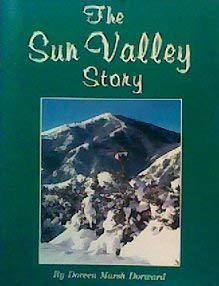
The Sun Valley story by Doreen Marsh Dorward
|
1988 |
|
The summer Canada burned the wildfire season that shocked the world by Monica Zurowski 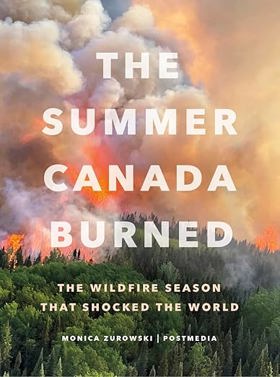
"The Summer Canada Burned tells the dramatic story of Canada's wildfires in 2023--a story that provides a case study of the changing climate and its impacts on our environment. It reflects evolving attitudes about approaches to wildfires and the role all people can play in prevention. Most importantly, however, the story of Canada's wildfires is a story of loss and of survival. From the ashes, people rise, communities rebuild and seeds of new growth sprout."-- Provided by publisher 183 pages : color illustrations ; 23 cm CIRC [ 0 ]
|
2023 |
|
The struggle for survival Indian cultures and the Protestant ethic in British Columbia [by] Forrest E. LaViolette by Forrest Emmanuel LaViolette
|
1973 |
|
The structure of Twana culture by William W. Elmendorf, A. L. Kroeber 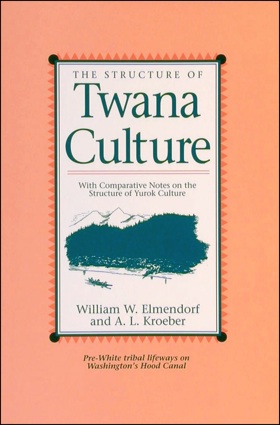
This remarkable account of Washington’s Twana Indians contains the most complete body of information compiled on any Native American group in the southern coast Salish region. 576 pages : illustrations, maps ; 23 cm CIRC [ 1 ]
|
1992 |
|
The story of Sidney by Peter Grant 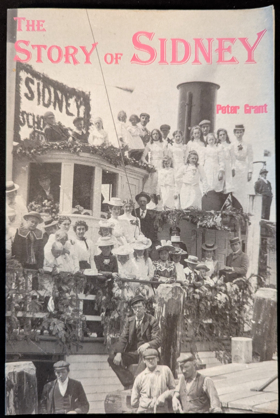
Authored by Peter Grant, The Story of Sidney chronicles the evolution of the coastal town on Vancouver Island, British Columbia, from its early Indigenous presence and 19th-century agricultural settlement into a vibrant modern community. The book details the establishment of local farms, the arrival of the railway, and the maritime connections that bridged the Saanich Peninsula to the broader Salish Sea region. Drawing on local archives, historical photographs, and personal accounts, the text highlights the community's persistent drive to balance commercial growth with small-town coastal character. A keen insight drawn from the work is how transportation revolutions dictate the very heartbeat of coastal towns; just as the transition from neighborhood steamships to the Swartz Bay ferry terminal radically reshaped Sidney's economic destiny, it proved that the survival of an island-adjacent community depends entirely on how successfully it manages its role as a regional gateway. 96 pages : illustrations ; 23 cm CIRC [ 1 ]
|
1998 |
|
The story of Sauvies Island by Omar C. Spencer
|
1950 |
|
The story of Idaho by Virgil M. Young 
A fourth-grade textbook presenting the history, geography, resources, government, traditions, and ethnology of Idaho 257 pages : illustrations, maps ; 29 cm CIRC [ 0 ]
|
2002 |
|
The story of Eugene by Lucia W. Moore, Nina W. McCornack, Gladys W. McCready 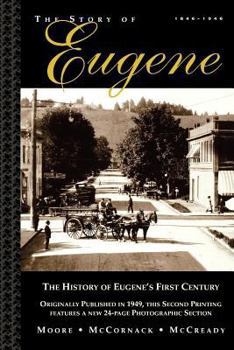
Authored by Lucia W. Moore, Nina W. McCornack, and Gladys W. McCready, The Story of Eugene chronicles the founding and growth of Oregon’s third-largest city from its humble beginnings as a remote Willamette Valley settlement in the mid-19th century. The book draws on pioneer diaries, local records, and oral histories to trace the community's evolution from a muddy river crossing named after Eugene Skinner into a bustling agricultural and educational hub anchored by the University of Oregon. Through its detailed civic narrative, the text highlights the entrepreneurial drive and social institutions that transformed a fragile frontier outpost into a thriving urban center. A keen insight drawn from the work is how the intentional integration of higher education served as a vital urban survival strategy; by aggressively lobbying to secure the state university, early town leaders successfully insulated Eugene from the boom-and-bust cycles of purely resource-dependent timber and rail economies, cementing the city's long-term cultural and economic resilience. 277 pages : illustrations ; 23 cm CIRC [ 1 ]
|
1995 |
|
The storage box of tradition Kwakiutl art, anthropologists, and museums, 1881-1981 by Ira Jacknis 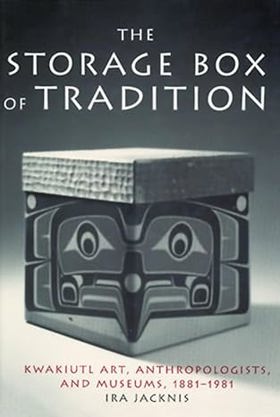
This unique study investigates the effects of the long interaction between anthropologists and the Kwakwaka'wakw (or Kwakiutl) peoples of coastal British Columbia. Beginning with Franz Boas, anthropologists have written extensively about the rich material culture of the Kwakwaka'wakw and have long collected their intricately detailed storage boxes, totem poles, and elaborate ceremonial wear. But how did the relationship between these two groups contribute to transform both ordinary and ritual objects into ethnological specimens, and then to works of art proudly displayed in museums? This expansive books is an anthropology of anthropology. Ira Jacknis identifies not only the effects of cross-cultural exchanges but also examines anthropology itself as a cultural process. He considers as well how museums define and present Native art and how their choices in turn influence current Native artists. The book offers a valuable collection of 131 halftones, ranging from nineteenth-century ethnographic photographs to catalog images from the American Museum of Natural History to documentary photographs taken by Jacknis in the 1980s. Together with Jacknis's close account of this classic chapter in anthropological history, they vividly show how the "anthropological encounter" is in fact an extraordinarily complex and fluid relationship. xvi, 463 pages : illustrations ; 24 cm. CIRC [ 0 ]
|
2002 |
|
The Stehekin we remember by Buckner Sisters, Irene Sargo, Harriet Morehead, Elizabeth Gans 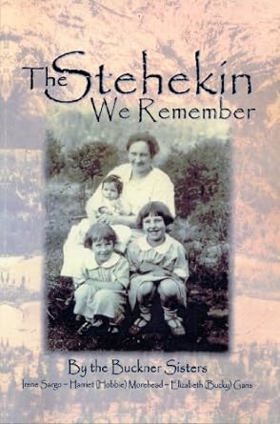
Published in 2007 by Irene Sargo, Harriet Morehead, and Elizabeth Gans—known as the Buckner sisters—The Stehekin We Remember offers an intimate, firsthand chronicle of pioneer life in the isolated Stehekin Valley at the head of Lake Chelan during the 1920s through the 1940s. The book blends family memoirs, historic photographs, and detailed genealogical maps to document the daily routines of self-sufficient homesteading, one-room schoolhouses, and orchard management without modern amenities. Alongside their own family history, the authors meticulously record the profiles of neighboring pioneer households, preserving a comprehensive social fabric of the valley. A keen insight drawn from the text is how it highlights the duality of isolation; while geographic remoteness imposed severe physical hardships and labor-intensive survival strategies on children growing up in the North Cascades, it simultaneously fostered a remarkably resilient, hyper-collaborative community network that deeply anchored their collective identity. 203 pages : illustrations ; 23 cm CIRC [ 1 ]
|
2007 |
|
The steamboat landing on Elliott Bay by Roland Carey
|
1962 |
|
|
1893 |
|
The state of Jefferson by Bernita Tickner, Gail L. Fiorini-Jenner 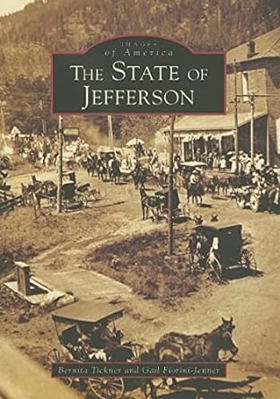
Published in 2017 by Bernita Tickner and Gail L. Fiorini-Jenner, The State of Jefferson explores the colorful, enduring political secession movement aimed at carving a new U.S. state out of the rugged rural counties of Northern California and Southern Oregon. Through a rich collection of vintage photographs and historical anecdotes, the book traces the movement from its 1941 theatrical launch—complete with gold-panning miners brandishing rifles—to its modern manifestations rooted in geographic isolation and anti-establishment sentiment. The text details how residents of this timber-and-mining corridor have long felt economically and politically abandoned by distant state capitals in Sacramento and Salem. A keen insight drawn from the work is how the persistent mythos of the "State of Jefferson" functions less as a viable legislative blueprint and more as a profound psychological safety valve; it provides rural populations with a shared, defiant regional identity that channels deep-seated economic grievances against metropolitan dominance into theatrical civic rebellion. 128 pages : chiefly illustrations, map ; 24 cm. CIRC [ 1 ]
|
2005 |
|
The Stanwood story Volume Two by Alice Essex
|
1975 |
|
The Spokane Valley by Florence Boutwell (Compiler) 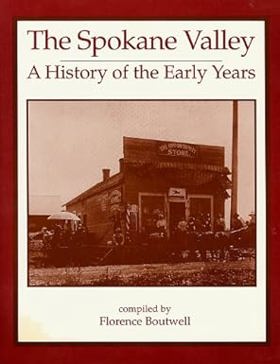
Compiled by local historian Florence Boutwell, The Spokane Valley chronicles the rapid transformation of Washington's inland plateau from an arid, pine-studded expanse into a flourishing agricultural and suburban community. Drawing on historical photographs, diaries, and local records, the book details the arrival of early homesteaders, the expansion of the Northern Pacific Railway, and the monumental irrigation efforts that turned the valley into a patchwork of prolific apple orchards and dairy farms. The text captures the close-knit social fabric of small pioneer settlements like Dishman, Millwood, and Opportunity as they gradually yielded to suburban expansion. A keen insight drawn from the work is how suburbanization in the Inland Empire inverted traditional migration patterns; unlike coastal regions where cities pushed outward, the Spokane Valley's agricultural hubs were explicitly established along irrigation canals first, forming rural clusters that later coalesced into a modern bedroom community. 3 volumes : illustrations, maps (1 folded) ; 29 cm CIRC [ 1 ]
|
1994 |