Catalog of British Columbiana and Pacific Northwest Americana
Encyclopedia Cascadia Catalog contains book titles of mostly non-fiction Pacific Northwest Coast of North America Titles (primarially British Columbia, Idaho, Oregon and Washington State) in an easy-to-understand title catalog. If you see a link with this badge ONLINE CIRC it means that there is an online institution that provides free access to that title. In some cases there may be more than one institution hosting the title digitally.
| Catalog Title | Published |
|---|---|
|
The Salem Clique Oregon's Founding Brothers by Barbara S. Mahoney 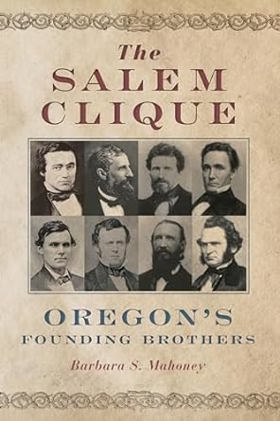
"During the decade of the 1850s, the Oregon Territory progressed toward statehood in an atmosphere of intense political passion and conflict. Editors of rival newspapers blamed a group of young men whom they named the 'Salem Clique' for the bitter party struggles of the time. Led by Asahel Bush, editor of the Oregon Statesman, the Salem Clique was accused of dictatorship, corruption, and the intention of imposing slavery on the Territory. The Clique, critics maintained, even conspired to establish a government separate from the United States, conceivably a 'bigamous Mormon republic.' While not in agreement with some of the more extreme contemporary accusations against the Clique, many historians have concluded that its members were vicious and unscrupulous men who were able, because of their command of the Democratic Party, to impose their hegemony on the Oregon Territory's inhabitants. Other scholars have seen them as merely another manifestation of the contentious politics of the period. Although the Salem Clique has been given considerable prominence in nearly every account of Oregon's Territorial period, there has not been a detailed study of its role until now. What sort of people were these men? What was their impact on the issues, events, and movements of the period? What role did they play in the years after Oregon became a state? Historian Barbara Mahoney sets out to answer these and many other questions in this comprehensive and deeply researched history"--Publisher description 1 online resource (xi, 212 pages) : illustrations, maps CIRC [ 1 ]
|
2017 |
|
The saga of American Falls Dam by Irvin E. Rockwell
|
1947 |
|
The Russian American colonies, 1798-1867 a documentary record by Basil Dmytryshyn, E. A. P. Crownhart-Vaughan, Thomas Vaughan
|
1989 |
|
The Royal Navy and the northwest coast of North America, 1810-1914 a study of British maritime ascendancy by Barry M. Gough 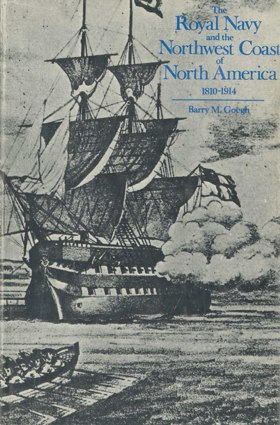
Examination of contest for the Columbia Country, the Oregon Crisis, the gold rush crises, the dispute over the San Juan Islands, and the defense of the Pacific colonies in a decade of Anglo-Americanism (1861-1871) from the perspective of the Royal Navy's involvement. Esquimalt Naval base's evolution as the Pacific headquarters of the Royal Navy to meet the changing strategic requirements of the whole Pacific area is considered in detail. The repercussions of the Crimean War and the rise of German and United States naval power on the alignment of British forces in the Pacific are also considered. xvi, 294 pages : illustrations, maps, portraits ; 25 cm CIRC [ 1 ]
|
1971 |
|
The Rosario story, Orcas Island by Glenn Carlson, Mildred Carlson
|
1967 |
|
The Rogue, a river to run (the story of pioneer whitewater river runner Glen Wooldridge and his first eighty years on the Rogue River) by Florence Arman, Glen Wooldridge 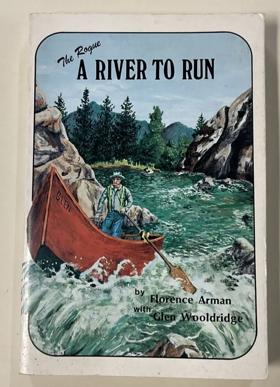
"One day in 1915, I started down the Rogue River in a boat I made. My first trip, I was a wild brainless kid of course, learning the hard way by rambunctious adventure, the needs to explore the unknown, down the plunging rapids. The Rogue is a wild brawling river and you had better respect it. I learned to use the oars, the pikepole, rope line, currents and eddies, and how to read the water. I craved fast white water like a steelhead, and tried lots of rivers like the Klamath, the Salmon River of No Return, Canadian rivers, etc., but for me the Rogue beats them all. Later I hauled dudes... hundreds of them... maybe over a thousand, shooting the rapids and camping out on the beach in the wilds." These stories and many more are in this no-holds-barred book. But more than that, it tells of the Rogue itself, of its development and its people. It gives you a sense of an earlier time - a time whose only remnants are rusting pieces of mining equipment, fiant traces of burned cabins and crumbling bridge piers. It brings alive the grizzled miners always looking to strike it rich tomorrow; hermits toting rifles after the ultimate game, each other; tall-tale tellers; poachers and gamewardens; fueders, gillnetters, sportsmen and unsportsmen. It tells of blasting the channel downriver, of floods and rescues, of depression and river-running highs. xv, 276 pages : illustrations ; 23 cm CIRC [ 1 ]
|
1982 |
|
The Rogue River Indian War and its aftermath, 1850-1980 by E. A. Schwartz 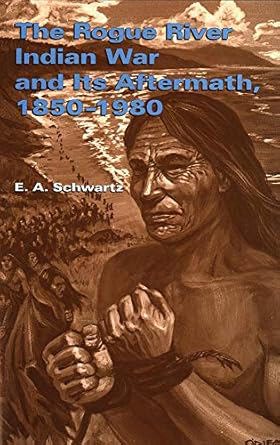
This history of the native peoples of western Oregon is a systematic study of the formation, application and effects of United States Indian policy. Historian E.A. Schwartz tells how contacts with whites early in the nineteenth century culminated in the pork-barrel Rogue River War of 1855-56, in which the Rogue River peoples demonstrated superior tactics and repeatedly drove off more-numerous opponents. Schwartz narrates how the Indian peoples known today as the Confederated Tribes of the Siletz Reservation survived American expansion and coped with each federal Indian-policy initiative, from the new western reservation policy of the 1850s through termination and restoration in the 1970s xiv, 354 pages : illustrations, maps ; 24 cm CIRC [ 0 ]
|
1997 |
|
The Robson Valley story a century of dreams by Marilyn J. Wheeler 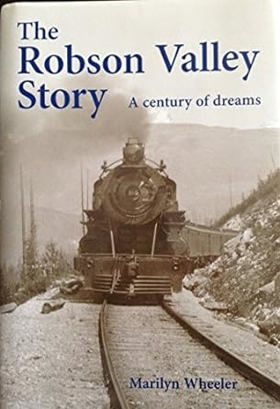
Marilyn Wheeler has authored and compiled a fascinating look at a a rural community in the wilds of British Columbia. She has found some of the best and most important stories from a very interesting part of the world. While her first edition of the Robson Valley Story was exceptionally popular, this new book is even more important. In a very deep way, Marilyn Wheeler has shown the essence of what it is to live in rural Canada-to live in community. It is a history of the valley to be sure, but one that mines the depth of our most important experiences, both good and bad. A remarkable new addition is the story of a Second World War veteran's struggle to reintegrate with his community. A story which would likely be lost or untold in a larger community gets its due here. The story of how people rallied together to bring in electricity is an amazing testament to their tenacity, their ability not just to adapt, but to seek out change. Matthew Wheeler's encyclopedic knowledge of the photographs of the Robson Valley will make this one of the best illustrated history books you have ever seen. -Andru McCracken, former editor of, The Robson Valley Times ix, 710 pages : illustrations, maps ; 26 cm CIRC [ 1 ]
|
2008 |
|
The river that made Seattle a human and natural history of the Duwamish by B. J. Cummings 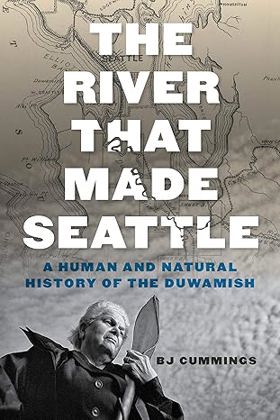
"With bountiful salmon and fertile plains, the Duwamish River has drawn people to its shores over the centuries for trading, transport, and sustenance. Chief Se'alth and his allies fished and lived in villages here and white settlers established their first settlements nearby. Industrialists later straightened the river's natural turns and built factories on its banks, floating in raw materials and shipping out airplane parts, cement, and steel. Unfortunately, the very utility of the river has been its undoing, as decades of dumping led to the river being declared a Superfund cleanup site. Using previously unpublished accounts by Indigenous people and settlers, BJ Cummings's compelling narrative restores the Duwamish River to its central place in Seattle and Pacific Northwest history. Writing from the perspective of environmental justice-and herself a key figure in river restoration efforts-Cummings vividly portrays the people and conflicts that shaped the region's culture and natural environment. She conducted research with members of the Duwamish Tribe, with whom she has long worked as an advocate. Cummings shares the river's story as a call for action in aligning decisions about the river and its future with values of collaboration, respect, and justice."-- Provided by publisher xiv, 222 pages : illustrations, maps ; 24 cm CIRC [ 0 ]
|
2020 |
|
The river pioneers early days on Grays Harbor by Edwin Van Syckle, David A. James 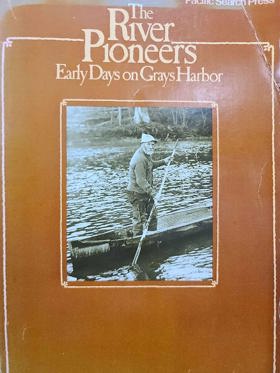
History of Grays Harbor, its coastal towns and river valleys in Grays Harbor County, Washington from 1775-1948. Narrative insights into the lives of the native Indians, early explorers and the pioneers who settled the valleys and established towns such as Aberdeen, Hoquiam, Cosmopolis and Grays Harbor City 423 pages, 48 unnumbered pages of plates : illustrations ; 24 cm CIRC [ 1 ]
|
1982 |
|
The resettlement of British Columbia essays on colonialism and geographical change by Cole Harris 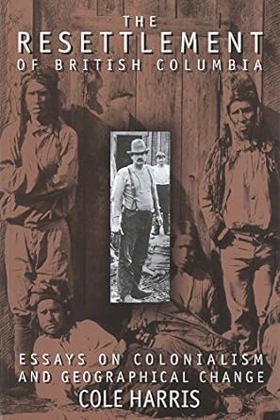
In this beautifully crafted collection of essays, Cole Harris reflect on the strategies of colonialism in British Columbia during the first 150 years after the arrival of European settlers. The pervasive displacement of Indigenous people by the newcomers, the mechanisms by which it was accomplished, and the resulting effects on the landscape social life, and history of Canada's western-most province are examined through the dual lenses of post-colonial theory and empirical data. By providing a compelling look at the colonial construction of the province, the book revises existing perceptions of the history and geography of British Columbia xxii, 314 pages : illustrations, maps ; 24 cm CIRC [ 1 ]
|
1997 |
|
The reminiscences of Doctor John Sebastian Helmcken by John Sebastian Helmcken, Dorothy Blakey Smith, Provincial Archives of British Columbia 
Born and brought up in Whitechapel, John Sebastian Helmcken worked his way through apprenticeships as a chemist and a medical pupil before gaining admission to Guy's Hospital to complete his training. The accounts he gives of working class family life and of the great economic and social disadvantages he had to confront in order to become a doctor make this volume of memoirs not only a valuable historical document, but also an autobiography with considerable human interest. In 1850 Helmcken arrived in Fort Victoria -- at that time still a fortified trading post -- to take up the position of Hudson's Bay Company doctor. British Columbia was then in the midst of rapid change: the fur trade was in decline, the gold rush was soon to begin, and the first phase of genuine settlement was just getting under way. In 1856 Helmcken entered what was to be a political life lasting 15years and served as Speaker in the first Legislative Assembly. This section of the Reminiscences is filled with vivid and often humorous descriptions of the personalities and everyday life of Victoria andBritish Columbia from the 1850's to the 1870's. In 1870 Helmcken secured his place in the history of Canada and British Columbia by accepting the task, together with Sir Joseph Trutchand R.W.W. Carrall, of negotiating British Columbia's entry into Canada. The Reminiscences, now held in the Provincial Archives of British Columbia, have a special significance for students of provincial and federal Canadian history. Helmcken's is a unique account of the way social and economic conditions were actually felt and experienced in B.C. at the time of Confederation. Together with his personal diary of the Ottawa negotiations, edited by Willard E. Ireland and included here, the memoirs are the most complete and intimate record available of how Canada secured a foothold on the Pacific. xlii, 373 pages, 6 unnumbered leaves of plates : illustrations ; 24 cm CIRC [ 0 ]
|
1975 |
|
The remarkable world of Frances Barkley, 1769-1845 by Beth Hill, Cathy Converse 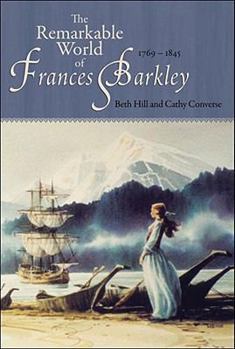
Frances Barkley was the first European woman to set foot on the coast of B.C. In 1786, she embarked from Europe on a trade and exploration voyage with her husband, Captain Charles W. Barkley. Her reminiscences contain her descriptions of their life at sea, and visits to S. American, India, China, and what is now known as Alaska and B.C xv, 207 p. : ill., ports., maps ; 23 cm. CIRC [ 1 ]
|
2009 |
|
The rediscovery of America native peoples and the unmaking of U.S. history by Ned Blackhawk 
"The most enduring feature of U.S. history is the presence of Native Americans, yet most histories focus on Europeans and their descendants. This practice of ignoring Indigenous history is changing, however, as a new generation of scholars insists that any full American history address the struggle, survival, and resurgence of American Indian nations. Indigenous history is essential to understanding the evolution of modern America. Ned Blackhawk interweaves five centuries of Native and non-Native histories, from Spanish colonial exploration to the rise of Native American self-determination in the late twentieth century. In this transformative synthesis he shows that: European colonization in the 1600s was never a predetermined success; Native nations helped shape England's crisis of empire; the first shots of the American Revolution were prompted by Indian affairs in the interior; California Indians targeted by federally funded militias were among the first casualties of the Civil War; the Union victory forever recalibrated Native communities across the West; twentieth-century reservation activists refashioned American law and policy. Blackhawk's retelling of U.S. history acknowledges the enduring power, agency, and survival of Indigenous peoples, yielding a truer account of the United States and revealing anew the varied meanings of America"--Publisher's description viii, 596 pages : illustrations, maps ; 24 cm. CIRC [ 0 ]
|
2023 |
|
The red coast radicalism and anti-radicalism in southwest Washington by Aaron Goings , Brian L. Barnes , Roger F. Snider 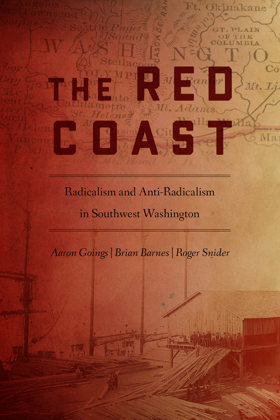
"The Red Coast is a lively and readable informal history of the labor, left-wing, and progressive activists who lived, worked, and organized in southwest Washington State from the late nineteenth century until World War II. The book serves as a hidden history for a region frequently identified with conservatism, rescuing these working-class activists from obscurity and placing them at the center of southwest Washington's history."--Back cover viii, 236 pages : illustrations, map ; 23 cm CIRC [ 0 ]
|
2019 |
|
|
1972 |
|
The Queen Charlotte Islands volume 1 ; 1774-1966 by Kathleen E. Dalzell
|
1981 |
|
The Queen Charlotte Islands volume 2 ; places and names by Kathleen E. Dalzell
|
1981 |
|
The Punjabis in British Columbia location, labour, First Nations, and multiculturalism by Kamala E. Nayar 
"In this richly detailed study, Kamala Nayar documents the social and cultural transformation of the Punjabi community in British Columbia. From their initial settlement in the rural Skeena region to the communities that later developed in larger urban centres, The Punjabis in British Columbia illustrates the complex and diverse experiences of an immigrant community that merits greater attention. Exploring themes of gender, employment, rural and urban migrant life, and the relationships between the Punjabis and surrounding First Nations and other immigrant groups, Nayar creates a portrait of a community in transition. Shedding light on the ways in which economic circumstances affect immigrant communities, Nayar presents findings from interviews conducted with over one hundred participants. She details the relocation of Punjabi populations from the Skeena region to British Columbia's lower mainland during the decline of the forestry and fishery industries, how their second migration changed their professional and personal lives, and how their history continues to shape the identities and experiences of Punjabis in Canada today. A nuanced look at the complexities of social and cultural adaptation, The Punjabis in British Columbia adds an essential perspective to what it means to be Canadian."--Publisher xxi, 361 pages : illustrations, maps, portraits ; 24 cm CIRC [ 0 ]
|
2012 |
|
The private journal of Captain G.H. Richards the Vancouver Island survey (1860-1862) by George Henry Richards, Linda Dorricott, Deidre Cullon 
Literary Nonfiction. History. Memoir. Native American Studies. Captain Richards's journal is an account of three survey seasons on Vancouver Island aboard two British Navy ships, the HMS Plumper and the HMS Hecate. Between 1860 and 1862 Richards and his dedicated crew surveyed and charted the entire coastline of Vancouver Island, creating baseline information for the nautical charts we use today. This monumental task, faithfully and often humorously recorded, also includes a lively description of California on the eve of the American Civil War as Richards sits in dry dock following the near wreck of the Hecate. Part of the private collection of a direct descendant of Captain Richards, the journal is a little known and untapped resource. Extensively annotated and supplemented with excerpts from the journals of Second Master John Gowlland, the journal provides a unique and personal view of the aboriginal, colonial, nautical and natural history of Vancouver Island. Richards is revealed as a man of immense energy and diplomacy; the descriptions of the First Nations he encounters are remarkably unbiased for the time and his keen observations are a portal into the social and political life of Vancouver Island during these formative years of the colony. The journal will appeal to historians, anthropologists, sailors, meteorologists and the general reading public alike. 271 pages, [32] pages of plates : illustrations (some color), maps, portraits ; 23 cm CIRC [ 1 ]
|
2012 |
|
The Princess story a century and a half of West Coast shipping by Norman R. Hacking, William Kaye Lamb, Mitchell Press (Publisher)
|
1976 |
|
The price of taming a river the decline of Puget Sound's Duwamish/Green waterway by Mike Sato 
The historical puzzle that is the Green River and its drainage basin, from Mount Rainier to Puget Sound, is carefully pieced together in this portrait of the people, events, and dramatic forces that have determined the fate of this once-powerful river. Beginning in the early years of this century, the Duwamish/Green waterway was rechanneled, dredged, dammed, and diked in an attempt to prevent flooding and salvage land for agriculture and industry. The "taming" of the river made a valuable stretch of land usable year-round but the consequences have been pollution and the destruction of the habitat it once provided for fish, shellfish, and wildlife. Ranging from prehistoric times to the present, from geologic forces to political and economic battles, The Price of Taming a River shows clearly what has been lost but also tells the compelling story of the individuals and communities who are working to restore and preserve the watershed. It is a story of small places and large issues, of bitter controversy and quiet victories, which presents a vision of what can be accomplished by those who choose to embrace their role as stewards of the river 107 pages : illustrations ; 21 cm CIRC [ 1 ]
|
1997 |
|
The price of power a biography of Charles Eugene Bedaux by Jim Christy 
Biography of Charles Bedaux who, among other activities, pioneered a route through the wilds of British Columbia and Yukon to Alaska - the Bedaux sub-arctic expedition in 1934 which left Edmonton on July 6, 1934. (Chapter 8) xviii, 342 pages, 24 unnumbered pages of plates : illustrations ; 24 cm CIRC [ 0 ]
|
1984 |
|
The prairie keepers secrets of the Zumwalt by Marcy Cottrell Houle 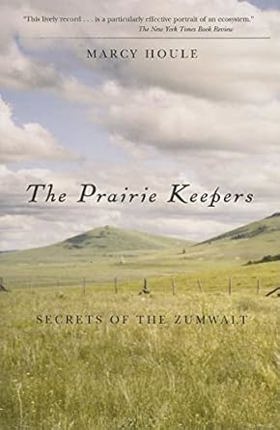
In the remote northeast corner of Oregon lies the ruggedly beautiful Zumwalt Prairie, one of the last native prairies in the United States. A wild expanse of untilled ground covering nearly two hundred square miles, the Zumwalt is almost entirely managed by cattle ranchers. It also is home to one of the highest concentrations of hawks in North America. Marcy Houle, a wildlife biologist and student, first went to the Zumwalt in 1979 to discover what attracts and sustains the hawks there in such startling abundance. Houle explores the vast prairie on foot and horseback, cataloging its hawks, studying its complex ecosystem, and meeting its people. Fueled by her youth, her spirit, her humor--and in part by her naivete--she bands birds, outruns a bull, and pulls together the factious community of ranchers, townspeople, and government employees. Her findings, eloquently reported, show that ranchers and wildlife not only can coexist, but in some instances must coexist if we are to save the last of the native prairies. In a new epilogue, Houle writes of the Zumwalt two decades later. Despite tremendous changes occurring in the American West, she finds reason for hope in the Zumwalt--in the hawks and ranchers still there, and also in new partnerships that encourage stewardship and sustainable cattle grazing. 274 pages ; 22 cm CIRC [ 0 ]
|
2007 |
|
The ports of British Columbia by Agnes Rothery 
Description and history of Vancouver and Victoria, chief seaports of British Columbia vii, 279 pages, 7 unnumbered pages of plates : illustrations ; 23 cm CIRC [ 1 ]
|
1943 |