Catalog of British Columbiana and Pacific Northwest Americana
Encyclopedia Cascadia Catalog contains book titles of mostly non-fiction Pacific Northwest Coast of North America Titles (primarially British Columbia, Idaho, Oregon and Washington State) in an easy-to-understand title catalog. If you see a link with this badge ONLINE CIRC it means that there is an online institution that provides free access to that title. In some cases there may be more than one institution hosting the title digitally.
| Catalog Title | Published |
|---|---|
|
The land that slept late the Olympic Mountains in legend and history by Robert L. Wood 
As stated, "When the first group of pioneers explored the rugged Olympic mountain range during the harsh winter of 1889, they encountered both breathtaking beauty and cruel acts of nature. In subsesuent years, numeruous expeditions followed, and with the gripping tales of these trailblazers, collected here for the first time". This book includes never-before published historical photos and features detailed maps of explorers' routes. 175 pages : illustrations, maps ; 16 x 23 cm CIRC [ 1 ]
|
1995 |
|
The land that kept its promise a history of South Lincoln County by Marjorie H. Hays
|
1976 |
|
The land of Sunrise Mountains memoirs of Idaho by Cloah Sebastian Cowling
|
1956 |
|
The land of heart's delight early maps and charts of Vancouver Island by Michael Layland 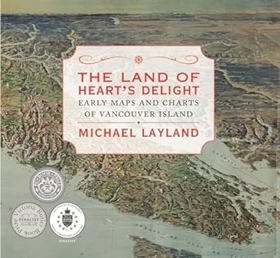
"Just how, and why, did Vancouver Island get onto the map? How was knowledge of our immediate geography acquired and recorded? With 130 maps, dating between 1593 and 1915, this cartographic history tells the story of how Vancouver Island and the surrounding area came to be mapped. The book shows local cartographic milestones, marking progress in our knowledge through the island's rich--although comparatively short--recorded history. However, the maps, by themselves and without context, cannot tell the whole story. The accompanying text reveals the motives, constraints, agendas, and intrigues that underpin their making."--Publisher's description 232 pages : maps (chiefly color) ; 25 cm CIRC [ 1 ]
|
2013 |
|
The land called Lewis a history of Lewis County, Washington by Sandra A. Crowell 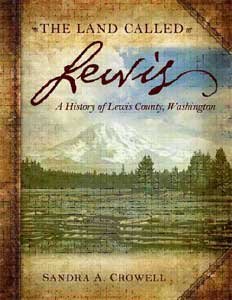
An excellent and comprehensive historical account of Lewis County history, from the first tribes to the closing of the Trans Alta coal mine in 2006. Wonderful historical photographs and fantastic research. A true Lewis County treasure. 204 pages : illustrations, maps ; 29 cm CIRC [ 1 ]
|
2007 |
|
The Lake Washington story a pictorial history by Lucile Saunders McDonald 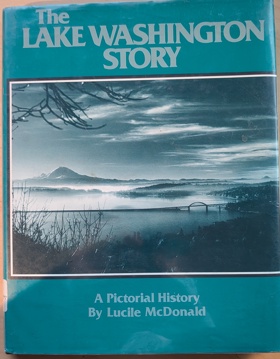
A physical and social history of Lake Washington, the 20 mile long body of water that forms the greater part of the eastern boundary of Seattle 160 pages : illustrations ; 28 cm CIRC [ 1 ]
|
1979 |
|
The Kwakiutl Indians of British Columbia by Ronald Preston Rohner , Evelyn C. Rohner
|
1970 |
|
The king's pines of Idaho a story of the Browns of McCall by Grace Edgington Jordan 
Carl Elliott Brown, son of Warren Goodhue Brown and Charlotte Elliott, was born in 1878. He married Ida Louise Harrington, daughter of John Sherman Harrington and Elizabeth Bigham, on 28 Aug., 1902. They had 4 children. They settled in McCall, Idaho 295 pages illustrations 23 cm CIRC [ 1 ]
|
1961 |
|
The killer whale who changed the world by Mark Leiren-Young 
The story of Moby Doll, the first publicly exhibited captive killer whale, and how he changed the way people saw killer whales and sparked the movement to save them. The fascinating and heartbreaking account of the first publicly exhibited captive killer whale a story that forever changed the way we see orcas and sparked the movement to save them. Killer whales had always been seen as bloodthirsty sea monsters. That all changed when a young killer whale was captured off the west coast of North America and displayed to the public in 1964. Moby Doll as the whale became known was an instant celebrity, drawing 20,000 visitors on the one and only day he was exhibited. He died within a few months, but his famous gentleness sparked a worldwide crusade that transformed how people understood and appreciated orcas. Because of Moby Doll, we stopped fearing killers” and grew to love and respect orcas.” x, 188 pages, 8 unnumbered pages of plates : illustrations ; 23 cm CIRC [ 0 ]
|
2016 |
|
The Kelowna story an Okanagan history by Sharron J. Simpson 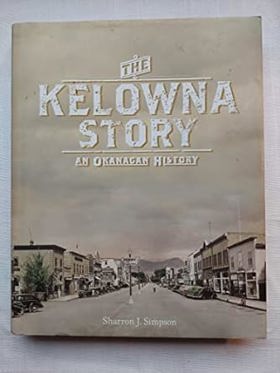
The Kelowna Story is a comprehensive full-length history of the largest metropolitan centre outside BC's Lower Mainland, a labour of love by a leading local historian whose family roots have been entwined with Kelowna's for five generations. It embraces the full sweep of central Okanagan history, starting with the days of the S-Ookanhkchinx, who enjoyed a largely peaceful existence along the shores of the lakes and rivers before the earliest explorers came to trade, followed by Father Pandosy and his Okanagan Mission in 1859. It was the mission that attracted Kelowna's first homesteaders, soon followed by cattle ranchers and orchardists, and much later by the empire-builders like the Bennett family who paved the way for today's budding metropolis. Author Sharron J. Simpson believes "history is best told through the stories of ordinary people," while allowing today's readers may not think it 'ordinary' to walk over mountain ranges to collect mail, or consider it 'ordinary' to climb into a narrow irrigation pipe to scrape the rust off the inside as it runs up and down the hillsides, or to row freight from one end of Okanagan Lake to the other. "In their time," she writes, "those who did extraordinary things were simply doing what needed to be done to get ahead. Their stories are fascinating and tell of the remarkable investment early settlers made in this community." 320 p. : ill., maps, ports. ; 28 cm. CIRC [ 1 ]
|
2011 |
|
The journals of Lewis and Clark by Meriwether Lewis , William Clark , Frank Bergon
In 1803, when the United States purchased Louisiana from France, the great expanse of this new American territory was a blank-not only on the map but in our knowledge. President Thomas Jefferson keenly understood that the course of the nation's destiny lay westward and that a national "Voyage of Discovery" must be mounted to determine the nature and accessibility of the frontier. He commissioned his young secretary, Meriwether Lewis, to lead an intelligence-gathering expedition from the Missouri River to the northern Pacific coast and back. From 1804 to 1806, Lewis, accompanied by co-captain William Clark, the Shoshone guide Sacajawea, and thirty-two men, made the first trek across the Louisiana Purchase, mapping the rivers as he went, tracing the principal waterways to the sea, and establishing the American claim to the territories of Idaho, Washington, and Oregon. Together the captains kept a journal, a richly detailed record of the flora and fauna they sighted, the Indian tribes they encountered, and the awe-inspiring landscape they traversed, from their base camp near present-day St. Louis to the mouth of the Columbia River. In keeping this record they made an incomparable contribution to the literature of exploration and the writing of natural history. With 2003 marking the beginning of the Lewis and Clark expedition bicentennial celebration, this journal is now reissued in a beautiful new Penguin Classics package xlvi, 505 pages : illustrations, maps ; 20 cm CIRC [ 1 ]
|
2003 |
|
The journal of John Work, a chief-trader of the Hudson's Bay Co. during his expedition from Vancouver to the Flatheads and Blackfeet of the Pacific Northwest by John Work, William S. Lewis, Paul C. Phillips 
The journal of John Work, a chief-trader of the Hudson's Bay Co. during his expedition from Vancouver to the Flatheads and Blackfeet of the Pacific Northwest, edited, and with an account of the fur trade in the Northwest, and life of Work 209 pages including plates, map frontispiece (portrait) 25 cm ONLINE CIRC [ 1 ]
|
1923 |
|
The Jewish Oregon story, 1950-2010 by Ellen Eisenberg 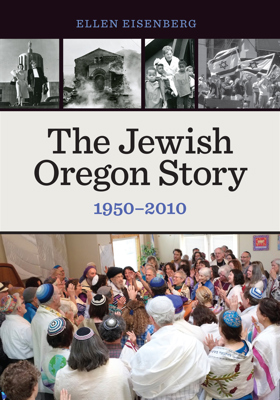
"The Jewish Oregon Story traces the history of diverse Jewish Oregonians and their communities during a period of dramatic change. Drawing on archival sources, including a collection of over five hundred oral histories, the book explores how Jewish Oregonians both contributed to and were shaped by the "Oregon Story," a political shift that fueled Oregon's--and particularly Portland's--emerging reputation for progressivism and sustainability. Six chapters examine a community grappling with, and increasingly embracing, change--from the dramatic national shifts in women's roles and inter-group relations to local issues such as the razing of the historic South Portland Jewish neighborhood. An original community musical, Whatever Happened to Old South Portland?, frames the creation of a new Portland Jewish identity, emerging out of the ashes of South Portland and tapping ethnic expression as an antidote to suburbanization and assimilation. A peek behind the scenes exposes the crucial role of women's voluntarism and traces the impact of women entering the workforce and winning acceptance as equals in organizational and ritual life. Chapters on involvement in liberal politics and advocacy for Israel explore communal engagement that reflected national trends, but, beginning in the 1980s, were increasingly shaped by emerging local progressivism. A final chapter charts recent shifts in Oregon Jewish geography, demographics, and organizational life, exploring the rebirth of smaller communities and the embrace of post-denominational Jewry, spirituality, and an ethos of environmentalism and inclusion. The Jewish Oregon Story will be of great interest to the Jewish community in Oregon and the Pacific Northwest and will appeal broadly to all readers of American, Western, and Oregon history, particularly those interested in questions of ethnicity and identity. Published in Cooperation with the Oregon Jewish Museum and Center for Holocaust Education"-- Provided by publisher xviii, 316 pages : illustrations ; 26 cm CIRC [ 0 ]
|
2016 |
|
The Jesuits and the Indian wars of the Northwest by Robert Ignatius Burns
|
1986 |
|
The James Francis Tulloch diary, 1875-1910 the true story of the ups and downs of James and Annie Tulloch and their nine children, all of whom were born and raised on Orcas Island in Washington State's San Juan Islands by James Francis Tulloch, Gordon Keith 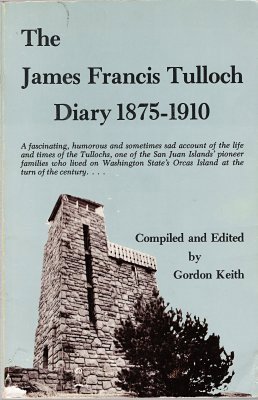
A fascinating, humorous and sometimes sad account of the life and times of the Tullochs, one of the San Juan Islands' pioneer families who lived on Washington State's Orcas Island at the turn of the century. Tulloch writes about his 35 years spent on Orcas Island with a candor and vigor seldom encountered in such a diary. Photos. Map. vii, 124 pages, 1 unnumbered leaf of plates : illustrations ; 23 cm CIRC [ 1 ]
|
1978 |
|
The Jackson County Rebellion a populist uprising in Depression-era Oregon by Jeffrey M. LaLande , Oregon State University Press (Publisher) 
"The Jackson County Rebellion explores a dramatic if little-known populist insurgency in the American West. Author Jeff LaLande takes a deep dive into a tumultuous uprising that captured national attention as it played out in rural Oregon. First tracing its roots back to the area's tradition of protest, including the Ku Klux Klan of the 1920s, he focuses on Jackson County's politics of upheaval during the worst days of the Great Depression. The broad strokes of the episode may be familiar to contemporary readers: Demagogues fanning rage - relentlessly accusing an elite of corruption and conspiracy. The strife-torn episode featured nativist and anti-Semitic elements. The local press played a key role in the events. Two inflammatory newspapers, one owned by wealthy orchardist Llewellyn Banks and the other by politician Earl Fehl, became the vehicles by which these men won the loyalty of rural and working-class residents. Partners in demagoguery, Banks and Fehl created a movement - dubbed the "Good Government Congress" that very nearly took over county government through direct action, ballot theft, and threats of violence. Among those opposing the two men was Harvard-educated Robert Ruhl, owner/editor of the Medford Mail-Tribune, who faced off against Banks and Fehl. Despite boycotts and threats of sabotage. Ruhl ran a resolute editorial campaign against the populist threat in his Mail-Tribune, which won a Pulitzer Prize for its reporting on the uprising. The rebellion blazed hotly but not for long. Its end was marked by the arrest of its leaders after the fiercely contested 1932 election and by Banks's murder of the police officer sent to arrest him. Placing the Jackson County Rebellion squarely within America's long tradition of populist uprisings against the perceived sins of an allegedly corrupt, affluent local elite, LaLande argues that this little-remembered episode is part of a long history of violent conflict in the West that continues today."-- Provided by publisher xiv, 206 pages : illustrations, map, portraits ; 23 cm CIRC [ 0 ]
|
2023 |
|
The island remembers a history of Harstine Island and its people by Beulah Hitchcock, Helen Wingert, Harstine Women's Club (Shelton, Wash)
|
1979 |
|
The interwoven lives of George Vancouver, Archibald Menzies, Joseph Whidbey, and Peter Puget exploring the Pacific Northwest Coast by John Michael Naish 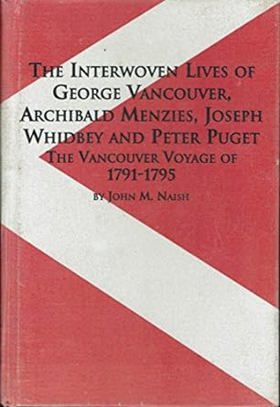
The Vancouver Voyage exemplifies the extraordinary upsurge in optimism and adventure in the last two decades of the 18th century. Four men were the lynch-pins of that enterprise and this volume examines their achievements and sufferings. It particularly examines the interplay and stress between the men, both physical and psychological, during the voyage. Evidence as to the nature of Vancouver's own chronic disease (which killed him in his 41st year) is presented, and his psychological state is analysed. The achievement of both Vancouver and Menzies in defeating scurvy during the voyage is described. Menzies' largely unpublished and voluminous journal provides the major source of information on the lands explored and the peoples encountered, and the work also contains original material about Whidbey's later life and relationships. Although unusual in format, this work seeks to illuminate the history of those times by applying a physician's eye to four outstanding representatives of an age of optimism. With nineteen photos and eight maps. 537 pages ; 24 cm. CIRC [ 1 ]
|
1996 |
|
The Indians of western Oregon this land was theirs by Stephen Dow Beckham, Christina Romano
|
1977 |
|
The Indians of Puget sound by Herman Karl Haeberlin, Erna Gunther
|
1973 |
|
The Indians of Puget Sound the notebooks of Myron Eells by Myron Eells, George Pierre Castile
|
1985 |
|
The Indian school on Magnolia Avenue voices and images from Sherman Institute by Clifford E. Trafzer , Matthew Sakiestewa Gilbert , Lorene Sisquoc 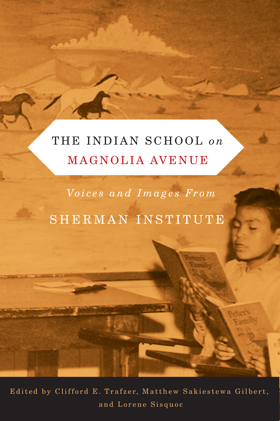
The first collection of writings and images focused on an off-reservation Indian boarding school, The Indian School on Magnolia Avenue shares the fascinating story of this flagship institution, featuring the voices of American Indian students. In 1902, the federal government opened Sherman Institute in Riverside, California, to transform American Indian students into productive farmers, carpenters, homemakers, nurses, cooks, and seamstresses. Indian students helped build the school and worked daily at Sherman; administrators provided vocational education and placed them in employment through the Outing Program. Contributors to The Indian School on Magnolia Avenue have drawn on documents held at the Sherman Indian Museum to explore topics such as the building of Sherman, the school’s Mission architecture, the nursing program, the Special Five-Year Navajo Program, the Sherman cemetery, and a photo essay depicting life at the school. Despite the fact that Indian boarding schools—with their agenda of cultural genocide— often prevented students from speaking their languages, singing their songs, and practicing their religions, most students learned to read, write, and speak English, and most survived to benefit themselves and contribute to the well-being of Indian people. The Indian School on Magnolia Avenue will be of interest to scholars and general readers in the fields of Native American studies, history, education, public policy, and historical photography. viii, 224 pages : illustrations ; 23 cm. CIRC [ 0 ]
|
2012 |
|
The Indian history of British Columbia the impact of the white man by Wilson Duff, Royal British Columbia Museum 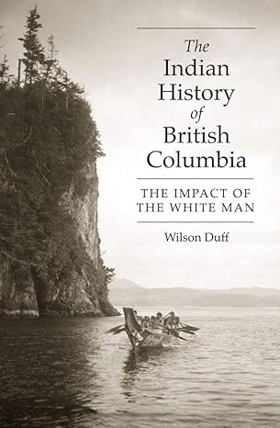
In The Impact of the White Man, Wilson Duff presents a clear and comprehensive summary of the effects of immigrant settlement on the population, culture, economy and religion of British Columbia's First Peoples. First published in 1964, this book has stood the test of time. With more than 15,000 copies in print, it remains an important anthropological and historical record up to the 1960s. Duff wrote The Impact of the White Man as the first of three volumes on the history of the First Peoples in B.C. He never completed the other two volumes, but this book, on its own, has become a classic of anthropology. The new edition retains the author's original text and features more photographs, an appendix updating the names and territories of First Nations in B.C., a new list of recommended reading, and an index 184 pages : illustrations, maps ; 23 cm CIRC [ 1 ]
|
1997 |
|
The Idaho traveler by Alan Minskoff 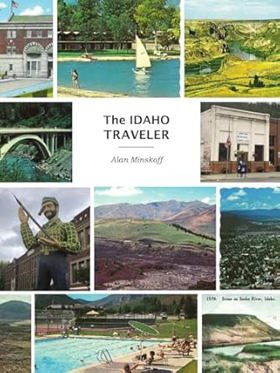
"Alan Minskoff's The Idaho Traveler is a field day for road trippers, a foodie's feast tour and every wanderer's dream-trek through the great Gem State. Minskoff shows us the route down the Idaho Pie Trail, meandering from the Wayside Café in Heyburn, Idaho, to the Pie Safe Bakery and Kitchen in Deary. Along the way, we meet up with locavores and librarians, rural mayors and councilwomen. This book is the holistic testament to the human, the historic, and the gustatory delights of the state of Idaho we have all been waiting for"-- Provided by publisher 293 pages : illustrations ; 21 cm CIRC [ 0 ]
|
2019 |
|
The Idaho story by Idaho Poets and Writers Guild
|
1967 |