Catalog of British Columbiana and Pacific Northwest Americana
Encyclopedia Cascadia Catalog contains book titles of mostly non-fiction Pacific Northwest Coast of North America Titles (primarially British Columbia, Idaho, Oregon and Washington State) in an easy-to-understand title catalog. If you see a link with this badge ONLINE CIRC it means that there is an online institution that provides free access to that title. In some cases there may be more than one institution hosting the title digitally.
| Catalog Title | Published |
|---|---|
|
Bright seas, pioneer spirits a history of the Sunshine Coast by Betty Keller, Rosella M. Leslie 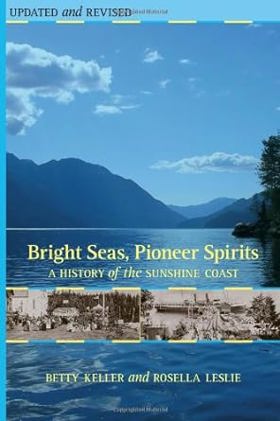
For well over a century, the bright seas of the Sunshine Coast have been attracting visitors to the waterfront resorts, fishing lodges and beaches that rest between Howe Sound and the spectacular Princess Louisa Inlet. These coastal hotspots and communities were settled by a few courageous and daring pioneers whose names are still familiar today: Gibsons, Roberts, Whitaker, Donley, Silvey, Griffiths. Bright Seas, Pioneer Spirits tells the stories of the homesteaders, loggers, prospectors and fishermen who carved out a living on the treacherous mountainside that rises straight out of the inlets. These men and women came with nothing in their pockets and founded logging empires, shingle mills and sawmills, launched fish canneries, a glue factory and even a well-known jam factory, and scaled the mountainsides to start copper and gold mines. They travelled and traded by boat, long before coastal roads were built in the 1950s, and their pioneering spirits still ride the bright seas of the Sunshine Coast today. 245 p. : ill., map, ports. ; 23 cm. CIRC [ 1 ]
|
2009 |
|
Fort St. James and New Caledonia where British Columbia began by Marie Elliott, Betty Keller 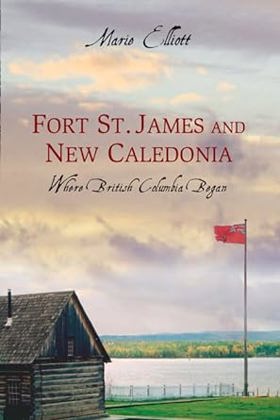
"As BC 150 celebrations have made us aware, modern British Columbia began in the central interior of the province, where Simon Fraser founded the fur trade empire known as New Caledonia. Today only the restored trading post of Fort St. James and the ancient trails remain. Fort St. James and New Caledonia is the first history of this crucial chapter in over one hundred years. Using unpublished Hudson's Bay Company archival material, Marie Elliott delivers rare glimpses into the lives and times of the first fur traders, weaving a tapestry of colourful characters including the great Carrier chief Kwah, Nor'westers John Stuart and James McDougall, as well as a surprisingly strong cast of women including Miyo Nipiy, Governor Simpson's country wife, Margaret Taylor and the tragic Elizabeth Pruden 270 pages : illustrations, maps ; 23 cm CIRC [ 1 ]
|
2009 |
|
Oregon off the beaten path, a guide to unique places by Myrna Oakley 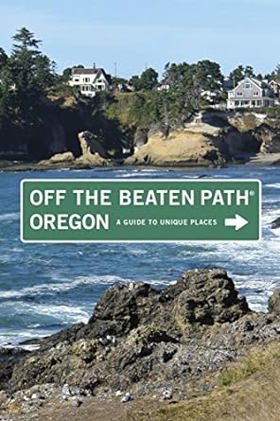
With this attractive and easy-to-use guide in hand youll discover the Oregon you never knew existed. Nine maps and thirteen black-and-white illustrations help you become acquainted with this unknown Oregon. x, 261 pages : illustrations ; 23 cm. CIRC [ 1 ]
|
2009 |
|
British Columbia place names by Mark Thorburn 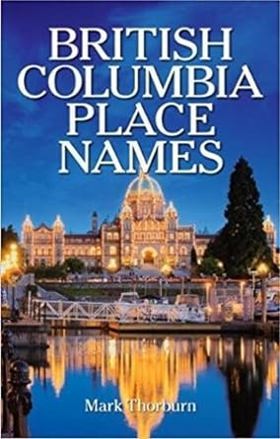
Whether the names come from the First Nations peoples, the English and Spanish explorers who sailed along BC's coast, or the fur traders, gold prospectors and settlers, the stories behind the place names reveal much about the places themselves and the history of the province: - Babine Lake takes its name from the French word for large lip and refers to the former practice of the local First Nations people of inserting half-inch pieces of wood or bone between the teeth and lower lips of their women - Barkerville was named for Billy Barker, a gold prospector from the Cariboo Gold Rush Days who struck it rich but later died in poverty - In 1920, the residents of Harper's Camp voted almost unanimously in favour of changing their community's name to Horsefly in honour of that pesky insect that visits every summer - Lulu Island, on which the city of Richmond sits, was named for 16-year old American actress Lulu Sweet who won the hearts of a detachment of Royal Engineers - Squamish is an anglicization of the Squamish people's name for themselves, the Skwxwú7mesh, the word means mother of the wind and many refer to the steady wind that blows off Howe Sound into the city - Vancouver's famous clothing-optional Wreck Beach was named after three ships that were sunk off its shores in 1928 to create a breakwater for a log-storage site - Tête Jaune Cache is French for Yellow Head's hiding place and refers to the yellow-haired Pierre Bostonais, an Iroquois Métis fur trapper and trader who worked as a guide for the North West and Hudson's Bay companies. 336 pages : portrait ; 21 cm CIRC [ 1 ]
|
2009 |
|
The U.S. Forest Service in the Pacific Northwest a history by Gerald W. Williams, United States Forest Service Pacific Northwest Region 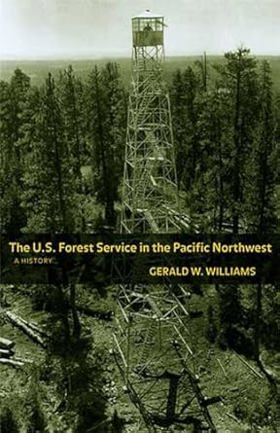
The Northwest has been at the forefront of forest management and research in the United States for more than one hundred years. In The U.S. Forest Service in the Pacific Northwest, Gerald Williams provides an historical overview of the part the Forest Service has played in managing the Northwest’s forests. Emphasizing changes in management policy over the years, Williams discusses the establishment of the national forests in the region, grazing on public land, the Great Depression, World War II, and the rise of multiple-use management policies. He draws on extensive documentation of the post-war development boom to explore its effects on forests and Forest Service workers. Presenting such controversial issues as roadless areas and wilderness designation, timber harvesting, forest planning, ecosystems, and spotted owls, Williams demonstrates the impact of 1970s environmental laws on national forest management. The book is rich in photographs, many drawn from the Gerald W. Williams Collection, Oregon State University Archives. Extensive appendices provide detailed data about Pacific Northwest forests. Chronicling a century of the agency’s management of almost 25 million acres of national forests and grasslands for the people of the United States, The U.S. Forest Service in the Pacific Northwest is a welcome and overdue resource. This work was completed through the collaborative efforts of the author and the Pacific Northwest Forest Service Association, with support from the U. S. Forest Service. x, 416 pages : illustrations, maps ; 23 cm CIRC [ 0 ]
|
2009 |
|
The environmental justice William O. Douglas and American conservation by Adam M. Sowards 
From the late 1940s to the mid-1970s, American conservation politics underwent a transformation — and Supreme Court Justice William O. Douglas was at the heart of this shift toward modern environmentalism. The Environmental Justice explores how Douglas, inspired by his youthful experiences hiking in the Pacific Northwest, eventually used his influence to reshape American conservation thought, politics, and law. One of the nation’s most passionate conservationists, Douglas wrote eloquent testimonies to the value of wilderness and society’s increasing need for it, both in his popular books and in his heartfelt judicial opinions celebrating nature and condemning those who would destroy it. He led public protests in favor of wilderness. He worked tirelessly to secure stronger legal protections for the environment, coordinating with a national network of conservationists and policymakers. As a sitting Supreme Court Justice, Douglas brought both prestige and the enormous symbolic power of legal authority to conservation crusades at a time when the nation's laws did not favor environmental protection. He understood the need for national solutions that included public involvement and protections of minority interests; the issues were nationally important and the forces against preservation were strong. In myriad situations Douglas promoted democratic action for conservation, public monitoring of government and business activities, and stronger laws to insure environmental and political integrity. x, 198 pages : illustrations, maps ; 23 cm CIRC [ 0 ]
|
2009 |
|
Oregon fossils by Elizabeth L. Orr, William N. Orr 
This revised and expanded edition of Oregon Fossils includes a record of all known fossils in Oregon going back 400 million years, along with collecting localities by county, age, rock formation, and published source. The book also provides a geologic overview of the state, from ocean beaches to the high desert, from the Blue Mountains to the Siskiyous. Unique among fossil field guides, Oregon Fossils includes both specimen identification and interesting notes about their discovery, naming, and conservation. The narrative is sprinkled with biographical sketches of paleontologists who have contributed to the state’s fossil record, and the text is richly illustrated with photographs, line drawings, charts, and maps. A complete bibliography lists full citations to fossil material. The only single volume that provides Oregon’s fossil record and history, Oregon Fossils is a well-written, well-organized guide. It is an excellent reference for classroom and library use, for researchers, and for private collectors and hobbyists. xiv, 300 pages : illustrations, maps ; 26 cm CIRC [ 0 ]
|
2009 |
|
Davis country H.L. Davis's Northwest by H. L. Davis, Brian Booth, Glen A. Love 
Davis Country collects the best writings of H. L. Davis, one of the Northwest's premier authors and the only Oregonian to receive the Pulitzer Prize for fiction. Born in southern Oregon's Umpqua Valley in 1894, Davis grew up in Antelope and The Dalles. He began as a poet, receiving the prestigious Levinson Prize at age twenty-five. With the encouragement of H. L. Mencken, he turned to fiction, winning the Pulitzer Prize for his 1935 novel Honey in the Horn, which Mencken called the best first novel ever published in America. Full of humor and humanity, Davis's work displays a vast knowledge of Pacific Northwest history, lore, and landscape. His instinctive feel for the Northwest – the weather, trees, plants, animals, the varieties of Oregon rain, the smell of forest winds and high-desert heat – is unmatched. This volume gathers many of Davis's finest stories, essays, poems, and letters, as well as excerpts from his most famous novels. An introduction by editors Brian Booth and Glen Love, a brief autobiography, and an afterword on Davis's final, unfinished novel provide for a better understanding of this truly original Northwest voice. 320 pages : illustrations ; 23 cm. CIRC [ 0 ]
|
2009 |
|
Handbook of Oregon birds a field companion to Birds of Oregon by Hendrik G. Herlyn, Alan Contreras 
Handbook of Oregon Birds is a portable, field-friendly guide to the seasonal status and distribution of Oregon birds. A condensation of the status and distribution material from Birds of Oregon: A General Reference, the definitive source for Oregon ornithology, the book provides a quick but detailed field reference for birders who want to know a bird’s status, seasonal patterns of occurrence, basic habitat information, and movements. The Handbook also includes comprehensive new breeding and winter maps, as well as the most up-to-date status of vagrants, displaying their seasonality and geographic occurrence in graphs and maps. Although not an introductory identification book, Handbook of Oregon Birds includes many features that newer birders will appreciate, including the maps, short summaries, and ID notes for difficult-to-identify species. A specially commissioned set of paintings by wildlife artist Ramiel Papish and a selection of color photographs provide identification aids that are an improvement on standard field guides for such challenges as flying alcids and immature swallows. 287 pages, 8 unnumbered pages of plates : illustrations (some color), maps ; 22 cm CIRC [ 0 ]
|
2009 |
|
Pedaling revolution how cyclists are changing American cities by Jeff Mapes 
"In a world of increasing traffic congestion, a grassroots movement is carving out a niche for bicycles on city streets. Pedaling Revolution explores the growing bike culture that is changing the look and feel of cities, suburbs, and small towns across North America." "From traffic-dodging-bike messengers to tattooed teenagers on battered bikes, from riders in spandex to well-dressed executives, ordinary citizens are becoming transportation revolutionaries. Jeff Mapes traces the growth of bicycle advocacy and explores the environmental, safety, and health aspects of bicycling. He rides with bicycle advocates who are taming the streets of New York City, joins the street circus that is Critical Mass in San Francisco, and gets inspired by the everyday folk pedaling in Amsterdam, the nirvana of American bike activists. Chapters focused on big cities, college towns, and America's most successful bike city, Portland, show how cyclists, with the encouragement of local officials, are claiming a share of the valuable streetscape."--Jacket 288 pages : illustrations ; 23 cm CIRC [ 0 ]
|
2009 |
|
Eden within Eden Oregon's utopian heritage by James J. Kopp 
Oregon has long been a destination for those seeking new beginnings. Since the establishment of the Aurora Colony in 1856, the state has been the home of nearly three hundred communal experiments. Eden Within Eden is the first book to survey this utopian history, from religious and Socialist groups of the nineteenth century to ecologically conscious communities of the twenty-first century. James Kopp examines Oregon’s communal history in the framework of utopian and communal experiences across America. Eden Within Eden provides rich detail about utopian communities – some realized, some only planned – many of which reflect broader social, political, economic, and cultural aspects of Oregon’s history. From the dawn of communal groups in Oregon – the German Christian colony at Aurora – to Oregon’s most infamous communal experiment – Rajneeshpuram – Kopp describes the range of attempts to establish ideal communities in the state. These include the Jewish agrarian colony of New Odessa in the 1880s as well as the “new pioneers” of the 1960s who captured the spirit of the counterculture and gave voice to growing concerns about the environment. Kopp explores other areas of Oregon’s utopian heritage as well, including literary works and idealistic city planning. The book’s appendix is a rich compilation that will guide students, scholars, and other interested readers to additional information on the profiled – and many other – communities. xiii, 370 pages : illustrations ; 23 cm CIRC [ 0 ]
|
2009 |
|
Picturing the Alaska-Yukon-Pacific Exposition the photographs of Frank H. Nowell by Nicolette Bromberg, Frank H. Nowell, John Stamets 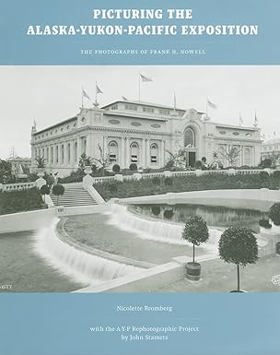
For those who experienced it, the Alaska-Yukon-Pacific Exposition was a time of wonder in a "citadel set in stars" -- a grand world's fair that transformed the summer of 1909 in Seattle into a whirl of excitement and pleasure. On what would become the University of Washington campus, for a brief moment a huge city emerged. At noon on June 1, amidst the blasting of horns and whistles, confetti filled the air and the gates were opened to a pent-up crowd of about 80,000 fairgoers. At the end of the evening on October 16, the fair was over and the magical city became a memory for its 3.7 million visitors. For those who couldn't make the trip to see the exhibits and for the rest of us today, the best record of the event was made by Frank H. Nowell, official photographer for the exposition. He documented the construction of the city, its landscaping, the people who built it, and the people who visited it, as well as the buildings that housed displays from dozens of foreign countries. He used a large view camera and 8 x 10 glass-plate negatives to create several thousand photographs. For this book, Nicolette Bromberg has chosen the best and most representative. Her essay illuminates both the man and the fair, providing perspective to a history of the West that connects us to a world-expanding event a hundred years ago, and also contains Nowell's photographs of Alaska during the gold rush, relating how an Alaskan photographer became the official A-Y-P photographer. For the 100th anniversary of the exposition, John Stamets organized and led University of Washington students in a project to rephotograph the site. This book includes an essay by Stamets describing the challenges, delights, and problems of the project, along with thirty rephotographs that imagine the fabulously spectacular ghost city on the campus. 128 pages : illustrations ; 28 cm CIRC [ 0 ]
|
2009 |
|
Warship under sail the USS Decatur in the Pacific West by Lorraine McConaghy, Center for the Study of the Pacific Northwest 
Ordered to join the Pacific Squadron in 1854, the sloop of war Decatur sailed from Norfolk, Virginia, through the Strait of Magellan to Valparaiso, Honolulu, and Puget Sound, then on to San Francisco, Panama, Nicaragua, and Costa Rica, while serving in the Pacific until 1859, the eve of the Civil War. Historian Lorraine McConaghy presents the ship, its officers, and its crew in a vigorous, keenly rendered case study that illuminates the forces shaping America's antebellum navy and foreign policy in the Pacific, from Vancouver Island to Tierra del Fuego. One of only five ships in the squadron, the Decatur participated in numerous imperial adventures in the Far West, enforcing treaties, fighting Indians, suppressing vigilantes, and protecting commerce. With its graceful lines and towering white canvas sails, the ship patrolled the sandy border between ocean and land. Warship under Sail focuses on four episodes in the Decatur's Pacific Squadron mission: the harrowing journey from the Atlantic to the Pacific Ocean through the Strait of Magellan; a Seattle war story that contested American treaties and settlements; participation with other squadron ships on a U.S. State Department mission to Nicaragua; and more than a year spent anchored off Panama as a hospital ship. In a period of five years, more than 300 men lived aboard ship, leaving a rich record of logbooks, medical and punishment records, correspondence, personal journals, and drawings. Lorraine McConaghy has mined these records to offer a compelling social history of a warship under sail. Her research adds immeasurably to our understanding of the lives of ordinary men at sea and American expansionism in the antebellum Pacific West. xi, 381 pages : illustrations, maps ; 27 cm. CIRC [ 0 ]
|
2009 |
|
In love with a hillside garden by Ann Pytkowicz Streissguth, Daniel Streissguth, Benjamin Streissguth, Arboretum Foundation (Seattle, Wash) 
It all began when architect Daniel, then a bachelor, built his own house on a wild hillside lot, developing his garden as next-door-neighbor, Ann, was developing a garden around natural springs in her backyard. We married, and together with our growing son, Benjamin, continued these gardens as we also fought through blackberries, horsetails, and morning glories to push intersecting paths through the adjacent two-lot wilderness we later purchased, creating a little park which we planted and nurtured and ultimately gave to the City of Seattle in 1996, with our promise to maintain it through our lifetimes. This richly illustrated book offers timely inspiration to gardeners in an increasingly urban world. In an engaging narrative, the Streissguths show the emergence of their gardening partnership during forty years of marriage, and their philosophy that developing a site along a public stairway gave them the opportunity to share their garden with neighbors and passersby. They offer practical insight into concepts of linking inside and outside rooms and of combining private and public spaces, and they describe the process through which they transformed a steep forested hillside in the heart of Seattle into a deciduous woodland garden with banks of perennials, a dell, vistas of the city and lake, and a site for ornamental and food-producing plants. Finally, they consider the future stewardship of the Streissguth Gardens, a park linking the wild and tamed sections of a unique greenbelt garden shared with joggers, strollers, fellow gardeners, schoolchildren, and those who call it “a touch of Eden in a big city.” 118 pages : illustrations (chiefly color) ; 26 cm CIRC [ 0 ]
|
2009 |
|
Ichishkiin sinwit Yakama/Yakima Sahaptin dictionary by Virginia Beavert, Sharon Hargus, Bruce Rigsby 
Sahaptin, or Ichishkíin Sínwit (literally, "this language"), is a Plateau Penutian language spoken in south-central Washington and northern Oregon. This dictionary documents the dialect of Sahaptin that is spoken by the Yakama people. Ichishkíin Sínwit Yakama / Yakima Sahaptin Dictionary is the first modern published dictionary of any Sahaptin dialect. The dictionary is divided into three sections: a Sahaptin-English section; an English-Sahaptin section; and a section listing roots used in the formation of Sahaptin words. The Sahaptin-English section contains approximately 3,500 headwords, over 4,500 example sentences, more than 100 images, and over 9,200 sound files available online. Copious cross-references alert readers to related words elsewhere in the Sahaptin-English section. The English-Sahaptin and roots sections serve as indices to the Sahaptin-English section. In the English-Sahaptin section, users can look up the Sahaptin equivalents of English words. In the root section, users can see words from different parts of the dictionary that share the same component of meaning. The dictionary also contains essays by noted Plateau linguist Bruce Rigsby (professor emeritus, University of Queensland) on the histories and current usage of the terms "Sahaptin" and "Yakima / Yakama." lxviii, 492 pages : illustrations (chiefly color) ; 26 cm + 1 audio disc (digital, MP3 file ; 4 3/4 in.) CIRC [ 1 ]
|
2009 |
|
Solidarity stories an oral history of the ILWU by Harvey Schwartz 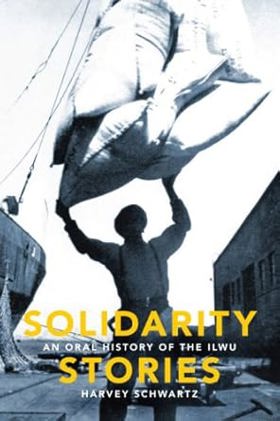
The International Longshore and Warehouse Union, born out of the 1934 West Coast maritime and San Francisco general strikes under the charismatic leadership of Harry Bridges, has been known from the start for its strong commitment to democracy, solidarity, and social justice. In this collection of firsthand narratives, union leaders and rank-and-file workers - from the docks of Pacific Coast ports to the fields of Hawaii to bookstores in Portland, Oregon - talk about their lives at work, on the picket line, and in the union. Workers recall the back-breaking, humiliating conditions on the waterfront before they organized, the tense days of the 1934 strike, the challenges posed by mechanization, the struggle against racism and sexism on the job, and their activism in other social and political causes. Their stories testify to the union's impact on the lives of its members and also to its role in larger events, ranging from civil rights battles at home to the fights against fascism and apartheid abroad. Solidarity Stories is a unique contribution to the literature on unions. There is a power and immediacy in the voices of workers that is brilliantly expressed here. Taken together, these voices provide a portrait of a militant, corruption-free, democratic union that can be a model and an inspiration for what a resurgent American labor movement might look like. The book will appeal to students and scholars of labor history, social and economic history, and social change, as well as trade unionists and anyone interested in labor politics and history. xi, 347 pages : illustrations ; 24 cm CIRC [ 0 ]
|
2009 |
|
Tales of the tract the beginnings of Twin Falls, Idaho and the "Magic" Valley by James F. Varley 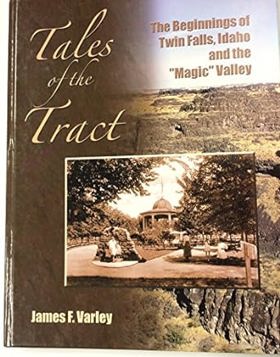
Collection of forty-six stories chronicling the events surrounding the building of the great Carey act irrigation project that has transmuted a once barren desert into what is now called the "Magic" Valley. The book tells the personal stories of pioneers who got that job done, and who founded the city of Twin Falls, and first made it prosper -- people like Ira Perrine, John Hansen, Paul Bickel, John and Anna Hayes, and many others ix, 176 pages : illustrations, maps ; 29 cm CIRC [ 1 ]
|
2008 |
|
Wild beauty photographs of the Columbia River Gorge, 1867-1957 by Terry Toedtemeier , John Laursen , Northwest Photography Archive (Publisher) 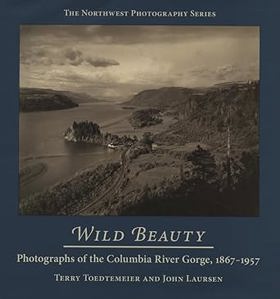
The inaugural volume in the Northwest Photography Series, Wild Beauty chronicles the rich photographic history of the spectacular Columbia River Gorge. This exquisitely produced large-format book features more than 130 images—most of them previously unpublished and many never before available for public view—by some three dozen photographers, including Carleton Watkins, Benjamin Gifford, Lily White, Sarah Ladd, Fred Kizer, Alfred Monner, and Ray Atkeson. Wild Beauty represents, in the words of one reviewer, “a culmination of decades of research, exhibition, and total immersion in the geology, history, and photography of the Columbia River Gorge.” The Columbia River Gorge exerts a powerful influence on the lives and imaginations of the inhabitants of the Pacific Northwest. For people who live here today, just as for those Native Americans and European settlers who preceded us, this dramatic natural landform is a source of awe. Since the 1860s it has inspired superb photographers who have framed and interpreted the way we see the Gorge, and who have in turn had their artistic vision shaped by this compelling landscape. The ninety-year period covered in Wild Beauty was a critical period in the river’s history. Over thousands of years the wild, free-flowing torrent of the Columbia River carved a passage – the Columbia River Gorge – through the Cascade Mountain Range. In the 1860s, when the first photographers arrived, the Gorge still looked much the same as it had when Lewis and Clark made their way down the river in 1805, and indeed as it had for centuries before that, when the native peoples’ culture of fishing and trade thrived along the river’s banks. In the mid twentieth century, the character of the river was fundamentally altered by the construction of hydroelectric dams. Wild Beauty begins in 1867 with images by the legendary Carleton Watkins, creator of some of the greatest landscape photographs of the nineteenth century. The volume ends in 1957 with the completion of The Dalles Dam, which drowned Celilo Falls and with it the historic site where Indians had fished for millennia. The images in this beautifully designed volume are presented one to a spread, with captions on the facing pages. The book is organized into five chronological sections, each with a brief introduction; a map shows the locations where the photographs were made. The photographs have been meticulously restored and are exquisitely reproduced in four-color process to capture the subtle coloration and nuanced tonal values of albumen prints, gelatin silver prints, platinum prints, hand-colored photographs, and early Kodachromes. The photography of Watkins and his successors is a significant piece of the cultural heritage of the Pacific Northwest. Readers interested in the history of the Columbia River and the photography of the developing American West will be enthralled by the book’s scope and artistry. And those who love the Gorge’s stunning beauty will welcome how this volume has captured its grandeur. Wild Beauty is the inaugural volume in a new series initiated by the Northwest Photography Archive. For 150 years, photographers have chronicled the landscape, people, and events of the Pacific Northwest. The Archive’s mission is to gather the finest and most significant of these images, from both private and public collections, and publish them in book form to make them widely available. All volumes in the series will be printed and bound in Oregon. 345 pages : illustrations (some color), color maps ; 32 cm. CIRC [ 1 ]
|
2008 |
|
Upriver voices tales of Skykomish by Nancy Cleveland, Anne Sekor, Jim Ojala, Skykomish Historical Society 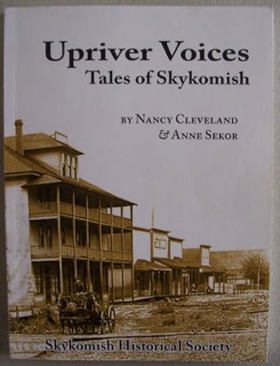
Published by the Skykomish Historical Society, Upriver Voices: Tales of Skykomish compiles local oral histories, archival photographs, and pioneer recollections to chronicle the dramatic evolution of the upper Skykomish River valley in Washington. The narrative captures the raw realities of a rugged mountain frontier shaped by the timber industry, the grueling construction of the Great Northern Railway, and the sheer grit required to carve isolated hamlets out of the Cascade foothills. Through the preserved voices of loggers, railway workers, and families, the volume documents the social fabric and daily hardships of a transient industrial community. A keen insight drawn from the text is how its grassroots, multi-author preservation approach exposes the fragile permanence of mountain boomtowns; by centering the firsthand accounts of ordinary workers rather than corporate boardrooms, the book illustrates how the relentless cycles of resource extraction left behind tight-knit communities defined just as much by communal resilience as by corporate transience. 166 pages : illustrations ; 20 cm CIRC [ 1 ]
|
2008 |
|
Out our back door Oregon south coast driving tours and day-hikes by Tom Baake 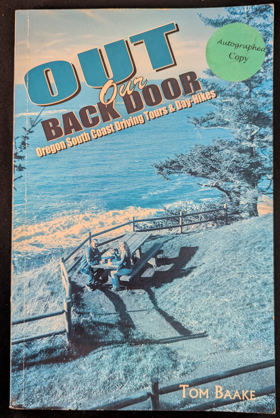
Discover the wonders of Oregon's beautiful South Coast, from unspoiled beaches and the vast Oregon Dunes, to lush river valleys and soaring forest mountaintops. Let this guidebook lead you to the region's world-famous scenery, and to some of its overlooked treasures. Coos Bay outdoor writer Tom Baake explores the region's popular scenic spots and visits the "back road" places, with an emphasis on easy day-hikes and driving loop tours. Destinations include Shore Acres State Park --spectacular seaside setting and gardens of a former lumber baron as well as Golden and Silver Falls State Park, twin cascades in a protected stand of old growth forest. Another tour takes you to South Slough, the nation's first protected estuary. With plenty of places to stop for a picnic and fun, you'll visit forest groves, see unusual geology, get inspired by waterfalls, wander the beaches and ridges, and experience life in this fascinating region. Wildflowers and wild rhododendrons line the way on many of the roads, while autumn colors are a delight. There's added information on camping, biking, paddling, boating, fishing, even a chapter on "what to do on a rainy day." Most of all, it's a book about picnics - so let's go! 183 pages : illustrations, maps ; 22 cm CIRC [ 1 ]
|
2008 |
|
Wings over Idaho an aviation history by Arthur A. Hart 
Wings Over Idaho began as a modest overview of the history of aviation in Boise, Idaho, and grew into a history embracing the whole state. The wonder of flight made Idaho's thousands of square miles of mountains and wilderness passable by plane in hours rather than weeks. 175 pages : illustrations ; 28 cm CIRC [ 0 ]
|
2008 |
|
Owyhee canyonlands by Mark Lisk, William L. Fox 
A beautifully designed book of photos celebrating the rugged Owyhee Mountain Canyonlands. The high desert of Owyhee Country contains some of the most spectacular, pristine canyonlands in the United States. A nationally recognized outdoor photographer, Mark Lisk s photographs of the Owyhees along with an essay by William Fox bring the rugged beauty of this Idaho and Oregon region to life. 120 pages : color illustrations ; 26 cm CIRC [ 0 ]
|
2008 |
|
Massacre at Bear River first, worst, forgotten by Rod Miller 
"Rod Miller tells the story of the West's worst, but least remembered attack on Native Americans. Although they have been largely ignored by historians, it was the war waged against the Shoshoni tribe that opened the book on Indian massacres in the West. The Shoshoni were victims of a bloodbath more extreme than that at Wounded Knee, and more deadly than the more famous slaughter at Sand Creek. The Bear River Massacre, on January 29, 1863, claimed at least 250 Shoshoni lives. And it changed the culture of the natives who lived in the area along what later became the Utah-Idaho border. The author provides a compelling narrative account of the Bear River Massacre and the events leading up to the bloody clash on a frozen riverbank in the foothills of the Rocky Mountains. He gives historical context to three major players in the massacre -- the Shoshoni, the military, and the Mormon settlers and their leaders -- and the interplay among those groups"--Page 4 of cover xix, 193 pages : illustrations, maps ; 23 cm CIRC [ 0 ]
|
2008 |
|
Massacre Rocks and City of Rocks 1862 attacks on emigrant trains by Donald H. Shannon 
Donald Shannon presents the third in his series of books on Indian attacks on emigrant trans on the Oregoni Trail west of the Rocky Mountains. Massacre Rocks and City of Rocks details attacks that took place in 1862 at those two sites in what is now southeast Idaho. xii, 240 pages : illustrations, maps, portrait ; 23 cm. CIRC [ 0 ]
|
2008 |
|
A father and an island reflections on loss by O. Alan Weltzien 
As author Ann Ronald notes, "Simultaneously a paean to his father and a personal memoir about a changing landscape caught by a ‘rising tide of affluence,’ Alan Weltzein’s A Father and an Island:Reflections on Loss, echoes my own Pacific Northwest youth—the endless saltwater summers, the quirky behavior of a bookworm, the sweet sharp tang of blackberry cobbler, the fierce games of badminton, the beachcombing days of discovery, the blessedness of parents well loved. Anyone who’s grown up in and around Puget Sound will find familiar memories triggered on every delicious page. Some sweet,some nostalgic, some downright sad, they’re all here in this poignant remembrance of things past." Northwest author Mary Clearman Blew writes, "In this moving tribute to his father and his family’s home on a Puget Sound island,Alan Weltzein returns us to a time when summers were glorious and children played all day long on beaches that were still unexploited and unrestricted—a pleasure to read." Weltzien's memoir is an essential book for Northwest Letters. 288 pages ; 22 cm CIRC [ 1 ]
|
2008 |