Catalog of British Columbiana and Pacific Northwest Americana
The Encyclopedia Cascadia Catalog indexes mostly non-fiction literature covering the Pacific Northwest coast of North America, with an emphasis on British Columbia, Idaho, Oregon, and Washington State.
| Catalog Title | Published |
|---|---|
|
A tour of duty in the Pacific Northwest E.A. Porcher and H.M.S. Sparrowhawk, 1865-1868 by Edwin A. Porcher, Dwight L. Smith 
"Working with Commander Porcher's manuscript journal, now in the Beinecke Rare Book and Manuscript Collection of Yale University, as well as other documents of the time, editor Smith has conjured an era through the unique voice of one of its standard bearers. Porcher's journal reveals a man who strived to do his duty by the lights of the British Empire, then at full bloom but - caught between vulnerable Russian America to the north, and the rambunctious and expanding United States to the south, and the French virtually everywhere - in slightly precarious position on North America's Pacific coast xvii, 172 pages, approximately [52] leaves of plates : illustrations (some color), map ; 27 cm Non-circulating [ 2 ]
|
2000 |
|
To fish in common the ethnohistory of Lummi Indian salmon fishing by Daniel L. Boxberger , Chris Friday 
"By focusing on the history of control over productive resources (in this case salmon, methods of harvest, processing, capital investment, and markets) Boxberger shows how the Lummi slid from independence and self-sufficiency to dependency, underdevelopment, and poverty. . . . Not only is it an excellent, in-depth study of the Lummi case, it can also serve as a metaphor for the larger question of Native American treaty rights and the resource provisions of agreements." --Pacific Historical Review xviii, 212 pages : illustrations ; 22 cm. Non-circulating [ 1 ]
|
2000 |
|
Since the time of the transformers the ancient heritage of the Nuu-chah-nulth, Ditidaht and Makah by Alan D. McMillan 
"The Nuu-chah-nulth, Ditidaht, and Makah occupy western Vancouver Island and the northern tip of the Olympic Peninsula in Washington. This book examines the long culture history of these closely related peoples, a history that extends back to mythic times, when the powerful transformers put the landscape and the animals in their present forms." "Alan McMillan brings together an impressive array of sources and integrates them into a single account. Archaeological evidence dating back more than 4,000 years is discussed in detail. Native oral traditions, linguistic studies, and historic evidence also contribute to a rounded picture of these societies and to an understanding of the changes that have occurred over time."--Jacket xii, 252 pages : illustrations, maps ; 24 cm Non-circulating [ 1 ]
|
1999 |
|
The Sooke story the history and the heartbeat by Elida Peers , Sooke Region Museum 
This history tells of the native people and of the first settlers - and with some anecdotal quotes, condenses the years of development of community, industry and culture into these pages. Anyone who has lived for any length of time in the Sooke area or whose family were participants in the early years of its growth will find this book of great interest." - Introduction 433 pages : illustrations ; 23 cm Non-circulating [ 1 ]
|
1999 |
|
River city a history of Campbell River and the Discovery Islands by Jeanette Taylor 
Campbell River, stretching along the benchland of Discovery Passage on the east Coast of Vancouver Island, is the hub of the island's north and the surrounding islands and inlets. Internationally renown as a sports fishing destination acclaimed for the size and quality of its salmon and for the wild beauty of its surroundings, the area draws tens of thousands of tourists each year. The modern Campbell River, with a population of 30,000, carries only faint hints of its rustic beginnings as logging and fishing village, and even fewer traces of its ancient roots as a First Nations fishing community. Jeanette Taylor, a longtime resident and local historian, delves deeply into the area's history to deliver a fascinating insider's account of the people who have melded their skills and souls with the bold, brash, richly endowed landscape of Campbell River and the Discovery Islands. Taylor follows the Lekwiltok peoples from their migration south to Campbell River's fishing grounds, through to "first contact" and the ensuing struggle for cultural and economic survival. She documents the indomitable first settlers of the area, whose vision and determination set the tone for the area's future growth, including Fred Nunns, who paddled up the coast from Comox with a piano straddling two canoes; businessman W.E. Anderson who made his fortune in the Yukon Gold Rush and expanded it by investing in the Quathiaski Canning Company; and a host of other Native people, loggers, fishermen, daredevils and pioneering men, women and children. They left their indelible stamp on Campbell River through the Great Depression, two World Wars and the astounding postwar boom in traditional industries, sport fishing and tourism. The vision and vigour of the area's first settlers can be seen in Campbell River citizens of the nineties. The resource industries that generated its first wave of expansion have declined, but Campbell River is standing firm, looking to the new millennium with optimism as the ecotourism trade develops and restoration and revitalization breathe new life into the community. A riveting saga as well as an important historical record, River City comes from a writer who knows and loves the area's history, and who brings fresh insights into life and work along the Discovery Coast. 239 pages : illustrations, map ; 29 cm Non-circulating [ 1 ]
|
1999 |
|
The world of the Oregon fishboat a study in maritime folklife by Janet Crofton Gilmore 
Originally published in a limited cloth edition in 1986, this reissue of The World of the Oregon Fishboat brings an important and lively book to a wider audience. Here, in an easily-read narrative, Janet Gilmore describes life in the Coos Bay community of Charleston, based upon her years of interviewing and research. She recounts a precarious lifestyle, but one filled with tradition. Oregon fishboats, and the fishermen who work on them, have been a mainstay of the Northwestern way of life. Now, as Gilmore notes both in her narrative and in the new introduction to this edition, that way of life is dramatically changing. In the process, the fishboats used by Oregon's commercial fishermen are also changing. The World of the Oregon Fishboat records a way of life as it was in the late 1970s as it focuses on the fisherman's vessel--which serves as vehicle, shelter, home, and companion. The World of the Oregon Fishboat is both an elegant recording of an important aspect of twentieth century American life and a compassionate plea to understand a world of work that most of us rarely contemplate. 1 online resource (xiv, 271 pages) : illustrations, maps Non-circulating [ 1 ]
|
1999 |
|
The coming of the spirit of pestilence introduced infectious diseases and population decline among Northwest Coast Indians, 1774-1874 by Robert T. Boyd 
In the late 1700s when European colonizers arrived on the Northwest Coast, they reported the presence of vigorous, diverse cultures—Tlingit, Haida, Kwakwaka’wakw (Kwakiutl), Nuu-chah-nulth (Nootka), Coast Salish, and Chinookan—with a population conservatively estimated at more than 180,000. Just a century later the population had plummeted to only 35,000—a devastating loss of Indigenous lives caused by the introduction of diseases brought by settlers and colonizers. The Coming of the Spirit of Pestilence examines the first century of contact and the effects of introduced diseases such as smallpox, malaria, measles, and influenza on Native American population size, structure, interactions, and viability. Whereas in most parts of the Americas disease transfer and depopulation occurred early and were poorly documented, the later date of Euro-American contact in the Pacific Northwest means that records are relatively complete. Through doctors’ records, ships’ logs, diaries, censuses, and Native American oral traditions and testimonies, Robert Boyd reconstructs the process of disease transfer and the profound demographic and cultural impact of specific epidemics. This definitive study of introduced diseases in the Pacific Northwest illuminates the magnitude of human suffering and traces connections between these processes and cultural change. xv, 403 pages : illustrations, maps ; 24 cm Non-circulating [ 1 ]
|
1999 |
|
Historical atlas of the Pacific Northwest maps of exploration and discovery : British Columbia, Washington, Oregon, Alaska, Yukon by Derek Hayes 
Reproduces and profiles more than 320 sixteenth- to twentieth-century maps of this region of the U.S. and Canada, including famous explorations, the purchase of Alaska, and the 1897 Klondike gold rush 1 atlas (208 pages) : illustrations (some color), maps (some color) ; 33 cm Non-circulating [ 1 ]
|
1999 |
|
Beyond the city limits rural history in British Columbia by R. W. Sandwell 
"The essays in Beyond the City Limits, all published here for the first time, challenge traditional readings of BC history. In this wide-ranging collection, R. W. Sandwell draws together a distinguished group of contributors who bring expertise, methodologies, and theoretical perspectives taken from social and political history, environmental studies, cultural geography, and anthropology. They discuss such diverse topics as Aboriginal-White settler relations on Vancouver Island, pimping and violence in northern BC, and the triumph of the codling moth over Okanagan orchardists, to show that a narrow emphasis on resource extraction, capitalist labour relations, and urban society is simply not broad enough to adequately describe those who populated the province's history." --Book Jacket viii, 293 pages : illustrations, maps ; 24 cm Non-circulating [ 1 ]
|
1999 |
|
Destination Cortez Island a sailor's life along the BC coast by June Cameron 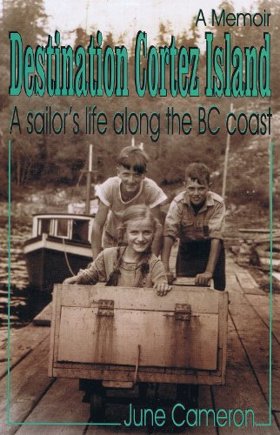
"My grandfather brought his wife and nine children to Cortez Island in 1917 with the dream of founding his own orchard, flower garden, and nursery." And so started a family legacy that would draw the author back to BC's coastal islands for the rest of her life. In 1930, June's parents bought the Loumar, a 36-foot wooden boat destined to become the family summer home for two decades. Now in her memoir of photographs, June relives the magic of those summer days on the Loumar. She provides historical background and highlights points of interest for travellers visiting the island today. 224 pages : illustrations, maps ; 22 cm Non-circulating [ 1 ]
|
1999 |
|
For Wood River or bust Idaho's silver boom of the 1880s by Clark C. Spence 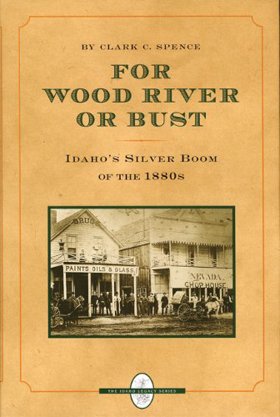
Chronicles the history of the silver rush in the Wood River area of Idaho during the late nineteenth century, describing the mining companies, settlements, and prospectors. The moment of brilliance of Idaho's Wood River mining towns spanned roughly the decade of the 1880s. Noted mining historian Clark C. Spence details the mining history of the Wood River region and captures the bedlam of the early camps and communities. Copublished with the Idaho State Historical Society. xi, 260 pages : illustrations, map ; 24 cm. Non-circulating [ 1 ]
|
1999 |
|
The Sky Valley. Volume 2 a photographic history by Buddie Williams 
Authored by local historian Buddie Williams, The Sky Valley, Volume 2: A Photographic History continues the visual documentation of Washington's rugged Skykomish River corridor through a rich collection of historic photographs and archival ephemera. The volume captures the dramatic transformation of towns like Index, Sultan, and Startup as they evolved from raw logging camps and mining outposts into established, tight-knit communities framed by the Cascade Mountains. Through vintage images of steam locomotives, timber mills, high-water floods, and local school children, the text portrays the relentless daily labor required to carve civilization out of a steep, flood-prone river valley. A keen insight drawn from the work is how visual archives of mountain valleys expose the inherent fragility of industrial frontier settlements; the recurring imagery of swollen rivers and swept-away bridges reminds readers that human infrastructure in the Pacific Northwest was always engaged in a precarious, high-stakes negotiation with an overwhelmingly powerful natural topography. 28 pages : illustrations ; 26 cm Non-circulating [ 1 ]
|
1999 |
|
Clearwater country! the travelers' historical and recreational guide, Lewiston, Idaho--Missoula, Montana by Borg Hendrickson, Linwood Laughy 
Few special places lie hidden in America, left much as they have been for centuries. Among them are the mountains, meadows, forests and streams of Clearwater Country. Here can be found the entire saga of the American west - from missionaries to miners, settlers to soldiers, outlaws and vigilantes, generals and war chiefs and more. The reader can follow in the footsteps of explorers Meriwether Lewis, William Clark and Sacagawea; missionaries Henry and Eliza Spalding; Nez Perce Chiefs Twisted Hair, Lawyer, Looking Glass and Joseph; General O.O. Howard; outlaw Henry Plummer - and dozens of other figures who wove the rich tapestry of Clearwater Country's historical past. This book will also help you discover Clearwater Country's wild and beautiful natural world - its flora and fauna, streams and rivers, beaches and hot springs, campgrounds and hiking trails. In addition to the historical and recreation guides, six additional chapters provide background information for! armchair historians and present or future visitors. The book includes maps, historical photos and original artwork. iv, 230 pages : illustrations, maps ; 22 cm Non-circulating [ 1 ]
|
1999 |
|
Hiking Oregon's history by William L. Sullivan, Navillus Press 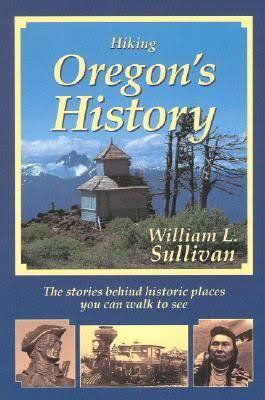
This guidebook tells the stories behind 56 of the state's most scenic historic sites. Come follow Lewis and Clark's trail across Tillamook Head. Ride with Chief Joseph on his tragic retreat through Hells Canyon. Discover paths to fire lookouts, lighthouses, and abandoned gold mines. Relive legends, discoveries, scandals, and triumphs that rocked the West. Come hike Oregon's history! -- Amazon 319 pages : illustrations, maps ; 23 cm Non-circulating [ 1 ]
|
1999 |
|
Annals of Astoria the headquarters log of the Pacific Fur Company on the Columbia River, 1811-1813 by Robert F. Jones 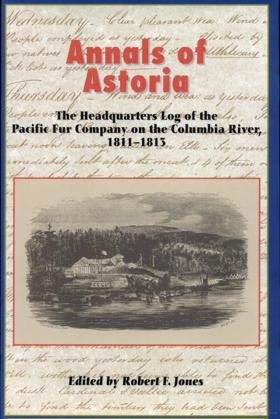
"This is the journal of Duncan McDougall, supervising partner of the Pacific Fur Company at Astoria. It records the daily operations at the post and in the Oregon country from the ship Tonquin's arrival on the Columbia until the sale of the post and the company assets to the North West Fur Company in November 1813"--Jacket xxx, 256 pages ; 24 cm Non-circulating [ 1 ]
|
1999 |
|
A guide to Oregon south coast history traveling the Jedediah Smith Trail by Nathan Douthit 
One of the state's most spectacular scenic regions, Oregon's southern coast is also rich in history. Fur trade explorer Jedediah Smith, Coos Indian Annie Miner Peterson, lumber baron Louis Simpson, and writer Zane Grey are just a few of the fascinating individuals who helped shape South Coast history. This indispensable guide and reference work opens with an overview of South Coast history, from prehistory to the present. This first section features in-depth looks at the region's native peoples, early exploration, white settlement, Indian-white warfare, the forest industry, transportation, and town development. The second section follows the route taken along the South Coast in 1828 by Jedediah Smith, one of the foremost explorers of the American West. It describes key historic sites from the California/Oregon border to Heceta Head. Drawing on journal entries, the author traces the Jedediah Smith Expedition's advance, and recounts its troubled relations with coastal Indians and its tragic ending. Along the expedition's route, the book profiles the region's many historic places: its archaeological sites, historic buildings, towns, museums, state parks, historic roads, natural areas, shipwrecks, and lighthouses. Nathan Douthit is professor emeritus of history and political science at Southwestern Oregon Community College in Coos Bay, where he taught from 1969 to 1997. He is author of The Coos Bay Region, 1890-1944: Life on a Coastal Frontier and articles on Indian-White relations in southern Oregon. For recreation on the South Coast, he likes to bike from Coquille to Arago, hike the coast trail from Sunset Bay to Shore Acres, and drive historic back roads. xii, 208 pages : illustrations, maps ; 26 cm Non-circulating [ 1 ]
|
1999 |
|
Kittitas County historic photo album by Pediment Publishing 
Published by Pediment Publishing in cooperation with regional archives, Kittitas County Historic Photo Album compiles a rich visual chronicle of central Washington's transition from an indigenous homeland and rugged frontier corridor into an organized agricultural and mining hub. The volume showcases rare vintage photographs documenting the rise of towns like Ellensburg, the punishing construction of railroads through mountain passes, and the daily lives of ranchers, homesteaders, and coal miners. Through its expansive visual catalog, the text captures the stark beauty of the high desert and river valleys alongside the relentless human labor required to harness the arid landscape. A keen insight drawn from the work is how photographic collections of inland Washington reveal the profound visual tension between monumental geography and fragile human enterprise; the stark, towering backdrops of the Cascade foothills dwarf the modest wooden storefronts and rail lines, underscoring how precarious early settlement truly was against the vast scale of the high desert. 128 pages : chiefly illustrations ; 20 x 27 cm Non-circulating [ 2 ]
|
1999 |
|
Union Pacific rails to the mines the Boise, Nampa & Owyhee Railway by Thornton Waite 
Authored by railroad historian Thornton Waite, Union Pacific Rails to the Mines: The Boise, Nampa & Owyhee Railway details the ambitious and financially volatile history of the late 19th-century rail line that connected southwestern Idaho's rich mining districts and agricultural valleys to the broader transcontinental network. The book traces the corporate maneuvers, engineering challenges, and economic battles required to construct and operate tracks through the rugged terrain between Nampa, Boise, and the Owyhee mountains. Drawing heavily on corporate archives, vintage maps, and historical photographs, the text illustrates how steel infrastructure dictated the survival and decline of regional boomtowns. A keen insight drawn from the work is how regional feeder railways acted as economic gatekeepers rather than mere public utilities; by holding a monopoly over mineral and crop transportation, independent lines like the Boise, Nampa & Owyhee held the ultimate power of life or death over local commerce, frequently leaving isolated communities at the mercy of distant corporate boardrooms. 64 pages : illustrations ; 28 cm Non-circulating [ 1 ]
|
1999 |
|
Best Places Oregon coast Destinations by Stephanie Irving 
Oregon Coast is your personal, portable guide to one of the region's favorite vacation destinations. From whale-watching and beachcombing to fresh oysters and beer, you'll find the best the coast has to offer. Expert opinions, inside information, and honest advice - from the most respected travel series in the Northwest. xiii, 133 pages : map ; 22 cm Non-circulating [ 1 ]
|
1999 |
|
Ghost towns of the Northwest by Norm Weis 
Sixty-two ghost towns from Oregon, Washington, Idaho, Wyoming, and Montana are individually described with the history of each town and specific directions on how to find them. Nearly twenty are unknown to the general public. The author has given you a head start in your quest, having explored new angles for information on some of the more familiar ghost towns, or visiting with old timers for an offbeat story or two. xviii, 319 p. : ill., maps ; 23 cm. Non-circulating [ 1 ]
|
1999 |
|
The Siuslaw storybook the first storybook of Siuslaw Indian fables by B. J. Berrykeeper 
Published under the name B. J. Berrykeeper, The Siuslaw Storybook: The First Storybook of Siuslaw Indian Fables preserves the traditional oral literature, cultural values, and ancestral narratives of the Indigenous Siuslaw people of the central Oregon coast. The volume collects traditional fables and moral teachings passed down through generations, offering readers a rare window into a worldview deeply rooted in the coastal rivers, forests, and marine ecosystems of the Pacific Northwest. Through these timeless stories, the text honors an ancient literary heritage that predates European-American settlement by millennia. A keen insight drawn from the work is how Indigenous fables function as ecological instruction manuals disguised as folklore; by embedding practical ecological wisdom and behavioral ethics into animal and landscape stories, the oral tradition ensured that generations of youth learned sustainable stewardship of their fragile coastal environment long before modern conservation laws existed. 73 pages : illustrations ; 22 cm Non-circulating [ 1 ]
|
1999 |
|
Dreamers on the trail of the Nez Perce by Martin Stadius 
In 1877 Nez Perce warriors fought U.S. troops to a standstill, during the 1,200-mile epic retreat toward Canada. Martin Stadius tells the story as he follows the Nez Perce National Historic Trail. Stadius' crisp, entertaining writing style makes Dreamers more than a history book. xx, 437 pages : illustrations ; 24 cm Desiderata
|
1999 |
|
The left hand of Eden meditations on nature and human nature by William Ashworth 
The Left Hand of Eden contributes to the growing, often contentious debate on wilderness and forest practices, but does so from an unusual perspective - that of an environmentalist advocating abandonment of wilderness preservation. Ashworth argues that wilderness preservation is a form of separation from the land and, as such, is as harmful to nature as logging or mining. Treating nature as something "other"--Whether to preserve it or destroy it - creates a false dichotomy, from which all modern environmental battles arise: use versus preservation, civilization versus wilderness. Ashworth presents his ideas in a series of linked nature essays. In these writings he shows that proper care for the land requires not just use or reverence, but use with reverence xiv, 194 pages ; 22 cm Desiderata
|
1999 |
|
Made to last historic preservation in Seattle and King County by Lawrence Kreisman, Historic Seattle Preservation Foundation 
Despite the relative youth of the Pacific Northwest, its buildings and historic sites are reminders of a rich and colorful heritage. Made to Last describes exemplary preservation programs in Seattle and King County, how they developed, and the process and the extent of protection offered landmark properties. Descriptions and photographs provide a guide to individual buildings and landmark districts, demonstrating how each played a part in the remarkably swift development of county and city. Examples of rehabilitation and adaptive reuse projects accomplished through creative public and private financing are described and illustrated, as are the personal stories of commitment, perseverance, and labor that have spurred the renewal of properties—designated or not—and made them useful again. Made to Last celebrates buildings whose age is not a detriment, but rather a valuable and contributing force in the community. xiii, 225 pages : illustrations, maps ; 28 cm Desiderata
|
1999 |
|
Naked against the rain the people of the lower Columbia River, 1770-1830 by Rick Rubin 
Thanks in large part to the abundant salmon runs the Chinook–speakers residing along the lower Columbia River were among the wealthiest in North America. Master fisherman and expert canoeists it was not uncommon for a single canoe and crew to net two tons of succulent Chinook salmon on a single outgoing tide. A thickset people with artificially flattened heads, anarchistic politics, and a highly stratified society, they spoke a language unconnected to any known language on earth. Yet despite all their wealth and accomplishments they were all but completely wiped out in a few short decades after whites first landed on their shores. Rubin conveys information about the people's daily life, spiritual beliefs, mythologies, and how the introduction of white settlers into the region forever changed their culture. 431 pages : illustrations ; 24 cm Desiderata
|
1999 |