Catalog of British Columbiana and Pacific Northwest Americana
Encyclopedia Cascadia Catalog contains book titles of mostly non-fiction Pacific Northwest Coast of North America Titles (primarially British Columbia, Idaho, Oregon and Washington State) in an easy-to-understand title catalog. If you see a link with this badge ONLINE CIRC it means that there is an online institution that provides free access to that title. In some cases there may be more than one institution hosting the title digitally.
| Catalog Title | Published |
|---|---|
|
Longview, the first fifty years 1923-1973 by Longview Golden Jubilee Committee
|
1973 |
|
Long day's journey the steamboat & stagecoach era in the northern West by Carlos A. Schwantes 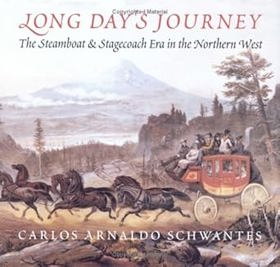
In Long Day’s Journey Carlos Schwantes gathers historical photographs, advertisements, posters, and contemporary accounts to recreate one of the most colorful periods in the American West. He traces the rapidly evolving saga of miners and settlers struggling to get from here to there in the days before railroads reached the West, trying to establish methods of transportation and communication between the eastern United States and the new territories that became Oregon, Washington, Idaho, Montana, and Wyoming—first by sea, around continents, then by land and water routes across America. Many of the enduring images and myths of the West derive from this era: the Pony Express, mule trains and plodding ox-team freighters, the picturesque side-wheelers and stern-wheelers that churned along the rivers, the colorful Concord stagecoaches drawn by four or six jingling, fleet horses. Schwantes describes in detail the technology of preindustrial modes of transportation. He explains the economics that linked the birth and death of western towns and cities, the business history of entrepreneurs and stagecoach and steamboat companies, and the challenges facing passengers and employees on the stages and steamers of the northern West. Integrating more than 200 historical photographs and other illustrations with vivid contemporary accounts, Schwantes presents a fascinating history of Americans forging the first working connections between the West and the rest of America—connections that the railroads would soon smooth and strengthen. His book Railroad Signatures across the Pacific Northwest detailed that story; here he tells of the people and animals and equipment supplanted by the twin ribbons of steel. 408 pages : illustrations (some color), maps ; 26 x 27 cm CIRC [ 0 ]
|
1999 |
|
Long Beach wild a celebration of people and place on Canada's rugged western shore by Adrienne Mason 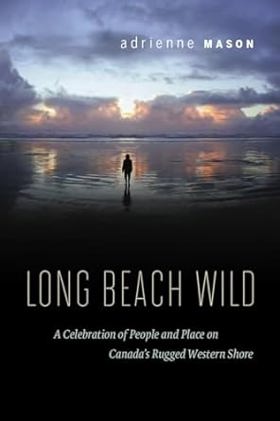
Each year, more than a million people visit the spectacular sweep of sand that stretches along Vancouver Island's west coast between Tofino and Ucluelet to watch waves crash ashore on a series of beaches-essentially one long beach separated by small rocky headlands, a shoreline steps away from howling wolves and towering red cedars. In Long Beach Wild: A Celebration of People and Place on Canada's Rugged Western Shore , local resident Adrienne Mason uses her intimate knowledge of the area and a selection of historic and contemporary photos to explore the region's rich natural and cultural history 215 p. : ill., maps, ports. ; 23 cm. CIRC [ 1 ]
|
2022 |
|
Lone Cone a journal of life on the west coast of Vancouver Island, B.C. by Dorothy Abraham
|
1961 |
|
Log of the Union John Boit's remarkable voyage to the Northwest Coast and around the world, 1794-1796 by John Boit, Edmund Hayes, Hewitt R. Jackson 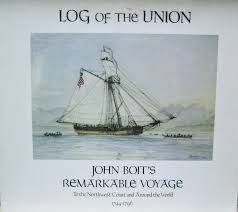
xxxvii, 136 pages, 1 unnumbered leaf of plates : illustrations (some color) ; 26 x 29 cm. CIRC [ 1 ]
|
1981 |
|
Living with thunder exploring the geologic past, present, and future of the Pacific Northwest by Ellen Morris Bishop 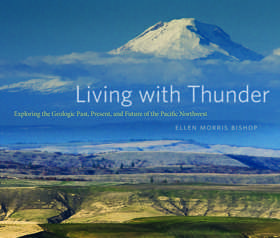
The Pacific Northwest is a region defined by its geology as much as its rugged coastline, drippy westside forests, fertile farms, and canyoned eastside grasslands. These landscapes have been forged by volcanoes, crumpled by faults, and sculpted by water and ice. But the Northwest’s geologic DNA is rooted in volcanic activity. From the ancient lavas of Washington’s Selkirks, to the world-class flood-basalts that dominate the Columbia Basin, to the restless peaks of the High Cascades, the thunder of volcanic eruptions echoes through the ages. In Living with Thunder, geologist and photographer Ellen Morris Bishop offers a fascinating and up-to-date geologic survey of the Northwest—Washington, Oregon, northern California, and western Idaho. New discoveries include Smith Rock as part of Oregon’s largest (and most extinct) volcano, portraits of Mount Hood’s 1793-1795 eruptions, and new ideas about the origin of the Columbia River basalts and the course of the ancestral Columbia River. Intended as an introduction for the general reader and geological non-specialist, Living with Thunder enlivens Northwest geological history by combining engaging science writing with the author’s stunning color photographs. In addition, color maps and time charts help guide the reader. The book presents evidence of changing ecosystems and ancient life, as well as the Northwest’s exceptional record of past climate changes and the implications for our future. Bishop also examines the confluence between scientific findings and Native American documentation of several major geologic events; the title of her book harks to the Klamath Indian recounting of Mount Mazama’s cataclysmic eruption. An important work by a gifted scientist and storyteller, Living with Thunder offers a key to understanding the Northwest’s unique, long-term volcanic heritage. 149 pages : color illustrations, color maps ; 22 x 26 cm CIRC [ 0 ]
|
2014 |
|
Living with earthquakes in the Pacific Northwest by Robert S. Yeats 
"In this expanded new edition of Living with Earthquakes, Robert Yeats, a leading authority on earthquakes in California and the Pacific Northwest, describes the threat posed by a great earthquake fault - the Cascadia Subduction Zone - which runs for hundreds of miles offshore from British Columbia to northern California. New research reveals subtle movements on the deepest part of this fault every fourteen to fifteen months - building up strain toward the next major earthquake." "A guide for anyone interested in understanding earthquake science or in preparing for the next earthquake, this book is also a call to action. Vivid descriptions of recent disasters - including the great tsunami that swept down the Northwest coast in 1964, the 1993 Oregon earthquakes, and the 2001 Nisqually earthquake - underscore the urgent need for better earthquake planning and awareness."--Jacket x, 390 pages : illustrations, maps ; 23 cm CIRC [ 0 ]
|
2004 |
|
Living off the Pacific Ocean floor stories of a commercial fisherman by George Moskovita 
In this authentic account of a seafaring life, Captain George Moskovita offers a highly personal and often humorous look at the career of a commercial fisherman. George Moskovita was sixteen when he graduated from high school in Bellingham, Washington, and went to sea. Fishing would take him crabbing off Alaska, seining for sardines off California and for tuna off Mexico, and catching soupfin sharks for their livers (a vital source of Vitamin A during World War II). He came to Astoria, Oregon, in 1939, where he was a pioneer of the Oregon ocean perch fishery. In a career that spanned over 60 years, George Moskovita met with many maritime adventures, recounted for the reader in a clear, direct, and unsentimental style. He saw the fishery he had helped build devastated by foreign factory processing ships. He bought, repaired, traded, and sank more boats than most fishermen would work on in a lifetime. Along the way, he managed to raise four daughters with his wife, June. The name of one of his last boats, the Four Daughters, reflects the central importance of family life to a man who was often at sea. Moskovita's memoir provides a unique glimpse of Pacific maritime life in the 20th century, small-town coastal life after World War II, and the early days of fishery development in Oregon. With an introduction and textual notes by Carmel Finley, an historian of science, and Mary Hunsicker, an aquatic and fisheries scientist, this book will be invaluable to fishery students and professionals interested in the biology, ecology, and history of oceans and commercial fishing. It will also have broad appeal to readers of Oregon history and maritime adventure, and anyone else who has ever stood at the western edge of the continent and wondered what life was like at sea xxiii, 137 pages : illustrations ; 23 cm CIRC [ 0 ]
|
2015 |
|
Living high by June Burn 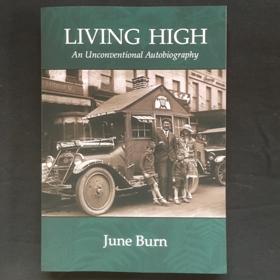
By June BurnCourage, gaiety, and a fresh approach to live are reflected in this "unconventional autobiography." It is a story of a twentieth-century pioneers as resourceful as ever they were in the days of the old frontier. June Burn and her husband Farrar determined to go their own sweet way, enjoying "first hand living" and not surrounding to the routines of a workday world. Through the years they had some high and glorious adventures, which included homesteading a "gumdrop" in the San Juan Islands, of the Pacific Northwest, teaching Eskimos near Siberia, and exploring the United States by donkey cart with a baby aboard. - Living High, 1958 edition book jacket 292 pages ; 23 cm CIRC [ 1 ]
|
1941 |
|
Live at the Commodore the story of Vancouver's historic Commodore Ballroom by Aaron Chapman 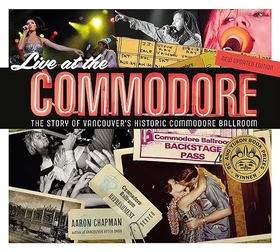
"A new edition of the storied history of Vancouver's Commodore Ballroom, by the author of Vancouver After Dark. The Commodore Ballroom, located in the heart of downtown Vancouver, remains one of the best-loved music venues in Canada, if not the world; it's played host to a who's who of music greats: the Police, the Clash, Blondie, Talking Heads, Nirvana, New York Dolls, U2, Lady Gaga, Katy Perry, Snoop Dogg, and the White Stripes, among others. The Commodore's history extends back to 1930, when it was built in the splendour of art deco style. Through World War II and into the 1950s, the Commodore was where Vancouverites went to hear swing orchestras and dance into the late hours. Beginning in the 1970s, the Commodore became a full-on music club, a must-stop for breakout bands and other music acts before they became arena headliners. Vancouverites soon filled the place on a nightly basis, not only to hear the latest in punk, new wave, blues, heavy metal, and rock, but also to dance on its legendary bouncy sprung floor. Now regarded as a music landmark, "the nightclub for all seasons" continues to attract the hottest musicians on tour, defying and outlasting other cultural venues that have vanished as a result of gentrification and the pandemic. First published in 2014, Live at the Commodore was a BC bestseller and won the Bill Duthie Booksellers' Choice Award at the BC Book Prizes. Author Aaron Chapman delves into the Commodore's archives to reveal stories about the club over the last ninety-plus years, as well as startling and outrageous anecdotes about the legendary acts that have graced its stage. Filled with never-before-published photographs, posters, and paraphernalia, Live at the Commodore is a visceral, energetic portrait of one of the world's great rock venues. This new edition includes a new chapter and several new photographs and posters. Full-colour throughout."-- Provided by publisher 246 pages : illustrations ; 23 x 26 cm CIRC [ 0 ]
|
2023 |
|
Little history of North Bend-Snoqualmie, Washington by Jack R. Evans
|
1990 |
|
Lincoln and Oregon country politics in the Civil War era by Richard W. Etulain 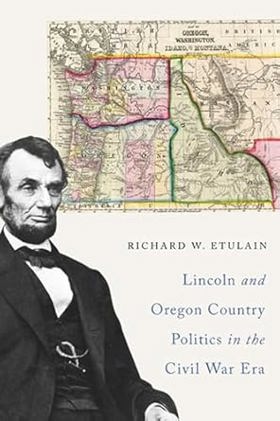
This cross-continental history demonstrates Abraham Lincoln’s strong connections with the Oregon Country on various political issues—Indian relations, military policies, civil and legal rights, and North-South ideological conflicts—before and during the Civil War years. Richard Etulain refutes the argument that Pacific Northwest residents were mere “spectators of disunion,” revealing instead that men and women of the Oregon Country were personally and emotionally involved in the controversial ideas and events that inflamed the United States during the fractious era. Etulain’s well-researched and clearly told story demonstrates how links between Washington, D.C., and the Oregon Country helped shape both Lincoln’s policies and Oregon politics. About the author: Richard W. Etulain is the author or editor of more than fifty books, including Conversations with Wallace Stegner on Western History and Literature, Beyond the Missouri: The Story of the American West, and Lincoln Looks West: From the Mississippi to the Pacific. A Professor Emeritus of History at the University of New Mexico, he lives in Clackamas, Oregon. xii, 210 pages : illustrations ; 23 cm CIRC [ 0 ]
|
2013 |
|
Lime quarrying and limemaking in the San Juan Islands by Boyd C. Pratt 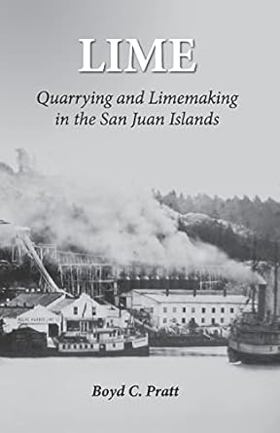
Formed through eons of geologic time and sculpted by glaciers, the limestone deposits along the islands' shores provided the essential ingredient for the block and mortar that built and rebuilt the West Coast's major cities. Read all about the islands' economic booms and busts, dramatic changes to the landscape, bloody murder, contentious lawsuits, and deadly shipwrecks. 53 pages : illustrations, maps ; 22 cm CIRC [ 1 ]
|
2016 |
|
Lights of the inside passage a history of British Columbia's lighthouses and their keepers by Donald Graham 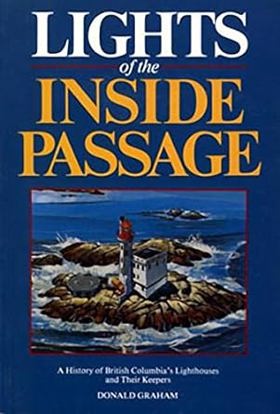
The lighthouses of the inside passage, many of them built to guide prospectors on their way to the Klondike, stretch from sheltered stations on the Gulf Islands to stark, storm-swept Triple Island and Langara, south of Alaska. Feel the fury of destructive North Pacific gales and tidal waves that ravage the coast; ponder the unsolved murder of Addenbrooke's keeper, and the mysterious disappearances on Egg Island; witness the insanity caused by isolation -and enjoy the contentment and peace that many keepers found on their solitary stations. Don Graham, keeper at Vancouver's Point Atkinson light, tells the stories of individual lighthouses, then brings the history of lightkeepers in general into the present. The century-old tradition of service that has insured the safety of West Coast mariners and ships is currently threatened by automation, and Graham presents a persuasive case against unmanning the lights through his account of the dedication and endurance of pioneer keepers. 269 str. : ilustr. ; 25 cm CIRC [ 1 ]
|
1993 |
|
Light on the devils coming of age on the Klamath by Louise Wagenknecht 
When Louise Wagenknecht’s family arrived in the remote logging town of Happy Camp in 1962, a boundless optimism reigned. Whites and Indians worked together in the woods and the lumber mills of northern California’s Klamath country. Logging and lumber mills, it seemed, would hold communities together forever. But that booming prosperity would come to an end. Looking back on her teenage years spent along the Klamath River, Louise Wagenknecht recounts a vanishing way of life. She explores the dynamics of family relationships and the contradictions of being female in a western logging town in the 1960s. And she paints an evocative portrait of the landscape and her relationship with it. Light on the Devils is a captivating memoir of place. It will appeal to general readers interested in the rural West, personal memoir, history, and natural history. vii, 216 pages : illustrations ; 23 cm CIRC [ 0 ]
|
2011 |
|
Life on "Clatsop" by Inez Stafford Hanson 
Published in local editions by Inez Stafford Hanson, Life on "Clatsop" offers an evocative, intimate glimpse into early pioneering existence along the rugged, wind-swept coast of northwestern Oregon. The book captures the daily hardships, quiet triumphs, and resourceful self-reliance of families who carved homesteads out of the dense timber and tidal flats near the mouth of the Columbia River. Through personal recollections and historical anecdotes, the author preserves the vanishing rhythms of isolated rural schooling, seasonal fishing, and coastal community-building. A keen insight drawn from the text is how maritime frontier memoirs highlight the profound psychological duality of coastal living; the very ocean and river currents that provided isolation and existential peril were simultaneously the lifeline connecting isolated settlers to the wider world. 85 pages : illustrations ; 28 cm CIRC [ 1 ]
|
2004 |
|
Life of General Isaac I. Stevens by Hazard Stevens
Written by his son Hazard Stevens, this extensive biography chronicles the life of General Isaac I. Stevens, focusing on his tenure as the first governor of Washington Territory and his subsequent military service during the Civil War. The narrative details his ambitious efforts to survey the northern transcontinental railroad route, his aggressive treaty negotiations with Pacific Northwest Native American tribes, and his eventual death at the Battle of Chantilly. A keen insight drawn from the text is how its deeply defensive, hagiographic tone—particularly regarding Stevens's highly controversial use of martial law during the Puget Sound War—demonstrates how 19th-century biographers actively sanitized the harsh realities of Manifest Destiny to cement a heroic family legacy. Ultimately, the work remains a vital, albeit heavily biased, historical record of the political and military foundations of the Pacific Northwest. Isaac Ingalls Stevens (March 25, 1818 - September 1, 1862) was the first governor of Washington Territory, a United States Congressman, and a major general in the Union Army during the American Civil War until his death at the Battle of Chantilly. 2 volumes (xix., 480, [13] leaves of plates; xx, 530 pages, [44] leaves of plates) : illustrations, maps, plans, portraits ; 24 cm ONLINE CIRC [ 2 ] CIRC [ 2 ]
|
1901 |
|
Life histories of Cascadia butterflies by David G. James, D. Nunnallee, Robert Michael Pyle 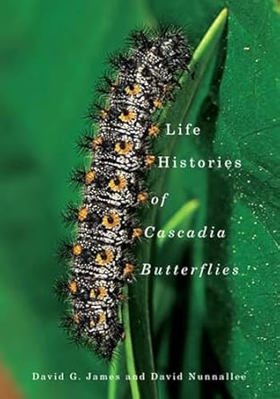
David G. James and David Nunnallee present the life histories of the entire butterfly fauna of a North American geographic region in exceptional and riveting detail for the first time in Life Histories of Cascadia Butterflies. Virtually all of the 158 butterfly species occurring in southern British Columbia, Washington, northern Idaho, and northern Oregon are included in the book. Color photographs of each stage of life—egg, every larval instar, pupa, adult—accompany information on the biology, ecology, and rearing of each species. Life Histories of Cascadia Butterflies will appeal to naturalists, hikers, amateur entomologists, butterfly gardeners, conservationists, students, and general readers of natural history. For scientists and dedicated lepidopterists, the book provides an unparalleled resource on the natural history of immature stages of butterflies in the Pacific Northwest—and beyond, as many of Cascadia’s butterflies occur in other parts of North America as well as Europe and Asia. 447 pages : illustrations (some color) ; 26 cm CIRC [ 0 ]
|
2011 |
|
Life at Puget Sound With sketches of travel in Washington territory, British Columbia, Oregon, and California, 1865-1881 by Caroline C Leighton
First person account of Western travel. Between 1865 and 1881 the author travelled extensively along the northwest coast describing localities, natural history, native customs and missionary activities. Her comments on the Chinese community in San Francisco are particularly interesting ONLINE CIRC [ 1 ]
|
1884 |
|
Liberty factory the untold story of Henry Kaiser's Oregon shipyards by Peter J. Marsh 
The extraordinary story of one of the keystones of victory in WW2. Churchill famously claimed that the only thing that had really frightened him during the war was the Battle of the Atlantic. Keeping open the lifeline between the US “arsenal of democracy” and the UK was essential to preparations for the invasion of Europe and in the final analysis this came down to building merchant ships faster than German U-boats could sink them. Crucial to this achievement was the British-designed “Liberty Ship,” a simple cargo ship that could be built rapidly, combined with the untapped industrial potential of the U.S. that could build them in vast numbers. Undoubtedly the most important individual in the rapid expansion of U.S. wartime shipyard capacity was Henry Kaiser, a man with no previous shipbuilding experience but an entrepreneur of vision and drive. This book tells the story of how he established huge new yards using novel mass-production techniques in the most surprising location―Oregon, one of the least industrially developed areas of the US and one without an existing pool of skilled labor to draw on. 256 pages : illustrations, maps ; 27 cm CIRC [ 0 ]
|
2021 |
|
Lha yudit'ih = We always find a way bringing the Tŝilhqot'in title case home by Lorraine Weir , Roger William , Mabel Solomon (Contributor), Cecile William (Contributor), Martin Quilt (Contributor), Ivor Deneway Myers (Contributor), Xeni Gwet'ins (Contributor), Tŝilhqot'ins (Contributor) 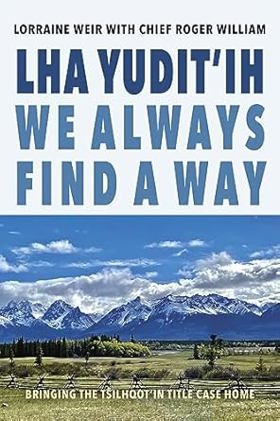
"Eight years in the making, Lha yudit'ih We Always Find a Way is a community oral history of Tsilhqot'in Nation v. British Columbia, the first case in Canada to result in a declaration of Aboriginal Rights and Title to a specific piece of land. Told from the perspective of the Plaintiff, Chief Roger William, joined by fifty Xeni Gwet'ins, Tŝilhqot'ins, and allies, this book encompasses ancient stories of creation, modern stories of genocide through smallpox and residential school, and stories of resistance including the Tŝilhqot'in War, direct actions against logging and mining, and the twenty-five-year battle in Canadian courts to win recognition of what Tŝilhqot'ins never gave up and have always known. "We are the land," as Chief Roger says. After the violence of colonialism, he understands the court case as "bringing our sight back." This book witnesses the power of that vision, its continuity with the Tŝilhqot'in world before the arrival of colonizers two centuries ago, and its potential for a future of freedom and self-determination for the Tŝilhqot'in People."-- Provided by publisher xxxix, 455 pages, a-p pages of plates : illustrations (some color), maps ; 24 cm CIRC [ 0 ]
|
2023 |
|
Lewiston/Clarkston by Samuel D. Hunter 
"LEWISTON: Alice and Connor sit by their roadside stand selling cheap fireworks while developers swallow the land around them. Promised a condo in the new development, their future is secure. Enter Marnie, Alice's long-lost granddaughter, proposing to buy the land to save her family's legacy. Marnie and Alice will become reacquainted with each other's deeply held secrets, uncertain pasts, and hopeful futures. Hunter, a 2014 MacArthur Fellowship recipient, explores the emotional frontiers of a family struggling to make a home in the vastness of the American landscape with affection, poignancy, and a profound sense of empathy."-- Back cover 161 pages ; 21 cm. CIRC [ 1 ]
|
2019 |
|
Lewiston country an armchair history by Margaret Day Allen, Ladd Hamilton 
Co-authored by Margaret Day Allen and Ladd Hamilton, Lewiston Country: An Armchair History chronicles the rich heritage, geographic crossroads, and frontier development of Idaho’s first territorial capital. The book traces the region's evolution from ancestral Nez Perce homelands into a bustling steamboat and mining hub where the Clearwater and Snake rivers converge. Through engaging historical narratives and archival imagery, the text captures the colorful cast of merchants, miners, and riverboat captains who anchored civilization at the gateway to the inland empire. A keen insight drawn from the work is how river confluences function as natural magnets for geopolitical and economic control; by examining how Lewiston leveraged its strategic waterway access to dominate regional supply lines, the narrative highlights how the geography of river junctions dictated the terms of colonial dominance and urban survival across the Pacific Northwest. vi, 253 pages : illustrations, maps ; 22 cm CIRC [ 1 ]
|
1990 |
|
Lewis Clark's field guide to wild flowers of field and slope in the Pacific Northwest by Lewis J. Clark 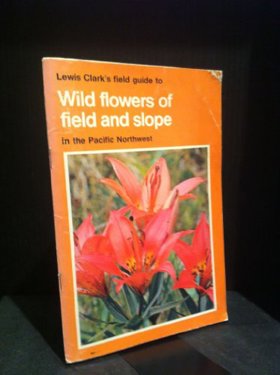
Lewis Clark was a professor at University of Victoria, Canada, for 45 years and carried out extensive botanical studies of the Pacific Northwest region. He was also a skilled photographer. His first book, Wild Flowers of British Columbia, published in 1973, was so successful it led to the series. They have sold more copies than any other field guide published for the Pacific Northwest region. [80] pages : color illustrations ; 21 cm. CIRC [ 0 ]
|
1974 |
|
Lewis and Clark's mountain wilds a site guide to the plants and animals they encountered in the Bitterroots by Sharon A. Ritter 
An indispensable and colorful site guide that any modern-day traveler can use to identify more than 100 species of native plants and animals first recorded by Lewis and Clark. Wildlife ecologist Sharon A. Ritter takes the reader from high on the Lolo Pass through the Bitterroot Mountains. xiii, 315 pages : illustrations (some color) ; 23 cm CIRC [ 0 ]
|
2002 |