Catalog of British Columbiana and Pacific Northwest Americana
Encyclopedia Cascadia Catalog contains book titles of mostly non-fiction Pacific Northwest Coast of North America Titles (primarially British Columbia, Idaho, Oregon and Washington State) in an easy-to-understand title catalog. If you see a link with this badge ONLINE CIRC it means that there is an online institution that provides free access to that title. In some cases there may be more than one institution hosting the title digitally.
| Catalog Title | Published |
|---|---|
|
British Columbia a new historical atlas by Derek Hayes 
British Columbia was among the last temperate places on Earth to appear on the map of the world, a function of its position-remote from Europe. When gold was finally discovered in quantity in 1858, leading to the gold rush that created British Columbia as a new colony, the interior was mostly unknown except for the routes blazed by the fur traders seeking the "soft gold" that characterized the exploration of much of Canada. The efforts of the explorers, the fur traders, the gold seekers, and the railway builders all involved the production of maps that showed what they had found, the routes and the settlements, the plans and the strategies that developed the province into what we know today. In British Columbia: A New Historical Atlas, acclaimed map historian Derek Hayes has curated nearly a thousand maps the majority of which have never been published before along with concise text, and extensive captions. Added to numerous other illustrations, the result is a geographically visual history, a unique and fascinating viewpoint on our province's past. 1 atlas (368 pages) : illustrations (some color), maps (some color) ; 35 cm CIRC [ 1 ]
|
2012 |
|
The private journal of Captain G.H. Richards the Vancouver Island survey (1860-1862) by George Henry Richards, Linda Dorricott, Deidre Cullon 
Literary Nonfiction. History. Memoir. Native American Studies. Captain Richards's journal is an account of three survey seasons on Vancouver Island aboard two British Navy ships, the HMS Plumper and the HMS Hecate. Between 1860 and 1862 Richards and his dedicated crew surveyed and charted the entire coastline of Vancouver Island, creating baseline information for the nautical charts we use today. This monumental task, faithfully and often humorously recorded, also includes a lively description of California on the eve of the American Civil War as Richards sits in dry dock following the near wreck of the Hecate. Part of the private collection of a direct descendant of Captain Richards, the journal is a little known and untapped resource. Extensively annotated and supplemented with excerpts from the journals of Second Master John Gowlland, the journal provides a unique and personal view of the aboriginal, colonial, nautical and natural history of Vancouver Island. Richards is revealed as a man of immense energy and diplomacy; the descriptions of the First Nations he encounters are remarkably unbiased for the time and his keen observations are a portal into the social and political life of Vancouver Island during these formative years of the colony. The journal will appeal to historians, anthropologists, sailors, meteorologists and the general reading public alike. 271 pages, [32] pages of plates : illustrations (some color), maps, portraits ; 23 cm CIRC [ 1 ]
|
2012 |
|
Secret beaches of the Salish Sea the southern Gulf Islands by Theo Dombrowski 
The fourth volume in the Secret Beaches series, one of two on the Salish Sea, covers 93 beaches in the southern Gulf Islands, including Salt Spring, Galiano, Saturna, Mayne, Thetis and Pender. At some locations, the selling point is a view of sandstone eroded into astounding curves and honeycombed lattices. At others, it's the chance of seeing the resident orcas of J1, K1 and L1 pods, whose summer home is the Gulf Islands. Theo's hand-drawn maps are indispensable, as each island marks its public beach access points differently, if they mark them at all. His detailed entries give comprehensive descriptions and an illustrative photo or painting for each beach. As usual, the charming paintings and photos are done by Theo himself. Whether seconds from the ferry or farther along a twisting, unsigned back road, the beach best suited to your adventure waits to be found in Secret Beaches of the Salish Sea. 236 p. : col. ill., maps, port. ; 22 cm. CIRC [ 1 ]
|
2012 |
|
David Douglas a naturalist at work : an illustrated exploration across two centuries in the Pacific Northwest by Jack Nisbet 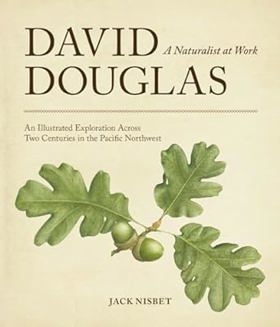
"During a meteoric career that spanned from 1825 to 1834, David Douglas made the first systematic collections of flora and fauna over many parts of the greater Pacific Northwest. Despite his early death, colleagues in Great Britain attached the Douglas name to more than 80 different species, including the iconic timber tree of the region. David Douglas, a Naturalist at Work is a colorfully illustrated collection of essays that examines various aspects of Douglas's career, demonstrating the connections between his work in the Pacific Northwest of the 19th century and the place we know today"--Amazon xv, 191 pages : illustrations (some color), color maps ; 23 cm CIRC [ 1 ]
|
2012 |
|
Juan de Fuca's Strait voyages in the waterway of forgotten dreams by Barry M. Gough 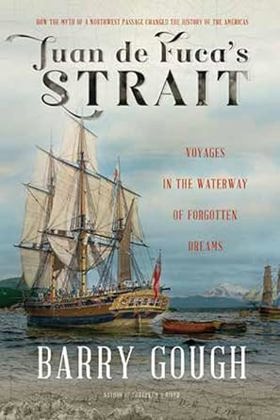
The tale begins in sixteenth-century Venice, when explorer Juan de Fuca encountered English merchant Michael Lok and relayed a fantastic story of a marine passageway that connected the Pacific and Atlantic Oceans. This tale would be the catalyst for centuries of dreaming, and exacerbate English and Spanish rivalry. The search for the fabled Northwest Passage inspired explorers to seek out fame, adventure, knowledge and riches. Likewise, the empires of Spain and Great Britain were impelled by the hopes of finding a naval trade route that would connect Europe to Asia, thus securing their dominance over the other as an economic power. The story of the Northwest Passage is one of significant figures and great empires, jostling for a distant corner of North America. Gough provides meticulously researched insight, delving into diplomatic records, narratives of explorers and commercial aspirants, legal affidavits and court records to illuminate the journeys of Martin Frobisher, James Cook, Francis Drake, Manuel Quimper, José Mar�a Narv�ez, George Vancouver and Juan Francisco de la Bodega y Quadra, among others. 287 pages : illustrations, maps, portraits ; 24 cm CIRC [ 1 ]
|
2012 |
|
The Columbia River's "Ellis Island" the story of Knappton Cove by Nancy Bell Anderson, Heather Bell Henry 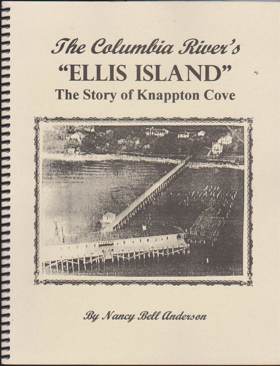
The United States mandated the medical inspection of all arriving immigrants in 1891. The Columbia River Quarantine Station in Knappton Cove, Washington, established 1899, was one of four points of entry on the west coast for immigrants coming to America. Thousands of European and Asian immigrants underwent health inspections at the station 98 pages : illustrations, maps ; 28 cm CIRC [ 0 ]
|
2012 |
|
Bamberton from dust to bust and back by Maureen Alexander, Andrew S. Brown
|
2012 |
|
Be brave, Tah-hy! the journey of Chief Joseph's daughter by Jack R. Williams, Jo Proferes (Illustrator) 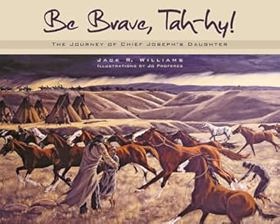
On June 17, 1877, gunshots marked the start of war—one that swept twelve-year-old Tah-hy (Chief Joseph’s daughter) and her people into a harrowing journey across the American West. Relentlessly pursued, they endured multiple battles, cold, hunger, and death. Eventually, after months of exile and heartbreak, they began their path to a new way of life. Based on actual events and narrated by Tah-hy’s youthful voice, this biographical novel is intended for young adults, but will also interest older readers. The story presents many aspects of the Nez Perce Dreamer culture and reminds us of what was lost when they were overpowered and displaced. 134 pages : color illustrations ; 21 x 26 cm CIRC [ 0 ]
|
2012 |
|
North Idaho memories the early years : 1800s-1939 by Couer d'Alene Press, Museum of North Idaho 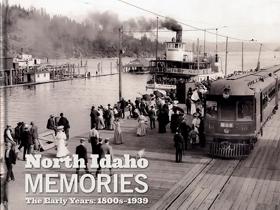
Welcome to North Idaho Memories: The Early Years, 1800s-1939. We hope you enjoy this pictorial expedition down memory lane published as a joint venture by the Coeur d’Alene Press and the Museum of North Idaho. While this book is not intended to be a comprehensive account of North Idaho’s history, it does offer many fascinating snapshots of the people and places that help define our rich heritage. The Museum of North Idaho graciously provided the vast majority of photos and caption information, and noted local historian Robert Singletary penned the chapter introductions after much diligent research. Since 1892, The Press has been an integral part of our region’s history. And for more than half a century, newspapers owned by The Hagadone Corp. throughout North Idaho have been faithfully recording not just the events around us, but insight into the people who shaped those events. This book is an extension of our mission. 128 pages : illustrations (black and white photographs) ; 23 cm CIRC [ 0 ]
|
2012 |
|
Trucking in British Columbia an illustrated history by Daniel Francis , Pam Robertson 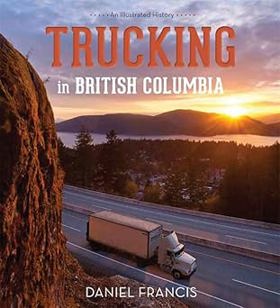
Trucks are everywhere--crowding the highways, lining up for the ferries, roaring down dusty logging roads--and yet trucking is often left off the list when talk turns to British Columbia's major industries. It shouldn't be, as this gorgeous new illustrated history celebrating the BC Trucking Association's 100th anniversary shows. With annual revenues of $1.88 billion and 60,000 employees, trucking is among BC's five largest industries. Accompanied by hundreds of previously unpublished archival and contemporary photographs, award-winning historian Daniel Francis delivers a fascinating account of the last hundred years of trucking in BC. Beginning in Vancouver with James Stark's first delivery van in 1907, motorized transport exploded in the province, soon traversing every dirt track, hauling logs on temporary plank roads and leading to a frenzy of experimentation and innovation-- from the failed Renard Road Train and early battery-operated vehicles to some truly impressive purpose-built trucks, many of them manufactured in BC. From hair-raising tales of the road by trucking legends like the scholarly Andy Craig and the bombastic Cog Harrington to important infrastructure projects and vital innovations for the future, here is a story never told before--a road less travelled, so to speak--but an important and an exciting chapter in British Columbia's history. 208 pages : illustrations (some colour), portraits (some colour) ; 29 cm. CIRC [ 0 ]
|
2012 |
|
Oregon's doctor to the world Esther Pohl Lovejoy and a life in activism by Kimberly Jensen 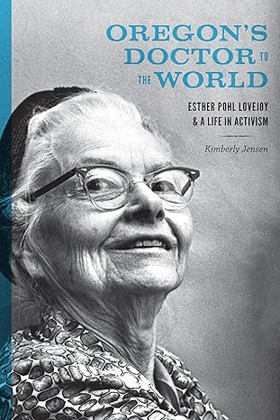
Esther Clayson Pohl Lovejoy, whose long life stretched from 1869 to 1967, challenged convention from the time she was a young girl. Her professional life began as one of Oregon's earliest women physicians, and her commitment to public health and medical relief took her into the international arena, where she was chair of the American Women's Hospitals after World War I and the first president of the Medical Women's International Association. Most disease, suffering, and death, she believed, were the result of wars and social and economic inequities, and she was determined to combat those conditions through organized action. Lovejoy's early life and career in the Pacific Northwest gave her key experiences and strategies to use for what she termed "constructive resistance," the ability to take effective action against unjust power. She took a political and pragmatic approach to what she called "woman's big job"-achieving a full female citizenship-and emphasized the importance of votes for women. In this engaging biography, Kimberly Jensen tells the story of this important western woman, exploring her approach to politics, health, and society and her civic, economic, and medical activism. xiii, 346 pages : illustrations, map ; 23 cm CIRC [ 0 ]
|
2012 |
|
Nisei soldiers break their silence coming home to Hood River by Linda Tamura 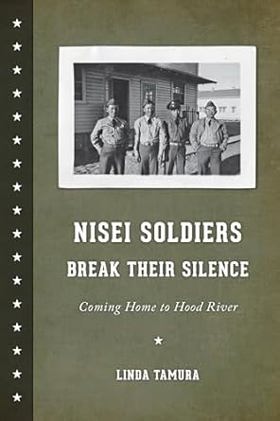
Nisei Soldiers Break Their Silence is a compelling story of courage, community, endurance, and reparation. It shares the experiences of Japanese Americans (Nisei) who served in the U.S. Army during World War II, fighting on the front lines in Italy and France, serving as linguists in the South Pacific, and working as cooks and medics. The soldiers were from Hood River, Oregon, where their families were landowners and fruit growers. Town leaders, including veterans' groups, attempted to prevent their return after the war and stripped their names from the local war memorial. All of the soldiers were American citizens, but their parents were Japanese immigrants and had been imprisoned in camps as a consequence of Executive Order 9066. The racist homecoming that the Hood River Japanese American soldiers received was decried across the nation. Linda Tamura, who grew up in Hood River and whose father was a veteran of the war, conducted extensive oral histories with the veterans, their families, and members of the community. She had access to hundreds of recently uncovered letters and documents from private files of a local veterans' group that led the campaign against the Japanese American soldiers. This book also includes the little known story of local Nisei veterans who spent 40 years appealing their convictions for insubordination. xx, 346 pages : illustrations ; 23 cm. CIRC [ 0 ]
|
2012 |
|
Chinuk Wawa kakwa nsayka ulman-tilixam laska munk-kemteks nsayka = as our elders teach us to speak it by Chinuk Wawa Dictionary Project (Compiler), Confederated Tribes of the Grand Ronde Community of Oregon (Publisher) 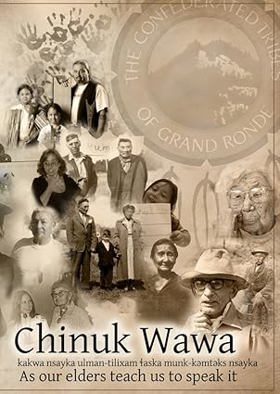
Chinuk Wawa (also known as Jargon and Chinook Jargon) is a hybrid lingua franca consisting of simplified Chinookan, combined with contributions from Nuuchahnulth (Nootkan), Canadian French, English, and other languages. It originated on the lower Columbia River, where it once was the predominant medium of intertribal and interethnic communication. Even after English came into general use on the lower Columbia, Chinuk Wawa survived for generations in families and communities shaped by the meeting of the region's historically diverse tribes and races. This Chinuk Wawa dictionary is based primarily on records from one such community, the Confederated Tribes of Grand Ronde, Oregon, where Chinuk Wawa is taught as a community heritage language. 494 pages : illustrations, maps ; 25 cm CIRC [ 0 ]
|
2012 |
|
The nature of borders salmon, boundaries, and bandits on the Salish Sea by Lissa K. Wadewitz, Center for the Study of the Pacific Northwest 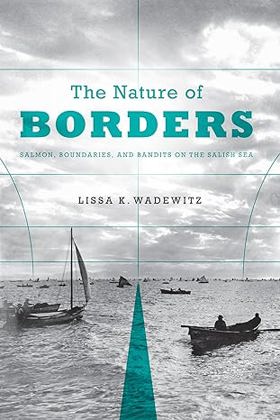
For centuries, borders have been central to salmon management customs on the Salish Sea, but how those borders were drawn has had very different effects on the Northwest salmon fishery. Native peoples who fished the Salish Sea--which includes Puget Sound in Washington State, the Strait of Georgia in British Columbia, and the Strait of Juan de Fuca--drew social and cultural borders around salmon fishing locations and found ways to administer the resource in a sustainable way. Nineteenth-century Euro-Americans, who drew the Anglo-American border along the forty-ninth parallel, took a very different approach and ignored the salmon's patterns and life cycle. As the canned salmon industry grew and more people moved into the region, class and ethnic relations changed. Soon illegal fishing, broken contracts, and fish piracy were endemic--conditions that contributed to rampant overfishing, social tensions, and international mistrust. The Nature of Borders is about the ecological effects of imposing cultural and political borders on this critical West Coast salmon fishery. This transnational history provides an understanding of the modern Pacific salmon crisis and is particularly instructive as salmon conservation practices increasingly approximate those of the pre-contact Native past. The Nature of Borders reorients borderlands studies toward the Canada-U.S. border and also provides a new view of how borders influenced fishing practices and related management efforts over time. xi, 271 pages, 27 unnumbered pages of plates : illustrations, maps ; 23 cm. CIRC [ 0 ]
|
2012 |
|
Obstinate hope the Western Expedition of Nathaniel J. Wyeth by Jim Hardee, Nathaniel J. Wyeth 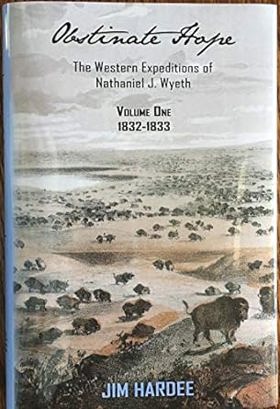
Obstinate Hope studies Nathaniel Jarvis Wyeth who is not numbered among America’s greatest heroes. The successful Boston ice merchant is considered a failure in the fur trade. Yet Wyeth was a practical businessman with an adventurous Yankee spirit that led him twice across the continent and back, in 1832 and again in 1834, prior to the development of reliable maps or emigrant trails. Wyeth’s contributions to westward expansion have been largely overlooked by historians. Obstinate Hope is part one of a two part examination of the life of Nathaniel J. Wyeth. The book begins with a look at Wyeth's pre-fur trade life including his heritage, operation of the family's Fresh Pond Hotel and his early career in the ice industry. The bulk of the book details his first expedition to the west (1832-1833) using his letters and journals as its base. The narrative follows Wyeth on his trip to the fur trade rendezvous in Pierre's Hole, on to the Pacific Northw...est and then back to the East coast. Each of Wyeth's journal entries are accompanied by the author's commentary, providing insight into Wyeth's experiences. The story is supplemented with information from the journals and letters of other people who were with him for all or part of the trip. The commentary also compares what Wyeth encountered in the west with events and occurrences from other trapper diaries. Ten maps and more than three dozen images illustrate the text. Jim Hardee is the editor of the Rocky Mountain Fur Trade Journal, published by the Sublette County Historical Society and the Museum of the Mountain Man in Pinedale, Wyoming. Jim is the author of Pierre’s The Fur Trade History of Teton Valley, Idaho. He is also the director of the Fur Trade Research Center and is a presenter for many conferences and symposiums. He has published numerous articles on various fur trade topics, and lives in Pierre's Hole, Idaho. v. : ill., maps ; 24 cm. CIRC [ 1 ]
|
2013 |
|
Breaking chains slavery on trial in the Oregon Territory by R. Gregory Nokes 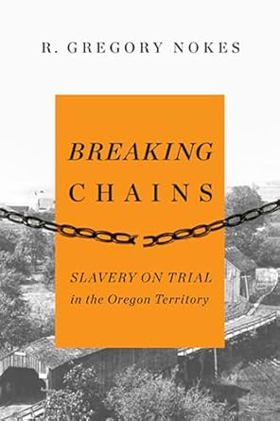
When they were brought to Oregon in 1844, Missouri slaves Robin and Polly Holmes and their children were promised freedom in exchange for helping develop their owner’s Willamette Valley farm. However, slaveholder Nathaniel Ford, an influential settler and legislator, kept them in bondage until 1850, even then refusing to free their children. Holmes took his former master to court and, in the face of enormous odds, won the case in 1853. In Breaking Chains, R. Gregory Nokes tells the story of the only slavery case ever adjudicated in Oregon courts—Holmes v. Ford. Drawing on the court record of this landmark case, Nokes offers an intimate account of the relationship between a slave and his master from the slave’s point of view. He also explores the experiences of other slaves in early Oregon, examining attitudes toward race and revealing contradictions in the state’s history. Oregon was the only free state admitted to the union with a voter-approved constitutional clause banning African Americans and, despite the prohibition against slavery, many in Oregon tolerated it, and supported politicians who were pro-slavery, including Oregon’s first territorial governor. Told against the background of the national controversy over slavery, Breaking Chains sheds light on a somber part of Pacific Northwest history, bringing the story of slavery in Oregon to a broader audience. xvi, 224 pages : illustrations ; 23 cm CIRC [ 0 ]
|
2013 |
|
Minidoka an American concentration camp by Teresa Tamura 
On February 19, 1942, President Franklin D. Roosevelt signed Executive Order 9066, authorizing U.S. Armed Forces to remove citizens and noncitizens from “military areas.” The result was the abrupt dislocation and imprisonment of 120,000 Japanese and Japanese American citizens in the western United States. In Minidoka: An American Concentration Camp, Teresa Tamura documents one of ten such camps, the Minidoka War Relocation Center in Jerome County, Idaho. Her documentation includes artifacts made in the camp as well as the story of its survivors, uprooted from their homes in Alaska, Washington, Oregon, and California. The essays are supplemented by 180 black-and-white photographs and interviews that fuse present and past. Tamura began her project after President Bill Clinton designated part of the Minidoka site as the 385th unit of the National Park Service. Her work furthers the tradition of socially inspired documentary photojournalism, illuminating the cultural, sociological, and political significance of Minidoka. Ultimately, her book reminds us of what happens when fear, hysteria, and racial prejudice subvert human rights and shatter human lives. vii, 305 pages : illustrations ; 23 x 28 cm CIRC [ 0 ]
|
2013 |
|
As rugged as the terrain CCC "boys," federal convicts, and World War II alien internees wrestle with a mountain wilderness by Priscilla Wegars , Dick Hendricks 
As Rugged as the Terrain: CCC Boys, Federal Convicts, and World War II Alien Internees Wrestle with a Mountain Wilderness explores some intriguing history of Idahos wild and scenic Lochsa River. In 1893 this site, at turbulent Canyon Creek, was a footnote in the saga of the ill-fated Carlin hunting party. Next, in 1933, it held nearly 200 tent-dwelling Civilian Conservation Corps recruits, most from New York State. The antics of these city slickers provide colorful insights into CCC camps housing young men far from home. xxxviii, 393 pages : illustrations, maps ; 23 cm. CIRC [ 0 ]
|
2013 |
|
The Columbia River a historical travel guide by JoAnn Roe 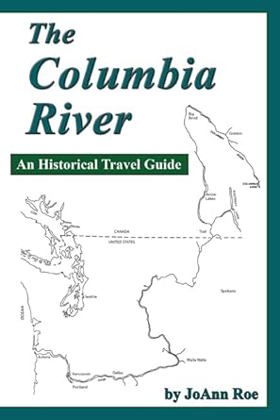
Throbbing with history of the Pacific Northwest of Canada and the United States, the mighty Columbia River is one of the longest rivers in North America. The Columbia has been an enemy at times. Before dams, vicious rapids claimed lives; and the river, swelled by ice melt from Canadas Columbia Ice Fields, flooded towns as distant as Portland, Oregon. Always it has been stunningly scenic. Read about the early river steamers on both sides of the border. Ponder the travels of salmon. Who built the Grand Coulee or Bonneville dams? What happened at the Hanford Project? Explore with David Thompson, who discovered the source of the river. Meet the real people who call the Columbia River shores their homes. xiii, 228 pages : illustrations ; 23 cm CIRC [ 1 ]
|
2013 |
|
Lincoln and Oregon country politics in the Civil War era by Richard W. Etulain 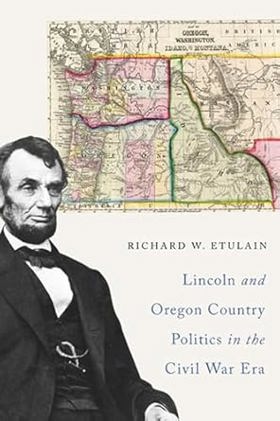
This cross-continental history demonstrates Abraham Lincoln’s strong connections with the Oregon Country on various political issues—Indian relations, military policies, civil and legal rights, and North-South ideological conflicts—before and during the Civil War years. Richard Etulain refutes the argument that Pacific Northwest residents were mere “spectators of disunion,” revealing instead that men and women of the Oregon Country were personally and emotionally involved in the controversial ideas and events that inflamed the United States during the fractious era. Etulain’s well-researched and clearly told story demonstrates how links between Washington, D.C., and the Oregon Country helped shape both Lincoln’s policies and Oregon politics. About the author: Richard W. Etulain is the author or editor of more than fifty books, including Conversations with Wallace Stegner on Western History and Literature, Beyond the Missouri: The Story of the American West, and Lincoln Looks West: From the Mississippi to the Pacific. A Professor Emeritus of History at the University of New Mexico, he lives in Clackamas, Oregon. xii, 210 pages : illustrations ; 23 cm CIRC [ 0 ]
|
2013 |
|
Land snails and slugs of the Pacific Northwest by Thomas E. Burke 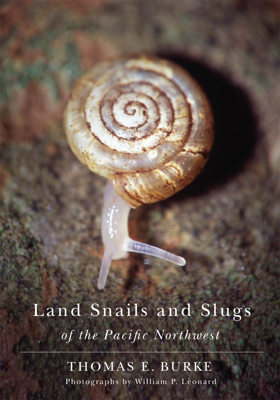
"Terrestrial mollusks, the second largest phylum in the animal kingdom, are vitally important to the earth's ecology. With the publication of Land Snails and Slugs of the Pacific Northwest, a definitive and comprehensive guide to snails and slugs of Oregon, Washington, Idaho, and western Montana is finally available. Primarily an identification guide, this richly illustrated volume offers complete information on the range of terrestrial mollusk shapes, sizes, and characteristics. It presents an overview of their habitat requirements as well as details of land snail and slug ecology, collection and preservation methods, and biogeography. Land Snails and Slugs of the Pacific Northwest is an essential reference for biologists, horticulturalists, gardeners, and naturalists, and anyone wishing to identify species in the field."--Publisher's website 344 pages : color illustrations, maps ; 25 cm CIRC [ 0 ]
|
2013 |
|
California condors in the Pacific Northwest by Jesse D'Elia, Susan M. Haig 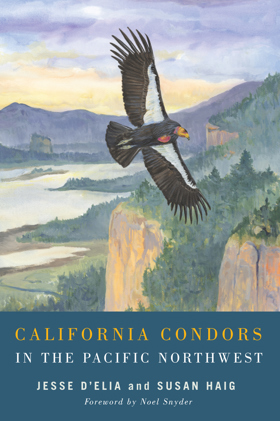
Despite frequent depiction as a bird of California and the desert southwest, North America’s largest avian scavenger once graced the skies of the Pacific Northwest, from northern California to British Columbia. This important volume documents the condor’s history in the region, from prehistoric times to the early twentieth century, and explores the challenges of reintroduction. Jesse D’Elia and Susan Haig investigate the paleontological and observational record as well as the cultural relationships between Native American tribes and condors, providing the most complete assessment to date of the condor’s occurrence in the Pacific Northwest. They evaluate the probable causes of regional extinction and the likelihood that condors once bred in the region, and they assess factors that must be considered in determining whether they could once again thrive in Northwest skies. Incorporating the newest research and findings and more than eighty detailed historical accounts of human encounters with these birds of prey, California Condors in the Pacific Northwest sets a new standard for examining the historical record of a species prior to undertaking a reintroduction effort. It is a vital reference for academics, agency decision makers, conservation biologists, and readers interested in Northwest natural history. The volume is beautifully illustrated by Ram Papish and includes a number of previously unpublished photographs. xvi, 208 pages : illustrations, maps ; 24 cm CIRC [ 0 ]
|
2013 |
|
Pacific Northwest cheese a history by Tami J. Parr 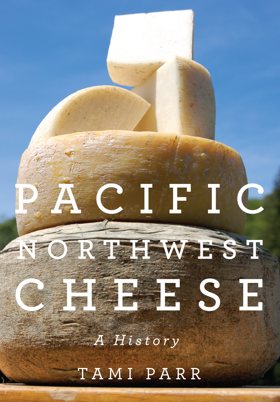
In this rich and engaging history, Tami Parr shows how regional cheesemaking found its way back to the farm. It?s a lively story that begins with the first fur traders in the Pacific Northwest and ends with modern-day small farmers in Oregon, Washington, and Idaho. For years, farmers in the Pacific Northwest made and sold cheese to support themselves, but over time the craft of cheesemaking became a profitable industry and production was consolidated into larger companies and cooperatives. Eventually, few individual cheesemakers were left in the region. In the late sixties and early seventies, influenced by the counterculture and back-to-the-land movements, the number of small farms and cheesemakers began to grow, initiating an artisan cheese renaissance that continues today 208 pages : illustrations ; 26 cm CIRC [ 0 ]
|
2013 |
|
Meander scars reflections on healing the Willamette River by Abby P. Metzger 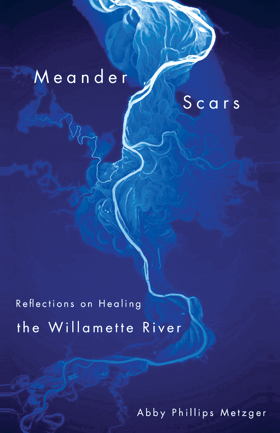
“Metzger’s keen insights spring from a lifetime of direct observation while growing up along the river and recording its most subtle changes and the impact of the scarring in the eco-region it passes through. Written with passion and grace, the book is, in a sense, a love story for a once-wild river now tamed. Metzger asks, ‘Who gives us permission to intervene?’ She concludes that in the great web of history, nature will ultimately decide, and that we humans are left only to imagine.” —Carol Ann Bassett, author of Galápagos at the Crossroads: Pirates, Biologists, Tourists, and Creationists Battle for Darwin’s Cradle of Evolution. Abby Phillips Metzger’s book of personal stories recounts a forgotten Oregon river, the Willamette, as it was before white settlement. Once a rich network of channels and sloughs, the Willamette today bears the scars of development and degradation. Yet, through canoe trips and intimate explorations of the river, Metzger discovers glints of resiliency: a beaver trolling through a slough, native fish in quiet backwaters, and strong currents that carry undertones of the wild Willamette. Together with tales from farmers and scientists alike, these experiences lead Metzger to ask whether something scarred can fully heal, and whether a disjointed river can be whole again. A story of re-discovery as told by a learner, Meander Scars will appeal to readers of literary nonfiction, river advocates, naturalists, and outdoor enthusiasts interested in sustaining healthy river systems for themselves, their children, and beyond. 142 pages ; 22 cm CIRC [ 0 ]
|
2013 |
|
Rum-runners and renegades whisky wars of the Pacific Northwest, 1917-2012 by Rich Mole 
On October 1, 1917, prohibition came into effect in the province of British Columbia. Washington and Oregon had gone dry the previous year. The ban on liquor sales led to deadly conflict and legal chaos in the Pacific Northwest, and the legacy of those booze battles continues into the 21st century. Rich Mole introduced readers to West Coast prohibitions pioneer years in Scoundrels and Saloons: Whisky Wars of the Pacific Northwest, 18401917. In Rum-runners and Renegades, he recounts the wild and wacky—and sometimes tragic—results of later prohibition laws through the exploits of both prohibitionists and prohibition-busters, among them Jonathan Rogers, a wealthy Vancouver builder and prohibition leader; the Billingsley brothers, a quartet of handsome bootleggers from Seattle; and enterprising Johnny Schnarr, Victorias number-one rum-runner. From vicious marine hijackers and bedeviled police to corrupt politicians and frustrated drinkers on both sides of the border, this is an action-filled account of liquor and lawlessness on the West Coast. 142 pages : illustrations, portraits ; 22 cm. CIRC [ 0 ]
|
2013 |