Catalog of British Columbiana and Pacific Northwest Americana
Encyclopedia Cascadia Catalog contains book titles of mostly non-fiction Pacific Northwest Coast of North America Titles (primarially British Columbia, Idaho, Oregon and Washington State) in an easy-to-understand title catalog. If you see a link with this badge ONLINE CIRC it means that there is an online institution that provides free access to that title. In some cases there may be more than one institution hosting the title digitally.
| Catalog Title | Published |
|---|---|
|
Portlandness a cultural atlas by David Banis , Hunter Shobe , Corinna Kimball-Brown (Cartographer), Randy Morris (Cartographer), Jon Franczyk (Cartographer), Daniel E. Coe (Cartographer), Kirk McEwen (Cartographer), Joan Lundell (Book designer) 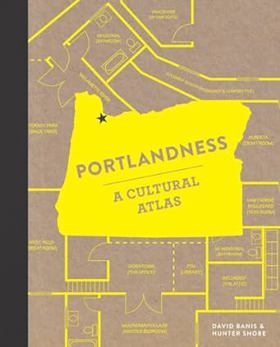
Summary: In 150 inforgraphic maps, two leading geographers explore Portland, Oregon, through unexpected topics such as city chickens, wild coyote encounters, food-truck trends, and coffee culture. Each map starts with the gathering of at least one data set about a given topic, then translating that into visual form which blends traditional cartographic skills with modern graphic design 190 pages : illustrations (chiefly color), color maps, color plans ; 26 cm CIRC [ 1 ]
|
2015 |
|
Watershed moments a pictorial history of Courtenay and district by Christine Dickinson , Judy Hagen , Deborah Griffiths , Catherine Siba , Courtenay and District Museum (Issuing body) 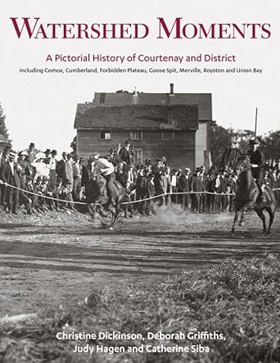
"In Watershed Moments, the Courtenay and District Museum opens its vast collection of historical photographs, glass plate negatives and other ephemera, much of which has never before been available to public viewing. Spanning from the late 1800s to the modern era, here are scenes of K'ómoks village life, boating parties, family celebrations, agricultural events and economic activities. This visual depiction of the development of this region is reinforced by a lively text, drawing heavily on the museum's vast holdings of primary source material."-- Provided by publisher xi, 195 pages : illustrations (some color), maps, portraits (some color) ; 29 cm CIRC [ 1 ]
|
2015 |
|
Chinookan peoples of the lower Columbia by Robert T. Boyd , Kenneth M. Ames , Tony A. Johnson 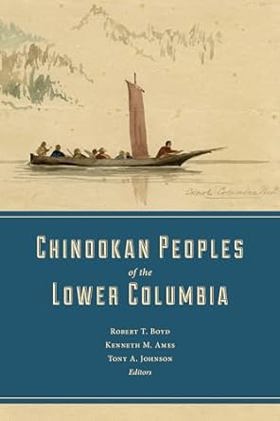
"Chinookan peoples have lived on the Lower Columbia River for millennia. Today they are one of the most significant Native groups in the Pacific Northwest, although the Chinook Tribe is still unrecognized by the United States government. In Chinookan Peoples of the Lower Columbia, scholars provide a deep and wide-ranging picture of the landscape and resources of the Chinookan homeland and the history and culture of a people over time, from 10,000 years ago to the present. They draw on research by archaeologists, ethnologists, scientists, and historians, inspired in part by the discovery of several Chinookan village sites, particularly Cathlapotle, a village on the Columbia River floodplain near the Portland-Vancouver metropolitan area. Their accumulated scholarship, along with contributions by members of the Chinook and related tribes, introduces readers to Chinookan history and culture in rich and sometimes surprising ways."--Back covers xix, 419 pages, 18 unnumbered pages of plates : illustrations, maps, portraits ; 23 cm CIRC [ 1 ]
|
2015 |
|
Stories of Richmond Beach growing up in Richmond Beach on Puget Sound in the 1930's and 40's by Norman R. Hansen , Barry W. Hansen 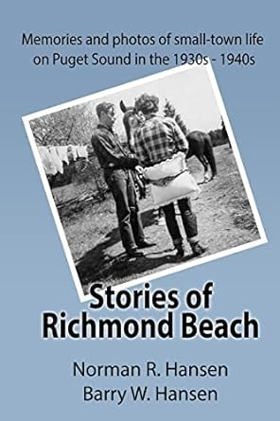
"Think of the time when settlers came to the area north of Seattle. This forested area along scenic Puget Sound attracted those willing to work the land, including my ancestors in the early 1900s on both sides of my family. I grew up in Richmond Beach on the property settled by my great-grandfather Morton M. Anderson. Read these stories and think of the aroma of strawberries, freshly baked bread, linen on the clothesline, water from a pump, hay bales, leather saddles on horses, fresh salt air, cleanly cut lumber, a whiff of chickens, and a hint of Flamo. There are many pictures from our family to fill in the details"-- Publisher description x, 207 pages : illustrations ; maps ; portraits ; 23 cm CIRC [ 1 ]
|
2015 |
|
Tulalip, from my heart an autobiographical account of a reservation community by Harriette Shelton Dover 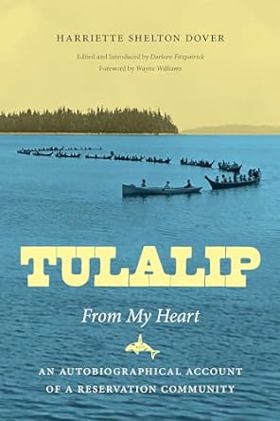
"In Tulalip, from My Heart, Harriette Shelton Dover describes her life on the Tulalip Reservation and recounts the myriad problems tribes faced after resettlement. Born in 1904, Dover grew up hearing the elders of her tribe tell of the hardships involved in moving from their villages to the reservation on Tulalip Bay: inadequate food and water, harsh economic conditions, and religious persecution outlawing potlatch houses and other ceremonial practices. Dover herself spent ten traumatic months every year in an Indian boarding school, an experience that developed her political consciousness and keen sense of justice. The first Indian woman to serve on the Tulalip board of directors, Dover describes her story in a personal, often fierce style, revealing her tribe's powerful ties and enduring loyalty to land now occupied by others." -- Publisher website xxxiv, 307 pages : illustrations, maps ; 24 cm CIRC [ 1 ]
|
2015 |
|
Good times in old Genesee a tale of two families by Gerald Hickman , Tea Joe Hickman 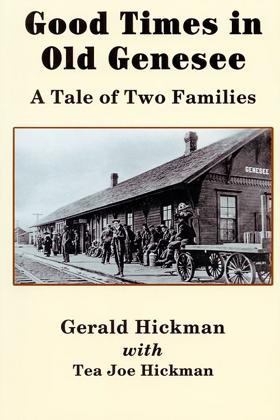
It's a personal and historical recollection of Genesee, Idaho from a former resident, a trip in time to his childhood ranch and beyond, back to the pioneers, in the Genesee valley of North-Central Idaho. It's a visit to Old Genesee, a small community deep in the winter snows and summer grains where his family found a place for themselves. The book covers the period from the first settlers of the 1870s to World War II. It describes the natural history of the area, the early town, and the farming and country life of the early pioneers and those who followed, as engines replaced horses out in the fields. With help from his granddaughter Tea Joe, Gerald Hickman shares his love of Western U.S. history in Good Times in Old Genesee. It's a trip in time to his childhood ranch and beyond, back to the pioneers, in the Genesee valley of North-Central Idaho. It's a visit to Old Genesee, a small community deep in the winter snows and summer grains where his family found a place for themselves. The book covers the period from the first settlers of the 1870s to World War II. It describes the natural history of the area, the early town, and the farming and country life of the early pioneers and those who followed, as engines replaced horses out in the fields. Gerald lives in Eastern Washington near the rolling Palouse hills that stretch out southward to Genesee, with Micky, his childhood bride of 47 years. They have three grown daughters, a dog named Spot, and a cat named Lilly. He is preparing another book on the Indian Wars 1850 through 1865. 107 pages : illustrations, map ; 20 cm CIRC [ 0 ]
|
2015 |
|
Embracing a Western Identity Jewish Oregonians, 1849-1950 by Ellen Eisenberg 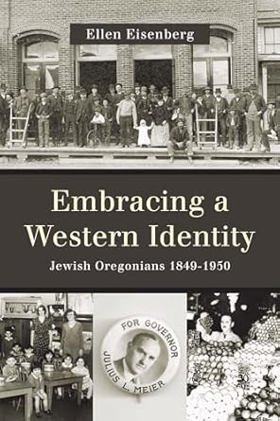
Not all of Oregon’s pioneers were Christian farmers or bachelor prospectors. Indeed, many of the first brick buildings on Oregon’s newly platted Main Streets were built by Jewish merchants whose services were essential to town founding and growth. In Embracing a Western Identity, Ellen Eisenberg places Jewish history in the larger context of western narratives, challenging the traditional view that the “authentic” North American Jewish experience stems from New York. The westward paths of Jewish Oregonians and their experiences of place shaped the communities, institutions, and identities they created, distinguishing them from other American Jewish communities. Eisenberg traces the Oregon Jewish experience from its pioneer beginnings in the mid-nineteenth century to the highly concentrated Portland communities of the mid-twentieth century. Drawing on extensive archival resources at the Oregon Jewish Museum, this historical commentary explores patterns of migration and settlement, the place of Jews in the state’s ethnic landscape, their engagement in politics, the development of institutions, and their relationship to Zionism. Departing from familiar treatments of the Jewish experience, Embracing a Western Identity provides a critical look at the impact of place and opportunity upon the identities of migrants both as Oregonians and as American Jews. Readers and scholars interested in western history—religious, ethnic, expansionist, and otherwise—will enjoy Eisenberg’s accessible writing style and rich photograph collection. x, 292 pages : illustrations ; 23 cm CIRC [ 0 ]
|
2015 |
|
A school for the people a photographic history of Oregon State University by Lawrence A. Landis 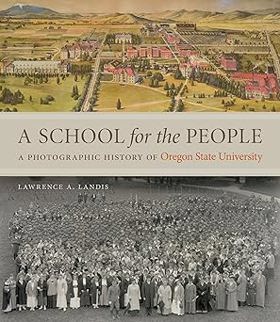
A School for the People tells the story of OSU’s nearly 150 years as a land grant institution through more than 500 photographs, maps, documents, and extensive captions. In-depth chapters focus on themes such as campus development, the growth of academics, the evolution of research as a major focus of the university, campus life and organizations, and, of course, athletics. A capsule history includes many of the iconic photographs associated with the university. As one of the first colleges and universities to offer photography as part of its curriculum in the early 1890s, OSU is well documented visually. Most of those photographic treasures have made their way into the holdings of the Special Collections & Archives Research Center at OSU’s Valley Library. Gleaned from hundreds of thousands of images at the Center, many of the photos included here have never before been seen by the general public. Written by a longtime archivist at OSU’s Special Collections & Archives Research Center, A School for the People tells the full, dynamic story of this multi-faceted and living university, documenting the inevitable ups and downs of the institution. Overflowing with visual riches, it will appeal to OSU alumni, faculty and staff, and anyone with an interest in the history of higher education in Oregon or land grant institutions generally. xi, 337 pages : illustrations (some color), portraits, facsimiles ; 30 cm CIRC [ 0 ]
|
2015 |
|
Henry M. Jackson a life in politics by Robert Gordon Kaufman 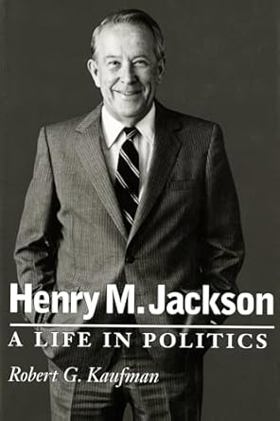
Henry M. Jackson ranks as one of the great legislators in American history. With a Congressional career spanning the tenure of nine Presidents, Jackson had an enormous impact on the most crucial foreign policy and defense issues of the Cold War era, as well as a marked impact on energy policy, civil rights, and other watershed issues in domestic politics. Jackson first arrived in Washington, D.C., in January 1941 as the Democratic representative of the Second District of Washington State, at the age of 28 the youngest member of Congress. “Scoop” Jackson won reelection time and again by wide margins, moving to the Senate in 1953 and serving there until his death in 1983. He became a powerful voice in U.S. foreign policy and a leading influence in major domestic legislation, especially concerning natural resources, energy, and the environment, working effectively with Senator Warren Magnuson to bring considerable federal investment to Washington State. A standard bearer for the New Deal-Fair Deal tradition of Roosevelt and Truman, Jackson advocated a strong role for the federal government in the economy, health care, and civil rights. He was a firm believer in public control of electric and nuclear power, and leveled stern criticism at the oil industry’s “obscene profits” during the energy crisis of the 1970s. He ran for the presidency twice, in 1972 and 1976, but was defeated for the nomination first by George McGovern and then by Jimmy Carter, marking the beginning of a split between dovish and hawkish liberal Democrats that would not be mended until the ascendance of Bill Clinton. Jackson’s vision concerning America’s Cold War objectives owed much to Harry Truman’s approach to world affairs but, ironically, found its best manifestation in the actions taken by the Republican administration of Ronald Reagan. An early and strong supporter of Israel and of Soviet dissidents, he strongly opposed the Nixon/Kissinger policy of detente as well as many of Carter’s methods of dealing with the Soviet Union. Robert Kaufman has immersed himself in the life and times of Jackson, poring over the more than 1,500 boxes of written materials and tapes that make up the Jackson Papers housed at the University of Washington, as well as the collections of every presidential library from Kennedy through Reagan. He interviewed many people who knew Jackson, both friends and rivals, and consulted other archival materials and published sources dealing with Jackson, relevant U.S. political history and commentary, arms negotiation documents, and congressional reports. He uses this wealth of material to present a thoughtful and encompassing picture of the ideas and policies that shaped America’s Cold War philosophy and actions. x, 548 pages, 24 unnumbered pages of plates : portraits ; 23 cm CIRC [ 0 ]
|
2015 |
|
Warren G. Magnuson and the shaping of twentieth-century America by Shelby Scates 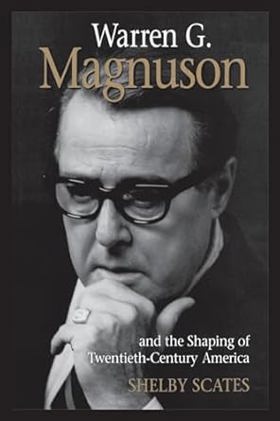
Warren G. Magnuson served as U.S. senator from the state of Washington for six terms. The sheer sweep of his accomplishments is astonishing: authoring the 1964 Civil Rights Act, protecting Puget Sound, saving Boeing for Seattle, championing consumer protection legislation, reorganizing the railroads, and godfathering the electrification of the Pacific Northwest by pressing for Columbia and Snake River dams. He pushed for federal aid to education, kept Pentagon budgets down, and established the National Institutes of Health while arguing throughout the McCarthy era against U.S. isolation from China. He was also a whiskey-and-poker companion to Presidents Roosevelt, Truman, Kennedy, and Johnson ix, 360 pages : illustrations ; 23 cm. CIRC [ 0 ]
|
2015 |
|
Northwest Coast Indian art an analysis of form by Bill Holm 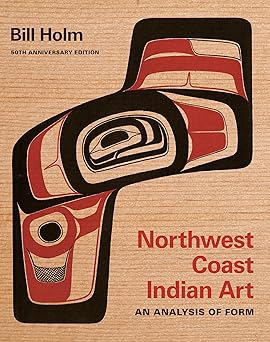
"The masterworks of Northwest Coast Native artists are admired today as among the great achievemments of the world's artists. The painted and carved wooden screens, chests and boxes, rattles, crest hats, and other artworks display the complex and sophisticated northern Northwest Coast style of art that is the visual language used to illustrate inherited crests and tell family stories. In the 1950s Bill Holm, a graduate student of Dr. Erna Gunther, former director of the Burke Museum, began a systematic study of northern Northwest Coast art. In 1965, after studying hundreds of bentwood boxes and chests, he published Northwest Coast Indian Art: An Analysis of Form, a foundational reference on northern Northwest coast Native art. Through his careful studies, Holm described this visual language using terminology that has become part of the established vocabularly that allows us to talk about works like these and understand changes in style both through time and among individual artists' styles. Holm examines how these pieces, although varied in origin, material, size, and purpose, are related to a surprising degree in the organization and form of their two-dimensional surface decoration. Holm presents an incisive analysis of the use of color, line, and texture; the organization of space; and such typical forms as ovoids, eyelids, U forms, and hands and feet. The evidence on which he based his conclusions constitutes a repository of valuable information for all succeeding researchers in the field." --Inside front cover xxvii, 114 pages : illustrations (some color), color map ; 24 cm. CIRC [ 0 ]
|
2015 |
|
In the spirit of the ancestors contemporary northwest coast art at the Burke Museum by Burke Museum of Natural History and Culture, Robin Kathleen Wright , Kathryn B. Bunn-Marcuse , Shaun Peterson 
"In the Spirit of the Ancestors celebrates the vitality of contemporary Pacific Northwest Coast art by showcasing a selection of objects from the Burke Museum's collection of more than 2,400 late-twentieth- and early-twenty-first-century Native American works. Essays focus on contemporary art while exploring the important historical precedents on which so many artists rely for training and inspiration. Margaret Blackman reflects on building one of the largest collections of Northwest Coast serigraphs, and Joe David reminisces about his artistic journey through mask-making. Shaun Peterson, Lisa Telford, and Evelyn Vanderhoop discuss the historical precedents for working in styles that were kept alive only by a few critical artists and are now making a comeback. Robin K. Wright explores the history of box drums and their revival. Emily Moore discusses the repatriation of two stolen house posts and proposes a new concept of "propatriation" to describe the resulting commissioning of contemporary posts to take their place. Kathryn Bunn-Marcuse explores the power of adornment and how clothing, jewelry, and personal adornments like tattooing express tribal and personal identity in ways both connected to the past and grounded in the present. The diversity of approaches presented by these contributors speaks to artists, collectors, academics, tribal communities, and all those interested in Pacific Northwest Coast art. Splendid color photographs of works never before published will delight everyone. Robin K. Wright is curator of Native American art at the Burke Museum, director of the Bill Holm Center for the Study of Northwest Coast Art, and professor of art history at the University of Washington, Seattle. She is the author of Northern Haida Master Carvers. Kathryn Bunn-Marcuse is assistant director of the Bill Holm Center for the Study of Northwest Coast Art"-- Provided by publisher ix, 150 pages : illustrations ; 27 cm. CIRC [ 0 ]
|
2015 |
|
The lost rescue parallel diaries of the advance party from the Lost Wagon Train of 1853 with a history of the lost wagon trains of 1845 and 1853 by Daniel Owen, Andrew S. McClure, Benjamin Franklin Owen 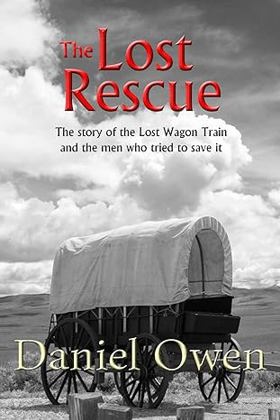
In 1853, a wagon train camped in the Eastern Oregon desert, 130 miles from the Oregon Trail. Uncertain of their whereabouts and in desperate need of supplies, they sent a scouting party over the mountains for help. This is the true story of Elijah Elliott’s “Advance Party.” Becoming lost in the Three Sisters Wilderness, they tell their own story of starvation and loyalty through two parallel diaries. Known as the Lost Rescue, the scouting party was the first known group of Euro-Americans to cross the Cascade Mountains through the Three Sisters Wilderness Area.The Lost Rescue contains a complete history of the Meek Cutoff. In 1845, while facing threats from the Walla Walla and Cayuse Nations, Stephen Meek led 1,050 men, women and children into the wilderness, seeking a short-cut across the Eastern Oregon desert. Poorly supplied and facing a mysterious illness, they forged a new path through the desert. In 1853, Elijah Elliott attempted to lead a large group on the same cutoff. After a costly wrong turn, Elliott found himself at the mercy of an angry mob. As they journeyed west, the starving train made their own way across the desert, facing hunger and intense thirst. In an act of desperation, the emigrants set their animals free, and followed them to the distant waters of the Deschutes River. xiii, 236 pages : illustrated, maps, portraits ; 23 cm CIRC [ 0 ]
|
2015 |
|
The tanoak tree an environmental history of a Pacific Coast hardwood by Frederica Bowcutt 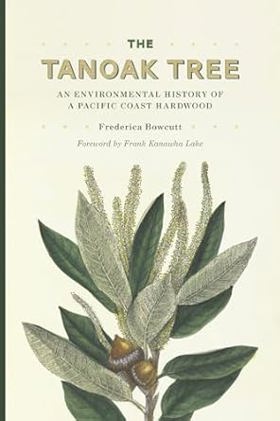
Tanoak (Notholithocarpus densiflorus) is a resilient and common hardwood tree native to California and southwestern Oregon. People’s radically different perceptions of it have ranged from treasured food plant to cash crop to trash tree. Having studied the patterns of tanoak use and abuse for nearly twenty years, botanist Frederica Bowcutt uncovers a complex history of cultural, sociopolitical, and economic factors affecting the tree’s fate. Still valued by indigenous communities for its nutritious acorn nut, the tree has also been a source of raw resources for a variety of industries since white settlement of western North America. Despite ongoing protests, tanoaks are now commonly killed with herbicides in industrial forests in favor of more commercially valuable coast redwood and Douglas-fir. As one nontoxic alternative, many foresters and communities promote locally controlled, third-party certified sustainable hardwood production using tanoak, which doesn’t depend on clearcutting and herbicide use. Today tanoaks are experiencing massive die-offs due to sudden oak death, an introduced disease. Bowcutt examines the complex set of factors that set the stage for the tree’s current ecological crisis. The end of the book focuses on hopeful changes including reintroduction of low-intensity burning to reduce conifer competition for tanoaks, emerging disease resistance in some trees, and new partnerships among tanoak defenders, including botanists, foresters, Native Americans, and plant pathologists. xvi, 219 pages : illustrations, maps ; 24 cm CIRC [ 0 ]
|
2015 |
|
The abandoned western Cascade Mountain railroad tunnels 1910 Wellington avalanche by Marques Vickers 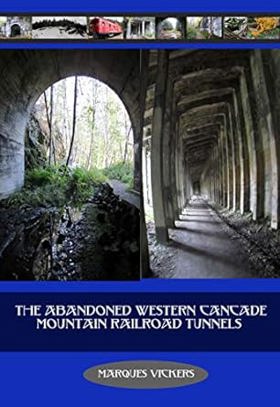
The creation of the train routes through the Cascade Mountains proved a monumental challenge. The conflict arose between the engineering capabilities of man and the treacherous topography and inclement weather of the region. The nine miles of track connecting the towns of Stevens Pass, Wellington and Scenic, Washington ultimately proved a failure for the Great Northern Railway. The Iron Goat Trail that retraces the former routing is a popular hiking destination. The trailhead is easily accessible by car. The well-maintained path leads you through traces of two ghost towns that were obliterated by avalanche. In the last decade of the 19th century, railroads were the primary mode of transportation for transcontinental passenger travel and freight. Previously isolated and inaccessible portions of the country became connected. Geographical impediments were merely obstacles to overcome. As profits swelled, ambitious and bold routings were designed and realized. During the 1890s, construction innovations enabled greater travel and more direct routes. These projects, employing tunneling and snow sheds, began lining the mountainous stretches immediately past Stevens Pass on the route to the Everett and Seattle stations. Immigrant laborers cleared the hillsides of mammoth trees. They drilled and blasted rock to create a flat grade. Camps were required for the hundreds of workers to maintain the tracks and keep them operational during the winter snows. Snowdrifts on the mountains often piled as high as 25 feet on either side of the tracks, creating artificial canyons and muffling warning noises. Snow slides often trapped and delayed trains for long periods of time until snowplows and large crews could manually shovel the paths. 69 pages : illustrations ; 23 cm CIRC [ 1 ]
|
2016 |
|
Historical images of the Illlinois Valley 1870's to present by Dennis Strayer (Compiler), Kerbyville Museum (Kerby, Or) (Issuing body, Publisher) 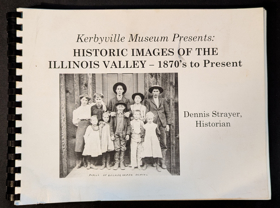
The historic images contained in this book provide a unique look into the past, when a slower pace of life existed long before electricity, cars, or computers. The Illinois Valley is located in the southern part of Josephine County, Oregon. Like most of Southern Oregon, mountains and high hills surround the valley on the west, south and east, which in both prehistoric and historic times made getting in and out of our valley a real challenge. We hope that you enjoy this "step back in time" when the horse served as the main mode of transportation and electricity was just an idea. 190 pages : chiefly illustrations, portraits ; 22 x 28 cm CIRC [ 1 ]
|
2016 |
|
Blisters and bliss a trekker's guide to the West Coast Trail by David Foster , Nelson Dewey (Illustrator), Wayne Aitken 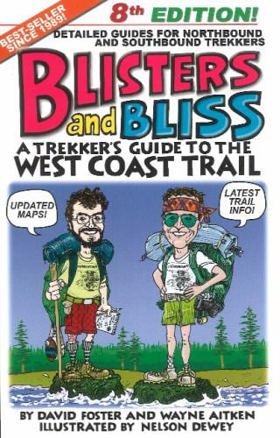
The bestselling Blisters and Bliss has been the trekker’s guide to the West Coast Trail since 1989. The 75-kilometre trail on Vancouver Island is rated as one of the world’s greatest hikes. This revised 8th edition once again provides a practical and easy-to-use resource for the thousands of hikers who visit the West Coast Trail every year. Combining current and accurate trail information with hundreds of safety and planning tips, this is the ideal guide for novices and experienced trekkers alike. 143 pages : illustrations ; 22 cm CIRC [ 0 ]
|
2016 |
|
Reporting the Oregon story how activists and visionaries transformed a state by Floyd J. McKay 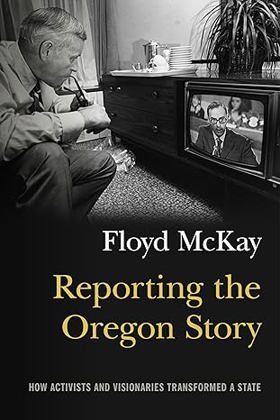
"Oregon entered a new era in 1964 with the election of Tom McCall as Secretary of State and Bob Straub as State Treasurer. Their political rivalry formed the backdrop for two of Oregon's most transformative decades, as they successively fought for, lost, and won the governorship. Veteran Oregon journalist Floyd McKay had a front-row seat. As a political reporter for The Oregon Statesman in Salem, and then as news analyst for KGW-TV in Portland, McKay was known for asking tough questions and pulling no punches. His reporting and commentaries ranged from analysis of the "Tom and Bob" rivalry, to the Vietnam War's impact on Senators Wayne Morse and Mark Hatfield and the emergence of a new generation of Portland activists in the 1970s. McKay and his colleagues were on the beaches as Oregon crafted its landmark Beach Bill, ensuring the protection of beaches for public use. They watched as activists turned back efforts to build a highway on the sand at Pacific City. Pitched battles over Oregon's Bottle Bill, and the panic-inducing excitement of "Vortex"--The nation's only state-sponsored rock festival--characterized the period. Covering the period from 1964-1986, McKay remembers the action, the players and the consequences, in this compelling and personal account. As major actors fade from the scene and new leaders emerge, McKay casts a backwards glance at enduring Oregon legends. Half a century later, amid today's cynicism and disillusionment with media, politics, and politicians, Reporting the Oregon Story serves as a timely reminder that charged politics and bitter rivalries can also come hand-in-hand with lasting social progress. Reporting the Oregon Story will be relished by those who lived the history, and it will serve as a worthy introduction to Oregonians young and old who want a first-hand account of Oregon's mid- twentieth-century political history and legislative legacy"-- Provided by publisher xiv, 270 pages : illustrations ; 23 cm CIRC [ 0 ]
|
2016 |
|
Her finest hour shipbuilding in the Portland area during World War II (1941-1945) by Robert R. La Du 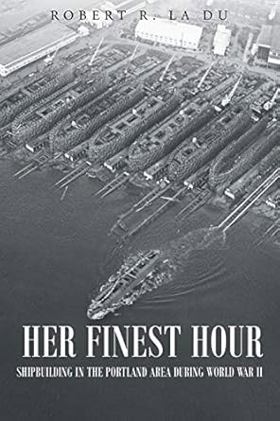
This work describes the monumental accomplishments of the World War II shipyards in Portland, Oregon, and Vancouver, Washington. Working twenty-four hours a day, seven days a week, they built and launched thousands of vessels--Liberty ships, Victory ships, tankers, aircraft carriers, submarine chasers, and many kinds of landing craft--to help defeat the Axis powers and preserve the way of life of the free world. Robert La Du viewed firsthand these activities from his home overlooking shipyards on the Willamette River. His father worked at Albina shipyard, his sister worked at Henry Kaiser's Swan Island shipyard, and he himself, as a high school student, worked nights at Commercial Iron and Steel shipyard. These experiences inform and enhance the pages of Her Finest Hour. 170 pages : illustrations ; 22 cm CIRC [ 0 ]
|
2016 |
|
A little dam problem by Jim Jones 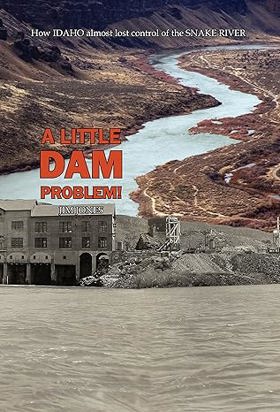
A Little Dam Problem chronicles an epic fight over water rights between the State of Idaho and Idaho Power Company. A court decision in 1982 gave Idaho Power virtual control over the flow of the Snake River in southern Idaho. An unlikely political team Democrat Governor John Evans and Republican Attorney General Jim Jones joined with legislators and water users to undo the damage caused by the decision. Jim Jones brings readers into the midst of the battle, providing an insider view of the struggle between the State of Idaho and a politically powerful adversary. The story reads much like those old western movies where a powerful landowner grabs up all of the water resources, depriving sodbuster families of the precious resource. The book opens a window into the real world of government and politics. viii, 374 pages ; 23 cm CIRC [ 0 ]
|
2016 |
|
Sawtooth-White Cloud by Mark Lisk (Photographer), Nicole LeFavour 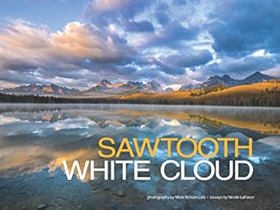
"Photographic profile of the Sawtooth/White Cloud wilderness areas in Idaho. Full-color photos are accompanied by essays describing the areas depicted"-- Provided by publisher 1 volume (various pagings) : color illustrations ; 24 x 31 cm CIRC [ 0 ]
|
2016 |
|
7,003 days 21 years in the Frank Church River of No Return Wilderness by Jim Akenson , Holly Akenson 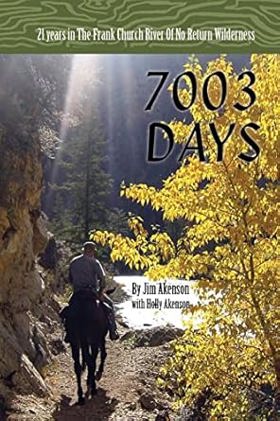
"Deep in the Idaho wilderness the last vestiges of Old Idaho linger. In 1982, an eager young couple seeking adventure and challenge, Jim and Holley Akenson, moved to a log cabin in the back country to manage Taylor Ranch, the University of Idaho's wilderness research station. In 7,003 Days, Jim describes their encounters with wildlife and nature: tracking wolves and cougars, using mules for transportation and ranch work, and introducing university stuedents to life in the rugged Salmon River Mountains of Central Idaho"--Provided by publisher 266 pages : illustrations, map ; 23 cm CIRC [ 0 ]
|
2016 |
|
Ethnobotany of the Coos, Lower Umpqua, and Siuslaw Indians by Patricia Whereat Phillips 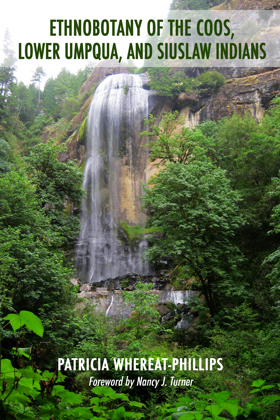
"Very little has been published until now on the ethnobotany of western Oregon indigenous peoples. Ethnobotany of the Coos, Lower Umpqua, and Siuslaw Indians documents the use of plants by these closely-related coastal tribes, covering a geographical area that extends roughly from Cape Perpetua on the central coast, south to the Coquille River, and from the Coast Range west to the Pacific shore. With a focus on native plants and their traditional uses, it also includes mention of farming crops, as well as the highly invasive Himalayan blackberry, which some Oregon coast Indians called the 'white man{u2019}s berry.' The cultures of the Coos Bay, Lower Umpqua and Siuslaw are distinct from the Athabaskan speaking people to the south, and the Alsea to the north. Today, many tribal members are reviving ancient arts of basket weaving and woodworking, and many now participate in annual intertribal canoe events. Ethnobotany of the Coos, Lower Umpqua, and Siuslaw Indians contributes to this cultural renaissance by filling an important gap in the historical record. It is an invaluable resource for anyone who wishes to learn about the indigenous cultures of the central and southern Oregon coast, as well as those who are interested in Pacific Northwest plants and their cultural uses."--Publisher's website xv, 147 pages : illustrations, maps ; 23 cm CIRC [ 0 ]
|
2016 |
|
A naturalist's guide to the hidden world of Pacific Northwest dunes by George O. Poinar 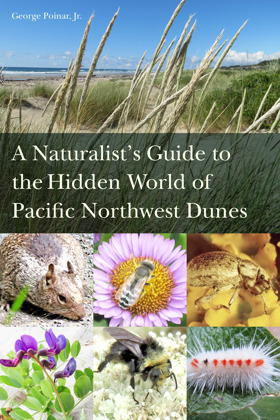
From Northern California to British Columbia, coastal dunes and beaches provide a unique habitat for plants, animals, and insects. With A Naturalist’s Guide to the Hidden World of Pacific Northwest Dunes, hikers and beach walkers on the Pacific Coast will discover a teeming metropolis of life in what may seem a barren landscape to the inattentive eye. Contrary to casual observation, intricate patterns of life occur in coastal dunes and along the strand. Plants, insects, and parasites abound. George Poinar’s in-depth knowledge of this hidden world is unsurpassed, and his enthusiasm for it is infectious. He has been investigating and photographing specimens along the Pacific Coast for more than four decades, and presents this trove of knowledge to the reader in a clear, engaging style. Poinar exposes the small, almost blind weevils that live under driftwood and slowly degrade the wood, the omnipresent beach hoppers that leap up at every step and flee from vicious rove beetles, dune ants that search out aphids for honeydew but are attacked themselves by dive-bomber wasps. He shows why he considers Beach pea, Seashore lupine, and Coast willow keystone species because they provide food and shelter for so many different life forms. With a focus on the associations between dune plants and other life forms, the book includes over 600 full-color photographs from the author’s extensive collection. While it is accessible enough to serve as a field guide for hikers and outdoor enthusiasts, comprehensive data for biologists studying dune ecology are also included. A Naturalist’s Guide to the Hidden world of Pacific Northwest Dunes belongs on every beach house bookshelf from California to Canada. Naturalists, scientists, and anyone who walks along the coast will welcome this lavishly-illustrated reference. 286 pages : color illustrations ; 23 cm CIRC [ 0 ]
|
2016 |
|
Rivers of Oregon by Tim Palmer 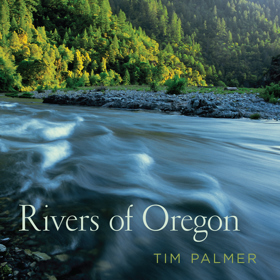
“Rivers are the essence of Oregon,” writes award-winning author and photographer Tim Palmer. In over 140 brilliant photos and evocative, informative text, Rivers of Oregon captures the life, the beauty, and the magic of Oregon’s remarkable array of waterways. The book’s engaging essays address the nature and ecology of flowing waters, the joy of travel on these lifelines of the planet, and the historic saga of Oregonians’ commitment to preserve, protect, and restore the best of their state for future generations. Rivers of Oregon captures the beauty and the intrinsic qualities of the state’s irresistible riverscapes like no other book has done. From the underwater view and from the refuge of riparian forests, from the seat of a canoe or raft and from distant mountain summits, readers will gain new perspectives on the extraordinary features that provide us with water, with life, and with scenes whose loss would leave us deeply impoverished. Join this celebrated photographer, author, conservationist, and river guide on a journey of discovery that will change the way you think about flowing water and the alluring paths it makes across our land. 162 pages : color illustrations ; 24 cm CIRC [ 0 ]
|
2016 |