Catalog of British Columbiana and Pacific Northwest Americana
Encyclopedia Cascadia Catalog contains book titles of mostly non-fiction Pacific Northwest Coast of North America Titles (primarially British Columbia, Idaho, Oregon and Washington State) in an easy-to-understand title catalog. If you see a link with this badge ONLINE CIRC it means that there is an online institution that provides free access to that title. In some cases there may be more than one institution hosting the title digitally.
| Catalog Title | Published |
|---|---|
|
Early Idaho atlas by Ralph N. Preston
|
1978 |
|
Early human occupation in British Columbia by Roy L. Carlson, Luke R. Dalla Bona 
This book presents the archaeological evidence for the first 5,500 years of prehistory in British Columbia, from about 10,500 to 5,000 years ago. As this period is poorly known even to specialists, Early Human Occupation in British Columbia is a vital contribution to current knowledge about an enigmatic time in a crucially important area of western North America. New data and syntheses have been integrated with previous data about the period, making this the most comprehensive and up-to-date book on the subject. Chapters cover the evidence for the earliest human occupation in all areas of the province: the Subarctic, the Columbia-Fraser Plateau, and the Northwest Coast 261 pages : illustrations, maps ; 29 cm CIRC [ 1 ]
|
1996 |
|
Early history of Thurston County, Washington together with biographies and reminiscences of those identified with pioneer days by Georgiana Mitchell Blankenship 
Compiled by Georgiana Mitchell Blankenship in 1914, Early History of Thurston County, Washington serves as an exhaustive anthology of biographical sketches and firsthand memoirs documenting the foundational years of the Puget Sound region. The volume weaves together the personal recollections of early white settlers, chronicling their grueling overland migrations, the establishment of Olympia, and the swift political and commercial dominance achieved by the pioneer class. Operating simultaneously as a community scrapbook and a civic monument, the text elevates the hardships of these foundational families while meticulously recording the social networks that solidified their territorial authority. A keen insight drawn from the work is how the genre of locally compiled pioneer reminiscences functioned as a highly insulated form of collective myth-making; by exclusively centering the frontier triumphs of their own peer group, compilers like Blankenship actively curated a historical memory that legitimized settler colonialism as a heroic destiny while systematically minimizing the concurrent displacement of the region's Indigenous populations. 392, [3] pages, 23 unnumbered leaves of plates : frontispiece, illustrations, portraits ; 23 cm ONLINE CIRC [ 1 ]
|
1914 |
|
Early history of the province of British Columbia by Bruce Alistair McKelvie
Published in 1926 by prominent Canadian journalist and popular historian Bruce Alistair McKelvie, Early History of the Province of British Columbia serves as a sweeping, romanticized narrative of the region's colonial formation. The text traces the province's origins from early maritime expeditions and the grueling overland treks of fur trade explorers to the highly structured corporate administration of the Hudson’s Bay Company. McKelvie meticulously chronicles the era of Governor James Douglas, the frantic influx of the gold rushes, and the political maneuvering that ultimately secured British Columbia's entry into the Canadian Confederation, framing the entire era as a triumphant defense of British sovereignty against both an untamed wilderness and the looming threat of American expansionism. A keen insight drawn from the work is how the narrative weaponizes the specter of American Manifest Destiny to morally launder British imperialism; by framing the colonization of the Pacific Northwest primarily as a heroic, defensive geopolitical chess match to save the territory from aggressive United States annexation, McKelvie effectively casts the British Crown and the Hudson's Bay Company not as invading conquerors, but as benevolent, stabilizing protectors. This historiographical strategy successfully sanitizes the devastating impacts of colonial settlement, transforming the systemic displacement and economic subjugation of First Nations peoples into a mere background condition of a noble, state-building enterprise designed to preserve "civilized" British order on the Pacific coast. 118 pages : illustrations ONLINE CIRC [ 1 ]
|
1926 |
|
Early days in old Oregon by Katharine Berry Judson
Authored by Katharine Berry Judson, Early Days in Old Oregon (1916) offers a romanticized, highly accessible history of the Pacific Northwest explicitly tailored for school children and general readers. The narrative traces the standard pioneer trajectory—from the Lewis and Clark expedition and early fur traders through the grueling overland migrations and the establishment of settler institutions—while vividly describing the region's geography and drawing heavily upon Indigenous myths. Typical of early twentieth-century educational literature, the book celebrates white westward expansion as a heroic civilizing mission. A keen insight drawn from the work is how educational histories actively codified frontier mythology for the next generation; by blending romanticized Native American folklore with sanitized accounts of pioneer perseverance, Judson's text illustrates how early state curricula intentionally crafted an innocent, adventurous origin story that effectively shielded young citizens from the brutal realities of territorial conquest and Indigenous displacement. ([12], 263 pages, 13 unnumbered leaves of plates) : illustrations, maps, photographs ONLINE CIRC [ 1 ]
|
1916 |
|
Early churches of Washington State by Arnold Pearson, Esther Pearson 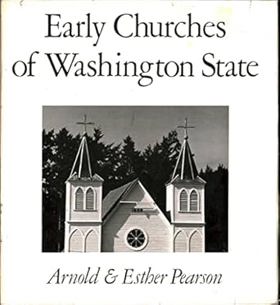
Author is an alumnus of Evanston Township High School, class of 1932 ix, 182 pages : illustrations, map ; 27 cm CIRC [ 1 ]
|
1980 |
|
Early Castle Rock and north Cowlitz County, Washington by Leland G. Jackson 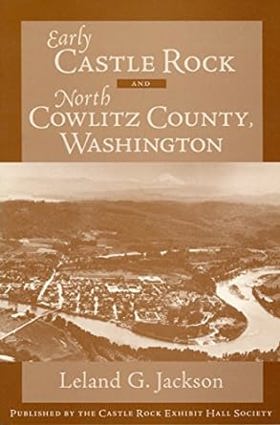
The late Leland Jackson (author), whose ancestors were among the early families to migrate to the area that was to become Castle Rock, Washington, was fortunate enough to appreciate local history and sufficiently skilled to write about it in a style that is both informative and easy to follow. This book provides readers insight into the hardships and joys the settlers experienced. xi, 160 pages : illustrations, maps ; 28 cm CIRC [ 1 ]
|
1992 |
|
Early birds in the Northwest 100 years of western history from Jacques Raphael Finlay to Dutch Jake Goetz by Rowland Bond
Of particular interest to Salish and Kootenai history are Bond's biographical sketches of Jacques Raphael Finley, Finan McDonald, Peter Jean DeSmet, and Joseph Joset 248 pages illustrations 23 cm CIRC [ 1 ]
|
1973 |
|
Early and present history of Fix Ridge, Latah County, Idaho, 1877-1964 by Maris T. Dennler, Fix Ridge Club (Issuing body) 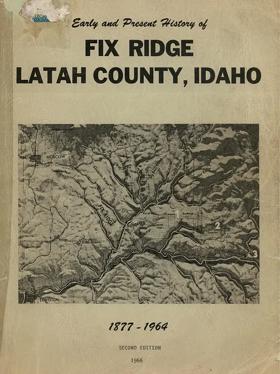
From the preface: This book "represents merely an attempt to pay a tribute to the 'old days' and the 'old Pioneers' and to record as accurately as possible the events and happenings of this area, both past and present." xvi, 128 leaves, 39 unnumbered leaves of plates : illustrations, map (on cover) portraits ; 28 cm CIRC [ 0 ]
|
1966 |
|
E.J. Hughes, life at the lake by Robert Amos , E. J. Hughes 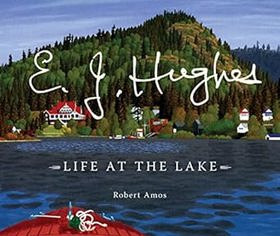
"In the most intimate volume yet about prolific Canadian painter E. J. Hughes, the artist’s official biographer Robert Amos brings us Life at the Lake, capturing the years Hughes and his wife Fern spent at their home on Shawnigan Lake, Vancouver Island. Following Hughes’s service as a war artist, in 1946 he and Fern looked for a place to buy in Victoria. Then, in 1951, they spotted an ad for a property on Shawnigan Lake, about 40 kilometres north of the city. The quiet lakeside existence he and Fern established suited his temperament and artistic needs perfectly. In addition to reproductions of all of his Shawnigan-themed oils and watercolours, the book includes dozens of sketches, colour notes, local news clippings, letters, and illuminating excerpts from recorded interviews with Pat Salmon, Hughes’s longtime friend and assistant. With a keen appreciation for the quotidian, Amos captures lakeside life at Shawnigan, with Hughes’s observations on birds and trees, and trips to local shops and restaurants. He tells of an unusually snowy winter that slowed the delivery of finished paintings to the post office and, on a more sombre note, the gradual progression of Fern’s muscular dystrophy. The book shares insights into the relationships--with Fern, Pat, and agent Max Stern--that allowed Hughes to achieve great success as an artist while living a quiet existence at Shawnigan Lake. For the Hughes fan and anyone who enjoys learning about the everyday lives of artists, this latest addition to the Hughes pictorial canon is a must."-- Provided by publisher 119 pages : illustrations (chiefly colour), map ; 21 x 25 cm CIRC [ 0 ]
|
2023 |
|
E. J. Hughes paints British Columbia by Robert Amos , E. J. Hughes 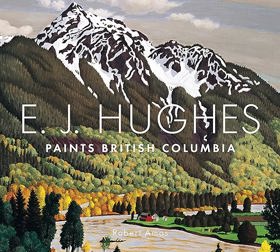
"A retrospective on one of BC's most famous artists that features beautifully reproduced landscape paintings from all over mainland BC, and unveils new photographs, sketches, and ephemera from the artist's estate. E. J. Hughes (1913-2007) is British Columbia's best-loved landscape painter. His lavish, picturesque views of the province are appreciated by art professionals and the public alike. Following the success of his previous volume, E. J. Hughes Paints Vancouver Island, author and artist Robert Amos tracks the footsteps of Hughes as he travelled throughout mainland British Columbia, from Stanley Park to Savary Island, from the Fraser Valley to the Okanagan, and from the Kootenays to the Rockies between the 1930s and 1970s. Working the with Estate of E. J. Hughes, Amos has crafted a nuanced representation of the activities and life of this exceptionally talented and private man. Both biography and monograph, this book features full-page, full-colour reproductions of Hughes's finest paintings, many of them published here for the first time. Each painting is accompanied by supporting sketches, drawings, and photographs from Hughes's personal archive."-- Provided by publisher ix, 189 pages : illustrations (some color), colour map ; 24 x 26 cm CIRC [ 1 ]
|
2019 |
|
During my time Florence Edenshaw Davidson, a Haida woman by Margaret B. Blackman, Florence Edenshaw Davidson 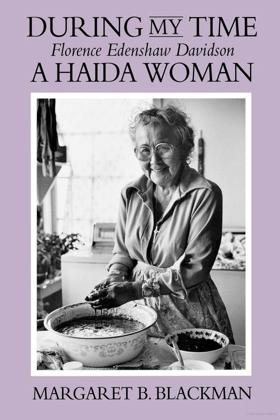
This book is the first life history of a Northwest Coast Indian woman. Florence Davidson, daughter of noted Haida carver and chief Charles Edenshaw, was born in 1896. As one of the few living Haida elders knowledgeable bout the culture of a bygone era, she was a fragile link with the past. Living in Masset on the Queen Charlotte Islands, some fifty miles off the northwest coast of British Columbia, Florence Davidson grew up in an era of dramatic change for her people. On of the last Haida women to undergo the traditional puberty seclusion and an arranged marriage, she followed patterns in her life typical of women of her generation. Florence’s narrative -- edited by Professor Blackman from more than fifty hours of tape recordings -- speaks of girlhood, of learning female roles, of the power and authority available to Haida women, of the experiences of menopause and widowhood. Blackman juxtaposes comments made by early observes of the Haida, government agents, and missionaries, with appropriate portions of the life history narrative, to portray a culture neither traditionally Haida nor fully Canadian, a culture adapting to Christianity and the imposition of Canadian laws. Margaret Blackman not only preserves Florence Davidson’s memories of Haida ways, but with her own analysis of Davidson’s life, adds significantly to the literature on the role of women in cross-cultural perspective. The book makes an important contribution to Northwest Coast history and culture, to the study of culture change, to fieldwork methodology, and to women’s studies. xvii, 172 pages : illustrations ; 23 cm CIRC [ 0 ]
|
1985 |
|
Dungeness, the lure of a river a Bicentennial history of the east end of Clallam County by Sequim Bicentennial Committee, Virginia Keeting
|
1976 |
|
Du Pont--the story of a company town by May G. Munyan
|
1972 |
|
Dryden's history of Washington by Cecil P. Dryden
|
1968 |
|
Dreaming in the rain how Vancouver became Hollywood North by Northwest by David Spaner 
Vancouver is now North America’s third largest center for film and television production, recently witnessing the filming of Halle Berry’s Catwoman and Will Smith’s I, Robot, among others. But Vancouver has been hosting filmmakers for years, coming into its own in the early 1970s when Robert Altman, Warren Beatty and Julie Christie made McCabe and Mrs. Miller and Mike Nichols, Jack Nicholson and Candice Bergen filmed Carnal Knowledge. Dreaming in the Rain tells the story of how Vancouver became North by Northwest, from its early days as a Hollywood studio backlot to its becoming home to a vibrant indigenous scene that is among the most acclaimed, provocative, independent filmmaking communities anywhere. 236 pages : portraits ; 23 cm CIRC [ 0 ]
|
2003 |
|
Dreamers, skeptics, and healers the story of BC's medical school by Wendy Cairns , John Cairns , David Ostrow , Gavin Stuart 
"A legacy of care. Hailed as one of the world's top-ranked medical schools, the UBC Faculty of Medicine is globally recognized as a leader in medical education and health sciences research. In celebration of its 70th anniversary, this richly illustrated history is an inspiring reflection on the Faculty's rise from humble beginnings to its standing today as a beacon of excellence. This beautifully illustrated book documents the history of the UBC Faculty of Medicine, from its creation to the present day. Tracing the trials, tribulations, and triumphs of the many people who strove to first bring the Faculty into existence, and then to ensure its success, it is a testament to their work in transforming aspiration into reality. Unlikely though it may seem today, the UBC Faculty of Medicine's creation was threatened from the moment British Columbia entered Confederation in 1871. Proposals for a provincial medical school encountered myriad challenges. There was no university until 1915, and it took eight decades from the early dream to enrollment of the first medical students. And yet, establishing the medical school was only the first of many milestones reached despite great odds. Today, the Faculty's medical undergraduate program is the fourth largest in North America. Its faculty members have garnered numerous illustrious awards--including the Nobel Prize. Its province-wide, distributed undergraduate and postgraduate program, established in 2004 as the first of its kind in Canada, is developing a new generation of doctors, bringing health education to remote regions and communities, and enhancing the quality of health care. And its researchers continue to make breakthroughs in the priority areas of precision health, cancer, brain and mental health, heart and lung health, population health, and chronic diseases as well as across the breadth of health and life sciences."-- Provided by publisher xvii, 210 pages : illustrations, color and black and white ; 26 cm CIRC [ 0 ]
|
2021 |
|
Dreamers on the trail of the Nez Perce by Martin Stadius 
In 1877 Nez Perce warriors fought U.S. troops to a standstill, during the 1,200-mile epic retreat toward Canada. Martin Stadius tells the story as he follows the Nez Perce National Historic Trail. Stadius' crisp, entertaining writing style makes Dreamers more than a history book. xx, 437 pages : illustrations ; 24 cm CIRC [ 0 ]
|
1999 |
|
Drawing lines in the forest creating wilderness areas in the Pacific Northwest by Kevin R. Marsh 
Drawing boundaries around wilderness areas often serves a double purpose: protection of the land within the boundary and release of the land outside the boundary to resource extraction and other development. In Drawing Lines in the Forest, Kevin R. Marsh discusses the roles played by various groups—the Forest Service, the timber industry, recreationists, and environmentalists—in arriving at these boundaries. He shows that pragmatic, rather than ideological, goals were often paramount, with all sides benefiting. After World War II, representatives of both logging and recreation use sought to draw boundaries that would serve to guarantee access to specific areas of public lands. The logging industry wanted to secure a guaranteed supply of timber, as an era of stewardship of the nation's public forests gave way to an emphasis on rapid extraction of timber resources. This spawned a grassroots preservationist movement that ultimately challenged the managerial power of the Forest Service. The Wilderness Act of 1964 provided an opportunity for groups on all sides to participate openly and effectively in the political process of defining wilderness boundaries. The often contentious debates over the creation of wilderness areas in the Cascade Mountains in Oregon and Washington represent the most significant stages in the national history of wilderness conservation since World War II: Three Sisters, North Cascades and Glacier Peak, Mount Jefferson, Alpine Lakes, French Pete, and the state-wide wilderness acts of 1984. xv, 227 pages, 16 unnumbered pages of plates : illustrations, maps ; 24 cm. CIRC [ 0 ]
|
2007 |
|
Dragonflies and damselflies of Oregon a field guide by Cary Kerst, Steve Gordon 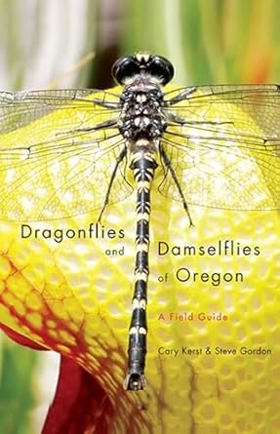
Growing interest in watching and identifying dragonflies and damselflies has sharpened the need for an authoritative resource like Dragonflies and Damselflies of Oregon, a definitive field guide devoted solely to dragonflies and damselflies found in the state. Cary Kerst and Steve Gordon include information on identification, as well as biology and behavior, using common terms useful to the novice and experienced enthusiast alike. The book features stunning color photographs of male and female of all species currently known in Oregon, along with helpful illustrations and charts with important identification characteristics. Dragonflies and Damselflies of Oregon presents the life cycle and larval habits of dragonflies and damselflies, along with photographs of the larvae of families. The Oregon range for each species is mapped, and the size range of adults is provided in text and illustration. The book also includes a description of the best sites in Oregon to observe these amazing insects, a useful tool for viewing uncommon species in spectacular settings. Dragonflies and Damselflies of Oregon is an essential reference for Odonatists, entomologists, birders, butterfly watchers, fishermen, wetland experts, naturalists, gardeners, artists, photographers, and all outdoor enthusiasts. xi, 304 pages : color illustrations, maps ; 22 cm. CIRC [ 0 ]
|
2011 |
|
Draft environmental impact statement for Madrona Point, Eastsound, Washington July 1982 by San Juan County (Wash)., Northwest Building Corporation 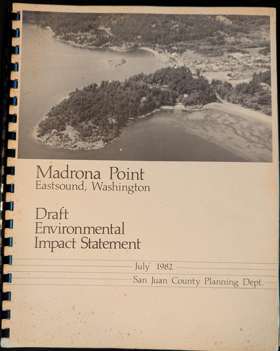
Platting of a 29.67 acre subdivision on Madrona Point, adjacent to the unincorporated town of Eastsound, into eleven single family lots (approx. 9 acres) five tracts for multi-family housing (approx. 3-1/2 acres) to contain 30 dwelling units in four- and five-unit buildings, and two larger tracts for future development subject to binding site plan approval (approx. 10-3/4 acres), intended for 61 multi-family dwellings in two- and four-unit buildings. In addition, four community recreation tracts will be established. On one of the community tracts a small caretaker's residence would be constructed, bringing the total of proposed residential units to 103. 241 pages : illustrations, maps ; 28 cm CIRC [ 1 ]
|
1982 |
|
Dr. John McLoughlin: the Father of Oregon by Frederick V. Holman 
McLoughlin came from Riviere du Loup in Quebec and worked his way up through the Hudson's Bay Company until he alone was responsible for that great chunk of continent known as the Pacific Northwest, and the help and support he offered the American emigrants to the Oregon Country in the critical years 1843-1846 301 pages, 2 unnumbered leaves of plates + [2] page publisher's advertisements : frontispiece (portrait), portrait ; 25 cm ONLINE CIRC [ 1 ]
|
1907 |
|
Dr. John McLoughlin master of Fort Vancouver, father of Oregon by Nancy Wilson, Bert Webber 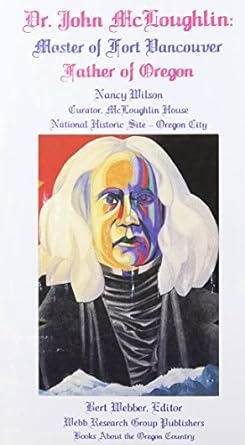
Curator Nancy Wilson of the McLoughlin House National Historic Site in Oregon City, has labored for years to bring together the details of the life of Dr. John McLoughlin. She has written about this Hudson's Bay Company Chief Factor, who also founded Oregon City, in a gracious yet telling way. This book covers, and a singular popular volume, everything that could be discovered about Mr. McLoughlin from his earliest years until the day he died. McLoughlin got into trouble with this British employers because he was a compassionate man who did his best to help sick, hungry and broke American pioneers freshly arrived over the Oregon Trail. But he insisted that Americans settled south of the Columbia River as he believed when the International boundary was settled the Columbia River would be the dividing line. To protect the interests of the Hudson's Bay Company, McLoughlin put up the first building at Wilmette Falls (Oregon City) then platted the city. On his retirement he moved permanently to Oregon City and became an American citizen. Here is the story recorded with library reference quality but is narrated in a easy-to-read language. The Editor, Bert Weber, Master Librarian (retired) and research photojournalist, is author of many books about Oregon. --- from book's back cover 205 pages : illustrations, maps ; 22 cm CIRC [ 1 ]
|
1994 |
|
Down the Columbia by Lewis R. Freeman 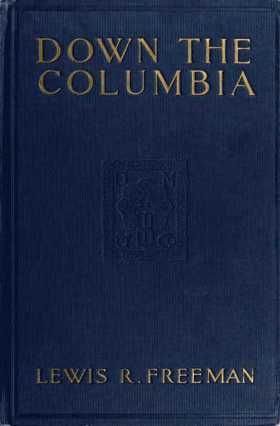
The day on which I first conceived the idea of a boat trip down the Columbia hangs in a frame all its own in the corridors of my memory. It was a number of years ago—more than a dozen, I should say. Just previously I had contrived somehow to induce the Superintendent of the Yellowstone National Park to grant me permission to attempt a winter journey on ski around this most beautiful of America’s great playgrounds. He had even sent a Government scout along to keep, or help, me out of trouble. We were a week out from the post at Mammoth Hot Springs. xx pages, 4 leaves, 383 pages frontispiece, plates, portraits, map 23 cm ONLINE CIRC [ 1 ]
|
1921 |
|
Douglas Lake Ranch empire of grass by Donna Yoshitake Wuest , Joe W. Gardner 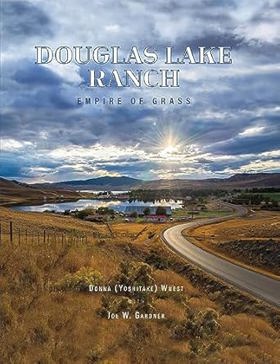
"Explore the rich history of Canada's largest ranch. Douglas Lake is the largest ranch in Canada, encompassing over one million acres of BC's south-central interior, and thousands of people have worked there since it was founded in the mid 1880s. Douglas Lake now includes BC's first cattle ranch, Alkali Lake Ranch, as well as Circle S Ranch, Quilchena Ranch, Riske Creek Ranching and the infamous Gang Ranch. It has had a succession of wealthy owners including Charles "Chunky" Woodward of Woodward's Stores and current owner, US real estate and sports mogul Stan Kroenke. It has recreational facilities and is known for hosting celebrity guests like Prince Philip, billionaire media mogul Malcolm Forbes and others but, as this book shows, it is a serious working cattle ranch. Having grown up on a BC ranch, author Donna Yoshitake Wuest brings an insider's understanding to the subject. Working closely with the ranch's long-time manager, Joe Gardner, she provides a detailed history from its founding by John Douglas 140 years ago, through innovations in quarter horse breeding and deer farming to helicopter cowboying. Together, Wuest and Gardner provide a fascinating account of the day-to-day operations of a large modern ranch as it faces the challenges of running an integrated cattle, forestry and recreational business. The book is rich with stories about the ranch's wealthy owners, celebrity guests and hard-working cowhands."-- Provided by publisher 192 pages : illustrations (chiefly colour), colour maps ; 27 cm CIRC [ 0 ]
|
2023 |