Catalog of British Columbiana and Pacific Northwest Americana
Encyclopedia Cascadia Catalog contains book titles of mostly non-fiction Pacific Northwest Coast of North America Titles (primarially British Columbia, Idaho, Oregon and Washington State) in an easy-to-understand title catalog. If you see a link with this badge ONLINE CIRC it means that there is an online institution that provides free access to that title. In some cases there may be more than one institution hosting the title digitally.
| Catalog Title | Published |
|---|---|
|
Tracks, trails, and tales in Clallam County, state of Washington by Harriet U. Fish 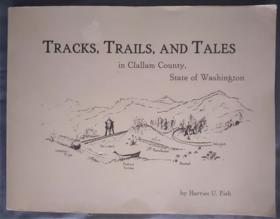
Published by local historian Harriet U. Fish, Tracks, Trails, and Tales in Clallam County, State of Washington chronicles the rugged pioneering history and frontier development of the Olympic Peninsula's northernmost reaches. The book captures the arduous experiences of early homesteaders, loggers, and native communities who navigated dense rain forests, uncharted coastal waters, and punishing mountain passes to build isolated settlements. Through first-person accounts, archival records, and local folklore, the text preserves the vanishing daily rhythms of a remote region shaped by timber extraction and maritime trade. A keen insight drawn from the work is how the geographic isolation of the Olympic Peninsula inverted standard settlement patterns; because dense wilderness and fierce coastal weather made overland travel nearly impossible, early Clallam County communities were often more closely tethered by steamship routes to distant Seattle and Victoria than to the rest of their own state. 214 pages : illustrations ; 22 x 28 cm CIRC [ 1 ]
|
1993 |
|
Tracking down Oregon by Ralph Friedman 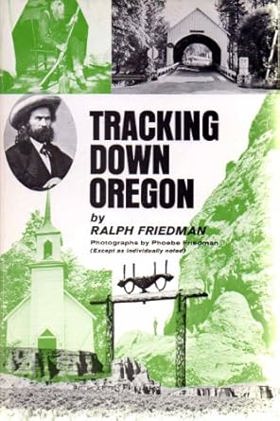
Ralph Friedman catches the spirit of the pioneer, the entrepreneur the builders of Oregon. Interesting people and places are sprinkled throughout his narrative, and he gives directions on how to find them, even if only from an armchair. xii, 306 pages : illustrations ; 23 cm CIRC [ 0 ]
|
1978 |
|
Tracing footsteps Jefferson County, Washington by Pam McCollum Clise 
From rich natural resources to free land to hard work and imaginative solutions. This is the story of one small county and what it took to make it strong. Stories of the hopeful, adventurous, opportunistic, and salt of the earth people that have made Jefferson County, Washington what it is today. By following footsteps from the past, starting with the tribes that inhabited this area for thousands of years, to Capt. George Vancouver's exploration in 1792, and on to the early European and east coast settlers, we are able to find the conditions under which decisions were made and actions taken. By unfolding the lives of the people that made it happen, it is possible to see more clearly how the richness of today's community was been handed down from those who came before us. 475 pages : illustrations ; 22 cm CIRC [ 1 ]
|
2014 |
|
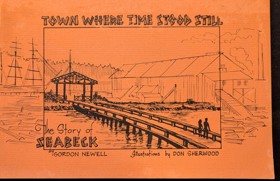
Town where time stood still the story of Seabeck by Gordon R. Newell, Don Sherwood
|
1958 |
|
Toward Oregon 2050 planning a better future by Megan Horst , Oregon State University Press (Publisher) 
"How do we plan for a better Oregon in 2050? What will the state be like in that year for five million Oregonians, particularly for the least privileged and powerful residents? These are the questions that drive Oregon 2050, an interdisciplinary project at Portland State University that aims to help the state become more environmentally sustainable, socially equitable, and fiscally resilient. In this compelling volume, leading experts in land use and urban planning, in cooperation with other scholars and community partners, envision various possible futures and begin the work of developing statewide plans to guide Oregon through the decades ahead. Building on the state's policy innovation and planning legacy, contributors to Toward Oregon 2050 address current challenges such as housing scarcity, income inequality, the rural-urban divide, and climate change. They offer recommendations on a range of issues, from culture to incarceration, transportation to voting rights, all with the goal of imagining what a fair and equitable Oregon might look like. Some of the imagined futures-with worsening effects of climate change, environmental harms, and social inequities-are not bright for many Oregonians. Other futures include enhanced resiliency to forest fires and flooding, more Oregonians in high-paying jobs and in secure housing, and more children walking and biking to school. But those positive futures are not guaranteed, and getting there won't be easy. They'll require all stakeholders-state and local government, members of all political parties, private businesses, non-profit organizations, and individual residents-to play a role in ensuring a better future for the next generation of Oregonians. Intended for all Oregonians who care about their state's future, Toward Oregon 2050 will also appeal to scholars and planners who have long looked to Oregon for inspiration and lessons learned. The book invites readers to envision the future of Oregon and to contribute their part toward a better future for the state"-- Provided by publisher ix, 452 pages : illustrations, maps ; 23 cm CIRC [ 0 ]
|
2024 |
|
Toward one Oregon rural-urban interdependence and the evolution of a state by Michael Hibbard 
Every state in the nation has geographic divisions—upstate/downstate, urban/rural, major city/rest of the state—that loom large as barriers to common cause. Toward One Oregon examines the prospects for uniting one geographically diverse state in the years ahead. When Oregon became a state in 1859, its role in the nation and the global economy was quite different than it is today. Boundaries that made sense in the nineteenth century don’t always serve twenty-first century needs productively. Current times demand a new, strategic understanding of the state and its role in the nation and the world if its people—all of its people—are to thrive. Oregon, like many states, is faced with recovering and rediscovering a sense of shared purpose as it attempts to meet the needs of its diverse communities, peoples, and landscapes. Toward One Oregon explores Oregon’s urban and rural history and assesses the current situation through political, economic, and demographic lenses. The book’s contributors include historians, urban planners, journalists, economists, sociologists, and political scientists. They explore the links and splits between urban and rural Oregon and together offer a collaborative path forward—for Oregon and for any state faced with similar, seemingly insurmountable, geographic divisions—using the best of urban and rural policies in strategic and complementary ways. 183 pages : illustrations, charts, maps ; 23 cm CIRC [ 0 ]
|
2011 |
|
Tough trip through paradise, 1878-1879 by Andrew Garcia, Bennett H. Stein 
This book grew out of a manuscript left by Andrew Garcia. Bennett Stein edited the manuscript to tell Garcia's story of the 1877 Nez Perce War, the end of the buffalo herds, and other historic events in western life. Garcia, a man of Hispanic descent was born in El Paso, moved north to Montana in 1876 and became a mountain man. Garcia served as a herder and packer for the U.S. Army in Montana in the Yellowstone and Musselshell country, working for Colonel Samuel D. Sturgis' "Boys in Blue" out of Fort Ellis from 1876-1878. He was present during the Nez Perce War. The book begins in 1878, when Garcia left his job with the army to go into business with a man named Beaver Tom, trapping beaver and trading for buffalo robes. While trading with members of the Pend d'Oreilles tribe, Garcia met and married a Nez Perce woman known among the Pend d'Oreille as In-who-lise ('Broken Tooth'; her original name, Kot-kot-hy-hih, means White Feather), who had been with Chief Joseph's tribe when they ran from the U.S. Cavalry. The book includes Garcia's reproduction of her firsthand account of the final engagement with 7th Infantry at the Battle of the Big Hole xviii, 409 pages : maps ; 18 cm CIRC [ 0 ]
|
2001 |
|
Totem poles an illustrated guide by Marjorie M. Halpin, Michael M. Ames 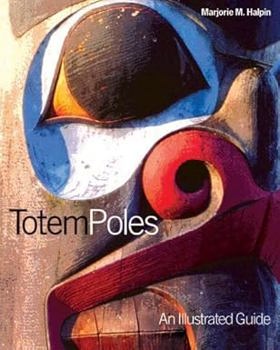
Presents an illustrated history of the totem poles of the Native peoples of the Northwest Coast and examines their form and meaning, origin and cultural significance to those in the Pacific Northwest 58 pages : illustrations (some color) ; 26 cm CIRC [ 0 ]
|
1981 |
|
Tosoiba by Lula Barnard, Faunda Bybee , Lola Walker , Daughters of Utah Pioneers Camp Meads
|
1958 |
|
Too high and too steep reshaping Seattle's topography by David B. Williams 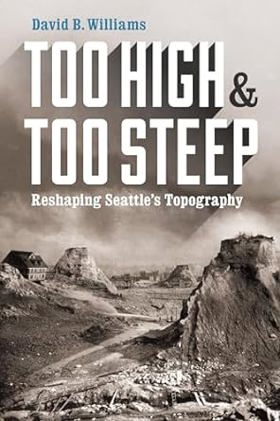
In Too High and Too Steep, David B. Williams uses his deep knowledge of Seattle, scientific background, and extensive research and interviews to illuminate the physical challenges and sometimes startling hubris of these large-scale transformations, from the filling in of the Duwamish tideflats to the massive regrading project that pared down Denny Hill. Residents and visitors in today’s Seattle would barely recognize the landscape that its founding settlers first encountered. As the city grew, its leaders and inhabitants dramatically altered its topography to accommodate their changing visions. In Too High and Too Steep, David B. Williams uses his deep knowledge of Seattle, scientific background, and extensive research and interviews to illuminate the physical challenges and sometimes startling hubris of these large-scale transformations, from the filling in of the Duwamish tideflats to the massive regrading project that pared down Denny Hill. In the course of telling this fascinating story, Williams helps readers find visible traces of the city’s former landscape and better understand Seattle as a place that has been radically reshaped. xxii, 239 pages : illustrations, maps ; 24 cm CIRC [ 1 ]
|
2015 |
|
Too cold to snow a memoir by Sue A. Fountain 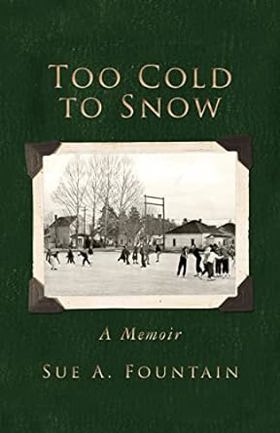
"A personal memoir about growing up in a small town during the time period of 1945-1965. This was a pivotal time in our recent history, and the pieces I have written reflect the growing up and loss of innocence of not only me, but the town of Bend, Oregon"--Publisher description 101 pages : black and white illustrations ; 22 cm CIRC [ 1 ]
|
2013 |
|
|
1938 |
|
Tofino and Clayoquot Sound a history by Margaret Horsfield , Ian Kennedy 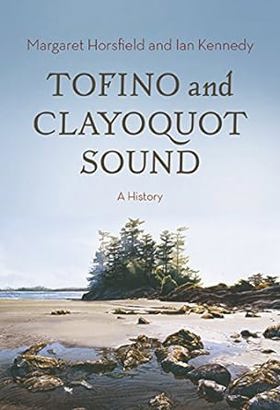
"Tofino and Clayoquot Sound delves into all facets of the region's history, bringing to life the chronicle that started with the dramatic upheavals of geological formation and continues to the present day. The book tours through the history of the Hesquiaht, Ahousaht and Tla-o-qui-aht as well as other nations that inhabited the area in earlier times. It documents the arrival of Spanish, British and American traders on the coast and their avid greed for sea otter pelts. It follows the development of the huge fur seal industry and its profound impact on the coast. It tracks the establishment of reserve lands and two residential schools. The coming of World War II is discussed, as is the installation of a large Air Force base near Tofino, which changed the town and area dramatically. From here the story spirals into the post-road period. With gravel and asphalt came tourism, newcomers, the counter-culture of the 1960s, the establishment of Pacific Rim National Park and, of course, surfing. The book also addresses logging—which became the main industry in the area—and its questionable practices, going into detail about the "War in the Woods"—the world-famous conflict and largest mass arrest in Canadian history." -- Amazon.com viewed August 3, 2020 xvi, 622 pages : illustrations, maps, portraits ; 24 cm. CIRC [ 1 ]
|
2014 |
|
To win the Indian heart music at Chemawa Indian School by Melissa Parkhurst 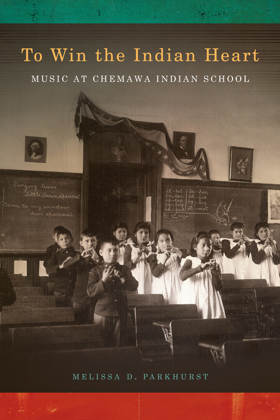
"Since 1879, Indian children from all regions of the United States have entered federal boarding schools - institutions designed to assimilate them into mainstream society. Chemawa Indian School in western Oregon, one of the nation's oldest and the longest still in continuous operation, is an emblem of a system that has intimately impacted countless lives and communities. In To Win the Indian Heart: Music at Chemawa Indian School, Melissa Parkhurst records the history of the school's musical life. She explores the crucial role music was meant to play in the total transformation of Indian children, and the cultural recovery and resiliency it often inspired instead. Parkhurst chronicles the complex ways in which students, families, faculty, and administrators employed music, both as a tool for assimilation and, conversely, as a vehicle for student resistance - a subject long overlooked in literature on Indian education and the assimilation campaign. Combining oral histories of Chemawa alumni with archival records of campus life, the book examines the prominent forms of music making at Chemawa - school band, choirs, private lessons, pageants, dance, garage bands, and powwows. Parkhurst traces the trajectory of federal Indian policy, highlighting students' creative responses and the ways in which music reveals the inherent contradictions in the U.S. government's assimilation practices."--Back cover 236 pages : illustrations ; 23 cm. CIRC [ 0 ]
|
2014 |
|
To the woods sinking roots, living lightly, and finding true home by Evelyn Searle Hess 
To the Woods is a tale of adventure, inspiration, and living life in concert with nature. It is the true story of Evelyn Searle Hess, who, in her late fifties, walks away from the world of modern conveniences to build a new life with her husband on twenty acres of wild land in the foothills of Oregon's Coast Range. To the Woods tracks the natural history of place through the seasons. It describes Hess's day-to-day challenges, from living in a trailer without electricity or indoor plumbing to excavating a pond to dealing with health crises. It explores the joys of living simply, building a relationship with the natural world, and awakening to the interconnectedness of all life. Hess's careful attention to detail, her extensive knowledge of local flora and fauna, and her thoughtful philosophical meditations add richness to her engaging prose. To the Woods will appeal to readers interested in the environment and sustainable living, and to anyone who has ever considered fleeing the city for a life closer to nature. xvi, 175 pages ; 23 cm CIRC [ 0 ]
|
2010 |
|
To the sundown side the mountain man in Idaho by Roland O. Byers 
A study of the Mountain Men of Idaho published by The University of Idaho. Includes chapters on Chief Black Elk, Indian foods, the Buffalo Hunt, Rocky Mountain Rendevous, more. 214 pages : illustrations ; 22 cm. CIRC [ 1 ]
|
1979 |
|
To the promised land a history of government and politics in Oregon by Tom Marsh 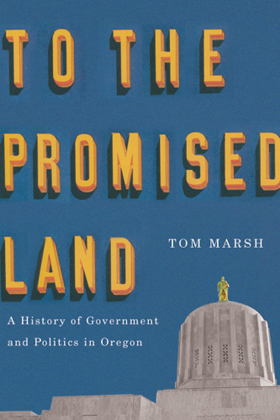
A comprehensive political history of Oregon, To the Promised Land examines the social and economic changes the state has pioneered over almost two hundred years. Highlighting major political figures, campaigns, and ballot measures, Tom Marsh traces the evolution of Oregon from incorporated territory to a state at the forefront of national environmental and social movements. From the first letter sent to Congress by Jason Lee, urging them to take possession of the Oregon Country for the United States, to John Kitzhaber’s precedent-setting third term as governor; from the land frauds of the early twentieth century to the state’s land-use planning goals; from the Beach Bill to the Bottle Bill, this book tells Oregon’s story. To the Promised Land provides the first general history of Oregon’s state government and political leaders. Marsh combines the clear expository style of a professional educator with the expertise of a political inside —a former U.S. history high school teacher, he also served two terms in the Oregon House of Representatives. Featuring interesting trivia, historical photographs, and biographical sketches of key politicians, this book will be a popular volume for general readers and public libraries as well as for textbook use in secondary and higher education classrooms. xvi, 508 pages : illustrations, maps ; 23 cm CIRC [ 0 ]
|
2012 |
|
To the Columbia gateway the Oregon Railway and the Northern Pacific, 1879-1884 by Peter J. Lewty 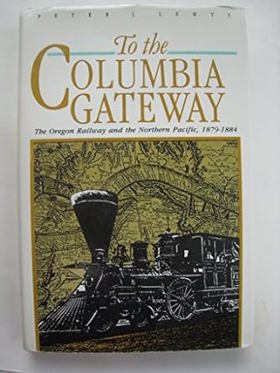
Fascinating history of the construction of the competitive transportation system in the inland Columbia River basin in the 19th century that linked the Pacific Northwest to eastern markets and provided easier access to the Orient. This volume covers the origins of the Northern Pacific Railroad and the Oregon Railway and Navigation Co., the rise and fall of Henry Villard's first empire, and the completion of overland railways converging on the Columbia Gateway. The author successfully conveys the excitement as well as the enormous amount of time, money and hard work required to build the Pacific Northwest rail lines. Illustrated with black and white photos. With maps. 202 pages with index. xxv, [1], 202 pages, 16 unnumbered pages of plates : illustrations, maps, portraits ; 24 cm CIRC [ 1 ]
|
1987 |
|
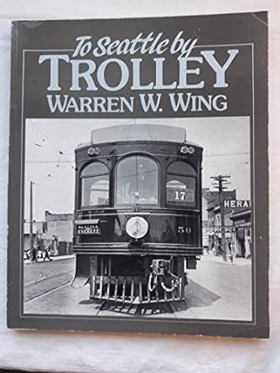
To Tacoma by trolley the Puget Sound Electric Railway by Warren W. Wing 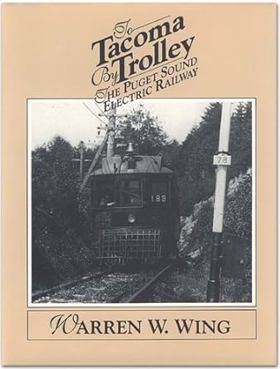
Wonderful history of the Puget Sound Electric Railway, part of Stone & Webster's empire of west coast interurbans. With beautiful black and white photos on almost every page plus 8 pages in color. Includes 200 photos, maps and complete equipment roster. 144 pages. 144 pages : illustrations (some color), maps ; 29 cm CIRC [ 1 ]
|
1995 |
|
To share, not surrender Indigenous and settler visions of treaty making in the colonies of Vancouver Island and British Columbia by Peter Cook , Neil Vallance , John S. Lutz , Graham Brazier , Hamar Foster 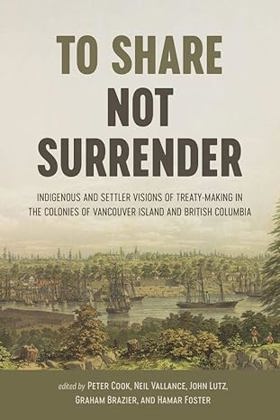
"Too often, history and knowledge of Indigenous-settler conflict over land take the form of confidential reports prepared for court challenges. To Share, Not Surrender offers an entirely new approach, opening scholarship to the public and augmenting it with First Nations community expertise. The collection appraises the historical and present-day relevance of treaty-making in the colonies of Vancouver Island and British Columbia. The authors take us back to when James Douglas and his family relocated to Fort Victoria on Vancouver Island in 1849, critically tracing the transition from treaty-making in the colony of Vancouver Island to reserve formation in the colony of British Columbia. Informed by cel'an'en - "our culture, the way of our people" - this multivocal work explicitly addresses the tensions between academic research, Indigenous knowledge, and local experience. The collection includes essays, translations/interpretations of the treaties into the SENĆOŦEN and Lekwungen languages, and contributions by participants of the Songhees, Huu-ay-aht, and WSANEC peoples. The chapters demonstrate that the continuing inability to arrive at equitable land-sharing arrangements stem from a fundamental absence of will with respect to accommodating First Nations world views. To Share, Not Surrender is an attempt to understand why, and thus to advance the urgent task of reconciliation in Canada."-- Provided by publisher xiv, 354 pages : illustrations, maps ; 24 cm CIRC [ 0 ]
|
2021 |
|
|
1988 |
|
To harvest, to hunt stories of resource use in the American West by Judy L. Li 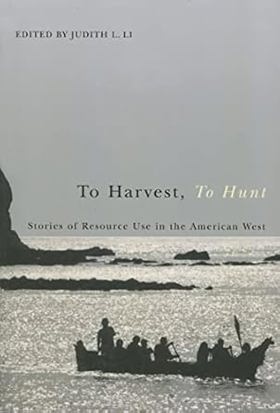
To Harvest, To Hunt reveals how diverse peoples have valued and used natural resources throughout the history of the American West. Drawing on family letters, oral traditions, historical records, and personal experience, the book's contributors offer readers new perspectives on the land they live on, the harvests they consume, and the natural resources they manage. Editor Judy Li weaves a tapestry of cultures and voices – from Pueblo tribes in the Southwest and Chinese fishermen in California to Mexican braceros in Oregon and Basque sheepherders in Idaho – as she details the region's historical dependence on the land and sea. Otter, walrus, abalone, grasslands, timber, and water are some of the vital resources discussed by writers, anthropologists, historians, and biologists in stories that tell how cultures struggle to adapt in changing environments. Spanning the last 200 years, To Harvest, To Hunt represents Native Americans, Native Alaskans, and Mexican, European, and Asian immigrants as varied in their perspectives as the landscapes the book describes. Readers will come to appreciate the region's once-abundant resources and find this book an illuminating overview of the dynamic between people and the land. Contributors: John Bieter, Dolly Garza, Erlinda Gonzales-Berry, Steven W. Hackel, David Hatch, Deanna Kingston, Jim LeMonds, Irene Martin, David Mas Masumoto, Margaret Mathewson, John Nichols, Patti Sakurai, and Charles Wilkinson. 192 pages : illustrations ; 23 cm CIRC [ 0 ]
|
2007 |
|
To fish in common the ethnohistory of Lummi Indian salmon fishing by Daniel L. Boxberger , Chris Friday 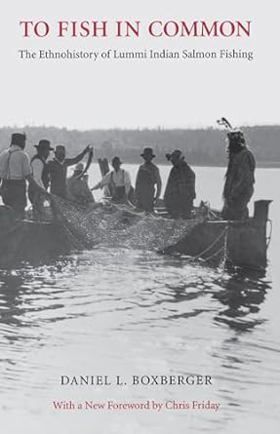
"By focusing on the history of control over productive resources (in this case salmon, methods of harvest, processing, capital investment, and markets) Boxberger shows how the Lummi slid from independence and self-sufficiency to dependency, underdevelopment, and poverty. . . . Not only is it an excellent, in-depth study of the Lummi case, it can also serve as a metaphor for the larger question of Native American treaty rights and the resource provisions of agreements." --Pacific Historical Review xviii, 212 pages : illustrations ; 22 cm. CIRC [ 1 ]
|
2000 |
|
To build a ship by Don Berry 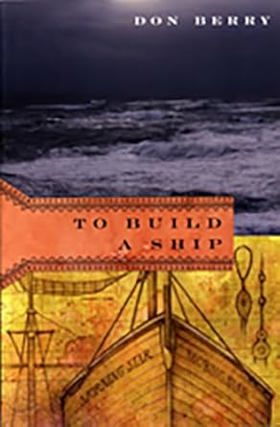
In To Build a Ship, Don Berry explores the extent to which a man can betray himself and his morality for a dream or an obsession. It's the story of a handful of settlers who take up land in the fertile Tillamook Bay Valley in the early 1850s-defiant dreamers battling the wilderness. With impenetrable mountains at their backs and the open sea as their sole road to trade, they are suddenly isolated from the outside world when the only captain willing to enter their harbor dies. With the survival of their new settlement threatened, they decide to build their own schooner. At first the challenge brings out the best in the men, but soon the tensions inherent in this monumental task engulf them. Obstacles accumulate and complications mount: a death, a murder trial, trouble with restive Indians, and finally a travesty of justice. Excitement, shock, and gripping drama mark this story of men pushed to the point of madness as they see the Morning Star of Tillamook slowly take shape on the wild Pacific shore. Don Berry's three novels about the Oregon Territory — Trask, Moontrap, and To Build a Ship — are as rich and compelling today as when they were first published more than 40 years ago. The new OSU Press editions of these books include an introduction by Jeff Baker, book critic for The Oregonian. 203 pages ; 23 cm CIRC [ 0 ]
|
2004 |
|
Tiná7 cht ti temíxw = We come from this land a walk through the history of the Squamish people by Squamish (First Nation) 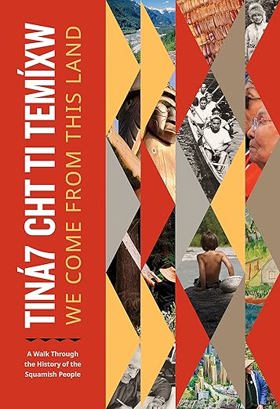
"From the watersheds of the Squamish and Mamquam Rivers and Howe Sound in the north to English Bay, False Creek, and Burrard Inlet in the south, Sḵwx̱wú7meshulh Aysáy̓ch (Squamish Territory) encompasses saltwater and rushing rivers, old-growth forests at valley bottoms, and alpine meadows high above the ocean. Tiná7 Cht Ti Temíxw---We Come From This Land is a powerful introduction to the vast history of the Sḵwx̱wú7mesh people. Drawing on stories from our Elders and in-depth research, we trace our history and culture from ancient times to the present day, offering a launching point for discovering more about the places, people, and stories found here."--Page 4 of cover xi, 401 pages : illustrations (some color), maps ; 24 cm CIRC [ 0 ]
|
2024 |