Catalog of British Columbiana and Pacific Northwest Americana
Encyclopedia Cascadia Catalog contains book titles of mostly non-fiction Pacific Northwest Coast of North America Titles (primarially British Columbia, Idaho, Oregon and Washington State) in an easy-to-understand title catalog. If you see a link with this badge ONLINE CIRC it means that there is an online institution that provides free access to that title. In some cases there may be more than one institution hosting the title digitally.
| Catalog Title | Published |
|---|---|
|
Tribal histories of the Willamette Valley by David G. Lewis 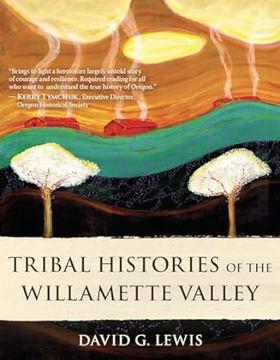
"The Willamette Valley is rich with history -- its riverbanks, forests, and mountains home to the tribes of Kalapuya, Chinook, Molalla, and more for thousands of years. This history has been largely unrecorded, incomplete, poorly researched, or partially told. In these stories, enriched by photographs and maps, Oregon Indigenous historian David G. Lewis combines years of researching historical documents and collecting oral stories, highlighting Native perspectives about the history of the Willamette Valley as they experienced it. The timeline spans the first years of contact between settlers and tribes, the takeover of tribal lands and creation of reservations by the US Federal Government, and the assimilation efforts of boarding schools. Lewis shows the resiliency of Native peoples in the face of colonization. Undoing the erasure of these stories reveals the fuller picture of the colonization and changes experienced by the Native peoples of the Willamette Valley absent from other contemporary histories of Oregon."-- Provided by publisher 238 pages : illustrations, maps ; 23 cm CIRC [ 1 ]
|
2023 |
|
This place is who we are stories of Indigenous leadership, resilience, and connection to homelands by Katherine Gordon , Dallas Smith 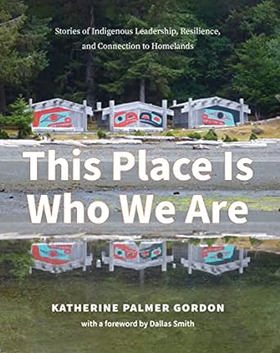
"This Place Is Who We Are profiles Indigenous communities in central and northern coastal BC that are reconnecting to their lands and waters--and growing and thriving through this reconnection. Indigenous peoples and cultures are integrally connected to the land. Well-being in every sense--physical, social, environmental, economic, spiritual and cultural--depends on that relationship, which is based on a fundamental concept: when the land is well, so are the people. With increasing strength, Indigenous peoples in this vast region of BC--which spans the homelands of more than two dozen First Nations and one of the largest remaining coastal temperate rainforests in the world--are restoring what has been lost through environmental depredation and healing what has been devastated by colonization. This volume is a collection of ten of these inspiring stories. X̱aayda voices explain how their Rediscovery camps are healing and empowering their youth; Dzawada̱'enuxw Hereditary Chief Maxwiyalidizi K'odi Nelson shares the story of building a healing centre and ecolodge; Wei Wai Kum Chief Christopher Roberts describes the challenges and opportunities for an urban First Nation looking to prosper while protecting the environment and ancient Ligʷiłdaxʷ history and living cultural values; and many more Indigenous leaders share their own experiences of growth, strength and reconnection. Thoughtful and inspiring, This Place Is Who We Are illustrates what can be accomplished when conservation and stewardship are inextricably intertwined with the prosperity and well-being of communities."-- Provided by publisher 245 pages : color illustrations, color map, color portraits ; 26 cm CIRC [ 0 ]
|
2023 |
|
Stewards of splendour a history of wildlife and people in British Columbia by Jennifer Bonnell , Royal British Columbia Museum (Publisher) 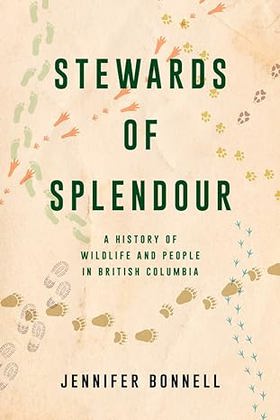
"The subject of wildlife both unites and deeply divides British Columbians. From concern over dwindling orca populations to deeply political debates over hunting and harvesting, questions surrounding fish and wildlife harvest rights and methods, and the effects of industrial resource extraction, tourism, and residential development upon wildlife populations, have produced an atmosphere of conflict and distrust in BC. Spanning the deep history of human relationships with wildlife, from pre-contact Indigenous land stewardship to the present day, Stewards of Splendour explores the ways that government, Indigenous communities and stakeholder groups have sought to shape and deliver, or responded to the consequences of, wildlife management policies and practices and resource development activities in the province. Throughout, it emphasizes the circumstances and initiatives that made and continue to make BC different, from the astonishing diversity of our ecosystems to our unusually high proportion (over 94%) of public land while profiling instances of made-in-BC approaches. Drawing upon a rich body of historical, scientific and policy-related literature and over 80 interviews, Stewards of Splendour examines changing societal values around wildlife and the implications of these changes for wildlife managers today."-- Provided by publisher xxiv, 589 pages, 8 unnumbered pages of plates : illustrations (some color), map (some color) ; 23 cm CIRC [ 0 ]
|
2023 |
|
Pacific voyages the story of sail in the great ocean by Gordon Miller 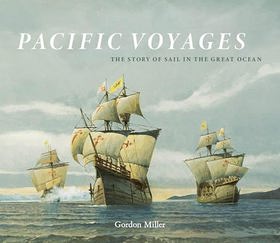
"In Western myths and imagination, the Pacific is the home of soft, warm, gentle trade winds, idyllic island lagoons and waving palms--the exotic earthly paradise of escapists, adventurers and romantics. Until James Cook showed otherwise, eighteenth-century Europeans also believed this ocean to contain a great southern continent of untold riches and beauty. The islands of the South Pacific can indeed be enchanting, their charm often exceeding expectations, but as European mariners realized when they first arrived here in the sixteenth century, the Pacific Ocean is also a region of ferocious tropical cyclones, treacherous, reef-littered atolls, wearying doldrums and mind-numbing distances. This book is maritime artist and historian Gordon Miller's tribute to the humble little ships that first ventured across the great Pacific, and the brave sailors that manned them. It is a brief, selective and condensed story of the charting, exploitation and occupation of the Pacific Ocean, mostly in small, wooden ships, with only wind and human muscle for power. These maritime pioneers united North and South America, Australia, New Zealand, the entire Pacific Ocean, all the coasts that surround it, and all the islands within. Even confined to the last four centuries of oceangoing sail, this is a large and complex story--a story brought to life by Miller's carefully researched text and masterfully rendered maritime paintings."-- Provided by publisher xi, 252 pages : illustrations (chiefly color), color maps ; 27 x 30 cm CIRC [ 0 ]
|
2023 |
|
Alexander Robb and the making of British Columbia the life and letters home of an Ulster-Scots pioneer by B. R. D. White , Ulster Historical Foundation (Publisher) 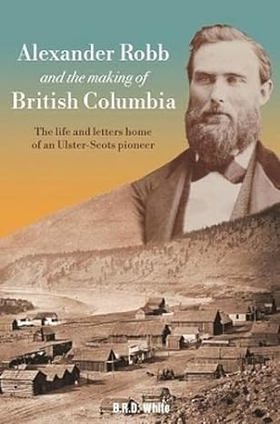
In 1862 Alexander Robb (1839-1910) was one of a group of young men from County Down, Ireland, who travelled to British Columbia. They were among the thousands seeking to make their fortunes in the goldfields of the Cariboo. Finding no gold and lucky not to starve, Alex got work among the labourers building the Cariboo wagon road. After several years struggling to make a living, he and an Englishman were the first two Europeans to homestead in the Nicola Valley of central British Columbia. Later, appointed by the province as superintendent, he oversaw building the first roads in the valley. In a series of letters to those at home in County Down, Alex told of his experiences as a labourer, rancher and public servant in a young colony that was transitioning into a province of the new Canada. Illness and death in his family took him back to Ireland where he steered the Robb farm successfully through a period of agricultural recession and major political change while continuing his commitment to public service. Alexander Robb’s remarkable story of hardship and perseverance is told along with a full revision of his unique letters. The book also contains insights into the lives of his comrades from County Down and elsewhere who had sought their fortunes in the Cariboo. xi pages, 1 unnumbered page, 177 pages, 20 unnumbered pages of plates : illustrations (some color), maps, portraits ; 24 cm CIRC [ 0 ]
|
2023 |
|
Dominion the railway and the rise of Canada by Stephen R. Bown 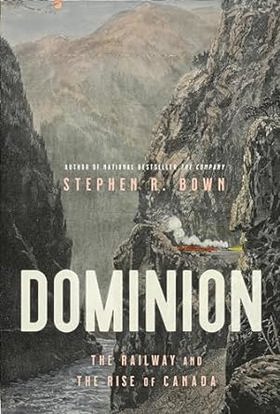
"Stephen R. Bown continues to revitalize Canadian history with this thrilling account of the engineering triumph that created a nation. In The Company, his bestselling work of revisionist history, Stephen Bown told the dramatic, adventurous and bloody tale of Canada's origins in the fur trade. With Dominion he continues the nation's creation story with an equally thrilling and eye-opening account of the building of the Canadian Pacific Railway. In the late 19th century, demand for fur was in sharp decline. This could have spelled economic disaster for the venerable Hudson's Bay Company. But an idea emerged in political and business circles in Ottawa and Montreal to connect the disparate British colonies into a single entity that would stretch from the Atlantic to the Pacific. With over 3,000 kilometers of track, much of it driven through wildly inhospitable terrain, the CPR would be the longest railroad in the world and the most difficult to build. Its construction was the defining event of its era and a catalyst for powerful global forces. The times were marked by greed, hubris, blatant empire building, oppression, corruption and theft. They were good for some, hard for most, disastrous for others. The CPR enabled a new country, but it came at a terrible price. In recent years Canadian history has been given a rude awakening from the comforts of its myths. In Dominion, Stephen Bown again widens our view of the past to include the adventures and hardships of explorers and surveyors, the resistance of Indigenous peoples, and the terrific and horrific work of many thousands of labourers. His vivid portrayal of the powerful forces that were molding the world in the late 19th century provides a revelatory new picture of modern Canada's creation as an independent state."-- Provided by publisher 400 pages, 8 unnumbered pages of plates : illustrations, maps ; 25 cm CIRC [ 0 ]
|
2023 |
|
Terminus Town Port Moody's transition through time by Ralph Drew 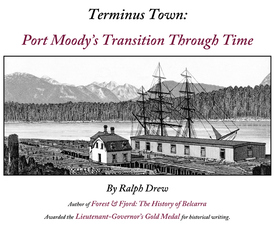
Port Moody owes its existance to the order-in-council by the 'Dominion Government of Canada' on October 4th, 1879, that established 'Port Moody' as the 'Western Terminus' of the transcontinental railway. Terminus Town describes the construction of the CPR railway along the north shore of the Fraser River between Port Moody and Yale making extensive use of photographs taken during construction. x, 385 pages : illustrations, maps, portraits ; 23 cm. CIRC [ 0 ]
|
2023 |
|
E.J. Hughes, life at the lake by Robert Amos , E. J. Hughes 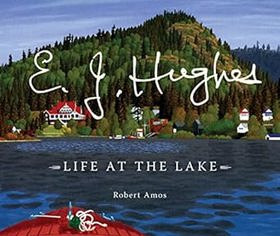
"In the most intimate volume yet about prolific Canadian painter E. J. Hughes, the artist’s official biographer Robert Amos brings us Life at the Lake, capturing the years Hughes and his wife Fern spent at their home on Shawnigan Lake, Vancouver Island. Following Hughes’s service as a war artist, in 1946 he and Fern looked for a place to buy in Victoria. Then, in 1951, they spotted an ad for a property on Shawnigan Lake, about 40 kilometres north of the city. The quiet lakeside existence he and Fern established suited his temperament and artistic needs perfectly. In addition to reproductions of all of his Shawnigan-themed oils and watercolours, the book includes dozens of sketches, colour notes, local news clippings, letters, and illuminating excerpts from recorded interviews with Pat Salmon, Hughes’s longtime friend and assistant. With a keen appreciation for the quotidian, Amos captures lakeside life at Shawnigan, with Hughes’s observations on birds and trees, and trips to local shops and restaurants. He tells of an unusually snowy winter that slowed the delivery of finished paintings to the post office and, on a more sombre note, the gradual progression of Fern’s muscular dystrophy. The book shares insights into the relationships--with Fern, Pat, and agent Max Stern--that allowed Hughes to achieve great success as an artist while living a quiet existence at Shawnigan Lake. For the Hughes fan and anyone who enjoys learning about the everyday lives of artists, this latest addition to the Hughes pictorial canon is a must."-- Provided by publisher 119 pages : illustrations (chiefly colour), map ; 21 x 25 cm CIRC [ 0 ]
|
2023 |
|
Galena Bay odyssey reflections of a hippie homesteader by Ellen Schwartz 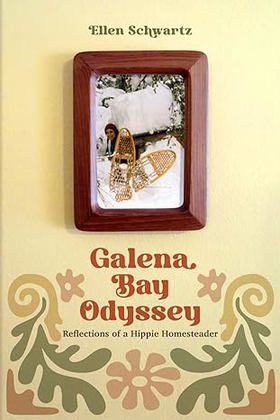
"A writer and educator reflects on the idealistic, tumultuous, and eye-opening time she spent as a back-to-the-land hippie homesteader in Kootenays in the 1970s. What compelled a nice Jewish girl from the suburbs of New York to spend a decade of her life as a hippie homesteader in the BC wilderness? Galena Bay Odyssey traces Ellen Schwartz's journey from a born-and-raised urbanite who was terrified of the woods to a self-determined logger, cabin-builder, gardener, chicken farmer, apiarist, and woodstove cook living on a communal farm in the Kootenays. Part memoir, part exploration of what motivated the exodus of young hippies--including American expatriates, like Ellen and her husband, Bill--to go "back to the land" in remote parts of North America during the 1960s and '70s, this fascinating book explores the era's naivety, idealism, and sense of adventure. Like most "back to the land" books, Galena Bay Odyssey describes the physical work involved in clearing land, constructing buildings, and living off of what they produced, but it also traces the complicated journey of discovery this experience brought to Ellen and Bill. Now, nearly half a century later, Ellen reflects on what her homesteader experience taught her about living more fully, honestly, and ecologically."-- Provided by publisher 265 pages, 14 unnumbered pages of plates : illustrations ; 23 cm CIRC [ 0 ]
|
2023 |
|
Syuwén ct:sununéymuxw mulstímuxw, Methodist ťiwi'ulhéwtxw 'u Kanata, Coqualeetza ťakw 'i' skwool The history that we share by Robert Janning , Adam Manson (Translator) 
"In The History That We Share, historian Robert Janning presents a clear and comprehensive depiction of the relationship that existed between the Snuneymuxw First Nation and the Methodist Church of Canada from the time of contact to the day Snuneymuxw children were first sent to the Coqualeetza Residential School, in Sardis, British Columbia. This book gives readers an opportunity to learn what day to day life was like in a First Nation community prior to the implementation of the Indian residential school system in British Columbia. Despite the fact that fear, guilt and shame have for many years conspired to conceal much of the history that we share, an immense body of documentation chronicling our past has been left to collect dust on the shelves of archives and libraries for a century or more. Driven by a consuming desire to better understand how we became who we are today, Janning launched an investigation that took five years to complete. After collecting and chronologically arranging his findings, he was determined that the evidence would get to see the light of day. After all, if it is the truth that will set us free, then is it not high time we took a long look in our rearview mirror?" -- Back cover xxx, 317 pages : maps, portraits, black and white photographs ; 29 cm CIRC [ 0 ]
|
2023 |
|
It stops here standing up for our lands, our waters, and our people by Rueben George , Michael Simpson 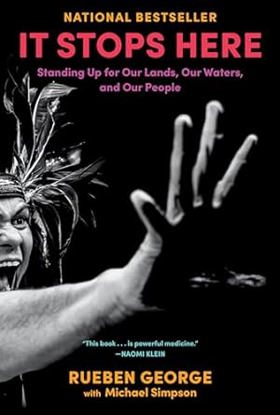
"A personal account of one man's confrontation with colonization that illuminates the philosophy and values of a First Nation threatened by the Trans Mountain pipeline. It Stops Here is the story of the spiritual, cultural, and political resurgence of a nation taking action to reclaim their lands, waters, law, and food systems in face of colonization. The book recounts the intergenerational struggle of the Tsleil-Waututh to overcome the harms of colonization and the powerful stance they have taken against the expansion of the Trans Mountain Pipeline--a fossil fuel megaproject that would triple the capacity of tar sands bitumen piped to tidewater on their unceded territory and result in a sevenfold increase in oil tankers moving through their waters. The book provides a firsthand account of this resurgence as told by one of the most prominent leaders of the widespread opposition to the Trans Mountain Pipeline expansion--Rueben George of the Tsleil-Waututh Nation. He has devoted more than a decade of his life to fighting this project and shares stories about his family's deep ancestral connections to these waters that have provided the Tsleil-Waututh with a rich abundance of foods and medicines since time immemorial. Despite the systematic attempts at cultural genocide enacted by the colonial state, Rueben recounts how key leaders of the community, such as his grandfather, Chief Dan George, always taught the younger generations to be proud of who they were and to remember the importance of their connection to the inlet. Part memoir, part call to action, It Stops Here urges policy makers to prioritize sacred territory over oil profits and insists that colonial Canada change its perspective from bending natural resources to their will to respecting this territory and those who inhabit it."-- Provided by publisher xxiii, 258 pages : illustrations ; 24 cm CIRC [ 0 ]
|
2023 |
|
Sheltering in the backrush a history of Twin Islands by Jeanette Taylor 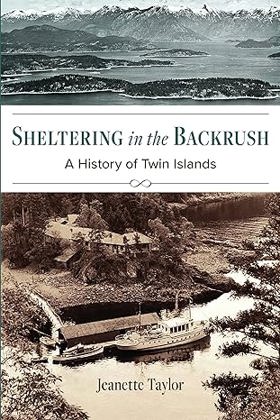
"Coastal historian Jeanette Taylor unveils the unique past of Twin Islands. Twin Islands form part of the lacey fringe at the southern edge of the Discovery Islands archipelago, where it meets the north Salish Sea. This is the interface between wilderness and urban settlement. To the north, heavily treed slopes rise vertically from the sea and fast tides churn through the constricted passages of a maze of islands and inlets. Navigating these waters is a white-knuckle challenge many recreational boaters avoid, ending their travels to the east in Desolation Sound Marine Park. To the south, the topography relaxes into a more habitable environment of open waters, villages, towns and highways. Those who do find their way to Twin are richly rewarded by a beautiful and tranquil destination--with a fascinating past. Discovery of a trove of sepia-toned pictures of Twin Islands from the late 1930s drew Jeanette Taylor to research and document the history of the islands. She found a live-wire cast of characters typical of remote places, including a one-legged sheep farmer; an aristocratic Irish priest who was the victim of an unsolved murder; American tycoons fleeing Japan on the cusp of World War II; German royalty; and an anonymous heiress who rescued the islands from logging. Through it all, Taylor found a thread among Twin's people, passed from one generation to the next--like an invisible torch handed over with the deed: a love of nature and the place. Illustrated with historical photos and engagingly written, Sheltering in the Back Rush is an important addition to Harbour Publishing's catalogue of coastal BC history."-- Provided by publisher 160 pages : illustrations, maps ; 23 cm CIRC [ 0 ]
|
2023 |
|
The notorious Georges crime and community in British Columbia's northern interior, 1909-25 by Jonathan Swainger 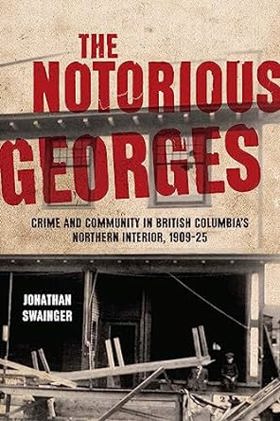
"Boozy and boisterous. The Georges--the communities of South Fort George and Fort George that ultimately became Prince George--have had a seedy reputation since before the First World War, branded Canada's "most dangerous city" more than once. Is Prince George really such a bad lad? The Notorious Georges takes another look, exploring how the local pursuit of respectability collided with caricatures of a riotously ill-mannered settlement frontier in its early years. Anxious that the Georges were being overlooked by the provincial government and venture capitalists, municipal leaders blamed Indigenous and mixed-heritage people, non-preferred immigrants, and transient laborers for local crime. Jonathan Swainger combs through police and legal records, government publications, and media commentary to demonstrate that the reputation was not only exaggerated but also unfair. Repeatedly cast as the bad apple, there was actually little to distinguish the Georges from the rest of a province that was admittedly a truculent place before the 1930s. And "respectable" white residents were responsible for the lion's share of the disorder. This lively account ultimately tells us about more than a particular community's identity. It also sheds light on small-town disaffection and unease with a diminished place in modern Canada."-- Provided by publisher xix, 288 pages : illustrations, maps ; 23 cm. CIRC [ 0 ]
|
2023 |
|
New heights transforming Seattle's iconic Space Needle by Olson Sundberg (Firm) , Olson Kundig (Firm) 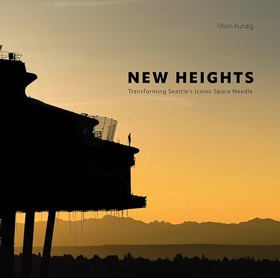
Originally built for the 1962 World's Fair, the Space Needle quickly became an international icon of the Pacific Northwest and a symbol of Seattle. At the time of its construction, the tower pointed the way toward the future with a sense of optimism, possibility, and invention. In its 55th year, the Space Needle is again representing an enhanced future with the Century Project, a holistic renovation of the upper levels led by Olson Kundig that repositions the iconic tower for its next fifty years. 'New Heights: Transforming Seattle's Iconic Space Needle' documents this latest chapter of the Space Needle's story with an in-depth look at the innovations, challenges, and triumphs realized by the client and project team, as seen through the eyes of the architects 191 pages : chiefly color illustrations ; 26 cm CIRC [ 0 ]
|
2023 |
|
Maritime names of Washington by Richard W. Blumenthal 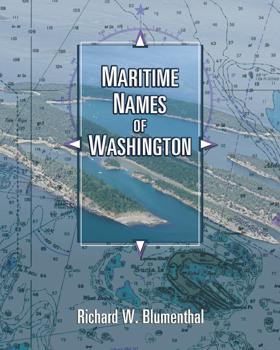
Maritime Names of Washington is a wonderful companion if you are a boating enthusiast or simply curious about Washington’s maritime history. This book is a scholarly study on the origins of place names for our coastal and inland waters. It covers every name that appears on current nautical charts, from the Pacific Coast to the Strait of Juan de Fuca, the San Juans, and Puget Sound from Port Townsend to Olympia. It includes every named island, bay, point, inlet, pass, harbor, rock, channel, strait, canal, peninsula, sound, and shoal. The book also features many local and historical names that are not shown on the charts. The manuscript generally identifies the individual who named the place, when, why, and for whom. It also identifies the chart where the name first appeared and the early settlement history of many places. The manuscript is richly annotated and uses many quotes from the observations of our earliest explorers to give readers a glimpse of what Puget Sound country looked like 200+ years ago. Each of our early explorations is discussed in detail as they relate to individual place names. The book contains 170 pictures and 44 historical nautical charts from 1790 to 1900 that show many of the names ix, 501 pages : illustrations, maps, charts ; 26 cm CIRC [ 1 ]
|
2023 |
|
Spirit whales & sloth tales fossils of Washington state by Elizabeth A. Nesbitt , David B. Williams 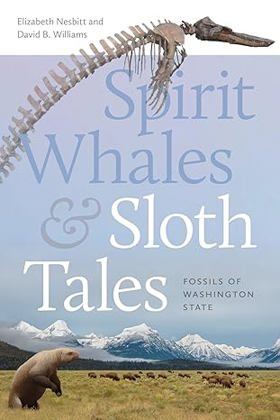
"From trilobites near the Idaho border and primitive horses on the Columbia Plateau to giant bird tracks near Bellingham and curious bear-like beasts on the Olympic Peninsula, fossils across Washington State are filled with clues of past life on Earth. With abundant and well-exposed rock layers, the state has fossils dating from Ice Age mammals only 12,000 years old back to marine invertebrates more than 500 million years old. In Spirit Whales and Sloth Tales, paleontologist Elizabeth A. Nesbitt teams up with popular science writer David B. Williams to offer a tour through more than a half billion years of natural history. Following an introduction to key concepts, twenty-four profiles-each featuring a unique plant, animal, or environment-tell stories of individual fossils, many of which are on display in Washington museums. The paleontology of Washington is brought to life with details of the fossils' discovery and extraction, their place in geological time, and the insights they provide into contemporary issues like climate change and species extinction"-- Provided by publisher x, 214 pages : color illustrations, color maps ; 24 cm CIRC [ 0 ]
|
2023 |
|
The American West and its interpreters essays on literary history and historiography by Richard W. Etulain 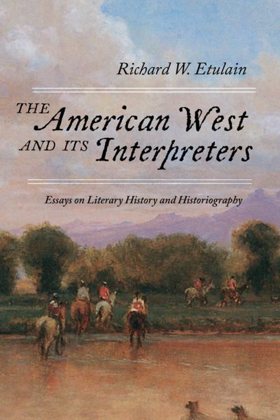
Distinguished historian Richard W. Etulain brings together a generous selection of essays from his sixty-year career as a specialist on the US West in this essential volume. Each essay provides an invaluable overview of the rise of western literary history and historiography--including insightful evaluations of individual historians--revealing summaries of regional literature and discussions of western stories yet to be told. Together these writings furnish readers with useful considerations of important subjects about the American West. All those interested in the American West and its interpreters will find these illuminative moments of literary history and historiography especially appealing xiii, 311 pages ; 23 cm CIRC [ 0 ]
|
2023 |
|
The making of the Northwest Forest Plan the wild science of saving old growth ecosystems by K. Norman Johnson , Jerry F. Franklin , Gordon H. Reeves , Debora L. Johnson (Contributor), Susan Jane M. Brown 
"Tree sitters. Logger protests. Dying timber towns. An iconic species on the brink. The Timber Wars consumed the Pacific Northwest in the late 1980s and early1990s and led political leaders to ask scientists for a solution. The Northwest Forest Plan was the result. For most of the twentieth century, the central theme of federal forest management in the Pacific Northwest had been logging old-growth forests to provide a sustained yield of timber. During the 1970s and 1980s, however, a series of studies by young scientists highlighted the destructive impact of that logging on northern spotted owls, salmon, and the old-growth ecosystem itself. Combining this new science with newly minted environmental laws like the Endangered Species Act, environmental activists obtained court injunctions to stop old-growth logging on federal land, setting off a titanic struggle in the Pacific Northwest to find a way to accommodate conservation imperatives as well as the logging that provided employment for tens of thousands of people. That effort involved years of controversy and debate, federal courts, five science assessments, Congress, and eventually the president of the United States. It led to creation of the Northwest Forest Plan, which sharply and abruptly shifted the primary goal of federal forestry toward conserving the species and ecosystems of old-growth forests. Scientists went from spectators to planners and guides, employing their latest scientific findings and expertise to create a forest plan for 20 million acres that would satisfy the courts. The largest upheaval in federal forest management in history had occurred, along with a precipitous decline in timber harvest, and there was no going back. In this book, three of the scientists who helped craft that change tell the story as they know it: the causes, development, adoption, and implementation of the Northwest Forest Plan. The book also incorporates personal reflections from the authors, short commentaries and histories from key figures- including spotted owl expert Eric Forsman-and experiences from managers who implemented the plan as best they could. Legal expert Susan Jane M. Brown helped interpret court cases and Debora Johnson turned spatial data into maps. The final chapters cover the plan's ongoing significance and recommendations for conserving forest and aquatic ecosystems in an era of megafires and climate change."-- Provided by publisher xv, 457 pages, 16 unnumbered pages of plates : illustrations (some color), maps (some color) ; 23 cm CIRC [ 0 ]
|
2023 |
|
Idaho ghost towns and mining camps by Robert E. Ballard 
Idaho Ghost Towns and Mining Camps provides the most updated accounting of the mining camps and towns that grew and prospered during one of the greatest gold and silver strikes ever seen in the western United States. Adventurers from all walks of life ventured into unknown regions to play a game of chance with finding wealth in a mountain stream or deep beneath the snow-covered earth. Behind them they left the towns they had built, the railroad tracks that had connected them to the outside world and equipment now rusted from years of abandonment. Follow easy directions to locate the sites of over 120 towns and camps throughout Idaho 288 pages : color illustrations ; 23 cm CIRC [ 0 ]
|
2023 |
|
It did happen here an antifascist people's history by Moe Bowstern , Mic Crenshaw , Celina Flores , Alec Dunn (Writer of introduction), Julie Perini , Eric K. Ward, Erin Yanke 
"Portland, Oregon, 1988. The brutal murder of Ethiopian immigrant Mulugeta Seraw by racist skinheads shocked the city. In response disparate groups quickly came together to organize against white nationalist violence and right wing organizing throughout the Rose City and the Pacific Northwest. It Did Happen Here compiles interviews with dozens of people who worked together during the waning decades of the 20th century to reveal an inspiring collaboration between groups of immigrants, civil rights activists, militant youth, and queer organizers. This oral history focuses on participants in three core groups: the Portland chapters of Anti Racist Action and Skinheads Against Racial Prejudice, and the Coalition for Human Dignity. Using a diversity of tactics-from out-and-out brawls on the streets and at punk shows, to behind-the-scenes intelligence gathering-brave antiracists unified on their home ground over and over, directly attacking right wing fascists and exposing white nationalist organizations and neo-Nazi skinheads. Embattled by police and unsupported by the city, these citizen activists eventually drove the boneheads out of the music scene and off the streets of Portland. This book shares their stories about what worked, what didn't, and ideas on how to continue the fight"-- Provided by publisher xiii, 282 pages : illustrations, map ; 23 cm CIRC [ 0 ]
|
2023 |
|
Constructing a democracy the history, law, and politics of redistricting in Oregon by Norman R. Williams , Oregon State University Press (Publisher) 
"Every ten years, states go through the process of redistricting: choosing how to divide up and apportion their state and federal legislative districts. How the districts are drawn can determine which party wins the district and therefore controls the legislature or Congress. Although the process may be different in every state, the questions are the same: Who draws the maps? Who can prevent gerrymandering? What power do legislatures, governors, courts, and political parties have to influence the process and the outcomes? In Constructing a Democracy, legal scholar Norman Williams presents a comprehensive history of legislative and congressional redistricting in Oregon. Because redistricting impacts the representativeness of the ensuing legislative body, Oregon's constitutional framers, legislators, and courts alike have understandably focused on developing legal rules to constrain the redistricting process. Williams is primarily interested in identifying and understanding the scope of those rules: What legal constraints have existed over time? How aggressively have the courts enforced those restraints? How have political actors undertaken the redistricting task in light of the various rules and the judicial pronouncements regarding those constraints? The redistricting process in Oregon has not drawn national attention the way it has in states like North Carolina and Pennsylvania. But the process in Oregon is notable in several ways, including an early attention to malapportionment, the use of the initiative to reform the process, and the impact of women leaders on the redistricting process. The Oregon process, however, has also notably lagged behind other states, particularly in considering issues of race and minority representation and preventing gerrymandering."-- Provided by publisher ix, 362 pages : map ; 23 cm CIRC [ 0 ]
|
2023 |
|
Field guide to Oregon rivers by Tim Palmer (Author, Photographer), William E. Avery (Illustrator), Oregon State University Press (Publisher) 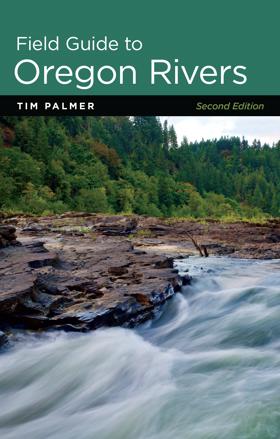
"In this updated edition of his classic Field Guide to Oregon Rivers, Tim Palmer gives us an unprecedented reference, introducing the state's waterways and offering outdoor enthusiasts and resource professionals an interpretive approach to an extraordinary network of streams. He begins with natural history-geology, climate, hydrology, plants, and wildlife-then profiles 111 rivers with notes about nature, fish, and conservation, followed by essential tips on where to see each river, to hike along the shores, to fish, and to explore by canoe, kayak, and raft. Illustrations identify riparian plants and animals while more than 150 photographs showcase a magnificent rivers estate. This volume is an essential outdoor companion for Oregonians and visitors alike."-- Provided by publisher 319 pages : color illustrations, color maps ; 21 cm CIRC [ 0 ]
|
2023 |
|
Macrolichens of the Pacific Northwest by Bruce McCune (Author, Photographer), Linda Geiser , Sylvia Duran Sharnoff (Photographer), Stephen Sharnoff (Photographer), Martin Hutten (Photographer), Joseph Di Meglio (Photographer), Richard Droker (Photographer), Peter R. Nelson (Photographer), Jim Riley (Photographer), Jason Hollinger (Illustra 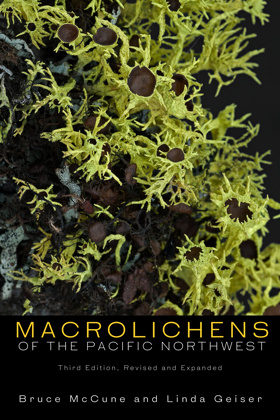
"A key component in healthy ecosystems, lichens can be found in almost any natural habitat in the Pacific Northwest. This comprehensive guide to the region's macrolichens is intended for use by beginners as well as specialists: weekend naturalists will be able to identify specimens and recognize the great diversity of lichens, while lichenologists and mycologists will gain greater knowledge of the distribution and abundance of various species. This updated third edition of Macrolichens of the Pacific Northwest includes 20 new species and an expanded introduction. It features keys to 109 genera and 681 species of Oregon and Washington macrolichens-all the macrolichens known or expected to occur in the two states. The keys also provide excellent coverage for lichens of Idaho and Montana, inland to the Continental Divide. Color photographs and detailed descriptions emphasize lichens prevalent in forested ecosystems. The illustrated glossary and introductory material cover the terminology needed to identify macrolichens and provide information on collection and handling. The biology, ecology, and air-quality sensitivity of lichens are discussed; regional air-quality sensitivities are provided for nearly 200 species. Macrolichens of the Pacific Northwest will prove invaluable to anyone seeking to identify lichens or to better understand these organisms and their vital role in the natural world."-- Provided by publisher 549 pages : illustrations (some color), color maps ; 23 cm CIRC [ 0 ]
|
2023 |
|
Skid Road on the frontier of health and homelessness in Seattle by Josephine Ensign 
Affluent Seattle has one of the highest numbers of unhoused people in the United States. In 2021 an estimated 40,800 people experienced homelessness in Seattle and King County during the year, not counting the significant number of "hidden" homeless people doubled up with friends or living in and out of cheap hotels. In Skid Road Josephine Ensign uncovers the stories of overlooked and long-silenced people who have lived on the margins of society throughout Seattle's history. How, Ensign asks, has a large, socially progressive city like Seattle responded to the health and social needs of people marginalized by poverty, mental illness, addiction, racial/ethnic/sexual identities, and homelessness? Through extensive historical research, Ensign pieces together the lives and deaths of those not included in official histories of the city. Drawing on interviews, she also shares a diversity of voices within contemporary health and social care and public policy debates. Ensign explores the tensions between caregiving and oppression, as well as charity and solidarity, that polarize perspectives on homelessness throughout the country 288 pages, 10 unnumbered pages of plates : illustrations (black and white) ; 23 cm CIRC [ 0 ]
|
2023 |
|
Jesintel living wisdom from Coast Salish elders by Darrell Hillaire , Natasha Frey , Beau Garreau (Photographer), Children of the Setting Sun Productions (Issuing body) 
A gathering of stories for all generations, past, present, and future. Dynamic and diverse, Coast Salish culture is bound together by shared values and relations that generate a resilient worldview. Jesintel—"to learn and grow together"—characterizes the spirit of this book, which brings the cultural teachings of nineteen elders to new generations. Featuring interviews that share powerful experiences and stories, Jesintel illuminates the importance of ethical reciprocal relationships and the interconnectedness of places, land, water, and the spirit within all things. Elders offer their perspectives on language revitalization, Coast Salish family values and naming practices, salmon, sovereignty, canoe racing, and storytelling. They also share traumatic memories, including of their boarding school experiences and the epidemics that ravished their communities. Jesintel highlights the importance of maintaining relations and traditions in the face of ongoing struggles. Collaboration is at the heart of this work and informs how the editors and community came together to honor the boundless relations of Coast Salish people and their territories. Elders Interviewed: Tom Sampson (Tsartlip First Nation), Virginia Cross (Muckleshoot Tribe), Ernestine Gensaw (Lummi Nation), Steve and Gwen Point (Stó:lō Nation), Gene and Wendy Harry (Malahat Nation), Claude Wilbur (Swinomish Tribe), Richard Solomon (Lummi Nation), Elaine Grinell (Jamestown S’Klallam Tribe), Arvid Charlie (Cowichan Nation), Amy George (Tsleil-Waututh Nation), Nancy Shippentower (Nisqually Tribe), Nolan Charles (Musqueam Indian Band), Andy de los Angeles (Snoqualmie Tribe), Jewell James (Lummi Nation), Kenny Moses Sr. Family (Tulalip Tribal Nation), Ramona Morris (Lummi Nation) xiv, 207 pages : illustrations (chiefly color), color maps ; 26 cm CIRC [ 0 ]
|
2023 |