Catalog of British Columbiana and Pacific Northwest Americana
Encyclopedia Cascadia Catalog contains book titles of mostly non-fiction Pacific Northwest Coast of North America Titles (primarially British Columbia, Idaho, Oregon and Washington State) in an easy-to-understand title catalog. If you see a link with this badge ONLINE CIRC it means that there is an online institution that provides free access to that title. In some cases there may be more than one institution hosting the title digitally.
| Catalog Title | Published |
|---|---|
|
The West beyond the West a history of British Columbia by Jean Barman 
"British Columbia is regularly described in superlatives both positive and negative - most spectacular scenery, strangest politics, greatest environmental sensitivity, richest Aboriginal cultures, most aggressive resource exploitation, closest ties to Asia. Jean Barman's The West beyond the West presents the history of the province in all its diversity and apparent contradictions. This critically acclaimed work is the premiere book on British Columbian history, with a narrative beginning at the point of contact between Native peoples and Europeans and continuing into the twenty-first century." "First published in 1991 and revised in 1996, this third edition of The West beyond the West, has been supplemented by statistical tables incorporating the 2001 census, two more extensive illustration sections portraying British Columbia's history in images, and other new material bringing the book up to date. Barman's deft scholarship is readily apparent and the book demands to be on the shelf of anyone with an interest in British Columbian or Canadian history."--Jacket xx, 539 pages, 48 unnumbered pages of plates : illustrations, maps, portraits ; 25 cm CIRC [ 1 ]
|
2007 |
|
Enchanted isles the southern Gulf Islands by David A. E. Spalding, Kevin Oke 
The southern Gulf Islands between Nanaimo and Victoria are among British Columbia's greatest scenic treasures, projecting an appeal so powerful as to make nesomanes (island lovers) of the most unromantic souls. Ranging in size from Saltspring (pop. 12,000) to unoccupied D'arcy, they first began to attract European settlers in 1859 and have been home to a special breed of freedom-loving denizen ever since. Author David A.E. Spalding and photographer Kevin Oke are both members of this unique tribe and in this book pay tribute to their chosen region with the sensitivity and insider knowledge only long-time residents can provide. Brimming with gorgeous colour photographs by Oke, Enchanted Isles begins with a historic overview detailing how the islands served as a favoured hideaway of some of BC's most distinguished eccentrics. Remittance men and other escapees from British stuffiness form one stream of islanders, but there have been many others. A census of Saltspring in 1895 included a Patagonian, Germans, Portuguese, Hawaiians, Americans, Shetlanders and Scandinavians. Today you may expect to find individuals from virtually anywhere in the world. Enchanted Isles showcases local wildlife, captures local character and history and offers insider tips for visitors. It is a spectacular coffee-table book that shows why the Gulf Islands rank with Whistler and the Pacific Rim as one of the most popular tourist destinations in BC. 144 p. : col. ill. ; 29 cm. CIRC [ 1 ]
|
2007 |
|
Orcas Island by Orcas Island Historical Society, Orcas Island Historical Museum 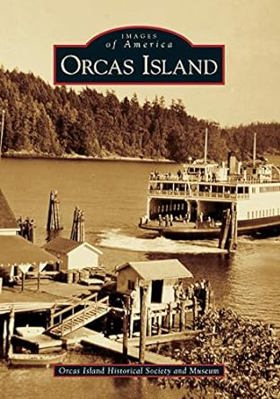
Presents a selection of vintage images culled from the archives of the Orcas Island Historical Society and Museum and a short history of Orcas Island. Orcas Island, the largest of the 172 islands in San Juan County, lies in the Salish Sea north of Puget Sound 128 pages : illustrations, map ; 24 cm. CIRC [ 1 ]
|
2007 |
|
Forgotten Cusheon Cove, Salt Spring Island by Charles Kahn, C. T. Hatfield 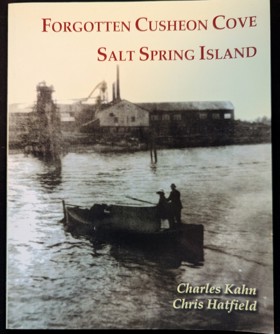
Imagine it's 1915 and you're on a small island in the Strait of Georgia with a population of just over 900. Now imagine a large sawmill with what was then state-of-the-art machinery on an isolated cove on the southeast side of the island. The mill employs up to 150 workers, many of them non-resident Norwe-gians, Swedes, Japanese, and Chinese. This is only a fragment of the story Chris Hatfield researched after he acquired the 100-acre site in 1984 and began finding items discarded by the different communities that had once lived there. Chris partly donated and partly sold most of the land to BC Parks in 2006. This little book explores the property's history. 53 p. : ill., maps, ports. ; 26 cm. CIRC [ 1 ]
|
2007 |
|
Soul of the city the Pike Place Public Market by Alice Shorett, Murray Morgan 
Pike Place Market is a space that annually draws more people than any of the city's major sporting and cultural events. It has a reputation among American markets that is comparable to Les Halles in Paris and Convent Garden in London - the difference being that it has survived. This book illustrates the many people who have fought to sustain it. 175, [1] pages : illustrations, map ; 26 cm CIRC [ 1 ]
|
2007 |
|
Up the Strait coastal British Columbia stories by Wayne J. Lutz 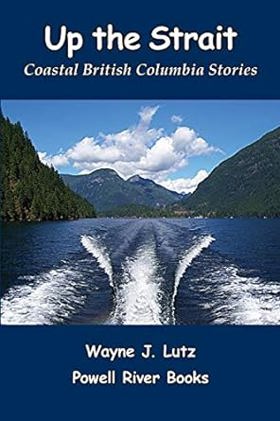
Boating, hiking, and survival off the grid in coastal British Columbia, where mountains drop into the sea and people practice self-reliance and a different sense of purpose. Destinations on the Strait of Georgia that can be reached by boat, bicycle, all-terrain vehicle, and sea kayak. Contrarian views of the people and places of coastal British Columbia. A travelogue memoir based on off-the-grid living in a floating cabin, where the sublime beauty of British Columbia's lower mainland forms the setting, and the Strait of Georgia awaits on your doorstep. 223 p. : ill., maps, ports. ; 23 cm. CIRC [ 1 ]
|
2007 |
|
Desolation Sound a history by Heather Harbord 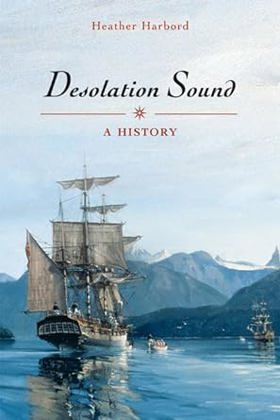
Beautiful Desolation Sound, 150 km north of Vancouver, has for many years been the most popular cruising destination on the BC coast, but is today almost as devoid of local occupants as it was in 1792 when the dyspeptic Captain George Vancouver gave it its misleading name. It has not always been this way. Thick clamshell middens in remote bays, rotted pilings on silent estuaries, ambitious stone terraces on vacant hillsides, overgrown fences around deserted fields, even abandoned railroads--all contribute to an impression that this is an area full of ghosts, an area with a storied past. In Desolation Sound, author Heather Harbord details that remarkable past and brings those ghosts back to unforgettable life. We meet Mike Shuttler, the Homer-quoting hermit who figured in famous books by Stuart Edward White and M. Wylie Blanchet. We meet his illiterate neighbour Phil Lavigne, who said, when Shuttler died, "All dem words, and 'e 'ad to die like all de rest of us!" We meet "the Cougar Queen of Okeover Arm," who said, "Living in the bush like I do, a gun is as much a part of my household tools as a vacuum cleaner is in the city." We visit Baloney Bay, a sprawling Depression-era logging camp where human life had so little value they piled accident victims in a heap and didn't bother moving them until the end of the working day. We meet Sliammon chief Joe Mitchell, whose ancestors had an aboriginal city with buildings 200 feet long in now-deserted Grace Harbour. Harbord assiduously tracks down all the old legends that cling to the shoreside trees like Spanish moss, debunking some, confirming many. Desolation Sound is a captivating book full of great characters, heroic deeds, humorous anecdotes and well-researched fact. It fills a crucial hole in the history of the BC coast. xi, 260 p. : ill., maps, ports. ; 23 cm. CIRC [ 1 ]
|
2007 |
|
The first Oregonians by Laura Berg , Oregon Council for the Humanities (Issuing body) 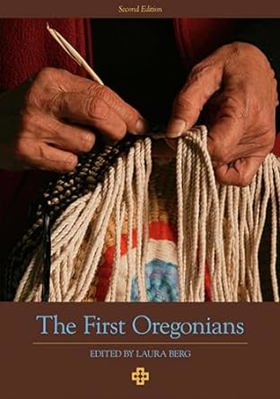
Originally published in 1991, The First Oregonians has been revised and expanded for a new generation of Oregonians. It provides a comprehensive view of Oregon's native peoples from the past to the present. In this remarkable volume, Oregon Indians tell their own stories—more than half of the chapters are written by members of Oregon's nine federally recognized tribes. Using oral histories and personal recollections, these chapters vividly depict not only a history of decimation and decline, but also a contemporary view of cultural revitalization, renewal, and continuity. The First Oregonians also includes essays by prominent Northwest scholars exploring geography, federal-Indian relations, language, and art. No other book offers as wide a variety of views and stories about the historical and contemporary experience of Oregon Indians. The First Oregonians is the definitive volume for anyone interested in the fascinating story of Oregon’s first peoples. Contributors: C. Melvin Aikens, Stephen Dow Beckham, Marilyn Couture, Douglas Deur, Yvonne Hajda, Eugene Hunn, Dell Hymes, Jennifer Karson, Robert Kentta, Bill Mercer, Brent Merrill, Wil Phinney, Michael Rondeau, Howard P. Roy, Minerva T. Soucie, Kathryn Anne Toepel, George B. Wasson, Jr., and Elizabeth Woody. xi, 348 pages : illustrations, maps, portraits ; 26 cm CIRC [ 1 ]
|
2007 |
|
Native Seattle histories from the crossing-over place by Coll-Peter Thrush 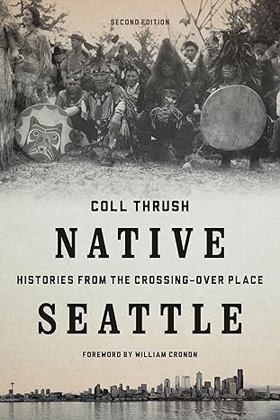
In traditional scholarship, Native Americans have been conspicuously absent from urban history. Indians appear at the time of contact, are involved in fighting or treaties, and then seem to vanish, usually onto reservations. In Native Seattle, Coll Thrush explodes the commonly accepted notion that Indians and cities--and thus Indian and urban histories--are mutually exclusive, that Indians and cities cannot coexist, and that one must necessarily be eclipsed by the other. Native people and places played a vital part in the founding of Seattle and in what the city is today, just as urban changes transformed what it meant to be Native. On the urban indigenous frontier of the 1850s, 1860s, and 1870s, Indians were central to town life. Native Americans literally made Seattle possible through their labor and their participation, even as they were made scapegoats for urban disorder. As late as 1880, Seattle was still very much a Native place. Between the 1880s and the 1930s, however, Seattle's urban and Indian histories were transformed as the town turned into a metropolis. Massive changes in the urban environment dramatically affected indigenous people's abilities to survive in traditional places. The movement of Native people and their material culture to Seattle from all across the region inspired new identities both for the migrants and for the city itself. As boosters, historians, and pioneers tried to explain Seattle's historical trajectory, they told stories about Indians: as hostile enemies, as exotic Others, and as noble symbols of a vanished wilderness. But by the beginning of World War II, a new multitribal urban Native community had begun to take shape in Seattle, even as it was overshadowed by the city's appropriation of Indian images to understand and sell itself. After World War II, more changes in the city, combined with the agency of Native people, led to a new visibility and authority for Indians in Seattle. The descendants of Seattle's indigenous peoples capitalized on broader historical revisionism to claim new authority over urban places and narratives. At the beginning of the twenty-first century, Native people have returned to the center of civic life, not as contrived symbols of a whitewashed past but on their own terms. In Seattle, the strands of urban and Indian history have always been intertwined. --From publisher's description 1 online resource (xxi, 326 pages) : illustrations CIRC [ 1 ]
|
2007 |
|
The Stehekin we remember by Buckner Sisters, Irene Sargo, Harriet Morehead, Elizabeth Gans 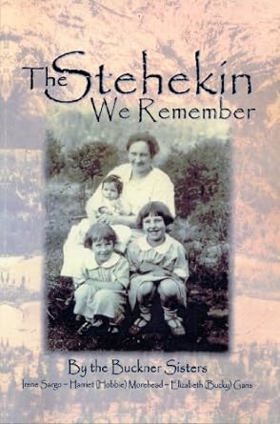
Published in 2007 by Irene Sargo, Harriet Morehead, and Elizabeth Gans—known as the Buckner sisters—The Stehekin We Remember offers an intimate, firsthand chronicle of pioneer life in the isolated Stehekin Valley at the head of Lake Chelan during the 1920s through the 1940s. The book blends family memoirs, historic photographs, and detailed genealogical maps to document the daily routines of self-sufficient homesteading, one-room schoolhouses, and orchard management without modern amenities. Alongside their own family history, the authors meticulously record the profiles of neighboring pioneer households, preserving a comprehensive social fabric of the valley. A keen insight drawn from the text is how it highlights the duality of isolation; while geographic remoteness imposed severe physical hardships and labor-intensive survival strategies on children growing up in the North Cascades, it simultaneously fostered a remarkably resilient, hyper-collaborative community network that deeply anchored their collective identity. 203 pages : illustrations ; 23 cm CIRC [ 1 ]
|
2007 |
|
The Methow Valley between home and heaven by Laura Hurwitz 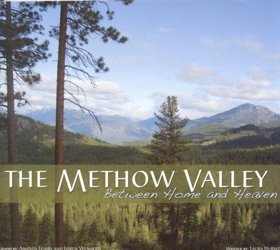
Washington's remote Methow Valley is a wild and extravagantly beautiful place that cradles an amazing diversity of wildlife, topography and people. Residents refer to this land of sparkling rivers, rugged mountains and dramatic seasons as home, while visitors, who flock to the area's unparalleled hiking, skiing, camping and biking, call it heaven. Professional, stunning photography and fluid, informative text highlight this gorgeous photo essay. For the discriminating adventurer and nature lover in everyone. vii, 88 pages : color illustrations ; 20 x 24 cm CIRC [ 1 ]
|
2007 |
|
Columbia Highlands exploring Washington's last frontier by Craig Romano, James Johnston (Illustrator) 
The beauty of the Columbia Highlands is subtle. It's measured by rays of sunlight filtering through a cathedral forest of ancient pines; a golden hillside teeming with deer; in the soft breezes that whistle through shiny snags. It's cherished for its vastness, its lack of human intervention, its rejuvenating properties, and its abundant wildlife. Columbia Highlands is a portrait of this-little known corner of the American West. It reveals its function as an important wildlife bridge between the Rockies and the Cascades for animals- including wolves, bears, moose, and lynx-who must roam to survive. It reveals the surprising coalition of people- hunters, hikers, loggers, business owners, Native people, and more-united in their love of the land and working to protect and restore it. Theirs is a new kind of conservation plan, one that preserves the health of the ecosystem while sustaining a viable rural economy and lifestyle 124 pages : illustrations (chiefly color), color maps ; 23 cm CIRC [ 1 ]
|
2007 |
|
Historical atlas of Vancouver and the Lower Fraser Valley by Derek Hayes 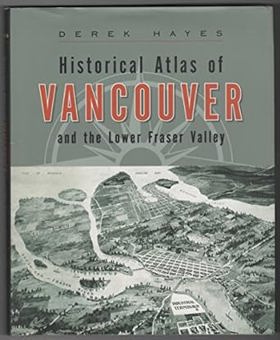
Map researcher and collector Derek Hayes here presents the sixth in a series of critically acclaimed, award-winning historical atlases. Gathered together in a single volume for the first time, here are the maps that shaped Vancouver and the surrounding Lower Fraser Valley. More than 370 original maps chart the region’s development beginning with the years of discovery and exploration. They depict its days as a fledgling colonial outpost, its appearance on the world scene after the arrival of the Canadian Pacific Railway, through to its emergence as a postwar Pacific metropolis. These maps evoke such historic events and developments as the founding of Fort Langley, the first settlements on the inlet, and the filling in of False Creek, along with more recent aspects of this richly diverse area such as the real estate boom and the explosive growth of Vancouver. Included are many fascinating plans for schemes that never got off the drawing board. 192 p. : ill. ; 30 cm. CIRC [ 1 ]
|
2007 |
|
Fortune's a river the collision of empires in northwest America by Barry M. Gough 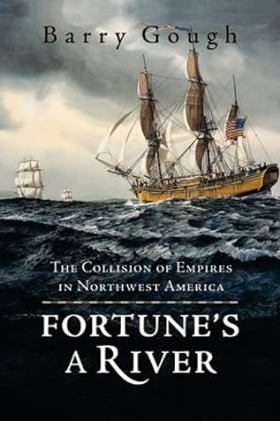
Finalist for the Writers' Trust Nereus Non-fiction Award. Finalist for the Roderick Haig-Brown Regional Prize, BC Book Prize. "Fortune's a River" is the most authoritative and readable account to date of just how British Columbia became British and how Oregon, Washington and Alaska became American. By the closing years of the 18th century, the stage was set for a major international confrontation over the Northwest Coast. Imperial Russia was firmly established in Alaska, Spain was extending its trade routes north from Mexico, Captain James Cook had claimed Northwest America for England and Captain Robert Gray had claimed the Columbia River region for the United States. Open warfare between Spain and England was narrowly averted during the Nootka Sound Controversy of 1789-1794, and again between Britain and the US in the War of 1812, when a British warship seized American property in Oregon. In "Fortune's a River," noted historian Barry Gough re-examines this Imperial struggle for possession of the future British Columbia and fully evokes its peculiar drama. It turned out the great powers were reluctant conquerors in this area. Russia and Spain withdrew of their own accord. Britain was in a position to dominate, but couldn't be bothered. The US vaguely wished to fulfill its manifest destiny by securing the Northwest Coast, but it was not a priority. In the end the battle was carried on by private enterprise and individuals of vision. Alexander Mackenzie established an overland route to the coast and with his partners Simon Fraser and David Thompson, set up a network of fur trading forts south to Oregon. US president Thomas Jefferson countered by sending out the Lewis and Clarkexpedition to strengthen American claims and an American entrepreneur, John Jacob Astor, established a lonely US outpost at Astoria. Gough examines each of the players in this territorial drama, bringing them fully to life and vividly recounting their hardships and struggles. "Fortune's a River" is a major historical work that reads like a wild west adventure. -- Publisher description 413 pages : illustrations, maps ; 24 cm CIRC [ 1 ]
|
2007 |
|
Can't you hear the whistle blowin' logs, lignite, and locomotives in Coos County, Oregon, 1850-1930 by William A. Lansing 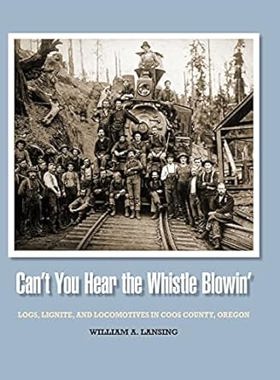
A one-of-a-kind readable history of the railroads that helped develop the timber and coal resources of Coos County, Oregon from 1850 to 1930. During the second half of the nineteenth century, the towns of Coos Bay, Oregon, grew from a few scattered homesteads to a bustling, ocean-going port. The area's phenomenal growth was fueled by timber and coal. Nothing was more important in developing these resources than railroads. Can't You Hear the Whistle Blowin' is the complete story of how these vital transportation links were built by daring entrepreneurs who drove lines of steel into the area's rugged mountains and deep canyons. From backwoods engines and wooden rails to town celebrations and bay-spanning bridges, Can't You Hear the Whistle Blowin' brings to life a time and place vital to the history of Oregon and the West. Author, William A. "Bill" Lansing has drawn upon decades of first-hand knowledge of the area, backed by hundreds of facts and figures, and countless hours of historical research, to produce a compendium of colorful stories of this robust time. 143 pages : illustrations, 1 color map ; 29 cm + 1 map (61 x 90 c.m.) in pocket CIRC [ 0 ]
|
2007 |
|
Visible bones journeys across time in the Columbia River country by Jack Nisbet 
How can you know a place? Historian and naturalist Jack Nisbet—author of Sources of the River: Tracking David Thompson Across Western North America—looks to the relics of a region to connect the present moment to the distant past. In the vast Western territory defined by the Columbia River, Nisbet tracks the stories and meaning of relics such as a trilobite fossil that points to a tropical prehistoric ecology; the nearly extinct California condor, once the largest thing in the skies, described with amazement by Meriwether Lewis; the indelible stain of the smallpox pandemic that overcame the native peoples of the West; a rare and socially potent strain of indigenous wild tobacco that reveals the presence of vestigial Indian practices; and the remains of one Jaco Finlay, a mixed-blood trapper and scout who seems to have been everywhere in the region two hundred years ago. All of these relics are the visible bones that show how past is present in the Columbia River Country. Together the stories these bones tell lays out a wholly original, hybrid history that connects nature with human endeavor, geography with the passage of time—all contribute to the biography of a place. The arrow of time travels in one direction, and this is usually how history is told: beginning to end. But Jack Nisbet is up to something else: journeys across time through a place, knitting past to present and back again to assemble a portrait of the land that marked the culmination of Lewis & Clark’s expedition, that saw the sad end of the Indian Wars with the flight of Chief Joseph, that has offered up fossil proof of mammoth species long extinct. In this western territory, the storied past is much in evidence. viii, 246 pages : illustrations, maps ; 23 cm CIRC [ 1 ]
|
2007 |
|
With Vancouver in inland Washington waters journals of 12 crewmen, April-June 1792 by Richard W. Blumenthal 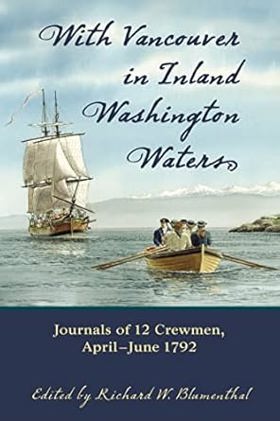
Publisher description: Picking up the narrative from his earlier volume, The Early Exploration of Inland Washington Waters: Journals and Logs from Six Expeditions, 1786-1792, Richard Blumenthal once again offers the reader a fascinating, firsthand look at the Northwest's earliest maritime history. This volume reproduces twelve individual journals, each composed by one of George Vancouver's men as they explored the Washington area in 1792. Providing additional details of exploration in inland areas not previously described, it contains a record of Peter Puget's observations and explorations of Puget Sound and a detailed description of William Broughton's passage through San Juan Islands. These journals also provide detail regarding the day-to-day onboard activities of both officers and enlisted men. A brief biographical note is provided at the beginning of each man's journal vii, 230 pages : maps ; 23 cm CIRC [ 0 ]
|
2007 |
|
Operation Orca Springer, Luna and the struggle to save West Coast killer whales by Daniel Francis, Gil Hewlett 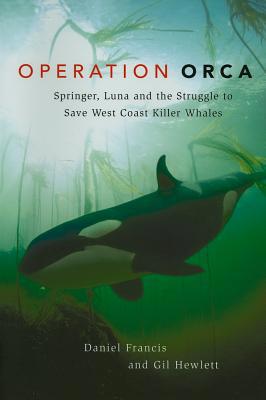
In 1964 when the Vancouver Aquarium obtained its first killer whale, Moby Doll, the prevalent attitudes towards killer whales was that they were fierce and vicious man-eaters. Over the years, attitudes have begun to change, and orcas are now revered as loveable, intelligent creatures and iconic symbols of the marine environment. In January 2002, a young killer whale was discovered alone in the waters of Puget Sound near Seattle. Determining that the whale would not survive alone so far from home, a team of scientists captured "Springer" and transported her by boat north to her home range where she rejoined her family. At the same time Springer was making her historic journey, another lone whale turned up in Nootka Sound on the west coast of Vancouver Island. The people of Nootka Sound adopted "Luna" as their own, but he was a large, boisterous youngster who liked to cuddle boats and the government feared he would get into trouble. Another rescue was planned to return Luna to his family but this time there was no happy ending. In Operation Orca, winner of the 2008 Foreword Magazine Nature Book of the Year award, author Daniel Francis and long-time Vancouver Aquarium staff member Gil Hewlett give breadth to the complications, contradictions, and political posturing that twice engulfed the debate of whether to interfere or let nature take its course. Through the amazing story of these two "orphan" whales, Operation Orca tells the larger story of orcas in the Pacific Northwest, the people who have studied them and the transformation of the whale's image from killer to icon. 280 p. : ill. (some col.), maps ; 24 cm. CIRC [ 0 ]
|
2007 |
|
The Little Lucky a family geography by Gail Wells 
"When you live in an old house, the remodeling and rehabilitating never end. I guess the same is true when you belong to a family." A tumble-down schoolhouse and a loving, troubled family are at the heart of The Little Lucky, a reflection of the many ways in which a place can shape and be shaped by family. In discerning and nimble prose, Gail Wells tells the story of how she and her husband moved from their tiny Seattle apartment to her grandfather’s house, formerly an abandoned schoolhouse, near the Little Luckiamute River of western Oregon. They work earnestly to transform the slantwise structure into a home and discover both joy and frustration along the way. With wry clarity, Wells reveals the tangled dream of living in rural Oregon — a chronically flooded basement, mouse skeletons inside the bathroom walls, and the relentless struggle to fix the unfixable — all while raising a family and salvaging a place alive with memories. Amid the angst of tearing down and building up, Wells discovers something unexpected: a sense of honorable struggle and the grace of getting what you need rather than what you want. These stories reveal an intimate geography and the dynamic between family and a homeplace. And these are also stories of acceptance, "of doing what you can and letting the rest go; of learning what is precious and what is expendable; of the surprising solace of surrendering to the possible; and of gratitude for incredible good luck." 143 pages ; 22 cm CIRC [ 0 ]
|
2007 |
|
Empty nets Indians, dams, and the Columbia River by Roberta Ulrich 
Empty Nets is a disturbing history of broken promises and justice delayed. It chronicles the Columbia River Indians' fight to maintain their livelihood and culture in the face of an indifferent federal bureaucracy and hostile state governments. In 1939, the U.S. Government promised to provide Columbia River Indians with replacements for traditional fishing sites flooded in the backwater of the Bonneville Dam. Roberta Ulrich recounts the Indians' decades-long struggle, in the courts and on the river, to persuade the government to keep its promise. From the beginning, the battle was intertwined with the tribes’ larger effort to assert treaty-guaranteed fishing rights. Ulrich deftly examines a host of other issues—including declining salmon runs, industrial development, tribal self-government, and recreation—that became enmeshed in the tribes’ pursuit of justice. Her broad and incisive account ranges from descriptions of the dam’s disastrous effects on a salmon-dependent culture to portraits of the plights of individual Indian families. Descendants of those to whom the promise was made and activists who have spent their lives working to acquire the sites reveal the remarkable patience and resilience of the Columbia River Indians. As Ulrich notes in a new epilogue to Empty Nets, the story continues to the present. With most of the replacement fishing sites now completed, the government’s promise will finally be fulfilled in this new century. vii, 254 pages : illustrations, map ; 23 cm. CIRC [ 0 ]
|
2007 |
|
An architectural guidebook to Portland by Bart King 
Portland strikes a graceful balance between the rich traditions of its past and the creative developments of modern architecture. Written for both layperson and professional, An Architectural Guidebook to Portland is filled with history and photos that demonstrate why this city is one of the most admired in the nation. Portland's civic planning, historic preservation, and overall attractiveness are all explored in detailed profiles of structures ranging from 19th-century cast-iron front buildings to sleek modern skyscrapers. Now revised and updated to reflect Portland's explosive growth in the 21st century, this second edition includes an added focus on the development of "green buildings" and sustainable design, a chapter on downtown bridges, and expanded coverage of the city's vibrant neighborhoods. With over 250 entries that tell the stories behind Portland's celebrated cityscape, this comprehensive guide is an indispensable resource for visitors and Portlanders alike. Don't miss Bart King's Architecural Guide to Portland, a mobile site for the Web and mobile devices, which features rotating content from the book. viii, 320 pages : illustrations, maps ; 23 cm CIRC [ 0 ]
|
2007 |
|
Children of the fur trade forgotten Métis of the Pacific Northwest by John C. Jackson 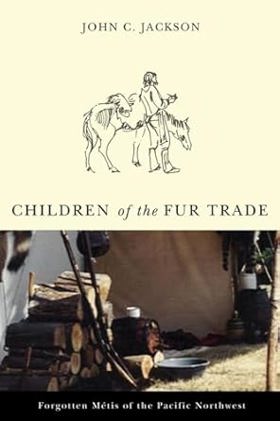
A riveting glimpse into a unique heritage, Children of the Fur Trade recovers a vital part of Northwest history. During the first half of the 19th century, a unique subculture built around hunting and mobility existed quietly in the Pacific Northwest. Descendants of European or Canadian fur trapper fathers and Native American mothers, these mixed-blood settlers--called Metis--were pivotal to the development of the Oregon Country, but have been generally neglected in its written history. Today we know them by the names they left on the land and the waters: The Dalles, Deschutes, Grand Ronde, Portneuf, Payette; and on the peoples who lived there: Pend Oreille, Coeur d'Alene, Nez Perce. John C. Jackson's Children of the Fur Trade gives readers a vivid and memorable portrait of Metis life at the western edge of North America. This informal account shows the Metis as explorers and mapmakers, as fur trappers and traders, and as boatmen and travelers in a vanishing landscape. Because of their mixed race, they were forced into the margin between cultures in collision. Often disparaged as half-breeds, they became links between the dispossessed native peoples and the new order of pioneer settlement. 326 pages : illustrations, maps ; 23 cm. CIRC [ 0 ]
|
2007 |
|
The Seattle bungalow people and houses, 1900-1940 by Janet Ore 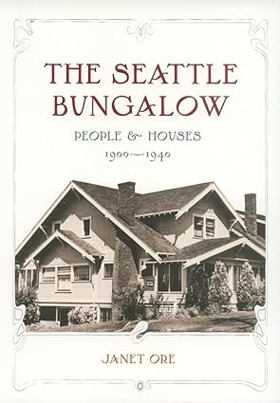
In the early twentieth century, the appearance of new houses across the United States shifted dramatically. Rejecting the elaborate decoration and complexity of Victorian homes, these new houses featured open, parlorless interiors and a minimalist aesthetic, radiating an aura of warmth, coziness, and naturalness. Nowhere were such residences more evident than in West Coast cities, especially Seattle, where explosive growth generated entire neighborhoods of this new house type--the bungalow. It was the nation's first modern home, and it established the essential characteristics of popular housing for the rest of the twentieth century. In The Seattle Bungalow, Janet Ore modifies the common notion that architectural change flows only from the design elite--the architects, domestic reformers, and planners who advocate for changes in domestic architecture--and argues that ordinary people played a crucial role in creating the bungalow. Through their growing power as consumers, modest-income families influenced the physical form of early twentieth-century houses and suburban landscapes. Still operating within a nineteenth-century labor and contracting system, small home builders responded to rising consumer demand for new conveniences such as electricity and central heating by simplifying their structures. Ambitious salespeople-real estate agents, plan book purveyors, and builders--created a new market for affordable small houses through astute advertising and financing. And once families acquired their homes, they used them flexibly, adapting their lives to their domestic spaces and refashioning their homes when necessary. From such efforts sprang the Seattle bungalow, an artifact of ordinary people's part in creating modern culture. xviii, 202 pages : illustrations, map ; 26 cm CIRC [ 0 ]
|
2007 |
|
On American soil how justice became a casualty of World War II by Jack Hamann 
During the night of August 14, 1944, an Italian prisoner of war was lynched on the Fort Lawton army base in Seattle--a murder that shocked the nation and the international community. It was a time of deep segregation in the army, and the War Department was quick to charge three African American soldiers with first-degree murder, although there was no evidence linking them to the crime. Forty other black soldiers faced lesser charges over the incident, launching one of the largest and longest army trials of World War II. In this harrowing story of race, privilege, and power, Jack Hamann explores the most overlooked civil rights event in American history. On American Soil raises important questions about how justice is carried out when a country is at war, offering vital lessons on the tensions between national security and individual rights. xviii, 358 pages ; 23 cm CIRC [ 0 ]
|
2007 |
|
Drawing lines in the forest creating wilderness areas in the Pacific Northwest by Kevin R. Marsh 
Drawing boundaries around wilderness areas often serves a double purpose: protection of the land within the boundary and release of the land outside the boundary to resource extraction and other development. In Drawing Lines in the Forest, Kevin R. Marsh discusses the roles played by various groups—the Forest Service, the timber industry, recreationists, and environmentalists—in arriving at these boundaries. He shows that pragmatic, rather than ideological, goals were often paramount, with all sides benefiting. After World War II, representatives of both logging and recreation use sought to draw boundaries that would serve to guarantee access to specific areas of public lands. The logging industry wanted to secure a guaranteed supply of timber, as an era of stewardship of the nation's public forests gave way to an emphasis on rapid extraction of timber resources. This spawned a grassroots preservationist movement that ultimately challenged the managerial power of the Forest Service. The Wilderness Act of 1964 provided an opportunity for groups on all sides to participate openly and effectively in the political process of defining wilderness boundaries. The often contentious debates over the creation of wilderness areas in the Cascade Mountains in Oregon and Washington represent the most significant stages in the national history of wilderness conservation since World War II: Three Sisters, North Cascades and Glacier Peak, Mount Jefferson, Alpine Lakes, French Pete, and the state-wide wilderness acts of 1984. xv, 227 pages, 16 unnumbered pages of plates : illustrations, maps ; 24 cm. CIRC [ 0 ]
|
2007 |