Catalog of British Columbiana and Pacific Northwest Americana
Encyclopedia Cascadia Catalog contains book titles of mostly non-fiction Pacific Northwest Coast of North America Titles (primarially British Columbia, Idaho, Oregon and Washington State) in an easy-to-understand title catalog. If you see a link with this badge ONLINE CIRC it means that there is an online institution that provides free access to that title. In some cases there may be more than one institution hosting the title digitally.
| Catalog Title | Published |
|---|---|
|
Mapping women's sense of place in Stehekin, WA an oral history-based study of place by Christina Copeland 
Authored as an oral history-based study by Christina Copeland, Mapping Women's Sense of Place in Stehekin, WA investigates how women have historically experienced, shaped, and emotionally mapped the deeply isolated community nestled at the head of Lake Chelan. The dissertation draws on extensive interviews to examine the gendered dimensions of living in a remote, rugged mountain enclave accessible primarily by boat, floatplane, or trail. By centering women's narratives, the text illuminates the invisible labor, social bonds, and unique environmental attachments required to sustain family and community life in an extreme wilderness setting. A keen insight drawn from the work is how geographical isolation redefines gender roles on the frontier; rather than being sidelined by rugged topography, women in Stehekin often became the primary architects of community stability, forging a profound, place-based identity that transformed an intimidating wilderness into an enduring home. vii, 153 leaves : illustrations, maps ; 29 cm CIRC [ 1 ]
|
2001 |
|
Captain McNeill and his wife the Nishga chief, 1803-1850 from Boston fur trader to Hudson's Bay Company trader by Robin Percival Smith 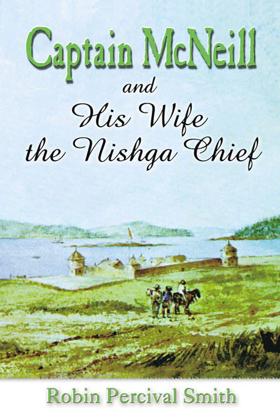
The historical recount of the life and times of Captain McNeill, a long-standing captain in the pioneering days of the fur trade. McNeill was the captain of the Honourable Hudson's Bay steam ship SS Beaver.The historical recount of the life and times of Captain McNeill, a long-standing captain in the pioneering days of the fur trade. McNeill was the captain of the Honourable Hudson's Bay steam ship SS Beaver. William McNeill was born in Boston in 1803. At eleven years old, he chose a life at sea, and began gaining his experience to rise to the rank of master of a vessel, which required skill in mathematics and an understanding of the cosmos for navigation. William was a red-head, tall and heavy set. His temper was on a short fuse and, when threatened, he was aggressive in his action, impetuous, blusterous and a little given to exaggeration. He was not fond of waiting to see how things might turn out. William was probably first mate at fifteen years of age on the brigantine Paragon and a master mariner at twenty-one. By the time he joined the Hudson's Bay Company, he was a competent and experienced master mariner and fur trader. Follow his historical immigration to Canada to become one of the most feared and serviceable trading captains of the Honorable Hudson's Bay Co. 256 pages : illustrations, maps ; 22 cm CIRC [ 1 ]
|
2001 |
|
The world of Chief Seattle how can one sell the air? by Warren Jefferson 
Chief Seattle gave his now famous speech in 1854 during treaty negotiations with the U.S. government, which was intent on forcing the Native people of Washington's Puget Sound onto reservations. This book puts Chief Seattle's life into the context of his time and gives a brief history of the region and its many tribes, with particular emphasis on Chief Seattle's tribe, the Suquamish 128 pages : illustrations, map ; 19 x 23 cm CIRC [ 1 ]
|
2001 |
|
Historical atlas of the North Pacific Ocean maps of discovery and scientific exploration, 1500-2000 by Derek Hayes, North Pacific Marine Science Organization 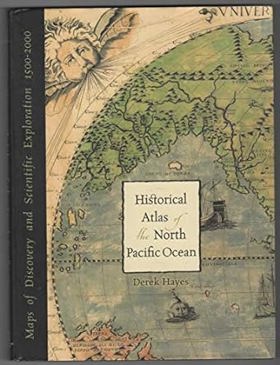
Map junkies rejoice! Derek Hayes, author of Historical Atlas of the Pacific Northwest, delivers another stunning atlas filled with stories of explorations and exquisite historical maps. Over five hundred years of maps depicting the North Pacific Ocean and the lands that border itthe United States, Canada, Alaska, Russia, Japan, Korea, and Chinahave been collected into this new atlas. From antique maps of the sixteenth century to modern satellite images, this volume covers all the major explorations, such as Magellan, Bering, Cook, and Vancouver; Perrys opening of Japan; and the U.S. North Pacific Exploring Expedition. It also includes modern maps that use the latest technology to show ocean currents, fault lines, and the seabed in astounding detail. 1 atlas (224 pages) : illustrations, color maps ; 33 cm CIRC [ 1 ]
|
2001 |
|
Old Square-Toes and his lady the life of James and Amelia Douglas by John D. Adams 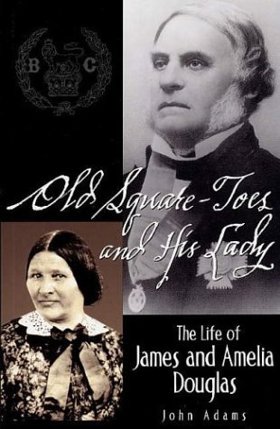
August 12, 2003, marks the 200th anniversary of the birth of Sir James Douglas. Although he played an integral role in British Columbia's history, in many ways Douglas remains misunderstood and an enigma. He is known for his contradictory qualities he was self-serving, racist, a military hawk, sometimes violent and arrogant. Yet he was also extremely community oriented, a humanitarian, brave and a devoted family member. John Adam's bestseller Old Square-Toes and His Lady: The Life of James and Amelia Douglas serves as an important source of information regarding Douglas's public and private lives. As Adams writes, [the term] old square-toes characterizes him as an unbending, stodgy, boring individual, but nothing could be further from the truth. At the pinnacle of his career, Douglas was knighted by order of Queen Victoria. Considering his modest, mixed-race beginnings in South America, his lofty status is, indeed, remarkable. Equally so is the life of his wife, Amelia. She was also of mixed blood, her mother being Cree and her father Irish. But unlike Douglas, who was educated in Scotland, she never left the northern forests until they married. Their ending up as a knight and lady of the British Empire was an unusual achievement. Old Square-Toes discusses the Douglases' diverse experiences of astonishing contrasts, from crossing North America by canoe to touring Europe by train, from Native uprisings to the frantic gold rush. Besides finding glory, they also faced grief in losing seven of their beloved children. This is a story of the adventure, heartbreak, and devotion that lies at the roots of western Canada xi, 243 pages : illustrations, maps ; 22 cm CIRC [ 1 ]
|
2001 |
|
Namely Vancouver the hidden history of Vancouver place names by Tom Snyders, Jennifer O'Rourke 
Namely Vancouver traces the fascinating origins and history of Greater Vancouver's place names--its streets, neighbourhoods, waterways, mountains, boroughs, and buildings, among others, in an illustrated historical glossary that takes you behind the ubiquitous signs and symbols, and provides a unique vantage point on the city. For instance, Commercial Drive was originally named Park Drive, as it abutted Clark Park in East Vancouver. As part of the route of the Vancouver-New Westminster interurban railway, Park Drive attracted a lot of new businesses; so much so, that in 1912 it was renamed Commercial Drive. There seems to be no truth to the rumour that Gassy Jack Deighton was so named for his frequent passing of wind. Rather, this instrumental figure in Vancouver's early history--the original site of his pub still forms the division between east and west streets in the city--was named for his windbag tendencies, and the legacy of this saloon keeper lives on in the name of historic Gastown. While many of Vancouver's early surveyors, mayors, and even saloon keepers had the honour of having streets or neighbourhoods named after them, John Morton had a slightly more dubious distinction. As one of the "three greenhorns," Morton went down in history as one of Vancouver's earliest settlers. In return, one of Vancouver's shortest streets is named after him. Lulu Island is named after Lulu Sweet, an actress with a travelling theatre company. Colonel Moody (of Port Moody fame) was smitten with Miss Lulu, and named the island, now known as Richmond, after her. An unorthodox and revealing guide, Namely Vancouver is an ideal book for tourists and Vancouverites alike. Includes numerous historical and contemporary B&W photographs. 299 pages : illustrations ; 23 cm CIRC [ 1 ]
|
2001 |
|
Idaho's Malad Valley a history by Thomas J. McDevitt 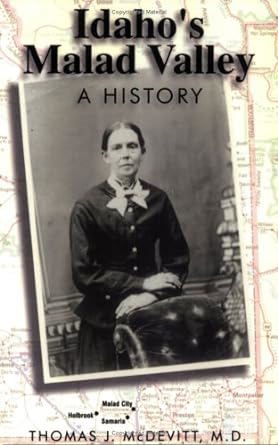
A history of the development of a section of Southeastern Idaho which was one of the main transportation routes from Salt Lake City to the gold fields as well as a rich agricultural area. A good, bad and ugly history of a small Idaho Welsh settlement. The frontier between Mormon and Gentile, Saint and sinner. A place once advertised where a woman could shoot her husband and never spend a day in jail.The Presbyterian tolled for an "innocent" young Michael Murphy, the first man legally hanged in Idaho. Charles Fremont looked from Malad towards Great Salt Lake. They almost drowned exploring from a rubber boat. x, 230 pages : illustrations, portraits ; 23 cm CIRC [ 1 ]
|
2001 |
|
A Sto:lo Coast Salish historical atlas by Keith Carlson, Albert Jules McHalsie, Stó:lō Heritage Trust 
This volume presents an in-depth natural, cultural, and spiritual history of the Fraser River region and its aboriginal and post-contact inhabitants over 15,000 years, in graphs, charts, lexicographies, historic maps, archival photographs, and original artwork. It covers such diverse subjects as: origins of the people and landscape, relationship between the Coast Salish spiritual beliefs and contemporary land management, pre-contact fortifications and warfare, expression and history of Sto:lo and Coast Salish identity, population movement in the historic era, architectural history, Sto:lo systems of justice, spatial analysis of hop yards, salmon canneries and residential schools, reinterpretation of Sto:lo historical demographics xvi, 208 p. : ill. (some col.), maps (some col.) 38 cm. CIRC [ 1 ]
|
2001 |
|
Eastern Oregon books and print an annotated and historical bibliography by Wayne Kee 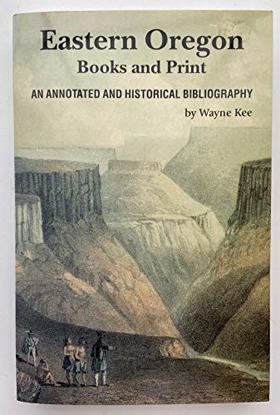
Published as an annotated historical bibliography by Wayne Kee, Eastern Oregon Books and Print catalogs the diverse literary output, regional imprints, and historical texts documenting the high desert and mountain landscapes of eastern Oregon. The work compiles comprehensive descriptions of rare books, pamphlets, and promotional literature ranging from early exploration journals and settlement guides to local histories and indigenous accounts. By structuring these bibliographic entries chronologically and topically, the text maps how print culture mirrored the region's economic and social transformation from an isolated frontier into an organized agrarian and resource-based society. A keen insight drawn from the work is how regional bibliographies function as meta-histories of ideological expansion; the catalog reveals that the printed word was not merely a passive record of eastern Oregon's development, but an active promotional tool deliberately used to tame an intimidating arid landscape into a welcoming destination for homesteaders and investors. xxi, 286 pages : illustrations ; 23 cm CIRC [ 1 ]
|
2001 |
|
Yester years by Gordon Ross 
Published locally by longtime Coos County dairy farmer, historian, and former commissioner Gordon Ross, Yester Years is a collection of humorous and homespun stories documenting the trials, eccentricities, and daily realities of early rural life in southwest Oregon. Drawing heavily on family lore, handed-down anecdotes, and personal recollections of the Ross Slough and Coos Bay regions, the book captures a vanishing landscape where neighbors survived through grit, improvisation, and close-knit community cooperation. Through lighthearted and unpretentious prose, the text preserves the rich oral history of pioneers, farmers, and loggers who shaped the rugged frontier. A keen insight drawn from the work is how regional humor functions as an essential survival mechanism; by chronicling the absurdities and hardships of frontier isolation with witty storytelling, the narrative reveals that laughter was just as vital as physical labor in subduing an unforgiving wilderness. 93 pages : illustrations ; 22 cm CIRC [ 1 ]
|
2001 |
|
A century of Coos County railroads by Steven Greif
Published by local historian Steven Greif, A Century of Coos County Railroads chronicles the ambitious, logistically treacherous, and economically volatile history of rail development along southwest Oregon’s rugged coast. The book details the immense engineering feats required to carve rail lines through dense timber, cross treacherous waterways, and connect isolated coastal timber and shipping towns to the national grid. Through detailed archival photographs, corporate records, and local lore, the text charts how steel tracks served as the primary economic lifeline that transitioned the region from maritime isolation into a heavy industrial timber economy. A keen insight drawn from the work is how railroads on the Pacific Northwest frontier acted as both liberators and tyrants; while steel lines successfully shattered geographic isolation, they simultaneously bound local communities to boom-and-bust corporate monopolies, making the region's economic survival entirely dependent on external market demands. 57 pages : illustrations, facsimiles, map ; 28 cm CIRC [ 1 ]
|
2001 |
|
Mill town footlights the theaters of Everett, Washington by David Dilgard, Everett Public Library 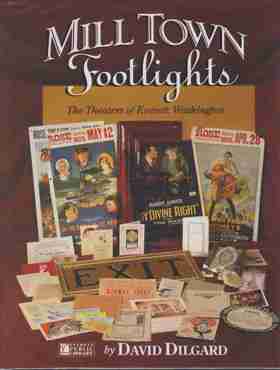
Published in local editions by historian David Dilgard and the Everett Public Library, Mill Town Footlights: The Theaters of Everett, Washington chronicles the vibrant, bustling entertainment history of a booming turn-of-the-century industrial city. The book details the rise and fall of Everett’s historic playhouses, vaudeville houses, and nickelodeons, illustrating how cultural institutions thrived amidst the grit, smoke, and labor strife of a quintessential Pacific Northwest mill town. Drawing on rich archival photographs and local ephemera, the text traces how early residents sought out sophisticated theatrical escapism as a vital counterbalance to grueling industrial labor. A keen insight drawn from the work is how the rapid emergence of high-culture entertainment in an isolated timber hub demonstrates that rough-edged frontier economies were deeply hungry for civic refinement, using the performing arts to rapidly project an image of metropolitan permanence and respectability onto a raw landscape iv, 116 pages : illustrations ; 29 cm CIRC [ 0 ]
|
2001 |
|
River of life, channel of death fish and dams on the lower Snake by Keith Petersen 
In the words of the author, "this book is the story of how people came to settle this region and demand river alterations--and how some eventually came to oppose them… It is also the chronicle, yet unfolding, of the conflict between native wildlife and dams. In microcosm it is, in many ways, the story of the American West." This history of the four Lower Snake River dams and their impact on Northwest salmon was named "Book of the Year" by the Idaho Library Association. River of Life, Channel of Death tells the story of the long struggle to bring navigation to Lewiston and hydro-power to a region; of the influence of powerful congressional representatives and booster organizations; of a clash of cultures, first between Indians and whites and later between environmentalists and developers; and of the role of the federal government in Western settlement. While the dams made Lewiston into the farthermost inland seaport in the western United States, they continue to be a subject of controversy in the continuing national debate over the fate of Northwest salmon. In a new preface written for this edition, Petersen comments on information that has become available and events that have occurred since his book was first published in 1995. xiv, 321 pages : map ; 23 cm CIRC [ 0 ]
|
2001 |
|
Tough trip through paradise, 1878-1879 by Andrew Garcia, Bennett H. Stein 
This book grew out of a manuscript left by Andrew Garcia. Bennett Stein edited the manuscript to tell Garcia's story of the 1877 Nez Perce War, the end of the buffalo herds, and other historic events in western life. Garcia, a man of Hispanic descent was born in El Paso, moved north to Montana in 1876 and became a mountain man. Garcia served as a herder and packer for the U.S. Army in Montana in the Yellowstone and Musselshell country, working for Colonel Samuel D. Sturgis' "Boys in Blue" out of Fort Ellis from 1876-1878. He was present during the Nez Perce War. The book begins in 1878, when Garcia left his job with the army to go into business with a man named Beaver Tom, trapping beaver and trading for buffalo robes. While trading with members of the Pend d'Oreilles tribe, Garcia met and married a Nez Perce woman known among the Pend d'Oreille as In-who-lise ('Broken Tooth'; her original name, Kot-kot-hy-hih, means White Feather), who had been with Chief Joseph's tribe when they ran from the U.S. Cavalry. The book includes Garcia's reproduction of her firsthand account of the final engagement with 7th Infantry at the Battle of the Big Hole xviii, 409 pages : maps ; 18 cm CIRC [ 0 ]
|
2001 |
|
Elegant arches, soaring spans C.B. McCullough, Oregon's master bridge builder by Robert W. Hadlow 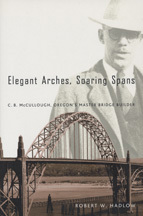
Conde Balcom McCullough ranks as a modern bridge builder of national and international acclaim. This first major study of McCullough traces the Professional life of a brilliant engineer and builder renowned for his elegant, cost-efficient, custom-designed spans. McCullough's legacy lies in the nearly 600 bridges he and his staff designed and built in Oregon during the years between the two world wars, most notably several beautiful bridges along the Oregon Coast Highway, bridges he called "jeweled clasps in a wonderful string of pearls." Trained as a civil engineer, McCullough came to Oregon in 1916, drawn by the state's dire need for bridges and its drive to "lift its feet out of the winter's mud and summer's dust." After developing the engineering program at Oregon Agricultural College (now Oregon State University), McCullough was named the state's bridge engineer. He became an impassioned promoter of state-sponsored bridge building that incorporated engineering efficiency with economic practicality and aesthetic appeal. McCullough's long career with the State Highway Department left a legacy of bridge building in Oregon unequaled in the twentieth century. In 1999, Engineering News-Record recognized McCullough as one of the most important bridge engineers of the past 125 years. He was an innovator in twentieth-century reinforced-concrete arch construction and built one of the first concrete tied-arch bridges in the United States. McCullough's bridges are rich in aesthetic detail; the finest among them are embellished with arch crowns, Art Deco-inspired pylons and obelisks, Gothic piers, towering spires, and arched railing panels. Illustrated with historic photographs and drawings, Robert Hadlow's definitive and highly readable biography will delight bridge buffs and engineering enthusiasts everywhere. It will also be of great interest to Oregon coast visitors and residents, and to students of transportation and technology history. xi, 211 pages : illustrations ; 23 cm CIRC [ 0 ]
|
2001 |
|
Wildlife-habitat relationships in Oregon and Washington by David H. Johnson , Thomas A. O'Neil 
The biggest challenge facing natural resource conservation efforts today is to maintain biological diversity and viable ecosystems. This requires the best available scientific information on the relationships between individual species and their habitat. Wildlife-Habitat Relationships in Oregon and Washington is the first book to compile and synthesize in a single convenient, comprehensive volume a vast amount of diverse information on 593 wildlife species and their relationships with the 32 terrestrial, freshwater, and marine habitat types of Oregon and Washington. Included are color photographs of each habitat type, as well as hundreds of maps, diagrams, and other illustrations. In addition, a separate CD-ROM (included with the book) contains additional wildlife diata and color maps, and seven matrices that link wildlife species with their respective habitat types. The 88 contributing authors include experts in wildlife, botany, fisheries, conservation biology, vegetation mapping, and the ecology of forest, rangeland, and marine environments, among other fields. Intended for use by natural resource managers and planners, scientists, conservationists, educators, and other individuals with a deep interest in wildlife species and their habitats, this book is sure to be a valuable resource and standard reference for many years to come. xix, 736 pages : illustrations, maps (some color) ; 29 cm + 1 CD-ROM (4 3/4 in.) CIRC [ 0 ]
|
2001 |
|
Winter twigs a wintertime key to deciduous trees and shrubs of northwestern Oregon and western Washington by Helen M. Gilkey, Patricia L. Packard 
Winter Twigs has long been respected and widely used as a unique guide for wintertime identification of the deciduous plants of northwestern Oregon and western Washington (many of the species covered are also found in British Columbia and Alaska). The first edition of this book has been used by thousands of botany students and other interested individuals to identify plants during the months that they lack the leaves and flowers that most field guides rely on. Intended for use by teachers, students, scientists, amateur botanists, and outdoor enthusiasts, Winter Twigs brings together in one convenient volume the information necessary to identify all of the native deciduous woody plants likely to be encountered in the region, as well as many of the more common escaped cultivated species, Also included are certain species which are normally evergreen but may be deciduous during severe winters. Covered are 82 species representing 35 genera of 17 plant families likely to be found between the Cascade mountains and Pacific Coast in Washington and Oregon as far south as the Umpqua divide, and keys to all species that can be readily identified by winter characteristics. The glossary of botanical terms and more than 100 line drawings that highlight the identifying features of various plants will be especially valuable to students and beginners. To make this new edition as accurate and up-to-date as possible, the nomenclature for 22 species has been updated to conform to the latest scientific literature, with contributions by the Oregon Vascular Plant Checklist Project. x, 118 pages : illustrations ; 23 cm CIRC [ 0 ]
|
2001 |
|
Harvest Wobblies the Industrial Workers of the World and agricultural laborers in the American West, 1905-1930 by Greg Hall 
Increased Mechanization and the expansion of new markets transformed the face of American farming in the early decades of the twentieth century, especially in the American West. These changes demanded a new kind of agricultural worker--gone was the local farmhand, replaced by a cheap and temporary labor force of migrant and seasonal workers. Greg Hall's fascinating book analyzes how "harvest Wobblies," members of the Industrial Workers of the World (IWW), organized these men, women, and sometimes children who had become so essential and yet so exploited on the farms of the West. Although harvest Wobblies worked in nearly all the western states, their stongholds were the Great Plains, California, and the Pacific Northwest, regions where harmers developed monocrop agriculture and where seasonal labor was indispensable come harvest time. Like their IWW brethren in logging camps and mines, the harvest Wobblies combined an effort to improve the lives of workers with harger revolutionary goals. Harvest Wobblies personified most of the indelible features of IWW membership: they were the militant casual laborers of the American West, riding the rails, living in hobo jungles, preaching revolution, and facing repression with innovative strategies, impassioned speech, humor, and song. Through trial and error, Wobbly organizers eventually implemented the idea of an industrial union in agriculture and helped the IWW to establish itself as a powerful force to be reckoned with by employers in the West. In tracing the rise and the eventual fall of the harvest Wobblies, Greg Hall examines the diverse and changing nature of the agricultural work force. He offers a social and cultural history of a union uniquely suited to organizing tens of thousands of migrant and seasonal workers. Harvest Wobblies will appeal to a broad audience of readers interested in labor history, the American West, U.S. agricultural history, and the history of the WWI. 279 pages : illustrations, map ; 24 cm CIRC [ 0 ]
|
2001 |
|
Lewis and Clark meet Oregon's forests lessons from dynamic nature by Gail Wells, Dawn Anzinger 
As Lewis and Clark's Corps of Discovery steered their canoes down the tumultuous narrows and rapids of the lower Columbia River, they were propelled out of the virtually treeless desert east of the Cascades into a vastly different landscape--one of thick and diverse forests. The forests the explorers encountered had been continuously shaped by many factors. Floods, windstorms, volcano-induced mud flows, landslides and fire, both naturally occurring and deliberately set by the Indians as part of their cultural practice: all had been working over many millennia to create the Oregon landscape of 1805. Recreating that landscape with the help of Clark's journal entries and those of early European explorers to the region, the authors examine the natural and human-caused influences that shaped and continue to shape the landscape in three different northwestern Oregon locations: the area around Tillamook Head, the lower Willamette Valley and the west slopes of the Cascades, and the Alsea River country of the central Coast Range. Concluding with a discussion of the lessons we can learn from the land's history, Wells and Anzinger assert that Northwest citizens need to be aware of the landscape, shaping it and being shaped by it, in a manner that sustains both its vital processes and our own. An excellent and engaging resource for anyone interested in the historic and future role of forests in the Northwest, the book includes more than 100 photographs and maps, many in full color. 223 pages : illustrations (some color), maps ; 23 cm CIRC [ 0 ]
|
2001 |
|
Handbook of Northwestern plants by Helen M. Gilkey , L. D. Johnston 
The Handbook of Northwestern Plants has long been one of the most respected and widely used guides for identifying the plants of western Washington and Oregon. Earlier editions of this book have been used by thousands of botany students and other interested individuals to identify hundreds of different species of plants, while learning how to use analytical plant keys and the basic botanical terminology necessary to understand and accurately identify plants in the field. Intended for use by teachers, students, scientists, amateur botanists, and outdoor enthusiasts, the Handbook of Northwestern Plants brings together in one comprehensive but convenient volume the information necessary to identify the amazing variety of plants found between the Cascade mountains and Pacific Coast in Washington and Oregon as far south as the Umpqua divide. The glossary of botanical terms, illustrations of different types of leaves and flowers, and hundreds of line drawings that highlight the identifying features of various plants will be especially valuable to students and beginners. To make this new edition as accurate and up-to-date as possible, author La Rea J. Dennis has updated the nomenclature to conform to the latest scientific literature, added species, and revised some plant descriptions and keys. To make the book easier to use, the genera and species have bee arranged alphabetically within families, and the longer keys have been numbered. As in earlier editions, hundreds of excellent line drawings illustrate the key characteristics of various plants 494 pages : illustrations ; 23 cm CIRC [ 0 ]
|
2001 |
|
Forest primeval the natural history of an ancient forest by Chris Maser 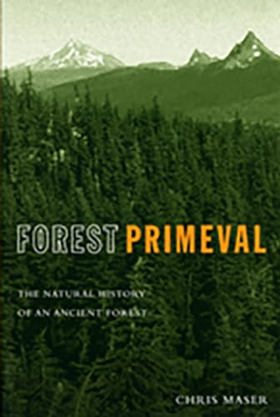
In this classic work of ecology, Chris Maser traces the growth of an ancient forest in Oregon's Cascade mountains from its fiery birth in the year 987 to present. A unique "biography" of an ecosystem, Forest Primeval portrays a diverse fabric of plants, animals, and microorganisms working in unison. Maser offers precise yet evocative accounts of the lives and events within the burgeoning forest: the habits of deer mice who help reseed the burned earth, the seemingly accidental but vitally necessary symbiotic associations between fungus and tree root tips that stimulate growth, the constant predation among wildlife. He revels how over the course of a millennium, "microbes and fungi change a forest just as surely as a raging fire, only inconspicuously and more slowly." As the life cycles of the forest progress, Maser's minute scientific observations unfold against the backdrop of history, a chronology of "humans struggle and suffering that is paralleled in the life of ..." a single 1000-year-old Douglas fir." In taking this millennial view, Maser shows how the forest represents our spiritual and historical roots as human beings. Arguing that our survival is as intertwined with the forests as are the myriad interlocking life cycles that created them, Maser makes a plea for the immediate global implementation of restoration forestry. Selected by School Library Journal as one of the year's "Best Science and Technical Books." xxi, 282 pages : illustrations ; 23 cm CIRC [ 0 ]
|
2001 |
|
Atlas of Oregon by William G. Loy, Stuart Allan, Aileen R. Buckley, James E. Meacham 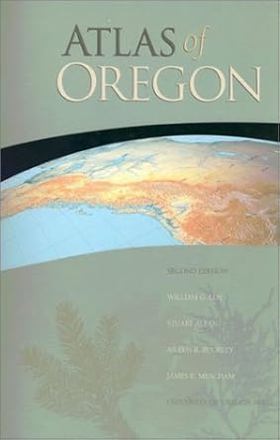
This beautiful and authoritative volume offers a detailed look at the history, geography, and people of Oregon. Stunning full-color maps are complemented by informative text exploring everything from the earliest settlers to the growth of Oregon vineyards to Portland's traffic jams. The Atlas maps a world of information, from native cultures, exploration, politics, religion, and economic growth to landforms, volcanoes, lakes, place names, vegetation, and wildlife habitat. Created by an award-winning team of geographers and cartographers, it is both a work of art and a fascinating reference. 1 atlas (xvii, 301 pages) : color illustrations, color maps ; 34 cm CIRC [ 0 ]
|
2001 |
|
Women in Pacific Northwest history by Karen J. Blair 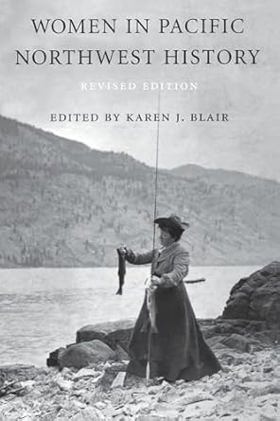
A collection of essays exploring women's experiences in Northwest history. This new edition of Karen Blair’s popular anthology originally published in 1989 includes thirteen essays, eight of which are new. Together they suggest the wide spectrum of women’s experiences that make up a vital part of Northwest history. ix, 324 pages, 4 unnumbered pages of plates : illustrations (some color), portraits ; 23 cm CIRC [ 0 ]
|
2001 |
|
Wings of power Boeing and the politics of growth in the Northwest by T. M. Sell 
Through most of its history, the Boeing Company has been one of the biggest providers of jobs and wealth in western Washington State. But in the 1990s, the company found itself a target of local activists and politicians who saw urban sprawl and “growth politics” ruining the region’s quality of life. T. M. Sell grew up in a Boeing family, near Boeing’s Renton plant, and later covered the company as a reporter for the Valley Daily News and the Seattle Post-Intelligencer. He is a first-hand observer of the drama he unfolds--one personally interested in the future of his community, well informed about the details of its history, acquainted with many of the principal players, and conversant with the theoretical and historical literature that bears on the multifaceted questions he seeks to answer. After a lively sketch of the Boeing Company’s history into the last decade of the 20th century, Sell looks at what happened when Boeing tried to expand its facilities in Renton and Everett. It was then that the “paradox of growth” first manifested itself, the point at which the benefits of economic expansion appeared to be outweighed by its costs. Sell examines political power management in Washington State, paying particular attention to Boeing’s successful efforts to be a positive influence in the state, to the strategies it used to influence growth-management legislation in Olympia, and to its negotiations with the communities most affected by its efforts to grow. In each case, Sell gives not just an overview of positions and strategies but also sharply drawn portraits of the lobbyists, analysts, and politicians involved, many of whom explain their views in direct conversation. The balanced and comprehensive approach Sell brings to bear on the story is also his recommendation for dealing with inevitable future growth-related contentions. Fostering the continuing health of our economic and political environment, he concludes, will require just such a broad, evenhanded, and sensible approach to the politics of compromise. xxx, 162 pages ; 24 cm CIRC [ 0 ]
|
2001 |
|
Chief Seattle, man of vision by Florence Westover Bond 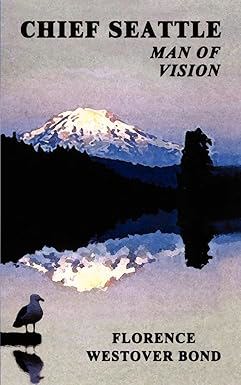
Published in regional biographical editions by Florence Westover Bond, Chief Seattle, Man of Vision explores the life, diplomacy, and complex legacy of the mid-19th-century Duwamish and Suquamish leader whose name became synonymous with the city of Seattle. The book details his strategic efforts to navigate the turbulent arrival of European-American settlers, maintain peace during the devastating conflicts of the 1850s, and protect the sovereign interests of his people amidst aggressive territorial displacement. Drawing on historical records and regional oral traditions, the text contrasts the popular, romanticized myth of the tragic vanishing Indian with the reality of a pragmatic political strategist. A keen insight drawn from the work is how Chief Seattle’s famous, oft-romanticized speech was not a surrender to inevitability, but a brilliant act of long-term rhetorical positioning; by binding the spiritual destiny of the white settlers to the sacred ancestral land of the tribes, he sought to morally obligate the colonizers to respect native memory even as their physical presence was being dismantled. xiv, 139 pages ; 21 cm CIRC [ 0 ]
|
2001 |