Catalog of British Columbiana and Pacific Northwest Americana
Encyclopedia Cascadia Catalog contains book titles of mostly non-fiction Pacific Northwest Coast of North America Titles (primarially British Columbia, Idaho, Oregon and Washington State) in an easy-to-understand title catalog. If you see a link with this badge ONLINE CIRC it means that there is an online institution that provides free access to that title. In some cases there may be more than one institution hosting the title digitally.
| Catalog Title | Published |
|---|---|
|
British Columbia an illustrated history by Geoff Molyneux 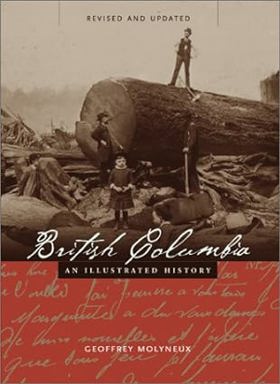
This history of British Columbia celebrates an enigmatic and beautiful frontier. At the same time, author Geoffrey Molyneux delivers barbs about the corrupt politicians and bizarre development plans that have threatened to compromise this majestic region. With over 100 photographs and excerpts from writers Douglas Coupland and Terry Glavin, this book provides a short but engaging history of Canada's westernmost province 174 pages : illustrations, maps ; 23 cm CIRC [ 1 ]
|
2002 |
|
A traveller's guide to historic British Columbia by Rosemary Neering 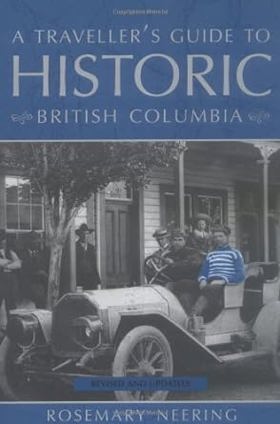
Published by Whitecap Books, Rosemary Neering's A Traveller's Guide to Historic British Columbia serves as an engaging geographical and historical companion that maps the province's rich tapestry of past human endeavors. The book navigates the reader across various regional landscapes—from the gold-rush trails of the Cariboo and the rugged mountain passes of the interior to coastal Indigenous settlements and early European trading posts. By intertwining travel logistics with historical vignettes, anecdotes, and archival context, the text brings physical landmarks and forgotten settlements vividly back to life. A keen insight drawn from the work is how travel guides to historical frontiers function as chronological bridges; by grounding sweeping provincial history in specific, visitable coordinates on a modern map, the book demonstrates that physical travel through British Columbia is inherently an act of temporal exploration across layers of competing human ambitions. xvii, 334 pages : illustrations (some color), maps ; 23 cm CIRC [ 1 ]
|
2002 |
|
Native river the Columbia remembered : Priest Rapids to the international boundary by William D. Layman 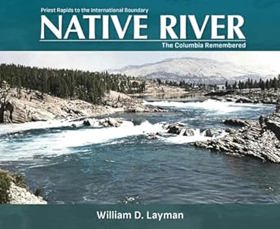
In images and narratives, Native River recreates the untamed Mid-Columbia--the river as it once was, before the building of seven major dams. Featuring a wealth of illustrations, maps, and photographs, many never before published, this finely crafted book focuses on the 350-mile reach of the middle Columbia River from Priest Rapids in south-central Washington to the U.S. Canadian border. William Layman affords each segment of this waterway with its own rich visual documentation, forming a backdrop to many absorbing river stories. -- Amazon xii, 195 pages : illustrations, maps ; 24 x 29 cm CIRC [ 1 ]
|
2002 |
|
Rolls of certain Indian tribes in Oregon and Washington by Glen Cameron Adams, Charles E. McChesney, Herbert C. Taylor, F. A. Hazeltine 
Published by Shorey Book Store and compiled from historical government records by editors including Glen Cameron Adams, Charles E. McChesney, Herbert C. Taylor, and F. A. Hazeltine, Rolls of Certain Indian Tribes in Oregon and Washington compiles critical nineteenth and early twentieth-century federal census rolls and allotment records for Pacific Northwest Indigenous groups. The volume preserves official documentation detailing tribal member names, family lineages, and demographic shifts during an era of aggressive federal assimilation and reservation-boundary reductions. By gathering these scattered archival enumerations into a single reference text, it serves as a vital genealogical and historical ledger for regional tribes. A keen insight drawn from the work is how bureaucratic instruments like federal census rolls acted as legal mechanisms of dispossession; while ostensibly created to manage annuity distributions and land allotments, these documents simultaneously codified colonial control over native bodies by reducing complex ancestral communities into rigid, state-administered categories. 1 volume (various pagings) : illustrations, facsimile, portraits ; 26 cm CIRC [ 1 ]
|
2002 |
|
The Skagit collection first views : an early history of Skagit County, 1850-1899, vol. 2 by Theresa Trebon , Skagit Valley Herald
Published in local editions by archivist Theresa Trebon in cooperation with the Skagit Valley Herald, The Skagit Collection: First Views: An Early History of Skagit County, 1850-1899, Vol. 2 compiles rare historical photographs and local narratives documenting the formative decades of Washington's Skagit Valley. The volume captures the arduous daily lives of early homesteaders, loggers, and commercial fishermen who wrestled a tamed agricultural and industrial landscape out of dense river deltas and dense timberlands. Drawing heavily from archival images and early newspaper columns, the text preserves the visual and social fabric of communities navigating rapid frontier expansion. A keen insight drawn from the work is how late 19th-century local journalism and photography served as deliberate acts of community-building; by visually documenting fledgling settlements before they were fully established, pioneers used the camera to legitimize their presence and carve a permanent sense of permanence out of a fluid, flood-prone wilderness. xxiv, 143 pages : illustrations, portraits ; 20 cm CIRC [ 1 ]
|
2002 |
|
A point in time a history of Yarrow Point, Washington by Suzanne Knauss, Charles Pierce LeWarne, King County (Wash). Office of Cultural Resources, Yarrow Point History Project Committee (Wash), King County Landmarks and Heritage Commission (Wash) 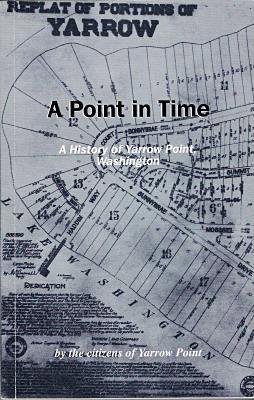
Published through collaborative efforts by the Yarrow Point History Project Committee, King County Office of Cultural Resources, and historians like Suzanne Knauss and Charles Pierce LeWarne, A Point in Time: A History of Yarrow Point, Washington chronicles the transformation of a quiet Lake Washington peninsula from a rugged wilderness into an exclusive residential enclave. The book traces the area's evolution from its early logging days and seasonal strawberry farms into a suburban sanctuary shaped by ferry access and the eventual construction of the floating bridges. Through local archives, oral histories, and photographs, the text details how residents deliberately cultivated a private, close-knit community while remaining tethered to the economic engine of nearby Seattle. A keen insight drawn from the work is how geographical isolation on a peninsula can be aggressively repurposed as a tool for modern exclusivity; by leveraging its distinct peninsular geography and limiting major thoroughfares, Yarrow Point successfully transformed a natural barrier into a socioeconomic filter that insulated its inhabitants from rapid urban sprawl. 174 pages : illustrations, maps ; 22 cm CIRC [ 1 ]
|
2002 |
|
Wenatchee Valley images of North Central Washington by Rufus Woods, World Publishing Company, Quebecor Books 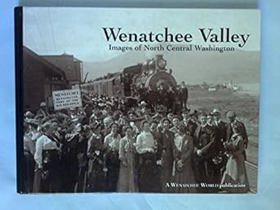
This is a photographic history of North Central Washington. Hundreds of people from the region brought photographs and the history behind the photograph. The best photos were compiled to represent the history of the region. The photographs start in the 1880s and continue until about 1959 iv, 155 pages : chiefly illustrations ; 19 x 26 cm CIRC [ 1 ]
|
2002 |
|
Puyallup a pioneer paradise by Lori Price, Ruth Anderson, Ezra Meeker Historical Society 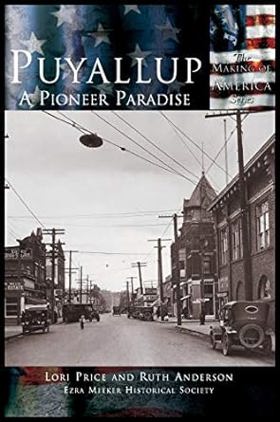
For many early Americans, native and immigrant, Puyallup was much more than simply a destination in Western Washington, but was a fulfillment of a dream, a vision of prosperity and opportunity. The lush valley region along the Puyallup River provided both beauty and bounty, sustaining countless generations and a variety of cultures, from the early American Indians to the later European explorers and settlers. Within this untamed wilderness, a group of hardy and self-reliant pioneers began the great task of carving a livelihood, and through their extraordinary efforts, created a lasting monument to their courage and determination-the city of Puyallup. Puyallup: A Pioneer Paradise chronicles the story of the city's evolution from the indigenous tribe that once populated the valley to the post-World War II building boom that attracted thousands of new residents. Readers travel across several centuries of change as the country of the "Generous People," or Puyallup tribe, succumbed to the unyielding waves of new people, such as the colonists of the Hudson's Bay Company, the stalwart Naches Pass Immigrants, and scores of later men and women searching for the promise of land. This unique volume traces the city's varied history, including its once-prominent agricultural traditions in hops, berries, flowers, fruits, vegetables, and Christmas trees, and remembers a host of its colorful characters, citizens like Ezra Meeker and J.P. Stewart, who worked tirelessly to promote Puyallup's development and supplied much of the land and leadership necessary for its growth. 160 pages : illustrations, map ; 25 cm CIRC [ 1 ]
|
2002 |
|
Historic shipwrecks of the Sunshine Coast by Rick James, Jacques Marc, Underwater Archaeological Society of British Columbia 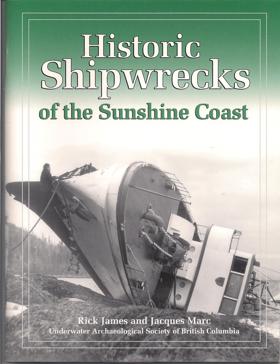
This UASBC regional inventory documents 12 of the most important shipwrecks in this easily accessible area north of Vancouver. Extensive archival research produced new details on the construction, operational history and loss of each vessel. Nine major wreck sites were explored and 3 deep water sidescan sonar searches were undertaken. A major accomplishment was the positive identification of the auxiliary schooner Malahat at Powell River. 2002, 8.5" x 11", 66 pages 66 p. : ill., map ; 28 cm. CIRC [ 0 ]
|
2002 |
|
The storage box of tradition Kwakiutl art, anthropologists, and museums, 1881-1981 by Ira Jacknis 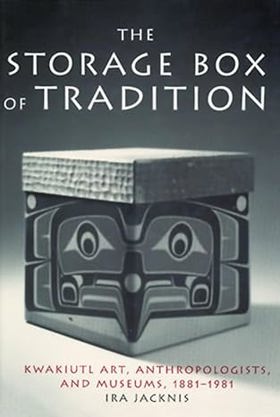
This unique study investigates the effects of the long interaction between anthropologists and the Kwakwaka'wakw (or Kwakiutl) peoples of coastal British Columbia. Beginning with Franz Boas, anthropologists have written extensively about the rich material culture of the Kwakwaka'wakw and have long collected their intricately detailed storage boxes, totem poles, and elaborate ceremonial wear. But how did the relationship between these two groups contribute to transform both ordinary and ritual objects into ethnological specimens, and then to works of art proudly displayed in museums? This expansive books is an anthropology of anthropology. Ira Jacknis identifies not only the effects of cross-cultural exchanges but also examines anthropology itself as a cultural process. He considers as well how museums define and present Native art and how their choices in turn influence current Native artists. The book offers a valuable collection of 131 halftones, ranging from nineteenth-century ethnographic photographs to catalog images from the American Museum of Natural History to documentary photographs taken by Jacknis in the 1980s. Together with Jacknis's close account of this classic chapter in anthropological history, they vividly show how the "anthropological encounter" is in fact an extraordinarily complex and fluid relationship. xvi, 463 pages : illustrations ; 24 cm. CIRC [ 0 ]
|
2002 |
|
Making Native space colonialism, resistance, and reserves in British Columbia by Cole Harris 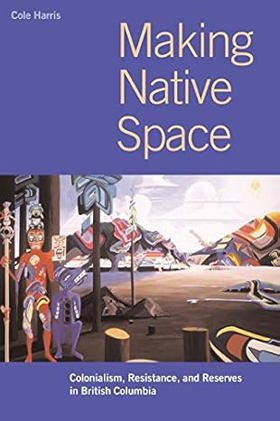
This elegantly written and insightful book provides a geographical history of the Indian reserve in British Columbia. Cole Harris analyzes the impact of reserves on Native lives and livelihoods and considers how, in light of this, the Native land question might begin to be resolved. The account begins in the early 19th-century British Empire and follows Native land policy and Native resistance to it in British Columbia from the Douglas treaties in the early 1850s to the formal transfer of reserves to the Dominion in 1938. Making Native Space clarifies and informs the current debate on the Native land question. It presents the most comprehensive account available of perhaps the most critical mapping of space ever undertaken in British Columbia the drawing of the lines that separated the tiny plots of land reserved for Native people from the rest. xxxi, 415 pages, 16 unnumbered pages of plates : illustrations, maps ; 23 cm CIRC [ 0 ]
|
2002 |
|
Exploring the Tualatin River Basin a nature and recreation guide by Susan Peter, Shirley Ewart, Tualatin Riverkeepers 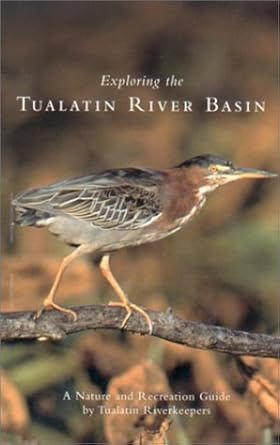
The Tualatin River Basin in Washington County, Oregon has some of the most appealing and least known natural areas in the greater Portland area, and nobody knows the territory better than Tualatin Riverkeepers. This informative, well-organized guide introduces 85 readily accessible sites throughout the Tualatin River Basin, from the River's tributaries in the Coast Range to its confluence with the Willamette River. The detailed site descriptions include directions, maps, and a wealth of information on the plants, wildlife, and natural attractions to be found. Also included are brief features on the flora, fauna, ecology, and history of the area. Hikers, canoeists, naturalists, birders, and outdoor enthusiasts of all kinds will find this unique field guide an essential companion as they explore the beautiful, meandering Tualatin River and its environs. xii, 162 pages : color illustrations ; ol. maps ; 22 cm CIRC [ 0 ]
|
2002 |
|
Forest and stream management in the Oregon coast range by Stephen D. Hobbs 
The Oregon Coast Range is an area that contains a diversity of plant and animal life and a wealth of natural resources. However, faced with a growing population and increasing demands on these resources, land managers today feel the need for new policies and practices aimed at ensuring their sustainability. Until recently there has been little scientific knowledge upon which to base these new approaches. In 1987 a major cooperative research effort called the Coastal Oregon Productivity Enhancement (COPE) Program was launched to fill this void. Forest and Stream Management in the Oregon Coast Range is the capstone of this effort and the synthesis of years of collaborative research. The book's ten chapters, written by scientists from leading research institutions, offer a thorough grounding in Coast Range geophysical processes, plant community ecology and dynamics, fisheries, wildlife, forest diseases, silviculture, and timber harvest operations. The book also describes a variety of management strategies and practices appropriate to the area and discusses the social and economic dimensions of sustainable management. Unlike other books dealing with natural resource management, this volume focuses exclusively on the Oregon Coast Range, an area of singular ecological assets and high economic importance. This has allowed the authors to provide specific and detailed information about the Coast Range and its particular resources and challenges. Written primarily for managers and resource specialists, the book will also appeal to resource scientists, forest landowners, the conservation community, and university students interested in forestry, fisheries, and wildlife sciences. This book is a result of the Coastal Oregon Productivity Enhancement (COPE) Program, a cooperative research and education effort between federal and state agencies, the forest products industry, city, county, and tribal governments, and small woodland owners. From 1987 to 1999, COPE sponsored 60 studies involving 130 researchers from 14 organizations and produced more than 300 publications. xii, 276 pages : illustrations (some color), maps (some color) ; 29 cm CIRC [ 0 ]
|
2002 |
|
The Arbutus/Madrone files reading the Pacific Northwest by Laurence Ricou 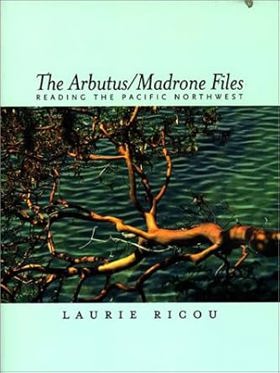
A lively and perceptive new look at twentieth-century Pacific Northwest writing, The Arbutus/Madrone Files explores the dynamics of this cross-border region using resonant quotations, poetry, song lyrics, and art to demonstrate and enhance author Laurie Ricou's critical readings and ideas. The Arbutus/Madrone Files is a wide-ranging, deeply felt meditation on the land, people, and literature of the U.S. and Canadian Pacific Northwest, gathered into twelve thematic essays or "files," including the Island File, Salmon File, Woodswords File, Sasquatch File, and, of course, the Rain File. A longtime student of literary regions, Ricou moves in this book from a scholarly perspective toward more personal and lyrical reflections about what constitutes "home" and "region." He explores the work of such Northwest authors as Emily Carr, H.L. Davis, David Guterson, Jack Hodgins, John Keeble, Ken Kesey, Joy Kogawa, Ursula Le Guin, John Okada, Kim Stafford, and David Wagoner, among others. This unique, stylishly written book will appeal to Pacific Northwest book-lovers interested in exploring the region's rich homegrown literature and art, and will be of great interest to scholars and students of regional literature, eco-criticism, and Pacific Northwest culture. xv, 239 pages : illustrations (some color), maps ; 23 cm CIRC [ 0 ]
|
2002 |
|
Crater Lake National Park a history by Rick Harmon 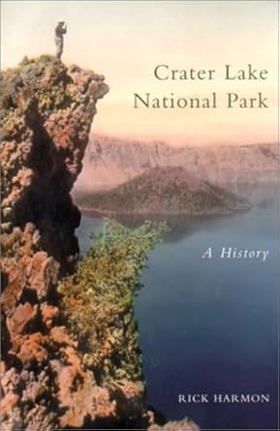
A lively and perceptive new look at twentieth-century Pacific Northwest writing, The Arbutus/Madrone Files explores the dynamics of this cross-border region using resonant quotations, poetry, song lyrics, and art to demonstrate and enhance author Laurie Ricou's critical readings and ideas. The Arbutus/Madrone Files is a wide-ranging, deeply felt meditation on the land, people, and literature of the U.S. and Canadian Pacific Northwest, gathered into twelve thematic essays or "files," including the Island File, Salmon File, Woodswords File, Sasquatch File, and, of course, the Rain File. A longtime student of literary regions, Ricou moves in this book from a scholarly perspective toward more personal and lyrical reflections about what constitutes "home" and "region." He explores the work of such Northwest authors as Emily Carr, H.L. Davis, David Guterson, Jack Hodgins, John Keeble, Ken Kesey, Joy Kogawa, Ursula Le Guin, John Okada, Kim Stafford, and David Wagoner, among others. This unique, stylishly written book will appeal to Pacific Northwest book-lovers interested in exploring the region's rich homegrown literature and art, and will be of great interest to scholars and students of regional literature, eco-criticism, and Pacific Northwest culture. 280 pages, 8 unnumbered pages of plates : illustrations (some color), maps ; 23 cm CIRC [ 0 ]
|
2002 |
|
Dispatches and dictators Ralph Barnes for the Herald Tribune by Barbara S. Mahoney 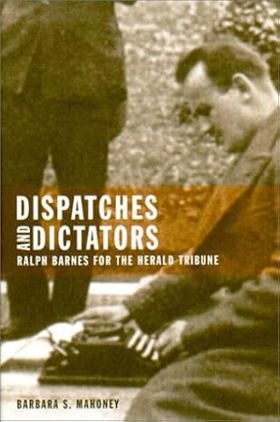
Dispatches and Dictators uncovers the fascinating story of Oregon native Ralph Barnes, the New York Herald Tribune's European correspondent, who served in Paris, Rome, Moscow, Berlin, and London in the years between the two world wars. Barnes has been praised by colleagues and competitors alike as one of the best reporters of that pivotal era. But since his death in the 1940 crash of a British bomber in Yugoslavia, he has been largely forgotten. With persistence and unusually keen insight, Ralph Barnes reported on Fascism, Communism, Nazism, and the events leading to World War II. Stalin confined Barnes to Moscow for disclosing that millions were dying during the Soviet collectivization of agriculture, and Hitler expelled Barnes from Germany for predicting the Nazi attack on the Soviet Union. Recently, scholars have rediscovered Barnes, recognizing the perceptiveness of his observations about the nature of the Soviet regime, the centrality of anti-Semitism to the Nazis, and the descent into war. Drawing from Barnes's dispatches, his personal correspondence, and the recollections of his colleagues, Dispatches and Dictators offers a valuable perspective on the interwar period and on the challenges facing journalists covering the events of the time. Barnes's story also offers an intimate glimpse into one family's experience with the risks, hardships, and separations that belie the romantic popular image of the foreign correspondent. vi, 310 pages : illustrations ; 24 cm CIRC [ 0 ]
|
2002 |
|
Willamette River Basin planning atlas trajectories of environmental and ecological change by David Hulse, Stan Gregory, Joan P. Baker, Pacific Northwest Ecosystem Research Consortium 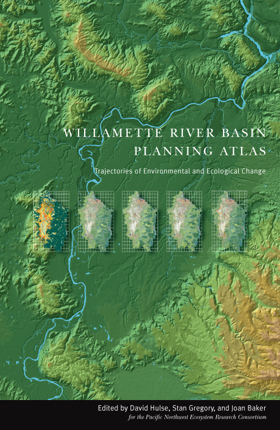
"The Willamette River Basin Planning Atlas offers a valuable resource for anyone interested in the region's past, present, and future. Using a variety of color maps, charts, and photographs, the Atlas presents a vast amount of information intended to provide a long-term, large-scale view of changes in human and natural systems within the Basin." "Five chapters provide information on current conditions and historical changes since 1850, focusing in turn on land forms and geology, water resources, plants and animals, land use, and human population." "Next, there is a detailed examination of how the Basin may change between now and 2050 under three alternative scenarios for future land and water use: one assuming a continuation of current land use and management policies, the second assuming a loosening of current policies to allow freer development, and the third assuming greater emphasis on ecosystem protection and restoration." ix, 178 pages : illustrations (some color), maps (some color) ; 44 cm ONLINE CIRC [ 1 ]
|
2002 |
|
Parallel destinies Canadian-American relations west of the Rockies by John M. Findlay, Kenneth Coates 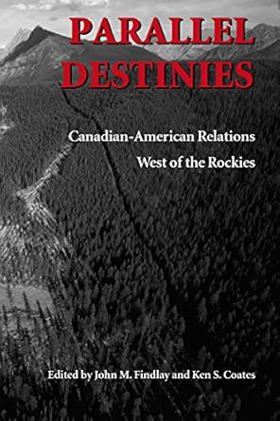
The Canadian West and the American Northwest offer a valuable setting for considering issues of borders and borderlands. The regions contain certain similarities, and during the first half of the nineteenth century they were even grouped together as a distinct political and economic unit, called the "Oregon Country" by Americans and the "Columbia Department" of the Hudson's Bay Company by the British. The essays in this volume -- which grew out of a conference commemorating the Oregon Treaty of 1846 -- view the boundary between Canada and the United States as a dividing line and also as a regional backbone, with people on each side of the border having key experiences and attitudes in common. In their eloquence and scope, they illustrate how historical study of Canadian-American relations in the West calls into question the parameters of the nation-state. The border has not had a single constant meaning; rather, its significance has changed over time and varied from group to group. The essays in Part One concern the movement of peoples and capital across a relatively permeable boundary during the nineteenth century. Many people in this era--especially Natives, miners, immigrants, and capitalists--did not regard the international boundary as particularly important. Part Two considers how the United States and Canada took pains to strengthen and enforce the international boundary during the twentieth century. In this era, the nation-state became more assertive about defining and defending the borderline. Part Three offers considerations of the distinctions, both real and imagined, that emerged during the nineteenth and twentieth centuries between Canada and the United States. Its essays examine different schools of history, divergent ideas toward wilderness, and the influence of anti-Americanism on Canadians' view of national development in North America. xxii, 302 pages : maps ; 24 cm CIRC [ 0 ]
|
2002 |
|
The accidental hermit by Noël. Murchie, Nancy Spaulding 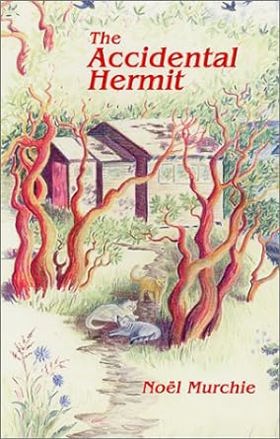
An amusing account of a 50-something woman living alone for a year in a rural cabin on a Puget Sound island. During her adventure she finds out more than she bargained for about pesky raccoons, wacky plumbing, foot infections, capricious weather, the effects of loneliness...and knowing herself. 170 pages ; 22 cm CIRC [ 1 ]
|
2001 |
|
Bitterbrush country living on the edge of the land by Diane Josephy Peavey 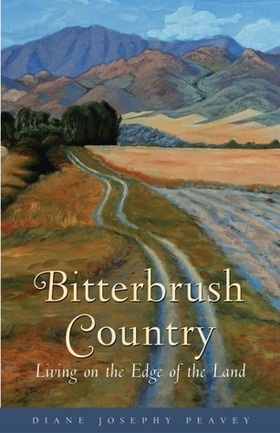
When author Diane Josephy Peavey first arrived in south-central Idaho twenty years ago, she did not know it was possible to become as connected to a place as she is now, nor, she claims, did she understand the "meaning of love, of home, of commitment. That would come to me here, 24 dirt-road miles from town." Story by story, readers will pass through the seasons of a ranching life, discovering the power of a landscape that inspires passion in so many. Book jacket xvi, 239 pages ; 23 cm CIRC [ 1 ]
|
2001 |
|
A history of Whidbey's Island (Whidbey Island), State of Washington by George Albert Kellogg, Island County Historical Society 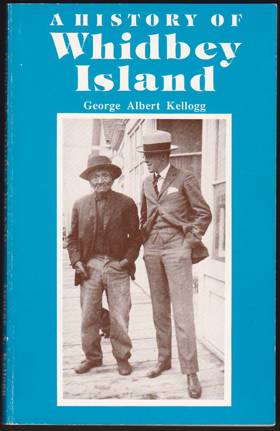
Published by the Island County Historical Society and authored by early pioneer descendant George Albert Kellogg, A History of Whidbey's Island, State of Washington chronicles the foundational decades of Puget Sound's largest island through the eyes of those who settled it. The book details the arrival of the first European-American homesteaders, maritime trading exploits, encounters with local Indigenous populations, and the arduous establishment of agriculture and civic infrastructure across the mid-to-late 19th century. Drawing on firsthand accounts, local lore, and early archival records, the text preserves the gritty, self-reliant spirit of a community forged in maritime isolation. A keen insight drawn from the work is how pioneer-authored local histories functioned as acts of cultural legitimation; by meticulously recording the trials of early settlement, authors like Kellogg sought to rapidly replace a deep, ancient indigenous geography with a heroic, permanent Anglo-American narrative of progress. 183 pages : maps, portrait ; 21 cm CIRC [ 1 ]
|
2001 |
|
River pigs & cayuses oral histories from the Pacific Northwest by Ron Strickland 
Ron Strickland’s oral histories recover a part of the original Northwest character that is rapidly disappearing. In River Pigs and Cayuses, he gathers stories from old-timers in Washington, Idaho, and Montana. Brimming with lively accounts both humorous and poignant, the book illuminates cadences and traditions that Strickland hopes will survive long after the storytellers are gone. Here a moonshiner, a fish pirate, a timber cruiser, a branding iron maker, a smoke jumper, a frontier bride, and 25 other fascinating individuals speak vividly, revealing their personal histories in their own words. Strickland introduces each story, providing information on the teller and placing the story in context. In telling their own stories, his subjects speak to the diversity of life and labor in the Northwest. A short glossary enhances the “listening” experience, as do Strickland's own photographs of the storytellers. In a new introduction, William Kittredge notes that Strickland’s interviewees are most passionate when speaking of their survival in the work-a-day world, sustained both by their livelihoods and by the solace of companionship. “What we hear echoing over and again in these voices,” Kittredge writes, “is pride, at having managed difficult lives, and having along the way earned independence, all the individuality they could manage, and an unapologetic sense of self.” xx, 155 pages : illustrations ; 23 cm. CIRC [ 1 ]
|
2001 |
|
Pioneer history of North Lincoln County, Oregon Volume III, January 2001 by Mildred Harmon Salazar (Composer)
Compiled and edited by Mildred Harmon Salazar, Pioneer History of North Lincoln County, Oregon, Volume III preserves the oral traditions, genealogical records, and firsthand accounts of the early homesteaders, loggers, and coastal traders who settled Oregon's rugged central coast. The volume details the immense challenges of carving out a living amid dense coastal forests, treacherous bar crossings, and geographic isolation before the arrival of modern highways. Through collected memoirs, family trees, and vintage photographs, the text captures the gritty everyday realities of building community infrastructure along a dramatic and unforgiving shoreline. A keen insight drawn from the work is how community-compiled pioneer histories serve as vital grassroots archives that rescue ordinary working lives from historical obscurity; by gathering stories directly from aging settlers, the volume reveals that the true foundation of coastal development was built not by corporate industrialists, but by the quiet, unyielding persistence of families adapting to an untamed maritime frontier. x, 212 pages : illustrations CIRC [ 1 ]
|
2001 |
|
Exploring Washington's past a road guide to history by Ruth Kirk, Carmela Alexander, David L. Nicandri, Louis Kirk 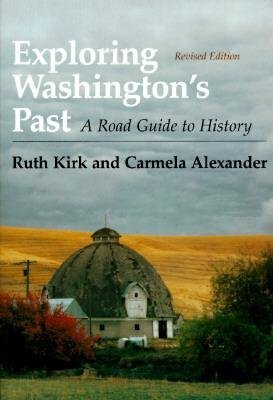
Exploring Washington’s Past tells the state’s story in terms of where to go and what to see. With words, photographs, and maps, the authors evoke the cultural landscape and portray Washington’s people and events from the days of the fur trade and pioneer settlement to the recent past. Capsule descriptions of small communities -- from Altoona to Zillah -- are interwoven with those of better known cities, and eastern and western Washington receive equal attention. More than two hundred photographs portray our historical landscape through images of today intermixed with a sampling of the past. This book will be an indispensable guide for residents, tourists, and armchair travelers. xiii, 543 pages : illustrations, maps (some color) ; 26 cm CIRC [ 1 ]
|
2001 |
|
Thumbpapers sketches of pioneer days by Leonore Gale Barette 
Published in local editions, Leonore Gale Barette’s Thumbpapers: Sketches of Pioneer Days offers a charming and intimate collection of vignettes capturing the daily struggles, simple pleasures, and quiet resilience of early settlers in the Pacific Northwest. The book weaves together personal reminiscences and local folklore to illustrate how isolated frontier communities banded together to build homes, schools, and civic life amidst vast wilderness. Through its evocative, unpretentious prose, the text preserves the texture of a bygone era before industrialization reshaped the rural landscape. A keen insight drawn from the work is how domestic and everyday details—rather than grand political milestones—serve as the true bedrock of historical memory; by focusing on the small, routine friction of pioneer housekeeping and community socializing, the narrative reveals that civilization on the frontier was sustained just as much by ordinary human connection as it was by physical survival. xi, 67 pages : illustrations ; 23 cm CIRC [ 1 ]
|
2001 |