Catalog of British Columbiana and Pacific Northwest Americana
Encyclopedia Cascadia Catalog contains book titles of mostly non-fiction Pacific Northwest Coast of North America Titles (primarially British Columbia, Idaho, Oregon and Washington State) in an easy-to-understand title catalog. If you see a link with this badge ONLINE CIRC it means that there is an online institution that provides free access to that title. In some cases there may be more than one institution hosting the title digitally.
| Catalog Title | Published |
|---|---|
|
A bit off center by Margaret Philbrick 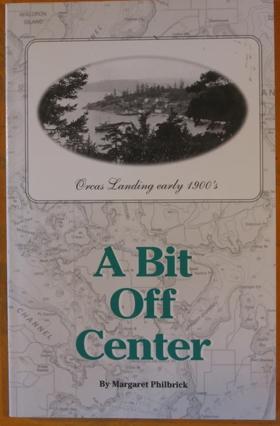
Authored by longtime resident and community historian Margaret Philbrick, A Bit Off Center presents a personal, highly localized history of Orcas Island in Washington's San Juan archipelago. Drawing on vintage photographs, maps, and oral recollections, the book chronicles the development of local landmarks, marine transport, small cottage industries, and the eccentric characters who anchored early island life. Through intimate vignettes of community hubs like the Orcas Hotel and Grindstone Harbor, the text captures the peculiar charm and texture of self-reliant island living. A keen insight drawn from the work is how insular communities derive their unique resilience from eccentricity; by documenting the colorful, non-conformist personalities that populated the margins of society, the narrative reveals that living "off center" was not just a geographic descriptor, but a vital cultural ethos that allowed isolated pioneers to thrive. 97 pages : illustrations, maps ; 21 cm CIRC [ 1 ]
|
2000 |
|
Trading beyond the mountains the British fur trade on the Pacific, 1793-1843 by Richard Mackie 
This books examines the Hudson's Bay company exploration efforts beyond the Rocky Mountains to the Pacific Ocean from 1793 to 1843 – which led to the commercial development of the Pacific coast and the Cordilleran interior of western North America. xxiv, 420 pages : illustrations, maps ; 24 cm CIRC [ 1 ]
|
2000 |
|
A tour of duty in the Pacific Northwest E.A. Porcher and H.M.S. Sparrowhawk, 1865-1868 by Edwin A. Porcher, Dwight L. Smith 
"Working with Commander Porcher's manuscript journal, now in the Beinecke Rare Book and Manuscript Collection of Yale University, as well as other documents of the time, editor Smith has conjured an era through the unique voice of one of its standard bearers. Porcher's journal reveals a man who strived to do his duty by the lights of the British Empire, then at full bloom but - caught between vulnerable Russian America to the north, and the rambunctious and expanding United States to the south, and the French virtually everywhere - in slightly precarious position on North America's Pacific coast xvii, 172 pages, approximately [52] leaves of plates : illustrations (some color), map ; 27 cm CIRC [ 1 ]
|
2000 |
|
Tales from a Tahuya log second growth by Helen Huson Olsen, Effie DeForest Boyer Knowlton 
Authored by Helen Huson Olsen and Effie DeForest Boyer Knowlton, Tales from a Tahuya Log: Second Growth preserves the rustic folklore, pioneer genealogy, and personal recollections of early settlement along the Tahuya Peninsula on Washington's Hood Canal. The book captures the unglamorous day-to-day realities of homesteading, logging, and raising families in a densely forested, isolated region where neighbors were separated by miles of wilderness rather than paved roads. Through charming anecdotes and local family histories, the text chronicles how a distinct, resilient community was hewed out of the second-growth timberland. A keen insight drawn from the work is how the concept of "second growth" serves as an apt metaphor for the psychological landscape of frontier children; just as new trees vigorously sprouted from the logged stumps of the original forest, the second generation of settlers had to grow sturdy and resourceful in the literal shadow of their parents' exhausting labor. 159 pages : illustrations, map ; 28 cm CIRC [ 1 ]
|
2000 |
|
To fish in common the ethnohistory of Lummi Indian salmon fishing by Daniel L. Boxberger , Chris Friday 
"By focusing on the history of control over productive resources (in this case salmon, methods of harvest, processing, capital investment, and markets) Boxberger shows how the Lummi slid from independence and self-sufficiency to dependency, underdevelopment, and poverty. . . . Not only is it an excellent, in-depth study of the Lummi case, it can also serve as a metaphor for the larger question of Native American treaty rights and the resource provisions of agreements." --Pacific Historical Review xviii, 212 pages : illustrations ; 22 cm. CIRC [ 1 ]
|
2000 |
|
Nez Perce summer, 1877 the U.S. Army and the Nee-Me-Poo crisis by Jerome A. Greene 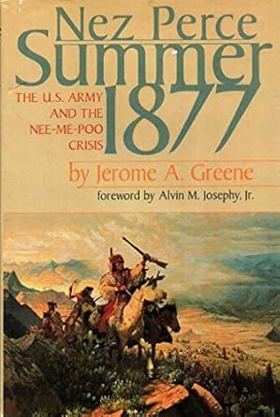
Greene (research historian, National Park Service) recounts the fighting retreat of the nontreaty Nez Perces, including Chief Joseph, across nearly 1,000 miles of Pacific Northwest wilderness. Greene draws from both U.S. Army and Nez Perce sources to explain their circuitous route through Yellowstone National Park and their attempts to seek refuge among the Crow Indians. Twenty-six illustrations and photographs and 16 maps are included. Annotation copyrighted by Book News Inc., Portland, OR xix, 554 pages : illustrations ; 24 cm CIRC [ 0 ]
|
2000 |
|
Idaho ghost towns, then and now early towns, military roads, state stations, early forts, overlay of modern road system by Ralph N. Preston (Cartographer), M. L. Preston (Cartographer) 
A package of 5 black & white maps of historic and current Idaho. Shown on the maps are early towns, military roads, stage stations, and early forts. Map 1 side 1 Idaho 1879, side 2, Idaho 1883. Map 2 side 1 Idaho 1895, side 2 Idaho 1912. Map 3 northern Idaho 1895 with overlay of current road system. Map 4 is southwest Idaho 1895, with overlay. Map 5 is southeast Idaho 1895 with overlay. 7 maps on 5 sheets : both sides ; sheets 54 x 36 cm or smaller, folded in envelope 24 x 16 cm CIRC [ 0 ]
|
2000 |
|
Home mountains reflections from a Western middle age by Susan H. Swetnam 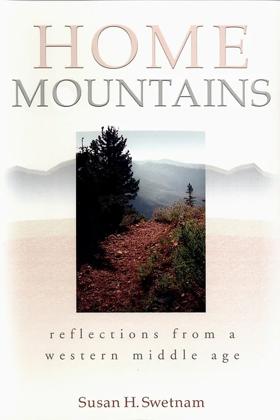
A collection of personal essays from the author's middle-age surprise of finding herself at home in the intermountain region of southeastern Idaho [6], 119, [2] pages : illustrations ; 21 cm. CIRC [ 0 ]
|
2000 |
|
Flora of Mount Rainier National Park by David Biek 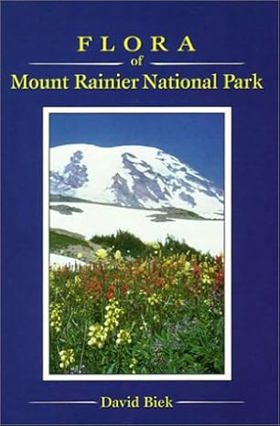
"Every one of these parks... is a garden filled knee-deep with fresh, lovely flowers of every hue, the most luxuriant and the most extravagantly beautiful of all the alpine gardens I ever beheld in all my mountain-top wanderings," wrote John Muir, describing his ascent of Washington's Mount Rainier, the highest peak in the Cascade Mountains. So impressed was Muir with the beauty of Rainier's meadows and forests that he joined others in calling for the establishment of a national park. Coinciding with this year's centennial of the founding of Mount Rainier National Park is a publication of a comprehensive new flora for the Park. Flora of Mount Rainier National Park provides a complete listing of the 866 species of native and introduced plants found in the Park, with keys, line drawings, and descriptions for identification, as well as a guide to plant location. It includes information on the Park's natural history, as well as sections on botanical exploration, rare plants, and the ecological impact of the Park's 2 million annual visitors. This authoritative treatment of the Park's flora offers a complete reference and field guide for visitors, as well as naturalists, resource managers, and conservationists. It will prove invaluable to professional and amateur students of Northwest flora. vi, 506 pages : illustrations, maps ; 23 cm CIRC [ 0 ]
|
2000 |
|
Last stands a journey through North America's vanishing ancient rainforests by Larry Pynn 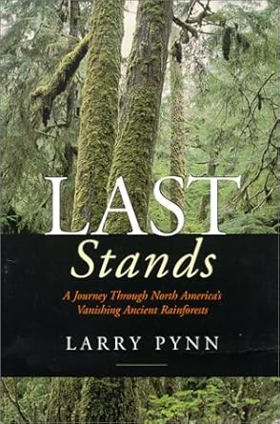
The remarkable Pacific temperate rainforest has become an endangered landscape, rarer than even the embattled tropical rainforest. In Last Stands, award-winning environmental writer Larry Pynn plunges into coastal forests from California to Alaska to explore this unique ecosystem and the complex factors that threaten it. Whether standing with new-age loggers as they toil beneath the churning blades of a heli-logging operation, witnessing the wolverine's legendary ferocity, bounding along in the back of a pickup with a couple of bear hunters, or embarking on a week-long solo hike through an uncharted wilderness, Pynn's approach to understanding North America's temperate rainforest--and the creatures and people connected to it--is as diverse and unconventional as the forest itself. The result is a fascinating book, one part impassioned travelogue and one part natural history. Cathedral, cash crop, the Earth's respiratory system: the rainforest is all this and more. The incalculable wealth and magnificence of these last stands spring forth in this savvy, down-to-earth chronicle. xi, 212 pages : map ; 23 cm CIRC [ 0 ]
|
2000 |
|
Nature's justice writings of William O. Douglas by William O. Douglas, James O'Fallon 
As the longest serving Justice in the history of the U.S. Supreme Court, William O. Douglas was known for writing a host of dissenting opinions. He was also a prolific writer off the bench, a man whose work was as much concerned with nature as with law. This collection brings together writings that represent the wide range of Douglas's interests. It includes selections from his autobiographical and political books, and opinions from landmark cases—all reflecting not only his love of justice but also his roots in the Northwest and his lifelong commitment to the environment. Several selections from Douglas's first book Of Men and Mountains portray his abiding love of the outdoors—particularly the Northern Cascades—and the rugged people who live there. These personal writings warmly recall events of his youth and celebrate the power of the mountains to renew the human spirit. Other selections evoke Douglas's professional activities: as a New Deal insider and Supreme Court Justice, a champion of civil liberties and the rights of minorities, a strong internationalist, and an unflagging supporter of environmental issues. These latter writings include passages from My Wilderness and his dissenting opinion in Sierra Club v. Morton arguing that trees have legal standing to bring lawsuits. These writings demonstrate that Douglas never shied from controversy—whether over interpretation of the Fourteenth Amendment or the choice between flies and bait for trout fishing—and offer inspiration for both environmentalists and all who yearn for a more just society. Whether extolling the joys of the wild or defending the rights of citizens, Douglas shows in this work that he truly was Nature's Justice—and one of a kind. x, 310 pages : illustrations ; 24 cm. CIRC [ 0 ]
|
2000 |
|
"Yours for liberty" selections from Abigail Scott Duniway's suffrage newspaper by Abigail Scott Duniway, Jean M. Ward, Elaine A. Maveety 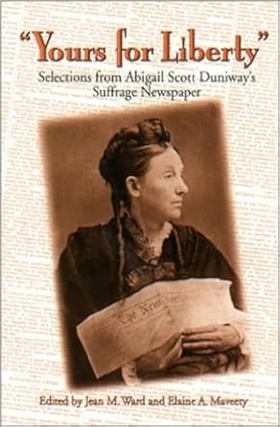
Between 1871 and 1887, Duniway, a leader in the woman suffrage movement, chronicled this "true history" in the pages of The New Northwest, one of the few newspapers in the nation devoted to woman's advancement. With its motto of "Free Speech, Free Press, Free People," Duniway's weekly reform journal aimed to expose and combat social injustice of all kinds. Yours for Liberty, the first published volume of Duniway's writings from The New Northwest, provides a vivid portrait of this pioneering suffragist and her work. The collected essays, news reports, and editorial and travel correspondence reveal her strong, often controversial convictions. Together, the nearly three hundred selections chronicle a fascinating and turbulent era when traditional social attitudes and institutions were being challenged, both in the Pacific Northwest and across the nation. Based in Portland, Oregon, far removed from the center of reform movements in the East, The New Northwest served as a forum for discussions of issues as varied as treatment of the Chinese, policies relating to American Indians, the rights and legal status of women, Temperance and Prohibition, and the vagaries of religion. As a suffragist editor, Duniway wrote to persuade and inform her readers. Still, The New Northwest never failed to entertain. Duniway's wit and love of adventure are evident in lively tales of attending seances, falling off stagecoaches, being egged and hung in effigy, and barnstorming the Pacific Northwest in the company of Susan B. Anthony. In their introductory essay, Jean Ward and Elaine Maveety provide a context for Duniway's tireless fight for reform and examine her remarkable career as an editor, writer, and suffragist. 307 pages : illustrations ; 23 cm CIRC [ 0 ]
|
2000 |
|
Two wheels north cycling the West Coast in 1909 by Evelyn McDaniel Gibb , Victor McDaniel, Ray Francisco, Oregon State University Press 
Two boys on a bike trip are sure to find adventure. Send them off into the wilds of the American West, and it's a safe bet adventure will find them. In 1909, Vic McDaniel and Ray Francisco, just out of high school, set out from Santa Rosa, California, on second-hand bikes, bound for the great Alaska-Yukon-Pacific Exposition in Seattle. Traveling on dusty roads, roads of logs, of planks, even of corn stalks, and often no roads at all, they pedaled, pushed, and walked a thousand miles north for 54 days. With excitement in their hearts and a good luck billiken in their bedroll, they started out with only $5.65 between them. Camp was wherever, whenever the sun was gone; food was an occasional meal from a kindly farm wife and what they could fish, hunt, or glean. But they learned that all strangers were not kind, not even close. Vic and Ray reported their adventures to their home-town newspaper. And what adventures they had. They met their share of memorable characters, from a young girl who stole Ray's heart to a pin-striped hustler who tried to pick Vic's pocket. They traveled paths beside railroad tracks, fought their way around boulders and up brushy hillsides, and crossed rivers layered with salmon. They survived a grizzly's nocturnal visit and the sudden terror of a snake bite. They held their breaths crossing railroad trestles over treacherous canyons, and discovered that a railroad tunnel doesn't offer safe passage when you're halfway through and a train comes along. Evelyn Gibb, daughter of one of the cyclists, has drawn on her father's recollections to tell this incredible adventure in his voice. Winner of the Pacific Northwest Writers Association Nonfiction Book Award, Two Wheels North is a captivating account of a journey that today we can only dream about — one that finds two boys on the road not only to Seattle, but also to manhood. Evelyn McDaniel Gibb is an award-winning writer whose stories and articles have appeared in dozens of magazines and in the popular Chicken Soup for the Soul series of books. She lives in Sedro Woolley, Washington, in the foothills of the North Cascades. viii, 181 pages : illustrations, map ; 23 cm CIRC [ 0 ]
|
2000 |
|
Exploring Oregon's historic house museums by Kathleen M. Wiederhold 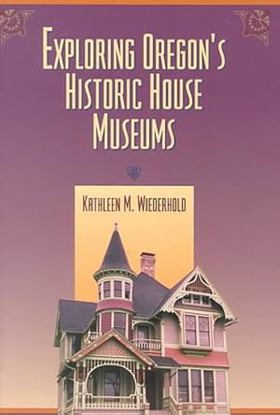
Oregon's historic house museums are time capsules that preserve our past domestic life. As Kathleen Wiederhold shows in this informative and entertaining guide, historic houses provide a place to experience the architecture and artifacts of the most intimate part of our lives, the home. Each of the historic house museums featured is unique in its place and time. The book covers houses built from 1841 to 1936, from a hewn log cabin in the high desert to a grand mansion in the state's most populated city. The houses, many of which are on the National Register of Historic Places, span the economic spectrum from poor to wealthy, and include those belonging to noteworthy Oregonians, from John McLoughlin to Wayne Morse. All are open to the public. The author introduces readers to more than fifty historic house museums in towns and cities from Astoria to Baker City. Each profile includes: a fascinating history of the people who built and lived in the house, detailed descriptions of exterior and interior features, including architectural styles, floorplans, and furnishings, a step-by-step tour of the house with tips on what to see, and visitor information such as directions, operating hours, and nearby attractions. Historic house museums showcase both ordinary and unusual objects that Oregonians used in everyday life. They provide glimpses of people's lives in the places where they lived. They also reflect on the course of the state's settlement and development. this engaging guide explains these dwellings and tells their stories. Photographs of both the exteriors and interiors bring the houses alive. For history buffs, old house enthusiasts, antique aficionados, and cultural tourists, this book is an excellent introduction to Oregon's heritage houses. Kathleen M. Wiederhold is a scholar of and an advocate for Oregon's courthouses. She has spent 18 years researching historic buildings and town histories. She has an extensive collection of courthouse memorabilia. She currently lives in Spokane, Washington. xv, 286 pages : illustrations, maps ; 23 cm CIRC [ 0 ]
|
2000 |
|
Fishing the Northwest an angler's reader by Glen A. Love 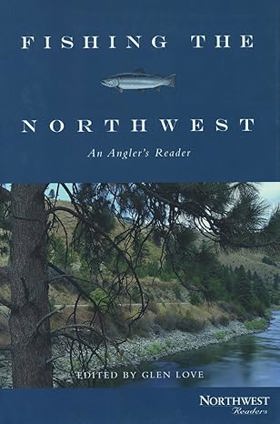
The Pacific Northwest is water country. This far corner of the world is distinguished and defined by rivers, streams, lakes, reservoirs, estuaries, and an ocean. Where there is so much water, there's fishing. And where there's fishing, there is bound to be writing about fishing because, as Thomas McGuane observed, "you can't say enough about it." Now there's a book for people who can't read enough about it either. Fishing the Northwest collects stories and essays by twenty-two of the best angling writers in the region. Veteran flyfisher Love has combed the vast literature on angling to create an exciting blend of subjects and styles that puts readers in the water next to fishing authors of great renown as well as noteworthy newer voices. Included are famous early writers like Zane Grey, who frequented Northwest rivers, and Roderick Haig-Brown, who defined angling literature for the region. Also spotlighted is a new wave of excellent writing that has exploded in the Northwest over the past two decades, calling on a host of gifted authors like Ted Leeson and Jessica Maxwell--one of several women who prove that it's no longer just a man's preserve. The book ranges from Alaska to the Rogue River in southern Oregon, the Olympic Mountains and Vancouver Island to the Continental Divide in Montana. From the advice of angling eminence Enos Bradner to the spirited fiction of Ken Kesey, from Robin Carey's account of getting acquainted with a new river to Lorian Hemingway's first flyfishing adventure, Fishing the Northwest is the ultimate reader for anyone who, in Norman Maclean's famous words, is "haunted by waters." Even if you've never felt a tug on a line, you'll discover in this book that some of the Northwest's best writing flows straight from its rivers. All royalties from Fishing the Northwest will be donated to the Pacific Rivers Council, a non-profit conservation organization dedicated to restoring, protecting, and enhancing American rivers. 232 pages ; 24 cm. CIRC [ 0 ]
|
2000 |
|
Badger and Coyote were neighbors Melville Jacobs on Northwest Indian myths and tales by William R. Seaburg, Pamela Amoss 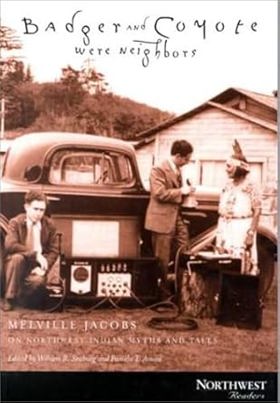
For the Clackamas Chinook Indians, these words signaled the end of a myth recital. Melville Jacobs spent a lifetime recording traditional stories and studying the life ways of those who told them. An anthropologist and folklorist, Jacobs (1902-1971) made it his life's work to preserve and interpret the fast-disappearing languages and traditions of the Indian peoples of Oregon and Washington. This volume presents an introduction to Jacobs's seminal research and provides an engaging selection of the myths and tales that he painstakingly collected. In their introduction, the editors provide an overview of Jacobs's remarkable life and career. A professor at the University of Washington, Jacobs, like his mentor Franz Boas, spent months in the field, seeking out and interviewing Native people. A selection of Jacobs's articles and essays on Northwest Indian oral traditions introduce his theory and method of folklore research. In addition to his own original writings, this volume gathers eighteen stories collected and translated by Jacobs. Eight of the stories include his extensive interpretations, several of which are published here for the first time. The stories represent the range of genres that Jacobs collected and are drawn from many of the Native groups with which he worked, including Chinook, Kalapuya, Sahaptin, and Coos. All the stories were originally collected in the Native languages and translated into English with help from Jacobs's Indian consultants. Making possible the scholarly understanding and appreciation of Native folk literature was Melville Jacobs's greatest challenge. This volume in the Northwest Readers series is evidence of his success. It offers a valuable introduction to Jacobs's work for anyone interested in the rich folklore of Northwest Indians, as well as for students and scholars of American Indian oral traditions and their interpretation. x, 310 pages : illustrations ; 23 cm. CIRC [ 0 ]
|
2000 |
|
The world of the Oregon fishboat a study in maritime folklife by Janet Crofton Gilmore 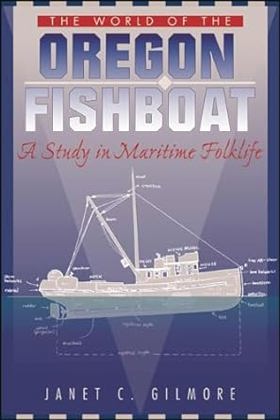
Originally published in a limited cloth edition in 1986, this reissue of The World of the Oregon Fishboat brings an important and lively book to a wider audience. Here, in an easily-read narrative, Janet Gilmore describes life in the Coos Bay community of Charleston, based upon her years of interviewing and research. She recounts a precarious lifestyle, but one filled with tradition. Oregon fishboats, and the fishermen who work on them, have been a mainstay of the Northwestern way of life. Now, as Gilmore notes both in her narrative and in the new introduction to this edition, that way of life is dramatically changing. In the process, the fishboats used by Oregon's commercial fishermen are also changing. The World of the Oregon Fishboat records a way of life as it was in the late 1970s as it focuses on the fisherman's vessel--which serves as vehicle, shelter, home, and companion. The World of the Oregon Fishboat is both an elegant recording of an important aspect of twentieth century American life and a compassionate plea to understand a world of work that most of us rarely contemplate. 1 online resource (xiv, 271 pages) : illustrations, maps CIRC [ 1 ]
|
1999 |
|
For Wood River or bust Idaho's silver boom of the 1880s by Clark C. Spence 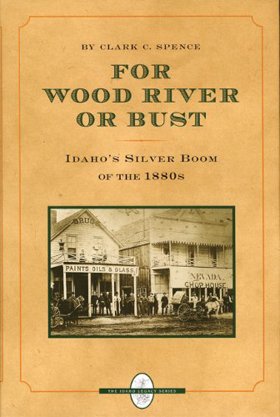
Chronicles the history of the silver rush in the Wood River area of Idaho during the late nineteenth century, describing the mining companies, settlements, and prospectors. The moment of brilliance of Idaho's Wood River mining towns spanned roughly the decade of the 1880s. Noted mining historian Clark C. Spence details the mining history of the Wood River region and captures the bedlam of the early camps and communities. Copublished with the Idaho State Historical Society. xi, 260 pages : illustrations, map ; 24 cm. CIRC [ 1 ]
|
1999 |
|
The Sky Valley. Volume 2 a photographic history by Buddie Williams
Authored by local historian Buddie Williams, The Sky Valley, Volume 2: A Photographic History continues the visual documentation of Washington's rugged Skykomish River corridor through a rich collection of historic photographs and archival ephemera. The volume captures the dramatic transformation of towns like Index, Sultan, and Startup as they evolved from raw logging camps and mining outposts into established, tight-knit communities framed by the Cascade Mountains. Through vintage images of steam locomotives, timber mills, high-water floods, and local school children, the text portrays the relentless daily labor required to carve civilization out of a steep, flood-prone river valley. A keen insight drawn from the work is how visual archives of mountain valleys expose the inherent fragility of industrial frontier settlements; the recurring imagery of swollen rivers and swept-away bridges reminds readers that human infrastructure in the Pacific Northwest was always engaged in a precarious, high-stakes negotiation with an overwhelmingly powerful natural topography. 28 pages : illustrations ; 26 cm CIRC [ 1 ]
|
1999 |
|
Clearwater country! the travelers' historical and recreational guide, Lewiston, Idaho--Missoula, Montana by Borg Hendrickson, Linwood Laughy 
Few special places lie hidden in America, left much as they have been for centuries. Among them are the mountains, meadows, forests and streams of Clearwater Country. Here can be found the entire saga of the American west - from missionaries to miners, settlers to soldiers, outlaws and vigilantes, generals and war chiefs and more. The reader can follow in the footsteps of explorers Meriwether Lewis, William Clark and Sacagawea; missionaries Henry and Eliza Spalding; Nez Perce Chiefs Twisted Hair, Lawyer, Looking Glass and Joseph; General O.O. Howard; outlaw Henry Plummer - and dozens of other figures who wove the rich tapestry of Clearwater Country's historical past. This book will also help you discover Clearwater Country's wild and beautiful natural world - its flora and fauna, streams and rivers, beaches and hot springs, campgrounds and hiking trails. In addition to the historical and recreation guides, six additional chapters provide background information for! armchair historians and present or future visitors. The book includes maps, historical photos and original artwork. iv, 230 pages : illustrations, maps ; 22 cm CIRC [ 1 ]
|
1999 |
|
Kittitas County historic photo album by Pediment Publishing 
Published by Pediment Publishing in cooperation with regional archives, Kittitas County Historic Photo Album compiles a rich visual chronicle of central Washington's transition from an indigenous homeland and rugged frontier corridor into an organized agricultural and mining hub. The volume showcases rare vintage photographs documenting the rise of towns like Ellensburg, the punishing construction of railroads through mountain passes, and the daily lives of ranchers, homesteaders, and coal miners. Through its expansive visual catalog, the text captures the stark beauty of the high desert and river valleys alongside the relentless human labor required to harness the arid landscape. A keen insight drawn from the work is how photographic collections of inland Washington reveal the profound visual tension between monumental geography and fragile human enterprise; the stark, towering backdrops of the Cascade foothills dwarf the modest wooden storefronts and rail lines, underscoring how precarious early settlement truly was against the vast scale of the high desert. 128 pages : chiefly illustrations ; 20 x 27 cm CIRC [ 1 ]
|
1999 |
|
Union Pacific rails to the mines the Boise, Nampa & Owyhee Railway by Thornton Waite 
Authored by railroad historian Thornton Waite, Union Pacific Rails to the Mines: The Boise, Nampa & Owyhee Railway details the ambitious and financially volatile history of the late 19th-century rail line that connected southwestern Idaho's rich mining districts and agricultural valleys to the broader transcontinental network. The book traces the corporate maneuvers, engineering challenges, and economic battles required to construct and operate tracks through the rugged terrain between Nampa, Boise, and the Owyhee mountains. Drawing heavily on corporate archives, vintage maps, and historical photographs, the text illustrates how steel infrastructure dictated the survival and decline of regional boomtowns. A keen insight drawn from the work is how regional feeder railways acted as economic gatekeepers rather than mere public utilities; by holding a monopoly over mineral and crop transportation, independent lines like the Boise, Nampa & Owyhee held the ultimate power of life or death over local commerce, frequently leaving isolated communities at the mercy of distant corporate boardrooms. 64 pages : illustrations ; 28 cm CIRC [ 1 ]
|
1999 |
|
The Siuslaw storybook the first storybook of Siuslaw Indian fables by B. J. Berrykeeper 
Published under the name B. J. Berrykeeper, The Siuslaw Storybook: The First Storybook of Siuslaw Indian Fables preserves the traditional oral literature, cultural values, and ancestral narratives of the Indigenous Siuslaw people of the central Oregon coast. The volume collects traditional fables and moral teachings passed down through generations, offering readers a rare window into a worldview deeply rooted in the coastal rivers, forests, and marine ecosystems of the Pacific Northwest. Through these timeless stories, the text honors an ancient literary heritage that predates European-American settlement by millennia. A keen insight drawn from the work is how Indigenous fables function as ecological instruction manuals disguised as folklore; by embedding practical ecological wisdom and behavioral ethics into animal and landscape stories, the oral tradition ensured that generations of youth learned sustainable stewardship of their fragile coastal environment long before modern conservation laws existed. 73 pages : illustrations ; 22 cm CIRC [ 1 ]
|
1999 |
|
Dreamers on the trail of the Nez Perce by Martin Stadius 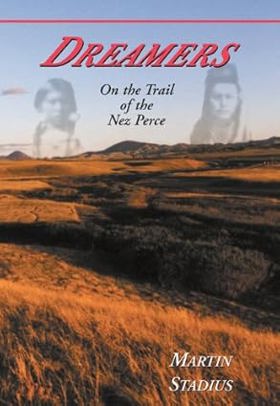
In 1877 Nez Perce warriors fought U.S. troops to a standstill, during the 1,200-mile epic retreat toward Canada. Martin Stadius tells the story as he follows the Nez Perce National Historic Trail. Stadius' crisp, entertaining writing style makes Dreamers more than a history book. xx, 437 pages : illustrations ; 24 cm CIRC [ 0 ]
|
1999 |
|
Naked against the rain the people of the lower Columbia River, 1770-1830 by Rick Rubin 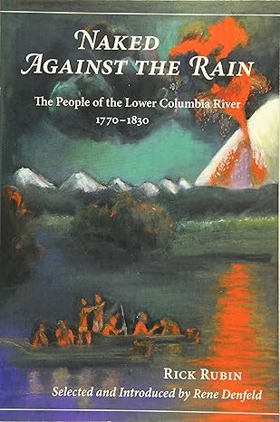
Thanks in large part to the abundant salmon runs the Chinook–speakers residing along the lower Columbia River were among the wealthiest in North America. Master fisherman and expert canoeists it was not uncommon for a single canoe and crew to net two tons of succulent Chinook salmon on a single outgoing tide. A thickset people with artificially flattened heads, anarchistic politics, and a highly stratified society, they spoke a language unconnected to any known language on earth. Yet despite all their wealth and accomplishments they were all but completely wiped out in a few short decades after whites first landed on their shores. Rubin conveys information about the people's daily life, spiritual beliefs, mythologies, and how the introduction of white settlers into the region forever changed their culture. 431 pages : illustrations ; 24 cm CIRC [ 0 ]
|
1999 |