Catalog of British Columbiana and Pacific Northwest Americana
Encyclopedia Cascadia Catalog contains book titles of mostly non-fiction Pacific Northwest Coast of North America Titles (primarially British Columbia, Idaho, Oregon and Washington State) in an easy-to-understand title catalog. If you see a link with this badge ONLINE CIRC it means that there is an online institution that provides free access to that title. In some cases there may be more than one institution hosting the title digitally.
| Catalog Title | Published |
|---|---|
|
Pacific voyages the story of sail in the great ocean by Gordon Miller 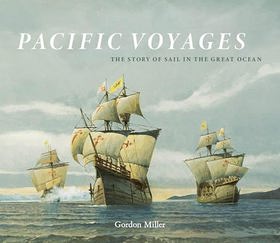
"In Western myths and imagination, the Pacific is the home of soft, warm, gentle trade winds, idyllic island lagoons and waving palms--the exotic earthly paradise of escapists, adventurers and romantics. Until James Cook showed otherwise, eighteenth-century Europeans also believed this ocean to contain a great southern continent of untold riches and beauty. The islands of the South Pacific can indeed be enchanting, their charm often exceeding expectations, but as European mariners realized when they first arrived here in the sixteenth century, the Pacific Ocean is also a region of ferocious tropical cyclones, treacherous, reef-littered atolls, wearying doldrums and mind-numbing distances. This book is maritime artist and historian Gordon Miller's tribute to the humble little ships that first ventured across the great Pacific, and the brave sailors that manned them. It is a brief, selective and condensed story of the charting, exploitation and occupation of the Pacific Ocean, mostly in small, wooden ships, with only wind and human muscle for power. These maritime pioneers united North and South America, Australia, New Zealand, the entire Pacific Ocean, all the coasts that surround it, and all the islands within. Even confined to the last four centuries of oceangoing sail, this is a large and complex story--a story brought to life by Miller's carefully researched text and masterfully rendered maritime paintings."-- Provided by publisher xi, 252 pages : illustrations (chiefly color), color maps ; 27 x 30 cm CIRC [ 0 ]
|
2023 |
|
Alexander Robb and the making of British Columbia the life and letters home of an Ulster-Scots pioneer by B. R. D. White , Ulster Historical Foundation (Publisher) 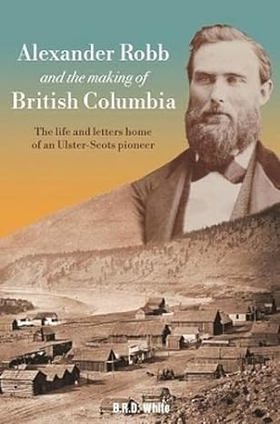
In 1862 Alexander Robb (1839-1910) was one of a group of young men from County Down, Ireland, who travelled to British Columbia. They were among the thousands seeking to make their fortunes in the goldfields of the Cariboo. Finding no gold and lucky not to starve, Alex got work among the labourers building the Cariboo wagon road. After several years struggling to make a living, he and an Englishman were the first two Europeans to homestead in the Nicola Valley of central British Columbia. Later, appointed by the province as superintendent, he oversaw building the first roads in the valley. In a series of letters to those at home in County Down, Alex told of his experiences as a labourer, rancher and public servant in a young colony that was transitioning into a province of the new Canada. Illness and death in his family took him back to Ireland where he steered the Robb farm successfully through a period of agricultural recession and major political change while continuing his commitment to public service. Alexander Robb’s remarkable story of hardship and perseverance is told along with a full revision of his unique letters. The book also contains insights into the lives of his comrades from County Down and elsewhere who had sought their fortunes in the Cariboo. xi pages, 1 unnumbered page, 177 pages, 20 unnumbered pages of plates : illustrations (some color), maps, portraits ; 24 cm CIRC [ 0 ]
|
2023 |
|
Dominion the railway and the rise of Canada by Stephen R. Bown 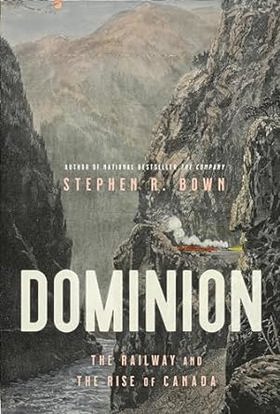
"Stephen R. Bown continues to revitalize Canadian history with this thrilling account of the engineering triumph that created a nation. In The Company, his bestselling work of revisionist history, Stephen Bown told the dramatic, adventurous and bloody tale of Canada's origins in the fur trade. With Dominion he continues the nation's creation story with an equally thrilling and eye-opening account of the building of the Canadian Pacific Railway. In the late 19th century, demand for fur was in sharp decline. This could have spelled economic disaster for the venerable Hudson's Bay Company. But an idea emerged in political and business circles in Ottawa and Montreal to connect the disparate British colonies into a single entity that would stretch from the Atlantic to the Pacific. With over 3,000 kilometers of track, much of it driven through wildly inhospitable terrain, the CPR would be the longest railroad in the world and the most difficult to build. Its construction was the defining event of its era and a catalyst for powerful global forces. The times were marked by greed, hubris, blatant empire building, oppression, corruption and theft. They were good for some, hard for most, disastrous for others. The CPR enabled a new country, but it came at a terrible price. In recent years Canadian history has been given a rude awakening from the comforts of its myths. In Dominion, Stephen Bown again widens our view of the past to include the adventures and hardships of explorers and surveyors, the resistance of Indigenous peoples, and the terrific and horrific work of many thousands of labourers. His vivid portrayal of the powerful forces that were molding the world in the late 19th century provides a revelatory new picture of modern Canada's creation as an independent state."-- Provided by publisher 400 pages, 8 unnumbered pages of plates : illustrations, maps ; 25 cm CIRC [ 0 ]
|
2023 |
|
Terminus Town Port Moody's transition through time by Ralph Drew 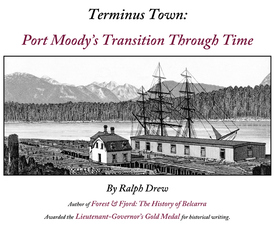
Port Moody owes its existance to the order-in-council by the 'Dominion Government of Canada' on October 4th, 1879, that established 'Port Moody' as the 'Western Terminus' of the transcontinental railway. Terminus Town describes the construction of the CPR railway along the north shore of the Fraser River between Port Moody and Yale making extensive use of photographs taken during construction. x, 385 pages : illustrations, maps, portraits ; 23 cm. CIRC [ 0 ]
|
2023 |
|
E.J. Hughes, life at the lake by Robert Amos , E. J. Hughes 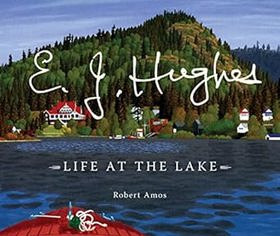
"In the most intimate volume yet about prolific Canadian painter E. J. Hughes, the artist’s official biographer Robert Amos brings us Life at the Lake, capturing the years Hughes and his wife Fern spent at their home on Shawnigan Lake, Vancouver Island. Following Hughes’s service as a war artist, in 1946 he and Fern looked for a place to buy in Victoria. Then, in 1951, they spotted an ad for a property on Shawnigan Lake, about 40 kilometres north of the city. The quiet lakeside existence he and Fern established suited his temperament and artistic needs perfectly. In addition to reproductions of all of his Shawnigan-themed oils and watercolours, the book includes dozens of sketches, colour notes, local news clippings, letters, and illuminating excerpts from recorded interviews with Pat Salmon, Hughes’s longtime friend and assistant. With a keen appreciation for the quotidian, Amos captures lakeside life at Shawnigan, with Hughes’s observations on birds and trees, and trips to local shops and restaurants. He tells of an unusually snowy winter that slowed the delivery of finished paintings to the post office and, on a more sombre note, the gradual progression of Fern’s muscular dystrophy. The book shares insights into the relationships--with Fern, Pat, and agent Max Stern--that allowed Hughes to achieve great success as an artist while living a quiet existence at Shawnigan Lake. For the Hughes fan and anyone who enjoys learning about the everyday lives of artists, this latest addition to the Hughes pictorial canon is a must."-- Provided by publisher 119 pages : illustrations (chiefly colour), map ; 21 x 25 cm CIRC [ 0 ]
|
2023 |
|
Galena Bay odyssey reflections of a hippie homesteader by Ellen Schwartz 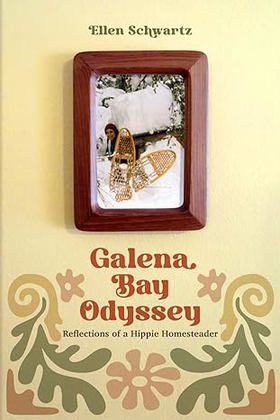
"A writer and educator reflects on the idealistic, tumultuous, and eye-opening time she spent as a back-to-the-land hippie homesteader in Kootenays in the 1970s. What compelled a nice Jewish girl from the suburbs of New York to spend a decade of her life as a hippie homesteader in the BC wilderness? Galena Bay Odyssey traces Ellen Schwartz's journey from a born-and-raised urbanite who was terrified of the woods to a self-determined logger, cabin-builder, gardener, chicken farmer, apiarist, and woodstove cook living on a communal farm in the Kootenays. Part memoir, part exploration of what motivated the exodus of young hippies--including American expatriates, like Ellen and her husband, Bill--to go "back to the land" in remote parts of North America during the 1960s and '70s, this fascinating book explores the era's naivety, idealism, and sense of adventure. Like most "back to the land" books, Galena Bay Odyssey describes the physical work involved in clearing land, constructing buildings, and living off of what they produced, but it also traces the complicated journey of discovery this experience brought to Ellen and Bill. Now, nearly half a century later, Ellen reflects on what her homesteader experience taught her about living more fully, honestly, and ecologically."-- Provided by publisher 265 pages, 14 unnumbered pages of plates : illustrations ; 23 cm CIRC [ 0 ]
|
2023 |
|
Syuwén ct:sununéymuxw mulstímuxw, Methodist ťiwi'ulhéwtxw 'u Kanata, Coqualeetza ťakw 'i' skwool The history that we share by Robert Janning , Adam Manson (Translator) 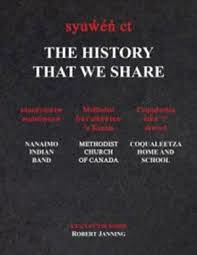
"In The History That We Share, historian Robert Janning presents a clear and comprehensive depiction of the relationship that existed between the Snuneymuxw First Nation and the Methodist Church of Canada from the time of contact to the day Snuneymuxw children were first sent to the Coqualeetza Residential School, in Sardis, British Columbia. This book gives readers an opportunity to learn what day to day life was like in a First Nation community prior to the implementation of the Indian residential school system in British Columbia. Despite the fact that fear, guilt and shame have for many years conspired to conceal much of the history that we share, an immense body of documentation chronicling our past has been left to collect dust on the shelves of archives and libraries for a century or more. Driven by a consuming desire to better understand how we became who we are today, Janning launched an investigation that took five years to complete. After collecting and chronologically arranging his findings, he was determined that the evidence would get to see the light of day. After all, if it is the truth that will set us free, then is it not high time we took a long look in our rearview mirror?" -- Back cover xxx, 317 pages : maps, portraits, black and white photographs ; 29 cm CIRC [ 0 ]
|
2023 |
|
It stops here standing up for our lands, our waters, and our people by Rueben George , Michael Simpson 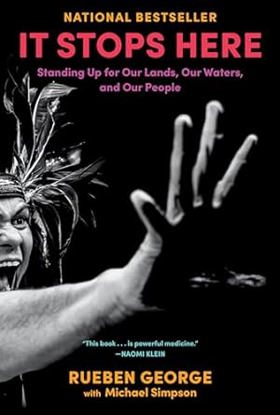
"A personal account of one man's confrontation with colonization that illuminates the philosophy and values of a First Nation threatened by the Trans Mountain pipeline. It Stops Here is the story of the spiritual, cultural, and political resurgence of a nation taking action to reclaim their lands, waters, law, and food systems in face of colonization. The book recounts the intergenerational struggle of the Tsleil-Waututh to overcome the harms of colonization and the powerful stance they have taken against the expansion of the Trans Mountain Pipeline--a fossil fuel megaproject that would triple the capacity of tar sands bitumen piped to tidewater on their unceded territory and result in a sevenfold increase in oil tankers moving through their waters. The book provides a firsthand account of this resurgence as told by one of the most prominent leaders of the widespread opposition to the Trans Mountain Pipeline expansion--Rueben George of the Tsleil-Waututh Nation. He has devoted more than a decade of his life to fighting this project and shares stories about his family's deep ancestral connections to these waters that have provided the Tsleil-Waututh with a rich abundance of foods and medicines since time immemorial. Despite the systematic attempts at cultural genocide enacted by the colonial state, Rueben recounts how key leaders of the community, such as his grandfather, Chief Dan George, always taught the younger generations to be proud of who they were and to remember the importance of their connection to the inlet. Part memoir, part call to action, It Stops Here urges policy makers to prioritize sacred territory over oil profits and insists that colonial Canada change its perspective from bending natural resources to their will to respecting this territory and those who inhabit it."-- Provided by publisher xxiii, 258 pages : illustrations ; 24 cm CIRC [ 0 ]
|
2023 |
|
Sheltering in the backrush a history of Twin Islands by Jeanette Taylor 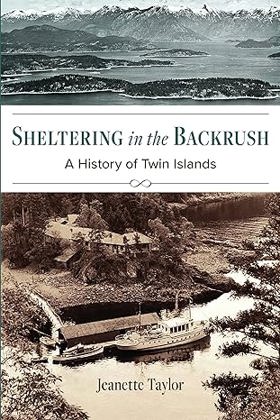
"Coastal historian Jeanette Taylor unveils the unique past of Twin Islands. Twin Islands form part of the lacey fringe at the southern edge of the Discovery Islands archipelago, where it meets the north Salish Sea. This is the interface between wilderness and urban settlement. To the north, heavily treed slopes rise vertically from the sea and fast tides churn through the constricted passages of a maze of islands and inlets. Navigating these waters is a white-knuckle challenge many recreational boaters avoid, ending their travels to the east in Desolation Sound Marine Park. To the south, the topography relaxes into a more habitable environment of open waters, villages, towns and highways. Those who do find their way to Twin are richly rewarded by a beautiful and tranquil destination--with a fascinating past. Discovery of a trove of sepia-toned pictures of Twin Islands from the late 1930s drew Jeanette Taylor to research and document the history of the islands. She found a live-wire cast of characters typical of remote places, including a one-legged sheep farmer; an aristocratic Irish priest who was the victim of an unsolved murder; American tycoons fleeing Japan on the cusp of World War II; German royalty; and an anonymous heiress who rescued the islands from logging. Through it all, Taylor found a thread among Twin's people, passed from one generation to the next--like an invisible torch handed over with the deed: a love of nature and the place. Illustrated with historical photos and engagingly written, Sheltering in the Back Rush is an important addition to Harbour Publishing's catalogue of coastal BC history."-- Provided by publisher 160 pages : illustrations, maps ; 23 cm CIRC [ 0 ]
|
2023 |
|
The notorious Georges crime and community in British Columbia's northern interior, 1909-25 by Jonathan Swainger 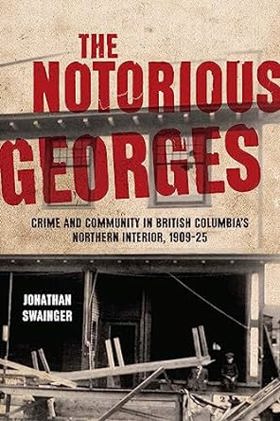
"Boozy and boisterous. The Georges--the communities of South Fort George and Fort George that ultimately became Prince George--have had a seedy reputation since before the First World War, branded Canada's "most dangerous city" more than once. Is Prince George really such a bad lad? The Notorious Georges takes another look, exploring how the local pursuit of respectability collided with caricatures of a riotously ill-mannered settlement frontier in its early years. Anxious that the Georges were being overlooked by the provincial government and venture capitalists, municipal leaders blamed Indigenous and mixed-heritage people, non-preferred immigrants, and transient laborers for local crime. Jonathan Swainger combs through police and legal records, government publications, and media commentary to demonstrate that the reputation was not only exaggerated but also unfair. Repeatedly cast as the bad apple, there was actually little to distinguish the Georges from the rest of a province that was admittedly a truculent place before the 1930s. And "respectable" white residents were responsible for the lion's share of the disorder. This lively account ultimately tells us about more than a particular community's identity. It also sheds light on small-town disaffection and unease with a diminished place in modern Canada."-- Provided by publisher xix, 288 pages : illustrations, maps ; 23 cm. CIRC [ 0 ]
|
2023 |
|
The best loved boat The Princess Maquinna by Ian Kennedy 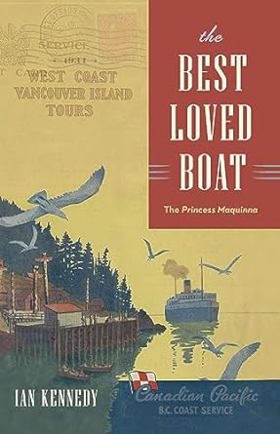
"Built in 1913, the Canadian Pacific Railway's ship Princess Maquinna steamed up and down the rugged west coast of Vancouver Island in summer and winter, calm weather and storms, for over forty years, and has become one of the most beloved boats in BC's maritime history. Princess Maquinna, sometimes referred to as the "Ugly Princess" but most often "Old Faithful," transported Indigenous people, settlers, missionaries, loggers, cannery workers, prospectors and travellers of all kinds up and down Vancouver Island's rugged and dangerous west coast, stopping at up to forty ports of call on her seven-day run. The Princess Maquinna faithfully served as the lifeline for all those who lived on the west coast of Vancouver Island before it became accessible by roads. Because of this strong connection she became the "Best Loved Boat" in BC's maritime history. Kennedy recounts battles through eighty-knot gales along the exposed coastline sailors called "The Graveyard of the Pacific," and reveals the bigotry that forced Indigenous and Chinese passengers to remain on the foredeck of the ship while other passengers sheltered from the elements inside. He brings the history of this beloved ship to life with rich detail, recalling a time when this remote part of British Columbia was alive with mines, canneries and now-forgotten settlements."-- Provided by publisher viii, 239 pages : illustrations, map ; 24 cm CIRC [ 0 ]
|
2023 |
|
Spirit whales & sloth tales fossils of Washington state by Elizabeth A. Nesbitt , David B. Williams 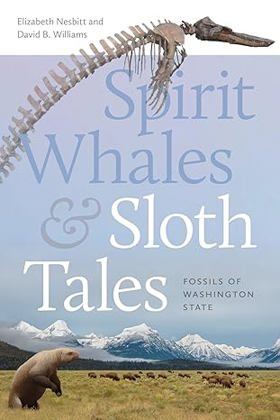
"From trilobites near the Idaho border and primitive horses on the Columbia Plateau to giant bird tracks near Bellingham and curious bear-like beasts on the Olympic Peninsula, fossils across Washington State are filled with clues of past life on Earth. With abundant and well-exposed rock layers, the state has fossils dating from Ice Age mammals only 12,000 years old back to marine invertebrates more than 500 million years old. In Spirit Whales and Sloth Tales, paleontologist Elizabeth A. Nesbitt teams up with popular science writer David B. Williams to offer a tour through more than a half billion years of natural history. Following an introduction to key concepts, twenty-four profiles-each featuring a unique plant, animal, or environment-tell stories of individual fossils, many of which are on display in Washington museums. The paleontology of Washington is brought to life with details of the fossils' discovery and extraction, their place in geological time, and the insights they provide into contemporary issues like climate change and species extinction"-- Provided by publisher x, 214 pages : color illustrations, color maps ; 24 cm CIRC [ 0 ]
|
2023 |
|
The Jackson County Rebellion a populist uprising in Depression-era Oregon by Jeffrey M. LaLande , Oregon State University Press (Publisher) 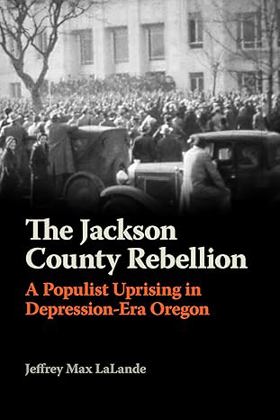
"The Jackson County Rebellion explores a dramatic if little-known populist insurgency in the American West. Author Jeff LaLande takes a deep dive into a tumultuous uprising that captured national attention as it played out in rural Oregon. First tracing its roots back to the area's tradition of protest, including the Ku Klux Klan of the 1920s, he focuses on Jackson County's politics of upheaval during the worst days of the Great Depression. The broad strokes of the episode may be familiar to contemporary readers: Demagogues fanning rage - relentlessly accusing an elite of corruption and conspiracy. The strife-torn episode featured nativist and anti-Semitic elements. The local press played a key role in the events. Two inflammatory newspapers, one owned by wealthy orchardist Llewellyn Banks and the other by politician Earl Fehl, became the vehicles by which these men won the loyalty of rural and working-class residents. Partners in demagoguery, Banks and Fehl created a movement - dubbed the "Good Government Congress" that very nearly took over county government through direct action, ballot theft, and threats of violence. Among those opposing the two men was Harvard-educated Robert Ruhl, owner/editor of the Medford Mail-Tribune, who faced off against Banks and Fehl. Despite boycotts and threats of sabotage. Ruhl ran a resolute editorial campaign against the populist threat in his Mail-Tribune, which won a Pulitzer Prize for its reporting on the uprising. The rebellion blazed hotly but not for long. Its end was marked by the arrest of its leaders after the fiercely contested 1932 election and by Banks's murder of the police officer sent to arrest him. Placing the Jackson County Rebellion squarely within America's long tradition of populist uprisings against the perceived sins of an allegedly corrupt, affluent local elite, LaLande argues that this little-remembered episode is part of a long history of violent conflict in the West that continues today."-- Provided by publisher xiv, 206 pages : illustrations, map, portraits ; 23 cm CIRC [ 0 ]
|
2023 |
|
Shipyard short histories of Whatcom County's boatbuilders & shipyards, with remembrances from those who worked them by Todd Warger 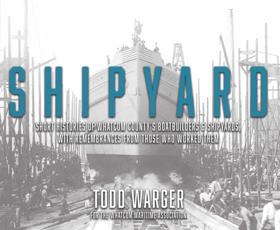
For over 120 years, Whatcom County has been at the forefront of boatbuilding and ship construction. Its shipwrights, carpenters, and manufacturers have led the way in marine technology and innovation, never afraid of embracing the use of new building materials, methods--and at time, pioneering the industry itself xv, 282 pages : illustrations ; 20 x 26 cm CIRC [ 0 ]
|
2023 |
|
Power lines giant hydroelectric power in the Pacific Northwest, an era and a career by Russell McCormmach , Palimpsest Books (Publisher) 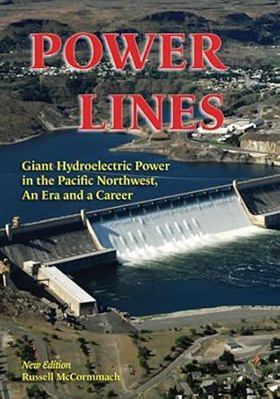
"The Columbia River and its tributaries hold the greatest hydroelectric power potential of any river system in America. The systematic development of the potential began with a survey of the Columbia River Basin by the US Army Corps of Engineers. Its subsequent report to Congress in 1931 recommended construction of a system of multipurpose dams of unprecedented size, difficulty, and expense. During the Great Depression, as part of President Roosevelt's efforts to remove men from relief roles, the federal government undertook to build two dams on the Columbia River following the Corp's master plan. They were completed in time to aid to the production of weaponry in World War II. Through the postwar economic boom, the government built more dams, distributing giant blocks of power to industry in a region whose economy until then had been mainly extractive. With a focus on the Pacific Northwest, this book treats of federal power in the dam-building era in America. The legacy of that era is conflicted. The hydroelectric development of the Columbia River Basin is incontrovertibly both one of the great technological achievements of the twentieth century and a massive incursion into nature. In keeping, this book discusses the development both from the side of engineering, the source of problems in the dam-building era, and from the side of nature, the source of problems in the era that succeeded it, the environmental. The Columbia River Basin is home to the country's greatest salmon runs, and dams have threatened their survival, even as nowhere else has so much effort and expense been directed to preserving them. Problems of power and of the environment have an urgency in today's world, and measures that address them are often contradictory. This book considers the measures and the place of hydroelectricity among alternative sources of energy."--page 4 of cover xii, 244 pages : illustrations (some color), maps ; 26 cm CIRC [ 0 ]
|
2023 |
|
Bayocean Atlantis of Oregon by Jerry Sutherland 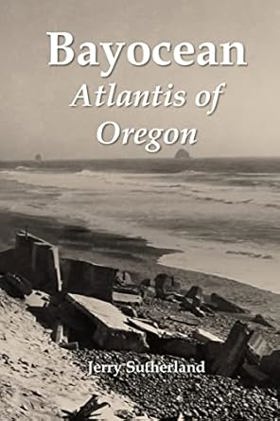
Like Plato's fictional island kingdom, most of Bayocean sank below the sea long ago. The rest lies buried beneath the shore pine, salal, and beach grass covering the four-mile-long spit that protects Tillamook Bay from the Pacific Ocean. This book chronicles the half-century this Oregon resort town existed, tells the stories of people who lived there, and explains its demise. Starting in 1907, urbanites in Oregon's Willamette Valley and across the Pacific Northwest were promised a grand resort where they could enjoy cool, ocean breezes during hot summers. Lots sold quickly at first, especially those along Bayocean's one-hundred-foot-high ridgeline where bay and ocean views were breathtaking. But Tillamook's remote location, an economic downturn, and insufficient financial reserves led to delays, litigation, and receivership. Though never grand, at one point or another Bayocean featured a massive natatorium, three hotels, forty-two rental cabins, a two-story mercantile, two restaurants, three dance halls, an amusement pavilion, and fifty-nine homes. Reed College students ran the resort one summer; a military academy for boys tried but failed another. A commune invigorated the town for a couple of years during the Great Depression, as did Coast Guard war dogs during World War II. These and other episodes in Bayocean's history make it more interesting than most, but the fact that nothing remains makes it matter. Erosion began pulling homes into the sea in the late 1920s and undercut the oceanside natatorium in 1932. As the spit's foredune continued to recede, more homes fell. In November 1952 a storm surge blew its narrow southern section into Tillamook Bay. Four years later, the Army Corps of Engineers built a breakwater to reconnect the island to Cape Meares, destroying what remained of the town in the process. It took geologists, geographers, and oceanographers two decades to figure out that the erosion had been caused by faulty jetty planning rather than natural forces. Their work prevented similar environmental disasters from occurring elsewhere. When Jerry Sutherland heard about Bayocean in 2014, he first read everything written about it. He then searched for additional information, traveling across the United States to look through personal and institutional archives. Along the way, he shared some of his discoveries with the public at www.bayocean.net and with the producers of television documentaries. But in his book, Sutherland shares it all.--Publisher 282 pages : illustration, maps, portraits ; 23 cm CIRC [ 0 ]
|
2023 |
|
Astoria by Chelsea K. Vaughn 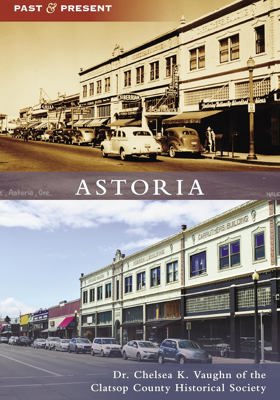
Established in 1811, Astoria, Oregon, holds claim to being the oldest US settlement west of the Rockies. After surviving devastating fires and severe economic downturns, modern Astoria--with its well-preserved historic homes and bustling downtown--is a beacon on the scenic Columbia River. Comparing our present to our past is how we understand our history. Books in this series offer a special view of American life by placing historical images side by side with contemporary photographs.--From back cover x, 95 pages : illustrations (some color) ; 24 cm. CIRC [ 0 ]
|
2023 |
|
Unbroken my fight for survival, hope, and justice for Indigenous women and girls by Angela Sterritt 
As a Gitxsan teenager navigating life on the streets, Angela Sterritt wrote in her journal to help her survive and find her place in the world. Now an acclaimed journalist, she writes for major news outlets to push for justice and to light a path for Indigenous women, girls, and survivors. In her brilliant debut, Sterritt shares her memoir alongside investigative reporting into cases of missing and murdered Indigenous women in Canada, showing how colonialism and racism led to a society where Sterritt struggled to survive as a young person, and where the lives of Indigenous women and girls are ignored and devalued. 'She could have been me,' Sterritt acknowledges today, and her empathy for victims, survivors, and families drives her present-day investigations into the lives of missing and murdered Indigenous women. In the end, Sterritt steps into a place of power, demanding accountability from the media and the public, exposing racism, and showing that there is much work to do on the path towards understanding the truth. But most importantly, she proves that the strength and brilliance of Indigenous women is unbroken, and that together, they can build lives of joy and abundance." -Inside front cover xv, 279 pages ; 24 cm CIRC [ 0 ]
|
2023 |
|
The ballad of Ginger Goodwin & Kitimat two plays for workers by Elaine Ávila 
"Two epic labour plays, based on true events, by the acclaimed author of Fado: The Saddest Music in the World. In The Ballad of Ginger Goodwin, discover how Canada got the eight-hour day - and in Kitimat, visit the fastest declining town in Canada, whose residents are suddenly offered a deal by Big Oil. The plays, performed from Los Angeles, California, to Lisbon, Portugal, are the recipient of many awards, including the Mellon Foundation Environment Arts Commission, and Best New Play, Audience Favourite, Best Production Awards from the Victoria Fringe and Victoria Critics Circle. The Ballad of Ginger Goodwin With a cast playing everyone from a radical socialist to an Italian laundress to a scientist-industrialist, The Ballad of Ginger Goodwin is about the dreams of immigrants, coal and smelter workers in Canada and the Pacific Northwest, and the battle for workers' rights. Featuring music of the period, including a new ballad by composer/activist Earle Peach, the play recreates the events surrounding the mysterious death of Albert "Ginger" Goodwin, who, through a strike at a Canadian zinc smelter in Trail, BC, brought the WWI British war machine to a halt. Kitimat Kitimat, British Columbia: an industry town in glorious wilderness finds itself the centre of international controversy when the town is asked to vote no or yes on an upcoming oil pipeline project. As election day approaches, the residents of Kitimat struggle to decide between economic prosperity or protection of the natural world. The Ballad of Ginger Goodwin: Cast of 2 women and 3 men Kitimat: Flexible, between 6 and 16 actors"-- Provided by publisher xi, 161 pages : illustrations ; 22 cm CIRC [ 0 ]
|
2023 |
|
The best loved boat The Princess Maquinna by Ian Kennedy 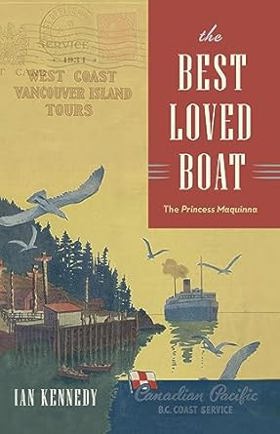
"Built in 1913, the Canadian Pacific Railway's ship Princess Maquinna steamed up and down the rugged west coast of Vancouver Island in summer and winter, calm weather and storms, for over forty years, and has become one of the most beloved boats in BC's maritime history. Princess Maquinna, sometimes referred to as the "Ugly Princess" but most often "Old Faithful," transported Indigenous people, settlers, missionaries, loggers, cannery workers, prospectors and travellers of all kinds up and down Vancouver Island's rugged and dangerous west coast, stopping at up to forty ports of call on her seven-day run. The Princess Maquinna faithfully served as the lifeline for all those who lived on the west coast of Vancouver Island before it became accessible by roads. Because of this strong connection she became the "Best Loved Boat" in BC's maritime history. Kennedy recounts battles through eighty-knot gales along the exposed coastline sailors called "The Graveyard of the Pacific," and reveals the bigotry that forced Indigenous and Chinese passengers to remain on the foredeck of the ship while other passengers sheltered from the elements inside. He brings the history of this beloved ship to life with rich detail, recalling a time when this remote part of British Columbia was alive with mines, canneries and now-forgotten settlements."-- Provided by publisher 1 online resource (viii, 239 pages) : illustrations, map CIRC [ 0 ]
|
2023 |
|
Burning sage poems from the Lytton fire by Meghan Fandrich 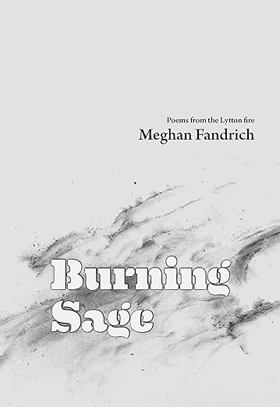
"On the day that Lytton, BC burned to the ground, Meghan Fandrich ran from the flames. She saw the village turn into a black pillar of smoke, and went home after a month-long evacuation to its ashes. Her house, on the edge of the fire, was saved; her community and her small business were not. Life as she knew it was gone, and somehow, in spite of the trauma and the ongoing onslaught of natural disasters, she had to keep going. Living. Surviving. Burning Sage shares Meghan's deeply personal story of the fire, the ensuing trauma, and the path out of it. But it is also a human story, a universal story, of loneliness, fragility and beauty. The poems follow the arc of shock, fear, and anger, and the impossibility of single parenting in a burned-up town. They tell of a connection, a love, and the way that feeling understood can help us understand ourselves. The poems in Burning Sage share a vivid portrait of grief and heartbreak and, ultimately, of healing."-- Provided by publisher 88 pages : illustrations ; 21 cm CIRC [ 0 ]
|
2023 |
|
Chinese opium in America, 1850-1920 by Bennet Bronson , Chuimei Ho 
"Many Chinese-American historians have tended to shy away from the subject of Chinese opium use in 19th century North America entirely and so have their counterparts in Asia. Opium use among Chinese immigrants was widespread, economically important, and -- until 1908-9 -- perfectly legal in most parts of the United States and Canada. Opium made hard lives more bearable and, perhaps due to easy availability and modest prices, seems not to have caused nearly as much violent crime as alcohol did then or as opioid drugs like heroin and fentanyl do nowadays. Our discussion focused on the abundant texts and artifacts relating to opium found at Chinese sites on this continent. As of now, more hard data on Chinese opium use is available at those sites than anywhere else in the world, including China itself. We have made several important discoveries when summarizing that data. For one thing, opium was not a profitable commodity in the U.S. and Canada during the 19th century. For another, as has not been previously recognized, the containers and equipment associated with the drug can quite easily be traced to their sources. Historians and archaeologists will find such information essential to their work"-- Provided by publisher xiv, 199 pages : illustrations, maps ; 26 cm CIRC [ 0 ]
|
2023 |
|
Idaho ghost towns and mining camps by Robert E. Ballard 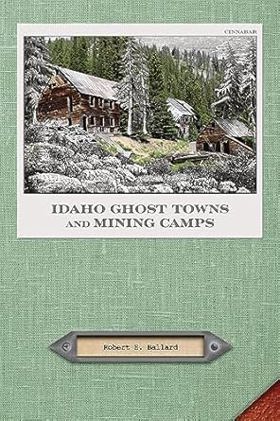
Idaho Ghost Towns and Mining Camps provides the most updated accounting of the mining camps and towns that grew and prospered during one of the greatest gold and silver strikes ever seen in the western United States. Adventurers from all walks of life ventured into unknown regions to play a game of chance with finding wealth in a mountain stream or deep beneath the snow-covered earth. Behind them they left the towns they had built, the railroad tracks that had connected them to the outside world and equipment now rusted from years of abandonment. Follow easy directions to locate the sites of over 120 towns and camps throughout Idaho 288 pages : color illustrations ; 23 cm CIRC [ 0 ]
|
2023 |
|
Edible and medicinal flora of the West Coast the Pacific Northwest and British Columbia by Collin Varner 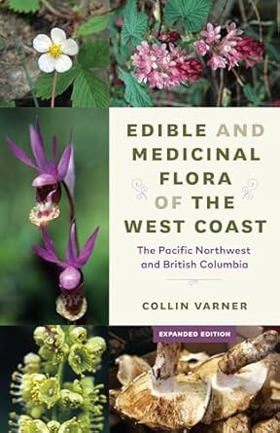
"The coastal Pacific Northwest of North America is home to a multitude of edible and medicinal plant species, edible mushrooms, and marine plants--from Black Gooseberry to Western Tea-Berry, from Golden Chanterelle to Yellow Morel Mushroom, and from Sea Asparagus to Winged Kelp. Now revised and updated with additional species and recipes, this compact, full-color forager's guide offers clear photography, descriptions, safety tips, and warnings, as well as culinary and medicinal uses from Indigenous Peoples and settlers, for more than 150 wild-growing flora species in the region. Practical, user-friendly, and safe, Edible and Medicinal Flora of the West Coast is an indispensable guide for beginner and experienced foragers alike"-- Provided by publisher 264 pages : color illustrations, color maps ; 22 cm CIRC [ 0 ]
|
2023 |
|
Heaven on the half shell the story of the oyster in the Pacific Northwest by David G. Gordon , Samantha Larson , MaryAnn Barron Wagner 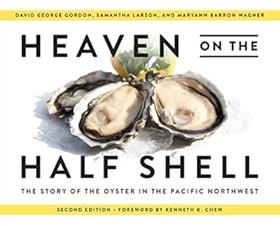
Heaven on the Half Shell offers a thoroughly researched and richly illustrated history of the Pacific Northwest’s beloved bivalve, the oyster. Starting with the earliest evidence of sea gardens and clam beds from 11,500 years ago, this book covers the history of oyster cultivation through contemporary aquaculture in coastal Washington, Oregon, British Columbia, northern California, and southeastern Alaska. Generations of oyster farmers, Native and non-Native, have weathered many challenges to continue the harvest. Their vivid individual accounts are braided together with significant history, such as the major contributions of Japanese immigrants prior to World War II and the 1994 Rafeedie decision that affirmed shellfish harvesting rights held by Northwest tribes. The book also sheds light on the innovations that made oysters an enduringly popular food, from the creation of so-called sexless oysters that could be consumed year-round to breakthroughs in contemporary oyster cuisine. Now fully updated and expanded—and chock-full of “oysterabilia”—this classic text shares new insights on emerging challenges to the oyster farmer’s life as well as increased coverage of the roles of women and contemporary tribes in building this cultural tradition, past and present. Newcomers and aficionados alike will also be delighted by the carefully selected recipes, both historic and contemporary, from the region’s top chefs. As the old saying goes, when the tide is out, the table is set. xiii, 228 pages : illustrations (chiefly color), maps, 19 x 23 cm CIRC [ 0 ]
|
2023 |