Catalog of British Columbiana and Pacific Northwest Americana
Encyclopedia Cascadia Catalog contains book titles of mostly non-fiction Pacific Northwest Coast of North America Titles (primarially British Columbia, Idaho, Oregon and Washington State) in an easy-to-understand title catalog. If you see a link with this badge ONLINE CIRC it means that there is an online institution that provides free access to that title. In some cases there may be more than one institution hosting the title digitally.
| Catalog Title | Published |
|---|---|
|
A northwest rail pictorial II by Warren W. Wing 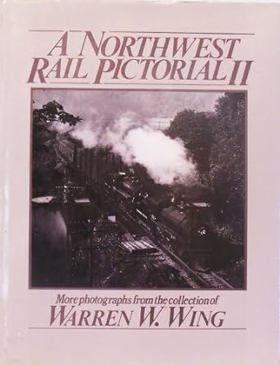
Handsomely done collection of black and white (and a very few color) photos showcasing the railways and streetcars of the Pacific Northwest. Includes vintage photos by James Turner as well as modern ones showing the end of steam and first generation of diesels, such as Northern Pacific Baldwins, Milwaukee Road Alcos, Great Northern F-units and Geeps from all the major roads. Includes rare construction photos showing the Milwaukee Road being built across the Snoqualmie Pass as well as Milwaukee Road steam, diesel and electric locomotives. There are logging railroads and shorelines and even glimpses of streetcars in Portland and Seattle. The Pacific Coast Railway, one of Mr. Wing's favorites, is covered in an expanded section highlighting its wooden trestles, small locomotives, waterfront facilities, and truss-rod rolling stock. 192 pages with index. 190 pages : chiefly illustrations ; 29 cm CIRC [ 1 ]
|
1991 |
|
Interpreting local culture and history by J. Sanford Rikoon , Judith Austin , Barre Toelken, A. J. Simmonds, G. Thomas Edwards, T. Allan Comp, LeRoy Ashby, Jan Harold Brunvand 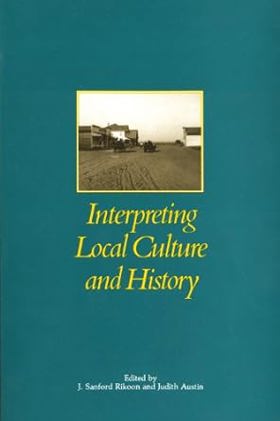
"In these essays, historians firmly rooted in the Pacific Northwest and the Great Basin share their experiences in bringing a wide variety of resources to bear in the illumination of local community life. The result is a range of techniques of value to all those who accept the challenge to interpret their own local culture and history with fresh insight and perspective." -- Publisher xviii, 178 pages : illustrations ; 23 cm CIRC [ 1 ]
|
1991 |
|
|
1991 |
|
Chief Seattle's unanswered challenge spoken on the wild forest threshold of the city that bears his name by John Martin Rich, Seattle 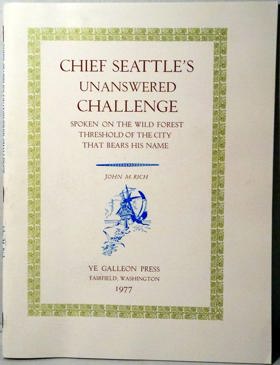
A fragment of Chief Seattle's speech, delivered at Seattle, Washington in the fall of 1854 in response to address of Hon. Isaac Stevens, commissioner of Indian affairs for Washington Territory, from the notes of Dr. Henry A. Smith; published in the Seattle Sunday Star on October 29, 1887: p. 32-42Listed in: The Washington 89 / by George H. Tweney 60 pages : illustrations ; 29 cm CIRC [ 1 ]
|
1991 |
|
Footprints in the Olympics an autobiography by Chris Morgenroth, Katherine Morgenroth Flaherty 
The books illustrated here with a picture on the cover are all soft-cover. The hardcovers are all dark green with gold letters. Also these books are by Chris Morgenroth (my Grandfather), edited by my mother (Katherine Morgenroth Flaherty). Whoever Pauline Battien is, she had nothing to do with this book. I helped my mother publish the book and we sold over 7,000 copies. I have a small inventory of both hard and soft cover books in my possession. Thanks for taking the time to read this. I've tried, unsuccessfully, to get Amazon to correct the master listing but it hasn't happen yet. 215 pages : illustrations, maps ; 26 cm CIRC [ 1 ]
|
1991 |
|
Chiefly feasts the enduring Kwakiutl potlatch by Aldona Jonaitis (Editor, Author), Douglas Cole , Ira Jacknis , Wayne P. Suttles , Gloria Cranmer Webster , Ellen J. Lehman (Donor), American Museum of Natural History 
The magnificent collection of art made by the Kwakiutl Indians of northern Vancouver Island and the nearby mainland, assembled in the late nineteenth and early twentieth centuries for the American Museum of Natural History, lies at the heart of 'Chiefly Feasts.' More than one hundred objects from the American Museum and other collections are illustrated in full color, and extended captions incorporating information provided by many members of the Kwakiutl community describe their history and acquisition. 300 pages : illustrations (some color) ; 26 x 27 cm CIRC [ 1 ]
|
1991 |
|
Noticias de Nutka an account of Nootka Sound in 1792 by José Mariano Moziño, Iris Wilson Engstrand 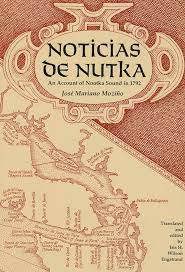
Account by botanist on expedition of Juan Francisco de la Bodega y Quadra of the Nootka Indians on Vancouver Island, their environment and adaptation to it. Introduction by Iris Wislon giving historical and anthropological background. This volume, long out of print, is now reissued in a new edition with the approval and support of the hereditary chiefs and elders of the Mowachaht, one of the Nuu-chah-nulth tribes. Included are Mozino's catalog of flora and fauna, his dictionary of the Nootka language, and reproductions of the drawings made by Atanasio Echeverria, the artists who accompanied the expedition liv, 142 pages, 24 pages of plates : illustrations ; 22 cm CIRC [ 1 ]
|
1991 |
|
Robert Brown and the Vancouver Island Exploring Expedition by Robert Brown, John Hayman 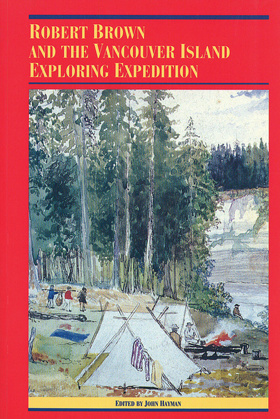
Robert Brown, a twenty-one-year-old Scotsman, arrived on Vancouver Island in 1863 for the purpose of collecting seeds, roots, and plants for the Botanical Association of Edinburgh. Relations with his employer quickly deteriorated, however, and when the opportunity arose in 1864 to head the Vancouver Island Exploring Expedition, Brown eagerly accepted the position as its commander. During the four and a half months of the expedition, Brown kept a journal which is published here for the first time. It is remarkable for its record of life on Vancouver Island over a century ago and its description of the island's pristine wilderness as well as for its proposals for future economic development. The accounts of agricultural settlements at Cowichan, Chemainus, and Comox and of the coal-mining town of Nanaimo are among the earliest available. The Vancouver Island Exploring Expedition did not venture north of Comox, but it crossed the island at several points, often by new routes, and in the process left its mark by giving place names to several locations. The expedition's most celebrated achievement was the discovery of gold at Leech River, named after the second-in-command, which resulted in a short but sensational gold rush. Robert Brown was exceptionally interested in the way of life of the native people. His entries on land reserve policies and on the failure to settle land claims are especially pertinent today. Excerpts from his related writings, among them one of the earliest records of a potlatch (at Alberni) and a collection of Indian myths and legends display an appreciation unusual at that time. Most of the known drawings of the expedition by Frederick Whymper, the travelling artist, are included in the book and give a contemporary view of many of the sites the expedition encountered. A checklist of Brown's other writings on the northwest coast completes the book. xiii, 211 pages : illustrations ; 23 cm CIRC [ 1 ]
|
1991 |
|
French presence in Victoria, B.C., 1843-1991 by John Greene, Association historique francophone de Victoria 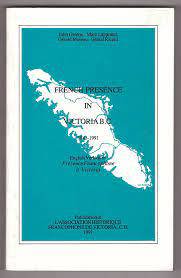
Published by the Association historique francophone de Victoria and authored by John Greene, French Presence in Victoria, B.C., 1843–1991 chronicles nearly a century and a half of Francophone contributions to the cultural, economic, and religious fabric of Vancouver Island. The book traces the arrival of French-Canadian fur traders, Catholic missionaries, and European immigrants who helped establish and shape the early colonial capital long before Confederation. Through archival records, church registers, and personal accounts, the text illuminates how a distinct Francophone community maintained its linguistic and cultural identity despite the overwhelming dominance of British institutions. A keen insight drawn from the work is how multiculturalism in early Western Canadian cities existed beneath a veneer of British imperial hegemony; by uncovering the vital, behind-the-scenes roles played by French speakers in commerce and governance, the study reveals that the foundational history of British Columbia was far more pluralistic than its overtly Anglo-Saxon administrative facade suggested. v, 200 pages, [17] pages of plates (1 folded) : illustrations, maps ; 22 cm CIRC [ 1 ]
|
1991 |
|
Homesteads and snug harbours the Gulf Islands by Peter Murray 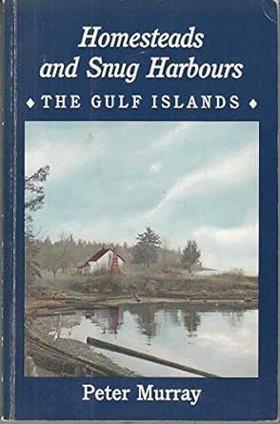
Authored by regional historian Peter Murray, Homesteads and Snug Harbours: The Gulf Islands chronicles the colorful pioneering history, maritime isolation, and rugged settlement of British Columbia's picturesque Strait of Georgia archipelago. The book explores how eccentric pioneers, fishermen, farmers, and self-reliant families carved out sustainable lives across islands defined by sheltered anchorages, rocky terrain, and a remarkably mild maritime climate. Drawing on extensive archival research and local oral histories, the text preserves the vanishing stories of an independent coastal community that lived at the mercy of wind, tide, and steamboat schedules. A keen insight drawn from the work is how the geography of island life fostered an intense culture of self-reliance juxtaposed with deep community interdependence; because these isolated maritime havens lacked roads and mainland infrastructure, early Gulf Islanders relied entirely on mutual aid and maritime mobility to survive the very isolation that drew them to the frontier. 213 pages : illustrations, maps ; 22 cm CIRC [ 1 ]
|
1991 |
|
Legends of Vancouver by E. Pauline Johnson, Laura Wee Láy Láq 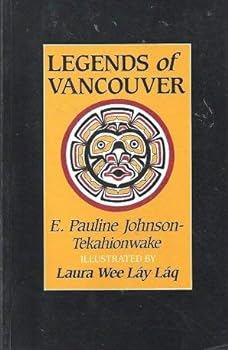
First published in 1911, Legends of Vancouver was an immediate sensation, introducing young readers to the fascinating customs and rich cultural life of the Pacific Coast Salish. Retold by Canada's best known native storyteller, E. Pauline Johnson-Teka- hionwake, these tales of romantic heroism, mystic enchantment, and magical transformations still have the power to captivate. Vibrant and charming, authentic and enduring, Legends of Vancouver has become a classic of Canadian children's and native literature 141 pages : illustrations ; 21 cm. CIRC [ 1 ]
|
1991 |
|
Roadside history of Oregon by Bill Gulick 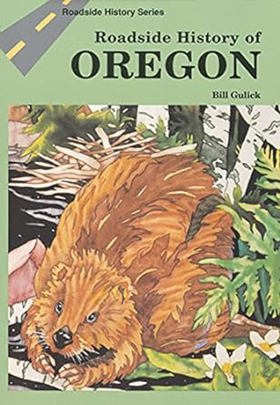
A historical guide of Oregon that includes information on historic sites, notable people, significant events, and places to visit along its highways xi, 430 pages : illustrations, maps ; 24 cm. CIRC [ 1 ]
|
1991 |
|
The voyage of Sutil and Mexicana, 1792 the last Spanish exploration of the northwest coast of America by John Kendrick, Dionisio Alcalá-Galiano, Cayetano Valdés Flores Bazán y Peón, Josef Espinosa y Tello, José Cordero 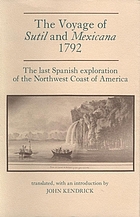
The Sutil and Mexicana sailed along the coast of the Pacific Northwest in 1792, their stated mission to put to rest the persistent rumors of the mythical strait connecting the Pacific and Atlantic in the neighborhood of the Strait of Juan de Fuca, the present-day border of Canada and the United States. This would be the last Spanish exploration along the Pacific Coast after 250 years of primacy in charting those waters 260 pages : illustrations, maps ; 25 cm. CIRC [ 1 ]
|
1991 |
|
Brief presence Spain's activity on America's northwest coast, 1774-1796 by Tomas Bartroli 
Authored by historian Tomás Bartroli, Brief Presence: Spain's Activity on America's Northwest Coast, 1774–1796 chronicles Spain's aggressive late-18th-century maritime expeditions and territorial assertions along the Pacific Northwest coast. The book details pioneering voyages led by explorers like Juan Pérez, Bruno de Heceta, and Salvador Fidalgo who mapped uncharted waters, established short-lived outposts like Fort San Miguel, and traded with Indigenous nations in a desperate bid to secure the region against British and Russian encroachment. Drawing heavily from Spanish naval archives and primary logs, the text illuminates the logistical hurdles and geopolitical anxieties that characterized Madrid's fleeting imperial footprint in the North Pacific. A keen insight drawn from the work is how imperial overextension doomed Spain's Pacific ambitions; by trying to police a vast, distant coastline with limited supply lines and sparse settlers, the Spanish crown ultimately transformed its maritime explorations into an expensive reconnaissance mission that inadvertently paved the way for British and American dominance. 62 pages : illustrations ; 22 cm CIRC [ 1 ]
|
1991 |
|
Otter skins, Boston ships, and China goods the maritime fur trade of the Northwest coast, 1785-1841 by James R. Gibson 
The first comprehensive account of the maritime fur trade on the Northwest Coast of North America. James Gibson's thoroughly researched and highly detailed study is the first comprehensive account of the maritime fur trade on the Northwest Coast of North America. Before Euro-American contact, the native peoples of the Northwest Coast had traded amongst themselves and with other indigenous people farther inland, but by the end of the 1780s, when Russian coasters had penetrated the Gulf of Alaska and British merchant ships were frequenting Nootka Sound, trade had become the dominant economic activity in the area.The Tlingit, Haida, Tsimshian, Nootka, Salish, and Chinook spent much of their time hunting fur-bearing animals and trading their pelts - especially the highly prized "black skins" of sea otters - to Russian, British, Spanish, and American traders for metals, firearms, textiles, and food. The Northwest Coast Indians used their newly acquired goods in intertribal trade, while the Euro-Americans traded their skins at Canton for tea, silk, and porcelain which they then sold in Europe and America. This traffic continued for more than half a century until, in the early 1840s, the Northwest trade declined significantly with depletion of the fur-bearing animals due to overhunting, depopulatlon of the Natives by disease and warfare, and depression of the market for furs.While previous studies have concentrated on the boom years of the fur trade, before the War of 1812, Gibson reveals that the maritime fur trade persisted into the 1840s and shows that the trade was not solely or even principally the domain of American traders. He gives an account of Russian, British, Spanish, and American participation, describes the market in South China, and outlines the evolution of the coast trade. He also assesses the physical and cultural effects of this trade on the Northwest Coast and Hawaiian Islands and on the industrialization of the New England states. Gibson's new interpretations derive from his use of Western primary sources that have been largely ignored by previous investigators; Russian-language sources not consulted by others; the records of the Russian-American, East India, and Hudson's Bay companies; the unpublished logs and journals of a number of American ships; and the business correspondence of several New England shipowners 1 online resource (xiii, 422 pages) : illustrations CIRC [ 1 ]
|
1991 |
|
Columbia's river the voyages of Robert Gray, 1787-1793 by J. Richard Nokes 
Covers the voyages of Robert Gray from 1787 to 1793 along the Pacific Northwest coast. The two voyages of the American Robert Gray, one began in 1787 and the other in 1790. In 1787, he was captain of the sloop Lady Washington, and entailed trade and discovery in the Pacific Northwest. He switched to captaining the Columbia which he took back to Boston by crossing the Pacific to China, thus becoming the first American to circumnavigating the globe. In 1790 he sailed the Columbia from Boston, around Cape Horn and up the west coast of South and North Americas to the Pacific Northwest. xviii, 352 pages : illustrations, maps ; 24 cm CIRC [ 1 ]
|
1991 |
|
Spokane & the Inland Empire an interior Pacific Northwest anthology by David H. Stratton 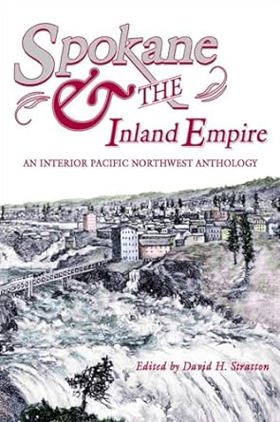
Essential aspects about the prehistory, history, geography, and architecture of the Inland Pacific Northwest are presented here in one succinct volume. This landmark collection features essays by noted national and regional scholars, such as Donald W. Meinig, Carlos A. Schwantes, Henry Matthews, Clifford E. Trafzer, and Harvey S. Rice. Spokane and the Inland Empire outlines the region's historical geographic systems, Palouse tribal history, characteristics of prehistoric Plateau Indian dwellings, a century of Columbia Plateau agriculture, Spokane's bitter labor disputes that occurred prior to America's entry into World War I, the exceptional architecture of Spokane's Kirtland Cutter, and more. This updated edition includes some new material and has been revised from the original volume published in 1991. Extensive illustrations supplement the text. xvii, 194 pages : illustrations, maps ; 24 cm CIRC [ 1 ]
|
1991 |
|
Sheriffs, 1911-1989 a history of murders in the wilderness of Washington's last county by Tony Bamonte 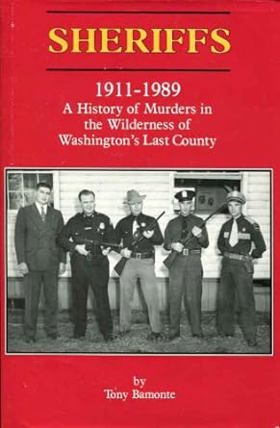
Authored by regional historian Tony Bamonte, Sheriffs, 1911-1989: A History of Murders in the Wilderness of Washington's Last County chronicles the grim true-crime history, law enforcement challenges, and violent frontier legacies of remote Pend Oreille County. The book investigates a series of harrowing homicide cases, missing persons mysteries, and complex investigations handled by local sheriffs operating across a sprawling, densely forested wilderness bordering Idaho and Canada. Through meticulous archival research, newspaper accounts, and police records, the text examines how rural law enforcement struggled to maintain order in an isolated landscape plagued by rugged terrain and transient populations. A keen insight drawn from the work is how regional crime reporting exposes the dark underbelly of wilderness escapism; by documenting how rugged isolation routinely attracted desperate outlaws and shielded violent criminals, the narrative shatters the romanticized myth of the peaceful frontier, revealing instead a lawless hinterland where justice was constantly undermined by vast geography. 251 pages : illustrations ; 24 cm CIRC [ 1 ]
|
1991 |
|
A time of gathering native heritage in Washington State by Robin Kathleen Wright, Thomas Burke Memorial Washington State Museum 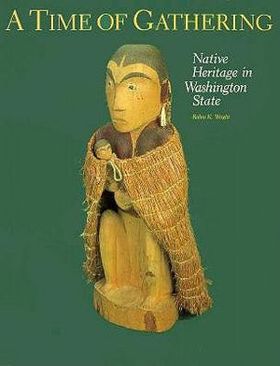
Published by the Burke Museum and edited by art historian Robin Kathleen Wright, A Time of Gathering: Native Heritage in Washington State serves as a profound celebration and catalog of Indigenous art, culture, and enduring sovereignty across the Pacific Northwest. The volume brings together tribal elders, artists, and scholars to document centuries of rich material culture, including intricate basketry, carved wooden regalia, and contemporary artistic expressions that defy historical erasure. Through stunning photographic plates and deeply contextual essays, the text emphasizes that Native communities are not relics of a static past, but dynamic, living cultures actively revitalizing their ancestral traditions. A keen insight drawn from the work is how museum archives can be radically decolonized through collaborative curation; by returning interpretive authority to the descendant communities who created these sacred objects, the publication transforms a traditional anthropological collection into a powerful instrument of indigenous self-determination. 280 pages : illustrations (some color), maps, portraits ; 29 cm CIRC [ 1 ]
|
1991 |
|
Northwest bastion the U.S. Army barracks at Vancouver, 1849-1916 by Ted Van Arsdol, Heritage Trust of Clark County (Wash) 
The U.S. Army, obeying the command, arrived May 13, 1849, to establish a military presence north of the Columbia River. The Hudson's Bay Co. moved from the Bastion to Victoria on Vancouver Island and slowly sold or abandoned its holding below the 49th parallel. A new chapter began in American history that year, as the bugle call was heard up and down the Columbia River. The United States extended from "sea to shining sea" and the country began to develop fully its economic, social, and cultural identity. Ch. 1 speaks of the Ninth Regiment stationed at Fort Vancouver and the famous Shanghai drill that was performed daily. The Indian Frontier (1849-1860) is the title of the first chapter. Ch. 2 talks of Volunteers Take Over (1861-1866) because the Civil War was beginning, and an early effect of that war was the removal of most regular Army units. Trained soldiers were required in the East. Some officers resigned and joined the Confede rates. This era at the fort was called the volunteer era. They had to let go of men like Sheridan, Augur, an Ingalls, and a Grant. Ch. 3 is about Pacifying The Natives (1867-1882) and the worry for Indian Tribes in the area. The troops at Vancouver were called out to curb tribes in the surrounding area. By 1882 the last Indian war of the Pacific NW was fought, and transition was under way into a different era. Ch. 4 speaks of Marking Time (1883-1898) because during this time the life of the fort was a round of dinner parties, dances, and theatricals. Ch. 5 is all about preparing troops for overseas duty, hence, Troops For Overseas (1898-1906). They were going "to the front" - artillery troops were leaving for Cuba from Vancouver. And later for the Philippines. Ch. 6 is called, Heading to Armageddon (1907-1916). Germany was exercising an expanding role in Europe at this time. Initially there were no big concerns about building up armed forces. 7 yrs. later this all changed. xii, 110 pages : illustrations, facsimiles, map ; 22 x 28 cm CIRC [ 1 ]
|
1991 |
|
Fort Langley, birthplace of British Columbia by B. A. McKelvie, Charles Lillard 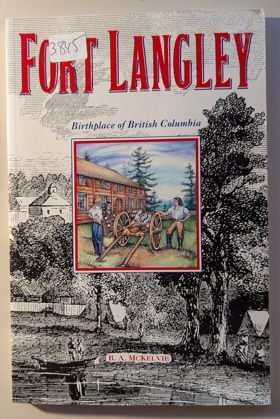
Co-authored by B.A. McKelvie and Charles Lillard, Fort Langley, Birthplace of British Columbia chronicles the foundational history of the Hudson's Bay Company fur-trading post established along the lower Fraser River in 1827. The book details how the fort evolved from a modest trading stockade dealing in salmon and beaver pelts into the geopolitical staging ground where British colonial rule was officially proclaimed in 1858. Drawing on historical journals and company records, the text illustrates the complex economic web linking fur traders, maritime supply ships, and local Indigenous populations. A keen insight drawn from the work is how the romantic narrative of a colony's "birthplace" obscures its corporate origins; by tracing British Columbia's administrative roots directly back to a commercial trading monopoly, the authors reveal that the region's political foundation was engineered less by heroic statecraft than by the ruthless logistical demands of the fur trade. 112 pages, [8] pages of plates : illustrations, maps ; 23 cm CIRC [ 1 ]
|
1991 |
|
Vancouver's Chinatown racial discourse in Canada, 1875-1980 by Kay Anderson 
Popular wisdom maintains that the colourful Chinese quarters of Canadian, American, and Australian cities owe their existence to the generations of Chinese immigrants who have made their lives there. The restaurants, pagodas, and neon lights are seen as intrinsically connected to the Chinese and their immigrant experience in the West. Kay Anderson argues, however, that "Chinatown" is a Western construction, illustrative of a process of cultural domination that gave European settlers in North America and Australia the power to define and shape the district according to their own images and interests. -- From publisher's description x, 323 pages : illustrations, maps ; 24 cm CIRC [ 1 ]
|
1991 |
|
James J. Hill and the opening of the Northwest by Albro Martin 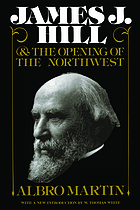
"James J. Hill (1838-1916), the Empire Builder, created a vast railroad network across the northwestern United States. In this splendid biography Albro Martin, the first researcher to have access to Hill's voluminous correspondence, richly portrays a man of many parts: an entrepreneur, a family man, a collector of notable French paintings, a promoter of scientific agriculture, and a booster for the Northwest."--Back cover xxvi, 676 pages : illustrations, maps ; 23 cm. CIRC [ 0 ]
|
1991 |
|
Idaho's Constitution the tie that binds by Dennis C. Colson, Idaho 
Distributed by the University of Nebraska Press for the University of Idaho PressThis revised edition of Dennis Colson's book presents a more accessible view to a new generation of students and legislators, many of whom are unfamiliar with Idaho's tumultuous beginnings. Idaho's Constitution opens a door for the reader into the political struggle and turmoil of a century ago, but also the spirit of compromise and common purpose that conquered the divisions they faced. xi, 288 pages ; 24 cm CIRC [ 0 ]
|
1991 |
|
Land of destiny the golden age of British Columbia by Charles Lillard, Michael Gregson 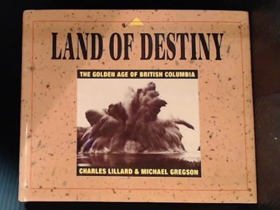
Co-authored by Charles Lillard and Michael Gregson, Land of Destiny: The Golden Age of British Columbia captures the vibrant, optimistic, and often turbulent era of early 20th-century development in Canada's westernmost province. The book chronicles an age of rapid railway expansion, booming resource extraction, and ambitious town-building that promised to transform the Pacific wilderness into an economic empire. Through rich historical anecdotes, vintage photographs, and archival documents, the authors reconstruct a time when pioneers and speculators viewed the landscape as an unexhausted horizon of boundless wealth. A keen insight drawn from the work is how the cultural obsession with a "golden age" relied on willful blindness toward ecological and human costs; by framing aggressive resource exploitation as a heroic destiny, society masked the rapid depletion of local forests and fisheries behind a glittering facade of unstoppable progress. 162 pages : illustrations ; 23 x 28 cm CIRC [ 0 ]
|
1991 |