Catalog of British Columbiana and Pacific Northwest Americana
Encyclopedia Cascadia Catalog contains book titles of mostly non-fiction Pacific Northwest Coast of North America Titles (primarially British Columbia, Idaho, Oregon and Washington State) in an easy-to-understand title catalog. If you see a link with this badge ONLINE CIRC it means that there is an online institution that provides free access to that title. In some cases there may be more than one institution hosting the title digitally.
| Catalog Title | Published |
|---|---|
|
It's always uphill from the dock the story of the Puget Sound islands by Ann B. Irish 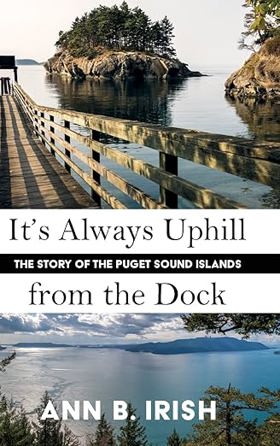
"Here is a look at the Puget Sound islands throughout history -- the San Juan Islands, Whidbey Island, Bainbridge and Vashon Islands, and many others. Featured are the people who have come to the islands: Native Americans, explorers, entrepreneurs, settlers and visitors. We learn of the Native peoples' traditional ways of life and the changes that the new settlers brought. The islands saw small pioneer farms and, later, very successful strawberry fields. Industries emerged, from lumber mills large and small to boat construction and even ski design and production. National defense installations have also been on the islands, and wartime policies have had a strong impact on Bainbridge and Vashon. Yet the islands have also hosted many summer camps, resorts and the parks that islanders and visitors today enjoy. We learn about the boats that brought people to the islands before the age of motor vehicles. More recently, how have automobile ferries and bridges impacted the islands? Here, too, is the story of the bridges to the islands that have not been built. Finally, what are the challenges these islands may face in the future?" -- Publisher description xv, 349 pages : illustrations, maps ; 24 cm CIRC [ 0 ]
|
2023 |
|
It takes a watershed to make a river by William A. Lansing , Karalynn Ott 
Gone Fishin' is a two-volume set that is hardbound and coffee-table quality. It is filled with superb historical photographs of the recreational and commercial fisheries in the rivers and bays of southwestern Oregon. Volume 1 (182 pages) pays tribute through stories and photographs of the five species of the Pacific Salmon, how they arrived and evolved in the rivers of Oregon. Its title It Takes a River to Make a Fish. Volume 2 (382 pages) pays tribute to the individual rivers from the Umpqua river on the north and the Winchuck on the south near the California border and everything in between. It is filled with stories about Zane Grey and Ginger Rogers, Glen Woolridge and other famous fishermen on each river. Its title It Takes a Watershed to Make a River. Both books the scientific jargon and only have enough statistics to help tell the story. The ocean fishery was omitted. 382 pages : illustrations, maps ; 29 cm CIRC [ 1 ]
|
2018 |
|
It takes a river to make a fish by William A. Lansing , Karalynn Ott 
Gone Fishin' is a two-volume set that is hardbound and coffee-table quality. It is filled with superb historical photographs of the recreational and commercial fisheries in the rivers and bays of southwestern Oregon. Volume 1 (182 pages) pays tribute through stories and photographs of the five species of the Pacific Salmon, how they arrived and evolved in the rivers of Oregon. Its title It Takes a River to Make a Fish. Volume 2 (382 pages) pays tribute to the individual rivers from the Umpqua river on the north and the Winchuck on the south near the California border and everything in between. It is filled with stories about Zane Grey and Ginger Rogers, Glen Woolridge and other famous fishermen on each river. Its title It Takes a Watershed to Make a River. Both books the scientific jargon and only have enough statistics to help tell the story. The ocean fishery was omitted. 182 pages : illustrations, maps ; 29 cm CIRC [ 1 ]
|
2018 |
|
It stops here standing up for our lands, our waters, and our people by Rueben George , Michael Simpson 
"A personal account of one man's confrontation with colonization that illuminates the philosophy and values of a First Nation threatened by the Trans Mountain pipeline. It Stops Here is the story of the spiritual, cultural, and political resurgence of a nation taking action to reclaim their lands, waters, law, and food systems in face of colonization. The book recounts the intergenerational struggle of the Tsleil-Waututh to overcome the harms of colonization and the powerful stance they have taken against the expansion of the Trans Mountain Pipeline--a fossil fuel megaproject that would triple the capacity of tar sands bitumen piped to tidewater on their unceded territory and result in a sevenfold increase in oil tankers moving through their waters. The book provides a firsthand account of this resurgence as told by one of the most prominent leaders of the widespread opposition to the Trans Mountain Pipeline expansion--Rueben George of the Tsleil-Waututh Nation. He has devoted more than a decade of his life to fighting this project and shares stories about his family's deep ancestral connections to these waters that have provided the Tsleil-Waututh with a rich abundance of foods and medicines since time immemorial. Despite the systematic attempts at cultural genocide enacted by the colonial state, Rueben recounts how key leaders of the community, such as his grandfather, Chief Dan George, always taught the younger generations to be proud of who they were and to remember the importance of their connection to the inlet. Part memoir, part call to action, It Stops Here urges policy makers to prioritize sacred territory over oil profits and insists that colonial Canada change its perspective from bending natural resources to their will to respecting this territory and those who inhabit it."-- Provided by publisher xxiii, 258 pages : illustrations ; 24 cm CIRC [ 0 ]
|
2023 |
|
It happened on the Oregon Trail by Tricia Martineau Wagner 
"It Happened on the Oregon Trail [Second edition] takes readers on a rollicking, behind-the-scenes look at some of the characters and episodes from the Oregon Trail's storied past. Including both famous tales, and famous names--and little-known heroes, heroines, and happenings"--Provided by publisher xiii, 205 pages : map ; 23 cm CIRC [ 1 ]
|
2014 |
|
It did happen here an antifascist people's history by Moe Bowstern , Mic Crenshaw , Celina Flores , Alec Dunn (Writer of introduction), Julie Perini , Eric K. Ward, Erin Yanke 
"Portland, Oregon, 1988. The brutal murder of Ethiopian immigrant Mulugeta Seraw by racist skinheads shocked the city. In response disparate groups quickly came together to organize against white nationalist violence and right wing organizing throughout the Rose City and the Pacific Northwest. It Did Happen Here compiles interviews with dozens of people who worked together during the waning decades of the 20th century to reveal an inspiring collaboration between groups of immigrants, civil rights activists, militant youth, and queer organizers. This oral history focuses on participants in three core groups: the Portland chapters of Anti Racist Action and Skinheads Against Racial Prejudice, and the Coalition for Human Dignity. Using a diversity of tactics-from out-and-out brawls on the streets and at punk shows, to behind-the-scenes intelligence gathering-brave antiracists unified on their home ground over and over, directly attacking right wing fascists and exposing white nationalist organizations and neo-Nazi skinheads. Embattled by police and unsupported by the city, these citizen activists eventually drove the boneheads out of the music scene and off the streets of Portland. This book shares their stories about what worked, what didn't, and ideas on how to continue the fight"-- Provided by publisher xiii, 282 pages : illustrations, map ; 23 cm CIRC [ 0 ]
|
2023 |
|
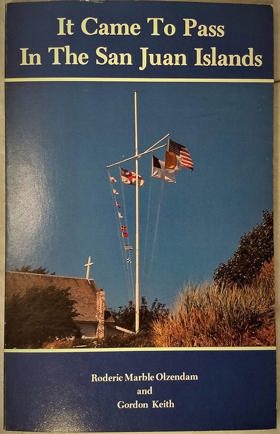
It came to pass in the San Juan Islands by Roderic Marble Olzendam, Gordon Keith
|
1978 |
|
Isleward bound a Lummi Island reader by Meredith Moench 
Published in local editions by Meredith Moench, Isleward Bound: A Lummi Island Reader compiles a rich anthology of essays, oral histories, and reflections capturing the unique communal and ecological rhythm of life on one of Washington's most distinct Salish Sea islands. The book explores the quiet realities of island isolation, the challenges of ferry-dependent infrastructure, and the deep-seated bonds among residents who choose to live off the beaten path. Through diverse personal narratives, the text preserves the vanishing traditions of local fishermen, artists, and long-time homesteaders while grappling with the pressures of modern mainland encroachment. A keen insight drawn from the work is how insular community literature functions as a defensive cultural shield; by celebrating the hyper-local eccentricities and mutual interdependence required to sustain life on a small island, the text resists the homogenization of the modern Pacific Northwest. v, 142 p. : ill. ; 27 cm. CIRC [ 1 ]
|
2005 |
|
Isle of the sea breezers by Roland Carey
|
1976 |
|
Islands in the Salish Sea a community atlas by Sheila Harrington, Judi Stevenson 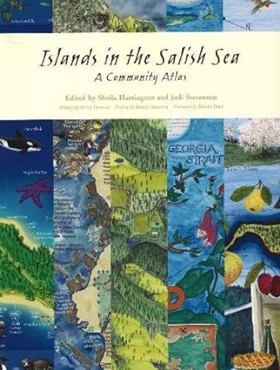
Gorgeous, fascinating and unconventional, the Islands in the Salish Sea show aspects of the Gulf Islands that are most beloved by the residents, from heritage orchards, fishing spots and patches of endangered wild orchids to ancient First Nations' sites and bird colonies. The community on each island decided what elements should be depicted, and local artists then created each of the magnificent and wildly different maps. This volume is a treasure-trove of cherished information that could have been lost, presented with imagination and great beauty. The Islands in the Salish Sea Community Mapping Project was coordinated by Sheila Harrington and Judi Stevenson, who live on Salt Spring Island 159 Seiten : zahlreiche Illustrationen und Karten CIRC [ 1 ]
|
2005 |
|
Island year by Hazel Heckman , Laurie Olin (Illustrator) 
In her first book, Island in the Sound, Heckman brought to life Anderson Island in Puget Sound, its people, its history, and its sadly vanishing way of life. Now, in this book, she brings the same clarity of vision, warmth, and insight to the natural life of her island, recording the cycle of the seasons as an appreciative and articulate observer. This is a diary of the natural world where the same things happen again and again but are always new. Each month brings surprises, expected or not: the blossoming of the wild red flower currant in March, the appearance of a pod of killer whales in July. Mrs. Heckman’s gift to the reader, as in all of the best nature writing, is to let us see it through her eyes, as if never seen before. But the developers have arrived, and the natural world of the Island is as threatened as the way of life of its people. Mrs. Heckman knows that Anderson Island is not the Grand Canyon, that its destruction will never arouse great public indignation, but while it exists as one of the ‘little wild places’ she is able to share it and her love for it. xi, 255 pages : illustrations ; 23 cm CIRC [ 0 ]
|
1972 |
|
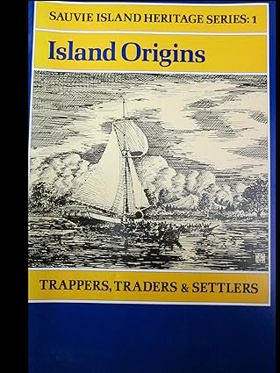
Island origins trappers, traders & settlers by J. D. Cleaver
|
1986 |
|
Island memoir a personal history of Anderson and McNeil Islands by Betsey Johnson Cammon 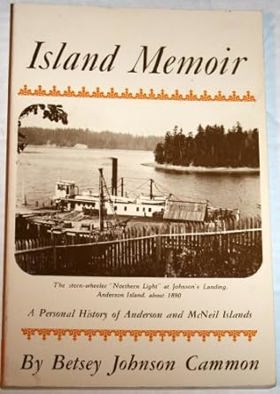
Bessie Cammon's who, what, when, where and why on Anderson Island demonstrates that the history of the West is the history of people... Her book is people, the Christensens, Ekenstams, Johnsons, and the other pioneer settlers of Anderson Island... These settlers typified the national groups who found homes in the western wilderness and who successfully adapted to the rigors of frontier life. --Bruce LeRoy, Director Washington State Historical Society 228 pages : illustrations ; 23 cm CIRC [ 1 ]
|
1987 |
|
Island in the sound by Hazel Heckman 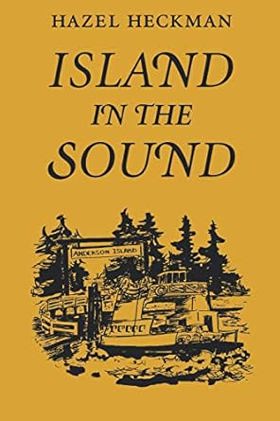
Anderson Island in Puget Sound exists as a kind of tiny, autonomous world. Sharply defined by bitterly cold water, deep enough to float a destroyer; by dense fog; and by dangerous tide rips caused by the narrow channels, it is a community without an officer of the law, a minister of the gospel, or a doctor of medicine. Nevertheless, it is a tightly knit and well-organized microcosm in its wilderness environment. Hailed as a ‘local classic’ by Murray Morgan and Wallace Stegner, Hazel Heckman’s story of this Northwest island will have strong appeal for devotees of island life anywhere. The Pacific Northwesterner will learn much about his native soil, but this book will find an audience far beyond the shadows of Mount Rainier and the wild Olympics. It will be especially treasured by those who feel deep nostalgia for the leisurely pace of life in a small community. Wit, depth of perception, engaging literary style -- all are warmly present in this saga of a Midwestern woman’s experience with a new homeland, an environment strange and very different from the dusty Oklahoma country where she had lived for the previous twenty years. Feeling at first that the perpetual rain and gray skies were a high price to pay for a relatively comfortable year-round climate, Mrs. Heckman came to like, and eventually to love, the Northwest only after she discovered Anderson Island. Located near McNeil Island in upper Puget Sound, Anderson has approximately ninety permanent residents. Most of them are descendants of the original Scandinavian settlers of the Island, and they seem to have inherited the individualism and self-reliance necessary to survive in a hostile environment. Thus, ‘modern’ innovations, such as regular ferry service and electricity, are comparatively recent developments. This book is the lively chronicle of Anderson Island -- its history, its residents, its idiosyncrasies, its commonplaces. Mrs. Heckman’s lyrical evocations of the natural life have captured the essence of Anderson Island. xii, 284 pages illustrations, map 23 cm CIRC [ 1 ]
|
1967 |
|
Island fishing history and seascape of marine harvesting in the San Juan Islands amid the Salish Sea by Boyd C. Pratt 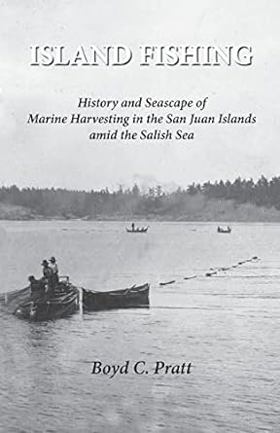
The San Juan Islands, in the heart of the Salish Sea, have been a fishing destination since time immemorial. From Coast Salish reef netting and tideland harvesting to the era of fish traps, purse seining, and gill netting, follow the many communities of fishers and their catches to understand the present-day seascape of the San Juan Archipelago. (from the back cover) ix, 390 pages : illustrations, maps ; 22 cm CIRC [ 1 ]
|
2021 |
|
Island farming history and landscape of agriculture in the San Juan Islands by Boyd C. Pratt 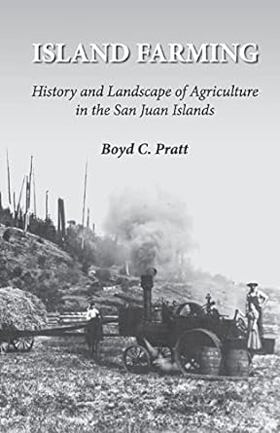
A free-ranging pig that caused an international war; a year's crop of ginseng that paid off a mortgage; and a breachy cow that led to a bloody murder. Farming in the San Juan Islands has always presented challenges and opportunities. From Coast Salish camas cultivation through homesteading to commercial farming, explore the islands' rich agricultural history in the landscape and farms of today. -- from publisher's description vi, 222 pages : illustrations, maps ; 22 cm CIRC [ 1 ]
|
2019 |
|
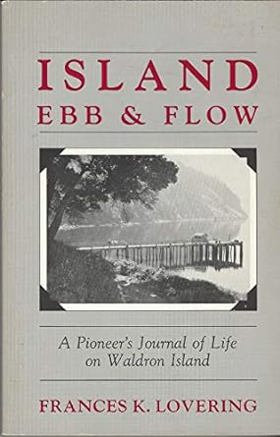
Island ebb & flow a pioneer's journal of life on Waldron Island by Frances K. Lovering
|
1985 |
|
Island County a world beater by E.M. Hawes and Lou Clark 
First published and written by E.M. Hawees and Lou Clark, 1911 iii, 55 pages illustrations, map, portraits 17 x 25 cm CIRC [ 1 ]
|
1968 |
|
Isaac I. Stevens young man in a hurry by Kent D. Richards 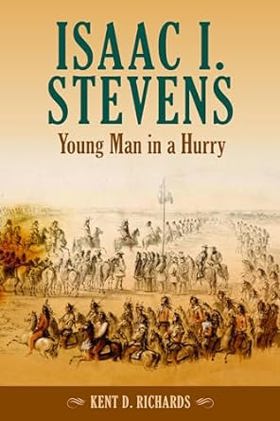
Washington Territory's first governor remains as controversial today as he was to his frontier contemporaries during the Pacific Northwest's most turbulent era -- the mid-1850s. Indian wars, martial law, and bitter political disputes, as well as the establishment of a new, sound governmental system, characterized Isaac I. Stevens' years as governor (1853-1857). History professor Kent Richards counters the popular misconception that Stevens acted with haste in forcing treaties on regional tribes, thus precipitating hostilities in 1855. Richards argues that this was in fact not the case, with the possible exception of the Flathead Council. An 1839 West Point graduate, Stevens pursued an exciting and useful career for his country, being as much at ease on horseback in the wilderness as in the halls of government at the nation's capital. In addition to serving as Washington's territorial governor, Superintendent of Indian Affairs, and, eventually, delegate to the U.S. Congress, Stevens also distinguished himself in the Mexican War, the Coast Survey, and as head of the Northern Pacific transcontinental railroad survey. In the early years of the Civil War, he was appointed a major general in the Union Army. Dying as flamboyantly as he had lived, Stevens was stricken down in 1862 while charging with banner in hand toward rebel fortifications on the same battlefield where his son lay wounded. Cut short in mid-career, Stevens nonetheless left an indelible mark on the destiny of the nation's great Northwest region xv, 451 pages : illustrations, maps ; 23 cm CIRC [ 1 ]
|
2016 |
|
Is it a house? archaeological excavations at English Camp, San Juan Island, Washington by Amanda K. Taylor, Julie K. Stein, Burke Museum of Natural History and Culture 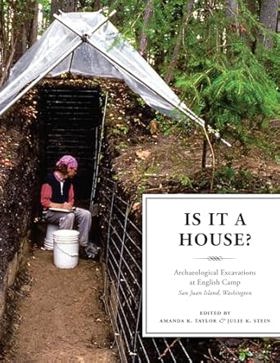
Prehistoric houses on the Northwest Coast were built from wood, often within piles of discarded shells, leaving little archaeological evidence from which to confirm their presence. Is It a House? uses multiple lines of evidence to investigate whether the U-shaped depression surrounded by shells at the English Camp site on San Juan Island was originally a house constructed by native peoples. Each chapter addresses a different kind of evidence, including artifacts, sediment, faunal remains, and stratigraphy. The quantitative and qualitative analyses used to examine the evidence reveal new directions and insights for identifying houses in similar contexts. The editors introduce the research in the context of current and past Gulf of Georgia (Coast Salish) archaeology, and end by synthesizing the research evidence. x, 170 pages : illustrations, maps ; 28 cm. CIRC [ 1 ]
|
2011 |
|
Irrigated Eden the making of an agricultural landscape in the American West by Mark Fiege 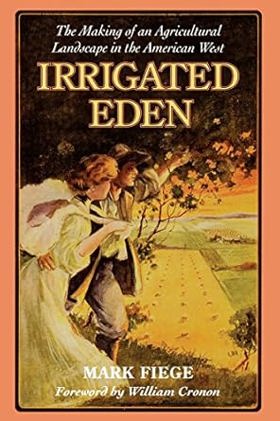
Irrigation came to the arid West in a wave of optimism about the power of water to make the desert bloom. Mark Fiege’s fascinating and innovative study of irrigation in southern Idaho’s Snake River valley describes a complex interplay of human and natural systems. Using vast quantities of labor, irrigators built dams, excavated canals, laid out farms, and brought millions of acres into cultivation. But at each step, nature rebounded and compromised the intended agricultural order. The result was a new and richly textured landscape made of layer upon layer of technology and intractable natural forces—one that engineers and farmers did not control with the precision they had anticipated. Irrigated Eden vividly portrays how human actions inadvertently helped to create a strange and sometimes baffling ecology. xv, 323 pages : illustrations, maps ; 25 cm. CIRC [ 0 ]
|
1999 |
|
Invisible generations living between Indigenous and white in the Fraser Valley by Jean Barman 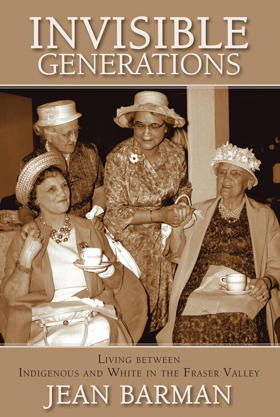
"Irene Kelleher lived all her life in the shadow of her inheritance. Her local community in British Columbia's Fraser Valley all too often treated her as if she was invisible. The combination of white and Indigenous descent that Irene embodied was beyond the bounds of acceptability by a dominant white society. To be mixed was to not belong. Attracted to the future British Columbia by a gold rush beginning in 1858, Irene's white grandfathers had families with Indigenous women. Theirs was not an uncommon story. Some of the earliest newcomers to do so were in the employ of the fur trading Hudson's Bay Company at Fort Langley. And yet, more than one hundred and fifty years later, the descendants of these early pioneers are still waiting for their stories to be heard. Through meticulous research, family records and a personal connection to Irene, Governor General award-winning historian Jean Barman explores this aspect of British Columbia's history and the deeply rooted prejudice faced by families who helped to build Canada. Invisible Generations evokes the Catholic residential school that Irene's parents and so many other 'mixed blood' children attended. Among Irene's family and friends we meet Josephine, who was separated as a child from her beloved upwardly mobile politician father. When her presence in his socially charged household became untenable, Josephine was dispatched to the same Fraser Valley boarding school. 'The transition from genteel Victoria to St. Mary's Mission was horrendous, ' she wrote. Yet individuals and families survived as best they could, building good lives for themselves and those around them. Irene was determined to be a schoolteacher and taught across the farthest reaches of the province, including Doukhobor children at a time when the community was vehemently opposed to their offspring attending school. Stories like that of Irene and of her family and friends have been largely forgotten, but in Invisible Generations Barman brings this important conversation into focus, shedding light on a common history across British Columbia and Canada. It is, in Irene's words, 'time to tell the story.'"-- Provided by publisher 174 pages : illustrations ; 23 cm CIRC [ 0 ]
|
2019 |
|
Inventing Idaho the Gem State's eccentric shape by Keith C. Petersen 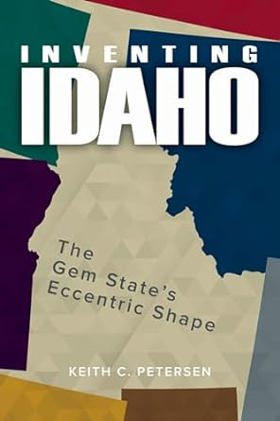
"As Idaho's State Historian, the question author Keith C. Petersen heard most was, "How did Idaho get such a strange shape?" In this book, he answers that popular inquiry, breaking the state's intriguing border story into six sections covering the fascinating events and people involved in creating the peculiar borders-boundaries that have held enormous influence on much of Idaho's political, economic, and cultural history"-- Provided by publisher x, 217 pages : illustrations, maps ; 23 cm CIRC [ 0 ]
|
2022 |
|
Invasive flora of the West Coast British Columbia and the Pacific Northwest by Collin Varner 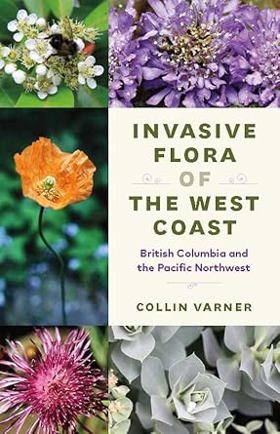
A compact, full-colour field guide to the growing number of invasive plant species spreading across coastal BC and the Pacific Northwest, highlighting their hazards and uses. The spread of invasive plant species is a growing concern across the coastal Pacific Northwest. Invasive plants compete for space with native plants, alter the natural habitat, and even interfere with the diet of local wildlife. Hundreds of these species are so commonly seen in our backyards, forests, and roadsides, that many people do not even realize that these plants are not native to this region. Designed for amateur naturalists, gardeners, and foragers, Invasive Flora of the West Coast is a clear, concise, full-colour guide to identifying and demystifying more than 200 invasive plant species in our midst, from Scotch broom to Evening Primrose. Featuring colour photography, origin and etymology, safety tips and warnings, as well as common uses, this book is practical, user-friendly, and portable for easy, on-the-go identification 207 pages : color illustrations, color map ; 22 cm CIRC [ 0 ]
|
2022 |
|
Interpreting local culture and history by J. Sanford Rikoon , Judith Austin , Barre Toelken, A. J. Simmonds, G. Thomas Edwards, T. Allan Comp, LeRoy Ashby, Jan Harold Brunvand 
"In these essays, historians firmly rooted in the Pacific Northwest and the Great Basin share their experiences in bringing a wide variety of resources to bear in the illumination of local community life. The result is a range of techniques of value to all those who accept the challenge to interpret their own local culture and history with fresh insight and perspective." -- Publisher xviii, 178 pages : illustrations ; 23 cm CIRC [ 1 ]
|
1991 |