Catalog of British Columbiana and Pacific Northwest Americana
Encyclopedia Cascadia Catalog contains book titles of mostly non-fiction Pacific Northwest Coast of North America Titles (primarially British Columbia, Idaho, Oregon and Washington State) in an easy-to-understand title catalog. If you see a link with this badge ONLINE CIRC it means that there is an online institution that provides free access to that title. In some cases there may be more than one institution hosting the title digitally.
| Catalog Title | Published |
|---|---|
|
Mapping identity the creation of the Coeur d'Alene Indian Reservation, 1805-1902 by Laura Woodworth-Ney 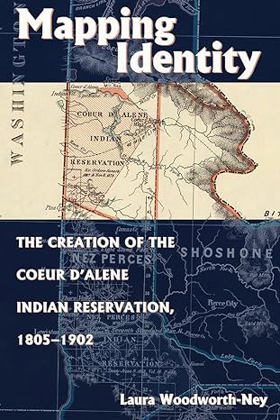
"Mapping Identity traces the formation of the Coeur d'Alene Indian Reservation in northern Idaho from the introduction of the Jesuit notion of "reduction" in the 1840s to the finalization of reservation boundaries in the 1890s. Using Indian Agency records, congressional documents, Bureau of Indian Affairs (BIA) records, Jesuit missionary reports, and tribal accounts, historian Laura Woodworth-Ney argues that the reservation-making process for the Coeur d'Alene reflected more than just BIA policy objectives. It was also the result of a complex interplay of Jesuit mission goals, the Schitsu'umsh chief Andrew Seltice's assimilationist policy, and political pressure from local non-Indians x, 234 pages : illustrations, maps ; 24 cm CIRC [ 1 ]
|
2004 |
|
The whole dam story the drowning and rising of a river city in the West by Ella Marie Rast 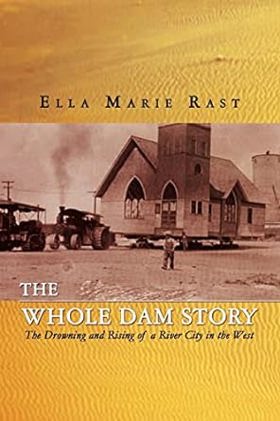
The primary focus of the book is the happenings during the past two hundred years at the water fall on the Snake River, the American Falls. This includes the European influence on the natural Western wilderness by explorers, fur trappers, gold miners, pioneers, cattle barons, sheep men, farmers, engineers and politicians.Southern Idaho's story is about mountains, rivers, the Snake River Plain and the harsh reality of drought in the desert. The natives had learned it was essential to preserve the fragile environment for their own survival. The newcomers lacked this awareness.Speculators and promoters found no value in the sagebrush forest. However, the soil was exceptionally fertile; all it needed was water. Water represented economic potential and that possibility encouraged entrepreneurs to descend with irrigation schemes. Few succeeded. Settlers found themselves caught in a web of broken promises, promoters, speculators, and failed banks.Probably the most publicized town in the nation in the twenties is American Falls! This is the story of hydroelectricity, railroad, a city, a dam and includes greed, power, intrigue, determination and commitment. It is a story our nation should know and not forget. vi, 175 pages : illustrations ; 23 cm CIRC [ 1 ]
|
2004 |
|
Wenatchee Valley images of North Central Washington. Volume II by Nancy Barnhart 
This is a photographic history of North Central Washington. Hundreds of people from the region brought photographs and the history behind the photograph. The best photos were compiled to represent the history of the region. The photographs start in the 1880s and continue until about 1969 iv, 155 pages : illustrations ; 19 x 26 cm CIRC [ 1 ]
|
2004 |
|
The best of Chief Dan George by Dan George, Helmut Hirnschall 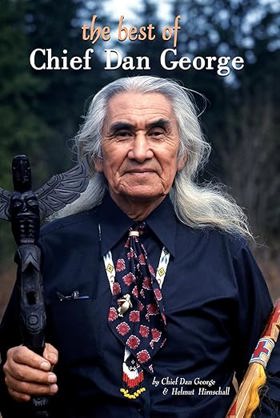
This book combines the two best sellers My Heart Soars & My Spirit Soars in one volume, 63 poems fully illustrated, eloquently illustrated throughout by Helmut Hirnschall. Included in this edition is the Lament for Confederation by Chief Dan George. Poetic and spiritual, this book has a universal message to all people. Chief Dan George was an accomplished performer, poet, philosopher, champion of Native peoples and loving patriarch of a large family. Chief Dan George was an accomplished performer, poet, philosopher, champion of first Nations peoples, loving patriarch of a large family, was born in 1899 on a Salish Band reserve on Burrard Inlet, in North Vancouver, one of twelve children of the chief. His given name was Teswahno, meaning thunder coming up over the land from the water. Like most native children at that time, under the influence of the Catholic Church, and in need of white culture's education, he went to a residential school at the age of five, so as not to be separated from his cherished older brother Harry. The next eleven years were difficult ones, being distanced from family, culture, language and customs. Schooling ended at sixteen, and he went immediately into the forest to harvest trees. At nineteen, in an arranged marriage, he and sixteen year old Squamish girl, Amy, entered into a devoted union of fifty-two years duration. They had eight children, six of whom survived into adulthood. Dan worked as a long-shoreman off and on for the next twenty-seven years, during frequent strikes supplementing his income with hunting and lumbering, until he had a serious accident on the docks in 1947, which damaged a hip and leg. In the forties, with his children and a cousin, who billed themselves as Dan George and His Indian Entertainers, he played for dances three or four nights a week throughout British Columbia. Traveling and sleeping in a covered truck, they would spend the summers picking hops and performing country and western music, with the kids doing special requests for extra money. Dan's instrument was the bass fiddle. He always remembered those years as the happiest times in his life. During the fifties, he was occupied with the duties of chief for his band. In the early 1960s, CBC TV was producing a series called Caribou Country. When an actor fell ill, the search was on to find a replacement for a character called Ol' Antoine. Through a fateful series of connections, Chief Dan tested for, and won, the part. With no formal training, he slipped into an instinctive way of acting that won him much acclaim, though initially he had to overcome a measure of hesitation and doubt. Having his two sons in the acting world was a major support, as was Amy's whole-hearted encouragement. Chief Dan gained further national recognition in 1967 with his now famous speech, The Lament for Confederation, which he read at the Centennial celebration in Vancouver. That same year, he came to the attention of the playwright, George Ryga, who was working on his powerful drama, The Ecstasy of Rita Joe. Their meeting resulted in the full development of the character of Rita Joe's father, which Chief Dan played, first at the Playhouse in Vancouver, and then two years later at the National Arts Centre in Ottawa, to glowing reviews. He also appeared in the Royal Winnipeg Ballet production based on the play. In 1973, he would recreate the part in Washington, D.C. for overflow audiences. When an episode of Paul St. Pierre's Caribou Country was brought by a Hollywood studio, Chief Dan got a call to test for the character Ol' Antoine in the Walt Disney movie, Smith. He easily got the part, and so began a film career that reached its peak with his legendary performance of the role of Old Lodgeskins, in Arthur Penn's film Little Big Man, with Dustin Hoffman, in 1970. For the first time, natives were seen without the stereotypical bias that the film industry had reflected for the first seventy years of its history. Chief Dan received the New York Film Critic's Award and the National Society of Film Critic's Award, as well as an Oscar nomination for the depth and sincerity of that characterization. For the last ten years of his life, he was in demand as a spokesperson for native people, and as an actor, musician, writer, speechmaker. He even toured for a year with the rock bank, Fireweed. Many awards came to him, including an honorary Doctor of Laws from Simon Fraser University. His highest aim was always for better understanding by white people of his culture and his people, and he pursued this with determination, wisdom and courage. He died in Vancouver in 1981. 126 pages : illustrations ; 22 cm CIRC [ 0 ]
|
2004 |
|
Raincoast chronicles 20 lilies and fireweed : frontier women of British Columbia by Stephen Hume 
Lilies and Fireweed is packed with unforgettable stories of women surviving in the unforgiving, sometimes hostile environment of pioneer and aboriginal British Columbia. Based on award-winning journalist Stephen Hume's popular series "Frontier Women of BC" that appeared in the Vancouver Sun in 2002, this collection of essays contains stories, photographs and other materials that have never before been published. From hospitals to dance halls, and from the classroom to the cannery floor, this insightful pictorial history examines indigenous and immigrant women's positions in the workplace, home and wilderness. Hume delves into the lives of aboriginal and pioneer women who had an important and multifaceted influence on the development of British Columbia. We meet women such as 17-year-old Frances Barkley, who insisted on accompanying her husband on a merchant voyage to British Columbia in 1786 and subsequently twice circumnavigated the world; Lady Amelia Douglas - a Cree woman and wife of Governor James Douglas - who had her own important but often overlooked role in the forging of British Columbia; Mrs. Washiji Oya, the first Japanese woman to settle in Canada in 1887; and Maria Pollard Grant, who, in 1895, became the first woman elected to public office in BC. Brimming with fascinating historical photographs, Lilies and Fireweed brings to light the forgotten stories of mothers, dance-hall girls, artists, teachers and adventurers that are as enthralling and diverse as BC itself. 80 p. : ill., ports. ; 28 cm. CIRC [ 0 ]
|
2004 |
|
Letters from Kik-I-allus a farmer's perspective by Glen Johnson 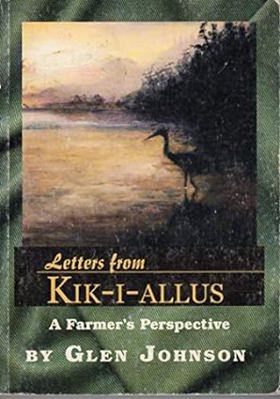
Published in local editions by Glen Johnson, Letters from Kik-I-allus: A Farmer's Perspective collects insightful essays and correspondence reflecting on rural life, environmental stewardship, and local history near the Skagit River delta. Written from the perspective of a working farmer tied to the ancestral homeland known as Kik-I-allus, the book chronicles the daily rhythms of agriculture, the seasonal cycles of the Pacific Northwest, and the mounting pressures of modern development on traditional farmlands. Through evocative prose, Johnson bridges personal agronomic experience with a deep-seated reverence for the surrounding watershed and its indigenous legacy. A keen insight drawn from the text is how the traditional agrarian viewpoint acts as an acute ecological barometer; by documenting the subtle, creeping degradation of local soils and water tables firsthand, the author reveals that the survival of family farming is inextricably bound to the broader health of the regional ecosystem. 246 pages : illustrations, map ; 18 cm CIRC [ 1 ]
|
2005 |
|
Ferries of Puget Sound by Steven J. Pickens 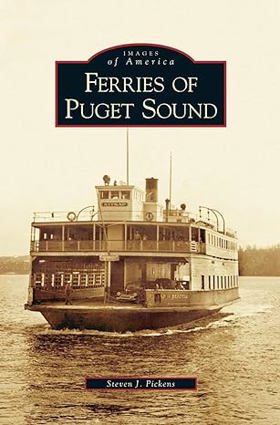
This pictorial retrospective presents more than 200 images from the author's personal collection of vintage photographs, postcards, and other visual memorabilia to trace the unique story of the floating highways and gentle maritime giants of Puget Sound 128 pages : chiefly illustrations, map ; 24 cm. CIRC [ 1 ]
|
2005 |
|
People of the river native arts of the Oregon territory by Bill Mercer, Portland Art Museum 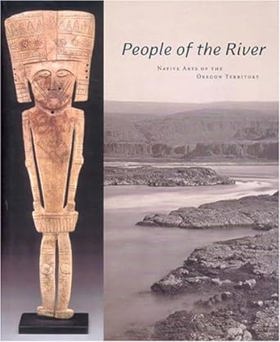
"People of the River: Native Arts of the Oregon Territory is the first major publication to focus exclusively on the rich artistic traditions of the Native Americans who traditionally lived along the lower Columbia River from the mouth of the Snake River to the Pacific Ocean. In this illustrated catalogue, author Bill Mercer describes the Columbia River art style as an Indigenous development that emerged over the course of countless generations and whose forms reveal unique combination of designs, motifs, materials, and techniques. Included are more than two hundred objects organized into sections that focus on sculptural forms, basketry, and beadwork spanning the pre-contact era to the middle of the twentieth century. People of the River features many objects that have never before been published and provides been insight into a previously unrecognized area of Native American art. With insightful texts, lavish reproductions, and an extensive bibliography, People of the River promises to be a key resource on this compelling body of work for years to come."--Jacket 191 pages : color illustrations ; 32 cm CIRC [ 1 ]
|
2005 |
|
A concise dictionary of the Nuuchahnulth language of Vancouver Island by John T. Stonham 
For some 20 years, Stonham (linguistics, U. of Newcastle-upon-Tyne) has been researching the language of the Nuuchahnulth, a group of First Nations peoples occupying the west coast of Vancouver Island. His dictionary is the first attempt to provide a detailed account of the lexicon of the Nuuchahnulth language, complete with examples and grammatical information. The work is based primarily on fieldnotes gathered by Edward Sapir between 1910 and 1922, fieldnotes by Morris Swadesh in the 1940s, and Stonham's own field research since the 1980s. The volume includes a Nuuchahnulth-English dictionary with some 7,000 main entries, an English-Nuuchahnulth glossary of some 8,500 entries consisting of English headwords and their Nuuchahnulth equivalents, and appendices of grammatical paradigms and place names. Annotation : 2004 Book News, Inc., Portland, OR (booknews.com) xviii, 537 pages ; 24 cm CIRC [ 1 ]
|
2005 |
|
Islands in the Salish Sea a community atlas by Sheila Harrington, Judi Stevenson 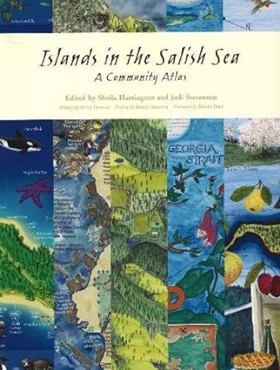
Gorgeous, fascinating and unconventional, the Islands in the Salish Sea show aspects of the Gulf Islands that are most beloved by the residents, from heritage orchards, fishing spots and patches of endangered wild orchids to ancient First Nations' sites and bird colonies. The community on each island decided what elements should be depicted, and local artists then created each of the magnificent and wildly different maps. This volume is a treasure-trove of cherished information that could have been lost, presented with imagination and great beauty. The Islands in the Salish Sea Community Mapping Project was coordinated by Sheila Harrington and Judi Stevenson, who live on Salt Spring Island 159 Seiten : zahlreiche Illustrationen und Karten CIRC [ 1 ]
|
2005 |
|
Pioneers of the Stillaguamish by Dennis Conroy, Carol Husby Ronken 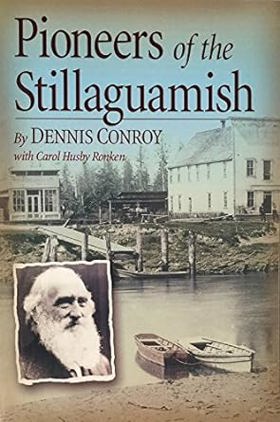
Published by local historians Dennis Conroy and Carol Husby Ronken, Pioneers of the Stillaguamish compiles extensive genealogical records, historical photographs, and pioneer recollections to chronicle the early European-American settlement of the Stillaguamish River valley in Washington. The book details the arduous process of clearing dense old-growth timber, establishing homesteads, and building rudimentary roads and schools along the unpredictable river corridor during the late 19th and early 20th centuries. By centering the struggles and daily lives of ordinary families, the text preserves the foundational social fabric of communities like Arlington and Stanwood. A keen insight drawn from the work is how local pioneer histories capture the immense cognitive dissonance of frontier expansion; by meticulously detailing the relentless destruction of ancient forests to plant farms, the text unwittingly reveals how the triumph of civilization for homesteaders was simultaneously an act of catastrophic ecological erasure for the valley's original inhabitants viii, 149 pages : illustrations, maps ; 23 cm CIRC [ 1 ]
|
2005 |
|
A view of the Methow from Moccasin Lake Ranch by James C. Pigott 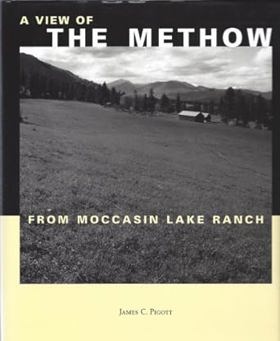
Published in local editions, James C. Pigott’s A View of the Methow from Moccasin Lake Ranch offers an evocative reflection on the landscape, history, and stewardship of Washington’s rugged Methow Valley. The book weaves personal memoir with regional lore, capturing the distinct seasonal rhythms of high-desert ranching, wildlife conservation, and the quiet isolation of the north-central Cascades. Through detailed observations of the local terrain and watershed, Pigott chronicles the delicate balance required to live harmoniously within a stunning yet demanding environment. A keen insight drawn from the text is how multi-generational ranching memoirs serve as intimate ecological barometers; by documenting decades of subtle shifts in local water availability and wildlife patterns, the author reveals that true land stewardship requires a profound, lived surrender to the cyclical limits of the natural world rather than attempts to conquer it. 167 pages : color illustrations, maps ; 25 cm CIRC [ 1 ]
|
2005 |
|
A song of Yamhill and Oregon's northwestern Willamette Valley by Gordon N. Zimmerman 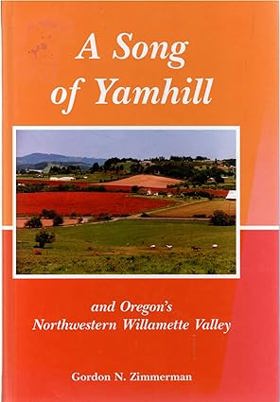
Published by Gordon N. Zimmerman, A Song of Yamhill and Oregon's Northwestern Willamette Valley weaves local history, personal reminiscences, and genealogical lore to celebrate the enduring rural heritage of the upper Willamette Valley. The book details the arrival of early Euro-American pioneers who navigated the Oregon Trail to settle the fertile, rolling hills of Yamhill County, establishing agrarian communities amidst rich timberlands and river valleys. Through vivid narrative vignettes, the text captures the seasonal rhythms of farming, local institution-building, and the close-knit social fabric of a foundational Oregon agricultural hub. A keen insight drawn from the text is how regional local histories act as counter-narratives to rapid urban sprawl; by meticulously preserving the human-scale stories of families tied to the land, the work anchors modern landscape identity in deep-rooted community stewardship rather than commercial development. xviii, 207 pages : illustrations, portraits ; 23 cm CIRC [ 1 ]
|
2005 |
|
The Nehalem River valley settling the big timberland by Stella Bellingham Satern 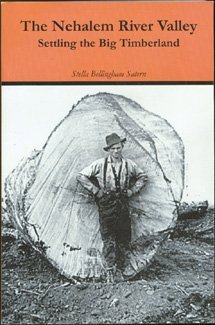
Stories about the pioneers who settled the Oregon wilderness of the Nehalem River valley, from the 1860s through the twentieth century 488 pages : illustrations ; 23 cm CIRC [ 1 ]
|
2005 |
|
Isleward bound a Lummi Island reader by Meredith Moench 
Published in local editions by Meredith Moench, Isleward Bound: A Lummi Island Reader compiles a rich anthology of essays, oral histories, and reflections capturing the unique communal and ecological rhythm of life on one of Washington's most distinct Salish Sea islands. The book explores the quiet realities of island isolation, the challenges of ferry-dependent infrastructure, and the deep-seated bonds among residents who choose to live off the beaten path. Through diverse personal narratives, the text preserves the vanishing traditions of local fishermen, artists, and long-time homesteaders while grappling with the pressures of modern mainland encroachment. A keen insight drawn from the work is how insular community literature functions as a defensive cultural shield; by celebrating the hyper-local eccentricities and mutual interdependence required to sustain life on a small island, the text resists the homogenization of the modern Pacific Northwest. v, 142 p. : ill. ; 27 cm. CIRC [ 1 ]
|
2005 |
|
Tenino, Washington the decades of boom & bust by Scott McArthur
Published in local editions by Scott McArthur, Tenino, Washington: The Decades of Boom & Bust chronicles the colorful economic highs and lows of a historic south Sound community shaped by sandstone quarrying, timber, and coal mining. The book details the town's late 19th-century industrial peak, its struggles through the Great Depression, and its famous emergency response of printing wooden money during the banking crisis of 1933. Through archival photographs and engaging local history, the text captures the gritty resilience of a working-class town repeatedly forced to reinvent itself as its primary resource industries faded. A keen insight drawn from the work is how severe economic isolation can spark profound civic innovation; by turning local wood veneer into legal tender, Tenino transformed a debilitating banking failure into an ingenious piece of public theater and enduring numismatic history. 143 pages : illustrations ; 22 cm CIRC [ 1 ]
|
2005 |
|
American Indians of the Pacific Northwest by Elizabeth Von Aderkas, Christa Hook 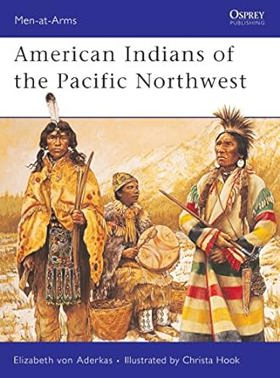
The Indian tribes of the Pacific Northwest, on both the Coast and the inland Plateau, were the last to encounter white traders and settlers. When contact occurred in the late 18th century the explorers and traders found two distinct cultures. The fairly recent adoption of the horse had opened up the Plateau tribes to influences from the peoples of the Plains; but the tribes of the Coast lived in a very different culture of rigid class hierarchies, an economy based on fishing and hunting 48 pages : illustrations (some color), maps, portraits (some color) ; 25 cm CIRC [ 1 ]
|
2005 |
|
Eastern Oregon books and print. Volume II an annotated and historical bibliography (with some emphasis on maps) by Wayne Kee 
Published in local editions by bibliographer Wayne Kee, Eastern Oregon Books and Print, Volume II serves as an annotated historical bibliography and cartographic guide dedicated to the literary and geographic records of the state's vast interior. The volume catalogs rare books, manuscripts, regional pamphlets, and historical maps, providing concise publication histories and contextual notes for collectors and researchers alike. By capturing the paper trail of eastern Oregon's settlement, resource extraction, and exploration, the text preserves the foundational documentation of a sparsely populated landscape. A keen insight drawn from the work is how comprehensive regional bibliographies reveal the ideological biases of early print culture; by highlighting which frontier narratives were preserved in print and which were omitted, the bibliography exposes how historical archives actively constructed a romanticized mythos of the high desert while erasing marginalized voices. xi, 206 pages : illustrations, facsimiles, maps ; 23 cm CIRC [ 1 ]
|
2005 |
|
What happened here? stories and legends based on the history of Coos and Curry counties, Oregon by Shirley Nelson 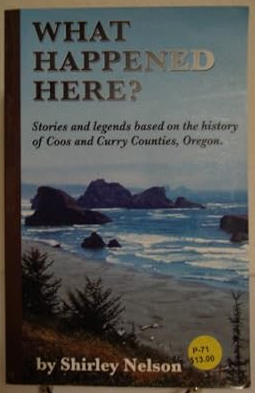
Published in local editions by Shirley Nelson, What Happened Here? Stories and Legends Based on the History of Coos and Curry Counties, Oregon weaves together local folklore, pioneer accounts, and historical research to chronicle the dramatic frontier past of Oregon's rugged southwestern coast. The book captures the dangerous realities of early coastal settlement, detailing shipwrecks along treacherous bars, gold-mining rushes in river canyons, and the often-tense interactions between Euro-American homesteaders and indigenous populations. Drawing on regional oral histories, Nelson preserves the vibrant, hard-scrabble legends that defined the daily existence of isolated coastal communities. A keen insight drawn from the text is how regional folklore functions as a vital psychological coping mechanism; by transforming the brutal isolation and constant tragedies of a perilous maritime frontier into enduring campfire legends, early settlers forged a resilient collective identity that helped them tame a deeply unforgiving landscape. 111 pages : illustrations, maps ; 22 cm CIRC [ 1 ]
|
2005 |
|
The state of Jefferson by Bernita Tickner, Gail L. Fiorini-Jenner 
Published in 2017 by Bernita Tickner and Gail L. Fiorini-Jenner, The State of Jefferson explores the colorful, enduring political secession movement aimed at carving a new U.S. state out of the rugged rural counties of Northern California and Southern Oregon. Through a rich collection of vintage photographs and historical anecdotes, the book traces the movement from its 1941 theatrical launch—complete with gold-panning miners brandishing rifles—to its modern manifestations rooted in geographic isolation and anti-establishment sentiment. The text details how residents of this timber-and-mining corridor have long felt economically and politically abandoned by distant state capitals in Sacramento and Salem. A keen insight drawn from the work is how the persistent mythos of the "State of Jefferson" functions less as a viable legislative blueprint and more as a profound psychological safety valve; it provides rural populations with a shared, defiant regional identity that channels deep-seated economic grievances against metropolitan dominance into theatrical civic rebellion. 128 pages : chiefly illustrations, map ; 24 cm. CIRC [ 1 ]
|
2005 |
|
Roadside geology of southern British Columbia by William Henry Mathews, J. W. H. Monger 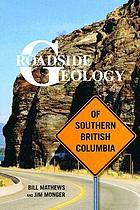
Southern British Columbia, from the northern tip of Vancouver Island to the Alberta border east of Golden, spans the Canadian Cordillera, a mountainous region with a tumultuous geologic history that continues to evolve with every volcanic eruption, landslide, and earthquake. Introductory sections of this guidebook interpret the geologic complexity of four regions-Vancouver Island, the Coast, the Interior Plateaus, and the Columbia and Rocky Mountains-and thirty-one road guides describe the xi, 403 pages : illustrations, maps ; 23 cm. CIRC [ 0 ]
|
2005 |
|
Necktie parties a history of legal executions in Oregon, 1851-1905 by Diane L. Goeres-Gardner 
Diane Goeres-Gardner makes readers eyewitnesses to frontier justice in Necktie Parties. This is the story of the men who climbed the gallows steps and faced the hangman's noose during the early years of settlement in Oregon. Today, capital punishment is a controversial topic, in the United States and around the world. That wasn?t the case during the 1800s on America's western frontier. Executions were public events drawing hundreds?sometimes thousands?of residents from miles around. The xxiv, 316 pages : illustrations, maps, portraits ; 23 cm CIRC [ 0 ]
|
2005 |
|
Governing Idaho politics, people, and power by James B. Weatherby, Randy Stapilus 
Idaho is a state with many varied interests vying for political control. Whether it be in the politically liberal north, the staunchly conservative southeast, or the rapidly changing southwest of the state, the social and political factors that determine who gains power in the Gem State often flies in the face of logic and makes for an interesting study in contrasts. xi, 237 pages : illustrations, map ; 23 cm CIRC [ 0 ]
|
2005 |
|
Elegant SOUL the life and music of Gene Harris by Janie Harris, Bob Evancho 
Gene Harris, the “Blues Man From Boise,” as the Wall Street Journal once called him, died at the start of a new millennium, but he left a legacy of music that will outlive us all. He played on more than 80 recordings and shared the stage or recording studio with many legends and luminaries. Gene's wife, Janie, and veteran writer Bob Evancho detail the career of this gifted entertainer. 279 pages : illustrations (some color), portraits (some color) ; 21 x 26 cm CIRC [ 0 ]
|
2005 |
|
Marine life of the Pacific Northwest a photographic encyclopedia of invertebrates, seaweeds and selected fishes by Andrew Lamb , Bernard P. Hanby (Author, Photographer), Michael William Hawkes , Sheila C. Byers 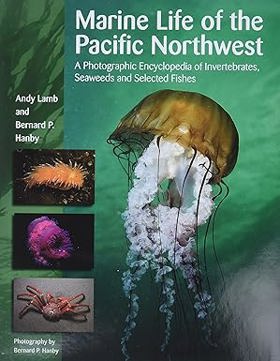
"Over 25 years in the making, Marine Life of the Pacific Northwest: A Photographic Encyclopedia of Invertebrates, Seaweeds and Selected Fishes is the most comprehensive photographic reference on Northwest marine life ever produced. With over 1,700 colour photographs of over 1,400 saltwater plants and animals, it is an essential addition to any natural history library. It is designed to allow the reader to recognize virtually any coastal organism that might be commonly encountered from southern Alaska to central California - from sea lettuces and feather boa kelp through to the leopard ribbon worm, Pacific red octopus, spiny-thigh sea spider and gutless awning-clam 398 pages : color illustrations, color map ; 29 cm CIRC [ 0 ]
|
2005 |