Catalog of British Columbiana and Pacific Northwest Americana
Encyclopedia Cascadia Catalog contains book titles of mostly non-fiction Pacific Northwest Coast of North America Titles (primarially British Columbia, Idaho, Oregon and Washington State) in an easy-to-understand title catalog. If you see a link with this badge ONLINE CIRC it means that there is an online institution that provides free access to that title. In some cases there may be more than one institution hosting the title digitally.
| Catalog Title | Published |
|---|---|
|
Under Vancouver 1972-1982 by Greg Girard (Photographer), David Campany (Compiler) 
Greg Girard's photographs of Vancouver from the 1970s and early 1980s show us the city's final days as a port town at the end of the railway line. Soon after Vancouver began to be noticed by the wider world (Expo 86 is generally agreed on as the pivotal moment), the city began refashioning itself as an urban resort on nature's doorstep and attracting attention as a destination for real estate investment. At that time, long before post-9/11 security concerns sealed off the working waterfront from the city, many of Vancouver's downtown and east side streets ended at the waterfront, an area filled with commercial fishing docks, cargo terminals, and bars and cafes for waterfront workers and sailors. Pawn-shop windows downtown displayed outboard motors, chainsaws and fishing gear. Wandering these streets, living in cheap hotels, Girard photographed the workaday (and night) world of the city where he grew up. The photographs in Under Vancouver 1972-1982 were made before Girard began earning a living as a magazine photographer, later establishing a formal practice as an artist. They reveal an early interest in the hidden and the overlooked, the use of color film at night, and the extended photographic inquiry of a specific place, all of which became signature features of later books such as City of Darkness and City of Darkness Revisited (about the infamous Kowloon Walled City), Phantom Shanghai and Hanoi Calling. Under Vancouver 1972-1982 is the first comprehensive collection of Girard's early photographs of Vancouver. Made in and of the moment, a young photographer's earliest engagements (often featuring the underside of the city), the pictures now form an unintended photographic record of a Vancouver that has all but disappeared 196 pages : illustrations ; 26 cm CIRC [ 1 ]
|
2017 |
|
Chief Seattle and the town that took his name the change of worlds for the native people and settlers on Puget Sound by David M. Buerge 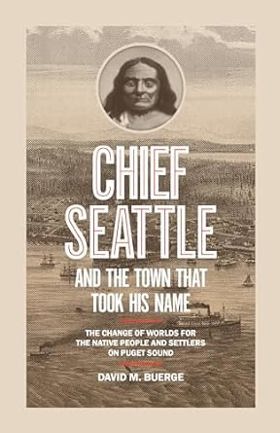
"When the British, Spanish, and then Americans arrived in the Pacific Northwest, it may have appeared to them as an untamed wilderness. In fact, it was a fully settled and populated land. Chief Seattle was a powerful representative from this very ancient world. Historian David Buerge has been researching and writing this book about the world of Chief Seattle for the past 20 years. Buerge has threaded together disparate accounts of the time from the 1780s to the 1860s--including native oral histories, Hudson Bay Company records, pioneer diaries, French Catholic church records, and historic newspaper reporting. Chief Seattle had gained power and prominence on Puget Sound as a war leader, but the arrival of American settlers caused him to reconsider his actions. He came to embrace white settlement and, following traditional native practice, encouraged intermarriage between native people and the settlers, offering his own daughter and granddaughters as brides, in the hopes that both peoples would prosper. Included in this account are the treaty signings that would remove the natives from their historic lands, the roles of such figures as Governor Isaac Stevens, Chiefs Leschi and Patkanim, the Battle at Seattle that threatened the existence of the settlement, and the controversial Chief Seattle speech that haunts to this day the city that bears his name."--Provided by publisher xxv, 325 pages : illustrations, maps ; 23 cm CIRC [ 1 ]
|
2017 |
|
Ghosts of Seattle past an anthology of lost Seattle places by Jaimee Garbacik (Curator, Editor) 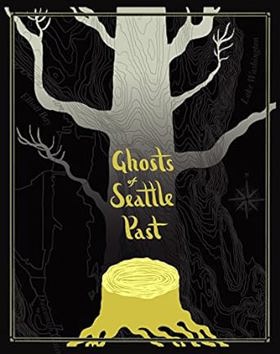
"Seattle is built on booms--logging, fishing, aerospace, and now tech. This anthology gathers essays, interviews, photography, and comix to reconstruct community hubs lost to growth. From the settlements of Native American tribes to the incubators of grunge, from a foxxxy cabaret to an Old Spaghetti Factory, Ghosts of Seattle Past provides an eyes-on-the-street view of a city in flux. The Ghosts of Seattle Past anthology comes at a critical point: Seattle had the country's steepest rent hikes in 2015. The city is becoming a national focal point for issues of development. Both recent transplants and the old guard are trying to figure out how to live in the new landscape. Through their warm, conversational, whip-smart voices, the city speaks not only to the current boom, but also to longer-brewing problems of segregation, queer erasure, and colonization. Tracing the issues across six hand-drawn maps, Seattle's best-known artists (including Elissa Washuta, Kate Lebo, and Paul Constant) join community lynchpins (including Chief Seattle's great-great-great-great grandson) in a dialogue as incisively political as it is richly human. Anthology curator Jaimee Garbacik is a book editor, writer, artist, youth equity advocate, and the owner and founder of Footnote Editorial. She previously authored Gender and Sexuality for Beginners, currently on curricula at more than a dozen universities. Josh Powell, artist behind the anthology's hand-drawn maps, is the former director of all-ages youth-led music and arts organization The Vera Project and co-founder of Seattle nonprofit The Bikery. He currently works at Seattle's largest environmental remediation firm"--Provided by publisher xxxvi, 318 pages : illustrations (some color), 4 folded maps ; 26 cm CIRC [ 1 ]
|
2017 |
|
Victoria a HarbourTown history by Gayle Baker 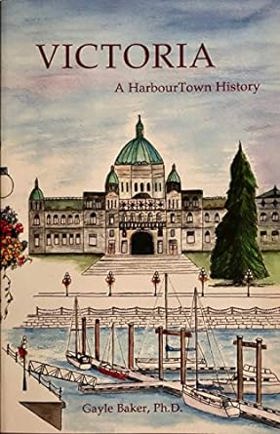
Lauded as a most interesting story of Victoria, this popular history introduces you to the intriguing tales of an amazing city nestled in the splendor of the Pacific Northwest. Victoria, A HarbourTown History will introduce you to the Lukwungen who were there before Victoria was Victoria and the powerful Hudson's Bay Company who came to dominate their area. You will also get to know the settlers, gold seekers, merchants, and visionaries who followed. Together, they created today's Victoria, one of the world's favorite destinations as well as a wonderful place to live.From bustling boom town to an almost abandoned settlement, Victoria's early years were marked by trial and triumph. Emerging as the centre of power and wealth in British Columbia, Victoria's leaders battled unsuccessfully retain its dominance over Vancouver. Eventually becoming a delightful English-like city surrounded by stunning scenery, this story will show you the Victoria hidden beneath its glamourous image. Enriched by the tales of the leaders who loved and transformed it and the stories of most memorable buildings, this concise, comprehensive history will introduce you to one of the world's favorite destinations.Designed for those who love Victoria, those who enjoy history, and those who simply enjoy a good read, this new popular history is sure to please. 141 pages : illustrations, map ; 22 cm CIRC [ 1 ]
|
2017 |
|
Vancouver Island book of musts the 101 places every islander must see by Peter Grant 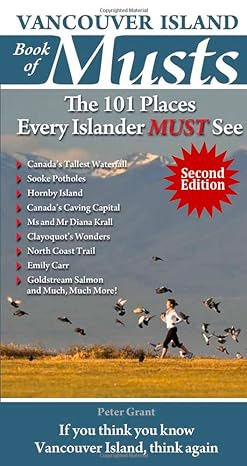
"From savouring wild blackberry desert wine in Cobble Hill to professional tea leaf readings at the Calico Cat, browsing the local produce at the Qualicum Farmers' Market and gazing up at the country's largest tree in Cheewhat Lake, this is the MUST list every Islander MUST have. From the wild, windswept shores of surfing town Tofino to the best bang-for-your-buck breakfast, it is all here."-- Provided by publisher pages cm. CIRC [ 1 ]
|
2017 |
|
The Salem Clique Oregon's Founding Brothers by Barbara S. Mahoney 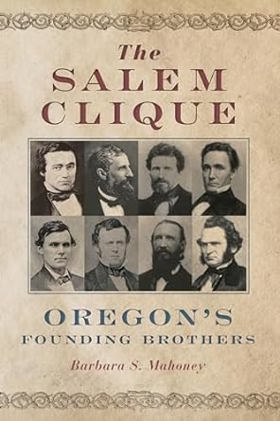
"During the decade of the 1850s, the Oregon Territory progressed toward statehood in an atmosphere of intense political passion and conflict. Editors of rival newspapers blamed a group of young men whom they named the 'Salem Clique' for the bitter party struggles of the time. Led by Asahel Bush, editor of the Oregon Statesman, the Salem Clique was accused of dictatorship, corruption, and the intention of imposing slavery on the Territory. The Clique, critics maintained, even conspired to establish a government separate from the United States, conceivably a 'bigamous Mormon republic.' While not in agreement with some of the more extreme contemporary accusations against the Clique, many historians have concluded that its members were vicious and unscrupulous men who were able, because of their command of the Democratic Party, to impose their hegemony on the Oregon Territory's inhabitants. Other scholars have seen them as merely another manifestation of the contentious politics of the period. Although the Salem Clique has been given considerable prominence in nearly every account of Oregon's Territorial period, there has not been a detailed study of its role until now. What sort of people were these men? What was their impact on the issues, events, and movements of the period? What role did they play in the years after Oregon became a state? Historian Barbara Mahoney sets out to answer these and many other questions in this comprehensive and deeply researched history"--Publisher description 1 online resource (xi, 212 pages) : illustrations, maps CIRC [ 1 ]
|
2017 |
|
Chinook resilience heritage and cultural revitalization on the lower Columbia River by Jon Darin Daehnke 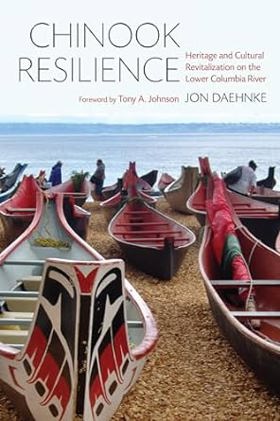
The Chinook Indian Nation--whose ancestors lived along both shores of the lower Columbia River, as well as north and south along the Pacific coast at the river's mouth--continue to reside near traditional lands. Because of its nonrecognized status, the Chinook Indian Nation often faces challenges in its efforts to claim and control cultural heritage and its own history and to assert a right to place on the Columbia River. Chinook Resilience is a collaborative ethnography of how the Chinook Indian Nation, whose land and heritage are under assault, continues to move forward and remain culturally strong and resilient. Jon Daehnke focuses on Chinook participation in archaeological projects and sites of public history as well as the tribe's role in the revitalization of canoe culture in the Pacific Northwest. This lived and embodied enactment of heritage, one steeped in reciprocity and protocol rather than documentation and preservation of material objects, offers a tribally relevant, forward-looking, and decolonized approach for the cultural resilience and survival of the Chinook Indian Nation, even in the face of federal nonrecognition xix, 233 pages : illustrations, maps ; 24 cm. CIRC [ 1 ]
|
2017 |
|
Vernon internment camp, 1914-1920 by Don McNair 
Researched and written by members of the Vernon & District Family History Society, this book concerns the internment camp that operated in Vernon B.C. during and after World War I. In that time, over 1000 ‘enemy aliens’ from the then AustroHungarian, German, and Ottoman empires passed through its gates. Vernon Internment Camp was one of largest in the country and one of only two camps that interned women and children. In the estimation of the Officer Commanding Internment Operations in Canada, Vernon’s was “the most difficult of our camps.” The book takes you into the lives of the internees and guards with numerous biographical sketches, great photographs from local, national and international sources, details of camp life, and the reactions of Vernon's citizens. There is also information about the neighbouring ‘work camps’ at Mara, Edgewood and Monashee, where prisoners were forced to build roads through the wilderness. 27 pages : illustrations, maps ; 27 cm CIRC [ 0 ]
|
2017 |
|
Fernie at war, 1914-1919 by Wayne R. Norton 
"Fernie, a small community located in BC's Kootenay region, entered the First World War in 1914 with optimism and a sense of national pride - it emerged five years later having experienced staggering losses and multiple controversies that threatened to tear their community apart. As a resource-based economy with unusually large and varied immigrant populations, and exceptionally high recruitment levels, Fernie was profoundly affected by conflicting impulses of labour, loyalty and ethnicity. Demands for internment of enemy aliens, resistance to prohibition and moral reform, the consequences of natural and man-made disasters, the unprecedented banning of recruitment, and the western labour revolt were all issues that contributed to a war-time experience for Fernie that was more dramatic and more revealing of underlying tensions than that of any other Canadian community. In his new book, Fernie at War, historian and author Wayne Norton explores what it meant to live in Fernie during those confusing and divisive years."--Provided by publisher 224 pages : illustrations, maps ; 23 cm CIRC [ 0 ]
|
2017 |
|
Selling sex in the Silver Valley a business doing pleasure by Heather Branstetter 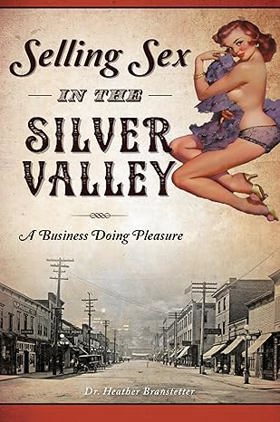
"Once the largest silver producer in the world, Wallace became notorious for labor uprisings, hard drinking, gambling and prostitution. As late as 1991, illegal brothels openly flourished because locals believed that sex work prevented rape and bolstered the economy, so long as it was regulated and confined to a particular area of town. The madams enjoyed unprecedented status as influential businesswomen, community leaders and philanthropists, while elsewhere a growing aversion to the sex trade drove red-light districts underground."--Page 4 of cover 222 pages : illustrations, maps ; 23 cm CIRC [ 0 ]
|
2017 |
|
Thunder in the Mountains Chief Joseph, Oliver Otis Howard, and the Nez Perce War by Daniel J. Sharfstein 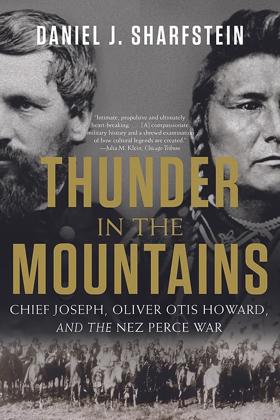
"Oliver Otis Howard thought he was a man of destiny. Chosen to lead the Freedmen's Bureau after the Civil War, the Union Army general was entrusted with the era's most crucial task: helping millions of former slaves claim the rights of citizens. He was energized by the belief that abolition and Reconstruction, the country's great struggles for liberty and equality, were God's plan for himself and the nation. To honor his righteous commitment to a new American freedom, Howard University was named for him. But as the nation's politics curdled in the 1870s, General Howard exiled himself from Washington, D.C., rejoined the army, and was sent across the continent to command forces in the Pacific Northwest. Shattered by Reconstruction's collapse, he assumed a new mission: forcing Native Americans to become Christian farmers on government reservations. Howard's plans for redemption in the West ran headlong into the resistance of Chief Joseph, a young Nez Perce leader in northeastern Oregon who refused to leave his ancestral land. Claiming equal rights for Native Americans, Joseph was determined to find his way to the center of American power and convince the government to acknowledge his people's humanity and capacity for citizenship. Although his words echoed the very ideas about liberty and equality that Howard had championed during Reconstruction, in the summer of 1877 the general and his troops ruthlessly pursued hundreds of Nez Perce families through the stark and unforgiving Northern Rockies. An odyssey and a tragedy, their devastating war transfixed the nation and immortalized Chief Joseph as a hero to generations of Americans. Re-creating the Nez Perce War through the voices of its survivors, Daniel J. Sharfstein's visionary history of the West casts Howard's turn away from civil rights alongside the nation's rejection of racial equality and embrace of empire. The conflict becomes a pivotal struggle over who gets to claim the American dream: a battle of ideas about the meaning of freedom and equality, the mechanics of American power, and the limits of what the government can and should do for its people. The war that Howard and Joseph fought is one that Americans continue to fight today."--Jacket xvii, 613 pages : maps ; 25 cm CIRC [ 0 ]
|
2017 |
|
A year right here adventures with food and family in the great nearby by Jess Thomson , Hannah Viano (Illustrator) 
Armed with “The Here List” and a Type-A personality, Seattle-based writer and cookbook author Jess Thomson sets out to spend a year exploring the food of the Pacific Northwest with her family. Planning to revel in the culinary riches of the region and hoping to break her son, Graham, of his childhood pickiness, the adventures into the great nearby include building a backyard chicken coop, truffle hunting in Oregon, and razor clamming on the Washington coast. Her plans to spend “a year right here” are complicated by efforts to help Graham overcome some of the mobility limitations of cerebral palsy, and thwarted further by her own limitations that come to the fore when she attempts the “Gourmet Century,” a hilly one-hundred-kilometer bike ride with gourmet food stops along the way. With touching, funny, sometimes devastating stories that we all can relate to, Jess pulls the reader in as she abandons “The Here List” and learns that letting go can be just as important as holding on. xii, 304 pages : illustrations ; 23 cm CIRC [ 0 ]
|
2017 |
|
The hope of another spring Takuichi Fujii, artist and wartime witness by Barbara Johns , Roger Daniels, Sandy Kita (Writer of introduction) 
Takuichi Fujii (1891-1964) left Japan in 1906 to make his home in Seattle, where he established a business, started a family, and began his artistic practice. When war broke out between the United States and Japan, he and his family were incarcerated along with the more than 100,000 ethnic Japanese located on the West Coast. Sent to detention camps at Puyallup, Washington, and then Minidoka in Idaho, Fujii documented his daily experiences in words and art. "The Hope of Another Spring" reveals the rare find of a large and heretofore unknown collection of art produced during World War II. The centerpiece of the collection is Fujiis illustrated diary that historian Roger Daniels has called the most remarkable document created by a Japanese American prisoner during the wartime incarceration. Barbara Johns presents Takuichi Fujiis life story and his artistic achievements within the social and political context of the time. Sandy Kita, the artists grandson, provides translations and an introduction to the diary. This is a significant contribution to Asian American studies, American and regional history, and art history xi, 334 pages : illustrations (some color) ; 26 cm. CIRC [ 0 ]
|
2017 |
|
The panic of 1893 the untold story of Washington State's first depression by Bruce A. Ramsey 
"In 1893 Washington, a new state with new people, plunged into the last depression of the 19th century. Banks failed. Railroad building stopped. Money became so scarce that Port Angeles and Bellingham made their own. Jobless men sawed wood, picked blackberries, and dug clams. In Spokane, the town's richest man was wiped out, and from Tacoma and Seattle protesters set off for Washington, D.C., on foot and by stealing rides on trains. In The Panic of 1893, former Seattle newspaper columnist Bruce A. Ramsey tells the story of how people survived and how their resilience defined their new state."-- Back cover 324 pages : illustrations, maps ; 23 cm CIRC [ 1 ]
|
2018 |
|
It takes a river to make a fish by William A. Lansing , Karalynn Ott 
Gone Fishin' is a two-volume set that is hardbound and coffee-table quality. It is filled with superb historical photographs of the recreational and commercial fisheries in the rivers and bays of southwestern Oregon. Volume 1 (182 pages) pays tribute through stories and photographs of the five species of the Pacific Salmon, how they arrived and evolved in the rivers of Oregon. Its title It Takes a River to Make a Fish. Volume 2 (382 pages) pays tribute to the individual rivers from the Umpqua river on the north and the Winchuck on the south near the California border and everything in between. It is filled with stories about Zane Grey and Ginger Rogers, Glen Woolridge and other famous fishermen on each river. Its title It Takes a Watershed to Make a River. Both books the scientific jargon and only have enough statistics to help tell the story. The ocean fishery was omitted. 182 pages : illustrations, maps ; 29 cm CIRC [ 1 ]
|
2018 |
|
It takes a watershed to make a river by William A. Lansing , Karalynn Ott 
Gone Fishin' is a two-volume set that is hardbound and coffee-table quality. It is filled with superb historical photographs of the recreational and commercial fisheries in the rivers and bays of southwestern Oregon. Volume 1 (182 pages) pays tribute through stories and photographs of the five species of the Pacific Salmon, how they arrived and evolved in the rivers of Oregon. Its title It Takes a River to Make a Fish. Volume 2 (382 pages) pays tribute to the individual rivers from the Umpqua river on the north and the Winchuck on the south near the California border and everything in between. It is filled with stories about Zane Grey and Ginger Rogers, Glen Woolridge and other famous fishermen on each river. Its title It Takes a Watershed to Make a River. Both books the scientific jargon and only have enough statistics to help tell the story. The ocean fishery was omitted. 382 pages : illustrations, maps ; 29 cm CIRC [ 1 ]
|
2018 |
|
The glorious mountains of Vancouver's North Shore a peakbagger's guide by David Crerar , Harry Crerar , Bill Maurer 
"The beautiful mountains of the North Shore define Vancouver, but few Vancouverites know of the natural beauty and adventure that lies within them, or even their names and history. The Glorious Mountains of Vancouver's North Shore: A Peakbagger's Guide offers something for everyone, from casual hikers to hard-core climbers, from gentle ramblers to ultra-fit trail runners, to parents introducing their children to the splendours of nature, and to those merely curious about what is out there, so close and yet so far. The book provides turn-by-turn route descriptions for climbing 66 North Shore peaks, including exhaustive facts and statistics, special cautions, first ascents, name origins, historic and cultural backgrounds, as well as little-known facts and secrets. Roads and access trails are provided. All peaks feature GPS-based maps, with elevation profiles. The glories of these mountains, creeks and lakes are enticingly illustrated with over 150 colour photographs. Covering all of the hikeable peaks from Capilano in the north, to the Howe Sound Islands in the west and the Seymour-Fannin peaks in the east, this book will encourage you to hop in your kayak or car, on your bike or your own two feet to explore this underappreciated paradise in our own backyard."--Amazon.com 503 pages : color illustrations, color maps ; 23 cm CIRC [ 0 ]
|
2018 |
|
Hells heroes how an unlikely alliance saved Idaho's Hells Canyon by Chris Carlson , Rick Johnson 
There is a story. There is a story of how Hells Canyon was saved. A story about this special place and special people who care about it. Brock Evans has written that real epics, are not about the deeds of gods and goddesses...Epics are what ordinary people do, rising to scary and demanding occasions and stumbling through them no matter what. Hells Canyon has epic written all over it. One of the West's great rivers slices through it. The rising bluffs and mountains create one of the deepest gorges on earth. The Seven Devils look down from a height of 7,000 feet above the Snake River. But the real epic is in the story of the people who love the place, and of those who worked to save it. 208 pages : color illustrations ; 23 cm CIRC [ 0 ]
|
2018 |
|
Fishes of Idaho a natural history survey by John W. Sigler 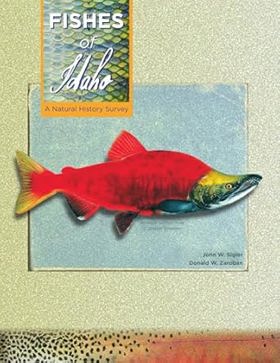
An exhaustive natural survey of all species known to exist in the Gem State, this encyclopedic book provides biologists, naturalists, students and anglers with the most complete reference of its kind. xviii, 794 pages : color illustrations, color maps ; 29 cm CIRC [ 0 ]
|
2018 |
|
Undercurrents from oceanographer to university president by John Vincent Byrne 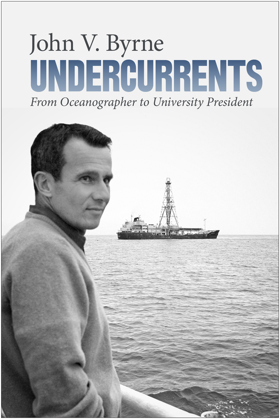
Undercurrents recounts the life and career of John Byrne, who started as a geologist at an oil company and retired as president of a major land grant university. He came to Oregon State in 1960 as a faculty member, later becoming department chair, dean, director of the Hatfield Marine Science Center, and vice president for Research and Graduate Studies. Along the way, he took leave from the university to serve the US government, first as a program director for oceanography at the National Science Foundation, and later as the administrator of the National Oceanic and Atmospheric Administration, before returning to OSU in 1984 as its twelfth president. As president of OSU, John Byrne used the lessons learned in industry and government to guide the university through a period of turbulence caused by severe state budget restrictions. During this period of economic contraction, OSU continued under Byrne’s leadership to grow in programs, facilities, and external funding. Byrne was one of the first to introduce Total Quality Management techniques to higher education. He emphasized the importance of international education and was a supporter of significant academic reform in higher education. While focusing on his professional career, Byrne’s memoir also shares personal stories of a childhood and youth shaped by the Great Depression and World War II. Undercurrents demonstrates on every page the curiosity, intellect, and humanity that made John Byrne successful as a scientist, educator, and administrator. Anyone pursuing a career in science or academia, and anyone interested in the history and legacy of land grant universities will welcome this richly detailed and warmly written account of Byrne’s career. 1 online resource CIRC [ 0 ]
|
2018 |
|
Speaking for the river confronting pollution on the Willamette, 1920s-1970s by James V. Hillegas-Elting 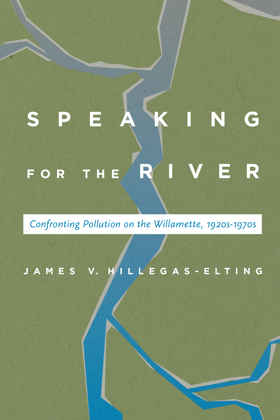
Since the Late 1960s, Oregon has been at the forefront of environmental protection in the United States. The state generally, and Portland in particular, continue to have strong "green" credentials well into the twenty-first century. Within this forty year period of progress, however, the health of the Willamette River has been a consistent blot on the record. Willamette River water pollution has not gone away - the problem has, in fact, gotten much more complex. James Hillegas-Elting's book, Speaking for the River, provides a historical look at this dilemma. Willamette River cleanup efforts between 1926 and 1975 centered on a struggle between abatement advocates and the two primary polluters in the watershed, the City of Portland and the pulp and paper industry. Beginning in 1926, clean streams advocates created ad hoc groups of public health experts, sanitary engineers, conservationists, sportsmen, and others to pressure Portland officials and industry representatives to cease polluting the river. By the late 1960s, these grassroots initiatives found political footholds at the state level. Governor Tom McCall took the issue of environmental protection personally, providing the charisma and leadership that was needed to finally make substantive progress toward cleaning the Willamette. Speaking for the River is the first book to describe the historical roots of Willamette River pollution, providing important context for understanding the political, fiscal, and technological antecedents to the present-day conundrum. Hillegas-Elting's contribution to the academic literature on environmental and urban history in Oregon will be welcomed by policy makers, environmentalists, and concerned citizens alike. Book jacket xiii, 334 pages : illustrations, maps ; 23 cm CIRC [ 0 ]
|
2018 |
|
The troubled life of Peter Burnett Oregon pioneer and first Governor of California by R. Gregory Nokes 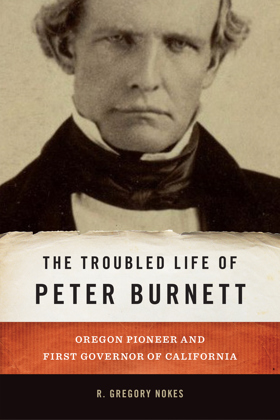
"Few people in the nineteenth-century American West could boast the achievements of Peter Burnett. He helped organize the first major wagon train to the Oregon Country. He served on Oregon's first elected government and was Oregon's first supreme court judge. He opened a wagon road from Oregon to California. He worked with the young John Sutter to develop the new city of Sacramento. Within a year of arriving in California, voters overwhelmingly elected him as the first US governor. He also won appointment to the California Supreme Court. It was one heck of a resume. Yet with the exception of the wagon road to California, in none of these roles was Burnett considered successful or well remembered. Indeed, he resigned from many of his most important positions, including the governorship, where he was widely perceived a failure. Burnett's weakness was that he refused to take advice from others. He insisted on marching to his own drum, even when it led to some terrible decisions. A former slaveholder, he could never seem to get beyond his single-minded goal of banning blacks and other minorities from the West. The Troubled Life of Peter Burnett is the first full-length biography of this complicated character. Historians, scholars, and general readers with an interest in Western history will welcome R. Gregory Nokes' accessible and deeply researched account."-- Provided by publisher xi, 270 pages : illustrations, map ; 23 cm CIRC [ 0 ]
|
2018 |
|
Beginner's luck dispatches from the Klamath Mountains by Malcolm Terence 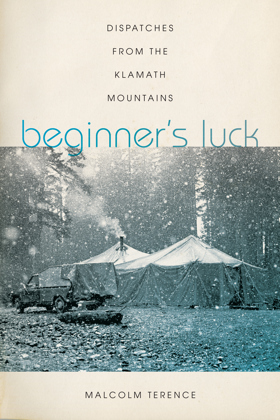
In the late 1960s, Malcolm Terence left his job as a reporter for the Los Angeles Times to look for adventure and may have found more than he bargained for. The era had triggered unprecedented social and political changes in America, tectonic shifts that challenged war and the social order that oppressed people along lines of class, gender, and race. One branch was a back-to-the-land movement, and Terence, who had just traveled for a year managing a rock band, strayed into Black Bear Ranch, a commune just starting in a remote corner of the Klamath Mountains near the California-Oregon border. Black Bear Ranch still exists, but many of its early residents eventually returned to urban civilization. A few, Terence among them, stayed on in neighboring river towns. Some tried logging, others gold mining, and some tried growing marijuana, all with mixed success. The local mining and timber communities had a checkered opinion of their new hippie neighbors, as did the Native tribes, but it was the kind of place where people helped each other out, even if they didn’t always agree. When wildfires grew large, Terence and other veterans of the commune joined the fire crews run by the US Forest Service. In between, the Black Bear expats built homesteads, planted gardens, delivered babies, and raised their children. They gradually overcame the skepticism of the locals and joined them in political battles against the use of herbicides in the forest and the Forest Service’s campaign to close all the mining claims. As in the best of organizing efforts, the organizers learned as much as they led. Beginner’s Luck will appeal to anyone who experienced life on a commune in the 1960s–1970s or who wants to learn about this chapter in modern American history. Terence offers insight into environmental activism and the long history of conflict between resource exploitation and Native American rights without lecturing or pontification. With wit, humor, and humility, his anecdotal essays chronicle a time and place where disparate people came together to form an unlikely community. 236 pages : illustrations ; 23 cm CIRC [ 0 ]
|
2018 |
|
Beyond the rebel girl women and the industrial workers of the world in the Pacific Northwest, 1905-1924 by Heather Mayer 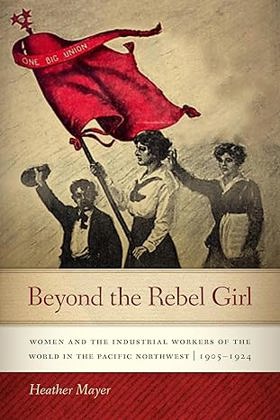
More than a century after their founding in 1905, the Industrial Workers of the World--or Wobblies as they are commonly known--remain a popular subject for study and discussion among students of labor history and social justice. They are often portrayed as lovable underdogs, with their songs and cartoons, generally irreverent attitude, and stalwart courage in the face of systemic persecution from vigilantes, law enforcement, and government officials. In Beyond the Rebel Girl, historian Heather Mayer questions the well-worn vision of Wobblies as young, single, male, itinerant workers. While such workers formed a large portion of the membership, they weren't the whole picture. In small towns across the Northwest, and in the larger cities of Seattle, Portland, and Spokane, women played an integral role in Wobbly life. Single women, but also families--husband and wife Wobbly teams--played important roles in some of the biggest fights for justice. IWW halls in these Northwest cities often functioned as community centers, with family-friendly events and entertainment. Women were drawn to the IWW for its radical vision, inclusionary policies, birth control advocacy, and emphasis on freedom of choice in marriage. The IWW also offered women an avenue for activism that wasn't focused primarily on the fight for suffrage. Beyond the Rebel Girl deepens our understanding of how the WWI functioned and how the union supported women in their fight for birth control, sexual emancipation, and better labor conditions, all while facing persecution at the local, state, and federal levels 204 pages : illustrations ; 23 cm CIRC [ 0 ]
|
2018 |
|
The Blues natural history of the Blue Mountains of northeastern Oregon and southeastern Washington by Robert J. Carson (Author, Photographer), Duane Scroggins (Photographer), Bill Rodgers (Photographer), David Frame (Photographer), Kevin R. Pogue (Photographer), Dave Powell (Photographer), Michael E. Denny (Photographer), Merrylynn Denny (Photographer), Clare Carson (Photographer), Donald Snow, Scot 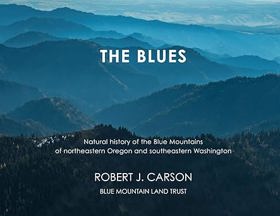
The Blue Mountains, stretching south of Walla Walla into central Oregon, are one of the Pacific Northwest's iconic mountain ranges. Formed by successive periods of volcanic activity, home to diverse forest and grassland ecosystems, and rich in wildlife, the Blues have long held a special fascination for all who live in and recreate in the range's embrace. Now the Blues' unique natural history is the subject of this new book – the first volume ever to take its readers deep into the story of the range’s creation and history. In geological parlance, the Blue Mountains are a long anticlinal ridge composed mostly of basalt flows, stretching from Clarno, Oregon to Clarkston, Washington. Here, Carson has combined scholarly and elegant writings with the outstanding photography from more than a dozen contributors. The book includes a foreword by Don Snow, an afterword by Scott Elliott, and poems by Katrina Roberts and Janice King. Duane Scroggins, Bill Rodgers, and many others have contributed hundreds of magnificent photographs that draw readers into this incredible region. vii, 208 pages : illustrations (chiefly color), maps (chiefly color) ; 23 x 29 cm CIRC [ 0 ]
|
2018 |