Catalog of British Columbiana and Pacific Northwest Americana
Encyclopedia Cascadia Catalog contains book titles of mostly non-fiction Pacific Northwest Coast of North America Titles (primarially British Columbia, Idaho, Oregon and Washington State) in an easy-to-understand title catalog. If you see a link with this badge ONLINE CIRC it means that there is an online institution that provides free access to that title. In some cases there may be more than one institution hosting the title digitally.
| Catalog Title | Published |
|---|---|
|
Chief Seattle and the town that took his name the change of worlds for the native people and settlers on Puget Sound by David M. Buerge 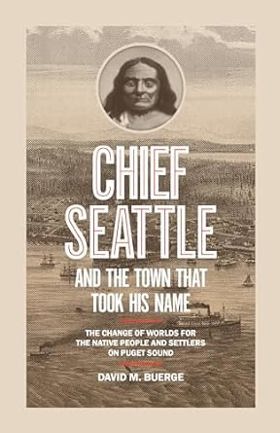
"When the British, Spanish, and then Americans arrived in the Pacific Northwest, it may have appeared to them as an untamed wilderness. In fact, it was a fully settled and populated land. Chief Seattle was a powerful representative from this very ancient world. Historian David Buerge has been researching and writing this book about the world of Chief Seattle for the past 20 years. Buerge has threaded together disparate accounts of the time from the 1780s to the 1860s--including native oral histories, Hudson Bay Company records, pioneer diaries, French Catholic church records, and historic newspaper reporting. Chief Seattle had gained power and prominence on Puget Sound as a war leader, but the arrival of American settlers caused him to reconsider his actions. He came to embrace white settlement and, following traditional native practice, encouraged intermarriage between native people and the settlers, offering his own daughter and granddaughters as brides, in the hopes that both peoples would prosper. Included in this account are the treaty signings that would remove the natives from their historic lands, the roles of such figures as Governor Isaac Stevens, Chiefs Leschi and Patkanim, the Battle at Seattle that threatened the existence of the settlement, and the controversial Chief Seattle speech that haunts to this day the city that bears his name."--Provided by publisher xxv, 325 pages : illustrations, maps ; 23 cm CIRC [ 1 ]
|
2017 |
|
Ghosts of Seattle past an anthology of lost Seattle places by Jaimee Garbacik (Curator, Editor) 
"Seattle is built on booms--logging, fishing, aerospace, and now tech. This anthology gathers essays, interviews, photography, and comix to reconstruct community hubs lost to growth. From the settlements of Native American tribes to the incubators of grunge, from a foxxxy cabaret to an Old Spaghetti Factory, Ghosts of Seattle Past provides an eyes-on-the-street view of a city in flux. The Ghosts of Seattle Past anthology comes at a critical point: Seattle had the country's steepest rent hikes in 2015. The city is becoming a national focal point for issues of development. Both recent transplants and the old guard are trying to figure out how to live in the new landscape. Through their warm, conversational, whip-smart voices, the city speaks not only to the current boom, but also to longer-brewing problems of segregation, queer erasure, and colonization. Tracing the issues across six hand-drawn maps, Seattle's best-known artists (including Elissa Washuta, Kate Lebo, and Paul Constant) join community lynchpins (including Chief Seattle's great-great-great-great grandson) in a dialogue as incisively political as it is richly human. Anthology curator Jaimee Garbacik is a book editor, writer, artist, youth equity advocate, and the owner and founder of Footnote Editorial. She previously authored Gender and Sexuality for Beginners, currently on curricula at more than a dozen universities. Josh Powell, artist behind the anthology's hand-drawn maps, is the former director of all-ages youth-led music and arts organization The Vera Project and co-founder of Seattle nonprofit The Bikery. He currently works at Seattle's largest environmental remediation firm"--Provided by publisher xxxvi, 318 pages : illustrations (some color), 4 folded maps ; 26 cm CIRC [ 1 ]
|
2017 |
|
Victoria a HarbourTown history by Gayle Baker 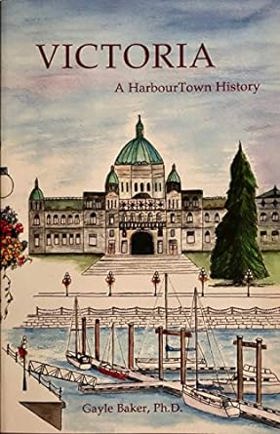
Lauded as a most interesting story of Victoria, this popular history introduces you to the intriguing tales of an amazing city nestled in the splendor of the Pacific Northwest. Victoria, A HarbourTown History will introduce you to the Lukwungen who were there before Victoria was Victoria and the powerful Hudson's Bay Company who came to dominate their area. You will also get to know the settlers, gold seekers, merchants, and visionaries who followed. Together, they created today's Victoria, one of the world's favorite destinations as well as a wonderful place to live.From bustling boom town to an almost abandoned settlement, Victoria's early years were marked by trial and triumph. Emerging as the centre of power and wealth in British Columbia, Victoria's leaders battled unsuccessfully retain its dominance over Vancouver. Eventually becoming a delightful English-like city surrounded by stunning scenery, this story will show you the Victoria hidden beneath its glamourous image. Enriched by the tales of the leaders who loved and transformed it and the stories of most memorable buildings, this concise, comprehensive history will introduce you to one of the world's favorite destinations.Designed for those who love Victoria, those who enjoy history, and those who simply enjoy a good read, this new popular history is sure to please. 141 pages : illustrations, map ; 22 cm CIRC [ 1 ]
|
2017 |
|
Vancouver Island book of musts the 101 places every islander must see by Peter Grant 
"From savouring wild blackberry desert wine in Cobble Hill to professional tea leaf readings at the Calico Cat, browsing the local produce at the Qualicum Farmers' Market and gazing up at the country's largest tree in Cheewhat Lake, this is the MUST list every Islander MUST have. From the wild, windswept shores of surfing town Tofino to the best bang-for-your-buck breakfast, it is all here."-- Provided by publisher pages cm. CIRC [ 1 ]
|
2017 |
|
Vernon internment camp, 1914-1920 by Don McNair 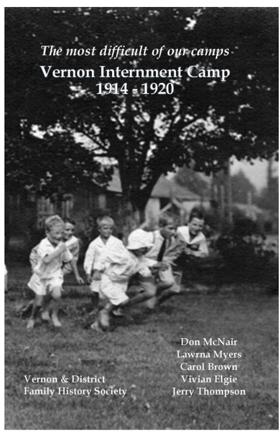
Researched and written by members of the Vernon & District Family History Society, this book concerns the internment camp that operated in Vernon B.C. during and after World War I. In that time, over 1000 ‘enemy aliens’ from the then AustroHungarian, German, and Ottoman empires passed through its gates. Vernon Internment Camp was one of largest in the country and one of only two camps that interned women and children. In the estimation of the Officer Commanding Internment Operations in Canada, Vernon’s was “the most difficult of our camps.” The book takes you into the lives of the internees and guards with numerous biographical sketches, great photographs from local, national and international sources, details of camp life, and the reactions of Vernon's citizens. There is also information about the neighbouring ‘work camps’ at Mara, Edgewood and Monashee, where prisoners were forced to build roads through the wilderness. 27 pages : illustrations, maps ; 27 cm CIRC [ 0 ]
|
2017 |
|
Fernie at war, 1914-1919 by Wayne R. Norton 
"Fernie, a small community located in BC's Kootenay region, entered the First World War in 1914 with optimism and a sense of national pride - it emerged five years later having experienced staggering losses and multiple controversies that threatened to tear their community apart. As a resource-based economy with unusually large and varied immigrant populations, and exceptionally high recruitment levels, Fernie was profoundly affected by conflicting impulses of labour, loyalty and ethnicity. Demands for internment of enemy aliens, resistance to prohibition and moral reform, the consequences of natural and man-made disasters, the unprecedented banning of recruitment, and the western labour revolt were all issues that contributed to a war-time experience for Fernie that was more dramatic and more revealing of underlying tensions than that of any other Canadian community. In his new book, Fernie at War, historian and author Wayne Norton explores what it meant to live in Fernie during those confusing and divisive years."--Provided by publisher 224 pages : illustrations, maps ; 23 cm CIRC [ 0 ]
|
2017 |
|
Selling sex in the Silver Valley a business doing pleasure by Heather Branstetter 
"Once the largest silver producer in the world, Wallace became notorious for labor uprisings, hard drinking, gambling and prostitution. As late as 1991, illegal brothels openly flourished because locals believed that sex work prevented rape and bolstered the economy, so long as it was regulated and confined to a particular area of town. The madams enjoyed unprecedented status as influential businesswomen, community leaders and philanthropists, while elsewhere a growing aversion to the sex trade drove red-light districts underground."--Page 4 of cover 222 pages : illustrations, maps ; 23 cm CIRC [ 0 ]
|
2017 |
|
Thunder in the Mountains Chief Joseph, Oliver Otis Howard, and the Nez Perce War by Daniel J. Sharfstein 
"Oliver Otis Howard thought he was a man of destiny. Chosen to lead the Freedmen's Bureau after the Civil War, the Union Army general was entrusted with the era's most crucial task: helping millions of former slaves claim the rights of citizens. He was energized by the belief that abolition and Reconstruction, the country's great struggles for liberty and equality, were God's plan for himself and the nation. To honor his righteous commitment to a new American freedom, Howard University was named for him. But as the nation's politics curdled in the 1870s, General Howard exiled himself from Washington, D.C., rejoined the army, and was sent across the continent to command forces in the Pacific Northwest. Shattered by Reconstruction's collapse, he assumed a new mission: forcing Native Americans to become Christian farmers on government reservations. Howard's plans for redemption in the West ran headlong into the resistance of Chief Joseph, a young Nez Perce leader in northeastern Oregon who refused to leave his ancestral land. Claiming equal rights for Native Americans, Joseph was determined to find his way to the center of American power and convince the government to acknowledge his people's humanity and capacity for citizenship. Although his words echoed the very ideas about liberty and equality that Howard had championed during Reconstruction, in the summer of 1877 the general and his troops ruthlessly pursued hundreds of Nez Perce families through the stark and unforgiving Northern Rockies. An odyssey and a tragedy, their devastating war transfixed the nation and immortalized Chief Joseph as a hero to generations of Americans. Re-creating the Nez Perce War through the voices of its survivors, Daniel J. Sharfstein's visionary history of the West casts Howard's turn away from civil rights alongside the nation's rejection of racial equality and embrace of empire. The conflict becomes a pivotal struggle over who gets to claim the American dream: a battle of ideas about the meaning of freedom and equality, the mechanics of American power, and the limits of what the government can and should do for its people. The war that Howard and Joseph fought is one that Americans continue to fight today."--Jacket xvii, 613 pages : maps ; 25 cm CIRC [ 0 ]
|
2017 |
|
A year right here adventures with food and family in the great nearby by Jess Thomson , Hannah Viano (Illustrator) 
Armed with “The Here List” and a Type-A personality, Seattle-based writer and cookbook author Jess Thomson sets out to spend a year exploring the food of the Pacific Northwest with her family. Planning to revel in the culinary riches of the region and hoping to break her son, Graham, of his childhood pickiness, the adventures into the great nearby include building a backyard chicken coop, truffle hunting in Oregon, and razor clamming on the Washington coast. Her plans to spend “a year right here” are complicated by efforts to help Graham overcome some of the mobility limitations of cerebral palsy, and thwarted further by her own limitations that come to the fore when she attempts the “Gourmet Century,” a hilly one-hundred-kilometer bike ride with gourmet food stops along the way. With touching, funny, sometimes devastating stories that we all can relate to, Jess pulls the reader in as she abandons “The Here List” and learns that letting go can be just as important as holding on. xii, 304 pages : illustrations ; 23 cm CIRC [ 0 ]
|
2017 |
|
The hope of another spring Takuichi Fujii, artist and wartime witness by Barbara Johns , Roger Daniels, Sandy Kita (Writer of introduction) 
Takuichi Fujii (1891-1964) left Japan in 1906 to make his home in Seattle, where he established a business, started a family, and began his artistic practice. When war broke out between the United States and Japan, he and his family were incarcerated along with the more than 100,000 ethnic Japanese located on the West Coast. Sent to detention camps at Puyallup, Washington, and then Minidoka in Idaho, Fujii documented his daily experiences in words and art. "The Hope of Another Spring" reveals the rare find of a large and heretofore unknown collection of art produced during World War II. The centerpiece of the collection is Fujiis illustrated diary that historian Roger Daniels has called the most remarkable document created by a Japanese American prisoner during the wartime incarceration. Barbara Johns presents Takuichi Fujiis life story and his artistic achievements within the social and political context of the time. Sandy Kita, the artists grandson, provides translations and an introduction to the diary. This is a significant contribution to Asian American studies, American and regional history, and art history xi, 334 pages : illustrations (some color) ; 26 cm. CIRC [ 0 ]
|
2017 |
|
The abandoned western Cascade Mountain railroad tunnels 1910 Wellington avalanche by Marques Vickers 
The creation of the train routes through the Cascade Mountains proved a monumental challenge. The conflict arose between the engineering capabilities of man and the treacherous topography and inclement weather of the region. The nine miles of track connecting the towns of Stevens Pass, Wellington and Scenic, Washington ultimately proved a failure for the Great Northern Railway. The Iron Goat Trail that retraces the former routing is a popular hiking destination. The trailhead is easily accessible by car. The well-maintained path leads you through traces of two ghost towns that were obliterated by avalanche. In the last decade of the 19th century, railroads were the primary mode of transportation for transcontinental passenger travel and freight. Previously isolated and inaccessible portions of the country became connected. Geographical impediments were merely obstacles to overcome. As profits swelled, ambitious and bold routings were designed and realized. During the 1890s, construction innovations enabled greater travel and more direct routes. These projects, employing tunneling and snow sheds, began lining the mountainous stretches immediately past Stevens Pass on the route to the Everett and Seattle stations. Immigrant laborers cleared the hillsides of mammoth trees. They drilled and blasted rock to create a flat grade. Camps were required for the hundreds of workers to maintain the tracks and keep them operational during the winter snows. Snowdrifts on the mountains often piled as high as 25 feet on either side of the tracks, creating artificial canyons and muffling warning noises. Snow slides often trapped and delayed trains for long periods of time until snowplows and large crews could manually shovel the paths. 69 pages : illustrations ; 23 cm CIRC [ 1 ]
|
2016 |
|
Historical images of the Illlinois Valley 1870's to present by Dennis Strayer (Compiler), Kerbyville Museum (Kerby, Or) (Issuing body, Publisher) 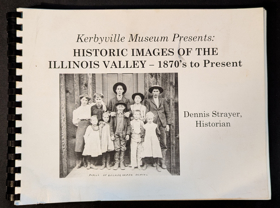
The historic images contained in this book provide a unique look into the past, when a slower pace of life existed long before electricity, cars, or computers. The Illinois Valley is located in the southern part of Josephine County, Oregon. Like most of Southern Oregon, mountains and high hills surround the valley on the west, south and east, which in both prehistoric and historic times made getting in and out of our valley a real challenge. We hope that you enjoy this "step back in time" when the horse served as the main mode of transportation and electricity was just an idea. 190 pages : chiefly illustrations, portraits ; 22 x 28 cm CIRC [ 1 ]
|
2016 |
|
Blisters and bliss a trekker's guide to the West Coast Trail by David Foster , Nelson Dewey (Illustrator), Wayne Aitken 
The bestselling Blisters and Bliss has been the trekker’s guide to the West Coast Trail since 1989. The 75-kilometre trail on Vancouver Island is rated as one of the world’s greatest hikes. This revised 8th edition once again provides a practical and easy-to-use resource for the thousands of hikers who visit the West Coast Trail every year. Combining current and accurate trail information with hundreds of safety and planning tips, this is the ideal guide for novices and experienced trekkers alike. 143 pages : illustrations ; 22 cm CIRC [ 0 ]
|
2016 |
|
Reporting the Oregon story how activists and visionaries transformed a state by Floyd J. McKay 
"Oregon entered a new era in 1964 with the election of Tom McCall as Secretary of State and Bob Straub as State Treasurer. Their political rivalry formed the backdrop for two of Oregon's most transformative decades, as they successively fought for, lost, and won the governorship. Veteran Oregon journalist Floyd McKay had a front-row seat. As a political reporter for The Oregon Statesman in Salem, and then as news analyst for KGW-TV in Portland, McKay was known for asking tough questions and pulling no punches. His reporting and commentaries ranged from analysis of the "Tom and Bob" rivalry, to the Vietnam War's impact on Senators Wayne Morse and Mark Hatfield and the emergence of a new generation of Portland activists in the 1970s. McKay and his colleagues were on the beaches as Oregon crafted its landmark Beach Bill, ensuring the protection of beaches for public use. They watched as activists turned back efforts to build a highway on the sand at Pacific City. Pitched battles over Oregon's Bottle Bill, and the panic-inducing excitement of "Vortex"--The nation's only state-sponsored rock festival--characterized the period. Covering the period from 1964-1986, McKay remembers the action, the players and the consequences, in this compelling and personal account. As major actors fade from the scene and new leaders emerge, McKay casts a backwards glance at enduring Oregon legends. Half a century later, amid today's cynicism and disillusionment with media, politics, and politicians, Reporting the Oregon Story serves as a timely reminder that charged politics and bitter rivalries can also come hand-in-hand with lasting social progress. Reporting the Oregon Story will be relished by those who lived the history, and it will serve as a worthy introduction to Oregonians young and old who want a first-hand account of Oregon's mid- twentieth-century political history and legislative legacy"-- Provided by publisher xiv, 270 pages : illustrations ; 23 cm CIRC [ 0 ]
|
2016 |
|
Her finest hour shipbuilding in the Portland area during World War II (1941-1945) by Robert R. La Du 
This work describes the monumental accomplishments of the World War II shipyards in Portland, Oregon, and Vancouver, Washington. Working twenty-four hours a day, seven days a week, they built and launched thousands of vessels--Liberty ships, Victory ships, tankers, aircraft carriers, submarine chasers, and many kinds of landing craft--to help defeat the Axis powers and preserve the way of life of the free world. Robert La Du viewed firsthand these activities from his home overlooking shipyards on the Willamette River. His father worked at Albina shipyard, his sister worked at Henry Kaiser's Swan Island shipyard, and he himself, as a high school student, worked nights at Commercial Iron and Steel shipyard. These experiences inform and enhance the pages of Her Finest Hour. 170 pages : illustrations ; 22 cm CIRC [ 0 ]
|
2016 |
|
A little dam problem by Jim Jones 
A Little Dam Problem chronicles an epic fight over water rights between the State of Idaho and Idaho Power Company. A court decision in 1982 gave Idaho Power virtual control over the flow of the Snake River in southern Idaho. An unlikely political team Democrat Governor John Evans and Republican Attorney General Jim Jones joined with legislators and water users to undo the damage caused by the decision. Jim Jones brings readers into the midst of the battle, providing an insider view of the struggle between the State of Idaho and a politically powerful adversary. The story reads much like those old western movies where a powerful landowner grabs up all of the water resources, depriving sodbuster families of the precious resource. The book opens a window into the real world of government and politics. viii, 374 pages ; 23 cm CIRC [ 0 ]
|
2016 |
|
Sawtooth-White Cloud by Mark Lisk (Photographer), Nicole LeFavour 
"Photographic profile of the Sawtooth/White Cloud wilderness areas in Idaho. Full-color photos are accompanied by essays describing the areas depicted"-- Provided by publisher 1 volume (various pagings) : color illustrations ; 24 x 31 cm CIRC [ 0 ]
|
2016 |
|
7,003 days 21 years in the Frank Church River of No Return Wilderness by Jim Akenson , Holly Akenson 
"Deep in the Idaho wilderness the last vestiges of Old Idaho linger. In 1982, an eager young couple seeking adventure and challenge, Jim and Holley Akenson, moved to a log cabin in the back country to manage Taylor Ranch, the University of Idaho's wilderness research station. In 7,003 Days, Jim describes their encounters with wildlife and nature: tracking wolves and cougars, using mules for transportation and ranch work, and introducing university stuedents to life in the rugged Salmon River Mountains of Central Idaho"--Provided by publisher 266 pages : illustrations, map ; 23 cm CIRC [ 0 ]
|
2016 |
|
Ethnobotany of the Coos, Lower Umpqua, and Siuslaw Indians by Patricia Whereat Phillips 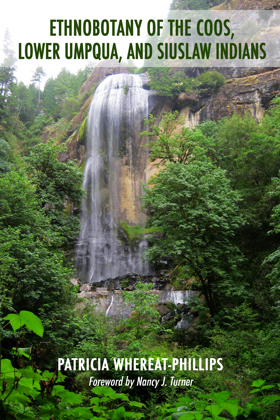
"Very little has been published until now on the ethnobotany of western Oregon indigenous peoples. Ethnobotany of the Coos, Lower Umpqua, and Siuslaw Indians documents the use of plants by these closely-related coastal tribes, covering a geographical area that extends roughly from Cape Perpetua on the central coast, south to the Coquille River, and from the Coast Range west to the Pacific shore. With a focus on native plants and their traditional uses, it also includes mention of farming crops, as well as the highly invasive Himalayan blackberry, which some Oregon coast Indians called the 'white man{u2019}s berry.' The cultures of the Coos Bay, Lower Umpqua and Siuslaw are distinct from the Athabaskan speaking people to the south, and the Alsea to the north. Today, many tribal members are reviving ancient arts of basket weaving and woodworking, and many now participate in annual intertribal canoe events. Ethnobotany of the Coos, Lower Umpqua, and Siuslaw Indians contributes to this cultural renaissance by filling an important gap in the historical record. It is an invaluable resource for anyone who wishes to learn about the indigenous cultures of the central and southern Oregon coast, as well as those who are interested in Pacific Northwest plants and their cultural uses."--Publisher's website xv, 147 pages : illustrations, maps ; 23 cm CIRC [ 0 ]
|
2016 |
|
A naturalist's guide to the hidden world of Pacific Northwest dunes by George O. Poinar 
From Northern California to British Columbia, coastal dunes and beaches provide a unique habitat for plants, animals, and insects. With A Naturalist’s Guide to the Hidden World of Pacific Northwest Dunes, hikers and beach walkers on the Pacific Coast will discover a teeming metropolis of life in what may seem a barren landscape to the inattentive eye. Contrary to casual observation, intricate patterns of life occur in coastal dunes and along the strand. Plants, insects, and parasites abound. George Poinar’s in-depth knowledge of this hidden world is unsurpassed, and his enthusiasm for it is infectious. He has been investigating and photographing specimens along the Pacific Coast for more than four decades, and presents this trove of knowledge to the reader in a clear, engaging style. Poinar exposes the small, almost blind weevils that live under driftwood and slowly degrade the wood, the omnipresent beach hoppers that leap up at every step and flee from vicious rove beetles, dune ants that search out aphids for honeydew but are attacked themselves by dive-bomber wasps. He shows why he considers Beach pea, Seashore lupine, and Coast willow keystone species because they provide food and shelter for so many different life forms. With a focus on the associations between dune plants and other life forms, the book includes over 600 full-color photographs from the author’s extensive collection. While it is accessible enough to serve as a field guide for hikers and outdoor enthusiasts, comprehensive data for biologists studying dune ecology are also included. A Naturalist’s Guide to the Hidden world of Pacific Northwest Dunes belongs on every beach house bookshelf from California to Canada. Naturalists, scientists, and anyone who walks along the coast will welcome this lavishly-illustrated reference. 286 pages : color illustrations ; 23 cm CIRC [ 0 ]
|
2016 |
|
Rivers of Oregon by Tim Palmer 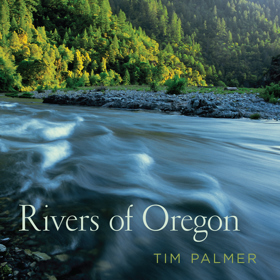
“Rivers are the essence of Oregon,” writes award-winning author and photographer Tim Palmer. In over 140 brilliant photos and evocative, informative text, Rivers of Oregon captures the life, the beauty, and the magic of Oregon’s remarkable array of waterways. The book’s engaging essays address the nature and ecology of flowing waters, the joy of travel on these lifelines of the planet, and the historic saga of Oregonians’ commitment to preserve, protect, and restore the best of their state for future generations. Rivers of Oregon captures the beauty and the intrinsic qualities of the state’s irresistible riverscapes like no other book has done. From the underwater view and from the refuge of riparian forests, from the seat of a canoe or raft and from distant mountain summits, readers will gain new perspectives on the extraordinary features that provide us with water, with life, and with scenes whose loss would leave us deeply impoverished. Join this celebrated photographer, author, conservationist, and river guide on a journey of discovery that will change the way you think about flowing water and the alluring paths it makes across our land. 162 pages : color illustrations ; 24 cm CIRC [ 0 ]
|
2016 |
|
The Jewish Oregon story, 1950-2010 by Ellen Eisenberg 
"The Jewish Oregon Story traces the history of diverse Jewish Oregonians and their communities during a period of dramatic change. Drawing on archival sources, including a collection of over five hundred oral histories, the book explores how Jewish Oregonians both contributed to and were shaped by the "Oregon Story," a political shift that fueled Oregon's--and particularly Portland's--emerging reputation for progressivism and sustainability. Six chapters examine a community grappling with, and increasingly embracing, change--from the dramatic national shifts in women's roles and inter-group relations to local issues such as the razing of the historic South Portland Jewish neighborhood. An original community musical, Whatever Happened to Old South Portland?, frames the creation of a new Portland Jewish identity, emerging out of the ashes of South Portland and tapping ethnic expression as an antidote to suburbanization and assimilation. A peek behind the scenes exposes the crucial role of women's voluntarism and traces the impact of women entering the workforce and winning acceptance as equals in organizational and ritual life. Chapters on involvement in liberal politics and advocacy for Israel explore communal engagement that reflected national trends, but, beginning in the 1980s, were increasingly shaped by emerging local progressivism. A final chapter charts recent shifts in Oregon Jewish geography, demographics, and organizational life, exploring the rebirth of smaller communities and the embrace of post-denominational Jewry, spirituality, and an ethos of environmentalism and inclusion. The Jewish Oregon Story will be of great interest to the Jewish community in Oregon and the Pacific Northwest and will appeal broadly to all readers of American, Western, and Oregon history, particularly those interested in questions of ethnicity and identity. Published in Cooperation with the Oregon Jewish Museum and Center for Holocaust Education"-- Provided by publisher xviii, 316 pages : illustrations ; 26 cm CIRC [ 0 ]
|
2016 |
|
Hiking from Portland to the coast an interpretive guide to 30 trails by James D. Thayer 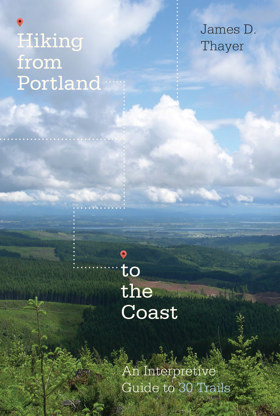
A guidebook for both experienced and casual hikers, Hiking from Portland to the Coast explores the many trails and logging roads that crisscross the northern portion of Oregon’s Coast Range. While showcasing convenient “looped” routes, it also describes complete throughways connecting Portland to the coastal communities of Seaside and Tillamook. Designed to both inform and entertain, each of the 30 trails described includes a “backstory” highlighting the rich histories of Native Americans, white settlers, loggers, and railroad operators. While suitable for hikers, equestrians, and bikers, many of these trails have never been surveyed for recreational use. All are meticulously surveyed and described here, alongside detailed and annotated maps. Some trails are located on private timber holdings, accessible only by paid permit, while access to others is free. In most cases vehicular traffic is not permitted; neither is camping, littering, or making fires. From time to time, access may be restricted due to fire danger or commercial activity. The maps, notes, and tips provided in Hiking from Portland to the Coast will be invaluable for those adventurers who wish to wander far from the beaten track. Less intrepid explorers will find plenty of short and scenic exploratory hikes in the forests that parallel Highway 26 to Seaside or Highway 6 to Tillamook. 272 pages : illustrations, maps ; 24 cm CIRC [ 0 ]
|
2016 |
|
Keeping Oregon green livability, stewardship, and the challenges of growth, 1960-1980 by Derek R. Larson 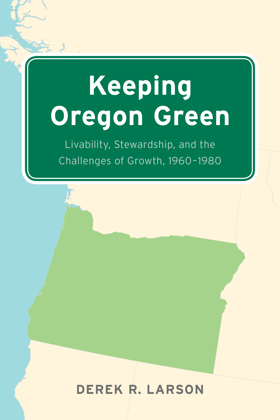
"Keeping Oregon Green is a new history of the signature accomplishments of Oregon's environmental era: the revitalization of the polluted Willamette River, the Beach Bill that preserved public access to the entire coastline, the Bottle Bill that set the national standard for reducing roadside litter, and the nation's first comprehensive land use zoning law. To these case studies is added the largely forgotten tale of what would have been Oregon's second national park, intended to preserve the Oregon Dunes as one of the country's first National Seashores. Through the detailed study of the historical, political, and cultural contexts of these environmental conflicts, Derek Larson uncovers new dimensions in familiar stories linked to the concepts of 'livability' and environmental stewardship. Connecting events in Oregon to the national environmental awakening of the 1960s and 1970s, the innovative policies that carried Oregon to a position of national leadership are shown to be products of place and culture as much as politics. While political leaders such as Tom McCall and Bob Straub played critical roles in framing new laws, the advocacy of ordinary citizens--farmers, students, ranchers, business leaders, and factory workers--drove a movement that crossed partisan, geographic, and class lines to make Oregon the nation's environmental showcase of the 1970s. Drawing on extensive archival research and source materials, ranging from poetry to congressional hearings, Larson's compelling study is firmly rooted in the cultural, economic, and political history of the Pacific Northwest. Essential reading for students of environmental history and Oregon politics, Keeping Oregon Green argues that the state's environmental legacy is not just the product of visionary leadership, but rather a complex confluence of events, trends, and personalities that could only have happened when and where it did"-- Provided by publisher ix, 307 pages ; 23 cm CIRC [ 0 ]
|
2016 |
|
Leaded the poisoning of Idaho's Silver Valley by Michael C. Mix 
Leaded is a timely and deeply researched account of one of the largest environmental disasters in western US history. It examines the origin, evolution, and causes of the harmful environmental and human health effects caused by mining operations in Idaho’s Coeur d’Alene Mining District—the “Silver Valley”—from 1885 to 1981. During that period, district mines produced over $5 billion worth of lead, silver, and zinc. The Bunker Hill Company dominated business and community activities in the district as owners and operators of the largest mine, lead smelter, and zinc plant.During the first half of the twentieth century, industrial mining operations caused severe environmental damage to area waterways and lands from releases of sulfur gases, lead, and other toxic metals. Damaging human health effects were evident soon after the smelter opened in 1917, when Bunker Hill workers suffered from lead poisoning. Despite the obvious devastation, due to the influence of the mine and lead industry in state and federal politics, as well as scientific uncertainties about pollution effects, no effective federal laws regulating mining and smelting operations were passed until the 1970s.In 1974, uncontrolled Bunker Hill lead smelter emissions led to the worst community lead exposure problem in the United States and resulted in a widespread lead poisoning epidemic of Silver Valley children. In response, the Environmental Protection Agency ultimately mandated federal air lead standards. At the same time, the National Institute for Occupational Safety and Health passed national standards reducing allowable occupational lead exposures. Bunker Hill could not meet the new standards, which was a major factor in forcing the company to close, leaving behind a contaminated geographic area that was classified at the time as the largest Superfund site in the United States.Leaded will resonate with anyone who is concerned about the long-term effects of industrial pollution, as well as students of environmental history, western US history, mining history, environmental ethics, and environmental law xvi, 260 pages : illustrations, map ; 23 cm CIRC [ 0 ]
|
2016 |