Catalog of British Columbiana and Pacific Northwest Americana
Encyclopedia Cascadia Catalog contains book titles of mostly non-fiction Pacific Northwest Coast of North America Titles (primarially British Columbia, Idaho, Oregon and Washington State) in an easy-to-understand title catalog. If you see a link with this badge ONLINE CIRC it means that there is an online institution that provides free access to that title. In some cases there may be more than one institution hosting the title digitally.
| Catalog Title | Published |
|---|---|
|
Eventful Life of Philip Hankin world-wide traveller and witness to british columbias... early history by GEOFF MYNETT 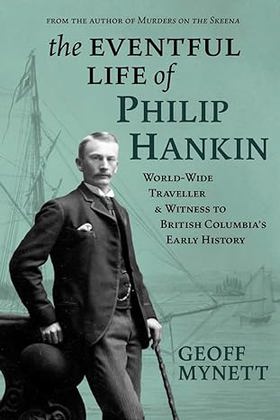
"Today’s explorers of Vancouver Island may be familiar with the name “Hankin”--Hankin Island lies off the coast of Ucluelet within the famous Pacific Rim National Park; Mount Hankin looms amidst the dense forests of central Vancouver Island; and nestled in the San Juan Islands, Hankin Point sits on the easternmost tip of Shaw Island. The man behind the name is Philip Hankin, a little-known but fascinating figure who led an eventful life marked by immense swings in fortune. In 1849, at just thirteen years old, Philip Hankin, then in England, entered the Royal Navy and engaged in the navy’s campaigns to suppress the trade of enslaved people on the coasts of Africa. His naval career brought him to Vancouver Island in 1858, where he helped survey the coastline on the Royal Navy’s HMS Plumper and Hecate. In his journeys on the Indigenous homelands of the Nuu-chah-nulth and Huu-ay-aht Peoples in what is now Vancouver Island, and the Lummi, WSÁNEĆ and Tulalip Peoples to the south, Hankin learned several Indigenous languages, a skill that would prove pivotal in his career. After leaving the navy at age twenty-eight, he walked from Yale to Barkerville to try his hand at prospecting. In this, despite family connections to Billy Barker, he failed miserably. Broke, he returned to Victoria, where within months he was appointed Superintendent of Police for the Colony of Vancouver Island, but the merger of the colonies in 1866 left him again jobless. He served as colonial secretary in British Honduras and then in late 1868 he returned to British Columbia as colonial secretary. Hankin was at the centre of BC politics in the years before BC’s accession to Canada in 1871. In his memoirs, Hankin reflected on his eventful life: “I have had many ups and downs and have travelled several times around the world… although I have been somewhat of a rolling stone, yet, I have gathered some moss.” In The Eventful Life of Philip Hankin, bestselling author and historian Geoff Mynett tells the story of the adventurous and often tumultuous life of this “rolling stone” and reveals his remarkable resilience."-- Provided by publisher 240 pages : illustrations ; 23 cm CIRC [ 0 ]
|
2024 |
|
A will to serve stories of patience, persistence, and friends made along the way by James R. Ellis , Jennifer Ott 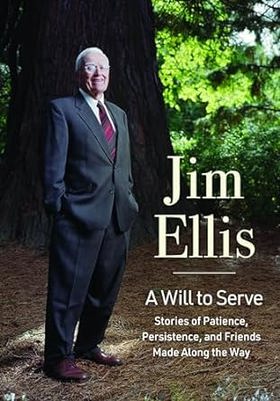
"Jim Ellis was one of the most influential and impactful civic leaders of Seattle's and Washington's recent history. Without ever seeking elected office, Ellis' vision and drive was the key force behind many major projects defining our city, county, and region from the 1960s through today. From cleaning up Lake Washington, establishing King County Metro, and implementing the broad array of community centered Forward Thrust improvement initiatives, to forward-thinking regional projects like the Mountains to Sound Greenway and the Washington State Convention Center, Ellis was astute at bringing together leaders across political divides to create consensus and change. A Will to Serve is a story about the balance and interconnectivity of personal life and civic life. It's about how the individual people--family, friends, neighbors, colleagues--their shared challenges, and how they worked together to effect change for regional progress. A Will to Serve is Ellis' first-person insight into a tumultuous and dynamic period of our regional history and a window into how patience, persistence, and vision can effect change. Ellis kept notes on his life and projects, wrote extensively about his experiences, and built a deep portfolio of public speeches. He drew from these to shape his detailed and engaging autobiography, a compelling telling of regional history. The Will to Serve, in Ellis' own words, is introduced and framed by former Secretary of the Interior, and Jim Ellis mentee, Sally Jewell. Several key accomplishments of his later life are presented by HistoryLink historian Jennifer Ott"-- Provided by publisher pages cm CIRC [ 0 ]
|
2024 |
|
Forest under siege the story of old growth after Gifford Pinchot by Rand Schenck 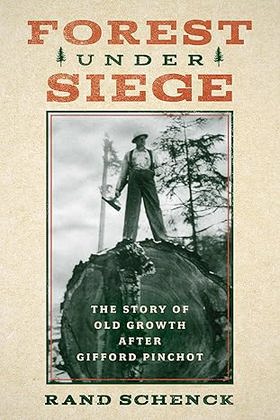
"The first chief of the United States Forest Service marveled at the Cascades' ancient forests, but by 1990, relentless logging left a mere thirteen percent of the Pacific Northwest's original old growth. Focusing primarily on the Gifford Pinchot National Forest, an environmental activist examines one hundred years of Pacific Northwest forestry-revealing just how close the region's ancient forests came to extinction-and offering his perspective on the decades of stewardship, the period of unabated harvest, and efforts toward old growth rebirth"-- Provided by publisher pages cm CIRC [ 0 ]
|
2024 |
|
CELEBRATING PALOUSE COUNTRY a history of the landscape in text and images by RICHARD SCHEUERMAN 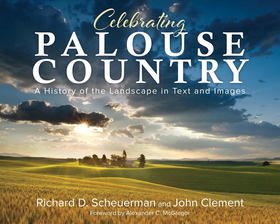
Enhanced with spectacular photographs from John Clement, travel through time among the Palouse Country’s beauty and expanse, starting with its First Peoples, then moving through distinct immigrant groups. Chapters cover events that prompted emigration, describe the settlers’ transitions and living conditions, chronicle significant people and families, discuss major influences that impacted the population, and recount how the communities grew and changed. CIRC [ 0 ]
|
2024 |
|
Washington state's round barns preserving a vanishing rural heritage by Tom J. Bartuska , Helen Bartuska 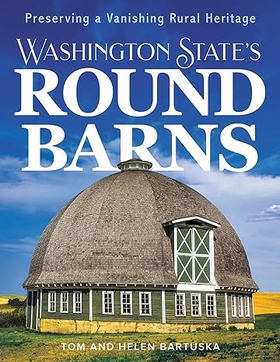
"Enchanted by their beauty, complexity, and historical significance, Tom and Helen Bartuska spent decades researching, visiting, and photographing twenty-one Washington round barns over fifty years old, at least two stories, and over fifty feet in diameter. They share what they learned-who built each structure and when, original and current uses, individual characteristics, construction details, and more. They also discuss the fascinating history, re-use, and creative preservation of round barns and other rural buildings and communities across the United States"-- Provided by publisher pages cm CIRC [ 0 ]
|
2024 |
|
Punjabi rebels of the Columbia River the global fight for Indian independence and citizenship by Johanna Ogden 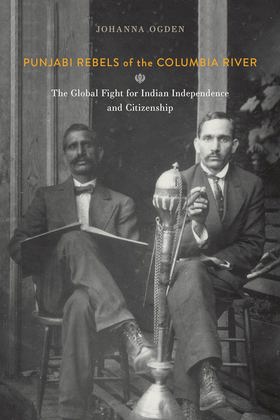
"Oregon is commonly perceived to have little, let alone notable, South Asian history. Yet in the early 1900s Oregon was at the center of two entwined quests for Indian independence and civic belonging that rocked the world. Punjabi Rebels of the Columbia River traces the stories of the radical Indian independence organization known as Ghadar and Bhagat Singh Thind's era-defining US Supreme Court citizenship case. Ghadar sought the overthrow of India's British colonizers while Thind utilized sanctioned legal channels to do so. Despite widely differing strategies, both the movement and the man were targeted, often in coordination, by the highest levels of the US and British governments. The empires' united message: India would not be an independent country and Indians could not be citizens. In the decades that followed, it was a verdict Indians refused to abide. Johanna Ogden's detailed history of migrants' experience expands the time frame, geographic boundaries, and knowledge of the conditions and contributions of Indians in North America. It is the story of a people's awakening amid a rich community of international workers in an age of nationalist uprisings. To understand why one of the smallest western Indian settlements became a resistance center, Punjabi Rebels mines the colonial underpinnings of labor, race, and place-making and their regional and global connections, rendering a history of whiteness and labor as much as of Indian-ness and migration. The first work to rejoin the lived experience of Thind and Ghadar activists, Punjabi Rebels complicates our understanding not just of the global fight for Indian political rights but of multi-racial democracy"-- Provided by publisher 296 pages CIRC [ 0 ]
|
2024 |
|
Discovering nothing in pursuit of an elusive Northwest Passage by David L. Nicandri 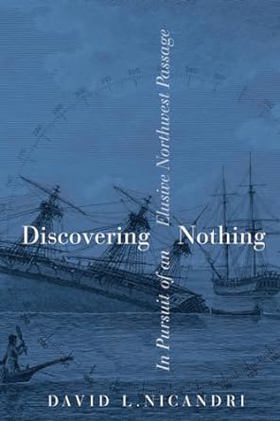
"The many attempts by navigators to find a Northwest Passage via its Pacific portal all ended in failure; however, their discoveries spurred expansionist developments that would forever alter the landscape of North America. In Discovering Nothing, David L. Nicandri maps a cast of geographic visionaries and practical explorers as they promoted or sought a workable commercial route linking the Pacific Ocean to the Atlantic. The discovery of the legendary northern passage proved elusive, but the equivalent land bridges that were built in the form of two transcontinental railroads changed the futures of Canada and the United States. Drawing from close readings of explorers’ personal journals, Nicandri provides readers a detailed, engaging, and multifaceted investigation into the many players and failed enterprises at the core of this search, beginning in the eighteenth century through to today--and to the unexpected impact of climate change on this fabled passage."-- Provided by publisher 328 pages CIRC [ 0 ]
|
2024 |
|
Becoming Walla Walla the transformation of cayuse country, 1805-1879 by Dennis Crockett 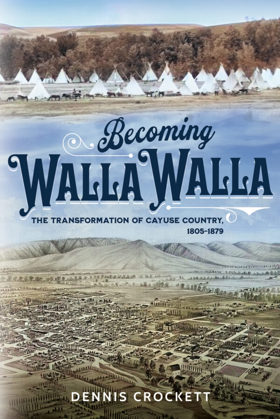
Becoming Walla Walla covers Walla Walla Valley history from the time of the Sahaptian Peoples’ first encounters with Euro-Americans to the initial expiration of the U.S. government’s treaty with the Cayuse, Walla Walla, and Umatilla. It sheds light on the city’s and reservation’s simultaneous development, re-animates the Walla Walla of the 1860s and 70s, reconsiders its status in early Washington Territory and Oregon State histories, and documents transformations of the region’s built and natural environments. 320 pages : illustrations CIRC [ 0 ]
|
2024 |
|
A Muckleshoot poetry anthology at the confluence of the Green and White rivers by Susan Landgraf 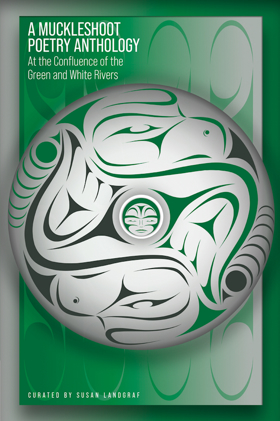
As part of workshops held on the Muckleshoot Indian Reservation, fifty-four poets—most from the Muckleshoot Tribal School—created the works in this collection. Their pieces are about searching and belonging. Loss and finding. All share a common theme—a reaching back and a reaching forward—sometimes in the same poem. They highlight Muckleshoot history and culture, but also spotlight individual histories, lessons, and beliefs. xvii, 91 pages : color illustrations, color map ; 23 cm CIRC [ 0 ]
|
2024 |
|
Rivers in my veins poems by Kara Briggs 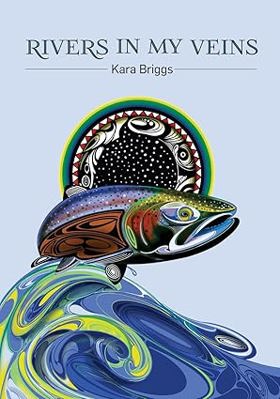
With calm elegance and precise language, Rivers in My Veins is a work of lyric courage celebrating the connection we all share to the earth. Kara Briggs' poems sing her people, Sauk-Suiattle and Yakama, onto the pages. "Land we live on land," she writes, calling us to embrace our kinship with the earth. As a career journalist, Briggs uses documentary poetry to expose the false settler-colonial narratives while innovating rhythms from the social dances of her tribes in poems that take the reader to the dance circle. She received the 2024 James Welch Prize for Indigenous Poetry for "Acknowledgement Two," a poem in this collection about her uncle who fought for fishing rights. Her fierce love of lands, waters, and stories of her peoples are carried in familiar poetic forms-sonnet, pantoum, and haiku-as vehicles to carry the readers on a journey through our shared world of literary - and deeply alive - landscapes. In groundbreaking forms of her ancestors and for future generations, Briggs introduces profiles of a Yakama treaty fisherman, a great-great-grandmother basket maker, and a Sauk-Suiattle leader calling for accountability, sharing the humanity and modernity of Native peoples. She uses sonnets, pantoums, and haiku as familiar vehicles for readers as she carries them into unfamiliar history and perspectives. She questions our relationship with words about Indigenous peoples by exploring their etymologies. She engages literary ancestors, poets Carolyn Kizer and Janice Gould, re-examining their poetics in her own. Kara Briggs works on environmental issues with tribes on the West Coast and has a background in journalism and higher education. She is a former president of the Native American Journalists Association. She graduated in 2024 with a Master of Fine Arts in Creative Writing from the Institute of American Indian Arts. This is her first poetry collection and her first publication with St. Julian Press. 59 pages ; 26 cm CIRC [ 0 ]
|
2024 |
|
Permission to land a memoir of loss, discovery, and identity by Judy LeBlanc 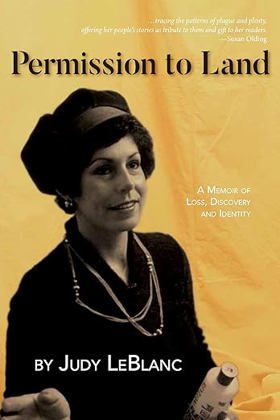
"When Judy LeBlanc’s mother died in 2015, she embarked on a personal journey of discovery and reconciliation with her known but unacknowledged Coast Salish ancestry on her mother’s side. She was to discover that both maternal great-grandparents had Scottish fathers and Coast Salish mothers. Her great-grandmother was from the W̱SÁNEĆ people in what is now known as Saanich on Vancouver Island, and her great-grandfather was the son of a woman from either the Suquamish in Washington state or the Tsleil-Waututh in Burrard Inlet, North Vancouver. Finally, LeBlanc discovers that her great aunt attended Chemawa, an American Indian boarding school where, at the age of fourteen, she contracted tuberculosis and was sent home to die. In this intimate and moving memoir-in-essays, LeBlanc reflects on the impact of erasure in her family, particularly on the women through four generations. Marked by grief for the loss of her mother and the discovery of buried family secrets, LeBlanc sets out on a journey, both literary and cultural, in the form of a voyage by canoe to the home of her ancestors. Permission to Land is a powerful and vulnerable exploration of the complexities of family, heritage and identity, courageously questioning whether it is possible to seek renewal after irrevocable loss."-- Provided by publisher 158 pages : illustrations ; 23 cm CIRC [ 0 ]
|
2024 |
|
Tiná7 cht ti temíxw = We come from this land a walk through the history of the Squamish people by Squamish (First Nation) 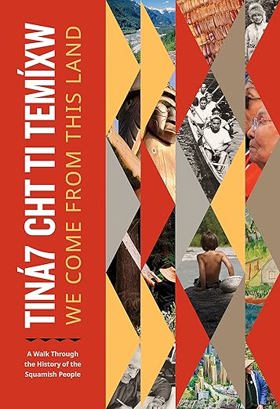
"From the watersheds of the Squamish and Mamquam Rivers and Howe Sound in the north to English Bay, False Creek, and Burrard Inlet in the south, Sḵwx̱wú7meshulh Aysáy̓ch (Squamish Territory) encompasses saltwater and rushing rivers, old-growth forests at valley bottoms, and alpine meadows high above the ocean. Tiná7 Cht Ti Temíxw---We Come From This Land is a powerful introduction to the vast history of the Sḵwx̱wú7mesh people. Drawing on stories from our Elders and in-depth research, we trace our history and culture from ancient times to the present day, offering a launching point for discovering more about the places, people, and stories found here."--Page 4 of cover xi, 401 pages : illustrations (some color), maps ; 24 cm CIRC [ 0 ]
|
2024 |
|
BEING IN BEING the collected works of a master haida mythteller by SKAAY 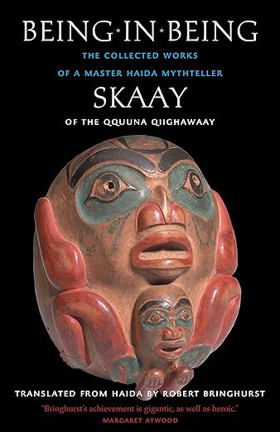
Being in Being contains three masterpieces by legendary Haida mythteller Skaay of the Qquuna Qiighawaay. The shortest recounts the high points of the legend of his family. The second, Raven Travelling, is the longest and most complex version of the story of the Raven ever recorded on the Northwest Coast. The third is The Qquuna Cycle, a narrative poem of nearly 5,500 lines, one of the true masterpieces of North American literature. 1 online resource CIRC [ 0 ]
|
2024 |
|
Untold tales of old British Columbia by Daniel Patrick Marshall 
"A collection of fascinating stories of the extraordinary and astonishing in BC's history. Daniel Marshall uncovers the stories of BC you've never heard. The award-winning Marshall captivates readers with intriguing and unknown stories, everything from Indigenous rights to Native gold; political intrigue to daring feats; the remarkable, mysterious traveller Harry (Harriet) Collins; the forgotten origin of Canada's oldest Chinatown; mysterious artifacts and confounding tales of the obscure and mysterious. Rigorously researched with interpretations that offer inclusive narratives while exploring surprising tales of great adventure."-- Provided by publisher 330 pages : illustrations, maps ; 23 cm CIRC [ 0 ]
|
2024 |
|
The HBC brigades culture, conflict and perilous journeys of the fur trade by Nancy Marguerite Anderson 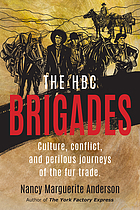
"A lively recounting of the tough men and heroic but overworked packhorses who broke open BC to the big business of the 19th century fur trade. Facing a grueling thousand-mile trail, the brigades of the Hudson Bay Company (HBC) pushed onward over mountains and through ferocious river crossings to reach the isolated fur-trading posts. But it wasn’t just the landscape the brigades faced, as First Nations people struggled with the desire to resist, or assist, the fur company’s attempts to build their brigade trails over the Aboriginal trails that led between Indigenous communities, which surrounded the trading posts. Nancy Marguerite Anderson recounts how the devastating Cayuse War of 1847, forced the HBC men over a newly-explored overland trail to Fort Langley. The journey was a disaster-in-waiting."-- Provided by publisher ix, 316 pages ; 23 cm CIRC [ 0 ]
|
2024 |
|
In common with the fish wars, the Boldt Decision, and the fight to save salmon in the Pacific Northwest by Bill Wilkerson , Don Pugnetti 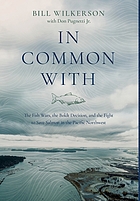
Because of state actions and policies, Washington Tribes had long been denied their fair share of the salmon harvest granted by treaties adopted by the US government and the Tribes in 1854. Tribal members staged "fish-ins" and other demonstrations, and ultimately pursued a federal lawsuit against the state. Decided in 1974 by US district court judge George H. Boldt, the landmark ruling gave Tribes an equal share of fish, meaning yields for non-Native fishermen plummeted. As a result, many non-Native commercial fishing businesses closed, and chaos and legal disputes continued into the 1980s. All the while, the number of salmon available for harvest steadily declined. During this post-Boldt period, a group of Tribal and government leaders collectively decided change was sorely needed. Through collaboration, they forged major, seemingly unattainable agreements to cooperatively manage fisheries, all while protecting and enhancing salmon runs. Author Bill Wilkerson, then fisheries director for the state of Washington, and legendary Tribal leader Billy Frank Jr. were among a select group of courageous visionaries who worked to bring peace to state waters and reverse the steady decline of salmon runs. Without Frank's dedicated participation in these talks, legitimizing the process in the view of local Tribes, it's unlikely these agreements would have ever been made. In Common With is an insider's look at a number of successful negotiations between historic adversaries. They included an international salmon treaty between the US and Canada, a long-term cooperative management agreement between the state and Tribes, and a major accord between the state, Tribes, and forestland managers to protect salmon habitat on privately owned forestlands. This groundbreaking feat of diplomacy and partnership revealed the power of honoring one another?s opinions, needs, and wants. This spirit of cooperation and dedication to common ground serves as a shining example for contemporary leaders in today's polarized political landscape xv, 381 pages ; 23 cm CIRC [ 0 ]
|
2024 |
|
River of renewal myth and history in the Klamath Basin by Stephen Most 
"River of Renewal tells the remarkable story of the Klamath Basin, a region of the Pacific Northwest spanning the Oregon-California border. Indian reservations are at the headwaters, along the estuary, and across the major tributary of the Klamath River. In this place that has witnessed, since the Gold Rush, genocide, war, and conflicts over resources, myths of the West loom large, amplifying differences among inhabitants of a land united by water and divided by people. Yet when faced with ecological catastrophe, farmers, tribes, and other regional stakeholders forged a consensus that led to the largest dam removal and watershed restoration project in history. The only history of the entire Klamath Basin, River of Renewal tells the stories of the region's diverse communities and stakeholders, including the government agencies that manage most of its land. Based on author Stephen Most's original research and interviews with tribal leaders, ranchers, farmers, fishermen, forest managers, and others, River of Renewal is a political as well as an environmental history, one that underscores the power of commitment to a place and the vital importance of traditional knowledge in ecological stewardship. It offers an indispensable resource for anyone who wishes to better understand the peoples of the Klamath Basin and their extraordinary accomplishment of bringing about the removal of the four hydroelectric dams that harmed their cultures, economies, and environment for a century"-- Provided by publisher xxiii, 342 pages : illustrations, maps ; 23 cm CIRC [ 0 ]
|
2024 |
|
Voices for the islands thirty years of nature conservation by the Salish Sea by Sheila Harrington 
"A fascinating compendium of stories chronicling the history of local conservation movements that evolved on seventeen islands in the Salish Sea from the 1980s to the present day. Saving the Islands chronicles the history and evolution of the conservation movement across eighteen islands in the Salish Sea. Narratively linked by author Sheila Harrington's two-year sailing journey to the islands to gather over fifty interviews with veteran conservationists, the book provides an in-depth view of conservation land trusts, from their emergence forty years ago through multiple legal battles, organizational challenges, hard lessons, case studies, and human-interest stories. Beginning in the 1980s, when logging and development threatened the fragile ecosystems and natural spaces of this region, and culminating in the creation of the Gulf Island National Park Reserve, this book will inspire readers to turn apathy to action and support the cause of conservation in an era of species extinction and climate change. Full of colour photos, maps, and fascinating first-hand stories by conservationists--many of whom are now elders--it reveals how grassroots movements have the power to transform the future of a natural environment."-- Provided by publisher xi, 273 pages : color illustrations, maps ; 26 cm CIRC [ 0 ]
|
2024 |
|
Fried eggs & fish scales tales from a Sointula troller by Jon David Taylor 
"Longtime fisherman and Sointula resident Jon Taylor dishes up hilarious yarns from his life off northern Vancouver Island. Capturing the "rough but reasonable" freedom of Malcolm Island, situated off the northeast shore of Vancouver Island, Jon Taylor recounts the bizarre but enticing lifestyle of a fisherman and his remote community--"haywire tightwads" for skippers, rotten fish in the hold that become "three thousand humpies in a warm, pink soup," and the kind of integrity you don't often see. Jon Taylor's family history on Malcolm Island extends back to 1917, when Taylor's Finnish grandparents planned to move to the community of Sointula, to live among fellow expats who shared a language and a dream. However, Taylor recounts, upon seeing the island they promptly changed their minds and moved to Cuba. Taylor himself moved to Malcolm Island in 1976 and became a steadfast resident, embracing the fishboat life, for better or worse, aboard seiners, gillnetters and his own troller. Taylor captures a classic but now-disappearing way of life in its heyday with his vibrant and amusing vignettes."-- Provided by publisher 224 pages ; 22 cm CIRC [ 0 ]
|
2024 |
|
Portland's audacious champion how Bill Naito overcame anti-Japanese hate and became an intrepid civic leader by Erica Naito-Campbell , Oregon State University Press (Publisher) 
"William "Bill" Sumio Naito (1925-1996) was a remarkable and visionary individual--the Portland-born son of Japanese immigrants who became one of the city's most significant business and civic leaders. Every day thousands of people drive on Naito Parkway alongside Portland's Waterfront Park, yet little has been written about the man for whom it was named. In this first biography, Erica Naito-Campbell, Bill's granddaughter, shows how his story is also the story of Portland, the city he loved. Naito's life, from the Great Depression and World War II through Portland's rebirth in the 1970s and its profound growth, tracked most of the major events in the city and was the catalyst for many of them. Through hard-earned success in importing and real estate with his brother Sam, Naito came to wield considerable power in the city, and his leadership led to much of what we consider iconic Portland today: the "Portland Oregon" sign near the Burnside Bridge, the annual Christmas tree in Pioneer Courthouse Square, and Harbor Drive's conversion to Waterfront Park. Naito's name became synonymous with civic leadership, whether it was growing Portland's urban tree canopy, revitalizing its downtown, or preserving historic buildings. But less is known about his difficult childhood--with a father who worked twelve-hour days and a mother whose treatment of him was harsh at best--and the racism he endured during World War II. After the expulsion of Japanese Americans following Pearl Harbor and his military service in Occupied Japan, Naito overcame great emotional turmoil to return to Portland and become one of its greatest change-makers."-- Provided by publisher x, 278 pages : illustrations, map, portraits ; 23 cm CIRC [ 0 ]
|
2024 |
|
From thorns to blossoms a Japanese American family in war and peace by Mitzi Asai Loftus , David Loftus , Oregon State University Press (Publisher) 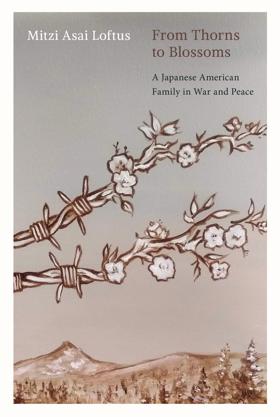
"Mitsuko "Mitzi" Asai was not yet ten years old in the spring of 1942 when President Roosevelt's Executive Order 9066 sent 120,000 people of Japanese ancestry--about two-thirds of them US citizens--from their homes on the West Coast to inland prison camps. They included Mitzi and most of her family, who operated a fruit orchard in Hood River, Oregon. The Asais spent much of World War II in the camps while two of the older sons served in the Pacific in the US Army. Three years later, when the camps began to close, the family returned to Hood River to find an altered community. Shop owners refused to serve neighbors they had known for decades; racism and hostility were open and largely unchecked. Humiliation and shame drove teenaged Mitzi to reject her Japanese heritage, including her birth name. More than a decade later, her life took another turn when a Fulbright grant sent her to teach in Japan, where she reconnected with her roots. In From Thorns to Blossoms, Mitzi recounts her rich and varied life, from a childhood surrounded by barbed wire and hatred to a successful career as a high school English teacher and college instructor in English as a Second Language. Today, Asai descendants continue to tend the Hood River farm while the town confronts its shameful history. Originally published in 1990 as Made in Japan and Settled in Oregon, this revised and expanded edition describes the positive influence Mitzi's immigrant parents had on their children, provides additional context for her story, and illuminates the personal side of a dark chapter in US history. It's the remarkable story of a transformation from thorns into blossoms, pain into healing."-- Provided by publisher x, 217 pages : illustrations, portraits ; 23 cm CIRC [ 0 ]
|
2024 |
|
Cooperatives across clusters lessons from the cranberry industry by Anil Hira , Paul David Gottlieb , Neil Reid , Stephan J. Goetz , Elizabeth A. Dobis , Oregon State University Press (Publisher) 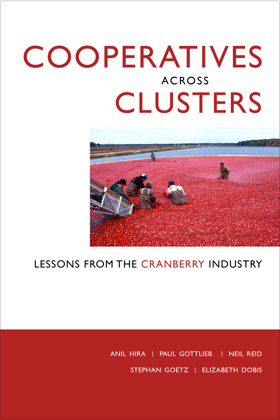
"Most agricultural production is of commodity or undifferentiated products. Producers suffer from a roller-coaster ride of price swings, over- or under-production, weather and pest threats, and the inability of family famers to capture anything beyond a small percentage of the final price. Cooperatives Across Clusters provides lessons from the cranberry industry, a commodity product organized mostly into family farms in seven different clusters around North America. The industry is remarkable in that it's substantially organized around one large cooperative, Ocean Spray. The authors examine how the cooperative came to be, the challenges of coordination and industry leadership across the diverging clusters, and the lessons for cooperation for other agricultural industries. The book provides a multi-layered contribution to agricultural economics. First, it examines location decisions and what factors supersede growing conditions to allow industries to arise around production. Second, it explores pathways available for farmers to try to overcome, through cooperative organization, the natural boom-bust cycles of commodity price swings. Third, it looks at how cooperative decisions are made, and the challenges of providing industry leadership, including research and development and collective marketing, through a cooperative that faces continual defections and new problems. Finally, through in-depth historical, statistical, and field research, it provides a comprehensive study of the cranberry industry and suggests ways farmers can grow the industry. Agricultural policymakers, farmers, industry specialists, and researchers of agriculture and clusters more generally will find this to be an important and informative new resource."-- Provided by publisher xvi, 216 pages : illustrations, maps ; 23 cm CIRC [ 0 ]
|
2024 |
|
Toward Oregon 2050 planning a better future by Megan Horst , Oregon State University Press (Publisher) 
"How do we plan for a better Oregon in 2050? What will the state be like in that year for five million Oregonians, particularly for the least privileged and powerful residents? These are the questions that drive Oregon 2050, an interdisciplinary project at Portland State University that aims to help the state become more environmentally sustainable, socially equitable, and fiscally resilient. In this compelling volume, leading experts in land use and urban planning, in cooperation with other scholars and community partners, envision various possible futures and begin the work of developing statewide plans to guide Oregon through the decades ahead. Building on the state's policy innovation and planning legacy, contributors to Toward Oregon 2050 address current challenges such as housing scarcity, income inequality, the rural-urban divide, and climate change. They offer recommendations on a range of issues, from culture to incarceration, transportation to voting rights, all with the goal of imagining what a fair and equitable Oregon might look like. Some of the imagined futures-with worsening effects of climate change, environmental harms, and social inequities-are not bright for many Oregonians. Other futures include enhanced resiliency to forest fires and flooding, more Oregonians in high-paying jobs and in secure housing, and more children walking and biking to school. But those positive futures are not guaranteed, and getting there won't be easy. They'll require all stakeholders-state and local government, members of all political parties, private businesses, non-profit organizations, and individual residents-to play a role in ensuring a better future for the next generation of Oregonians. Intended for all Oregonians who care about their state's future, Toward Oregon 2050 will also appeal to scholars and planners who have long looked to Oregon for inspiration and lessons learned. The book invites readers to envision the future of Oregon and to contribute their part toward a better future for the state"-- Provided by publisher ix, 452 pages : illustrations, maps ; 23 cm CIRC [ 0 ]
|
2024 |
|
Tent City, Seattle refusing homelessness and making a home by Tony Sparks 
Transforms our understanding of being unhoused in the United States. Tent City 3 provides Seattle’s unhoused people with a place to create and sustain not just shelter but a home. In 2000 it became one of the first organized, peer-operated tent encampments in the city, a type of community that has become more common throughout the West Coast and the United States in the intervening years. Based on groundbreaking participatory research and interviews, this book explores the lives of Tent City 3’s residents and their efforts to reclaim dignity, freedom, and the deep human connection to one’s own space. Tent City 3 upends stereotypes of homelessness by being a self-managed, self-governing, and largely self-supporting community of informal housing. Residents enact ongoing and relational homemaking practices that challenge widely accepted notions of private and public, self and other, and home and homeless. Tony Sparks reveals how small tasks undertaken in Tent City 3 contribute to a larger process of homemaking through practices of care, collectivity, and the creation of a commons. He also shows how the encampment’s residents refuse the normative boundaries of private property to create and sustain a sense of home and resist the ongoing settler colonialism that justifies their exclusion. Brimming with insightful analysis and rich storytelling, Tent City, Seattle dispels myths about homelessness while placing the issue within the arc of American history. viii, 181 pages : illustrations ; 23 cm CIRC [ 0 ]
|
2024 |
|
UNUSUAL ORCAS ISLAND ghost stories and other legends from the gem of the san juans by Joseph Reigel 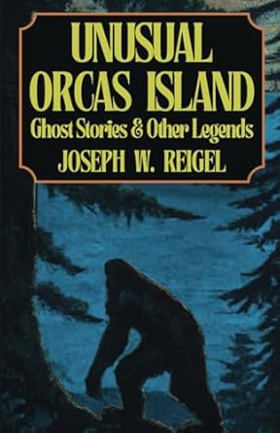
Orcas Island, Washington has long been celebrated for its rare beauty and colorful history—but for many visitors and locals alike, the feeling that something strange lurks beneath the surface is all too real. Does Sasquatch really stalk the remote woods? Did pirates bury a fortune on Turtleback Mountain? Is there a portal to a hidden world in Mount Constitution, and an Atlantean energy vortex in East Sound? With scores of articles, first-hand accounts, and historical photographs, Unusual Orcas Island attempts to shed light on these legends, and to uncover others that have never been collected before. CIRC [ 0 ]
|
2024 |