Catalog of British Columbiana and Pacific Northwest Americana
Encyclopedia Cascadia Catalog contains book titles of mostly non-fiction Pacific Northwest Coast of North America Titles (primarially British Columbia, Idaho, Oregon and Washington State) in an easy-to-understand title catalog. If you see a link with this badge ONLINE CIRC it means that there is an online institution that provides free access to that title. In some cases there may be more than one institution hosting the title digitally.
| Catalog Title | Published |
|---|---|
|
Too high and too steep reshaping Seattle's topography by David B. Williams 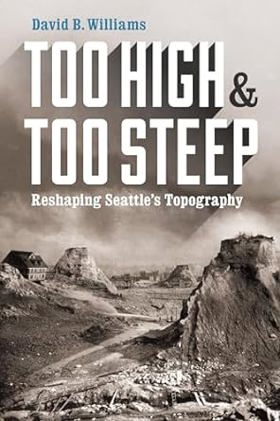
In Too High and Too Steep, David B. Williams uses his deep knowledge of Seattle, scientific background, and extensive research and interviews to illuminate the physical challenges and sometimes startling hubris of these large-scale transformations, from the filling in of the Duwamish tideflats to the massive regrading project that pared down Denny Hill. Residents and visitors in today’s Seattle would barely recognize the landscape that its founding settlers first encountered. As the city grew, its leaders and inhabitants dramatically altered its topography to accommodate their changing visions. In Too High and Too Steep, David B. Williams uses his deep knowledge of Seattle, scientific background, and extensive research and interviews to illuminate the physical challenges and sometimes startling hubris of these large-scale transformations, from the filling in of the Duwamish tideflats to the massive regrading project that pared down Denny Hill. In the course of telling this fascinating story, Williams helps readers find visible traces of the city’s former landscape and better understand Seattle as a place that has been radically reshaped. xxii, 239 pages : illustrations, maps ; 24 cm CIRC [ 1 ]
|
2015 |
|
At the hearth of the crossed races a French-Indian community in nineteenth-century Oregon, 1812-1859 by Melinda Marie Jetté 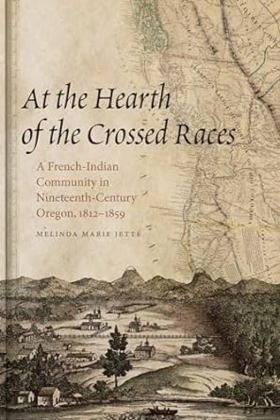
"Despite the force of Oregon's founding mythology, the Willamette Valley was not an empty Eden awaiting settlement by hardy American pioneers. Rather, it was, as Melinda Jette explores in At the Hearth of the Crossed Races, one of the earliest sites of extensive intercultural contact in the Pacific Northwest. Jette's study focuses on the 'hearth' of this contact: French Prairie, so named for the French-Indian families who resettled the homeland of the Ahantchuyuk Kalapuyans. Although these families sought a middle course in their relations with their various neighbors, their presence ultimately contributed to the Anglo-American colonization of the region. By establishing farming and husbandry operations in the valley, the French-Indian settlers enhanced the Willamette Valley's appeal as a destination of choice for the Anglo-Americans who later emigrated to the Pacific Northwest via the Oregon Trail. Upon these emigrants' arrival, the social space for the people of the 'crossed races' diminished considerably, as the Anglo-Americans instituted a system of settler colonialism based on racial exclusion. Like their Native kin, the French-Indian families pursued various strategies to navigate the changing times and Jette's study of French Prairie takes on the relationships among all three: the French-Indian families, the Indigenous peoples, and the Anglo-American settlers. With At the Hearth of the Crossed Races, Jette delivers a social history that deepens our understanding of the Oregon Country in the nineteenth century. This history of French Prairie provides a window into the multi-racial history of the Pacific Northwest and offers an alternative vision of early Oregon in the lives of the biracial French-Indian families whose community challenged notions of white supremacy, racial separation, and social exclusion"-- Provided by publisher xix, 337 pages : illustrations ; 23 cm. CIRC [ 1 ]
|
2015 |
|
Čáw pawá láakni = They are not forgotten Sahaptian place names atlas of the Cayuse, Umatilla, and Walla Walla by Eugene S. Hunn , E. Thomas Morning Owl , Phillip Cash Cash , Jennifer Karson Engum , Daniel B. Haug , Roberta Conner , Bruce Rigsby , John M. Chess , Modesta J. Minthorn 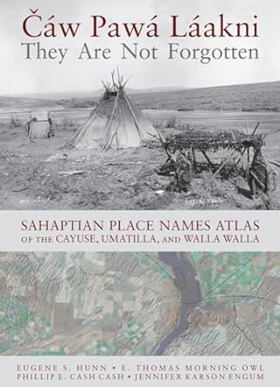
Cáw Pawá Láakni / They Are Not Forgotten is a book like none other. This ethnogeographic atlas of Native place names presents a compelling account of interactions between a homeland and its people. A project of the Tamástslikt Cultural Institute at the Confederated Tribes of the Umatilla Indian Reservation - composed of the Cayuse, Umatilla, and Walla Walla Tribes in eastern Oregon - Cáw Pawá Láakni documents and describes more than four hundred place names. The full-color, detailed maps and the narrative that introduces and supports them paint a picture of a way of life. This meticulous assemblage of memory and meaning echoes cultural and geographical information that has all but disappeared from common knowledge. To create this historical and cultural atlas of the Cayuse, Umatilla, and Walla Walla homeland, which spans the Columbia River and its tributaries from southeastern Washington to northeastern Oregon, ethnographic, traditional, and institutional knowledge was gathered together and incorporated into a GIS database to produce customized maps that present this knowledge. Many of the accounts are from the individuals who traveled on horseback, lived in and saw these places, and possessed knowledge that can no longer be replicated. In presenting these place-names, the Tribes strive to ensure the vitality of this communal knowledge into the future. In Cáw Pawá Láakni, places named in Indian languages are juxtaposed with sites that are central to the colonial period in the West, such as those described by the Lewis and Clark Expedition and those given to fur-trading posts, missions, and places on the Oregon Trail. The atlas adds a needed and vivid Native perspective to the written history and geography of Oregon and the West. xxi, 248 pages : illustrations (some color), color maps ; 30 cm CIRC [ 1 ]
|
2015 |
|
Watershed moments a pictorial history of Courtenay and district by Christine Dickinson , Judy Hagen , Deborah Griffiths , Catherine Siba , Courtenay and District Museum (Issuing body) 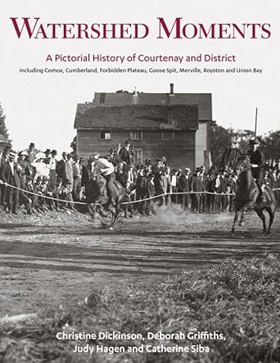
"In Watershed Moments, the Courtenay and District Museum opens its vast collection of historical photographs, glass plate negatives and other ephemera, much of which has never before been available to public viewing. Spanning from the late 1800s to the modern era, here are scenes of K'ómoks village life, boating parties, family celebrations, agricultural events and economic activities. This visual depiction of the development of this region is reinforced by a lively text, drawing heavily on the museum's vast holdings of primary source material."-- Provided by publisher xi, 195 pages : illustrations (some color), maps, portraits (some color) ; 29 cm CIRC [ 1 ]
|
2015 |
|
Uncharted waters the explorations of José Narváez (1768-1840) by Jim McDowell 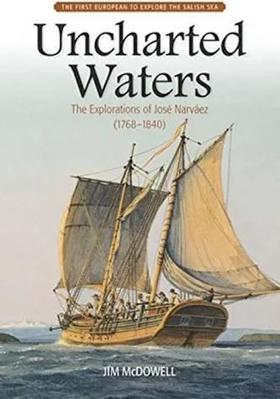
"Jim McDowell's new biography of the little-known Spanish explorer José María Narváez, reveals his significant discoveries during the European exploration of what is now Canada's Pacific Northwest Coast. Narváez was the first European to investigate a Russian fur-trading outpost in the Gulf of Alaska in 1788. The following year he became the first Spaniard to reconnoitre Juan de Fuca Strait. In 1791, he charted the interiors of three large inlets on Vancouver Island's West Coast, discovered a vast inland sea to the east (today's Salish Sea), mapped the entire gulf, made first contact with Aboriginal peoples in the area, and found the site of what became western Canada's largest city -- Vancouver, British Columbia. Narváez also undertook diplomatic missions around the Pacific Ocean, charted the waters of the Philippines, and engaged extensively in the political upheaval that transformed New Spain into Mexico between 1796 and his death in 1840"--Publisher's description 1 online resource CIRC [ 1 ]
|
2015 |
|
Fairhaven a history by Brian L. Griffin 
The complete history of that most southerly community on Bellingham Bay, one of the four original towns that were consolidated in 1904 to become the present City of Bellingham. Fairhaven, Washington--from the glaciers to today--the places, the participants, and the grand possibilities. A new arrival in 1889 said, "only crude raw beginnings, the primeval forest of giant firs and cedars barely pushed back to the hillsides, mud streets gouged out, raw with jumbled piles of burning stumps, flames and smoke obscuring the sky. On the beach, tents flap in the breeze and a few unpainted wooden structures suggest civilization is to come." In 2015, what would be recognizable to any of those old-timers would be the enterprising spirit of the latest inhabitants, who have done so much to create Fairhaven's modern growth and economic strength xi, 275 pages : illustrations, maps ; 26 cm CIRC [ 1 ]
|
2015 |
|
George Gibbs northwest array full reports, place names, word list, artifact names, and guide by George Gibbs , Jay Miller 
Essential information for Northwest tribes, traditions, languages, place names, and systematic word study by George Gibbs from the 1850s 266 pages ; 27 cm CIRC [ 1 ]
|
2015 |
|
Ozette excavating a Makah whaling village by Ruth Kirk 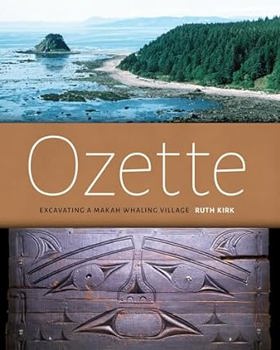
Makah families left the coastal village of Ozette in the 1920s to comply with the federal government's requirement that they send their children to school, and by doing so they ended nearly 2000 years of occupation at this strategic whale- and seal-hunting site on Washington's Olympic Peninsula ologist Richard Daugherty took note of the site in a survey of the coast in 1947 and later returned at the request of the Makah tribal chairman when storm waves began exposing both architecture and artifacts. Full-scale excavations from 1966 to 1981 evealed houses and their contents--including ordinarily perishable wood and basketry objects that had been buried in a mudflow well before the arrival of Europeans in the region xvii, 102 pages : illustrations, maps ; 26 cm CIRC [ 1 ]
|
2015 |
|
Where the waters begin the traditional Nisqually Indian history of Mount Rainier by Cecelia Svinth Carpenter 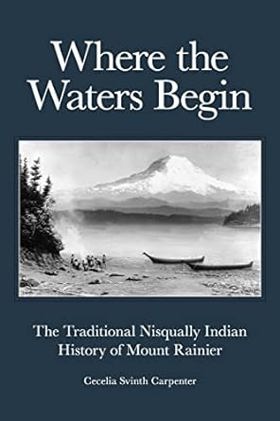
Where the Waters Begin takes us up the Nisqually side of Mount Rainier through the traditional beliefs of the Nisqually people and their relationship to the bountiful natural resources the mountain offered them. The Nisqually are the original stewards of the prairies, mountains, and rivers west of the mountain on lands that are now Thurston and Pierce Counties. Living in a more natural world, without the complexities of today, they developed a coexistence with nature that included respect and appreciation of its beneficent forces as well as fear of its darker sides. The deep connection the Nisqually people developed with the mountain they called Ta-co-bet is best related through their traditional stories. Author and Nisqually tribal historian Cecelia Svinth Carpenter brings those stories to life here in Where the Waters Begin: the Traditional Nisqually Indian History of Mount Rainier. 108 pages : illustrations, maps ; 23 cm CIRC [ 1 ]
|
2015 |
|
People of North Kitsap Peninsula by Hansville Historical Society 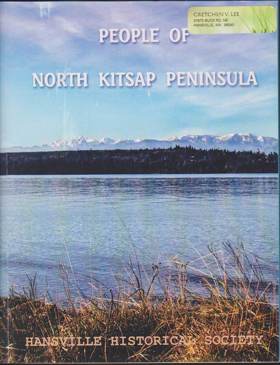
It is a history of the communities and families of the North Kitsap area beginning with the S'Klallam Tribe and moving north. Communities included are S'Klallam Tribe, Eglon, Hansville, Point No Point, Skunk Bay, Twin Spits, Foulweather Bluff, Cliffside, Driftwood Key, and Shore Woods. In addition to the community histories, personal histories of early families are included. --description from Hansville Historical Society Website 198 pages : illustrations ; 28 cm. CIRC [ 0 ]
|
2015 |
|
Forgotten tales of Idaho by Andy Weeks, Cait Brennan (Illustrator) 
Idaho was the forty-third state admitted to the Union, but it just might lead the nation in strange stories and offbeat legends. Author and Idaho resident Andy Weeks fills this collection of tales with stories ranging from compelling and heartfelt to outlandish and bizarre. Discover the boxcar that carried the alleged body of John Wilkes Booth through Idaho. Uncover the identity of Lady Bluebeard, the unassuming Twin Falls housewife who allegedly murdered four husbands. Find out how cars ended up at the bottom of Lake Coeur d'Alene. Learn the grisly story of Gobo Fango, a black Mormon sheepherder whose late 1800s bloody dispute with a cattleman on the open range proved fatal. These tales and many others bring to light Idaho's unruly past in fascinating detail 204 pages : illustrations ; 18 cm CIRC [ 0 ]
|
2015 |
|
Popular Day Hikes: South-Central Okanagan Kelowna, Penticton, Oliver by Gerry Shea 
Gerry Shea’s Popular Day Hikes: South-Central Okanagan serves as an accessible, comprehensive trail guide for exploring the diverse landscapes stretching from Kelowna and Penticton down to Oliver. The book details 35 distinct routes through the region, providing practical maps, elevation profiles, and trailhead directions across a striking cross-section of semi-arid bunchgrass, ponderosa pine forests, and dramatic canyon country. A keen insight drawn from the text is how outdoor recreation guidebooks in the interior Pacific Northwest function as quiet instruments of ecological management; by systematically channeling foot traffic onto designated paths, the guide helps protect fragile desert-ecosystem flora and sensitive wildlife habitats from the pressures of a booming regional tourism economy. 143 pages : colour illustrations, maps ; 22 cm. CIRC [ 0 ]
|
2015 |
|
The Salish Sea jewel of the Pacific Northwest by Audrey D. Benedict, Joseph K. Gaydos 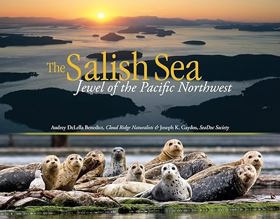
In stunning color photographs, and compelling stories, this keepsake book reveals the the Salish Sea, a unique ecosystem home to thousands of different species of mammals, birds, fish, reptiles, and macro-invertebrates. The Salish Sea region is an ecological jewel straddling the western border between Canada and the United States, connected to the Pacific Ocean primarily through the Strait of Juan de Fuca. There, lush and mossy old-growth forests meet waters with dazzlingly-colored anemones and majestic orcas. This is the first book of its kind to describe the Salish Sea, whose name was not even officially recognized until 2008. One of the world’s largest inland seas, the Salish Sea contains 6,535 square miles of sea surface area and 4,642 miles of coastline. This fascinating visual journey through the Salish Sea combines a scientist’s inquiring mind, dazzling full-color photographs, and a lively narrative of fascinating stories, all of which impart a sense of connection with this intricate marine ecosystem and the life that it sustains. xi, 147 pages : color illustrations ; 22 x 28 cm CIRC [ 0 ]
|
2015 |
|
A school for the people a photographic history of Oregon State University by Lawrence A. Landis 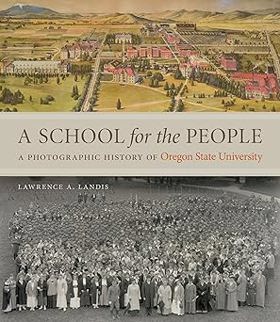
A School for the People tells the story of OSU’s nearly 150 years as a land grant institution through more than 500 photographs, maps, documents, and extensive captions. In-depth chapters focus on themes such as campus development, the growth of academics, the evolution of research as a major focus of the university, campus life and organizations, and, of course, athletics. A capsule history includes many of the iconic photographs associated with the university. As one of the first colleges and universities to offer photography as part of its curriculum in the early 1890s, OSU is well documented visually. Most of those photographic treasures have made their way into the holdings of the Special Collections & Archives Research Center at OSU’s Valley Library. Gleaned from hundreds of thousands of images at the Center, many of the photos included here have never before been seen by the general public. Written by a longtime archivist at OSU’s Special Collections & Archives Research Center, A School for the People tells the full, dynamic story of this multi-faceted and living university, documenting the inevitable ups and downs of the institution. Overflowing with visual riches, it will appeal to OSU alumni, faculty and staff, and anyone with an interest in the history of higher education in Oregon or land grant institutions generally. xi, 337 pages : illustrations (some color), portraits, facsimiles ; 30 cm CIRC [ 0 ]
|
2015 |
|
Building a better nest living lightly at home and in the world by Evelyn Searle Hess 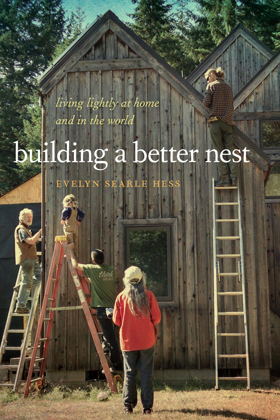
For fifteen years, Evelyn Hess and her husband David lived in a tent and trailer, without electricity or running water, on twenty acres of wild land in the foothills of the Oregon Coast Range. When they decided to build a house – a real house at last – they knew it would have to respect the lessons of simple living that they learned in their camping life. They knew they could not do it alone. Building a Better Nest chronicles their adventures as they begin to construct a house of their own, seeking a model for sustainable living not just in their home, but beyond its walls. What does it mean to build a better nest? Better for whom? Is it better for the individual or family? The planet? Green building and sustainable design are popular buzzwords, but to Hess, sustainable building is not a simple matter of buying and installing the latest recycled flooring products. It is also about cooperative work: working together in employment, in research, in activism, and in life. Hess is concerned with her local watershed, but also with the widening income gap, disappearing species, and peak resources. She actively works to reduce overconsumption and waste. For Hess, these problems are both philosophical and practical. As Hess and her husband age, the questions of how to live responsibly arise with greater frequency and urgency. With unfailing wit and humor, she looks for answers in such places as neuroscience, Buddhism, and her ancestral legacy. Building a Better Nest will appeal to anyone with an interest in sustainable building, off-grid living, or alternative communities. The questions it asks about the way we live are earnest and important, from an author whose voice is steeped in wisdom and gratitude. 191 pages ; 23 cm CIRC [ 0 ]
|
2015 |
|
Money trees the Douglas fir and American forestry, 1900-1944 by Emily K. Brock 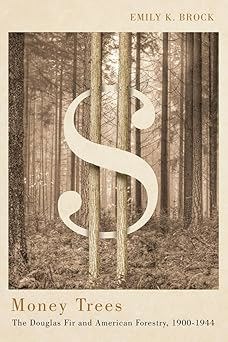
"Around the start of the last century, the forests of the Pacific Northwest were viewed as dynamic sites of industrial production, and also as natural landscapes of ecological integrity. These competing visions arose as the nation's professional foresters faced conflicting demands from lumber companies and government regulators. External pressures converged with internal scientific debates within the profession, leading foresters to question the proper scope of their work. Money Trees is an interdisciplinary history of the crucial decades that shaped the modern American conception of the value of the forest. It begins with early twentieth century environmental changes in the Douglas Fir forests of the Pacific Northwest, which led to increasing divisiveness and controversy among foresters. Brock balances this regional story with a national view of the intellectual and political currents that governed forest management, marshaling archival evidence from industry, government, and scientific sources. An important contribution to environmental scholarship, Money Trees offers a nuanced vision of forestry's history and its past relationship to both wilderness activism and scientific ecology. With fresh perspectives on well-known environmental figures such as Bob Marshall and Gifford Pinchot, it will add to the conversation among scholars in environmental history, history of science, and the history of the American West. It will be welcomed as a key resource across the spectrum of environmental studies, and by anyone interested in natural resources, land management, the role of science in environmentalism, and the modern wilderness movement."-- Back cover 272 pages : illustrations, map ; 23 cm CIRC [ 0 ]
|
2015 |
|
Naked in the woods my unexpected years in a hippie commune by Margaret Grundstein 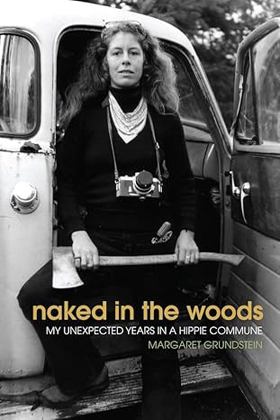
"In 1970, Margaret Grundstein abandoned her graduate degree at Yale and followed her husband, an Indonesian prince and community activist, to a commune in the backwoods of Oregon. Together with ten friends and an ever-changing mix of strangers, they began to build their vision of utopia. Naked in the Woods chronicles Grundstein's shift from reluctant hippie to committed utopian--sacrificing phones, electricity, and running water to live on 160 acres of remote forest with nothing but a drafty cabin and each other. Grundstein, (whose husband left, seduced by "freer love") faced tough choices. Could she make it as a single woman in man's country? Did she still want to? How committed was she to her new life? Although she reveled in the shared transcendence of communal life deep in the natural world, disillusionment slowly eroded the dream. Brotherhood frayed when food became scarce. Rifts formed over land ownership. Dogma and reality clashed. Many people, baby boomers and millennials alike, have romantic notions about the 1960s and 70s. Grundstein's vivid account offers an unflinching, authentic portrait of this iconic and often misreported time in American history. Accompanied by a collection of distinctive photographs she took at the time, Naked in the Woods draws readers into a period of convulsive social change and raises timeless questions: how far must we venture to find the meaning we seek, and is it ever far out enough to escape our ingrained human nature?"-- Provided by publisher 212 pages : illustrations ; 23 cm CIRC [ 0 ]
|
2015 |
|
A man for all seasons Monroe Sweetland and the liberal paradox by William G. Robbins 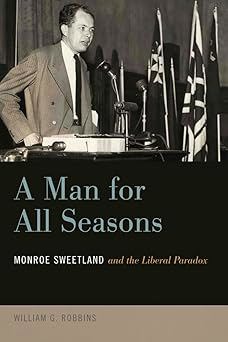
"The life of prominent Oregon political leader Monroe Sweetland spans the spectrum of 20th-century America. Through seven decades, Sweetland experienced the economic collapse of the Great Depression, the unparalleled violence of a nation at war, the divisiveness of Cold War politics, and the cultural and political turmoil of the Vietnam War. Historian William G. Robbins illuminates the wrenching transformation of American political culture in A Man for All Seasons : Monroe Sweetland and the Liberal Paradox. Racial and economic inequalities motivated much of Sweetland's civic life, including his lifelong memberships in the American Civil Liberties Committee, the National Association for the Advancement of Colored People, the Urban League, the Japanese American Citizens League, and the Red Cross, where Sweetland worked repatriating American prisoners of war after Japan's surrender. Robbins' portrait is holistic, exploring Sweetland's socialist beginnings, inconsistencies in his politics--especially during the Cold War--and his regional legacy. He was the most important person in the resurgence of the modern, liberal Oregon Democratic Party from the late 1940s to the 1960s. He joined the National Education Association in 1964 and became the driving force behind the Bilingual Education Act of 1968 and the fight for the age-18 vote, achieved in the ratification of the 26th amendment in 1971. Monroe Sweetland was a nationally prominent figure, whose fights bequeathed to modern America important legislation that shaped its political landscape"-- Provided by publisher xi, 300 pages ; 24 cm CIRC [ 0 ]
|
2015 |
|
Shaping the public good women making history in the Pacific Northwest by Susan H. Armitage 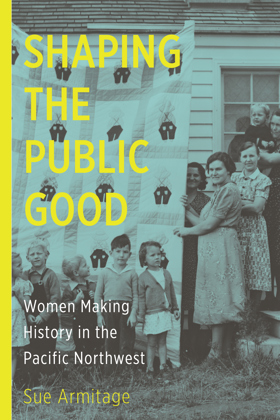
"Carved into a rock overlooking the Columbia River stands the arresting image of Tsagigla'lal, or "She Who Watches," an ancient female chief. As the Wishram people recount, when men replaced women in positions of power, Tsagigla'lal was turned to stone by Coyote so that she could forever guide her community and guard its development. Using the story of She Who Watches as her guide, Armitage shows that even though women were barred from positions of public authority until recently, they have always worked quietly and informally to assure the stability and security of their families and communities. Women's community-building and cooperative skills have been decisive in developing the societies of the Pacific Northwest--Washington, Oregon, Idaho, western Montana, and British Columbia. Like She Who Watches, women have never been mere observers, but watchful guardians and active shapers of the public good. Drawing on her three decades of research and teaching and based on hundreds of secondary sources, Armitage's account explores the varied ways in which, beginning in the earliest times and continuing to the present, women of all races and ethnicities have made the history of our region. An accessible introduction for general readers and scholars alike, Shaping the Public Good restores a missing piece of Pacific Northwest history by demonstrating the part that women--"the famous, the forgotten, and all the women in between"--have always played in establishing their families and building communities."-- Provided by publisher 349 pages : illustrations ; 23 cm CIRC [ 0 ]
|
2015 |
|
The color of night race, railroaders, and murder in the wartime West by Max G. Geier 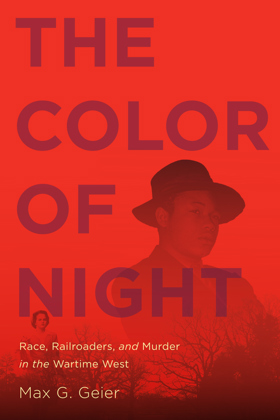
"On an unusually cold January night in 1943, Martha James was murdered on a train in rural Oregon, near the Willamette Valley town of Albany. She was White, Southern, and newly-married to a Navy pilot. Despite inconsistent and contradictory eyewitness accounts, a young Black cook by the name of Robert Folkes, a trainman from South Central Los Angeles, was charged with the crime. The ensuing investigation and sensational murder trial captured national attention during a period of intense wartime fervor and extensive Black domestic migration. Folkes' trial and controversial conviction--resulting in his execution by the state of Oregon--reshaped how Oregonians and others in the West thought about race, class, and privilege. In this deeply researched and detailed account, Geier explores how race, gender, and class affected the attitudes of local town-folk, law officers, and courtroom jurors toward Black trainmen on the West Coast, at a time when militarization skewed perceptions of virtue, status, and authority. He delves into the working conditions and experiences of unionized Black trainmen in their 'home and away' lives in Los Angeles and Portland, while illuminating the different ways that they, and other residents of Oregon and southern California, responded to news of 'Oregon's murdered war bride.' Reporters, civil rights activists, and curiosity seekers transformed the trial and appeals process into a public melodrama. The investigation, trial, and conviction of Robert Folkes galvanized civil rights activists, labor organizers, and community leaders into challenging the flawed judicial process and ultimately the death penalty in Oregon, serving as a catalyst for civil rights activism that bridged rural and urban divides. The Color of Night will appeal to 'true crime' aficionados, and to anyone interested in the history of race and labor relations, working conditions, community priorities, and attitudes toward the death penalty in the first half of the 20th century"-- Provided by publisher 374 pages : illustrations ; 23 cm CIRC [ 0 ]
|
2015 |
|
Wild in the Willamette exploring the Mid-Valley's parks, trails, and natural areas by Lorraine Anderson, Abby P. Metzger 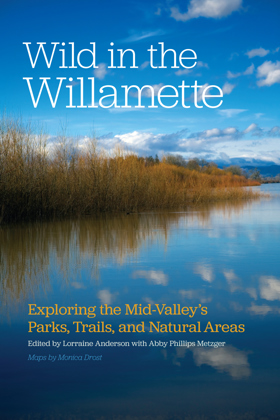
Located between the population centers of Portland and Eugene, Oregon’s Willamette Valley boasts rich opportunities for outdoor recreation that are too often overlooked. Wild in the Willamette is a guidebook to the natural treasures of the mid-Willamette Valley, extending far beyond the familiar I-5 corridor. Sprinkled with natural history sidebars and infused with essays by notable local authors, it aims to connect residents and visitors with the best hiking, biking, and paddling opportunities the mid-Valley offers. With a special focus on seven watersheds—the Marys, Calapooia, South Santiam, North Santiam, Luckiamute, Yamhill, and Pudding—as well as the middle portion of the main stem Willamette River, the book describes a range of outings at different levels of challenge. Families with young children, day hikers, long-distance backpackers, kayakers, canoeists, bird watchers, and cyclists alike will find ideas for spending a satisfying afternoon or venturing outside for a multiday trip. Whether choosing a wheelchair-accessible trail, a rugged hike in a wilderness area, a dip in a rocky swimming hole, a paddle on the broad Willamette, or a bike ride through farmland—whether lifetime residents or week-long visitors—outdoor enthusiasts will benefit from detailed notes on the history and ecology of this special place. Armchair travelers will also find reward in the book’s literary and natural history offerings. Generously illustrated with maps and keys to the area’s many attractions, Wild in the Willamette, a companion volume to the Portland-Vancouver region’s Wild in the City, is an essential guide to the natural wonders of Oregon’s mid-Willamette Valley. xxi, 306 pages ; 23 cm CIRC [ 0 ]
|
2015 |
|
Outsiders in a promised land religious activists in Pacific Northwest history by Dale Edward Soden 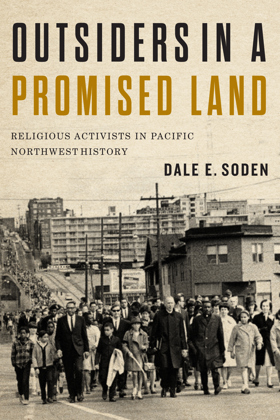
"Outsiders in a Promised Land explores the role that religious activists have played in shaping the culture of the Pacific Northwest, particularly in Washington and Oregon, from the middle of the 19th century onward. The region's earliest settlers came to work in the mines and forests, and a culture of saloons, gambling halls, and brothels grew up to serve them. When migration to the region intensified, newcomers with families and religious traditions often saw themselves as outsiders in opposition to the prevailing frontier culture. As communities grew in population, early activists found common ground in a desire to protect women and children, and make their towns more hospitable to religious values. Protestants, Catholics, and Jews worked together to transform communities. Together they introduced public and private schools, health care institutions, libraries and orphanages, and lobbied for the prohibition of alcohol. Beginning in the 1930s, religious activism played a crucial role in the emerging culture wars between liberals and conservatives. Liberals rallied around the protection of civil rights and the building of social safety nets, while conservatives decried the rise of secularism, liberalism, and communism. Today, religious activists of many faiths are deeply engaged in matters related to women's and gay rights, foreign policy, and environmental protection. Outsiders in a Promised Land is a meticulously researched, comprehensive treatment of religion in Pacific Northwest public life from the middle of the nineteenth century to the present. The first book of its kind, it is destined to be an essential reference for scholars, activists, and religious leaders of all faiths."-- Provided by publisher xiii, 306 pages : illustrations, portraits ; 23 cm CIRC [ 0 ]
|
2015 |
|
Living off the Pacific Ocean floor stories of a commercial fisherman by George Moskovita 
In this authentic account of a seafaring life, Captain George Moskovita offers a highly personal and often humorous look at the career of a commercial fisherman. George Moskovita was sixteen when he graduated from high school in Bellingham, Washington, and went to sea. Fishing would take him crabbing off Alaska, seining for sardines off California and for tuna off Mexico, and catching soupfin sharks for their livers (a vital source of Vitamin A during World War II). He came to Astoria, Oregon, in 1939, where he was a pioneer of the Oregon ocean perch fishery. In a career that spanned over 60 years, George Moskovita met with many maritime adventures, recounted for the reader in a clear, direct, and unsentimental style. He saw the fishery he had helped build devastated by foreign factory processing ships. He bought, repaired, traded, and sank more boats than most fishermen would work on in a lifetime. Along the way, he managed to raise four daughters with his wife, June. The name of one of his last boats, the Four Daughters, reflects the central importance of family life to a man who was often at sea. Moskovita's memoir provides a unique glimpse of Pacific maritime life in the 20th century, small-town coastal life after World War II, and the early days of fishery development in Oregon. With an introduction and textual notes by Carmel Finley, an historian of science, and Mary Hunsicker, an aquatic and fisheries scientist, this book will be invaluable to fishery students and professionals interested in the biology, ecology, and history of oceans and commercial fishing. It will also have broad appeal to readers of Oregon history and maritime adventure, and anyone else who has ever stood at the western edge of the continent and wondered what life was like at sea xxiii, 137 pages : illustrations ; 23 cm CIRC [ 0 ]
|
2015 |
|
Marie Equi radical politics and outlaw passions by Michael Helquist 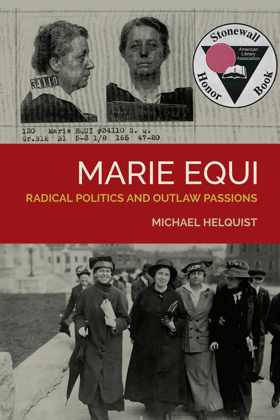
Named a 2016 Stonewall Honor Book by the American Library Association, Marie Equi explores the fiercely independent life of an extraordinary woman. Born of Italian-Irish parents in 1872, Marie Equi endured childhood labor in a gritty Massachusetts textile mill before fleeing to an Oregon homestead with her first longtime woman companion, who described her as impulsive, earnest, and kind-hearted. These traits, along with courage, stubborn resolve, and a passion for justice, propelled Equi through an unparalleled life journey. Equi self-studied her way into a San Francisco medical school and then obtained her license in Portland to become one of the first practicing woman physicians in the Pacific Northwest. From Pendleton, Portland, Seattle and beyond to Boston and San Francisco, she leveraged her professional status to fight for woman suffrage, labor rights, and reproductive freedom. She mounted soapboxes, fought with police, and spent a night in jail with birth control advocate Margaret Sanger. Equi marched so often with unemployed men that the media referred to them as her army. She battled for economic justice at every turn and protested the U.S. entry into World War I, leading to a conviction for sedition and a three-year sentence in San Quentin. Breaking boundaries in all facets of life, she became the first well-known lesbian in Oregon, and her same-sex affairs figured prominently in a U.S. Supreme Court case. Marie Equi is a finely written, rigorously researched account of a woman of consequence, who one fellow-activist considered “the most interesting woman that ever lived in this state, certainly the most fascinating, colorful, and flamboyant.” This much-anticipated biography will engage anyone interested in Pacific Northwest history, women’s studies, the history of lesbian and gay rights, and the personal demands of political activism. It is the inspiring story of a singular woman who was not afraid to take risks, who refused to compromise her principles in the face of enormous opposition and adversity, and who paid a steep personal price for living by her convictions. 310 pages : illustrations ; 23 cm CIRC [ 0 ]
|
2015 |
|
Breaking ground the Lower Elwha Klallam Tribe and the unearthing of Tse-whit-zen village by Lynda Mapes 
In 2003, a backhoe operator hired by the state of Washington to work on the Port Angeles waterfront discovered what a larger world would soon learn. The place chosen to dig a massive dry dock was atop one of the largest and oldest Indian village sites ever found in the region. Yet the state continued its project, disturbing hundreds of burials and unearthing more than 10,000 artifacts at Tse-whit-zen village, the heart of the long-buried homeland of the Klallam people. Excitement at the archaeological find of a generation gave way to anguish as tribal members working alongside state construction workers encountered more and more human remains, including many intact burials. Finally, tribal members said the words that stopped the project: "Enough is enough." Soon after, Lower Elwha Klallam Tribe chairwoman Frances Charles asked the state to walk away from more than $70 million in public money already spent on the project and find a new site. The state, in an unprecedented and controversial decision that reverberated around the nation, agreed. In search of the story behind the story, Seattle Times reporter Lynda V. Mapes spent more than a year interviewing tribal members, archaeologists, historians, city and state officials, and local residents and business leaders. Her account begins with the history of Tse-whit-zen village, and the nineteenth- and twentieth-century impacts of contact, forced assimilation, and industrialization. She then engages all the voices involved in the dry dock controversy to explore how the site was chosen, and how the decisions were made first to proceed and then to abandon the project, as well as the aftermath and implications of those controversial choices. This beautifully crafted and compassionate account, illustrated with nearly 100 photographs, illuminates the collective amnesia that led to the choice of the Port Angeles construction site. "You have to know your past in order to build your future," Charles says, recounting the words of tribal elders. Breaking Ground takes that teaching to heart, demonstrating that the lessons of Tse-whit-zen are teachings from which we all may benefit. 1 volume : illustrations (colour) CIRC [ 0 ]
|
2015 |