Catalog of British Columbiana and Pacific Northwest Americana
Encyclopedia Cascadia Catalog contains book titles of mostly non-fiction Pacific Northwest Coast of North America Titles (primarially British Columbia, Idaho, Oregon and Washington State) in an easy-to-understand title catalog. If you see a link with this badge ONLINE CIRC it means that there is an online institution that provides free access to that title. In some cases there may be more than one institution hosting the title digitally.
| Catalog Title | Published |
|---|---|
|
Portlandness a cultural atlas by David Banis , Hunter Shobe , Corinna Kimball-Brown (Cartographer), Randy Morris (Cartographer), Jon Franczyk (Cartographer), Daniel E. Coe (Cartographer), Kirk McEwen (Cartographer), Joan Lundell (Book designer) 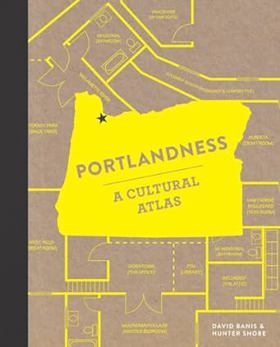
Summary: In 150 inforgraphic maps, two leading geographers explore Portland, Oregon, through unexpected topics such as city chickens, wild coyote encounters, food-truck trends, and coffee culture. Each map starts with the gathering of at least one data set about a given topic, then translating that into visual form which blends traditional cartographic skills with modern graphic design 190 pages : illustrations (chiefly color), color maps, color plans ; 26 cm CIRC [ 1 ]
|
2015 |
|
Chinookan peoples of the lower Columbia by Robert T. Boyd , Kenneth M. Ames , Tony A. Johnson 
"Chinookan peoples have lived on the Lower Columbia River for millennia. Today they are one of the most significant Native groups in the Pacific Northwest, although the Chinook Tribe is still unrecognized by the United States government. In Chinookan Peoples of the Lower Columbia, scholars provide a deep and wide-ranging picture of the landscape and resources of the Chinookan homeland and the history and culture of a people over time, from 10,000 years ago to the present. They draw on research by archaeologists, ethnologists, scientists, and historians, inspired in part by the discovery of several Chinookan village sites, particularly Cathlapotle, a village on the Columbia River floodplain near the Portland-Vancouver metropolitan area. Their accumulated scholarship, along with contributions by members of the Chinook and related tribes, introduces readers to Chinookan history and culture in rich and sometimes surprising ways."--Back covers xix, 419 pages, 18 unnumbered pages of plates : illustrations, maps, portraits ; 23 cm CIRC [ 1 ]
|
2015 |
|
Stories of Richmond Beach growing up in Richmond Beach on Puget Sound in the 1930's and 40's by Norman R. Hansen , Barry W. Hansen 
"Think of the time when settlers came to the area north of Seattle. This forested area along scenic Puget Sound attracted those willing to work the land, including my ancestors in the early 1900s on both sides of my family. I grew up in Richmond Beach on the property settled by my great-grandfather Morton M. Anderson. Read these stories and think of the aroma of strawberries, freshly baked bread, linen on the clothesline, water from a pump, hay bales, leather saddles on horses, fresh salt air, cleanly cut lumber, a whiff of chickens, and a hint of Flamo. There are many pictures from our family to fill in the details"-- Publisher description x, 207 pages : illustrations ; maps ; portraits ; 23 cm CIRC [ 1 ]
|
2015 |
|
Tulalip, from my heart an autobiographical account of a reservation community by Harriette Shelton Dover 
"In Tulalip, from My Heart, Harriette Shelton Dover describes her life on the Tulalip Reservation and recounts the myriad problems tribes faced after resettlement. Born in 1904, Dover grew up hearing the elders of her tribe tell of the hardships involved in moving from their villages to the reservation on Tulalip Bay: inadequate food and water, harsh economic conditions, and religious persecution outlawing potlatch houses and other ceremonial practices. Dover herself spent ten traumatic months every year in an Indian boarding school, an experience that developed her political consciousness and keen sense of justice. The first Indian woman to serve on the Tulalip board of directors, Dover describes her story in a personal, often fierce style, revealing her tribe's powerful ties and enduring loyalty to land now occupied by others." -- Publisher website xxxiv, 307 pages : illustrations, maps ; 24 cm CIRC [ 1 ]
|
2015 |
|
Good times in old Genesee a tale of two families by Gerald Hickman , Tea Joe Hickman 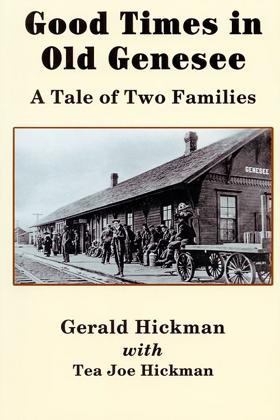
It's a personal and historical recollection of Genesee, Idaho from a former resident, a trip in time to his childhood ranch and beyond, back to the pioneers, in the Genesee valley of North-Central Idaho. It's a visit to Old Genesee, a small community deep in the winter snows and summer grains where his family found a place for themselves. The book covers the period from the first settlers of the 1870s to World War II. It describes the natural history of the area, the early town, and the farming and country life of the early pioneers and those who followed, as engines replaced horses out in the fields. With help from his granddaughter Tea Joe, Gerald Hickman shares his love of Western U.S. history in Good Times in Old Genesee. It's a trip in time to his childhood ranch and beyond, back to the pioneers, in the Genesee valley of North-Central Idaho. It's a visit to Old Genesee, a small community deep in the winter snows and summer grains where his family found a place for themselves. The book covers the period from the first settlers of the 1870s to World War II. It describes the natural history of the area, the early town, and the farming and country life of the early pioneers and those who followed, as engines replaced horses out in the fields. Gerald lives in Eastern Washington near the rolling Palouse hills that stretch out southward to Genesee, with Micky, his childhood bride of 47 years. They have three grown daughters, a dog named Spot, and a cat named Lilly. He is preparing another book on the Indian Wars 1850 through 1865. 107 pages : illustrations, map ; 20 cm CIRC [ 0 ]
|
2015 |
|
Embracing a Western Identity Jewish Oregonians, 1849-1950 by Ellen Eisenberg 
Not all of Oregon’s pioneers were Christian farmers or bachelor prospectors. Indeed, many of the first brick buildings on Oregon’s newly platted Main Streets were built by Jewish merchants whose services were essential to town founding and growth. In Embracing a Western Identity, Ellen Eisenberg places Jewish history in the larger context of western narratives, challenging the traditional view that the “authentic” North American Jewish experience stems from New York. The westward paths of Jewish Oregonians and their experiences of place shaped the communities, institutions, and identities they created, distinguishing them from other American Jewish communities. Eisenberg traces the Oregon Jewish experience from its pioneer beginnings in the mid-nineteenth century to the highly concentrated Portland communities of the mid-twentieth century. Drawing on extensive archival resources at the Oregon Jewish Museum, this historical commentary explores patterns of migration and settlement, the place of Jews in the state’s ethnic landscape, their engagement in politics, the development of institutions, and their relationship to Zionism. Departing from familiar treatments of the Jewish experience, Embracing a Western Identity provides a critical look at the impact of place and opportunity upon the identities of migrants both as Oregonians and as American Jews. Readers and scholars interested in western history—religious, ethnic, expansionist, and otherwise—will enjoy Eisenberg’s accessible writing style and rich photograph collection. x, 292 pages : illustrations ; 23 cm CIRC [ 0 ]
|
2015 |
|
Henry M. Jackson a life in politics by Robert Gordon Kaufman 
Henry M. Jackson ranks as one of the great legislators in American history. With a Congressional career spanning the tenure of nine Presidents, Jackson had an enormous impact on the most crucial foreign policy and defense issues of the Cold War era, as well as a marked impact on energy policy, civil rights, and other watershed issues in domestic politics. Jackson first arrived in Washington, D.C., in January 1941 as the Democratic representative of the Second District of Washington State, at the age of 28 the youngest member of Congress. “Scoop” Jackson won reelection time and again by wide margins, moving to the Senate in 1953 and serving there until his death in 1983. He became a powerful voice in U.S. foreign policy and a leading influence in major domestic legislation, especially concerning natural resources, energy, and the environment, working effectively with Senator Warren Magnuson to bring considerable federal investment to Washington State. A standard bearer for the New Deal-Fair Deal tradition of Roosevelt and Truman, Jackson advocated a strong role for the federal government in the economy, health care, and civil rights. He was a firm believer in public control of electric and nuclear power, and leveled stern criticism at the oil industry’s “obscene profits” during the energy crisis of the 1970s. He ran for the presidency twice, in 1972 and 1976, but was defeated for the nomination first by George McGovern and then by Jimmy Carter, marking the beginning of a split between dovish and hawkish liberal Democrats that would not be mended until the ascendance of Bill Clinton. Jackson’s vision concerning America’s Cold War objectives owed much to Harry Truman’s approach to world affairs but, ironically, found its best manifestation in the actions taken by the Republican administration of Ronald Reagan. An early and strong supporter of Israel and of Soviet dissidents, he strongly opposed the Nixon/Kissinger policy of detente as well as many of Carter’s methods of dealing with the Soviet Union. Robert Kaufman has immersed himself in the life and times of Jackson, poring over the more than 1,500 boxes of written materials and tapes that make up the Jackson Papers housed at the University of Washington, as well as the collections of every presidential library from Kennedy through Reagan. He interviewed many people who knew Jackson, both friends and rivals, and consulted other archival materials and published sources dealing with Jackson, relevant U.S. political history and commentary, arms negotiation documents, and congressional reports. He uses this wealth of material to present a thoughtful and encompassing picture of the ideas and policies that shaped America’s Cold War philosophy and actions. x, 548 pages, 24 unnumbered pages of plates : portraits ; 23 cm CIRC [ 0 ]
|
2015 |
|
Warren G. Magnuson and the shaping of twentieth-century America by Shelby Scates 
Warren G. Magnuson served as U.S. senator from the state of Washington for six terms. The sheer sweep of his accomplishments is astonishing: authoring the 1964 Civil Rights Act, protecting Puget Sound, saving Boeing for Seattle, championing consumer protection legislation, reorganizing the railroads, and godfathering the electrification of the Pacific Northwest by pressing for Columbia and Snake River dams. He pushed for federal aid to education, kept Pentagon budgets down, and established the National Institutes of Health while arguing throughout the McCarthy era against U.S. isolation from China. He was also a whiskey-and-poker companion to Presidents Roosevelt, Truman, Kennedy, and Johnson ix, 360 pages : illustrations ; 23 cm. CIRC [ 0 ]
|
2015 |
|
Northwest Coast Indian art an analysis of form by Bill Holm 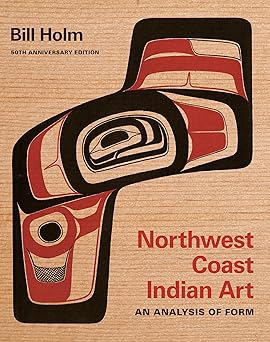
"The masterworks of Northwest Coast Native artists are admired today as among the great achievemments of the world's artists. The painted and carved wooden screens, chests and boxes, rattles, crest hats, and other artworks display the complex and sophisticated northern Northwest Coast style of art that is the visual language used to illustrate inherited crests and tell family stories. In the 1950s Bill Holm, a graduate student of Dr. Erna Gunther, former director of the Burke Museum, began a systematic study of northern Northwest Coast art. In 1965, after studying hundreds of bentwood boxes and chests, he published Northwest Coast Indian Art: An Analysis of Form, a foundational reference on northern Northwest coast Native art. Through his careful studies, Holm described this visual language using terminology that has become part of the established vocabularly that allows us to talk about works like these and understand changes in style both through time and among individual artists' styles. Holm examines how these pieces, although varied in origin, material, size, and purpose, are related to a surprising degree in the organization and form of their two-dimensional surface decoration. Holm presents an incisive analysis of the use of color, line, and texture; the organization of space; and such typical forms as ovoids, eyelids, U forms, and hands and feet. The evidence on which he based his conclusions constitutes a repository of valuable information for all succeeding researchers in the field." --Inside front cover xxvii, 114 pages : illustrations (some color), color map ; 24 cm. CIRC [ 0 ]
|
2015 |
|
In the spirit of the ancestors contemporary northwest coast art at the Burke Museum by Burke Museum of Natural History and Culture, Robin Kathleen Wright , Kathryn B. Bunn-Marcuse , Shaun Peterson 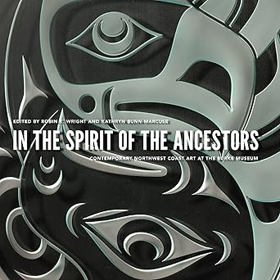
"In the Spirit of the Ancestors celebrates the vitality of contemporary Pacific Northwest Coast art by showcasing a selection of objects from the Burke Museum's collection of more than 2,400 late-twentieth- and early-twenty-first-century Native American works. Essays focus on contemporary art while exploring the important historical precedents on which so many artists rely for training and inspiration. Margaret Blackman reflects on building one of the largest collections of Northwest Coast serigraphs, and Joe David reminisces about his artistic journey through mask-making. Shaun Peterson, Lisa Telford, and Evelyn Vanderhoop discuss the historical precedents for working in styles that were kept alive only by a few critical artists and are now making a comeback. Robin K. Wright explores the history of box drums and their revival. Emily Moore discusses the repatriation of two stolen house posts and proposes a new concept of "propatriation" to describe the resulting commissioning of contemporary posts to take their place. Kathryn Bunn-Marcuse explores the power of adornment and how clothing, jewelry, and personal adornments like tattooing express tribal and personal identity in ways both connected to the past and grounded in the present. The diversity of approaches presented by these contributors speaks to artists, collectors, academics, tribal communities, and all those interested in Pacific Northwest Coast art. Splendid color photographs of works never before published will delight everyone. Robin K. Wright is curator of Native American art at the Burke Museum, director of the Bill Holm Center for the Study of Northwest Coast Art, and professor of art history at the University of Washington, Seattle. She is the author of Northern Haida Master Carvers. Kathryn Bunn-Marcuse is assistant director of the Bill Holm Center for the Study of Northwest Coast Art"-- Provided by publisher ix, 150 pages : illustrations ; 27 cm. CIRC [ 0 ]
|
2015 |
|
The lost rescue parallel diaries of the advance party from the Lost Wagon Train of 1853 with a history of the lost wagon trains of 1845 and 1853 by Daniel Owen, Andrew S. McClure, Benjamin Franklin Owen 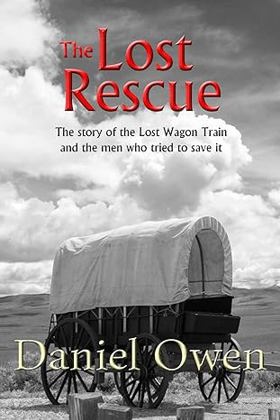
In 1853, a wagon train camped in the Eastern Oregon desert, 130 miles from the Oregon Trail. Uncertain of their whereabouts and in desperate need of supplies, they sent a scouting party over the mountains for help. This is the true story of Elijah Elliott’s “Advance Party.” Becoming lost in the Three Sisters Wilderness, they tell their own story of starvation and loyalty through two parallel diaries. Known as the Lost Rescue, the scouting party was the first known group of Euro-Americans to cross the Cascade Mountains through the Three Sisters Wilderness Area.The Lost Rescue contains a complete history of the Meek Cutoff. In 1845, while facing threats from the Walla Walla and Cayuse Nations, Stephen Meek led 1,050 men, women and children into the wilderness, seeking a short-cut across the Eastern Oregon desert. Poorly supplied and facing a mysterious illness, they forged a new path through the desert. In 1853, Elijah Elliott attempted to lead a large group on the same cutoff. After a costly wrong turn, Elliott found himself at the mercy of an angry mob. As they journeyed west, the starving train made their own way across the desert, facing hunger and intense thirst. In an act of desperation, the emigrants set their animals free, and followed them to the distant waters of the Deschutes River. xiii, 236 pages : illustrated, maps, portraits ; 23 cm CIRC [ 0 ]
|
2015 |
|
The tanoak tree an environmental history of a Pacific Coast hardwood by Frederica Bowcutt 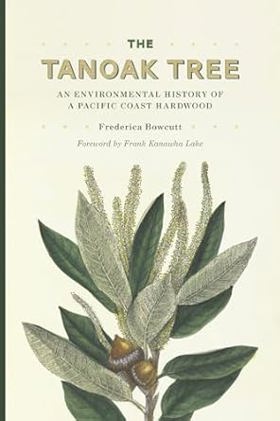
Tanoak (Notholithocarpus densiflorus) is a resilient and common hardwood tree native to California and southwestern Oregon. People’s radically different perceptions of it have ranged from treasured food plant to cash crop to trash tree. Having studied the patterns of tanoak use and abuse for nearly twenty years, botanist Frederica Bowcutt uncovers a complex history of cultural, sociopolitical, and economic factors affecting the tree’s fate. Still valued by indigenous communities for its nutritious acorn nut, the tree has also been a source of raw resources for a variety of industries since white settlement of western North America. Despite ongoing protests, tanoaks are now commonly killed with herbicides in industrial forests in favor of more commercially valuable coast redwood and Douglas-fir. As one nontoxic alternative, many foresters and communities promote locally controlled, third-party certified sustainable hardwood production using tanoak, which doesn’t depend on clearcutting and herbicide use. Today tanoaks are experiencing massive die-offs due to sudden oak death, an introduced disease. Bowcutt examines the complex set of factors that set the stage for the tree’s current ecological crisis. The end of the book focuses on hopeful changes including reintroduction of low-intensity burning to reduce conifer competition for tanoaks, emerging disease resistance in some trees, and new partnerships among tanoak defenders, including botanists, foresters, Native Americans, and plant pathologists. xvi, 219 pages : illustrations, maps ; 24 cm CIRC [ 0 ]
|
2015 |
|
Reasons to go outside a Seattle parks project by James Mitchell , Jackson Quall (Author, Photographer) 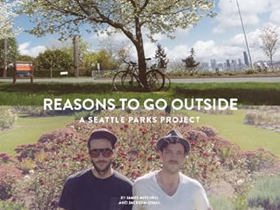
A collection of photographs taken at each of Seattle's 334 parks. Includes a brief history of Seattle parks, location and size of each park, and comments on the photographs. Our names are James and Jackson. In October of 2009 we made the decision to visit and take a photograph at every park in our hometown of Seattle, Washington; a city known for its natural beauty best observed through its exceptional park system. The basic idea was to include ourselves and the rainbow colored park sign that welcomes you to each park in each photograph to more or less "prove" we were there. It ended up taking us 3 years and 8 months to visit every one. We rode our bicycles to 207 of the parks and were able to include 187 different people in the project: some old friends, new friends, acquaintances, strangers, animals and even the Mayor of Seattle. 255 pages : color illustrations ; 23 x 31 cm CIRC [ 1 ]
|
2014 |
|
Port Alberni more than just a mill town by Jan Peterson 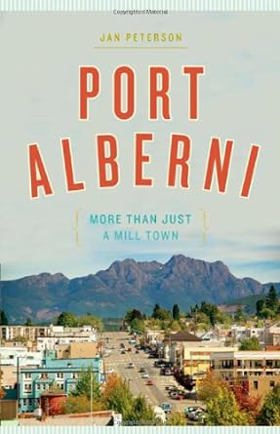
Any community that has ever been labelled a mill town carries both the promise of prosperity and the constant threat of collapse, its fortune hinging on a single industry whose performance is as much related to the whims of a global economy as it is to the abundance of a key natural resource. The people of Port Alberni, located deep in Vancouver Islands Alberni Valley, know all too well the highs and lows that come with such a label. Jan Peterson, who lived in Port Alberni for two of the towns most tumultuous decades and worked as a reporter for the Alberni Valley Times, describes how the towns people persevered through three decades of boom and bust, developed a vibrant arts and sporting community, and strived to make life better under any circumstances. From the prosperous 1970s, when Port Alberni earned the reputation of forestry capital of Canada, to the decline of the industry in the 1980s, when economic uncertainty signalled a need for diversification, to the environmental protests in nearby Clayoquot Sound, which polarized the community, Port Alberni tells the story of Port Alberni from a perspective that is rarely heard. Through fascinating interviews and meticulous historical research, Peterson captures the heart and soul of a town so often defined by dollars and cents. 264 pages, 16 unnumbered pages of plates : illustrations, maps, portraits ; 22 cm. CIRC [ 1 ]
|
2014 |
|
Idaho's place a new history of the Gem State by Adam M. Sowards , University of Idaho Program in Pacific Northwest Studies 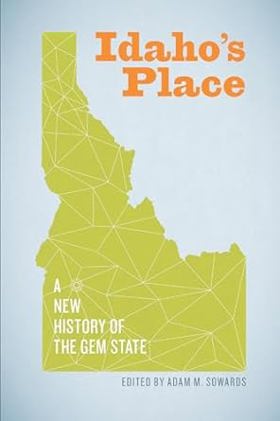
Idaho's Place is an anthology of the most current and original writing on Gem State history. From the state's indigenous roots and early environmental battles to recent political and social events, these essays provide much-needed context for understanding Idaho's important role in the development of the American West. Through a creative approach that combines explorations of concepts such as politics, gender, and race with the oral histories of Idaho residents - the very people who lived and made state history - this unique collection sheds new light on the state's surprisingly contentious past. Readers, whether they are longtime residents or newcomers, tourists or seasonal dwellers, policy makers or historians, will be treated to a rich narrative in which the many threads of Idaho's history entwine to produce a complete tapestry of this beautiful and complex Western state. ix, 310 pages : illustrations, maps ; 24 cm CIRC [ 1 ]
|
2014 |
|
Tracing footsteps Jefferson County, Washington by Pam McCollum Clise 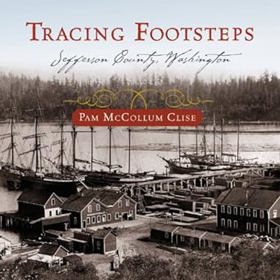
From rich natural resources to free land to hard work and imaginative solutions. This is the story of one small county and what it took to make it strong. Stories of the hopeful, adventurous, opportunistic, and salt of the earth people that have made Jefferson County, Washington what it is today. By following footsteps from the past, starting with the tribes that inhabited this area for thousands of years, to Capt. George Vancouver's exploration in 1792, and on to the early European and east coast settlers, we are able to find the conditions under which decisions were made and actions taken. By unfolding the lives of the people that made it happen, it is possible to see more clearly how the richness of today's community was been handed down from those who came before us. 475 pages : illustrations ; 22 cm CIRC [ 1 ]
|
2014 |
|
This is Portland by Alexander Barrett 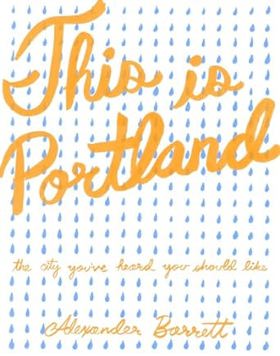
A firsthand look at one of the world’s most livable cities, this fun take on the guidebook genre explores the atmosphere of Portland, Oregon, versus detailing its landmarks and restaurants. It both explains and embraces how beautiful and ridiculous Portland life can be, and includes essays on everything from the rain and bicycling to beards and tater tots. With its approachable and often hilarious tone, this book is perfect for anyone who wants to learn more about the city that is earning its way onto more and more top cities lists each year. 62 pages : illustrations, map CIRC [ 1 ]
|
2014 |
|
Coos County agriculture a short history by Bill Mast 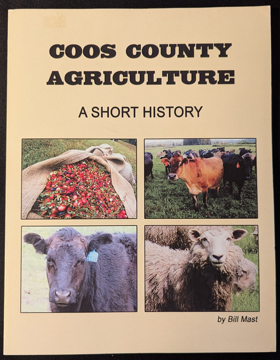
Coos County began the transition from a hunter-gatherer to an agrarian society with the first permanent white settlement in 1853. This book is an attempt to document the next 160 years of that process. The first agriculture in Coos County consisted of subsistence farms marketing their surplus production to logging camps and mining operations. As the farm economy grew, an export market to San Francisco developed. By the late 19th century, shipments of cheese, butter, cattle, hogs, sheep, wool, leather, apples, and potatoes sailed from Coos Bay and the Coquille River. In later decades, blackberries, loganberries, cranberries, and various vegetable crops joined the shipments. Coos County ranked third out of Oregon's 36 counties for apple production and near the top for dairy products by 1910. 87 pages : illustrations (1 color) ; 28 cm CIRC [ 1 ]
|
2014 |
|
Wood, water & grass Meek Cutoff of 1845 by James H. Hambleton , Theona J. Hambleton , Stafford J. Hazelett, Caxton Press (Caldwell, Idaho) (Issuing body), Caxton Printers (Printer) 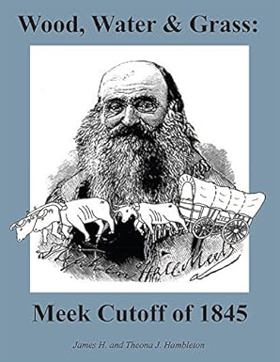
Researchers James H. and Theona J. Hambleton relate the history of the Meek Cutoff through the words of the diarists that lived through the ordeal. Included in the book are 53 USGS Quadrangle maps showing the actual trail location and many color photos of the remains of the trail itself xiv, 192 pages : illustrations (chiefly color), color maps ; 28 cm CIRC [ 0 ]
|
2014 |
|
Defending Idaho's natural heritage by Ken Robison 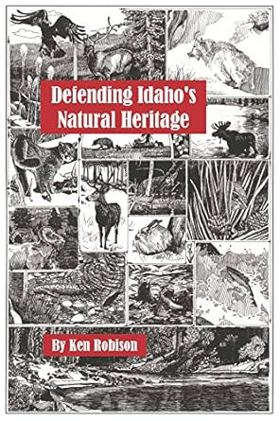
Idaho is rich in natural treasure with more than 100 named mountain ranges, surging rivers, deep canyons, abundant wildlife, seagoing fish, vast forests and picturesque lakes. Throughout the 20th Century many in Idaho saw the state's natural heritage threatened. Early in the 20th Century the state's club women campaigned for a Sawtooth National Park. In the 1930s, a hunting enthusiast named Harry Shellworth led a movement to establish a primitive area in central Idaho. A forester named Bob Marshall persuaded the Forest Service to designate an even larger primitive area north of the Salmon River. Despite these efforts Idaho suffered huge losses of fish and wildlife habitat. Beginning in 1954, sportsmen fought back by sponsoring an initiative to curb dredge mining damage and opposing dams on the Clearwater River and on the Snake River below the mouth of the Salmon. Still to come were intense struggles to stop a proposed open pit mine in the White Clouds, retain a free flowing Snake River in Hells Canyon and protect the Salmon River Wilderness. All of these battles were fought with the intent of preserving the land and the history that make up Idaho's natural heritage. The stories of the various conservation efforts are collected in this book 351 pages : illustrations ; 23 cm CIRC [ 0 ]
|
2014 |
|
The next tsunami living on a restless coast by Bonnie Henderson 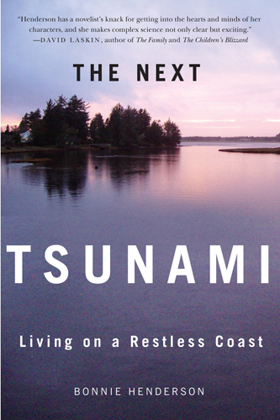
On a March evening in 1964, ten-year-old Tom Horning awoke near midnight to find his yard transformed. A tsunami triggered by Alaska’s momentous Good Friday earthquake had wreaked havoc in his Seaside, Oregon, neighborhood. It was, as far as anyone knew, the Pacific Northwest coast’s first-ever tsunami. More than twenty years passed before geologists discovered that it was neither Seaside’s first nor worst tsunami. In fact, massive tsunamis strike the Pacific coast every few hundred years, triggered not by distant temblors but by huge quakes less than one hundred miles off the Northwest coast. Not until the late 1990s would scientists use evidence like tree rings and centuries-old warehouse records from Japan to fix the date, hour, and magnitude of the Pacific Northwest coast’s last megathrust earthquake: 9 p.m., January 26, 1700, magnitude 9.0—one of the largest quakes the world has known. When the next one strikes—this year or hundreds of years from now—the tsunami it generates is likely to be the most devastating natural disaster in the history of the United States. In The Next Tsunami, Bonnie Henderson shares the stories of scientists like meteorologist Alfred Wegener, who formulated his theory of continental drift while gazing at ice floes calving from Greenland glaciers, and geologist Brian Atwater, who paddled his dented aluminum canoe up muddy coastal streams looking for layers of peat sandwiched among sand and silt. The story begins and ends with Tom Horning, who grew up to be a geologist and return to his family home at the mouth of the river in Seaside—arguably the Northwest community with the most to lose from what scientist Atwater predicts will be an “apocalyptic” disaster. No one in Seaside understands earthquake and tsunami science—and the politics and complicated psychology of living in a tsunami zone—better than Horning. Henderson’s compelling story of how scientists came to understand the Cascadia Subduction Zone and how ordinary people cope with that knowledge is essential reading for anyone interested in the charged intersection of science, human nature, and public policy. 322 pages : illustrations ; 23 cm CIRC [ 0 ]
|
2014 |
|
Field guide to the sedges of the Pacific Northwest by Barbara L. Wilson , Richard E. Brainerd , Danna Lytjen , Bruce Newhouse , Nick Otting , Carex Working Group 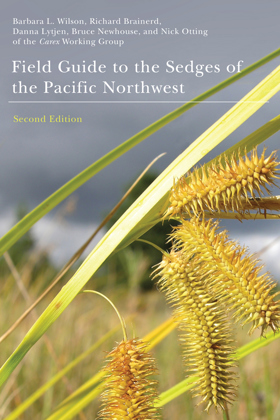
"Field Guide to the Sedges of the Pacific Northwest" is an illustrated guide to all 169 species, subspecies, and varieties in the genus "Carex" that grow in the wild in Oregon and Washington. Most of these species are found throughout the Pacific Northwest and California. This updated second edition includes eight additional species documented in the region since the guide was first published, along with an improved identification key, updated nomenclature and taxonomy, revised range maps, and improved illustrations. Sedges can be difficult to identify, with differences between species based on small, technical characters. This comprehensive guide contains identification keys, descriptions, more than 650 color photographs, and distribution maps for each species, providing users with helpful tools and tips for identifying the plants in this challenging group. Information about sedge ecology, habitat, management and restoration, ethnobotanical uses, and propagation enhances the guide's utility."Field Guide to the Sedges of the Pacific Northwest" provides an invaluable resource for botanists, land managers, restoration ecologists, and plant enthusiasts. And, as the genus "Carex" becomes increasingly important amongst landscapers, nurseries, and gardeners, the guide will serve as a handy tool for choosing Northwest natives for the garden 432 pages : color illustrations ; 23 cm CIRC [ 0 ]
|
2014 |
|
To win the Indian heart music at Chemawa Indian School by Melissa Parkhurst 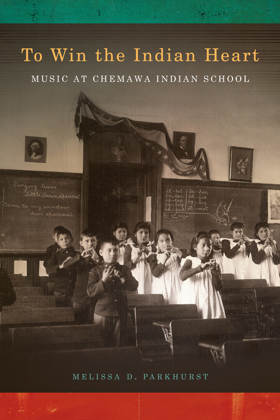
"Since 1879, Indian children from all regions of the United States have entered federal boarding schools - institutions designed to assimilate them into mainstream society. Chemawa Indian School in western Oregon, one of the nation's oldest and the longest still in continuous operation, is an emblem of a system that has intimately impacted countless lives and communities. In To Win the Indian Heart: Music at Chemawa Indian School, Melissa Parkhurst records the history of the school's musical life. She explores the crucial role music was meant to play in the total transformation of Indian children, and the cultural recovery and resiliency it often inspired instead. Parkhurst chronicles the complex ways in which students, families, faculty, and administrators employed music, both as a tool for assimilation and, conversely, as a vehicle for student resistance - a subject long overlooked in literature on Indian education and the assimilation campaign. Combining oral histories of Chemawa alumni with archival records of campus life, the book examines the prominent forms of music making at Chemawa - school band, choirs, private lessons, pageants, dance, garage bands, and powwows. Parkhurst traces the trajectory of federal Indian policy, highlighting students' creative responses and the ways in which music reveals the inherent contradictions in the U.S. government's assimilation practices."--Back cover 236 pages : illustrations ; 23 cm. CIRC [ 0 ]
|
2014 |
|
The nude beach notebook by Barbara J. Scot 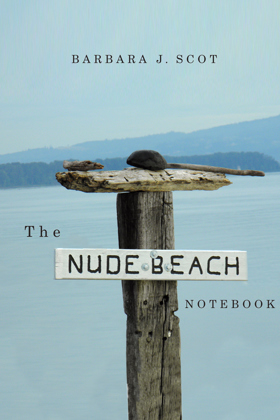
"In this engaging new memoir, a loose sequel to her earlier Prairie Reunion, Barbara J. Scot explores her reluctance and longing to reconnect with a much-loved brother, lost to alcoholism for thirty years. Scot uses long, meditative walks on the 'clothing optional' beach of the idyllic Sauvie Island near Portland, Oregon, to explore family responsibility, time' passage, and faith. She weaves entries from her notebook--a record of the island's wildlife, descriptions of the "Odd Ones" she encounters on the beach, and stories about the native people who once lived on the river--with the main narrative, tracing her search for her brother, her close friendship with a fellow writer, and daily life on the moorage. Scot considers the uses of fiction and non-fiction in memory as well as in writing, the brevity and beauty of human existence, and the inscrutable, enduring mystery of death"--Provided by publisher 198 pages ; 23 cm CIRC [ 0 ]
|
2014 |
|
Geology of the San Juan Islands by Edwin H. Brown 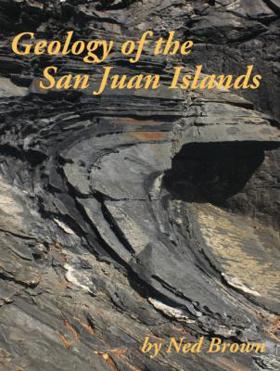
Nestled in the heart of the Salish Sea lie the picturesque San Juan Islands, an archipelago molded by eons of tectonic and glacial activity. Over the course of his nearly five-decade career, WWU geology professor Ned Brown has led countless research teams to decode this complex terrestrial heritage. In Geology of the San Juan Islands, Brown provides detailed, approachable, full color photos and diagrams to illuminate the complexities of these iconic islands. Author Ned Brown is an Emeritus Professor of geology at Western Washington University. He was raised in Minnesota, and went on to receive higher education at Dartmouth College, University of Otago, and U.C. Berkeley. He came to Bellingham in 1966, attracted by the landscape and mountain-building geology. In his nearly five-decade career, Ned, together with students, traversed and sampled much of the bedrock in the Cascades, San Juan Islands, and southern British Columbia Coast Mountains. This lifetime work is the basis for numerous student theses, and professional reports. 99 pages : illustrations (chiefly color), maps ; 28 cm CIRC [ 1 ]
|
2014 |