Catalog of British Columbiana and Pacific Northwest Americana
The Encyclopedia Cascadia Catalog indexes mostly non-fiction literature covering the Pacific Northwest coast of North America, with an emphasis on British Columbia, Idaho, Oregon, and Washington State.
| Catalog Title | Published |
|---|---|
|
Texada tapestry a history by Heather Harbord 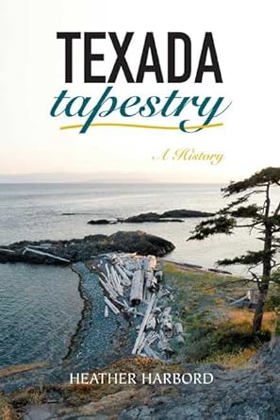
"Texada is the largest island in the Strait of Georgia, a long strip of richly mineralized granite and limestone dividing the upper gulf. Travel time from Vancouver is six hours via three ferries. A newcomer's first impression is of an idyllic place with a big sandy beach, a Sunday farmer's market and a scant population of aging loggers, miners, pot-growers and other retirees, but this belies Texada's intriguing history. Although today Texada is better known as the home of the illegal agricultural product called Texada Gold, it was once the focus of a real gold rush that lured no less a figure than cookie tycoon William Christie. Later, Texada was the site of British Columbia's first major political scandal when squabbles over a rich iron ore claim forced the resignation of Premier Amor de Cosmos in February 1874. The rich mineral deposits in time gave rise to three booming towns--Gillies Bay, Blubber Bay and Van Anda, noted as the town with everything: not just a whorehouse, but an opera house. Population ebbed and flowed with mineral prices and Texada went in and out of the news. Its association with illegal intoxicants dates back to 1928 when the biggest whisky still north of Vancouver was busted in romantic Pocahontas Bay. The bitter Blubber Bay strike of 1938 put Texada in the news again as the Pacific Lime Company faced off against the International Woodworkers' Association labour union in a bloody riot. This is also the feisty island that repelled the might of the Greater Vancouver Regional District when it wanted to dump metropolitan garbage in the abandoned pit of the once-famous Texada Mine. Author Heather Harbord has dedicated years to research, including over a hundred interviews of locals and old-timers to create a captivating book full of unforgettable characters, humorous anecdotes and well-researched fact, accompanied by many previously unpublished photographs. Once again, she has created a valuable volume on the history of the BC coast." --Publisher's description 288 p. : ill., map, ports. ; 24 cm. Non-circulating [ 1 ]
|
2011 |
|
The Pig War the last Canada-US border conflict by Rosemary Neering 
On May 15, 1859, an American settler on San Juan Island shot a pig belonging to the Hudsons Bay Company. This seemingly insignificant act was the spark that almost set aflame the strangest of many confrontations between Britain and the United States on the northwest coast of North America. On one side of the border dispute over the strategically located San Juan Islands was Governor James Douglas, determined to protect the interests of the Hudsons Bay Company and prove the military superiority of Britain. On the other side was General William Selby Harney, spoiling for a fight and believing in Americas manifest destiny to rule the continent. In this lively account of the conflict that became known as the Pig War, Rosemary Neering traces the events that led to the standoff in the San Juans and brings to life the memorable characters who played leading roles in the drama. The book is an excellent travel companion to anyone visiting the San Juans and the original American and British camps that are open to the public. 142 p. : ill., maps, ports. ; 22 cm. Non-circulating [ 1 ]
|
2011 |
|
Company, crown and colony the Hudson's Bay Company and territorial endeavour in western Canada by Stephen A. Royle 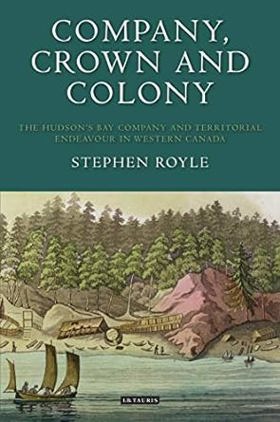
Trading companies played a vital role in colonial endeavour. The great English, Dutch and French merchant companies took the risks of trade and travel in a dangerous world, opening up trading routes to the Farthest corners of the globe. The Hudson's Bay Company was just such an enterprise. Established under a charter granted by Charles II in 1670, with Prince Rupert, the king's cousin, as one of its directors, the company was granted 4m square kilometres of what was to become Canada, over which huge territory they were given sole trading rights 304 pages : illustrations, maps ; 24 cm Non-circulating [ 1 ]
|
2011 |
|
New land, north of the Columbia historic documents that tell the story of Washington State from territory to today by Lorraine McConaghy 
New Land North of the Columbia features an 1860 letter protesting the escape of an Olympia slave to Victoria on the Puget Sound Underground Railroad. There's also territorial Governor Pickering's telegram to Abraham Lincoln sent on the brand-new telegraph--and Lincoln's hand-signed response. Other ephemera include posters and letters that support and condemn women's right to vote, prohibition of the sale of alcohol, and aid to the unemployed during the Great Depression. Here are documents about the massive, secret Hanford Engineering Works that was Washington's Manhattan Project. The book includes an ad for the first Lame Fest concert featuring Mudhoney and Nirvana, the original box that contained Windows 95, and a poster calling all protesters to the 1999 WTO conference. Historian Lorraine McConaghy has traversed the state and sifted through the files of three dozen archives to cull the 400 fascinating documents that bring to life Washington's last 150 years. vi, 153 pages : illustrations (some color), maps (some color) ; 25 x 29 cm Non-circulating [ 1 ]
|
2011 |
|
Portland in three centuries the place and the people by Carl Abbott 
A compact and comprehensive history of Portland from first European contact to the twenty-first century, Portland in Three Centuries introduces the women and men who have shaped Oregon’s largest city. The expected politicians and business leaders appear, but Carl Abbott also highlights workers and immigrants, union members and dissenters, women at work and in the public realm, artists and activists, and other movers and shakers. Incorporating social history and contemporary scholarship in his narrative, Abbott examines current metropolitan character and issues, giving close attention to historical background. He explores the context of opportunities and problems that have helped to shape the rich mosaic that is Portland. This revised and updated second edition includes greater attention to the Indigenous peoples of the Portland region, Portland’s communities of color, and the challenges of recent years that have thrust Portland into the national spotlight. A highly readable character study of a city, and enhanced by more than sixty historic and contemporary images, Portland in Three Centuries will appeal to readers interested in Portland, in Oregon, and in Pacific Northwest history. 192 pages : illustrations, maps ; 26 cm Non-circulating [ 1 ]
|
2011 |
|
Sonny Montes and Mexican American activism in Oregon by Glenn Anthony May 
This textn tells the story of Oregon's most prominent Chicano activist, which also illustrates the formation of a significant Mexican-American community in the state between the 1960s and 1980's, and the ensuing rise of Oregon's Chicano movement x, 326 pages : illustrations ; 23 cm Desiderata
|
2011 |
|
Human impacts on seals, sea lions, and sea otters integrating archaeology and ecology in the northeast Pacific by Todd J. Braje, Torben C. Rick 
Brings together archaeologists, biologists, and other scientists to consider how archaeology can inform the conservation and management of pinnipeds and other marine mammals along the Pacific Coast. viii, 320 pages : illustrations, maps ; 27 cm Desiderata
|
2011 |
|
Nl̳ekèpmxcín Thompson River Salish speech by Steven M. Egesdal , M. Terry Thompson , Mandy N. Jimmie 
Published in 2011 by Steven M. Egesdal, M. Terry Thompson, and Mandy N. Jimmie, Nl̳ekèpmxcín: Thompson River Salish Speech is a comprehensive linguistic and cultural collection documenting the traditional language of the Nlaka'pamux people of British Columbia. The massive volume compiles dozens of authentic narratives, traditional orations, prayers, and conversations gathered from fluent speakers, complete with detailed interlinear morphological glosses and English translations. By bridging raw oral recordings with rigorous academic analysis, the text preserves complex grammatical structures and cultural knowledge directly from the source. A keen insight drawn from the work is how meticulous documentation of this caliber transcends traditional academic linguistics; by capturing spoken oral history in the native tongue, the book functions as a vital, community-rooted lifeline for language revitalization against the pressures of generational attrition xiv, 596 pages : illustrations, map ; 29 cm. Desiderata
|
2011 |
|
Seattle geographies by Michael Brown, Richard L. Morrill 
Seattle is located on the northwest edge of the continental United States, flanked by two mountain ranges and set on the calm shores of Puget Sound. It is remote from the country's hub but a portal to Alaska and Asia. It is widely considered liberal and green, but such a characterization oversimplifies a city of many idiosyncrasies and contradictions. Seattle Geographies explores the human geography of the city and region to examine why Seattle is Seattle. The contributors to this volume look into Seattle's social, economic, political, and cultural geographies across a range of scales from neighborhoods to the world. They tackle issues as diverse as economic restructuring, gay space, trade with China, skateboarding, and P-patches. They apply a geographic perspective to uniquely Seattle events and movements such as the WTO protests and grunge. They also look at homelessness, poverty, and segregation. Guided by a strong sense of accountability to place, these geographers offer a wide, multifaceted portrayal of the city and its region. ix, 209 pages : illustrations (chiefly color), maps (chiefly color) ; 26 cm Desiderata
|
2011 |
|
Atomic frontier days Hanford and the American West by John M. Findlay, Bruce William Hevly 
On the banks of the Pacific Northwest’s greatest river lies the Hanford nuclear reservation, an industrial site that appears to be at odds with the surrounding vineyards and desert. The 586-square-mile compound on the Columbia River is known both for its origins as part of the Manhattan Project, which made the first atomic bombs, and for the monumental effort now under way to clean up forty-five years of waste from manufacturing plutonium for nuclear weapons. Hanford routinely makes the news, as scientists, litigants, administrators, and politicians argue over its past and its future. It is easy to think about Hanford as an expression of federal power, a place apart from humanity and nature, but that view distorts its history. Atomic Frontier Days looks through a wider lens, telling a complex story of production, community building, politics, and environmental sensibilities. In brilliantly structured parallel stories, the authors bridge the divisions that accompany Hanford’s headlines and offer perspective on today’s controversies. Influenced as much by regional culture, economics, and politics as by war, diplomacy, and environmentalism, Hanford and the Tri-Cities of Richland, Pasco, and Kennewick illuminate the history of the modern American West. xv, 368 pages : illustrations, maps ; 23 cm. Desiderata
|
2011 |
|
Field guide to the rare plants of Washington by Pamela Camp, John Gamon, Joseph Arnett 
Field Guide to the Rare Plants of Washington offers a window into the beauty and diversity of the rarest plants in the state. The field guide includes: 317 vascular plants, six mosses, and one lichen; Full-color photographs of the plants and their habitats, line drawings, and distribution maps; Detailed species descriptions, identification tips, and easiest times to identify the plants; Current conservation status and state rank; Complete reference list and glossary. Each rare plant is fully characterized according to its appearance, reproductive strategy, associated plants, habitat, current threats, and scarcity in areas outside the state. A trip across Washington presents an array of habitats, from dripping spruce and hemlock forests along the coast to arid grasslands, shrub-steppe, and sand dune systems east of the mountains, from low-elevation outwash prairies to alpine slopes, from basalt flows and rocky islands to salt marshes and riverbanks. This book brings attention to the rarest and least understood plant species that find niches in this complex landscape. xi, 392 pages : illustrations (some color), color maps ; 23 cm Desiderata
|
2011 |
|
Seattle in Black and white the Congress of Racial Equality and the fight for equal opportunity by Joan Singler 
Seattle was a very different city in 1960 than it is today. There were no black bus drivers, sales clerks, or bank tellers. Black children rarely attended the same schools as white children. And few black people lived outside of the Central District. In 1960, Seattle was effectively a segregated town. Energized by the national civil rights movement, an interracial group of Seattle residents joined together to form the Seattle chapter of the Congress of Racial Equality (CORE). Operational from 1961 through 1968, CORE had a brief but powerful effect on Seattle. The chapter began by challenging one of the more blatant forms of discrimination in the city, local supermarkets. Located within the black community and dependent on black customers, these supermarkets refused to hire black employees. CORE took the supermarkets to task by organizing hundreds of volunteers into shifts of continuous picketers until stores desegregated their staffs. From this initial effort CORE, in partnership with the NAACP and other groups, launched campaigns to increase employment and housing opportunities for black Seattleites, and to address racial inequalities in Seattle public schools. The members of Seattle CORE were committed to transforming Seattle into a more integrated and just society. Seattle was one of more than one hundred cities to support an active CORE chapter. Seattle in Black and White tells the local, Seattle story about this national movement. Authored by four active members of Seattle CORE, this book not only recounts the actions of Seattle CORE but, through their memories, also captures the emotion and intensity of this pivotal and highly charged time in America’s history. xiii, 279 pages : illustrations, map ; 24 cm. Desiderata
|
2011 |
|
Dark rose organized crime and corruption in Portland by Robert C. Donnelly 
In April 1956, Portland Oregonian investigative reporters Wallace Turner and William Lambert exposed organized crime rackets and rampant corruption within Portland’s law enforcement institutions. The biggest scandal involved Teamsters officials and the city’s lucrative prostitution, gambling, and bootlegging operations. Turner and Lambert blew the cover on the Teamsters’ scheme to take over alcohol sales and distribution and profit from these fringe enterprises. The Rose City was seething with vice and intrigue. The exposé and other reports of racketeering from around the country incited a national investigation into crime networks and union officials headed by the McClellan Committee, or officially, the U.S. Senate Select Committee on Improper Activities in the Labor or Management Field. The commission discovered evidence in Portland that helped prove Teamsters president Dave Beck’s embezzlement of union funds and union vice president Jimmy Hoffa’s connection to the mob. Dark Rose reveals the fascinating and sordid details of an important period in the history of what by the end of the century had become a great American city. It is a story of Portland’s repeated and often failed efforts to flush out organized crime and municipal corruption - a familiar story for many mid-twentieth-century American cities that were attempting to clean up their police departments and municipal governments. Dark Rose also helps explain the heritage of Portland’s reform politics and the creation of what is today one of the country’s most progressive cities. xiii, 202 pages : illustrations ; 22 cm Desiderata
|
2011 |
|
Exploring Fort Vancouver by Douglas Calvin Wilson, Theresa E. Langford 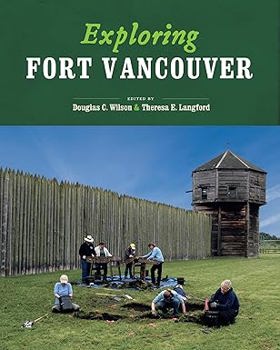
To explore the sweep of human history at Fort Vancouver is to grasp some of the essentials of the North American experience. The fort has been part of the major historical trends of the Pacific Northwest for over 150 years, from the effects of colonialism native peoples to the role of the U.S. Army. Native Americans, traders, homesteaders, and soldiers lived and worked at the fort, their lives interwoven and their stories imbedded in the objects they left behind. Exploring Fort Vancouver uses some of the most intriguing objects from the fort's extensive archaeological and archival collections to tell the history of technology, material culture, globalization, health and diet, and the National Park Service at this significant place. xii, 116 pages : illustrations (some color), color maps ; 26 cm Desiderata
|
2011 |
|
Gene Zema architect, craftsman by Grant Hildebrand, Gene Zema 
In the three decades following World War II, a group of architects centered in the Puget Sound region were designing buildings of extraordinary quality, whose most evident commonality was the use of wood in profusion, as exposed, meticulously detailed structure and as interior and exterior surface. Gene Zema, a 1950 graduate of the University of Washington and a student of the legendary Lionel Pries, was one of this group. In a career that spanned twenty years, Zema designed forty-six houses, seven clinics, two architectural offices, a nursery, and a golf clubhouse, and he participated in the design of two University buildings. He built several buildings with his own hands, developing a consummate sense of appropriate design in wood. The luxuriantly crafted details and uniquely dramatic spatial compositions of his work place it at the forefront of that remarkable movement. Zema was also a distinguished collector and retailer of Native American and Japanese antiquities. In 1983, relying on the sale of antiquities for income and limiting his architectural practice, he and his wife, Jane, bought a 70-acre meadow on Whidbey Island. On their property Zema built a workshop, a windmill and pump house, a chicken house, a home, a peacock house, and a kiln, all of which are as remarkable as his earlier masterpieces. Gene Zema is an iconic figure among those who know his work, but the region to which his work is intimately bound is far from the centers of architectural journalism and his story is little known. It is the story of a unique figure in an extraordinary American architectural movement and an exceptional figure in the history of the Pacific Northwest. x, 147 pages : illustrations (chiefly color) ; 26 cm Desiderata
|
2011 |
|
Before Seattle rocked a city and its music by Kurt E. Armbruster 
Seattle is a music town with rich, deep roots that have influenced the culture and identity of its civic life for decades. In a society that appreciates music but is ambivalent toward the profession of making it, the importance and contribution of Seattle's musicians have been routinely overlooked in historical accounts of the city. Kurt Armbruster fills that gap in this far-reaching and entertaining panorama of Seattle music from the 1890s to the 1960s, "before Seattle rocked." For this once-remote city, music forged links as real as those created by railroads and steamships. Classical music embodied the middle-class aspirations for gentility and cosmopolitan stature; jazz and blues gave Seattle's small African American community a vehicle for affirmation and economic advancement; ethnic music helped immigrants adjust to a new home; songs and drumming kept the memories of the Duwamish alive in a changing world. Before Seattle Rocked is enlivened by personal anecdotes and memories from many of Seattle's most beloved musicians and is enriched by historic photos of the changing music scene. ix, 374 pages : illustrations ; 23 cm Desiderata
|
2011 |
|
Sources of the River, 2nd Edition Tracking David Thompson Across North America by Jack Nisbet 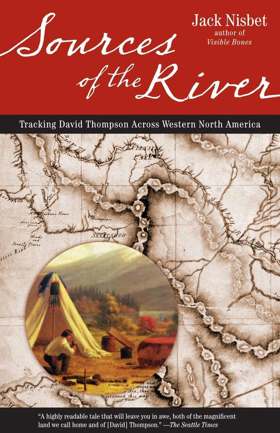
The awe-inspiring story of explorer David Thompson, whose expeditions helped shape western North America In this true story of adventure, author Jack Nisbet re-creates the life and times of David Thompson--fur trader, explorer, surveyor, and mapmaker. From 1784 to 1812, Thompson explored western North America, and his field journals provide the earliest written accounts of the natural history and indigenous cultures of the what is now British Columbia, Alberta, Montana, Idaho, Washington, and Oregon. Thompson was the first person to chart the entire route of the Columbia river, and his wilderness expeditions have become the stuff of legend. Jack Nisbet tracks the explorer across the content, interweaving his own observations with Thompson's historical writings. The result is a fascinating story of two men discovering the Northwest territory almost two hundred years apart 1 online resource (288 p.) Non-circulating [ 1 ]
|
2011 |
|
Sk̲wx̲wú7mesh sníchim - xwelíten sníchim Sk̲exwts = Squamish - English dictionary by Squamish Nation Education Department, University of Washington
|
2011 |
|
The story of Sidney Island's three names by Jim McDowell 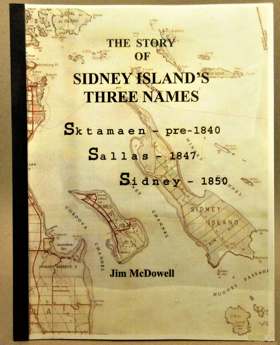
Jim McDowell’s The Story of Sidney Island's Three Names traces the cartographic, linguistic, and political evolution of a prominent landform in the southern Gulf Islands by examining the layered origins of its designations. The text illustrates how corporate traders and imperial hydrographers progressively superimposed colonial designations—first as "Sallas Island" under the Hudson's Bay Company and subsequently as "Sidney Island" via British Admiralty surveys—directly over the ancestral W̱SÁNEĆ (Saanich) territory and ancient harvesting shores of SḰŦÁMEN (Sktamaen). McDowell details the changing logistics of island access and resource extraction, showing how an Indigenous marine domain defined by reef net fisheries and seasonal harvesting was re-engineered through colonial property surveys to facilitate settler pre-emptions, steam navigation in Haro Strait, and industrial brick-making operations at Sidney Spit. Ultimately, this toponymic chronicle demonstrates how successive colonial renamings functioned as deliberate instruments of spatial control across the Salish Sea, superimposing imperial administrative authority onto an enduring Indigenous archipelago. 65 pages : illustrations (some color), maps (some color) ; 28 cm Desiderata
|
2011 |
|
The boy in the picture the Craigellachie kid and the driving of the last spike by Ray Argyle
Ray Argyle’s The Boy in the Picture: The Craigellachie Kid and the Driving of the Last Spike provides a focused historical narrative detailing the climactic completion of Canada’s transcontinental railway on November 7, 1885. Centering on eighteen-year-old Edward Mallandaine, who stood alongside financier Donald Smith in Alexander Ross's iconic photograph, the narrative reconstructs the harsh alpine terrain and fragile logistics of Eagle Pass in the Selkirk and Monashee ranges. Argyle details how railroad survey crews, construction gangs, and supply packers established temporary canvas boomtowns and track beds across ancient interior river valleys navigated by Indigenous peoples. Ultimately, the work illustrates how the completion of the rail link at Craigellachie permanently opened interior British Columbia to rapid settler immigration, industrial resource extraction, and federal administrative integration. 176 pages : illustrations ; 22 cm Desiderata
|
2010 |
|
Return to the frontier the photographs and journeys of Frank Swannell, 1920-1928 by Jay Sherwood
Jay Sherwood’s Return to the Frontier: The Photographs and Journeys of Frank Swannell, 1920–1928 documents government surveying and mapping expeditions through northern British Columbia along the route of the Dominion Telegraph Line. Drawing upon surveyor Frank Swannell’s journals and photography, Sherwood maps the trail running from Hazelton through the Stikine wilderness toward the Yukon boundary. The chronicle details the operation of remote telegraph maintenance stations—including Fourth Cabin and Fifth Cabin—and packhorse supply outposts such as Days Ranch, Callison Ranch, Rupert, and Hiusta Meadow. The narrative highlights encounters with Tahltan families, lineman crews, and packers who maintained communication across this demanding subarctic terrain. 176 pages : illustrations, maps, portraits ; 22 x 26 cm Desiderata
|
2010 |
|
Bear Lake County by Bear Lake County Historical Society
Compiled by the Bear Lake County Historical Society, Bear Lake County presents a photographic and spatial ledger documenting the development of the high mountain basin from pioneer pre-emptions through early twentieth-century modernization. The book traces how agricultural settlements, irrigation networks, and rail corridors were superimposed over ancestral Shoshone seasonal hunting grounds. Featuring extensive archival imagery from local family collections, the text documents the architectural vernacular of pioneer brick and stone residences, early logging mills in the Bear River Range, and the recreational development along the turquoise shores of Bear Lake at Fish Haven. Detailed narrative captions record civic milestones and community institutions across Paris, Montpelier, Bloomington, St. Charles, Georgetown, Ovid, and Pegram. 128 pages : illustrations, maps, portraits ; 24 cm Desiderata
|
2010 |
|
Eminent Astorians from John Jacob Astor to the salmon kings by Karen Kirtley, Stephen Dow Beckham 
Marks the bicentennial of Astoria in 2011. Each of nine essays presents a literary biography of a figure who looms large in Astoria's history, from Comcomly, the powerful, one-eyed leader of the Chinook Tribe when Lewis and Clark arrived at the mouth of the Columbia River in 1805, to the “Salmon Kings”, who capitalized on the region's natural bounty from the 1870s to the 1910s. 272 pages : illustrations, map ; 23 cm Desiderata
|
2010 |
|
Astorians, eccentric and extraordinary by Karen Kirtley 
In 1993, The New Yorker published Calvin Trillin’s memorable article on the eccentric Flavel family of Astoria, the descendants of Captain George Flavel, whose ornate Queen-Anne-style mansion is a tourist draw today. With Trillin’s gracious consent, “First Family of Astoria” is reprinted in Part One of Astorians, Eccentric and Extraordinary, making its first appearance in book form. Part Two carries on the theme with portraits of fifty-five other notable Astorians. Five Oregon writers have captured the essence and the flavor of vivid personalities that include the notorious shanghaier Bridget Grant; the charming scoundrel Mayor Francis Clay Harley; the elusive English “barmaid” Jane Barnes, the first white woman in the Pacific Northwest; and Rolf Klep, who believed he could create a major maritime museum in an economically depressed town—and made it happen. In biology, it is said that the richest life forms reside at the edge of the ecosystem. Astoria epitomizes edges—the edge of the country, the edge of a great river, the edge of the Pacific Ocean, and the edge of our American culture. This book celebrates the larger-than-life quality that has appeared with regularity in the town’s two-hundred-year history. As Steve Forrester, publisher of The Daily Astorian, notes in the book’s introduction: “Extraordinary people are not necessarily eccentric. But eccentrics are driven to do extraordinary things.” 224 pages : illustrations, maps ; 23 cm Desiderata
|
2010 |
|
No small potatoes how a family potato salad recipe is fast becoming a billion dollar business by Al Reser, Kerry Tymchuk, Oregon State University Alumni Association 
In 1960 when twenty-five-year-old Al Reser became president of the potato salad manufacturing business which his parents began in their Oregon farmhouse kitchen ten years earlier, the company had a dozen or so part-time employees and annual sales of $300,000. Accountants told Al that the business was a likely candidate for bankruptcy. What the balance sheets didn’t account for, however, was the perseverance, hard work, and ingenuity of Al Reser. Today, Reser’s Fine Foods is one of the most respected and admired companies in the food industry, boasting over 2,600 employees and annual sales approaching one billion dollars. Reser’s salads, side dishes, dips, Mexican food specialties, snack foods, and desserts are familiar sights in kitchens in all fifty states, as well as in Canada and Mexico. The philanthropy of Al and his family has also made the Reser name familiar to America’s college football fans, as the Oregon State University Beavers play their home football games at Reser Stadium. In No Small Potatoes, Al Reser not only shares the inspiring story of his rise from poverty to the top of the business world, he also recounts the tough decisions that spurred Reser’s phenomenal growth, and the values that have guided his steps. It is a book that will inspire anyone who hopes to grow a small business into something bigger, and is proof that small potatoes and big dreams are a perfect recipe for success. 132 pages : illustrations ; 23 cm Desiderata
|
2010 |