Catalog of British Columbiana and Pacific Northwest Americana
Encyclopedia Cascadia Catalog contains book titles of mostly non-fiction Pacific Northwest Coast of North America Titles (primarially British Columbia, Idaho, Oregon and Washington State) in an easy-to-understand title catalog. If you see a link with this badge ONLINE CIRC it means that there is an online institution that provides free access to that title. In some cases there may be more than one institution hosting the title digitally.
| Catalog Title | Published |
|---|---|
|
Seattle's women teachers of the interwar years shapers of a livable city by Doris Hinson Pieroth 
In Seattle’s Women Teachers of the Interwar Years, Doris Pieroth describes the contributions of a remarkable group of women who dominated the Seattle public school system in the early years of the twentieth century and helped to produce well-educated citizens who were responsible for the widespread philanthropic, volunteer, and municipal activities that came to characterize the city. While most publications on the history of education have emphasized theory or administration, Pieroth focuses on individual teachers. Set against the backdrop of a developing city, the book provides vivid portraits of educated, strong, ambitious women making successful careers at a time when job opportunities for women were very limited. Pieroth interviewed as many of these women as she could find, and quotes from the interviews enhance her lively, well-written narrative. Using details drawn from local newspapers and school publications, she demonstrates that the influence of this cohort of women made modern Seattle the livable place that it remains today. Seattle’s Women Teachers of the Interwar Years is a significant contribution to the history of Seattle and the region, to women’s history, and to the history of education. 283 pages : illustrations, maps ; 24 cm CIRC [ 0 ]
|
2004 |
|
Seattle's totem poles by Viola E. Garfield 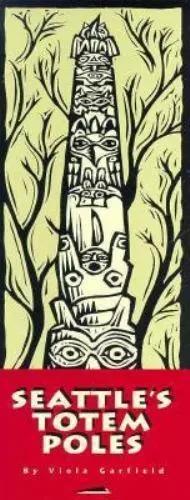
This book tells the history of the Seattle Totem Pole, located in Pioneer Square, including its abduction from its Tlinglit village by Seattle businessmen. The present cedar pole is a duplicate of the original, which was taken down after suffering damage from age and vandals. The book's second section explains Northwest Indian symbols used in poles and carvings seen around the area. Descriptions and photos of several area totem poles are included along with maps showing where other totem poles are located in the Greater Seattle area. 64 pages : illustrations, maps ; 28 x 11 cm CIRC [ 1 ]
|
1996 |
|
Seattle's black Victorians, 1852-1901 by Esther Hall Mumford 
"...looks at black life in 19th century Seattle from many angles. The combination of newspaper files, county records, and oral history gives a density to the historical picture." John Berry, Seattle Sun -- Back cover 235 pages : illustrations, facsimiles, map, portraits ; 22 cm CIRC [ 0 ]
|
1980 |
|
Seattle Walks Discovering History and Nature in the City : Discovering History and Nature in the City by David B. Williams 
One of America's most walkable cities, Seattle rewards urban trekkers with expansive scenery and architectural and historical riches. The second edition of this acclaimed guidebook offers eithteen walks chosen for interest and easy accessibility. Williams's compelling stories bring the city to life, revealing often-overlooked details of Seattle's past and present. 304 Pages, 5.5 x 7.5 in, 54 color illus., 33 b&w illus., 19 maps CIRC [ 0 ]
|
2025 |
|
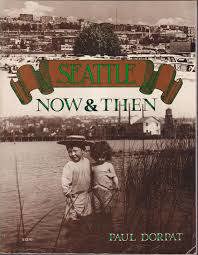
Seattle now & then by Paul Dorpat
|
1984 |
|
Seattle Leschi diary by Wade Vaughn, Leschi Improvement Council
|
1982 |
|
Seattle in the Great Depression a history of business, labor, and politics drawn from local chronicles by Bruce A. Ramsey 
Capturing stories from Seattle newspapers and other sources, this narrative history traces a turbulent decade that scarred a generation and defined years of policy and culture—from the city’s real estate depression, savings and loan failures, and waterfront Hooverville, to its political fights over unemployment assistance, intense business rivalries, union growth, and more. 260 pages, illustrations, notes, bibliography CIRC [ 0 ]
|
2025 |
|
Seattle in the 1880s by David M. Buerge, Stuart R. Grover , Historical Society of Seattle and King County (Publisher)
|
1986 |
|
Seattle in Black and white the Congress of Racial Equality and the fight for equal opportunity by Joan Singler 
Seattle was a very different city in 1960 than it is today. There were no black bus drivers, sales clerks, or bank tellers. Black children rarely attended the same schools as white children. And few black people lived outside of the Central District. In 1960, Seattle was effectively a segregated town. Energized by the national civil rights movement, an interracial group of Seattle residents joined together to form the Seattle chapter of the Congress of Racial Equality (CORE). Operational from 1961 through 1968, CORE had a brief but powerful effect on Seattle. The chapter began by challenging one of the more blatant forms of discrimination in the city, local supermarkets. Located within the black community and dependent on black customers, these supermarkets refused to hire black employees. CORE took the supermarkets to task by organizing hundreds of volunteers into shifts of continuous picketers until stores desegregated their staffs. From this initial effort CORE, in partnership with the NAACP and other groups, launched campaigns to increase employment and housing opportunities for black Seattleites, and to address racial inequalities in Seattle public schools. The members of Seattle CORE were committed to transforming Seattle into a more integrated and just society. Seattle was one of more than one hundred cities to support an active CORE chapter. Seattle in Black and White tells the local, Seattle story about this national movement. Authored by four active members of Seattle CORE, this book not only recounts the actions of Seattle CORE but, through their memories, also captures the emotion and intensity of this pivotal and highly charged time in America’s history. xiii, 279 pages : illustrations, map ; 24 cm. CIRC [ 0 ]
|
2011 |
|
Seattle geographies by Michael Brown, Richard L. Morrill 
Seattle is located on the northwest edge of the continental United States, flanked by two mountain ranges and set on the calm shores of Puget Sound. It is remote from the country's hub but a portal to Alaska and Asia. It is widely considered liberal and green, but such a characterization oversimplifies a city of many idiosyncrasies and contradictions. Seattle Geographies explores the human geography of the city and region to examine why Seattle is Seattle. The contributors to this volume look into Seattle's social, economic, political, and cultural geographies across a range of scales from neighborhoods to the world. They tackle issues as diverse as economic restructuring, gay space, trade with China, skateboarding, and P-patches. They apply a geographic perspective to uniquely Seattle events and movements such as the WTO protests and grunge. They also look at homelessness, poverty, and segregation. Guided by a strong sense of accountability to place, these geographers offer a wide, multifaceted portrayal of the city and its region. ix, 209 pages : illustrations (chiefly color), maps (chiefly color) ; 26 cm CIRC [ 0 ]
|
2011 |
|
Seattle from the margins exclusion, erasure, and the making of a Pacific Coast city by Megan Asaka 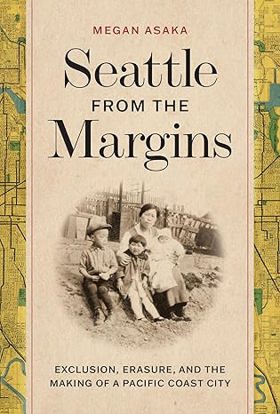
From the origins of the city in the mid-nineteenth century to the beginning of World War II, Seattle's urban workforce consisted overwhelmingly of migrant laborers who powered the seasonal, extractive economy of the Pacific Northwest. Though the city benefitted from this mobile labor force—consisting largely of Indigenous peoples and Asian migrants—municipal authorities, elites, and reformers continually depicted these workers and the spaces they inhabited as troublesome and as impediments to urban progress. Today the physical landscape bears little evidence of their historical presence in the city. Tracing histories from unheralded sites such as labor camps, lumber towns, lodging houses, and so-called slums, Seattle from the Margins shows how migrant laborers worked alongside each other, competed over jobs, and forged unexpected alliances within the marine and coastal spaces of the Puget Sound. By uncovering the historical presence of marginalized groups and asserting their significance in the development of the city, Megan Asaka offers a deeper understanding of Seattle's complex past. Seattle from the Margins was made possible in part by a grant from 4Culture’s Heritage Program. x, 258 pages : illustrations, maps 24 cm. CIRC [ 0 ]
|
2022 |
|
Seattle & King County. Volume III gateway to the Pacific Northwest by Troy Wolff 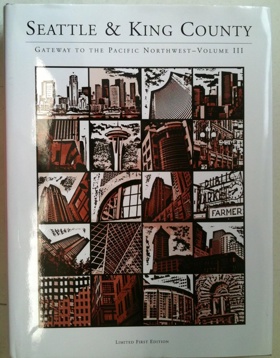
Published in 2008 and edited by Judith Gouldthorpe, Troy Wolff’s Seattle & King County: Gateway to the Pacific Northwest—Volume III offers a richly illustrated local history chronicling the modern development, neighborhoods, and civic milestones of Washington's most populous region. The volume combines historical overviews with localized profiles of communities, businesses, and prominent figures who shaped the greater Puget Sound area at the turn of the 21st century. Through its extensive photographic archives and narrative vignettes, the book documents how a timber-and-shipping outpost evolved into a major global metropolitan hub. A keen insight drawn from the text is how contemporary regional histories often function as curated civic time capsules, consciously celebrating corporate and community achievements while neatly glossing over the socio-economic tensions and gentrification pressures accompanying rapid urban expansion. 296 pages : illustrations (some color) ; 31 cm CIRC [ 1 ]
|
2008 |
|
Seashore life of the northern Pacific coast an illustrated guide to northern California, Oregon, Washington, and British Columbia by Eugene N. Kozloff 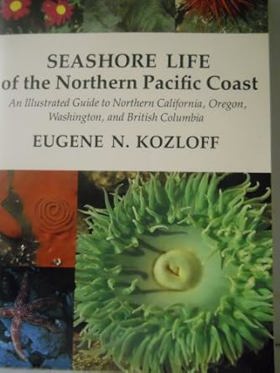
On the northern Pacific coast, from Monterey Bay to Vancouver Island, zoologist Eugene Kozloff explores the rich variety of seashore life of the northern Pacific coast. Hundreds of plants and animals that inhabit the rocky shores, sandy beaches, and quiet bays and estuaries are described and illustrated with encyclopedic thoroughness. Two hundred and ninety-nine color illustrations and nearly 400 black-and-white photographs and line drawings show sponges, molluscs, crustaceans, comb jellies, flatworms, seaweeds, and many other kinds of seashore life, making for easy identification. The text, cross-referenced with figures and plates, describes in precise terms the size, color, activities, and peculiarities of the plants and animals most likely to be encountered. This book is a greatly expanded version of the author’s popular Seashore Life of Puget Sound, the Strait of Georgia, and the San Juan Archipelago, published in 1973. It includes much new material on marine life along the open coast and in coastal bays, and extends the coverage to Oregon and northern California. Years of additional study make this the definitive work on the common seashore life of the northern Pacific coast. Kozloff discusses the geology and geography of the area, and gives the reader “some instant zoology and botany” with which to make the most of seashore exploration. He presents more than 650 species of plants and animals, each in its individual habitat, in chapters dealing with “Floating Docks and Pilings,” “Rocky Shores of the Puget Sound Region,” “Rocky Shores of the Open Coast,” “Sandy Beaches,” and “Quiet Bays and Salt Marshes.” He also explains the laws and customs governing the collection of biological material and how animals respond to changes in their environment. Clearly and convincingly, he communicates pleasure in, and respect for, diverse marine habitats. This book is not only for the use of professional biologists and students; it will add to the pleasure of all who visit the Pacific seashores, ranging from secluded inlets in the San Juan Islands to the magnificent rocky outer coast and tidal estuary of San Francisco Bay. viii, 373 pages, 40 pages of plates : illustrations (some color) ; 25 cm CIRC [ 0 ]
|
1993 |
|
Searching for Pitt Lake gold facts and fantasy in the legend of Slumach by Fred Braches 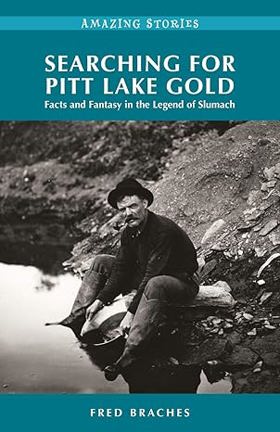
"A smart, concise analysis of the legend of Slumach's Gold, which strives to uncover the truth behind this mythical gold deposit said to be hidden north of Pitt Lake. British Columbia is gold country, and with gold comes legends that have been passed down through the generations. Ever since the Fraser Canyon gold rush, prospectors and adventurers have been looking for a mysterious, exceedingly rich gold deposit in the watershed of Pitt Lake, first mentioned in a small newspaper entry in November 1869. Over time, as the story spread, the man at the centre of this legendary gold start was endowed with the identity of Slum.ook, better known as Slumach, a Katzie man who was ultimately hanged in 1891 for shooting and killing another man in anger. The legend of the gold grew into that of an exceedingly rich deposit known as 'Slumach's gold.' This book presents, unravels, and dissects the legends of the gold of Pitt Lake, and tells the stories of some of the daredevils and venerable prospectors who searched for the mythical gold at their peril."-- Provided by publisher 133 pages : illustrations, maps, portraits ; 22 cm CIRC [ 0 ]
|
2019 |
|
Search for the Northwest Passage by Lucile Saunders McDonald 
Tells of the three hundred-year quest by a variety of nations to find the reputed short cut through North America from the Atlantic to the Pacific 137 pages illustrations 23 cm CIRC [ 1 ]
|
1958 |
|
Seabeck tide's out, table's set by Fredi Perry, Michael Jay Mjelde, Larry Hill, Victoria Rowe 
History of Seabeck, Washington (state) covers the early Native American history, exploration by British and American navigators, and continues on to the development of the harbor as the site of a lumber mill and shipbuilding center. Topics include water transportation, hotels, saloons, store, post office, schools, cemetery, Seabeck Christian Conference Center, and surrounding communities. Included are census and cemetery records, maps, legends, and an extensive index. This is the second printing.-- 242 pages : illustrations, maps ; 28 cm CIRC [ 1 ]
|
1993 |
|
Scoundrels of the Salish Sea tales of crime and punishment in Washington State's history by Carol Turner 
"From Orcas Island to Tacoma, and west to the Kitsap and Olympic Peninsulas, the American section of the Salish Sea serves as an abundant setting for a wild ride through Washington's history of crime and punishment. These stories came primarily from the pages of old newspapers--the earliest occurred in 1856, the latest in 1938. They are the tales of crimes and criminals, of the lawmen who hunted them down, and the lawyers and judges who threw them into our system of justice. They are also the stories of lost lives and shattered families. Most of these tales from Washington State's boisterous history generated enormous headlines at the time, and local newspapers sometimes played an outsize role in the unfolding drama. Other stories simply offer an irresistible cast of characters or a stunning twist in our justice system. Although the language and manners might seem quaint and occasionally absurd, and the iniquities and prejudices of the day were blatant, the details often show that, after all, not much has changed."--Amazon.com 160 pages, 16 unnumbered pages of plates : illustrations (some color), color map ; 24 cm. CIRC [ 1 ]
|
2020 |
|
Sawtooth-White Cloud by Mark Lisk (Photographer), Nicole LeFavour 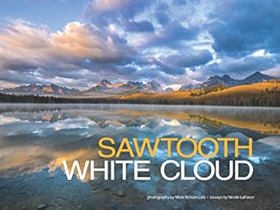
"Photographic profile of the Sawtooth/White Cloud wilderness areas in Idaho. Full-color photos are accompanied by essays describing the areas depicted"-- Provided by publisher 1 volume (various pagings) : color illustrations ; 24 x 31 cm CIRC [ 0 ]
|
2016 |
|
Sawtooth tales by Dick D'Easum, John Collias, Ernest Day 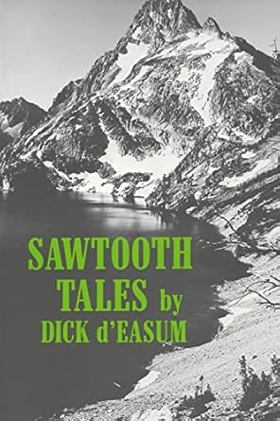
Dick d'Easum fist glimpsed Idaho's Sawtooth Mountains when he was a boy, and it was love at first sight. D'Easum spent his life getting better acquainted with the mountains. He collected stories of the people, history, and legends of the region for more than fifty years. xii, 281 pages, [1] folded leaf of plates : illustrations, color map, portraits ; 23 cm CIRC [ 1 ]
|
1977 |
|
Saving the Willamette a history of Oregon heartland river by Joe R. Blakely 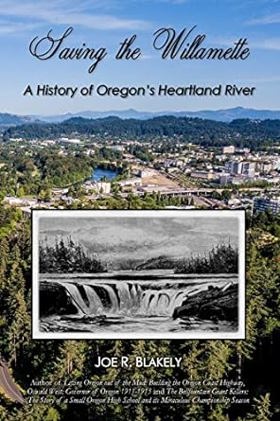
"This is the story of the Willamette River from its birth to the 21st century. Confined in the Willamette Basin, the river has been a way of life for valley inhabitants. From early Native Americans to modern man the river has been a vital source of nourishment, floods, steamboats, agriculture, pollution, conservation, and recreation. In the mid-20th century pollution reigned. Governors McCall and Straub fought for a clean river, and the Willamette Greenway-a strip of land 150 feet wide on both banks of the Willamette from Eugene to Portland. Farmers fought that plan which resulted in a 1970s compromise. That solution still exists today."--Back cover 167 pages : illustrations ; 23 cm CIRC [ 1 ]
|
2020 |
|
Saving the reservation Joe Garry and the battle to be Indian by John Fahey 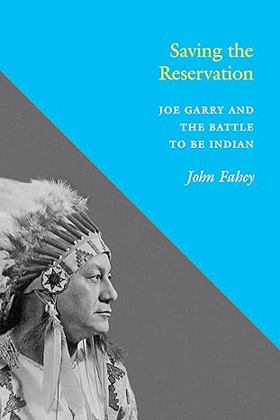
Joseph R. Garry (1910–1975), a Coeur d’Alene Indian, served six terms as president of the National Congress of American Indians in the 1950s. He led the battles to compel the federal government to honor treaties and landownership and dominated an era in government-Indian relations little attended by historians. Firmly believing that forced assimilation of Indians and termination of federal trusteeship over Native Americans and their reservations would doom Indian cultures, Garry had his greatest success as a leader in uniting American Indian tribes to fend off Congress’s plan to abandon Indian citizens. Born into a chief’s family and raised on the Coeur d’Alene reservation in northern Idaho, Garry rose to chairmanship of his tribal council, president of the Affiliated Tribes of the Northwest Indians, and leadership of NCAI. He was the first Native American elected to the Idaho House and Senate. Handsome, personable, and articulate, Garry traveled constantly to urge Indian tribes to hold onto their land, develop economic resources, and educate their young. In a turbulent decade, Garry elevated Indians to political and social participation in American life, and set in motion forces that underlie Indian relations today. xi, 220 pages : illustrations ; 24 cm CIRC [ 0 ]
|
2001 |
|
Saving the Oregon Trail Ezra Meeker's last grand quest by Dennis M. Larsen 
"Much has been written about Ezra Meeker, most of it by Meeker himself. Despite the paper trail he left behind, no one has yet written his comprehensive biography. In this, the last of three volumes on Meeker, Larsen examines the pioneer's most enduring legacy-his grand and much publicized promotion of the Oregon Trail"-- Provided by publisher xi, 266 pages : illustrations, map, portraits ; 23 cm CIRC [ 0 ]
|
2020 |
|
Saving Puget Sound a conservation strategy for the 21st Century by John Lombard, Washington (State). Department of Ecology 
No other developed area in the world matches the Puget Sound region's combination of beauty, wealth, natural resiliency, and history of environmental concern. Saving Puget Sound develops a practical proposal to conserve the Puget Sound region's most important ecosystems in the face of long-term population growth, drawing lessons that are relevant across the Northwest and in other parts of the country. It provides both a vision for conservation and a detailed review of the political and legal issues that must be at the core of any practical strategy to achieve it. xvii, 336 pages : illustrations (some color), maps (some color) ; 25 cm CIRC [ 0 ]
|
2006 |
|
Sandy the true story of a rare sandhill crane who joined our family by Dayton O. Hyde 
On a wilderness ranch in southern Oregon nearly a century ago, Dayton Hyde dove into a rushing river to rescue the threatened nest of a sandhill crane. The egg saved from the nest hatched into a bird, and also into an amazing story. "Sandy" the crane grew up in Hyde's household as a member of the family and had to be taught she was really a bird. Hyde served as parent, companion, dietitian, even flight instructor to Sandy, and eventually watched over her mate and fledglings as well. Over the years, he had to learn a lot about sandhills. In return, the cranes taught him quite a bit about what it is to be wild. More than an animal story, Sandy is the true account of an individual who dedicated himself to saving an endangered species. Hyde shares his totally charming, often hilarious stories of Sandy and the other wild pets, showing us how one man's heroic act to save an unhatched egg blossomed into a lifetime of conservation activities. First published over 30 years ago, Sandy contains a message more urgent today as civilization sprawls without regard for wilderness. It shows what private landowners can do to help wildlife conservation — that ranches, when run with an understanding of whole ecosystems, can serve as miniature wildlife sanctuaries that address the concerns of ranchers and environmentalists alike. 214 pages illustrations 24 cm CIRC [ 0 ]
|
1968 |
|
Sandon, the mining centre of the silvery Slocan by Dave May 
A local history book based in the Kootenay region of British Columbia. Book is fully illustrated throughout with lots of pictures as well as a couple of maps. viii, 216 p. : ill., maps, ports. ; 24 cm. CIRC [ 0 ]
|
1986 |