Catalog of British Columbiana and Pacific Northwest Americana
Encyclopedia Cascadia Catalog contains book titles of mostly non-fiction Pacific Northwest Coast of North America Titles (primarially British Columbia, Idaho, Oregon and Washington State) in an easy-to-understand title catalog. If you see a link with this badge ONLINE CIRC it means that there is an online institution that provides free access to that title. In some cases there may be more than one institution hosting the title digitally.
| Catalog Title | Published |
|---|---|
|
Roads less traveled in South-Central Oregon a guide to back roads and special places by Steve Arndt 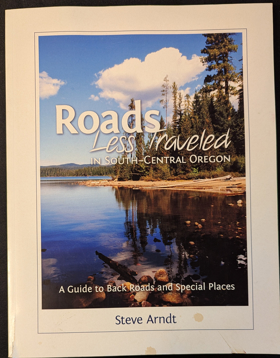
From the clear water of Crater Lake to the desolate desert valleys near the California and Nevada borders, South-Central Oregon is a region of cinder cones, ancient forests and rugged living. Roads Less Traveled in South-Central Oregon leads modern explorers on nearly 900 miles of routes and explains what they'll find along the way. vi, 103 pages : illustrations, maps ; 28 cm CIRC [ 1 ]
|
2013 |
|
Riverside remembers books I, II & III by Greater Riverside Organization (Everett, Wash)
|
1987 |
|
Rivers of Oregon by Tim Palmer 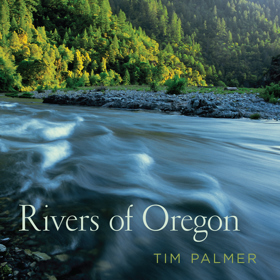
“Rivers are the essence of Oregon,” writes award-winning author and photographer Tim Palmer. In over 140 brilliant photos and evocative, informative text, Rivers of Oregon captures the life, the beauty, and the magic of Oregon’s remarkable array of waterways. The book’s engaging essays address the nature and ecology of flowing waters, the joy of travel on these lifelines of the planet, and the historic saga of Oregonians’ commitment to preserve, protect, and restore the best of their state for future generations. Rivers of Oregon captures the beauty and the intrinsic qualities of the state’s irresistible riverscapes like no other book has done. From the underwater view and from the refuge of riparian forests, from the seat of a canoe or raft and from distant mountain summits, readers will gain new perspectives on the extraordinary features that provide us with water, with life, and with scenes whose loss would leave us deeply impoverished. Join this celebrated photographer, author, conservationist, and river guide on a journey of discovery that will change the way you think about flowing water and the alluring paths it makes across our land. 162 pages : color illustrations ; 24 cm CIRC [ 0 ]
|
2016 |
|
Rivers in my veins poems by Kara Briggs 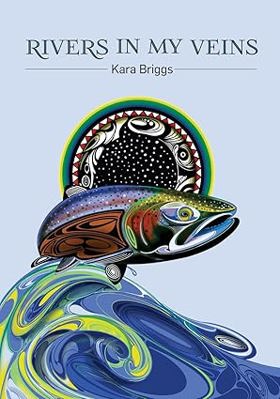
With calm elegance and precise language, Rivers in My Veins is a work of lyric courage celebrating the connection we all share to the earth. Kara Briggs' poems sing her people, Sauk-Suiattle and Yakama, onto the pages. "Land we live on land," she writes, calling us to embrace our kinship with the earth. As a career journalist, Briggs uses documentary poetry to expose the false settler-colonial narratives while innovating rhythms from the social dances of her tribes in poems that take the reader to the dance circle. She received the 2024 James Welch Prize for Indigenous Poetry for "Acknowledgement Two," a poem in this collection about her uncle who fought for fishing rights. Her fierce love of lands, waters, and stories of her peoples are carried in familiar poetic forms-sonnet, pantoum, and haiku-as vehicles to carry the readers on a journey through our shared world of literary - and deeply alive - landscapes. In groundbreaking forms of her ancestors and for future generations, Briggs introduces profiles of a Yakama treaty fisherman, a great-great-grandmother basket maker, and a Sauk-Suiattle leader calling for accountability, sharing the humanity and modernity of Native peoples. She uses sonnets, pantoums, and haiku as familiar vehicles for readers as she carries them into unfamiliar history and perspectives. She questions our relationship with words about Indigenous peoples by exploring their etymologies. She engages literary ancestors, poets Carolyn Kizer and Janice Gould, re-examining their poetics in her own. Kara Briggs works on environmental issues with tribes on the West Coast and has a background in journalism and higher education. She is a former president of the Native American Journalists Association. She graduated in 2024 with a Master of Fine Arts in Creative Writing from the Institute of American Indian Arts. This is her first poetry collection and her first publication with St. Julian Press. 59 pages ; 26 cm CIRC [ 0 ]
|
2024 |
|
River tales of Idaho by Darcy Williamson 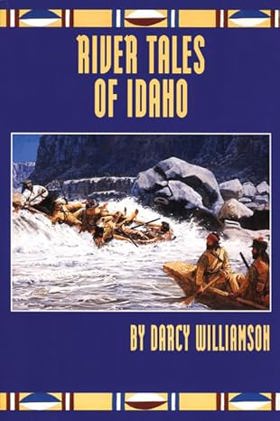
Idaho's history centers, in many regards, on its rivers. Idaho has more free flowing water than any other state in the continental US. Idaho rivers have played an important role in the state's history, travel and commerce. River Tales of Idaho includes fifty eight stories that illustrate the importance of the state's streams to Native Americans, explorers, settlers, industry and recreationists. xi, 342 pages : illustrations, maps ; 23 cm CIRC [ 0 ]
|
1997 |
|
River reflections Snohomish City, 1859 to 1910 : a popular narrative history of Snohomish City by Snohomish Historical Society
|
1975 |
|
River reflections Part II - 1910 - 1980 by Snohomish Historical Society
|
1981 |
|
River pigs & cayuses oral histories from the Pacific Northwest by Ron Strickland 
Ron Strickland’s oral histories recover a part of the original Northwest character that is rapidly disappearing. In River Pigs and Cayuses, he gathers stories from old-timers in Washington, Idaho, and Montana. Brimming with lively accounts both humorous and poignant, the book illuminates cadences and traditions that Strickland hopes will survive long after the storytellers are gone. Here a moonshiner, a fish pirate, a timber cruiser, a branding iron maker, a smoke jumper, a frontier bride, and 25 other fascinating individuals speak vividly, revealing their personal histories in their own words. Strickland introduces each story, providing information on the teller and placing the story in context. In telling their own stories, his subjects speak to the diversity of life and labor in the Northwest. A short glossary enhances the “listening” experience, as do Strickland's own photographs of the storytellers. In a new introduction, William Kittredge notes that Strickland’s interviewees are most passionate when speaking of their survival in the work-a-day world, sustained both by their livelihoods and by the solace of companionship. “What we hear echoing over and again in these voices,” Kittredge writes, “is pride, at having managed difficult lives, and having along the way earned independence, all the individuality they could manage, and an unapologetic sense of self.” xx, 155 pages : illustrations ; 23 cm. CIRC [ 1 ]
|
2001 |
|
River of the west stories from the Columbia by Robert Clark 
The mighty Columbia River encompasses not only the full range of American history but a geography of myth, hope, and tragedy. With the intricate detail of a scholar and the art of a storyteller, author Robert Clark captures the impact of Manifest Destiny, the conquest of native peoples, emigrants from the drought-ridden Midwest, and hydropowered New Deal dreams x, 406 pages ; 21 cm CIRC [ 1 ]
|
1997 |
|
River of renewal myth and history in the Klamath Basin by Stephen Most 
"River of Renewal tells the remarkable story of the Klamath Basin, a region of the Pacific Northwest spanning the Oregon-California border. Indian reservations are at the headwaters, along the estuary, and across the major tributary of the Klamath River. In this place that has witnessed, since the Gold Rush, genocide, war, and conflicts over resources, myths of the West loom large, amplifying differences among inhabitants of a land united by water and divided by people. Yet when faced with ecological catastrophe, farmers, tribes, and other regional stakeholders forged a consensus that led to the largest dam removal and watershed restoration project in history. The only history of the entire Klamath Basin, River of Renewal tells the stories of the region's diverse communities and stakeholders, including the government agencies that manage most of its land. Based on author Stephen Most's original research and interviews with tribal leaders, ranchers, farmers, fishermen, forest managers, and others, River of Renewal is a political as well as an environmental history, one that underscores the power of commitment to a place and the vital importance of traditional knowledge in ecological stewardship. It offers an indispensable resource for anyone who wishes to better understand the peoples of the Klamath Basin and their extraordinary accomplishment of bringing about the removal of the four hydroelectric dams that harmed their cultures, economies, and environment for a century"-- Provided by publisher xxiii, 342 pages : illustrations, maps ; 23 cm CIRC [ 0 ]
|
2024 |
|
|
1947 |
|
River of memory the everlasting Columbia by William D. Layman, Wenatchee Valley Museum and Cultural Center 
The Columbia River of today bears little resemblance to the river Native Americans, First Nations, and settlers knew in the early twentieth century. Engineering has transformed much of the river into a series of large reservoirs contained by fourteen hydroelectric dams. While many grieved the loss of the free-flowing river, others embraced a newly tamed waterway that could control floods, irrigate desert lands, and supply electrical power for the growing region. River of Memory honours a place and time now gone from view. It restores an unfettered Columbia through more than ninety historical photographs that capture the river as it once appeared. This extraordinary visual record is accompanied by the words of early explorers, surveyors, and naturalists who wrote about specific places along the river and by the work of contemporary Canadian and American writers and poets. Organized to carry the reader from the mouth of the Columbia where it enters the ocean to its source in eastern British Columbia, the narrative introduces the natural history of the river through the archetypal journey of salmon returning to the river’s headwaters in Columbia Lake. Introducing each section are colour illustrations of salmon and other indigenous fish by noted artist Joseph Tomelleri. River of Memory fosters connections between the river’s natural and human histories by encouraging readers to linger along the river’s shores and spend time reflecting on its dramatic mountain and plateau landscapes. xv, 150 pages : illustrations (some color), maps (some color) ; 24 x 29 cm CIRC [ 1 ]
|
2006 |
|
River of life, channel of death fish and dams on the lower Snake by Keith Petersen 
In the words of the author, "this book is the story of how people came to settle this region and demand river alterations--and how some eventually came to oppose them… It is also the chronicle, yet unfolding, of the conflict between native wildlife and dams. In microcosm it is, in many ways, the story of the American West." This history of the four Lower Snake River dams and their impact on Northwest salmon was named "Book of the Year" by the Idaho Library Association. River of Life, Channel of Death tells the story of the long struggle to bring navigation to Lewiston and hydro-power to a region; of the influence of powerful congressional representatives and booster organizations; of a clash of cultures, first between Indians and whites and later between environmentalists and developers; and of the role of the federal government in Western settlement. While the dams made Lewiston into the farthermost inland seaport in the western United States, they continue to be a subject of controversy in the continuing national debate over the fate of Northwest salmon. In a new preface written for this edition, Petersen comments on information that has become available and events that have occurred since his book was first published in 1995. xiv, 321 pages : map ; 23 cm CIRC [ 0 ]
|
2001 |
|
River city a history of Campbell River and the Discovery Islands by Jeanette Taylor 
Campbell River, stretching along the benchland of Discovery Passage on the east Coast of Vancouver Island, is the hub of the island's north and the surrounding islands and inlets. Internationally renown as a sports fishing destination acclaimed for the size and quality of its salmon and for the wild beauty of its surroundings, the area draws tens of thousands of tourists each year. The modern Campbell River, with a population of 30,000, carries only faint hints of its rustic beginnings as logging and fishing village, and even fewer traces of its ancient roots as a First Nations fishing community. Jeanette Taylor, a longtime resident and local historian, delves deeply into the area's history to deliver a fascinating insider's account of the people who have melded their skills and souls with the bold, brash, richly endowed landscape of Campbell River and the Discovery Islands. Taylor follows the Lekwiltok peoples from their migration south to Campbell River's fishing grounds, through to "first contact" and the ensuing struggle for cultural and economic survival. She documents the indomitable first settlers of the area, whose vision and determination set the tone for the area's future growth, including Fred Nunns, who paddled up the coast from Comox with a piano straddling two canoes; businessman W.E. Anderson who made his fortune in the Yukon Gold Rush and expanded it by investing in the Quathiaski Canning Company; and a host of other Native people, loggers, fishermen, daredevils and pioneering men, women and children. They left their indelible stamp on Campbell River through the Great Depression, two World Wars and the astounding postwar boom in traditional industries, sport fishing and tourism. The vision and vigour of the area's first settlers can be seen in Campbell River citizens of the nineties. The resource industries that generated its first wave of expansion have declined, but Campbell River is standing firm, looking to the new millennium with optimism as the ecotourism trade develops and restoration and revitalization breathe new life into the community. A riveting saga as well as an important historical record, River City comes from a writer who knows and loves the area's history, and who brings fresh insights into life and work along the Discovery Coast. 239 pages : illustrations, map ; 29 cm CIRC [ 1 ]
|
1999 |
|
Rites of passage a memoir of the sixties in Seattle by Walt Crowley 
On a hot summer night in 1963, a teenager named Walt Crowley hopped off a bus in Seattle’s University District, and began his own personal journey through the 1960s. Four years later at age 19, he was installed as “rapidograph in residence” at the Helix, the region’s leading underground newspaper. His cartoons, cover art, and political essays helped define his generation’s experience during that tumultuous decade. Rites of Passage: A Memoir of the Sixties in Seattle weaves Crowley’s personal experience with the strands of international, intellectual, and political history that shaped the decade. As both a member and in-house critic of the New Left and counter-culture, the author offers a unique perspective in explaining why the experiments and excess of the period “made sense at the time.” Anti-war marches, human be-ins, rock festivals, psychedelic drugs, underground newspapers, free universities, light shows, inner-city riots, radical skirmishes, and hippie antics are chronicled with personal anecdotes, contemporary accounts, and historical insights. In the pages of Rites of Passage, the reader will encounter Black (and White) Panthers, the Seattle and Chicago Seven, Weathermen and Radical Women, and many more remarkable characters. As an engaging blend of history and personal reminiscence, Rites of Passage places the sixties in a context unavailable to its participants at the time. In addition to his text, Crowley has assembled a chronology of the decade beginning with its harbingers in the forties and fifties and continuing through its aftermath. This compilation covers political, social, and cultural events, and provides the most complete synopsis of sixties history now in print. xiv, 351 pages : illustrations ; 25 cm CIRC [ 0 ]
|
1995 |
|
Rising tides and tailwinds the story of the Port of Seattle by Casey McNerthney , Kit Oldham , Peter Blecha 
"A century ago, Seattle was held hostage by its own waterfront. Competing railroad companies built a chaotic sprawl of rail lines, docks, and warehouses along the shoreline of Elliott Bay, creating conditions so bad that visionary civic planner Virgil Bogue called the harbor side "a blot on the city and a menace to the lives of its people." After years of bickering and lawsuits, the 1911 Port District Act was passed, making the Port of Seattle the first public port formed under legislation. The new public seaport briefly became the second busiest in the country during World War I. In the 1940s the Port of Seattle agreed to provide civilian air services by building Seattle-Tacoma International Airport, which today serves millions of passengers per year. This new edition covers the innovative Northwest Seaport Alliance, created in 2015 with the Port of Tacoma to jointly operate commercial shipping out of two harbors; the rise of cruise ship travel and the accompanying economic boom; Sea-Tac’s responses to 9/11 and the Covid-19 pandemic; and the airport’s growth and new International Arrivals Facility. Revised and updated, this new edition brings the story of the Port of Seattle up to the present and marks the seventy-fifth anniversary of Seattle’s bustling international airport." -- Provided by publisher 168 pages : illustrations (chiefly color), maps ; 27 cm CIRC [ 0 ]
|
2024 |
|
Rhythm in the rain jazz in the Pacific Northwest by Lynn A. Darroch 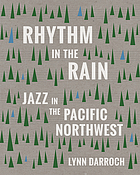
Rhythm in the Rain is a nonfiction narrative about the jazz community in the Pacific Northwest that examines the people, places, and events that have made cities like Portland, Oregon, and Seattle, Washington, so popular among musicians. From the genesis of Jackson Street and Williams Avenue in the 1940s & '50s with such legends as Ray Charles and Quincy Jones, to the modern voices of George Colligan, Rebecca Kilgore, and Esperanza Spalding, this book aims to encompass and illuminate the rich musical history of a region that, while not widely recognized as a jazz mecca, has seen its relevance within the local community xiii, 235 pages : illustrations ; 26 cm CIRC [ 0 ]
|
2016 |
|
Rexburg, Idaho the first one hundred years, 1883-1983 by David L. Crowder
|
1983 |
|
Return to the land of the head hunters Edward S. Curtis, the Kwaka'wakw, and the making of modern cinema by Brad Evans , Aaron Glass 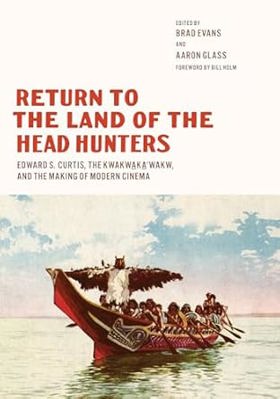
Photographer Edward Curtis’s 1914 orchestrally scored melodrama In the Land of the Head Hunters was one of the first US films to feature an Indigenous cast. This landmark of early silent cinema was an intercultural product of Curtis’s collaboration with the Kwakwa̱ka̱’wakw of British Columbia—meant, like Curtis’s photographs, to document a supposedly vanishing race. But as this collection shows, the epic film is not simply an artifact of colonialist nostalgia. In recognition of the film’s centennial, and the release of a restored version, Return to the Land of the Head Hunters brings together leading anthropologists, Native American authorities, artists, musicians, literary scholars, and film historians to reassess the film and its legacy. The volume offers unique Kwakwa̱ka̱’wakw perspectives on the film, accounts of its production and subsequent circulation, and evaluations of its depictions of cultural practice. Resituated within film history and informed by a legacy of Kwakwa̱ka̱’wakw participation and response, the movie offers dynamic evidence of ongoing cultural survival and transformation under shared conditions of modernity. xxvii, 420 pages ; 26 cm. CIRC [ 0 ]
|
2014 |
|
Restoration of Puget Sound rivers by David R. Montgomery, University of Washington Center for Water and Watershed Studies, Society for Ecological Restoration Northwest Chapter Spring Meeting (2000 : Seattle, Wash) 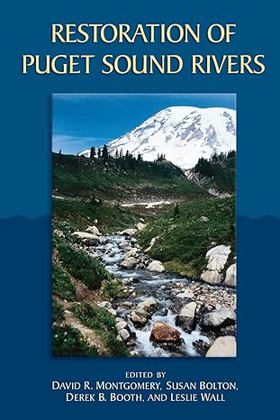
The recent listing of Pacific salmon under the Endangered Species Act has led to substantial interest in the scientific basis for river restoration in the Pacific Northwest. Millions of dollars in state and federal funding have been programmed for habitat restoration efforts to stem the decline of salmon populations in the region. This volume addresses the need for a solid understanding of fluvial processes and aquatic ecology in order to predict both river and salmonid response to restoration projects. In the Pacific Northwest, as in most regions of the United States, we are still learning about the processes that create habitat and river structure, how those processes influence aquatic ecosystems, and how to gauge the response of river systems to both land-use changes and restoration efforts. River systems are still responding to historic changes, and degraded habitat may not be restored successfully if natural conditions are not well understood, particularly if massive changes in watershed hydrology or other processes are the root cause. These issues faced in the development of regional river restoration programs are by no means unique to the Northwest, and so the initiation of a regional program of river restoration provides an opportunity to evaluate the state of river restoration in general. The eighteen chapters of Restoration of Puget Sound Rivers--presented by the region’s experts at a symposium of the Society for Ecological Restoration--examine geological and geomorphological controls on river and stream characteristics and dynamics, biological aspects of river systems in the region, and the application of fluvial geomorphology, civil engineering, riparian ecology, and aquatic ecology in efforts to restore Puget Sound Rivers. This volume will be of interest to geomorphologists, aquatic biologists, civil engineers, planners, and all those interested in the interface of science and policy in addressing one of the fundamental environmental challenges of the twenty-first century. v, 505 pages : illustrations, maps ; 23 cm CIRC [ 0 ]
|
2003 |
|
Resilience through writing a bibliographic guide to Indigenous-authored publications in the Pacific Northwest before 1960 by Robert E. Walls , Darby C. Stapp , Alexandra L.C. Martin (Book designer), Victoria M.R. Boozer (Book designer) 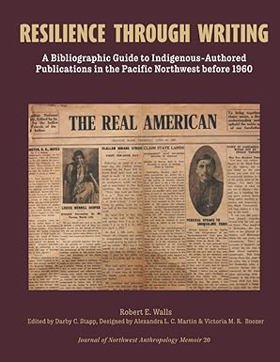
Resilience Through Writing: A Bibliographic Guide to Indigenous-Authored Publications in the Pacific Northwest before 1960 includes nearly 2,000 entries by over 700 individuals, 29% of them women, most of which were largely unknown. Coverage has been thorough, with writings from coastal and interior regions of Alaska, British Columbia, Washington, Idaho, Oregon, and northern California. Entries include newspaper letters to the editors, school compositions, speeches, legal statements, and articles in miscellaneous relatively obscure publications. These materials thus provide new perspectives on Native American/First Nations cultures in the Pacific Northwest. The potential value of this material to descendants; tribal members; tribal historians; and scholars of Indigenous literature, political science, and culture change is enormous. By producing this bibliography and allowing the Journal of Northwest Anthropology (JONA) to publish it in our Memoir series, Robert Walls has given those interested in Northwest Indigenous writings the roadmap to years of research. xiv, 481 pages : illustrations ; 28 cm CIRC [ 0 ]
|
2021 |
|
Researching local history by Mary Reed, Carole Simon-Smolinski, Idaho State Historical Society
|
1985 |
|
Requiem for a people the Rogue Indians and the frontiersmen by Stephen Dow Beckham
|
1971 |
|
Reptiles of Washington and Oregon by Herbert A. Brown, Robert M. Storm, William P. Leonard, Seattle Audubon Society 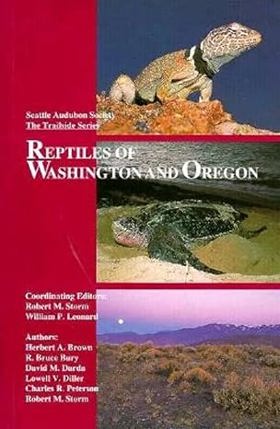
"A guide to turtles, lizards, and snakes. Each species entry includes: description, distribution, ranges, habits, comparison to similar species, and remarks regarding the uniqueness of the species. Also the only field guide to cover all marine and freshwater turtles in the region" --back cover viii, 176 pages : illustrations (chiefly color), maps ; 22 cm. CIRC [ 0 ]
|
1995 |
|
Reports and letters of Herbert Beaver, 1836-1838, chaplain to the Hudson's Bay Company and missionary to the Indians at Fort Vancouver by Herbert Beaver, Hudson's Bay Company 
Reports and letters to the governor and committee of the Hudson's Bay Company of London xxiv, [2], 148, [5] pages : illustration ; 28 cm CIRC [ 1 ]
|
1959 |