Catalog of British Columbiana and Pacific Northwest Americana
Encyclopedia Cascadia Catalog contains book titles of mostly non-fiction Pacific Northwest Coast of North America Titles (primarially British Columbia, Idaho, Oregon and Washington State) in an easy-to-understand title catalog. If you see a link with this badge ONLINE CIRC it means that there is an online institution that provides free access to that title. In some cases there may be more than one institution hosting the title digitally.
| Catalog Title | Published |
|---|---|
|
Company town Potlatch, Idaho, and the Potlatch Lumber Company by Keith Petersen, Latah County Historical Society (Publisher) 
Potlatch, Idaho, was a company town -- a community completely owned by a large lumber company. Its story is the story of the Pacific Northwest in microcosm: the exploitation of natural resources; the impact of big business on the development of a rural area; of ordinary people making a place their home xix, 284 pages, 32 unnumbered pages of plates : illustrations ; 24 cm CIRC [ 1 ]
|
1987 |
|
|
1987 |
|
Spilsbury's coast pioneer years in the wet West by Howard White, Jim Spilsbury 
Spilsbury's Coast is that part of the Inside Passage between the Fraser River and the top end of Vancouver Island -- a place of small boats, countless islands and whole towns on floats. When Jim Spilsbury, B.C's most famous pioneer entrepreneur, teams up with master storyteller and literary craftsman Howard White, the result is a spell-binding romp up and down British Columbia's rugged coast; eighty years of fascinating anecdotes and memories distilled into 190 pages. Jim Spilsbury grew up in a tent on Savary Island, squatting on crown land. His story is one of the classic "rags-to-riches" stories in Canadian history. As well as being as brilliant inventor and an ambitious, astute businessman, he had the intangible gift of being in the right place at the right time. In 1923, at the age of 18, primed with a correspondence course in electrical engineering, Jim Spilsbury began building sophisticated radio telephones. Fishermen bought them, loggers bought them, and eventually homesteaders, explorers and even governments bought them. "Radio boomed," Spilsbury recalls, "and it carried me with it." As we follow Spilsbury in his adventures, we meet Frank Osborne, the genius engine-builder; Emil Gordon, the obsessive flamboyant Powell River salesman who sold everything from refrigerators to cows; Red Mahone, the obstreperous Boathouse cook and Spilsbury's own bizarre family, including his rifle-toting mother who cut her hair like a man's and golfed on the beaches at low tide. Howard White, himself a child of BC's backwaters, brings the voice of authority to Spilsbury's amazing tale. A rare gem of authentic storytelling - it flows fast and bright, like a mountain stream. iii, 190 pages, 64 unnumbered pages of plates : illustrations, maps, portraits ; 24 cm CIRC [ 1 ]
|
1987 |
|
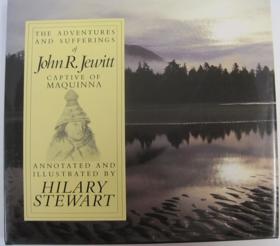
The adventures and sufferings of John R. Jewitt, captive of Maquinna by John R. Jewitt, Hilary Stewart
|
1987 |
|
To the Columbia gateway the Oregon Railway and the Northern Pacific, 1879-1884 by Peter J. Lewty 
Fascinating history of the construction of the competitive transportation system in the inland Columbia River basin in the 19th century that linked the Pacific Northwest to eastern markets and provided easier access to the Orient. This volume covers the origins of the Northern Pacific Railroad and the Oregon Railway and Navigation Co., the rise and fall of Henry Villard's first empire, and the completion of overland railways converging on the Columbia Gateway. The author successfully conveys the excitement as well as the enormous amount of time, money and hard work required to build the Pacific Northwest rail lines. Illustrated with black and white photos. With maps. 202 pages with index. xxv, [1], 202 pages, 16 unnumbered pages of plates : illustrations, maps, portraits ; 24 cm CIRC [ 1 ]
|
1987 |
|
Reach of tide, ring of history a Columbia River voyage by Sam McKinney 
Aboard a small handmade boat, Sam McKinney set out to rediscover the Columbia River of his youth. The story of his voyage offers an intimate history of the great river and of the people who have lived and worked along its shores. McKinney, a seasoned explorer, historian, and riverman, begins his voyage on the sea. Following the path of Robert Gray's ship Columbia Rediviva across the treacherous Columbia River bar, he embarks on an upriver journey that leads beyond urban Portland to the barrier of Bonneville Dam. Along the way, he visits the sites of old Indian villages, the camps of the Lewis and Clark expedition, the rotting piers of early river communities, and the islands of the lower river. Walking out along the jetty at the mouth of the Columbia, McKinney recounts how this infamous bar was formed, and how it was tamed by turn-of-the-century marine engineering. He sloshes through Astoria's rainy streets, recalling its origins as the first American outpost on the Pacific Slope and its lusty past as a working waterfront. His voyage takes him to ghost towns and abandoned villages — Chinookville, Frankfort, Knappton. He describes the development of the river's fishing industry and the harsh conditions faced by fishers during the industry's peak years. He remembers his own boyhood, working on the river as a gillnet fisherman and as a deckhand aboard one of the last sternwheelers. Combining the river's storied history, rich personal memories, and observations gleaned from the deck of the 16-foot Gander, McKinney gives us a sensitive portrait of the Columbia river, a book that reflects the rhythms of tides that the author knows so well. "Two weeks on the river and I was only fifty miles upstream," writes McKinney, grounded on a hidden sandbar. "My wake, had it been recorded, would have revealed a slow, wandering track of curiosity — islands explored, old townsites discovered, and unnamed channels followed." Sam McKinney is a founder of the Lewis and Clark Columbia River Water Trail and the author of Bligh: A True Account of the Mutiny Aboard HMS Bounty. In the late 1980's he completed a 4-year, 5000-mile journey across North America through the inland waterways of the continent. He lives in Vancouver, British Columbia, and is a research associate at the Vancouver maritime Museum. xi, 172 pages : illustrations ; 26 cm CIRC [ 1 ]
|
1987 |
|
Indian affairs in Oregon and Washington territories, &c. message from the President of the United States by United States, James Buchanan, United States Army Division of the Pacific
|
1987 |
|
Riverside remembers books I, II & III by Greater Riverside Organization (Everett, Wash)
|
1987 |
|
|
1988 |
|
Idaho place names a geographical dictionary by Lalia Phipps Boone
|
1988 |
|
Historical atlas of Washington by James William Scott, Roland L. De Lorme , Ted R. Brandt, Patrick S. Grant 
In 77 maps and accompanying texts, this atlas presents the history of Washington state from prehistoric times to the present, Beginning with Washington’s terrain climate, vegetation, and hydrography, it then displays and records the evolution of both Indian and white settlements, the development of the state’s modern economy, and the progress of society and culture from Indian times to the present. Some of the maps in the atlas cover major historical events or specific periods; other show present-day patterns of activity and deal with the historical background in the accompanying commentary. Selective bibliographies refer readers to further readings on the subject of each map 1 atlas (xxix, [181] pages) : illustrations, maps ; 32 cm CIRC [ 1 ]
|
1988 |
|
Kashpar the saga of the Basque immigrants to North America by Joseph Eiguren, Basque Museum and Cultural Center of the Basques in Idaho and the West 
Joe “Kashpar” Eiguren was raised in the Basque Country during very difficult times. During his childhood he experienced the dictatorship of King Alfonso XII, who persecuted Basque (as many Spanish leaders had done before and did afterward as well). Joe felt strongly about the Basque cause, and when he came to the United States in 1934 it remained very much part of his life. And he continued to fight totalitarianism by serving in combat in the American army in World War II. After the war, together with Pete Cenarrusa and Pat Bieter, Joe advocated for the Basques, and supported Basque freedom and independence. Joe, though never formally educated, loved to write when he found something of interest to him. That was how he began writing Kashpar. Joe was very knowledgeable about Basque history, the Basque language, and Basque politics as well as a terrific storyteller. He belonged to a generation of the Basque immigrants who were very fluent in the Basque language and had undergone the political and socioeconomic crises provoked by long-lasting dictatorships in his homeland. Here, in his own words, Joe writes about leaving his home, coming to a foreign land, making a full life, serving his new country selflessly, and becoming a community leader and energetic promoter of Basque culture. viii, 186 pages : illustrations ; 23 cm CIRC [ 1 ]
|
1988 |
|
On the Northwest commercial whaling in the Pacific Northwest, 1790-1967 by Robert Lloyd Webb 
On the Northwest is the first complete history of commercial whaling in the Pacific Northwest from its shadowy origins in the late 1700s to its demise in western Canada in 1967. Whaling in the eastern North Pacific represented a century and a half of exploration and exploitation which involved the entrepreneurs, merchants, politicians, and seamen of a dozen nations. The results of the whaling effort mirrored the outcome of whaling throughout the world. By exploiting the large whales without considering their finite numbers or reproductive capacity, the industry drove its prey to commercial extinction. It was the seamen themselves, however, who gave substance to the business of whaling. On the Northwest focuses on the working lives of these men: the shellbacks 'before the mast,' the colourful harpoon gunners who chased the whales from spray-soaked gun platforms, and shore-station workers who preserved the international flavour of the Pacific Northwest whaling industry until its demise only two decades ago. xxi, 425 pages : illustrations ; 24 cm CIRC [ 1 ]
|
1988 |
|
Eastern Oregon portrait of the land and its people by Alan D. St John
|
1988 |
|
The first 100 years an illustrated celebration by Richard M. Steele, Vancouver (B.C.). Board of Parks and Recreation
|
1988 |
|
Bound for Idaho the 1864 trail journal of Julius Merrill by Julius Merrill, Irving R. Merrill
|
1988 |
|
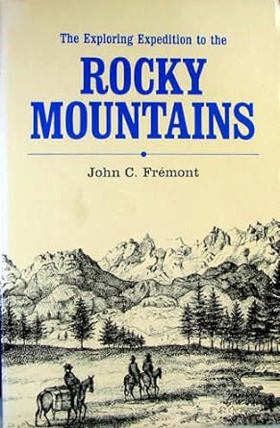
The exploring expedition to the Rocky Mountains by John Charles Frémont
|
1988 |
|
That balance so rare the story of Oregon by Terence O'Donnell
|
1988 |
|
The way to the western sea Lewis and Clark across the continent by David Lavender 
Lavender sets the stage with an account of the imperial rivalries between England, Spain, France, and the United States, and their role in Thomas Jefferson's decision to sponsor an expedition that might strengthen the young country's claims to lands it had purchased but never seen. Lavender then takes us through the steps that led to the selection of Meriwether Lewis as the Corps of Discovery's leader with William Clark as coleader. From there the great adventure story unfolds, and we follow Lewis and Clark and their company on their journey through vast, uncharted territory as they seek a transcontinental route to the Pacific. x, 444 pages, 1 unnumbered leaf of plates : illustrations, maps ; 25 cm CIRC [ 1 ]
|
1988 |
|
The park builders a history of state parks in the Pacific Northwest by Thomas R. Cox 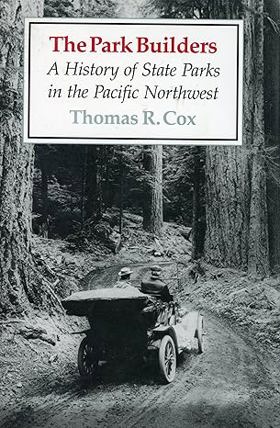
Among the greatest attractions of the Pacific Northwest are its state parks, campgrounds and tree-lined highways. From Idaho hot springs to the Oregon coast, millions of people enjoy this priceless legacy every year but few stop to think about the source of this bounty. The Park Builders profiles the men who provided the parks, and the times that shaped them. From its beginnings as part of the progressive crusades to its evolution into an expected function of state government, the state parks movement in the Northwest is a window onto the political and social developments of the twentieth century. The states of Washington, Idaho, and Oregon were generally in the mainstream of the parks movement, but each of their histories is unique. Taken together, they help to define the nature and limitations of regionalism in the Northwest. Especially in the early years, the story of state parks was largely the story of individuals. Drawing extensively from interviews and personal papers, Thomas Cox creates memorable pictures of parks activists in each state. Robert Moran, creator of the battleship, Nebraska, spent a decade lobbying the state of Washington to accept his magnificent acreage on Orcas Island. Sam Boardman went from a road crew to the head of Oregon’s park system, and took up his mission with a zeal that was literally religious: “To me a park is a pulpit,” he wrote. “The more you keep it as He made it, the closer you are to Him.” In Idaho, Senator Weldon Heyburn, no proponent of state expenditures, set out to create a national park, and ended up with a premier state park, named for him. State parks serve more people at far less expense than do those in the National Park System. Since their fates are determined largely at the state level, they are an ideal venue for the study of grassroots activism and regional trends. This book is the first to collect these themes into a coherent whole. It will serve as a model for further regional studies of its kind. xiii, 248 pages, 20 unnumbered pages of plates : illustrations, map, portraits ; 24 cm CIRC [ 1 ]
|
1988 |
|
Washington and Oregon a map history of the Oregon country by Martha Berry Parker
|
1988 |
|
Kid on the river by Dean Nichols 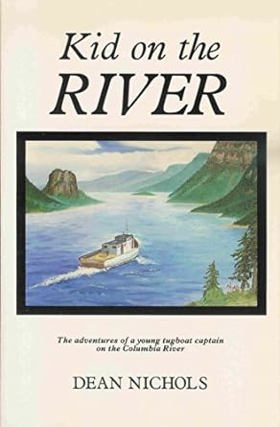
Narrow escapes, hilarious predicaments, and grim disasters are all part of the rich and varied experiences of a young tugboat captain on the Columbia River during the era between the grand old sternwheelers and the multi-thousand horsepower tugboats of today. The author had captured the excitement o this episode in his life and presented it in and informal manner that will appeal to a wide audience. 5 1/2 x 8 1/2. 128 pages. Map. x, 118 pages : illustrations ; 22 cm CIRC [ 1 ]
|
1988 |
|
Latah County centennial, 1888-1988 by Idahonian
|
1988 |
|
Circling north by Charles Lillard
|
1988 |
|
Umbrella guide to Friday Harbor & San Juan Island by Jerome K. Miller
|
1988 |