Catalog of British Columbiana and Pacific Northwest Americana
Encyclopedia Cascadia Catalog contains book titles of mostly non-fiction Pacific Northwest Coast of North America Titles (primarially British Columbia, Idaho, Oregon and Washington State) in an easy-to-understand title catalog. If you see a link with this badge ONLINE CIRC it means that there is an online institution that provides free access to that title. In some cases there may be more than one institution hosting the title digitally.
| Catalog Title | Published |
|---|---|
|
On American soil how justice became a casualty of World War II by Jack Hamann 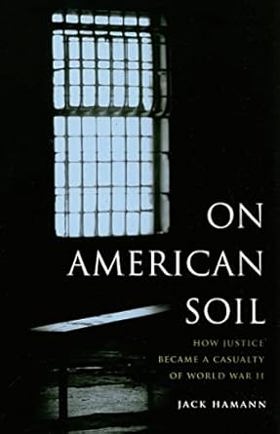
During the night of August 14, 1944, an Italian prisoner of war was lynched on the Fort Lawton army base in Seattle--a murder that shocked the nation and the international community. It was a time of deep segregation in the army, and the War Department was quick to charge three African American soldiers with first-degree murder, although there was no evidence linking them to the crime. Forty other black soldiers faced lesser charges over the incident, launching one of the largest and longest army trials of World War II. In this harrowing story of race, privilege, and power, Jack Hamann explores the most overlooked civil rights event in American history. On American Soil raises important questions about how justice is carried out when a country is at war, offering vital lessons on the tensions between national security and individual rights. xviii, 358 pages ; 23 cm CIRC [ 0 ]
|
2007 |
|
Olga 125 years : memories and potlucks by Irene Barfoot O'Neill 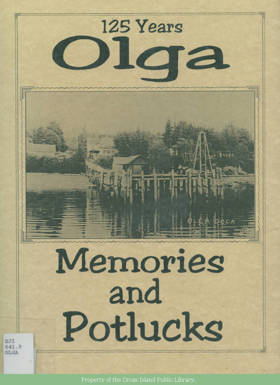
Authored by Irene Barfoot O'Neill, Olga 125 Years: Memories and Potlucks celebrates more than a century of community history in the historic waterfront settlement on Orcas Island, Washington. The book weaves together family recollections, archival records, and community traditions to trace how a pioneer farming and canning outpost evolved into a close-knit, enduring residential hamlet. Through these shared narratives and local recipes, the text highlights the social glue that has sustained generations of residents through changing economic tides. A keen insight drawn from the work is how communal food traditions and shared gatherings function as vital infrastructure in isolated island enclaves; by anchoring local history around the community potluck, the narrative reveals that shared meals served as the primary mechanism for bridging generational divides, welcoming newcomers, and preserving collective memory when formal institutions were scarce. 144 pages : illustrations ; 28 cm CIRC [ 1 ]
|
1996 |
|
Old Yamhill the early history of its towns and cities by Yamhill County Historical Society
|
1976 |
|
Old West in Grant County country by Monty Hormel 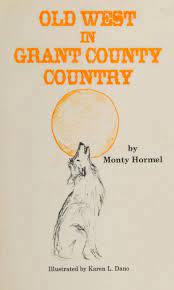
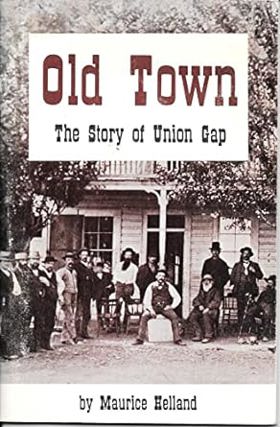
Authored by local historian Monty Hormel, Old West in Grant County Country chronicles the rugged frontier heritage and colorful historical legacy of eastern Oregon's high desert mining and ranching country. The book details the turbulent late-19th-century era defined by gold rushes, cattle drives, vigilante justice, and the sheer tenacity of homesteaders who carved out lives in an arid, isolated landscape. Through vintage photographs and local archives, the text preserves the vanishing oral histories and dramatic episodes that shaped communities like John Day and Canyon City. A keen insight drawn from the work is how the popular mythology of the "Old West" masks the mundane economic desperation of frontier extraction; by examining the boom-and-bust cycles driven by mineral exhaustion and grazing limits, the narrative reveals that legendary tales of outlaw lawlessness often served to distract from the grinding precariousness of living on depleted land. vii, 95 pages : illustrations ; 22 cm CIRC [ 1 ]
|
1992 |
|
Old Town the story of Union Gap by Maurice Helland
|
1983 |
|
Old Square-Toes and his lady the life of James and Amelia Douglas by John D. Adams 
August 12, 2003, marks the 200th anniversary of the birth of Sir James Douglas. Although he played an integral role in British Columbia's history, in many ways Douglas remains misunderstood and an enigma. He is known for his contradictory qualities he was self-serving, racist, a military hawk, sometimes violent and arrogant. Yet he was also extremely community oriented, a humanitarian, brave and a devoted family member. John Adam's bestseller Old Square-Toes and His Lady: The Life of James and Amelia Douglas serves as an important source of information regarding Douglas's public and private lives. As Adams writes, [the term] old square-toes characterizes him as an unbending, stodgy, boring individual, but nothing could be further from the truth. At the pinnacle of his career, Douglas was knighted by order of Queen Victoria. Considering his modest, mixed-race beginnings in South America, his lofty status is, indeed, remarkable. Equally so is the life of his wife, Amelia. She was also of mixed blood, her mother being Cree and her father Irish. But unlike Douglas, who was educated in Scotland, she never left the northern forests until they married. Their ending up as a knight and lady of the British Empire was an unusual achievement. Old Square-Toes discusses the Douglases' diverse experiences of astonishing contrasts, from crossing North America by canoe to touring Europe by train, from Native uprisings to the frantic gold rush. Besides finding glory, they also faced grief in losing seven of their beloved children. This is a story of the adventure, heartbreak, and devotion that lies at the roots of western Canada xi, 243 pages : illustrations, maps ; 22 cm CIRC [ 1 ]
|
2001 |
|
Old forts of the Northwest by Herbert M. Hart 
Surveys the various roles and historical significance of numberous United States military posts that operated during the latter half of the nineteenth century 192 pages : illustrations, portraits, map (on lining papers) plans ; 28 cm CIRC [ 1 ]
|
1963 |
|
Old Fort Boise by Annie Laurie Bird, Arthur E. Yensen (Illustrator)
|
1971 |
|
Oh Shaw! and other islands by Jo Ann Morse, Jo Ann Ridley 
Limited edition prose and poetry book about Shaw Island which highlights watercolors by Rex Brandt, Joan Irving, and illustrator Malcolm Cameron. 38 pages : illustrations ; 23 cm CIRC [ 1 ]
|
1978 |
|
Of yesterday and the river by June Crithfield
|
1968 |
|
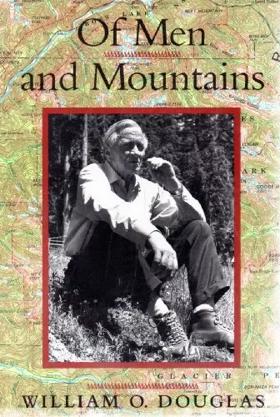
Of men and mountains by William O. Douglas
|
1990 |
|
|
1977 |
|
Of forests and fields Mexican labor in the Pacific Northwest by Mario Jimenez Sifuentez 
"Of Forest and Fields tells the story of the ethnic Mexicans that toiled in the fields, canneries, packing sheds, and forests who helped turn the Pacific Northwest into one of the most productive agricultural regions in the country. The book explores the struggle of Braceros, Tejanos, and Mexican immigrants, to contest their exploitation in various ways. The history of their resistance culminated in the creation of one of the most important farm worker's unions in the country, the Pineros y Campesinos Unidos Noreste (PCUN)"--Provided by publisher x, 169 pages : illustrations ; 24 cm. CIRC [ 0 ]
|
2016 |
|
Odd place names and their origin by United States Works Progress Administration, Federal Writers' Project (Or), Historical Records Survey (Or), Oregon State Board of Control
|
1938 |
|
Oceanography of the British Columbia coast by Richard E. Thomson 
This book deals with the physical aspects of the sea as exemplified by the Pacific Ocean and the contiguous waters of the British Columbia coast. Although principally devoted to waves, currents and tides, the book spans a broad spectrum of topics ranging from meteorology and marine biology to past and present marine geology. It attempts to elucidate the nature of oceanic motions and to relate them to everyday experience for the general interest of the casual reader and for the practical benefit of the professional mariner, scientist, or engineer xii, 291 pages : illustrations ; 28 cm CIRC [ 1 ]
|
1981 |
|
Oceanic origin of the Kwakiutl-Nootka and Salish stocks of British Columbia by Charles Hill-Tout 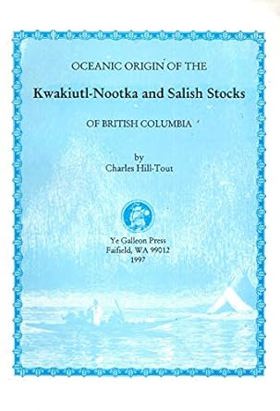
Authored by pioneering anthropologist Charles Hill-Tout, Oceanic Origin of the Kwakiutl-Nootka and Salish Stocks of British Columbia presents an early 20th-century linguistic and ethnological study exploring the ancestral roots of Pacific Northwest Indigenous peoples. The book investigates complex grammatical structures, cultural customs, and physical characteristics to argue for maritime migration theories linking Northwest Coast tribes to Pacific island populations. Through meticulous comparative analysis, the text reflects the ambitious scope of early anthropological attempts to map the peopling of the Americas. A keen insight drawn from the work is how obsolete scientific theories often inadvertently highlight the profound maritime orientation of coastal tribes; by obsessing over trans-oceanic origins to explain advanced coastal cultures, early researchers underscored a fundamental truth—that the Salish, Kwakiutl, and Nootka peoples treated the open ocean not as a barrier of isolation, but as a vast, unifying highway for human movement. 60 pages : illustrations ; 26 cm CIRC [ 1 ]
|
1997 |
|
Ocean Shores, Washington, the exciting growth years by Margaret L. Rasmussen (Compiler)
|
1974 |
|
Obstinate hope the Western Expedition of Nathaniel J. Wyeth by Jim Hardee, Nathaniel J. Wyeth 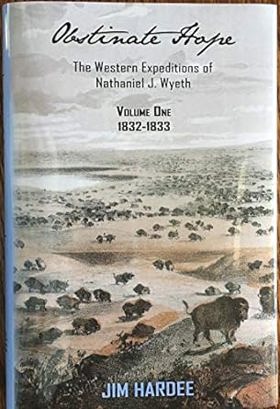
Obstinate Hope studies Nathaniel Jarvis Wyeth who is not numbered among America’s greatest heroes. The successful Boston ice merchant is considered a failure in the fur trade. Yet Wyeth was a practical businessman with an adventurous Yankee spirit that led him twice across the continent and back, in 1832 and again in 1834, prior to the development of reliable maps or emigrant trails. Wyeth’s contributions to westward expansion have been largely overlooked by historians. Obstinate Hope is part one of a two part examination of the life of Nathaniel J. Wyeth. The book begins with a look at Wyeth's pre-fur trade life including his heritage, operation of the family's Fresh Pond Hotel and his early career in the ice industry. The bulk of the book details his first expedition to the west (1832-1833) using his letters and journals as its base. The narrative follows Wyeth on his trip to the fur trade rendezvous in Pierre's Hole, on to the Pacific Northw...est and then back to the East coast. Each of Wyeth's journal entries are accompanied by the author's commentary, providing insight into Wyeth's experiences. The story is supplemented with information from the journals and letters of other people who were with him for all or part of the trip. The commentary also compares what Wyeth encountered in the west with events and occurrences from other trapper diaries. Ten maps and more than three dozen images illustrate the text. Jim Hardee is the editor of the Rocky Mountain Fur Trade Journal, published by the Sublette County Historical Society and the Museum of the Mountain Man in Pinedale, Wyoming. Jim is the author of Pierre’s The Fur Trade History of Teton Valley, Idaho. He is also the director of the Fur Trade Research Center and is a presenter for many conferences and symposiums. He has published numerous articles on various fur trade topics, and lives in Pierre's Hole, Idaho. v. : ill., maps ; 24 cm. CIRC [ 1 ]
|
2013 |
|
Nu·tka· Captain Cook and the Spanish explorers on the Coast by Barbara S. Efrat, W. J. Langlois, Provincial Archives of British Columbia Aural History
|
1978 |
|
Nuu-chah-nulth voices, histories, objects & journeys by Alan L. Hoover, Royal British Columbia Museum 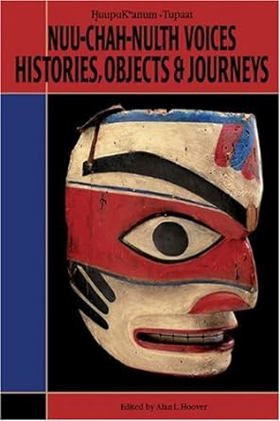
"This is the first collection of essays, articles and interviews about the Nuu-chah-nulth people, who live along the west coast of Vancouver Island (Canada) and the Olympic Peninsula (U.S.A.). Alan L. Hoover has assembled a balance of views from inside and outside Nuu-chah-nulth history, culture and art. He presents the collection in four parts." "In "Voices", the Mowachaht-Muchalaht and Huu-ay-aht nations recount their own histories, and describe who and where they are today. "Histories" offers fascinating accounts of recent history from outside the Nuu-chah-nulth culture, and ancient histories and legends from inside. "Objects" highlights the different interests of those who create objects and those who collect them: are these objects art? Finally, 'Journeys' relates the personal and spiritual growth of three Nuu-chah-nulth artists, and how their creations speak about where they came from and where they are now."--Jacket vii, 389 pages : illustrations (some color), maps ; 24 cm CIRC [ 1 ]
|
2000 |
|
Nowhere to remember Hanford, White Bluffs, and Richland to 1943 by Robert Bauman (Editor of compilation), Robert Franklin (Editor of compilation) 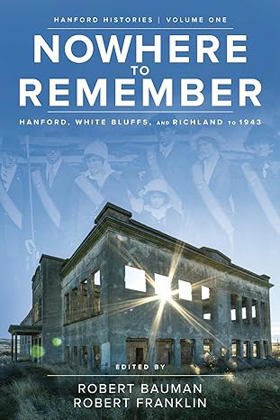
Euro-American Priest River Valley settlers turned acres of sagebrush into fruit orchards. Although farm life required hard work and modern conveniences were often spare, many former residents remember idyllic, close-knit communities where neighbors helped neighbors. Then, in 1943, families received forced evacuation notices. "Fruit farmers had to leave their crops on their trees. And that was very hard on them, no future, no money...they moved wherever they could get a place to live," Catherine Finley recalled. Some were given just thirty days, and Manhattan Project restrictions meant they could not return. Drawn from Hanford History Project personal narratives, Nowhere to Remember highlights life in Hanford, White Bluffs, and Richland--three small agricultural communities in eastern Washington's mid-Columbia region. It covers their late 1800s to early 1900s origins, settlement and development, the arrival of irrigation, dependence on railroads, Great Depression struggles, and finally, their unique experiences in the early years of World War II. David W. Harvey examines the impact of wagon trade, steamships, and railroads, grounding local history within the context of American West history. Robert Franklin details the tight bonds between early residents as they labored to transform scrubland into an agricultural Eden. Laura Arata considers the early twentieth century experiences of women who lived and worked in the region. Robert Bauman utilizes oral histories to tell forced removal stories. Finally, Bauman and Franklin convey displaced occupants' reactions to their lost spaces and places of meaning--and explore ways they sought to honor their heritage. xvi,196 pages : illustrations, maps, portraits ; 23 cm CIRC [ 0 ]
|
2018 |
|
Now you are my brother missionaries in British Columbia by Margaret Whitehead
|
1981 |
|
Now go home wilderness, belonging, and the crosscut saw by Ana Maria Spagna 
Now Go Home tells the story of how a quintessential California girl ended up earning her living in the Pacific Northwest with a crosscut saw. Ana Maria Spagna came of age in southern California in the "hot-pink eighties." By the time she turned 19, she had visited Disneyland 37 times and was ready to hit the road. In these finely edged essays, she takes her readers along. With candor, wit, and hard-earned wisdom, Spagna reflects on the journey that took her from a childhood in the suburbs of LA to a trail crew in the North Cascades, where she falls in love with a place and, unexpectedly, with a woman. With days spent laboring as the only woman on a trail crew and evenings in a cabin no larger than Thoreau's, she has world enough and time to wrestle with the compromises and contradictions of making "a life in the woods." From the work she does and the people she meets, she comes to see the nuances, and occasionally the humor, of big ideas like wilderness and environmentalism. And she decides this is the place she must call home. About the author: Ana Maria Spagna lives in Stehekin, Washington, where she works on a National Park Service trail crew. Her essays have appeared in Orion, Utne Reader, Open Spaces, Backpacker, and Best Essays NW. 166 pages ; 22 cm CIRC [ 0 ]
|
2004 |
|
Noticias de Nutka an account of Nootka Sound in 1792 by José Mariano Moziño, Iris Wilson Engstrand 
Account by botanist on expedition of Juan Francisco de la Bodega y Quadra of the Nootka Indians on Vancouver Island, their environment and adaptation to it. Introduction by Iris Wislon giving historical and anthropological background. This volume, long out of print, is now reissued in a new edition with the approval and support of the hereditary chiefs and elders of the Mowachaht, one of the Nuu-chah-nulth tribes. Included are Mozino's catalog of flora and fauna, his dictionary of the Nootka language, and reproductions of the drawings made by Atanasio Echeverria, the artists who accompanied the expedition liv, 142 pages, 24 pages of plates : illustrations ; 22 cm CIRC [ 1 ]
|
1991 |
|
|
1953 |