Catalog of British Columbiana and Pacific Northwest Americana
Encyclopedia Cascadia Catalog contains book titles of mostly non-fiction Pacific Northwest Coast of North America Titles (primarially British Columbia, Idaho, Oregon and Washington State) in an easy-to-understand title catalog. If you see a link with this badge ONLINE CIRC it means that there is an online institution that provides free access to that title. In some cases there may be more than one institution hosting the title digitally.
| Catalog Title | Published |
|---|---|
|
Walter Moberly and the Northwest Passage by rail by Daphne Sleigh 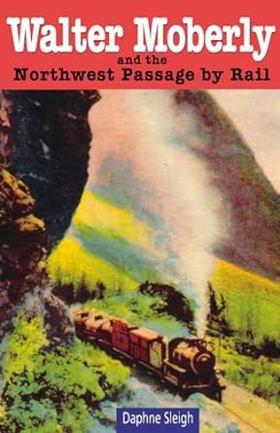
Published in 1996 by Daphne Sleigh, Walter Moberly and the Northwest Passage by Rail chronicles the remarkable life and grueling exploratory expeditions of the 19th-century civil engineer who charted the rugged mountain passes of British Columbia. The book details Moberly's perilous quest to find a viable rail route through the formidable Selkirk and Cascade mountains for the Canadian Pacific Railway, battling harsh winters, treacherous terrain, and scarce supplies. Through archival journals and historical records, the text illustrates the immense physical and political hurdles involved in stitching a nascent Canadian nation together through steel. A keen insight drawn from the work is how transcontinental railway engineering was fundamentally an exercise in imperial imagination; surveyors like Moberly did not merely chart existing wilderness, but actively imposed a geopolitical grid onto an alpine landscape that fiercely resisted human dominion. 272 pages : illustrations, maps ; 22 cm CIRC [ 1 ]
|
2003 |
|
Lewis & Clark in Lemhi County, Idaho August 12-September 4, 1805 by Richard R. Smith 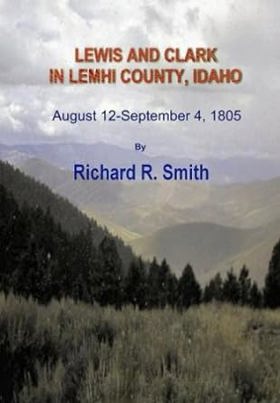
Published by historian Richard R. Smith, Lewis & Clark in Lemhi County, Idaho: August 12-September 4, 1805 meticulously chronicles the Corps of Discovery's harrowing and pivotal traverse through the rugged continental divide. The book details the expedition's difficult encounters with the geography and the Agaidika (Salmon Eater) Shoshone people, highlighting the critical diplomatic negotiations and horse trades that ultimately enabled their passage over the Bitterroot Mountains. Drawing on journal entries, cartographic records, and local terrain analysis, the text traces the exact footpaths and campsites used during this grueling three-week window. A keen insight drawn from the work is how the expedition’s survival in the Salmon River country completely inverted the explorers' geographic expectations; instead of discovering an easy water route across the continent, Lewis and Clark were forced to humble themselves before indigenous mountain pathways, realizing that the West could only be crossed through collaborative reliance on native survival expertise. v, 56, xi pages : color illustrations, maps ; 28 cm CIRC [ 1 ]
|
2003 |
|
Fort Limhi the Mormon adventure in Oregon territory, 1855-1858 by David L. Bigler 
Published by Utah State University Press, Fort Limhi: The Mormon Adventure in Oregon Territory, 1855–1858 by David L. Bigler chronicles the dramatic and ultimately ill-fated attempt by Brigham Young to establish an outlying Latter-day Saint mission in the remote wilderness of present-day Idaho. The book details the missionaries' grueling efforts to construct a fortified settlement along the Salmon River, cultivate relations with the local Bannock and Shoshone tribes, and build an expansive intermountain empire. Through meticulous archival research and pioneer journals, the text reconstructs the compounding pressures of geopolitical tension, cross-cultural friction, and a violent 1858 raid that forced the colony's sudden abandonment. A keen insight drawn from the work is how the mission exposes the friction between utopian religious expansion and indigenous territorial sovereignty; the enterprise failed not merely due to logistical isolation, but because Mormon colonizers fundamentally underestimated native resistance to having their ancestral homelands converted into a foreign ecclesiastical buffer zone. 372 pages : illustrations, maps ; 25 cm. CIRC [ 1 ]
|
2003 |
|
Portland people, politics, and power, 1851-2001 by Jewel Beck Lansing 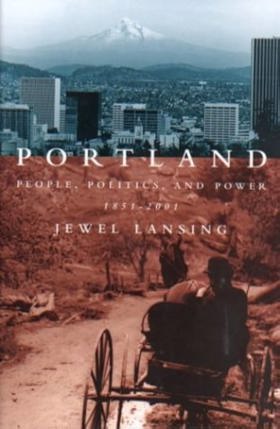
This is the definitive book on Portland's political history, beginning in 1845 when a 16-lot townsite was laid out on the bank of the Willamette River and continuing through the sesquicentennial of Portland city government. Jewel Lansing has amassed a treasure trove of information on Portland's civic and political life, which she presents in a lively volume, organized around accounts of the successive reigns of Portland's mayors. The story is rich in anecdotes that bring to life the unique individuals and controversial issues of Portland's distant and more recent past. Lansing shows that Portland's path to its present place as the 28th largest city in the United States, with a deserved reputation as one of the nation's most livable cities, has not always been smooth. Corruption, profiteering, and wide-open vice characterized the City of Roses at the turn of the 20th century, and every era has had its own controversies and rivalries: disputes over railroad franchises and rights-of-way, women's suffrage, public versus private power, the Chinese Exclusion Act, Prohibition, and the siting of freeways, to name just a few. Anyone with an interest in Portland, and in learning more about the individuals, events, and issues that have shaped it, will find this comprehensive history fascinating and informative. About the author: Jewel Lansing served as the elected City of Portland Auditor from 1983 to 1986 and as Multnomah County Auditor from 1975 to 1982. She was the author of eight books, including two about women and politics, and a murder mystery set in Portland City Hall. She is honored on Portland's Walk of the Heroines for her pioneering role as a woman in government and politics and her outstanding civic contributions. xii, 576 pages : illustrations, map ; 24 cm CIRC [ 1 ]
|
2003 |
|
James Swan, cha-tic of the Northwest Coast drawings and watercolors from the Franz & Kathryn Stenzel collection of western American art by George A. Miles, James G. Swan, Franz Stenzel, Kathryn M. Stenzel 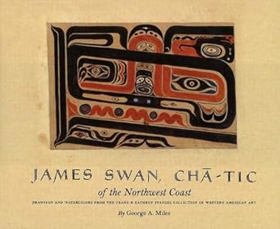
"In November 1852 James Swan moved to the Olympic Peninsula of Washington Territory. Fascinated by the Indian communities he encountered, Swan spent the remainder of his life studying their art, material culture, and history. The author of several books, he became the Smithsonian Institution's principal agent in the Northwest, collecting natural history and ethnographic objects from Gray's Harbor through the Alaskan panhandle 160 pages : color illustrations, maps ; 25 x 32 cm CIRC [ 1 ]
|
2003 |
|
Voyages of delusion the quest for the Northwest Passage by Glyndwr Williams 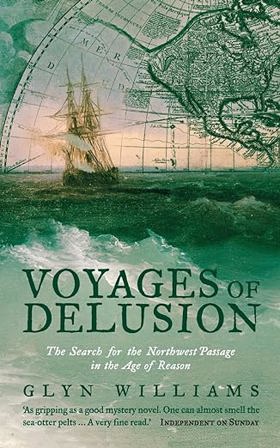
The eighteenth century--the Age of Reason--was characterized by determined attempts by philosophers, scientists, and political theorists to dispel myth, superstition, and ignorance. But the Age of Reason also witnessed some of the most irrational and vainglorious attempts by sailors and speculators to find a navigable Northwest Passage that would lead through the icy seas of the Arctic from Hudson Bay to the wealth of the Pacific Ocean. Lured by the promise of fame and riches, men endured paralyzing cold, malnutrition, and terrifying storms. Many lives and fortunes were lost in the quest for the elusive "maritime philosopher's stone." Glyn Williams describes the adventures and mishaps of these misguided expeditions xx, 467 pages : illustrations, maps ; 23 cm CIRC [ 1 ]
|
2003 |
|
The Nehalem Tillamook an ethnography by Elizabeth Derr Jacobs, William R. Seaburg 
The first book-length ethnography of any Western Oregon native group, The Nehalem Tillamook fills an important gap in what was previously known about southern Northwest Coast native cultures. In 1933 and 1934, Elizabeth Jacobs, advised by her husband, the noted anthropologist Melville Jacobs, conducted fieldwork on the Nehalem Tillamook culture of northwestern Oregon. Working with her extraordinarily able Nehalem Tillamook consultant Clara Pearson, Jacobs recorded extensive ethnographic and folkloric materials that far surpass in quality and quantity the Tillamook research of previous investigators. Jacobs's collaboration with Pearson eventually resulted in the publication of Nehalem Tillamook Tales, an exceptional collection of myths and tales recorded in English. But the companion ethnography was never finished. The Nehalem Tillamook grew from that unfinished manuscript. In consultation with Elizabeth Jacobs, the manuscript was expanded and extensively edited by William Seaburg. After Elizabeth Jacobs's death in 1983, Seaburg added careful annotations and a detailed historical introduction. The result is a remarkable book that makes a major contribution to our understanding of Nehalem Tillamook culture and will be invaluable for drawing comparisons with other Northwest native cultures. xii, 260 pages : illustrations, maps ; 23 cm CIRC [ 0 ]
|
2003 |
|
New era reflections on the human and natural history of Central Oregon by Jarold Ramsey 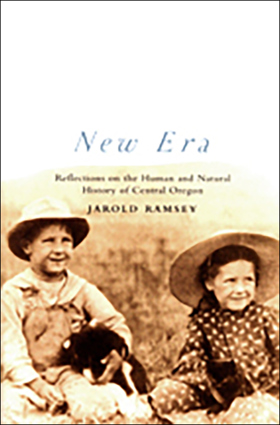
The first book-length ethnography of any Western Oregon native group, The Nehalem Tillamook fills an important gap in what was previously known about southern Northwest Coast native cultures. In 1933 and 1934, Elizabeth Jacobs, advised by her husband, the noted anthropologist Melville Jacobs, conducted fieldwork on the Nehalem Tillamook culture of northwestern Oregon. Working with her extraordinarily able Nehalem Tillamook consultant Clara Pearson, Jacobs recorded extensive ethnographic and folkloric materials that far surpass in quality and quantity the Tillamook research of previous investigators. Jacobs's collaboration with Pearson eventually resulted in the publication of Nehalem Tillamook Tales, an exceptional collection of myths and tales recorded in English. But the companion ethnography was never finished. The Nehalem Tillamook grew from that unfinished manuscript. In consultation with Elizabeth Jacobs, the manuscript was expanded and extensively edited by William Seaburg. After Elizabeth Jacobs's death in 1983, Seaburg added careful annotations and a detailed historical introduction. The result is a remarkable book that makes a major contribution to our understanding of Nehalem Tillamook culture and will be invaluable for drawing comparisons with other Northwest native cultures. About the author: JAROLD RAMSEY was born in central Oregon and grew up on his family’s ranch there. He left the ranch to attend college, and became an award-winning essayist and poet, as well as a published playwright and a respected authority on traditional American Indian literature. He is professor emeritus of English at the University of Rochester and the author of several books. In 2017, he received the Charles Erskine Scott Wood Distinguished Writer Award for lifetime achievement from Literary Arts. He lives in Madras, Oregon. 154 pages : illustrations ; 23 cm CIRC [ 0 ]
|
2003 |
|
Oregon viticulture by Edward W. Hellman 
Oregon Viticulture is a comprehensive, easy-to-use guide to successful strategies and methods for commercial vineyards in Oregon that will be extremely valuable both for current winegrape growers and for prospective growers. It is unique in its approach of combining the expertise and experience of university researchers with that of professional grape growers and winemakers--most chapters were written by at least two authors with different perspectives. Oregon Viticulture is the successor to the popular Oregon Winegrape Growers Guide, with both broader coverage of more topics and greater depth of coverage than the earlier book. It emphasizes the importance of understanding the characteristics of a vineyard site, matching grape varieties to the site, and selecting and adjusting the most appropriate management practices for each unique site. The structure and physiology of grapevines is concisely summarized, and viticulture principles are introduced throughout the book. Standard production practices are described, and separate chapters discuss sustainable viticulture practices and organic grape growing. In addition, Oregon Viticulture addresses important business management topics not usually found in similar books, including economics, marketing and contracts, compliance with government regulations, and labor management. Commercial winegrape growers, students, researchers, serious home viticulturists, and individuals with a strong interest in Northwest wines and the wine industry will find Oregon Viticulture to be a valuable reference and easy-to-use textbook and guide. viii, 264 pages : illustrations (some color), color maps ; 28 cm CIRC [ 0 ]
|
2003 |
|
Lelooska the life of a northwest coast artist by Chris Friday 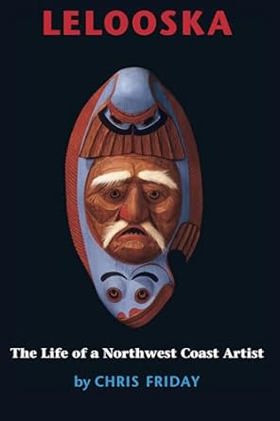
Don Smith - or Lelooska, as he was usually called - was a prominent Native American artist and storyteller in the Pacific Northwest. Born in 1933 of “mixed blood” Cherokee heritage, he was adopted as an adult by the prestigious Kwakiutl Sewid clan and had relationships with elders from a wide range of tribal backgrounds. Initially producing curio items for sale to tourists and regalia for Oregon Indians, Lelooska emerged in the late 1950s as one of a handful of artists who proved crucial to the renaissance of Northwest Coast Indian art. He also developed into a supreme performer and educator, staging shows of dances, songs, and storytelling. During the peak years, from the 1970s to the early 1990s, the family shows with Lelooska as the centerpiece attracted as many as 30,000 people annually. In this book, historian and family friend Chris Friday shares and annotates interviews that he conducted with Lelooska, between 1993 and ending shortly before the artist's death, in 1996. This is the story of a man who reached, quite literally, a million or more people in his lifetime and whose life was at once exceptional and emblematic. xvii, 283 pages : illustrations ; 23 cm CIRC [ 0 ]
|
2003 |
|
Where land & water meet a Western landscape transformed by Nancy Langston 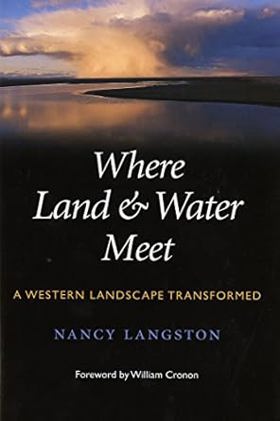
Water and land interrelate in surprising and ambiguous ways, and riparian zones, where land and water meet, have effects far outside their boundaries. Using the Malheur Basin in southeastern Oregon as a case study, this intriguing and nuanced book explores the ways people have envisioned boundaries between water and land, the ways they have altered these places, and the often unintended results. The Malheur Basin, once home to the largest cattle empires in the world, experienced unintended widespread environmental degradation in the late nineteenth and early twentieth centuries. After establishment in 1908 of Malheur National Wildlife Refuge as a protected breeding ground for migratory birds, and its expansion in the 1930s and 1940s, the area experienced equally extreme intended modifications aimed at restoring riparian habitat. Refuge managers ditched wetlands, channelized rivers, applied Agent Orange and rotenone to waterways, killed beaver, and cut down willows. Where Land and Water Meet examines the reasoning behind and effects of these interventions, gleaning lessons from their successes and failures. Although remote and specific, the Malheur Basin has myriad ecological and political connections to much larger places. This detailed look at one tangled history of riparian restoration shows how—through appreciation of the complexity of environmental and social influences on land use, and through effective handling of conflict—people can learn to practice a style of pragmatic adaptive resource management that avoids rigid adherence to single agendas and fosters improved relationships with the land. xiv, 230 pages : illustrations, maps ; 24 cm. CIRC [ 0 ]
|
2003 |
|
Madison Park remembered by Jane Powell Thomas 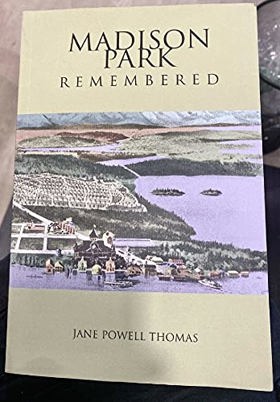
Published in local editions by Jane Powell Thomas, Madison Park Remembered captures the intimate neighborhood history and evolution of one of Seattle’s most historic lakeside communities. The book traces the area's transformation from a native transit route and late 19th-century recreational resort accessible by cable car into a vibrant residential enclave nestled along the shores of Lake Washington. Through a rich collection of archival photographs and personal reminiscences, the text preserves the vanishing daily rhythms of neighborhood cottages, local parks, and lakeside streetcar culture. A keen insight drawn from the work is how urban lakeside neighborhoods function as historical micro-ecosystems; by tracking how a recreational getaway morphed into an affluent urban suburb, the narrative reveals how Seattle's rapid geographic expansion was fundamentally propelled by the public desire to escape industrial city life while still retaining metropolitan proximity. 170 pages : illustrations, maps ; 23 cm CIRC [ 1 ]
|
2004 |
|
Conquest and catastrophe the triumph and tragedy of the Great Northern Railway through Stevens Pass by T. Gary Sherman, Washington State Library Rare Publications Collection 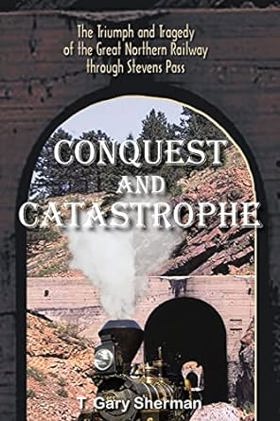
Published by the Washington State Library Rare Publications Collection, Conquest and Catastrophe: The Triumph and Tragedy of the Great Northern Railway Through Stevens Pass by T. Gary Sherman details the epic, perilous engineering feat of pushing a transcontinental railroad through the rugged Cascade Mountains. The book chronicles James J. Hill's ambitious drive to conquer the treacherous terrain of Stevens Pass, balancing the immense economic triumph of connecting the Midwest to Puget Sound against the staggering human and environmental toll. Through archival records and striking photographs, the text recounts deadly avalanches—such as the infamous 1910 Wellington disaster—and the relentless labor required to tame an unforgiving alpine landscape. A keen insight drawn from the work is how corporate hubris on the industrial frontier often blinded railway leaders to ecological realities, demonstrating that treating raw mountain passes as mere engineering obstacles carried a devastating human cost. xiii, 243 pages : illustrations, maps ; 23 cm CIRC [ 1 ]
|
2004 |
|
Nanaimo the harbour city by Goody Niosi, Terry Patterson 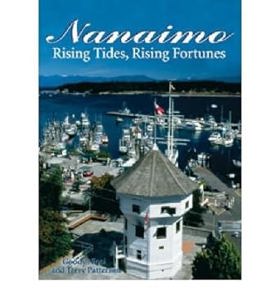
Published in 2004, Nanaimo: The Harbour City is an engaging travel guide and visual keepsake written by Goody Niosi with photography by Terry Patterson. The book chronicles the history and cultural evolution of this Vancouver Island community, tracing its growth from an early Aboriginal settlement into a thriving, modern port city. Alongside Patterson's vibrant images of the bustling harbour and local seascape, Niosi provides readers with detailed walking tours of historic neighborhoods and insights into the area's natural beauty. It serves as both a practical resource for travelers and a colorful celebration of Nanaimo's unique coastal heritage. 112 pages : illustrations (chiefly color), 1 color map, portraits ; 28 cm CIRC [ 1 ]
|
2004 |
|
The Boise Massacre on the Oregon Trail attack on the Ward party in 1854 and massacres of 1859 by Donald H. Shannon 
Only some half-dozen of the adverse encounters between Indians and emigrants on the Oregon and California Trails can be termed "massacre". The Ward Party Massacre that occurred on the Boise river is one of those unfortunate, and often overlooked events. Author Donald H. Shannon explores the relations between the peoples of the "Snake Country" of Southern Idaho, Shoshoni, Northern Paiutes, Bannocks and Emigrants, in a attempt to describe the environment that led to several of the most violent conflicts that occurred along the Oregon and California trails. xi, 287 pages : illustrations, maps ; 23 cm. CIRC [ 1 ]
|
2004 |
|
Sacajawea's people the Lemhi Shoshones and the Salmon River country by John W. W. Mann 
"John W.W. Mann offers an absorbing and richly detailed look at the life of Sacajawea's people before their first contact with non-Natives, their encounter with the Lewis and Clark Expedition in the early nineteenth century, and their subsequent confinement to a reservation in northern Idaho near the town of Salmon. He follows the Lemhis from the liquidation of their reservation in 1907 to their forced union with the Shoshone-Bannock tribes of the Fort Hall Reservation to the south. He describes how for the past century, surrounded by more populous and powerful Native tribes, the Lemhis have fought to preserve their political, economic, and cultural integrity. His compelling and informative account should help to bring Sacajawea's people out of the long shadow of history and restore them to their rightful place in the American story."--Jacket 1 online resource (xxiii, 258 pages) : illustrations, maps CIRC [ 1 ]
|
2004 |
|
The Long Beach Peninsula where the Columbia meets the Pacific by Donella J. Lucero, Nancy L. Hobbs 
Jutting northward from the mouth of the Columbia River, the Long Beach Peninsula defines Washington's southwestern coastal geography. The picturesque blend of beach and forest along the river, Willapa Bay, and the Pacific Ocean was home to the Chinook Indians who first settled this region. European and American trade came to this area in the 18th century, opening the way for Lewis and Clark to explore and establish a land route to the Pacific. The region prospered because of its diverse natural resources and thriving fur trade. Today, a vibrant tourist industry fuels the Peninsula's continuing development. 159 pages : illustrations, map ; 25 cm. CIRC [ 1 ]
|
2004 |
|
The early exploration of inland Washington waters journals and logs from six expeditions, 1786-1792 by Richard W. Blumenthal 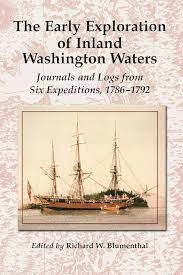
"For those armchair historians interested in the initial nautical exploration of inland Washington waters, this text is an addition to Northwest maritime history. Beginning in 1786 and continuing through 1792, The Early Exploration of Inland Washington Waters includes annotated transcriptions of all the logs and journals of the area's earliest explorers. This text follows the initial journey of John Meares, four intervening expeditions by the Spanish, and culminates with George Vancouver's voyage in 1792." vii, 214 pages ; 23 cm CIRC [ 1 ]
|
2004 |
|
Enduring threads ecclesiastical textiles of St. John the Divine Church, Yale, British Columbia, Canada by Jennifer Iredale, Irene Bjerky, Fraser Heritage Society 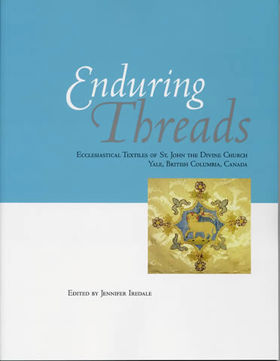
This project focused on researching approximately 100 liturgical textiles in the collection of St. John the Divine Anglican Church in Yale, BC. St. John the Divine is one of the oldest churches in the province, and many of the handmade textiles appear to date back to the time of its origins in the 1860s. The Church is now de-sanctified and designated as a Provincial Heritage Site. The Church was associated with the All Hallows Anglican girls school, which operated in Yale from 1884 to 1920. Part of the research concentrated on the production of textiles for the Church by the faculty and students of the school. Research included an analysis of the technical construction of the textiles to help determine their origins. The study of the St. John the Divine collection was contextualized within a broader history of the production of Anglican liturgical textiles, particularly in Western Canada. Comparisons were made between the Yale pieces and those from other sites. Oral history interviews with members of Anglican textile guilds, sanctuary committees, and descendants of students from All Hallows School helped fill out the research. 52 p. : ill., port. (some col.) ; 28 cm. CIRC [ 0 ]
|
2004 |
|
Steamboats on Northwest rivers by Bill Gulick 
Before the Northwest sported trains and roads alongside its rivers, steamboats took the curious and the settlers as far inland as the water could take them. Gulick describes the boats and the people who plied the rivers from Idaho to Alaska in the early days of white settlement, focusing on the career of the irascible William Polk Gray, who turned from his aspirations to be a missionary medical man to become a skilled fresh-water mariner. Gray and only a few dozen others like him managed xviii, 248 pages : illustrations, map ; 23 cm CIRC [ 0 ]
|
2004 |
|
A Voyage to the Northwest Side of America The Journals of James Colnett, 1786-89 by James Colnett, Robert Galois 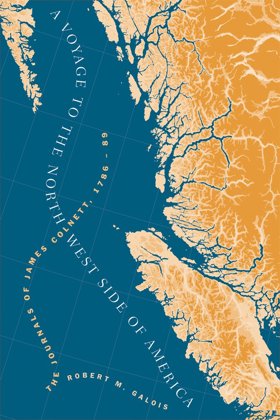
The journal of James Colnett is the last unpublished account of the early maritime fur trade on the Northwest Coast. Between 1786 and 1789, Colnett's expedition traversed the coast from Prince William Sound to the Strait of Juan de Fuca. Its members were the first Europeans to encounter the Tsimshian and the southern Heiltsuk, and the first to land on the southern Queen Charlotte Islands. The journal is reproduced with full scholarly apparatus, as well as extracts from a second journal by Andrew Bracey Taylor, 3rd mate on one of the ships in Colnett's command. Focusing on the expedition's remarkable encounters with the Native peoples of the Northwest Coast, Galois' introductory essay also addresses the geopolitical context of the voyage and the intellectual background that shaped the writing of the journals. This fascinating account gives us a new understanding of early European presence in the Northwest and of Native responses to these developments. It will interest historians, geographers, and ethnographers of the Northwest Coast and beyond. xiii, 441 pages : illustrations, maps ; 24 cm CIRC [ 1 ]
|
2004 |
|
The Lewis and Clark trail yesterday and today by William E. Hill 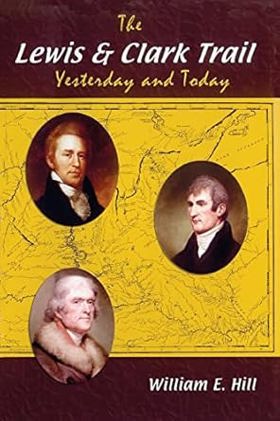
Veteran author William Hill commemorates the 200th anniversary of the Lewis and Clark expedition with this guide to the history and the route of the Corps of Discovery. Journals, maps, paintings and photographs serve to vividly contrast the U.S. that Lewis and Clark ventured through to the land that the modern adventurere will pass through when following this guidebook. xxiii, 288 pages : illustrations, maps ; 23 cm CIRC [ 0 ]
|
2004 |
|
Lewis and Clark's bittersweet crossing by Carol Lynn MacGregor, Gaye Hoopes (Illustrator) 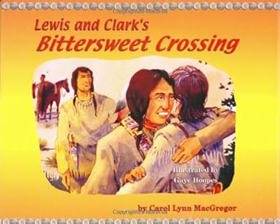
Describes the Lewis and Clark Expedition to explore the American West in the early 1800s, focusing particularly on the time the group spent with the Shoshoni and Nez Perce Indians in Idaho 32 pages : color illustrations, color maps ; 23 x 28 cm CIRC [ 0 ]
|
2004 |
|
Six decades back early days on the Snake River Plain by Charles S. Walgamott 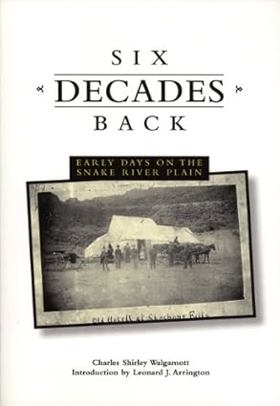
Charles Shirley Walgamott arrived by stage at Rock Creek Station, Idaho Territory in 1875. In an untamed land, far from his native Iowa, he survived illness, hardship, and lawlessness. Walgamott mined, trapped, ranched and hunted, while living with settlers, Indians and outlaws. xxv, 357 pages : illustrations ; 21 cm. CIRC [ 0 ]
|
2004 |
|
Dining car to the Pacific the "famously good" food of the Northern Pacific Railway by William A. McKenzie 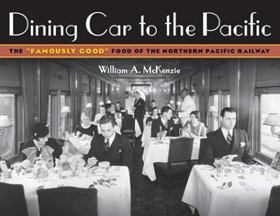
"William A. McKenzie offers an illustrated and detailed account of hospitality on the Northern Pacific - a service that many considered the best in the industry - drawing on sources ranging from railroad records of the 1860s to anecdotal accounts from the people who were there. In addition, McKenzie includes more than 150 authentic recipes used on the line, such as the Great Big Baked Potato, Washington Apple Pan Cake, and Northern Pacific Fruit Cake. Dining Car to the Pacific will be a treasured addition to the libraries of historians, cooks, and any one with nostalgia for the dinning car experience."--Jacket xi, 164 pages : illustrations ; 22 x 28 cm. CIRC [ 0 ]
|
2004 |