Catalog of British Columbiana and Pacific Northwest Americana
Encyclopedia Cascadia Catalog contains book titles of mostly non-fiction Pacific Northwest Coast of North America Titles (primarially British Columbia, Idaho, Oregon and Washington State) in an easy-to-understand title catalog. If you see a link with this badge ONLINE CIRC it means that there is an online institution that provides free access to that title. In some cases there may be more than one institution hosting the title digitally.
| Catalog Title | Published |
|---|---|
|
Victoria a HarbourTown history by Gayle Baker 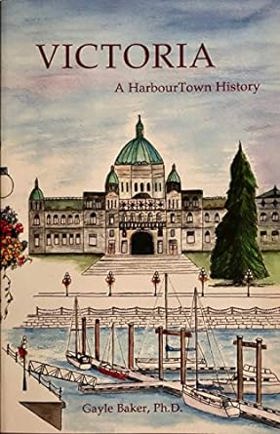
Lauded as a most interesting story of Victoria, this popular history introduces you to the intriguing tales of an amazing city nestled in the splendor of the Pacific Northwest. Victoria, A HarbourTown History will introduce you to the Lukwungen who were there before Victoria was Victoria and the powerful Hudson's Bay Company who came to dominate their area. You will also get to know the settlers, gold seekers, merchants, and visionaries who followed. Together, they created today's Victoria, one of the world's favorite destinations as well as a wonderful place to live.From bustling boom town to an almost abandoned settlement, Victoria's early years were marked by trial and triumph. Emerging as the centre of power and wealth in British Columbia, Victoria's leaders battled unsuccessfully retain its dominance over Vancouver. Eventually becoming a delightful English-like city surrounded by stunning scenery, this story will show you the Victoria hidden beneath its glamourous image. Enriched by the tales of the leaders who loved and transformed it and the stories of most memorable buildings, this concise, comprehensive history will introduce you to one of the world's favorite destinations.Designed for those who love Victoria, those who enjoy history, and those who simply enjoy a good read, this new popular history is sure to please. 141 pages : illustrations, map ; 22 cm CIRC [ 1 ]
|
2017 |
|
Very close to trouble the Johnny Grant memoir by Johnny Grant, Lyndel Meikle 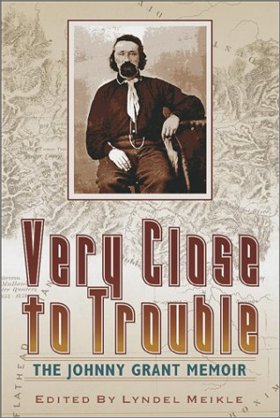
Grant was 76 when he dictated his memoirs to Clothild Bruneau Grant, the last in his fairly long line of wives. Meikle has ably edited the manuscript down to focus on his life in the 1850s and '60s, when Grant galloped across the western Montana frontier, making a name for himself as an early pioneer and trader. Grant's eyewitness accounts of frontier life, from a stage overturning to the hanging of highwaymen, the Mormon rising of 1857 and the discovery of gold, give readers an absorbing glimpse into his rough-and-ready times. --Copyright 1996 Cahners Business Information, Inc xii, 223 pages, 8 unnumbered pages of plates : illustrations, maps, portraits ; 24 cm CIRC [ 0 ]
|
1996 |
|
Vernon internment camp, 1914-1920 by Don McNair 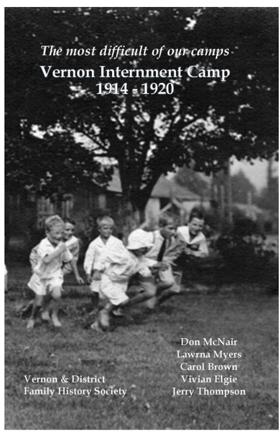
Researched and written by members of the Vernon & District Family History Society, this book concerns the internment camp that operated in Vernon B.C. during and after World War I. In that time, over 1000 ‘enemy aliens’ from the then AustroHungarian, German, and Ottoman empires passed through its gates. Vernon Internment Camp was one of largest in the country and one of only two camps that interned women and children. In the estimation of the Officer Commanding Internment Operations in Canada, Vernon’s was “the most difficult of our camps.” The book takes you into the lives of the internees and guards with numerous biographical sketches, great photographs from local, national and international sources, details of camp life, and the reactions of Vernon's citizens. There is also information about the neighbouring ‘work camps’ at Mara, Edgewood and Monashee, where prisoners were forced to build roads through the wilderness. 27 pages : illustrations, maps ; 27 cm CIRC [ 0 ]
|
2017 |
|
Vanport by Manly Maben 
"Vanport City, Oregon, was conceived in 1942 as a temporary housing project for the families of men and women who came to the Pacific Northwest to work in the Kaiser shipyards and further the war effort (World War II). Situated on a flood plain between Vancouver, Washington, and Portland, Oregon, the Columbia River reclaimed the city for its own in a flood on Memorial Day, 1948. In its brief but vital lifetime, Vanport pushed the Portland area into a new era of change and development, leaving a legacy that is felt even today. During its time, Vanport was the largest housing project in the United States, (perhaps the world) and the second largest city in Oregon"--Cover xiv, 151 pages : illustrations ; 23 cm CIRC [ 1 ]
|
1987 |
|
Vancouver's women in blue trailblazers of the Vancouver Police Department, 1904-1975 by Carolyn J. Daley 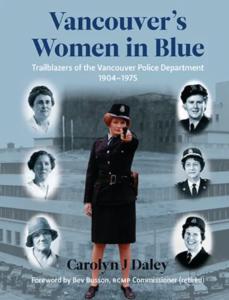
Women in Blue is a comprehensive history of women in the VPD from 1904 (as it turns out) through 1975. For decades, VPD history noted that the first females were hired in 1912, but it turns out four matrons were hired between 1904 and 1912. The matrons performed many of the same duties as the police women who were hired in 1912. 266 pages : illustrations (some colour), portraits ; 28 cm CIRC [ 0 ]
|
2020 |
|
Vancouver's voyage charting the Northwest Coast, 1791-1795 by Robin Fisher 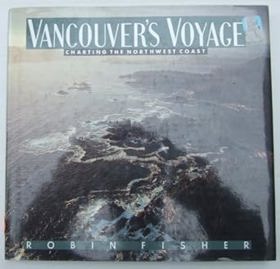
Traces the history of Vancouver's expedition to explore and map the west coast of North America xi, 131 p. : ill. (some col.) ; 25 x 26 cm. CIRC [ 1 ]
|
1992 |
|
Vancouver's discovery of Puget Sound portraits and biographies of the men honored in the naming of geographic features of northwestern America by Edmond S. Meany, Washington State Library Classics in Washington History 
Chapters 5-12 (p. 61-334) include a portion of Vancouver's journal, reprinted from v. 2 of his Voyage of discovery to the north Pacific Ocean, and round the world, 2nd edition, London, 1801. The reprint "is designed to follow the explorer from the time he strikes the shore of the present state of Washington ... on into Puget Sound, and around Vancouver Island, and, finally, through the negotiations at Nootka." xvii, 344 pages : illustrations ; 22 cm ONLINE CIRC [ 1 ] CIRC [ 1 ]
|
1907 |
|
Vancouver's Chinatown racial discourse in Canada, 1875-1980 by Kay Anderson 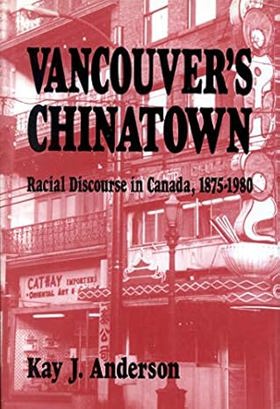
Popular wisdom maintains that the colourful Chinese quarters of Canadian, American, and Australian cities owe their existence to the generations of Chinese immigrants who have made their lives there. The restaurants, pagodas, and neon lights are seen as intrinsically connected to the Chinese and their immigrant experience in the West. Kay Anderson argues, however, that "Chinatown" is a Western construction, illustrative of a process of cultural domination that gave European settlers in North America and Australia the power to define and shape the district according to their own images and interests. -- From publisher's description x, 323 pages : illustrations, maps ; 24 cm CIRC [ 1 ]
|
1991 |
|
Vancouver on the Columbia an illustrated history by Ted Van Arsdol, Sheila Guenther, Greater Vancouver Chamber of Commerce (Wash)
|
1986 |
|
Vancouver Island's west coast 1762-1962. With illustrations, map and list of shipwrecks by George Salier Willis Nicholson
Index of shipwrecks. History from the time of the landing of the Spaniards and Captain Cook 356 pages : illustrations, portraits, maps (on lining papers) ; 25 cm CIRC [ 1 ]
|
1963 |
|
Vancouver Island scoundrels, eccentrics and originals tales from the library vault by Stephen Ruttan 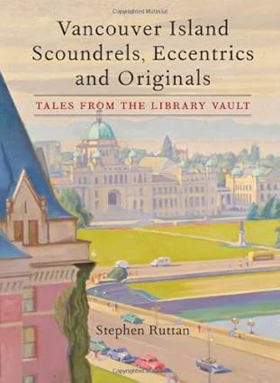
Found on the history shelves of the Greater Victoria Public Library, these twenty true stories are brought to life by Stephen Ruttan. They draw a picture of the life of a city with a recent past that's both unconventional and colourful. From Miss Wilson and her famous parrot, Louis, to Jimmy Chicken Island, named after a man who acquired his surname from his habit of stealing chickens, to the Pig War, when Britain and the United States nearly came to blows over the San Juan Islands, to the rise and fall of Francis Rattenbury, one of Victorias best-known architects, these stories reveal a lively history of a West Coast capital city. Archival illustrations, newspaper clippings, and modern photos help make Vancouver Island Scoundrels, Eccentrics and Originals a delightful and illluminating read. 184 pages : illustrations (some colour), maps, portraits ; 19 cm. CIRC [ 0 ]
|
2014 |
|
Vancouver Island railroads by Robert D. Turner
The history of railroads on Vancouver Island begins in 1863. Turner presents the stories of the lines, the men who built them, and the locomotives and cars that gave them a unique character. Included is the saga of the Dunsmuirs, the coal barons and railroad builders who influenced the entire history of the Island 170 pages illustrations 29 cm CIRC [ 1 ]
|
1973 |
|
Vancouver Island book of musts the 101 places every islander must see by Peter Grant 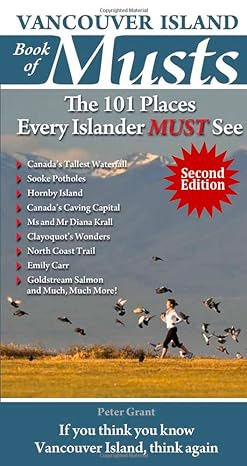
"From savouring wild blackberry desert wine in Cobble Hill to professional tea leaf readings at the Calico Cat, browsing the local produce at the Qualicum Farmers' Market and gazing up at the country's largest tree in Cheewhat Lake, this is the MUST list every Islander MUST have. From the wild, windswept shores of surfing town Tofino to the best bang-for-your-buck breakfast, it is all here."-- Provided by publisher pages cm. CIRC [ 1 ]
|
2017 |
|
Vancouver Island and British Columbia their history, resources and prospects by Matthew Macfie
Published in London in 1865 after the author's five-year residency in Victoria, Matthew Macfie’s Vancouver Island and British Columbia offers a comprehensive geographical, historical, and economic assessment of the twin Pacific colonies during the transformative Cariboo Gold Rush. A keen insight drawn from the text is how Macfie strategically weaponizes his critique of the monopolistic Hudson's Bay Company, arguing that true imperial prosperity and a robust defense against American expansionism required both the immediate political union of the two colonies and the construction of a transcontinental railway. Functioning as sophisticated promotional literature for prospective British emigrants, the volume meticulously catalogs the region's agricultural, mining, and timber potential while actively minimizing the complex realities of the existing Indigenous and growing Chinese populations. Consequently, the book stands as a quintessential artifact of Victorian colonial boosterism that accurately forecasted the infrastructural and political integration that would ultimately define western Canada. xxi, 574 pages, 2 unnumbered pages, 3 leaves of plates (2 folded) : illustrations, frontispiece, 2 color maps ; 23 cm ONLINE CIRC [ 1 ]
|
1865 |
|
Vancouver exposed a history in photographs by Donald E. Waite 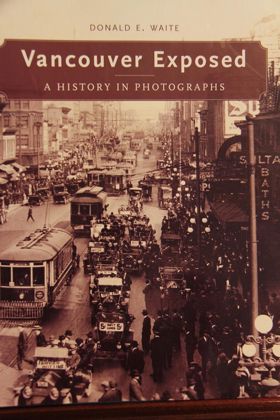
Vancouver has experienced many dramatic changes since its beginnings on the edge of the frontier. Once an almost inaccessible logging town, it has grown to be a major North American urban centre, and a jewel of the Pacific Rim. Within a mere century, it has metamorphosed from a little ventured rainforest to a thriving and cosmopolitan metropolis. This book tells the extraordinary story of that coming of age. 150 striking images, carefully reproduced, capture Vancouver in every phase of its growth. See the boomtown created by the coming of the railway. The land of mansions and motor car bought by the Roaring Twenties. The lean city of the Depression and the war years. The scene of intense urban expansion since the fifties. An entertaining chronicle, this Vancouver photo history is essential for every visitor and resident. 272 p. : ill. (some col.), maps, ports. ; 29 cm. CIRC [ 1 ]
|
2010 |
|
Vancouver a visual history by Bruce Macdonald 
Absolutely unique in its presentational style, Vancouver: A Visual History is a delightful and important book. This stunning, full-colour historical atlas brings to life Vancouver s first fourteen decades, beginning with a map of the 1850s depicting the land use, economy and settlement patterns of its first peoples, and ending with a map of the 1980s. Using a repeating grid format, in which each ten-year period of the city s history is examined through the application of the same criteria, each decade is introduced by a full-colour map that illustrates land use patterns. A column of text to the left of this map describes the major land use changes that have occurred since the previous decade; to the right of the map are notes that provide related details of the city s evolving history. Following each double-page map, the reader is introduced to the prominent personalities of the decade, in the area of sports, politics, business, labour, culture and community service, as well as given an overview of each period s economic focus, settlement patterns, political directions and key historical events xi, 84 p. : ill. (some col.), col. maps, ports. ; 32 cm. CIRC [ 1 ]
|
1992 |
|
Vancouver from milltown to metropolis by Alan Morley
|
1961 |
|
Van Olinda's history of Vashon-Maury Island by Van Olinda, O.S., Roland N. Carey
|
1985 |
|
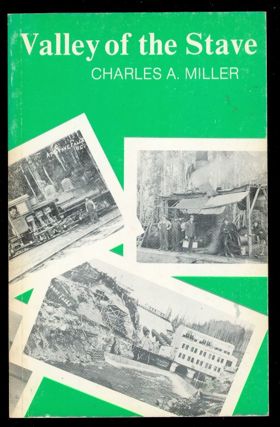
Valley of the Stave by Charles A. Miller
|
1981 |
|
Valley of the spirits the Upper Skagit Indians of western Washington by June M. Collins
"Although the Upper Skagit Indians at one time controlled the great Skagit River drainage system in northwestern Washington, relatively little has been known about them, owing to the isolation in which many of them lived. When June Collins began her field work among the Upper Skagit in 1942, many precontact religious traditions and family and kinship practices had survived. Continuing her field work at intervals over a period of twenty years, she formed strong friendships with her informants. She is therefore able to present one of the most detailed and thorough ethnographic studies ever undertaken of a Northwest Coast people. Of particular interest is the exceptionally detailed description of Upper Skagit religious life, which was characterized by a belief in guardian spirits. Basing her analysis on dozens of case studies and descriptions by informants, Collins discusses the nature of the spirits, how they were acquired by the individual, the powers they conferred, and the dances held in their honor"--Book jacket xiii, 267 pages : illustrations ; 22 cm. CIRC [ 1 ]
|
1974 |
|
Valley of the red hand a western historical novel by Lowell Thomas Clay
Authored by Lowell Thomas Clay, Valley of the Red Hand is a sweeping western historical novel that plunges readers into the rugged, lawless frontier of the American West. The story follows hardened frontiersmen, desperate outlaws, and resilient settlers as they clash over disputed territory, valuable resources, and survival in an unforgiving landscape. Through vivid descriptive prose and fast-paced dramatic tension, the narrative captures the visceral danger and moral ambiguity of frontier expansion. A keen insight drawn from the work is how popular western fiction encodes historical anxiety; by framing territorial conquest through personal vendettas and blood feuds, the novel dramatizes the psychological toll of a violent nation-building process where justice was routinely forged outside the bounds of civilized law. 352 pages : illustrations ; 22 cm. CIRC [ 1 ]
|
1991 |
|
Utopias on Puget Sound, 1885-1915 by Charles Pierce LeWarne 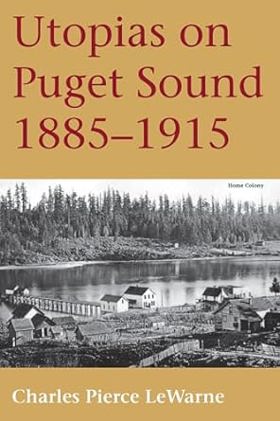
Postmaster General James A Farley's famous toast "to the forty-seven states and the soviet of Washington" introduces and sets the tone for this study of Washington State radicalism. The state's colorful reputation for radical movements was established in the 1920s and 1930s by free speech fights, strikes, strong labor organizations, and woman suffrage reforms. Charles LeWarne finds the roots of this radicalism in the communitarian experiments of the late nineteenth century. Through analyses of several of these experiments, LeWarne demonstrates that the influence of a coterie of liberals and radicals centered on Puget Sound in such communities as Home, Burley, Freeland, Equality, and Port Angeles was felt in the state long after the "utopias" they came to colonize had ceased to exist. Probably the most famous of the experiments was Home Colony on Joe's Bay near Tacoma. From a nucleus of three families, Home grew to over two hundred residents and lasted for more than twenty years. Its reputation for anarchism and flamboyance contributed to a jail sentence conviction for one editor of the Home newspaper for publishing an editorial called "The Nude and the Prudes." Readers interested in current social movements and lifestyles will find many enlightening parallels with recent communal attempts, particularly the rejection of traditional values and the belief in a perfectible world. Whatever the differences within individual colonies, the communitarian ideal has certain general characteristics that find their way into each of these attempts to form a perfect society. Historians will welcome this treatment of an important part of the social and cultural history of the area. The book contains a mine of previously scattered information on the subject. It is a delightful footnote to the history of the Puget Sound region. XXIV, 325 Seiten Illustrationen, Karten 23 cm CIRC [ 1 ]
|
1995 |
|
Urban Cascadia and the pursuit of environmental justice by Nik Janos , Corina McKendry 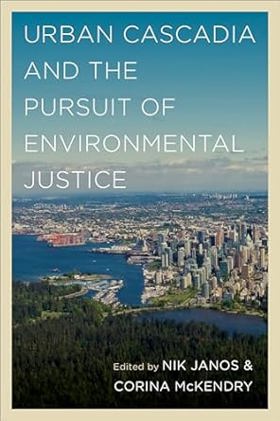
How histories of environmental inequalities and settler colonialism undercut a famously “green” region. In Portland’s harbor, environmental justice groups challenge the EPA for a more thorough cleanup of the Willamette River. Near Olympia, the Puyallup assert their tribal sovereignty and treaty rights to fish. Seattle housing activists demand that Amazon pay to address the affordability crisis it helped create. Urban Cascadia, the infrastructure, social networks, built environments, and non-human animals and plants that are interconnected in the increasingly urbanized bioregion that surrounds Portland, Seattle, and Vancouver, enjoys a reputation for progressive ambitions and forward-thinking green urbanism. Yet legacies of settler colonialism and environmental inequalities contradict these ambitions, even as people strive to achieve those progressive ideals. In this edited volume, historians, geographers, urbanists, and other scholars critically examine these contradictions to better understand the capitalist urbanization of nature, the creation of social and environmental inequalities, and the movements to fight for social and environmental justice. Neither a story of green disillusion nor one of green boosterism, Urban Cascadia and the Pursuit of Environmental Justice reveals how the region can address broader issues of environmental justice, Indigenous sovereignty, and the politics of environmental change. vii, 296 pages : illustrations, maps ; 24 cm CIRC [ 0 ]
|
2021 |
|
Upriver voices tales of Skykomish by Nancy Cleveland, Anne Sekor, Jim Ojala, Skykomish Historical Society 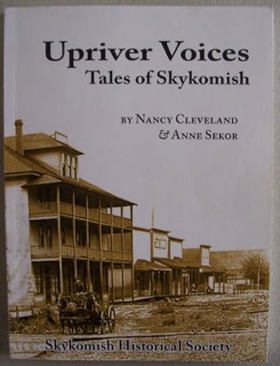
Published by the Skykomish Historical Society, Upriver Voices: Tales of Skykomish compiles local oral histories, archival photographs, and pioneer recollections to chronicle the dramatic evolution of the upper Skykomish River valley in Washington. The narrative captures the raw realities of a rugged mountain frontier shaped by the timber industry, the grueling construction of the Great Northern Railway, and the sheer grit required to carve isolated hamlets out of the Cascade foothills. Through the preserved voices of loggers, railway workers, and families, the volume documents the social fabric and daily hardships of a transient industrial community. A keen insight drawn from the text is how its grassroots, multi-author preservation approach exposes the fragile permanence of mountain boomtowns; by centering the firsthand accounts of ordinary workers rather than corporate boardrooms, the book illustrates how the relentless cycles of resource extraction left behind tight-knit communities defined just as much by communal resilience as by corporate transience. 166 pages : illustrations ; 20 cm CIRC [ 1 ]
|
2008 |
|
Up the Strait coastal British Columbia stories by Wayne J. Lutz 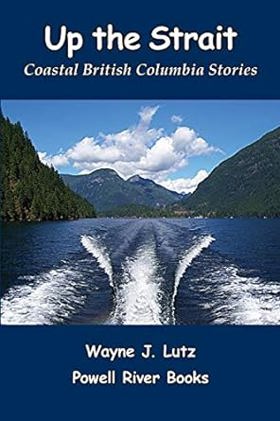
Boating, hiking, and survival off the grid in coastal British Columbia, where mountains drop into the sea and people practice self-reliance and a different sense of purpose. Destinations on the Strait of Georgia that can be reached by boat, bicycle, all-terrain vehicle, and sea kayak. Contrarian views of the people and places of coastal British Columbia. A travelogue memoir based on off-the-grid living in a floating cabin, where the sublime beauty of British Columbia's lower mainland forms the setting, and the Strait of Georgia awaits on your doorstep. 223 p. : ill., maps, ports. ; 23 cm. CIRC [ 1 ]
|
2007 |