Catalog of British Columbiana and Pacific Northwest Americana
Encyclopedia Cascadia Catalog contains book titles of mostly non-fiction Pacific Northwest Coast of North America Titles (primarially British Columbia, Idaho, Oregon and Washington State) in an easy-to-understand title catalog. If you see a link with this badge ONLINE CIRC it means that there is an online institution that provides free access to that title. In some cases there may be more than one institution hosting the title digitally.
| Catalog Title | Published |
|---|---|
|
Isaac I. Stevens young man in a hurry by Kent D. Richards 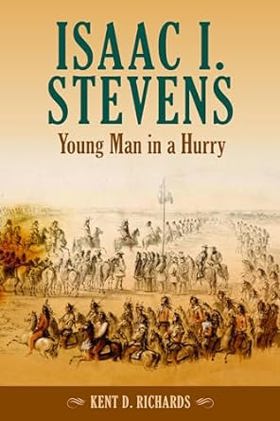
Washington Territory's first governor remains as controversial today as he was to his frontier contemporaries during the Pacific Northwest's most turbulent era -- the mid-1850s. Indian wars, martial law, and bitter political disputes, as well as the establishment of a new, sound governmental system, characterized Isaac I. Stevens' years as governor (1853-1857). History professor Kent Richards counters the popular misconception that Stevens acted with haste in forcing treaties on regional tribes, thus precipitating hostilities in 1855. Richards argues that this was in fact not the case, with the possible exception of the Flathead Council. An 1839 West Point graduate, Stevens pursued an exciting and useful career for his country, being as much at ease on horseback in the wilderness as in the halls of government at the nation's capital. In addition to serving as Washington's territorial governor, Superintendent of Indian Affairs, and, eventually, delegate to the U.S. Congress, Stevens also distinguished himself in the Mexican War, the Coast Survey, and as head of the Northern Pacific transcontinental railroad survey. In the early years of the Civil War, he was appointed a major general in the Union Army. Dying as flamboyantly as he had lived, Stevens was stricken down in 1862 while charging with banner in hand toward rebel fortifications on the same battlefield where his son lay wounded. Cut short in mid-career, Stevens nonetheless left an indelible mark on the destiny of the nation's great Northwest region xv, 451 pages : illustrations, maps ; 23 cm CIRC [ 1 ]
|
2016 |
|
A perfect Eden encounters by early explorers of Vancouver Island by Michael Layland 
"In 1842, when explorer James Douglas encountered the rugged natural paradise that would become Vancouver Island, he described it as "a perfect Eden." This book gathers the early recorded histories and personal accounts left by Chinese seafarers, Spanish and British naval officers, traders seeking sea otter pelts, colonial surveyors, as well as soldiers, settlers, and other adventurers, starting from many centuries ago up to 1858. Collected here in detail for the first time, these accounts create a multilayered tale of discovery and exploration."-- Provided by publisher xv, 240 pages : illustrations (some colour), maps (some colour), portraits (some colour) ; 25 x 27 cm CIRC [ 1 ]
|
2016 |
|
With hearts and minds Maillardville, 100 years of history on the west coast of B.C. by A. J. Boire 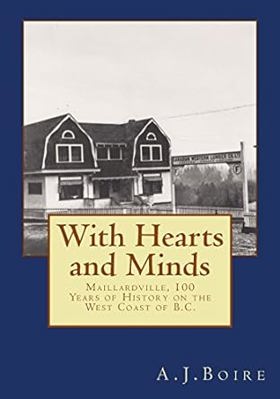
In 1907, A.D McRae, a wealthy businessman and entrepreneur, has come to the west coast of British Columbia to build the Fraser River Lumber Company into one of the largest operations in the British Commonwealth. But McRae has a problem. At a time when anti-Asian sentiment is at fever pitch in Vancouver, his mill is populated with Chinese, Japanese and East Indian workers. Determined to correct this “intolerable” situation he sends two recruiters, a Catholic priest and a night-watchman, to Ontario and Quebec to lure French Canadian lumbermen to his mill to displace the Asians. Promised higher wages, land and lumber for house and church the first contingent arrives at Millside station in September, 1909. The great experiment to displace the Asian labour force begins. It is an experiment watched closely by the provincial government, the Catholic Church and the entire lumber industry in BC and across the nation. Will McRae be successful? Will the French Canadians prosper in their new English world? This is the exciting story of Canada’s two founding nations in the far west of the country coming together to form the quintessential Canadian experience in the early twentieth century. Set against the backdrop of many of the major events of the times, this epic 100 year history is sweeping in its scope as it examines racism and multiculturalism, the growth of the lumber industry, grass roots union movement, communism and the Catholic Church.Above all, the history of Maillardville, BC is a bright illustration of that elusive and sometimes tragic Canadian ideal of “two founding nations”. 311 pages : illustrations, portraits ; 26 cm. CIRC [ 1 ]
|
2016 |
|
Aboard the Portland a history of the Northwest Steamers by Rebecca Harrison 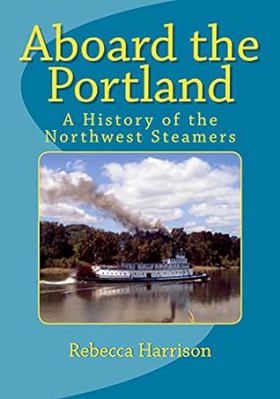
In her latest book, Rebecca Harrison takes you back in time over 150 years to ride the grand Columbia and Willamette Rivers on the the sternwheelers of the mid 1800's. Meticulously researched, Aboard the Portland: A history of the Northwest Steamers tells the exciting story of these trade and transport ships, and explores how the Portland survived time and harsh work to become one of the last operating steam sternwheelers in America 1 online resource (171 pages : black and white illustrations) CIRC [ 1 ]
|
2016 |
|
Comin' in over the rock a storyteller's history of Cannon Beach by Peter Lindsey 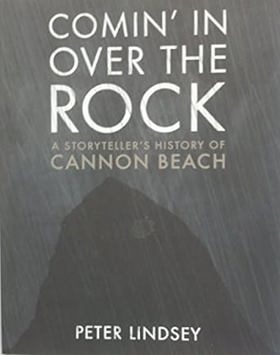
An anecdotal history of Cannon Beach, Oregon, written by someone who has been there for sixty years. Witness the beginnings, the character and the characters of this timeless ocean community. 170 pages : illustrations ; 23 cm CIRC [ 1 ]
|
2016 |
|
Kamiakin Country Washington Territory in turmoil, 1855-1858 by Jo N. Miles 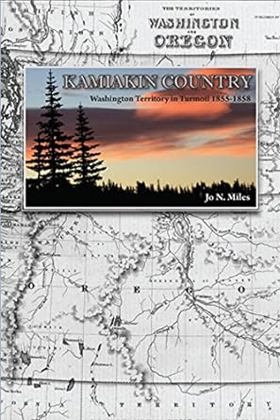
"Kamiakin Country is the story of Yakama Chief Kamiakin. Kamiakin was a highly-respected Native American leader. He led the tribes of the Pacific Northwest in an attempt stem the flow of Euro Americans into that region in the mid 19th century by peaceful means and by force of arms. Writer Jo N. Miles takes a close look at the events during that period and the leaders on both sides in the conflict"--Provided by publisher xx, 192 pages : illustrations, maps ; 23 cm CIRC [ 1 ]
|
2016 |
|
The killer whale who changed the world by Mark Leiren-Young 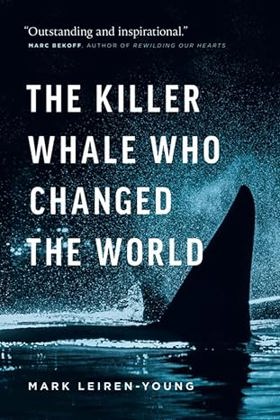
The story of Moby Doll, the first publicly exhibited captive killer whale, and how he changed the way people saw killer whales and sparked the movement to save them. The fascinating and heartbreaking account of the first publicly exhibited captive killer whale a story that forever changed the way we see orcas and sparked the movement to save them. Killer whales had always been seen as bloodthirsty sea monsters. That all changed when a young killer whale was captured off the west coast of North America and displayed to the public in 1964. Moby Doll as the whale became known was an instant celebrity, drawing 20,000 visitors on the one and only day he was exhibited. He died within a few months, but his famous gentleness sparked a worldwide crusade that transformed how people understood and appreciated orcas. Because of Moby Doll, we stopped fearing killers” and grew to love and respect orcas.” x, 188 pages, 8 unnumbered pages of plates : illustrations ; 23 cm CIRC [ 0 ]
|
2016 |
|
The other Idahoans forgotten stories of the Boise Valley by Todd Shallat 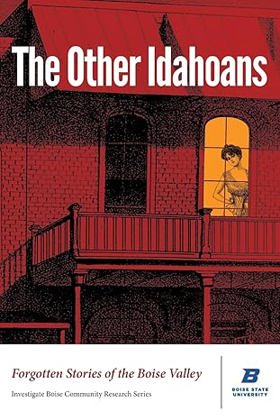
Fallen angels in the bawdy houses. Migrants barred from Main Street. Homesteaders driven from homesteads when August rained black storms of dust. The Other Idahoans recovers their hard-luck stories. Volume 7 of Boise State University's prizewinning research series, the book closes with a driving tour of storied places from history's underside. 139 pages : illustrations (some color), color maps ; 23 cm. CIRC [ 0 ]
|
2016 |
|
Rhythm in the rain jazz in the Pacific Northwest by Lynn A. Darroch 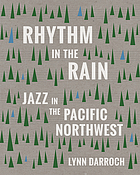
Rhythm in the Rain is a nonfiction narrative about the jazz community in the Pacific Northwest that examines the people, places, and events that have made cities like Portland, Oregon, and Seattle, Washington, so popular among musicians. From the genesis of Jackson Street and Williams Avenue in the 1940s & '50s with such legends as Ray Charles and Quincy Jones, to the modern voices of George Colligan, Rebecca Kilgore, and Esperanza Spalding, this book aims to encompass and illuminate the rich musical history of a region that, while not widely recognized as a jazz mecca, has seen its relevance within the local community xiii, 235 pages : illustrations ; 26 cm CIRC [ 0 ]
|
2016 |
|
Of forests and fields Mexican labor in the Pacific Northwest by Mario Jimenez Sifuentez 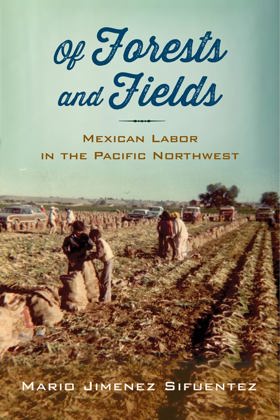
"Of Forest and Fields tells the story of the ethnic Mexicans that toiled in the fields, canneries, packing sheds, and forests who helped turn the Pacific Northwest into one of the most productive agricultural regions in the country. The book explores the struggle of Braceros, Tejanos, and Mexican immigrants, to contest their exploitation in various ways. The history of their resistance culminated in the creation of one of the most important farm worker's unions in the country, the Pineros y Campesinos Unidos Noreste (PCUN)"--Provided by publisher x, 169 pages : illustrations ; 24 cm. CIRC [ 0 ]
|
2016 |
|
The Snake River-Palouse and the invasion of the inland Northwest by Clifford E. Trafzer , Richard D. Scheuerman 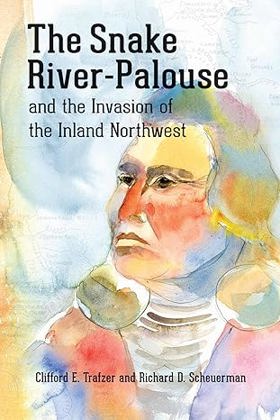
Originally released in 1986 as Renegade Tribe, this award-winning title sensitively retells the compelling saga of western expansion and Indian-white conflict from a Native American perspective. The Snake River-Palouse resisted immigrant encroachment and fought a losing battle to retain their way of life. The Whitman Massacre, as well as a refusal to enter into U.S. government treaties, left them with a hostile reputation among the newcomers. With settlers increasingly demanding their removal and no reservation of their own, these Inland Northwest Indians faced extermination by the end of the nineteenth century. Examining written and oral evidence left by both indigenous and white cultures, this book presents the Snake River-Palouse as important actors in events and demonstrates how their initiative and decisions influenced the course of history. This revised edition offers a new introduction by the authors and a new foreword by Chief Tilcoax's descendent Wilson Wewah. xxiv, 271 pages : illustrations, maps ; 23 cm CIRC [ 0 ]
|
2016 |
|
Idaho's remarkable women daughters, wives, sisters, and mothers who shaped history by L. E. Bragg 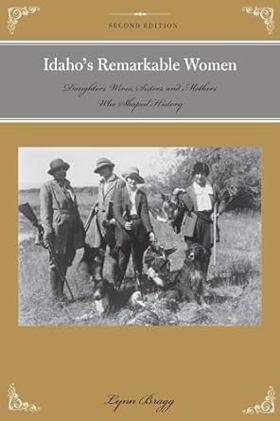
Idaho's Remarkable Women 2 tells the history of the Gem State through the stories of fifteen pioneering women, all born before 1900, who made a profound impact on Idaho. Each woman in her own way displayed remarkable courage, hope, and love during a time when Idaho was still an untamed frontier. xi, 163 pages : illustrations, map ; 23 cm. CIRC [ 0 ]
|
2016 |
|
University of Idaho The Campus History Series by Erin Passehl-Stoddart , Katherine G. Aiken 
Chroniclers have deemed the University of Idaho “The Beacon for Mountain and Plain” and “This Crested Hill”—both are apt monikers for Idaho’s land grant and comprehensive research university. For over 125 years, the University of Idaho has served the people of Idaho, the nation, and the world. As the state’s first university, the University of Idaho looks to a bright future of serving students and contributing to economic and social progress for Idaho and beyond. This book commemorates the proud heritage and innovative spirit of students, faculty, and staff who have shaped the history of the University of Idaho, featuring images from the library’s extensive Special Collections and Archives department. Erin Passehl-Stoddart is an associate professor and head of Special Collections and Archives. Katherine G. Aiken is a professor of history and a proud University of Idaho alumna. 127 pages : illustrations ; 24 cm. CIRC [ 0 ]
|
2016 |
|
Pacific seaweeds a guide to common seaweeds of the West Coast by Louis D. Druehl , Bridgette E. Clarkston , Shirarose Wilensky 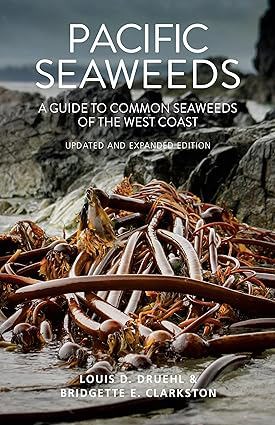
This updated and expanded guide thoroughly documents every aspect of seaweed life, from species identification and seaweed biology to the essential--and often surprising--roles seaweed plays in the marine ecosystem and our everyday lives. Seaweeds are used in everything from cosmetics to sustainable biofuels, and some species, like kelp, contribute to the remediation of coastal ecosystems. Featuring an attractive new full-colour design, the expanded Pacific Seaweeds includes updated species descriptions, dozens of additional colour photos, new species discovered since the original edition, and brand-new sections on common shore plants and the use of DNA techniques to discover, catalog and identify seaweeds. It also features several new recipes and an essay on umami--because in addition to all its other uses, some species of seaweed make delectable food. Packed with illustrations, vivid colour photographs, comprehensive scientific information and further readings, this easy-to-use guidebook will appeal to marine biologists, amateur beachcombers, gourmet foragers and everyone in between. 320 pages : illustrations (some color), map, portrait ; 22 cm CIRC [ 0 ]
|
2016 |
|
Where mountains meet the sea an illustrated history of the District of North Vancouver by Daniel Francis 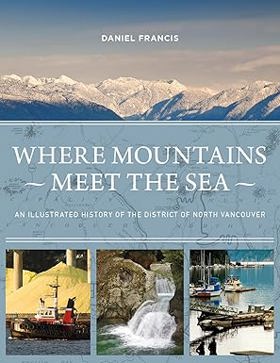
"Where Mountains Meet the Sea commemorates the 125th anniversary of the District of North Vancouver's incorporation as a municipality. Combining hundreds of illustrations with the personal accounts of residents and a lively text, the book presents the story of North Vancouver in all its colour and complexity. Instead of a conventional chronological narrative, Where Mountains Meet the Sea divides the story of North Vancouver's development into three major parts: 1) the origins of the community, its First Nations residents and the development of its waterfront; 2) the political and cultural evolution of the community; and 3) the development of the mountain resorts and the creation of the many parks which characterize the North Shore. From the District's auspicious beginnings with the sawmill at Moodyville dominating the industry of Burrard Inlet, through the postwar population boom that saw the municipality evolve from a suburb of Vancouver into a bustling community in its own right, to the District's rich legacy of outdoor recreation, the text, residents' anecdotes and photographs create a vivid portrait of the development of a thriving community. Each section of the book is richly illustrated in full colour with biographies, eyewitness memories, artifacts from the collection of the North Vancouver Museum and Archives, historic photographs, maps and charts."-- Provided by publisher ix, 245 pages : illustrations (some color), maps (some color) ; 29 cm CIRC [ 0 ]
|
2016 |
|
Columbia River Gorge railroads by D. C. Jesse Burkhardt 
The Columbia River Gorge is a land of scenic wonder, revered by tourists for its beauty and by recreationalists for its fishing, windsurfing, hiking, and rafting. The region is also a major transportation corridor, home to two vital east-west railroad routes: Burlington Northern Santa Fe on the Washington side of the Columbia River and Union Pacific on the Oregon side. Every day, dozens of freight trains, as well as Amtrak passenger trains, snake along on opposite banks of the wide river, and rail operations have become an integral part of the heartbeat of the gorge. The colorful images in this work celebrate the art and magic of the trains that move goods and passengers through this striking, rugged landscape 95 pages : color illustrations, color maps ; 24 cm. CIRC [ 0 ]
|
2016 |
|
Eastern Oregon shortline railroads by Jeff Moore 
"Most of Oregon east of the Cascade Mountains is a raw and inhospitable land, largely the product of recent volcanic activity. Railroad builders constructed a couple mainlines skirting the edges of the regioni and some branchlines into agricultural communities, but found very little else to attract their interest. Over time, however, a small collection of interesting shortline railroads built or bought rail lines, either in conjunction with the developing timber industry in the Blue, Ochoco, and Wallowa mountains or to connect a few existing communities with the mainline that bypassed the town. This book tells the stories of these small railroads and the roles they played in the development and economies of the region ..."--Cover 176 pages : illustrations ; 25 cm. CIRC [ 0 ]
|
2016 |
|
A guide to freshwater fishes of Oregon by Douglas F. Markle, Joseph R. Tomelleri (Illustrator) 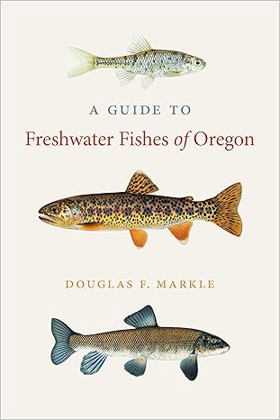
A Guide to Freshwater Fishes of Oregon is the first authoritative guide to the native and non-native freshwater fishes found in Oregon. It provides identification aids and images for most of the 137 known species and subspecies. Larval and juvenile stages and hybrids are also illustrated for some groups. Many groups of Oregon fishes are difficult to identify because of their size, diversity of forms, or lack of comprehensive study. In addition, ongoing debate remains about the number of species or subspecies in Oregon. This guide makes use of established naming conventions while highlighting apparent biological diversity. This compromise between accepted nomenclature and a system that reflects the true biodiversity of Oregon’s fishes reflects the delicate balance between scientific communication and the organism’s place in nature. Written by a scientist who has studied diversity in marine and freshwater fishes for decades, and beautifully illustrated with the author’s photographs and full-color drawings by renowned “fish artist” Joseph R. Tomelleri, A Guide to Freshwater Fishes of Oregon is as visually pleasing as it is scientifically rigorous. With annotated keys and detailed color illustrations, it will be useful to professional biologists, sportsmen and anglers, and anyone curious about the diversity of freshwater fishes of Oregon 140 pages : color illustrations, color maps ; 23 cm CIRC [ 0 ]
|
2016 |
|
The Jewish Oregon story, 1950-2010 by Ellen Eisenberg 
"The Jewish Oregon Story traces the history of diverse Jewish Oregonians and their communities during a period of dramatic change. Drawing on archival sources, including a collection of over five hundred oral histories, the book explores how Jewish Oregonians both contributed to and were shaped by the "Oregon Story," a political shift that fueled Oregon's--and particularly Portland's--emerging reputation for progressivism and sustainability. Six chapters examine a community grappling with, and increasingly embracing, change--from the dramatic national shifts in women's roles and inter-group relations to local issues such as the razing of the historic South Portland Jewish neighborhood. An original community musical, Whatever Happened to Old South Portland?, frames the creation of a new Portland Jewish identity, emerging out of the ashes of South Portland and tapping ethnic expression as an antidote to suburbanization and assimilation. A peek behind the scenes exposes the crucial role of women's voluntarism and traces the impact of women entering the workforce and winning acceptance as equals in organizational and ritual life. Chapters on involvement in liberal politics and advocacy for Israel explore communal engagement that reflected national trends, but, beginning in the 1980s, were increasingly shaped by emerging local progressivism. A final chapter charts recent shifts in Oregon Jewish geography, demographics, and organizational life, exploring the rebirth of smaller communities and the embrace of post-denominational Jewry, spirituality, and an ethos of environmentalism and inclusion. The Jewish Oregon Story will be of great interest to the Jewish community in Oregon and the Pacific Northwest and will appeal broadly to all readers of American, Western, and Oregon history, particularly those interested in questions of ethnicity and identity. Published in Cooperation with the Oregon Jewish Museum and Center for Holocaust Education"-- Provided by publisher xviii, 316 pages : illustrations ; 26 cm CIRC [ 0 ]
|
2016 |
|
Hiking from Portland to the coast an interpretive guide to 30 trails by James D. Thayer 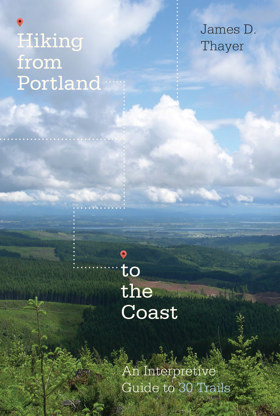
A guidebook for both experienced and casual hikers, Hiking from Portland to the Coast explores the many trails and logging roads that crisscross the northern portion of Oregon’s Coast Range. While showcasing convenient “looped” routes, it also describes complete throughways connecting Portland to the coastal communities of Seaside and Tillamook. Designed to both inform and entertain, each of the 30 trails described includes a “backstory” highlighting the rich histories of Native Americans, white settlers, loggers, and railroad operators. While suitable for hikers, equestrians, and bikers, many of these trails have never been surveyed for recreational use. All are meticulously surveyed and described here, alongside detailed and annotated maps. Some trails are located on private timber holdings, accessible only by paid permit, while access to others is free. In most cases vehicular traffic is not permitted; neither is camping, littering, or making fires. From time to time, access may be restricted due to fire danger or commercial activity. The maps, notes, and tips provided in Hiking from Portland to the Coast will be invaluable for those adventurers who wish to wander far from the beaten track. Less intrepid explorers will find plenty of short and scenic exploratory hikes in the forests that parallel Highway 26 to Seaside or Highway 6 to Tillamook. 272 pages : illustrations, maps ; 24 cm CIRC [ 0 ]
|
2016 |
|
Keeping Oregon green livability, stewardship, and the challenges of growth, 1960-1980 by Derek R. Larson 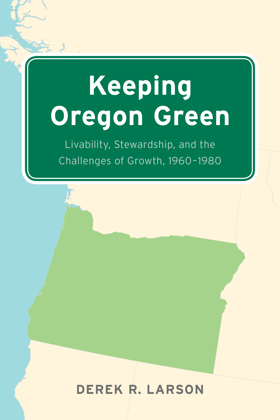
"Keeping Oregon Green is a new history of the signature accomplishments of Oregon's environmental era: the revitalization of the polluted Willamette River, the Beach Bill that preserved public access to the entire coastline, the Bottle Bill that set the national standard for reducing roadside litter, and the nation's first comprehensive land use zoning law. To these case studies is added the largely forgotten tale of what would have been Oregon's second national park, intended to preserve the Oregon Dunes as one of the country's first National Seashores. Through the detailed study of the historical, political, and cultural contexts of these environmental conflicts, Derek Larson uncovers new dimensions in familiar stories linked to the concepts of 'livability' and environmental stewardship. Connecting events in Oregon to the national environmental awakening of the 1960s and 1970s, the innovative policies that carried Oregon to a position of national leadership are shown to be products of place and culture as much as politics. While political leaders such as Tom McCall and Bob Straub played critical roles in framing new laws, the advocacy of ordinary citizens--farmers, students, ranchers, business leaders, and factory workers--drove a movement that crossed partisan, geographic, and class lines to make Oregon the nation's environmental showcase of the 1970s. Drawing on extensive archival research and source materials, ranging from poetry to congressional hearings, Larson's compelling study is firmly rooted in the cultural, economic, and political history of the Pacific Northwest. Essential reading for students of environmental history and Oregon politics, Keeping Oregon Green argues that the state's environmental legacy is not just the product of visionary leadership, but rather a complex confluence of events, trends, and personalities that could only have happened when and where it did"-- Provided by publisher ix, 307 pages ; 23 cm CIRC [ 0 ]
|
2016 |
|
Leaded the poisoning of Idaho's Silver Valley by Michael C. Mix 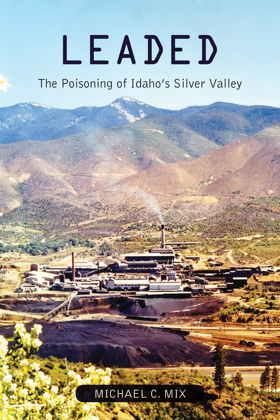
Leaded is a timely and deeply researched account of one of the largest environmental disasters in western US history. It examines the origin, evolution, and causes of the harmful environmental and human health effects caused by mining operations in Idaho’s Coeur d’Alene Mining District—the “Silver Valley”—from 1885 to 1981. During that period, district mines produced over $5 billion worth of lead, silver, and zinc. The Bunker Hill Company dominated business and community activities in the district as owners and operators of the largest mine, lead smelter, and zinc plant.During the first half of the twentieth century, industrial mining operations caused severe environmental damage to area waterways and lands from releases of sulfur gases, lead, and other toxic metals. Damaging human health effects were evident soon after the smelter opened in 1917, when Bunker Hill workers suffered from lead poisoning. Despite the obvious devastation, due to the influence of the mine and lead industry in state and federal politics, as well as scientific uncertainties about pollution effects, no effective federal laws regulating mining and smelting operations were passed until the 1970s.In 1974, uncontrolled Bunker Hill lead smelter emissions led to the worst community lead exposure problem in the United States and resulted in a widespread lead poisoning epidemic of Silver Valley children. In response, the Environmental Protection Agency ultimately mandated federal air lead standards. At the same time, the National Institute for Occupational Safety and Health passed national standards reducing allowable occupational lead exposures. Bunker Hill could not meet the new standards, which was a major factor in forcing the company to close, leaving behind a contaminated geographic area that was classified at the time as the largest Superfund site in the United States.Leaded will resonate with anyone who is concerned about the long-term effects of industrial pollution, as well as students of environmental history, western US history, mining history, environmental ethics, and environmental law xvi, 260 pages : illustrations, map ; 23 cm CIRC [ 0 ]
|
2016 |
|
Northwest passage the great Columbia River by William Dietrich 
In this new edition of Northwest Passage , Dietrich updates the status of the mighty Columbia River, discussing the health of its salmon runs, the state of its dams, and the river’s growing importance in light of climate change. 448 pages : illustrations, maps ; 23 cm CIRC [ 0 ]
|
2016 |
|
The Portland Black Panthers empowering Albina and remaking a city by Lucas N. N. Burke , J. L. Jeffries 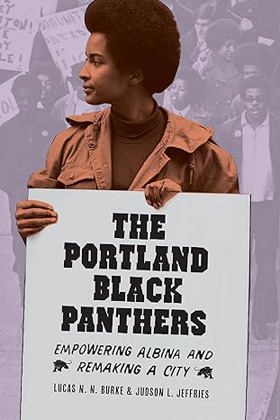
Portland, Oregon, though widely regarded as a liberal bastion, also has struggled historically with ethnic diversity; indeed, the 2010 census found it to be “America’s whitest major city.” In early recognition of such disparate realities, a group of African American activists in the 1960s formed a local branch of the Black Panther Party in the city’s Albina District to rally their community and be heard by city leaders. And as Lucas Burke and Judson Jeffries reveal, the Portland branch was quite different from the more famous—and infamous—Oakland headquarters. Instead of parading through the streets wearing black berets and ammunition belts, Portland’s Panthers were more concerned with opening a health clinic and starting free breakfast programs for neighborhood kids. Though the group had been squeezed out of local politics by the early 1980s, its legacy lives on through the various activist groups in Portland that are still fighting many of the same battles. Combining histories of the city and its African American community with interviews with former Portland Panthers and other key players, this long-overdue account adds complexity to our understanding of the protracted civil rights movement throughout the Pacific Northwest. 283 pages, 16 unnumbered pages of plates : illustrations, maps ; 24 cm CIRC [ 0 ]
|
2016 |
|
Forest under story creative inquiry in an old-growth forest by Nathaniel Brodie , Charles Goodrich , Frederick J. Swanson 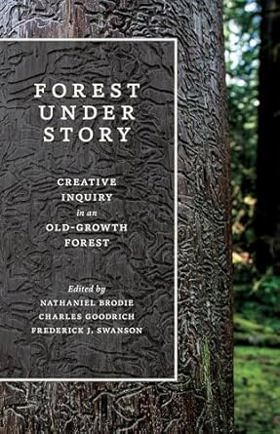
Two kinds of long-term research are taking place at the H. J. Andrews Experimental Forest, a renowned research facility in the temperate rain forest of the Oregon Cascades. Here, scientists investigate the ecosystem’s trees, wildlife, water, and nutrients with an eye toward understanding change over varying timescales up to two hundred years or more. And writers from both literary and scientific backgrounds spend time in the forest investigating the ecological and human complexities of this remarkable and deeply studied place. This anthology—which includes work by some of the nation’s most accomplished writers, including Sandra Alcosser, Alison Hawthorne Deming, Jane Hirshfield, Linda Hogan, Freeman House, Robin Wall Kimmerer, Kathleen Dean Moore, Robert Michael Pyle, Pattiann Rogers, and Scott Russell Sanders—grows out of the work of the Long-Term Ecological Reflections program and showcases the insights of the program’s thoughtful and important encounters among writers, scientists, and place. These vivid essays, poems, and field notes convey a landscape of moss-draped trees, patchwork clear-cuts, stream-swept gravel bars, and hillsides scoured by fire, and also bring forward the ambiguities and paradoxes of conflicting human values and their implications for the ecosystem. Forest Under Story offers an illuminating and multifaceted way of understanding the ecology and significance of old-growth forests, and points the way toward a new kind of collaboration between the sciences and the humanities to better know and learn from special places. 251 pages : illustrations, maps ; 23 cm CIRC [ 0 ]
|
2016 |