Catalog of British Columbiana and Pacific Northwest Americana
Encyclopedia Cascadia Catalog contains book titles of mostly non-fiction Pacific Northwest Coast of North America Titles (primarially British Columbia, Idaho, Oregon and Washington State) in an easy-to-understand title catalog. If you see a link with this badge ONLINE CIRC it means that there is an online institution that provides free access to that title. In some cases there may be more than one institution hosting the title digitally.
| Catalog Title | Published |
|---|---|
|
Romantic Vancouver Island Victoria yesterday and today by Dorothy Abraham
|
1968 |
|
Oregon imprints 1845-1870 by George N. Belknap
|
1968 |
|
Shipwrecks off Juan de Fuca by Jim Gibbs
|
1968 |
|
Sandy the true story of a rare sandhill crane who joined our family by Dayton O. Hyde 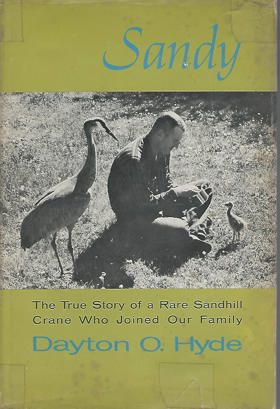
On a wilderness ranch in southern Oregon nearly a century ago, Dayton Hyde dove into a rushing river to rescue the threatened nest of a sandhill crane. The egg saved from the nest hatched into a bird, and also into an amazing story. "Sandy" the crane grew up in Hyde's household as a member of the family and had to be taught she was really a bird. Hyde served as parent, companion, dietitian, even flight instructor to Sandy, and eventually watched over her mate and fledglings as well. Over the years, he had to learn a lot about sandhills. In return, the cranes taught him quite a bit about what it is to be wild. More than an animal story, Sandy is the true account of an individual who dedicated himself to saving an endangered species. Hyde shares his totally charming, often hilarious stories of Sandy and the other wild pets, showing us how one man's heroic act to save an unhatched egg blossomed into a lifetime of conservation activities. First published over 30 years ago, Sandy contains a message more urgent today as civilization sprawls without regard for wilderness. It shows what private landowners can do to help wildlife conservation — that ranches, when run with an understanding of whole ecosystems, can serve as miniature wildlife sanctuaries that address the concerns of ranchers and environmentalists alike. 214 pages illustrations 24 cm CIRC [ 0 ]
|
1968 |
|
Umpqua Valley, Oregon, and its pioneers by Harold Avery Minter
|
1967 |
|
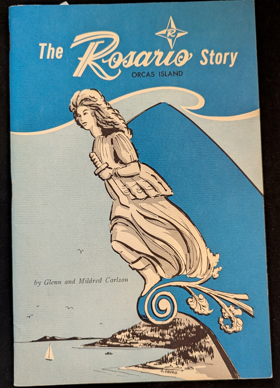
The Rosario story, Orcas Island by Glenn Carlson, Mildred Carlson
|
1967 |
|
The Oregon territory by C. G. Nicolay, Robert Hitchman (Writer of introduction)
|
1967 |
|
Home port Victoria a collection of true stories of men and ships that sailed from this port, told by seamen at meetings of the Thermopylae Club, Victoria, B.C., including short sketches of their narrators, articles on relevant history of the Port of Victoria, and two maps by Ursula Jupp, Thermopylae Club 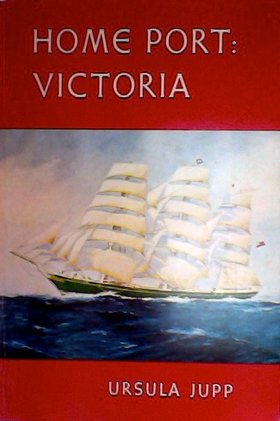
Home Port Victoria, compiled by Ursula Jupp in collaboration with Victoria's maritime-focused Thermopylae Club in 1967, is a rich anthology of authentic nautical history and personal seafaring narratives. The book preserves the firsthand accounts of veteran seamen, detailing the rugged voyages of the men and ships that sailed out of British Columbia's capital city. Alongside these captivating true stories, the volume features biographical sketches of the narrators, historical essays on the port's development, and detailed maps that anchor the region's proud maritime legacy. 168 pages illustrations, maps, portraits 24 cm CIRC [ 1 ]
|
1967 |
|
The Idaho story by Idaho Poets and Writers Guild
|
1967 |
|
Astoria by Washington Irving
|
1967 |
|
The Oregon question essays in Anglo-American diplomacy and politics by Frederick Merk
|
1967 |
|
Clackamas County historical, 1966-1967 history of Willamette Falls by Clackamas County Historical Society
|
1967 |
|
Champoeg place of transition; a disputed history by John A. Hussey, Oregon State Highway Commission, United States National Park Service
|
1967 |
|
Washington's historical markers by W. M. Scofield
|
1967 |
|
So this is Klickitat by Selma M. Neils, Klickitat Woman's Club
|
1967 |
|
You're at liberty here mines and miners of the Swauk by Josee Jordan
|
1967 |
|
Island in the sound by Hazel Heckman 
Anderson Island in Puget Sound exists as a kind of tiny, autonomous world. Sharply defined by bitterly cold water, deep enough to float a destroyer; by dense fog; and by dangerous tide rips caused by the narrow channels, it is a community without an officer of the law, a minister of the gospel, or a doctor of medicine. Nevertheless, it is a tightly knit and well-organized microcosm in its wilderness environment. Hailed as a ‘local classic’ by Murray Morgan and Wallace Stegner, Hazel Heckman’s story of this Northwest island will have strong appeal for devotees of island life anywhere. The Pacific Northwesterner will learn much about his native soil, but this book will find an audience far beyond the shadows of Mount Rainier and the wild Olympics. It will be especially treasured by those who feel deep nostalgia for the leisurely pace of life in a small community. Wit, depth of perception, engaging literary style -- all are warmly present in this saga of a Midwestern woman’s experience with a new homeland, an environment strange and very different from the dusty Oklahoma country where she had lived for the previous twenty years. Feeling at first that the perpetual rain and gray skies were a high price to pay for a relatively comfortable year-round climate, Mrs. Heckman came to like, and eventually to love, the Northwest only after she discovered Anderson Island. Located near McNeil Island in upper Puget Sound, Anderson has approximately ninety permanent residents. Most of them are descendants of the original Scandinavian settlers of the Island, and they seem to have inherited the individualism and self-reliance necessary to survive in a hostile environment. Thus, ‘modern’ innovations, such as regular ferry service and electricity, are comparatively recent developments. This book is the lively chronicle of Anderson Island -- its history, its residents, its idiosyncrasies, its commonplaces. Mrs. Heckman’s lyrical evocations of the natural life have captured the essence of Anderson Island. xii, 284 pages illustrations, map 23 cm CIRC [ 1 ]
|
1967 |
|
Bridge River gold by Emma Ritchie De Hullu, Evelyn E. Cunningham
|
1967 |
|
One man's gold rush a Klondike album by Murray Morgan, Eric A. Hegg (Illustrator, Photographer) 
"When Eric A. Hegg rushed north to Alaska in 1897, he as a journeyman photographer, largely self-trained. He forced a sled load of photographic equipment across the coastal mountains in the dead of winter. He hiked out to the claims on Bonanza and Eldorado, and he poked his camera into the banks and bars and bordellos in Dawson. He rode a paddle-wheel steamer down the Yukon to the Bering and was on the dark sands of the beach at Home when the prospectors swirled gravel in their pans and worked their mechanical rockers. Most important, he was there, high on the Chilkoot Pass in the winter of 1897-98, as the dark-clad men climbed antlike up the frozen steps of The Scales under the burden of a year's supplies." -- amazon.com 213 pages : illustrations, maps, portraits ; 22 x 27 cm CIRC [ 1 ]
|
1967 |
|
|
1967 |
|
|
1967 |
|
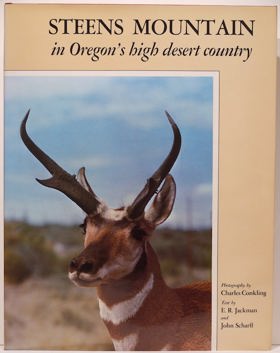
Steens Mountain in Oregon's high desert country by Charles Conkling, E. R. Jackman , John Scharff
|
1967 |
|
Indians of the North Pacific Coast by Tom McFeat (Editor, Writer of introduction) 
This book offers a many-faceted examination of the cultures of the Tlingit, the Haida, the Tsimshian, the Bella Coola, the Kwakiutl, the Nootka, and the Salish--Indian peoples of the coast running from the Canadian border area of Juan de Fuca Strait to Yakutat Bay in southeastern Alaska. Professor McFeat has brought together key writings by seventeen authorities including Franz Boas, Helen Codere, Viola E. Garfield, and Wayne Suttles. General readers as well as scholars have an opportunity to examine a wide range of literature and thereby to increase their understanding of one of the most interesting groups among the Indian peoples of North America. xv, 268 pages 21 cm CIRC [ 0 ]
|
1967 |
|
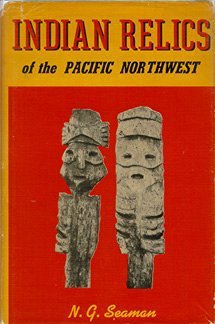
Indian relics of the Pacific Northwest by N. G. Seaman
|
1967 |
|
Once upon an island by David Conover 
Once Upon an Island by David Conover is a classic 1967 memoir chronicling the true story of a young couple who purchased Wallace Island in the Canadian Gulf Islands during the late 1940s. The book details David and Jeanne Conover's adventures, struggles, and eventual triumphs as they worked to transform the rugged, undeveloped land into a functioning summer vacation resort. Ultimately, it serves as an inspiring and humorous narrative for boaters and dreamers drawn to the trials and joys of escaping city life for a self-sufficient island existence. 242 pages illustrations, portraits 22 cm CIRC [ 1 ]
|
1967 |