Catalog of British Columbiana and Pacific Northwest Americana
Encyclopedia Cascadia Catalog contains book titles of mostly non-fiction Pacific Northwest Coast of North America Titles (primarially British Columbia, Idaho, Oregon and Washington State) in an easy-to-understand title catalog. If you see a link with this badge ONLINE CIRC it means that there is an online institution that provides free access to that title. In some cases there may be more than one institution hosting the title digitally.
| Catalog Title | Published |
|---|---|
|
On island time a traveler's atlas : illustrated adventures on & around the islands of Washington & British Columbia by Chandler O'Leary 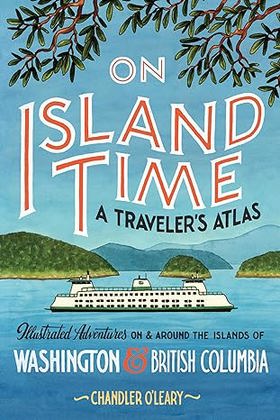
Dream of escaping to an island, for the slower pace and stunning views? An illustrated love letter to the Pacific Northwest's iconic islands--focusing on Puget Sound, the San Juans, and Canada's Gulf Islands and Vancouver Island--this guide charms and educates travelers, locals, and armchair adventurers alike. Kick back, relax, and get On Island Time! This quirky illustrated travel guide showcases the hidden delights, natural wonders, and singular history of Washington and British Columbia's islands, from the author of bestselling The Best Coast, Illustrated Adventures Along the West Coast Historic Highways xi, 195 pages : color illustrations, color maps ; 27 cm CIRC [ 1 ]
|
2023 |
|
Chimacum In the valley near the water by Nancy L. McDaniel 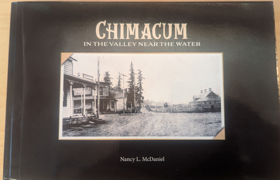
"In the Valley, Near the Water" are the first words of Chimacum High School's Alma Mater song. Written by Duane Montgomery, cherished music director, those words have a special meaning for Chimacum residents. Published in 2023 by local historian Nancy L. McDaniel, Chimacum: In the Valley Near the Water provides an intimate local history of the Chimacum Valley and its surrounding agricultural communities on Washington's Olympic Peninsula. The narrative chronicles the area's transition from ancestral indigenous homelands to a bustling hub of pioneer farming, timber harvesting, and dairy production driven by 19th-century homesteaders. Drawing on extensive family archives, oral histories, and photographs, the book meticulously reconstructs the daily lives, schoolhouses, and community networks of early settlers. A keen insight drawn from the text is how its granular, bottom-up preservation of rural genealogy reveals the quiet, persistent labor required to carve an agrarian society out of a heavily forested frontier, offering a localized counterweight to grand narratives of Pacific Northwest expansion. 277 pages CIRC [ 1 ]
|
2023 |
|
Printer's devils a feisty pioneer newspaper shaped the history of British Columbia, 1895-1925 by Ron Verzuh 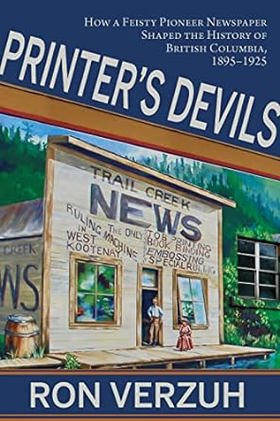
"The grisly murder of a nurse, a crippling 1917 strike, death on the wartime battlefield, the 1918–19 flu pandemic, life on the home front—these are just some of the historic events covered in the early days of the Trail Creek News. In Printer’s Devils, historian Ron Verzuh offers both a study of pioneer journalism and a social history of the smelter city of Trail as it grew into a small but prosperous community. He traces the stories of residents and their evolving attitudes, pastimes and opinions as they respond in times of economic crisis, war, labour strife and life-threatening disease against the backdrop of one of Canada’s pioneer industrial centres. Beneath these stories is a revealing exploration into the lives of six Trail News editors—Trail’s printer’s devils—in which we see firsthand how their editorial choices were honed by their education, business priorities and experience as tramp printers in the early days of newspaper publishing in the region. Delving back through layers of history, Printer’s Devils: The Feisty Pioneer Newspaper That Shaped the History of British Columbia’s Smelter City is a tribute to the lasting impact of journalism in Canadian society, as chronicled in one single-industry town."-- Provided by publisher pages cm CIRC [ 0 ]
|
2023 |
|
Capturing the summit Hamilton Mack Laing and the Mount Logan expedition of 1925 by Trevor Marc Hughes 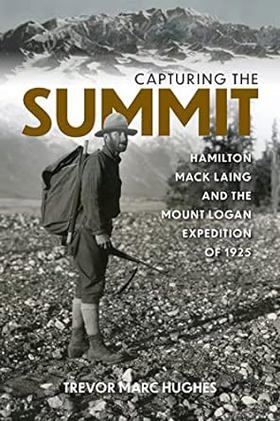
"A remarkable account of the grueling journey to the summit of Mount Logan. Naturalist and cinematographer, Hamilton Mack Laing, marched into the Alaskan wilderness alongside weathered guides and hardened, experienced mountaineers. From Laing's diaries, we learn how capturing the summit pits the daring adventurers in a struggle with nature, changing them irrevocably as they became part of the environment that tested them."-- Provided by publisher 268 pages : illustrations ; 23 cm CIRC [ 0 ]
|
2023 |
|
My paddle's keen and bright summer camp stories by Rika Ruebsaat 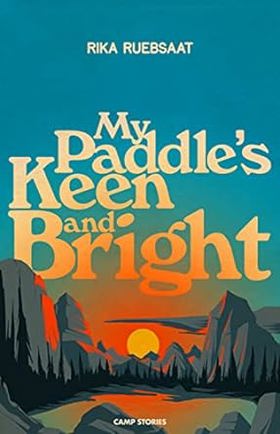
"Parents began sending their kids off to summer camp more than a century ago, a tradition that continues strong in the face of transformative changes to society, and childhood. The history of summer camping, with its roots in Boy Scouts and other Victorian-era social movements, is beginning to be written. But until now, less has been said about the experiences of the generations of young men and women whose outlook has been shaped by their summer vacations. In My Paddle's Keen and Bright, Rika Ruebsaat allows the camp veterans of all ages and backgrounds to reflect on their experiences, and the indelible lifelong impressions these have left on them. Every facet of camp experience is described, from the bus or boat that takes you away from the familiars into a new world of strangers, to the bittersweet partings and memories lasting a lifetime. Campers describe the terror, and exhilaration, of learning about new people and different lives outside of their own families; the food, strange rituals, and exciting new adventures involving boats, or horses, or hikes, chores, even practical jokes. Here are the vivid recollections of passionate friendships made in the course of a few days; of crushes on counsellors; the campfires and songs; the first fumbling sexual explorations; the skinned knees and overcome fears; the lessons learned and carried for the rest of their lives. Grown-ups from all social classes and outloooks established summer camps. The storytellers reflect on their experiences in the more traditional summer camps organized by Boy Scouts or Girl Guides; the camps organized by religious organizations or around political viewpoints. The differences - and, more often, the continuities - provide a fascinating and unique perspective into a world that continues to leave an indelible mark on society, even as the world of summer camp slips into history."-- Provided by publisher xii, 287 pages ; 22 cm CIRC [ 0 ]
|
2023 |
|
The curious passage of Richard Blanshard first governor of Vancouver Island by Barry M. Gough 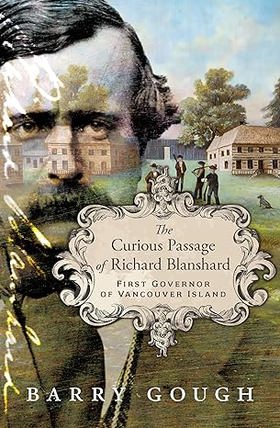
"Celebrated historian Barry Gough brings a defining era of Pacific Northwest history into focus in this biography of Richard Blanshard, the first governor of Vancouver Island--illuminating with intriguing detail the genesis and early days of Canada’s westernmost province. Early one wintry day in March 1850, after seven weary weeks out of sight of land, a well-dressed Londoner, a bachelor aged thirty-two, stood at the ship’s rail taking in the immensity of the unfolding scene. From Her Britannic Majesty’s paddlewheel sloop-of-war Driver, steadily thumping forth on Imperial purpose, all that Richard Blanshard could make out to port, in reflected purple light upon the northern side, was a forested, rock-clad island rising to considerable height. Vancouver’s Island they called it in those far-off days. This was his destination. Richard Blanshard was governor of the young colony for three short, unhappy years--only one and a half of which were spent in the colony itself. From the very beginning he was at odds with the vastly influential Hudson’s Bay Company, run by its Chief Factor James Douglas, who succeeded Blanshard as governor of the colony of Vancouver Island and later became the first governor of the colony of British Columbia. While James Douglas is remembered, for better or worse, as a founding father of British Columbia, Richard Blanshard’s name is now largely forgotten, despite his vitally important role in warning London of American cross-border aggressions, including a planned takeover of Haida Gwaii. However, his failures highlight the fascinating struggles of the time--the supreme influence of commerce, the disparity between expectations and reality, and the bewildering collision of European and Pacific Northwest culture."-- Provided by publisher 368 p. CIRC [ 0 ]
|
2023 |
|
The fire still burns life in and after residential school by Sam George , Jill Yonit Goldberg , Liam Belson , Dylan MacPhee , Tanis Wilson 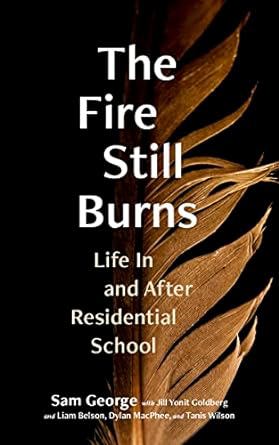
"'My name is Sam George. In spite of everything that happened to me, by the grace of the Creator, I have lived to be an Elder.' The crimes carried out at St. Paul's Indian Residential School in North Vancouver scarred untold numbers of Indigenous children and families across generations. Sam George was one of these children. This candid account follows Sam from his idyllic childhood growing up on the Eslhá7an (Mission) reserve to St. Paul's, where he weathered physical, emotional, and sexual abuse. He spent much of his life navigating the effects of this trauma - prison, addiction, and challenging relationships - until he found the strength to face his past. Now an Elder and educator with the Indian Residential School Survivors Society, this is Sam's harrowing story, in his own words. An ember of Sam's spirit always burned within him, and even in the darkest of places he retained his humour and dignity. The Fire Still Burns is an unflinching look at the horrors of a childhood in the Indian Residential School system and the long-term effects on survivors. It illustrates the healing power of one's culture and the resilience that allows an individual to rebuild a life and a future."-- Provided by publisher xii, 133 pages : illustration ; 21 cm CIRC [ 0 ]
|
2023 |
|
Exploring Vancouver ten tours of the city and its buildings by Harold Kalman , Robin Ward 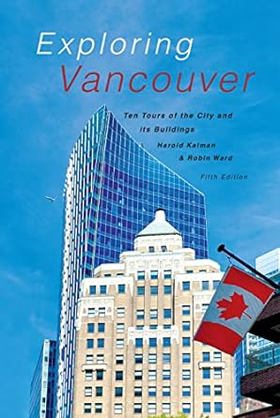
"This new edition of the classic urban guidebook brings the city's architectural story up to date. Harold Kalman and Robin Ward, long-time chroniclers of Vancouver, offer an authoritative and highly readable book about Vancouver's most interesting places and explain how, why and by whom the city's urban environment was created. Containing more than four hundred entries, ten self-guided tours highlight significant buildings from all eras in the city and its metro region, and feature new projects that transform the skyline more radically than ever before. The tours--organized by neighbourhood and planned variously for walking, cycling, car and transit--reveal Vancouver in a constant state of reinvention, fuelled by real estate speculation, immigration and the egos of civic boosters, developers and architects. Today, this dynamic is colliding with architectural and urban planning responses to climate change. For the first time in the series, this edition includes the Musqueam, Squamish and Tsleil-Waututh peoples' role in the narrative, including information on several substantial local projects shaped by these communities and Nations. For wayfinding, entries are numbered and keyed to maps. A glossary of architectural terms and styles is provided. Exploring Vancouver is the perfect companion for curious visitors and citizens of this fascinating metropolis alike."-- Provided by publisher 366 pages : colour illustrations, maps ; 23 cm CIRC [ 0 ]
|
2023 |
|
Live at the Commodore the story of Vancouver's historic Commodore Ballroom by Aaron Chapman 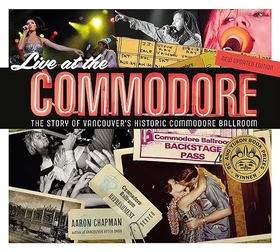
"A new edition of the storied history of Vancouver's Commodore Ballroom, by the author of Vancouver After Dark. The Commodore Ballroom, located in the heart of downtown Vancouver, remains one of the best-loved music venues in Canada, if not the world; it's played host to a who's who of music greats: the Police, the Clash, Blondie, Talking Heads, Nirvana, New York Dolls, U2, Lady Gaga, Katy Perry, Snoop Dogg, and the White Stripes, among others. The Commodore's history extends back to 1930, when it was built in the splendour of art deco style. Through World War II and into the 1950s, the Commodore was where Vancouverites went to hear swing orchestras and dance into the late hours. Beginning in the 1970s, the Commodore became a full-on music club, a must-stop for breakout bands and other music acts before they became arena headliners. Vancouverites soon filled the place on a nightly basis, not only to hear the latest in punk, new wave, blues, heavy metal, and rock, but also to dance on its legendary bouncy sprung floor. Now regarded as a music landmark, "the nightclub for all seasons" continues to attract the hottest musicians on tour, defying and outlasting other cultural venues that have vanished as a result of gentrification and the pandemic. First published in 2014, Live at the Commodore was a BC bestseller and won the Bill Duthie Booksellers' Choice Award at the BC Book Prizes. Author Aaron Chapman delves into the Commodore's archives to reveal stories about the club over the last ninety-plus years, as well as startling and outrageous anecdotes about the legendary acts that have graced its stage. Filled with never-before-published photographs, posters, and paraphernalia, Live at the Commodore is a visceral, energetic portrait of one of the world's great rock venues. This new edition includes a new chapter and several new photographs and posters. Full-colour throughout."-- Provided by publisher 246 pages : illustrations ; 23 x 26 cm CIRC [ 0 ]
|
2023 |
|
Room at the inn historic hotels of British Columbia’s Southern interior by Glen Mofford , Karla Decker 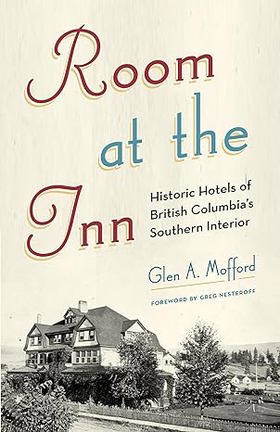
"A fully illustrated social history profiling forty historic hotels spread over five regions of the southern interior of British Columbia, covering the time period of the 1890s to 1950s. Room at the Inn reveals the long-forgotten histories of British Columbia’s early hospitality industry, through the riveting stories of the men and women who built, ran, and frequented hotels, hostelries, resorts, and roadhouses in the southern Interior. From the Similkameen town of Keremeos to Spences Bridge at the confluence of the Thompson and Nicola Rivers, east to the Alberta border along the Trans-Canada Highway, and south to the Canada–US border, the history of these hotels mirrors the history of BC’s mining towns and boom-bust economy of the late nineteenth and early twentieth centuries, as waves of prospectors, settlers, and eventually tourists shaped the culture of the province that we know today. Of the forty historic hotels profiled in this book, all contributed to their communities in various ways. They provided more than just a roof over the heads of weary travellers; they were often the sites of live entertainment, places where community members could meet and socialize. Some even doubled as makeshift hospitals during wildfires and floods. Through colourful anecdotes, meticulous research, and fascinating archival photography, Room at the Inn transports readers to a bygone era and pays tribute to the pioneers, entrepreneurs, and hard-work men and women who built and operated these historic accommodations."-- Provided by publisher xi, 323 pages : illustrations, map, portrait ; 22 cm CIRC [ 0 ]
|
2023 |
|
The wild horses of the Chilcotin their history and future by Wayne McCrory 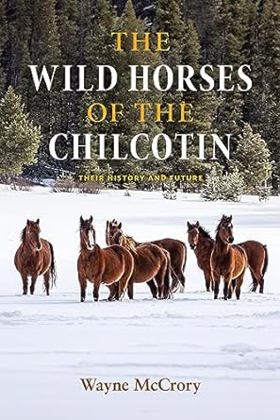
"The Chilcotin's wild horses are are romantic and beautiful, but they are also controversial: they are seen by government policy as intruders competing for range land with native species and domestic cattle and, as a result, they have been subject to culls and are not officially protected. In this compelling book, wildlife biologist Wayne McCrory draws upon two decades of research to make a case for considering these wonderful creatures, called qiyus in traditional Tŝilhqot'in culture, a resilient part of the area's balanced prey-predator ecosystem. McCrory also chronicles the Chilcotin wild horses' genetic history and significance to the Tŝilhqot'in, juxtaposing their efforts to protect qiyus against movements to cull them."-- Provided by publisher 332 pages, xxxii pages of plates : illustrations (some colour) ; 24 cm CIRC [ 0 ]
|
2023 |
|
The last lookout on Dunn Peak fire spotting in Idaho's St. Joe National Forest by Nancy Sule Hammond 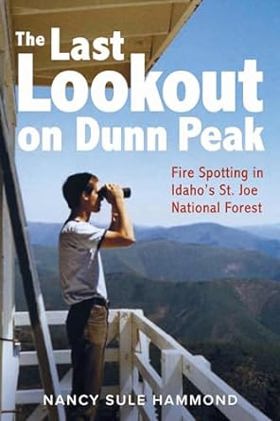
"Don and Nancy Hammond spent two seasons spotting fires in Idaho's St. Joe National Forest. Interspersing personal stories, history, and details of the work, Nancy journeys back to that exciting time"-- Provided by publisher xi, 271 pages illustrations (some color), maps ; 23 cm CIRC [ 0 ]
|
2023 |
|
Man of treacherous charm territorial justice Edmund C. Fitzhugh by Candace Wellman 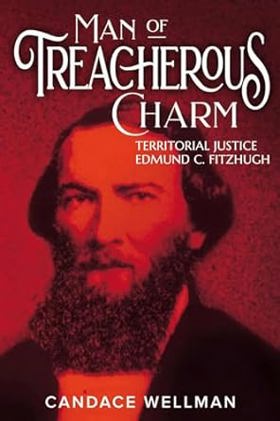
"Appointed to Washington Territory's District and Supreme Courts in 1857 despite being under indictment for murder, Edmund C. Fitzhugh's biography offers unique insights into the territory and 19th century American West"-- Provided by publisher xvii, 319 pages : illustrations ; 23 cm. CIRC [ 0 ]
|
2023 |
|
Boyhood among the woolies growing up on a Basque sheep ranch by Richard W. Etulain 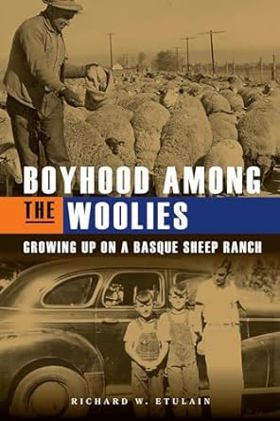
Like many Pacific Northwest sheepherders, Sebastian Etulain emigrated from Europe's Basque country. He arrived in Yakima, Washington, in May 1921, convinced that hard work could overcome a lack of formal education and other obstacles. That became his doctrine, and he advanced to ranch owner before marrying Mary Gillard Foster in 1936. The Etulain sheep ranch lay among the rock ridges, coulees, hills, and grasslands twenty miles east of Ritzville in eastern Washington. Isolated and sprawling across nearly ten thousand acres, it included a sturdy ranch house surrounded by hay barns, a water pump house, corrals, and pens for sheep, goats, dogs, and pigs. The spread also had a milking parlor and creamery as well as a blacksmith shop. The Etulains adopted seasonal rhythms: for part of the year, their pasture grasses provided sufficient fodder, and in the summer, they herded most of their animals up to mountains near St. Maries, Idaho. But in winter, the sheep and cattle needed purchased feed, and plenty of it. Sebastian's three sons reveled in a magical upbringing on the ranch-despite the demanding work. In Boyhood Among the Woolies, his youngest son, Richard, reveals the family's story, a rare look at life on an early eastern Washington sheep ranch. He recounts endless chores, lambing season, sheep shearing, efforts to keep animals safe, and fighting one of the greatest dangers-grass fires. He also describes family activities, relationships with hired staff, favorite dogs, brotherly pranks and shenanigans, schooling and church in Ritzville, Basque history, and more. xii, 151 pages : illustrations, maps ; 23 cm CIRC [ 0 ]
|
2023 |
|
The Evergreen Collection exceptional stories from across Washington State by Larry Clark , Adriana Janovich 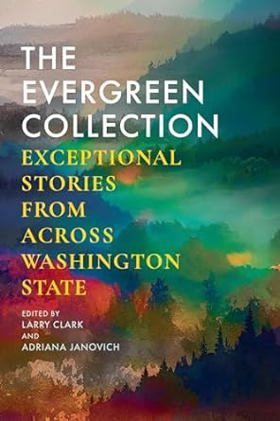
"While working for Washington State Magazine, eleven journalists traveled throughout the region to interview farmers, chefs, wine tasters, mountain climbers, scientists, and more. The resulting stories highlight the Evergreen State's captivating people, industries, and history, describing influential programs, cities from Aberdeen to Zillah, as well as a wide variety of trends, research, and innovative solutions"-- xiii, 273 pages : color illustrations ; 23 cm CIRC [ 0 ]
|
2023 |
|
Getting elected is the easy part working and winning in the state legislature by Karen Keiser 
Across the nation every two years, first-time lawmakers enter state legislatures--institutions steeped in tradition, arcane procedures, and unwritten rules. Although dozens of publications advise candidates on how to run and win campaigns, for those elected, few resources exist. After more than twenty years in the Washington State Legislature, Senator Karen Keiser realized she could address that knowledge gap. Written for legislative newcomers and others interested in state government, her book blends documented research with her personal experiences and observations about how to succeed and achieve real change. She focuses on the culture adjustment and challenges many newly elected lawmakers face, and offers tips and advice to help them achieve their legislative goals xiv, 155 pages : illustrations ; 23 cm CIRC [ 0 ]
|
2023 |
|
Frances Barkley eighteenth-century seafarer by Cathy Converse , Frances Barkley 
"A rivetingly imagined re-telling of the voyages of Frances Barkley (1769–1845), who as a young woman travelled the world on a trading mission with her sea captain husband. Over two hundred years ago, Frances Barkley, a seventeen-year-old girl fresh out of a convent school in France, met twenty-six-year-old sea captain, fell deeply in love, and married him after a six-week courtship. Five weeks later, she stepped aboard his ship, the Imperial Eagle, to set sail on an eight-year voyage that would take them around the world twice. Frances Barkley’s story is a remarkable one. It is a story born of discovery, of firsts, of hardship, of disease, of illness, and of death. Relying on her strength of character and wit, this young woman survived fierce seas, shipwreck, and capture by pirates. When Frances was approaching her seventh decade, at the behest of her daughter, she put pen to paper and wrote down what she could remember of her life with her husband in the merchant sea trade. Frances Barkley: Eighteenth-century Seafarer is not simply a re-issue of Frances’s own reminiscences, but a work of creative non-fiction—an extensive reimagining of her time at sea, supplemented through extensive historical, geographic, and nautical research."-- Provided by publisher 137 pages : illustrations, maps ; 22 cm. CIRC [ 0 ]
|
2023 |
|
East Side story growing up at the PNE by Nick Marino 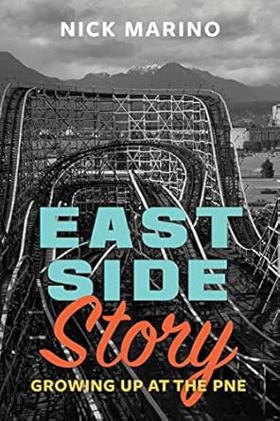
"A sly, sentimental, and wickedly funny memoir about growing up at the local fair. The PNE (Pacific National Exhibition) is a Vancouver tradition, an annual fair started in 1910 that is famous for its farm animals, dog trick shows, and amusement park - highlighted by Canada's oldest wooden roller coaster still in existence. In 1980, when Nick Marino was twelve years old, he started working at the PNE and quickly learned that there was more to the fair than winning stuffed animals and eating mini donuts. He had to contend with belligerent bosses, unhinged carnies, and teenage hustlers. In this funny, charming memoir of fair life, Marino revisits the "Wild West" of the city's East Side, home to the PNE, sharing stories from his six summers working at the fair, where arcade bouncers went on midnight roller coaster rides, riots broke out at concerts, and local kids helped themselves to everything. With beguiling and at times poignant humour, he pulls back the curtain on the culture of carnivals and fairs, an unpredictable and eternally young world of players, scammers, and dreamers."-- Provided by publisher 235 pages : illustrations ; 23 cm CIRC [ 0 ]
|
2023 |
|
JAJ a Haida manga by Michael Nicoll Yahgulanaas (Artist, Author) 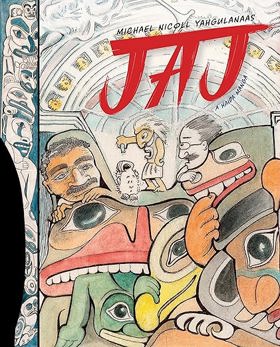
"With gorgeous imagery, visual artist Michael Nicoll Yahgulanaas brings to life the tumultuous history of first contact between Europeans and Indigenous peoples and the early colonization by the Europeans of the northern West Coast. Yahgulanaas uses a blend of traditional and modern art, eschewing the traditional boxes of comic books for the flowing shapes of North Pacific iconography. The panels are filled with colourful and expressive watercolour paintings. The panels of each page, if removed and assembled into one whole image, form a large image reminiscent of a woven robe. The story follows several historical figures, including Johan Adrian Jacobsen (JAJ), who comes to the Haida village of Masset to collect specimens for a German museum, through a time span that includes first contact, the devastation of the smallpox epidemic, and the mass resettlement of disenfranchised peoples, both Indigenous and European."-- Provided by the Publisher 116 pages : chiefly color illustrations ; 27 cm CIRC [ 0 ]
|
2023 |
|
White riot the 1907 anti-Asian riots in Vancouver by Henry Tsang 
"Essays and photographs that document the anti-Asian riots of 1907 in the context of contemporary anti-Asian sentiment. White Riot: The 1907 Anti-Asian Riots in Vancouver explores the conditions leading up to and the impact of a demonstration and parade in Vancouver, Canada, organized by the Asiatic Exclusion League and the ensuing mob attack on the city's Chinese Canadian and Japanese Canadian communities. Emblematic of a systemically racist era, White Riot reveals the social and political environment of the time, when racialized communities were targeted through legislated as well as physical acts of exclusion and violence. Based on 360 Riot Walk, a 360-degree video walking tour by artist and author Henry Tsang, White Riot offers an intersectional approach to this pivotal moment in the history of racialized communities and a cultural and social context for understanding for the current wave of anti-Asian sentiment. It features photographs of the riots colourized by Tsang as well as those of contemporary Vancouver where the riots took place. Essays by Tsang and others speak to the colonial times that preceded and followed the 1907 riots, as well as issues that Chinese and Japanese communities (and other racialized communities) in North America are facing today. White Riot poses the question: in the current ethos of anti-racism and decolonization, what does it take to reconcile our collective histories within the legacy of white supremacy? Includes essays by the Asian Canadian Labour Alliance, Paul Englesberg, Melody Ma, Angela May and Nicole Yakashiro, Jeffery R. Masuda, Aaron Franks, Audrey Kobayashi and Trevor Wideman, and Andy Yan, with an introduction by Patricia E. Roy."-- Provided by publisher 191 pages : illustrations (chiefly color), color maps ; 21 x 26 cm CIRC [ 0 ]
|
2023 |
|
Building Portland 150 years of outstanding architecture in today's central Portland by Victor Graf 
"A treasure trove of facts and factoids, original photos, people, events, weird and picturesque Portland... Your indispensable reference and compact field guide to the great architecture in the one square mile of today's central Portland." --Back cover viii, 106 pages : chiefly color illustrations, map, charts ; 23 cm CIRC [ 0 ]
|
2023 |
|
Forest park exploring Portland's natural sanctuary by Marcy Cottrell Houle 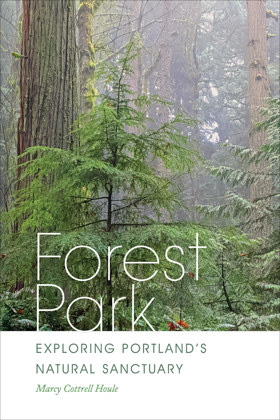
"Situated in the rugged hills west of downtown Portland, Forest Park is the nation's premier urban natural sanctuary. It supports essential habitat for hundreds of native plants and animals, including species at risk, and is one of the largest city parks in the world. While extending critical ecosystem services to the region, it covers miles of outstanding hiking trails, all within minutes of the downtown core. Forest Park: Exploring Portland's Natural Sanctuary showcases this treasure in a new light, offering a compendium of the most up-to-date and comprehensive information available. Twenty-one hikes covering seventy-five miles bring a full awareness of the park's outstanding attributes. Hikes are grouped by theme to encourage people to explore Forest Park's watersheds, geology, lichens and mosses, vegetation, amphibians and reptiles, pollinators, native wildlife, and wildlife corridors. Beautiful photographs and full-color maps accompany each trail description. Forest Park is a shining example of the Pacific Northwest western hemlock community-an ecosystem unique among all temperate forests of the world. It is also an exciting model for a future Urban Biodiversity Reserve, a concept that would recognize the park's scientific, natural, and cultural qualities. Forest Park will help all visitors discover the beauty and wonders of this extraordinary natural resource"-- Provided by publisher xv, 216 pages : color illustrations, color maps ; 23 cm CIRC [ 0 ]
|
2023 |
|
They never asked senryū poetry from the WWII Portland Assembly Center by Shelley Baker-Gard , Michael J. Freiling , Satsuki Takikawa , Duane Watari, Portland Assembly Center (Portland, Or) 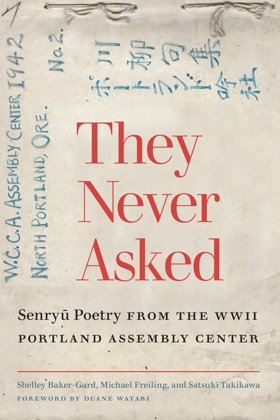
In 1942, after Executive Order 9066 was issued, Japanese families were removed from their homes in Oregon and the Yakima Valley and sent to the Portland International Livestock Exposition Center, where they were housed in converted animal stalls. The Wartime Civil Control Administration forcibly held these Japanese Americans at the Portland Assembly Center until September 1942, when they were transferred to newly built permanent incarceration camps at Minidoka, Heart Mountain, and Tule Lake. The Japanese American communities in Oregon and southern Washington were relatively small and many of the detainees knew each other; they drew on existing family and community networks to help each other through the long summer, living in inhumane conditions under the constant threat of violence. Several members of Bara Ginsha, a Portland poetry group, decided to continue their work while imprisoned at the center, primarily by writing senryū, a type of Japanese poetry related to haiku. They Never Asked is a collection of work produced by Bara Ginsha members in the WCCA camp, based on a journal kept by Masaki Kinoshita. The senryū collected here were written by a group of twenty-two poets, who produced hundreds of poems. Individually, the poems reflect the thoughts and feelings the authors experienced while being detained in the center; collectively, they reflect the resilience and resistance of a community denied freedom. Editors Shelley Baker-Gard, Michael Freiling, and Satsuki Takikawa present translations of the poems alongside the originals, supplemented by historical and literary context and a foreword by Duane Watari, Masaki Kinoshita’s grandson. xiv, 185 pages : illustrations, portraits ; 23 cm CIRC [ 0 ]
|
2023 |
|
Protest city Portland's summer of rage by Rian Dundon (Author, Photographer), Donnell Alexander, Carmen P. Thompson (Writer of introduction) 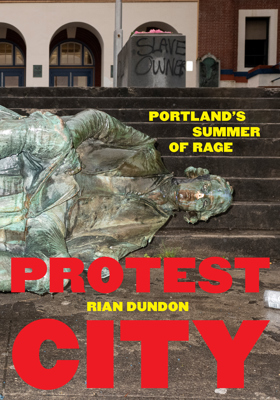
"In the months leading up to the 2020 presidential election, Portland made national news with nightly social justice protests, often met with violent response by counter protestors and law enforcement. Though frequently regarded as a progressive hub, Portland has a long history of racial inequality and oppression, and the city's entrenched divisions gained new attention during the Trump years. The photographs in Protest City present a visceral visual record of this significant moment in Portland's history. Rian Dundon, who has been photographing the rise of extreme politics on the West Coast since 2016, lived only a short walk from the protests that erupted after the murder of George Floyd. For one hundred days, Dundon enmeshed himself in the demonstrations with an unobtrusive point-and-shoot camera. The result is a graphic portrayal of how social movements become politicized, how spectacle serves as a subtext to change in the digital age, and how modern protests blur distinctions among performance, ritual, and surveillance. As he follows the progress of Portland's conflicts, Dundon draws connections to Oregon's legacy as a stronghold of white supremacist extremism and interrogates the role of whiteness in racial justice movements. Dundon's striking photos recreate the immediacy and impact of the protests, while a foreword by journalist Donnell Alexander and introduction by historian Carmen P. Thompson contextualize the uprising's sociopolitical background. A chronology and author's note are also featured"-- Page 4 of cover xxviii, 187 pages : color illustrations ; 26 cm CIRC [ 0 ]
|
2023 |
|
My name is LaMoosh by Linda Meanus , Oregon State University Press (Publisher), Confluence Project (Publisher) 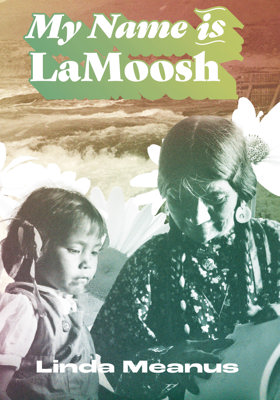
"My Name is LaMoosh is the life story of Warm Springs Tribal Elder Linda Meanus. She grew up with her grandma Flora Thompson and grandpa Chief Tommy Thompson near Celilo Falls, a mighty fishery on the Columbia that was flooded in 1957 by the construction of The Dalles Dam. Linda persevered through this historic trauma and life's challenges to teach young people about the Indigenous ways of the Columbia River. Intended for early readers to learn more about Native American history through a first-hand account, the book is also a reminder that Indigenous people continue to maintain a cultural connection to the land and river that gave them their identity. My Name is LaMoosh includes fact boxes that provide historical, cultural, and environmental context for Linda's personal story. Hundreds of books exist about Lewis and Clark and their journey of "discovery." This book balances our understanding of American history with the long-neglected voices of Indigenous people. Linda's story is not just about historic trauma but also about resilience, perseverance, and reciprocity."-- Provided by publisher 95 pages : illustrations, maps, portraits ; 26 cm CIRC [ 0 ]
|
2023 |