Catalog of British Columbiana and Pacific Northwest Americana
Encyclopedia Cascadia Catalog contains book titles of mostly non-fiction Pacific Northwest Coast of North America Titles (primarially British Columbia, Idaho, Oregon and Washington State) in an easy-to-understand title catalog. If you see a link with this badge ONLINE CIRC it means that there is an online institution that provides free access to that title. In some cases there may be more than one institution hosting the title digitally.
| Catalog Title | Published |
|---|---|
|
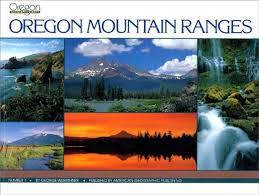
Oregon mountain ranges by George Wuerthner
|
1987 |
|
Abraham Lincoln and the Washington Territory by H. D. Smiley
|
1987 |
|
Distant neighbors a comparative history of Seattle & Vancouver by Norbert MacDonald
|
1987 |
|
Washington's coast by Robert Steelquist
|
1987 |
|
The Chilliwacks and their neighbors by Oliver Wells, Ralph Maud, Brent Douglas Galloway, Marie Weeden 
Oliver Wells, naturalist, writer, ethnographer, farmer, and stock breeder, was born in 1907 at the pioneer farm established by his family three generations before in the valley of the Chilliwack River. The name of this farm, Edenbank, echoes the rich heritage and idealist aspirations of the pioneer family who came to the valley to establish a new way of life in this new land. Their neighbors were the Chilliwacks, the native Canadians who live in the area. In the 1950s, sensing that the people with whom his family had shared the land for generations were on the threshold of losing their culture and traditions in the face of ever-growing pressure of settlement in the area, he began work on preserving, with the Native community, their way of life and their history. While Wells was not a trained ethnographer, he brought to his work a vitality possible only for a man who can draw on generations of intimacy and wide-ranging friendships within the community. With tape recorder, notebook, and sketch pad, he began recording the lives and memories of his friends in exhaustive detail. He did not record this information as an outsider―he took an active part in an attempt to actually revitalize the culture and traditions of his friends. He is credited, for example, with reviving the Salish weaving techniques of the community which are now famous throughout the world. 226 pages : illustrations ; 26 cm CIRC [ 1 ]
|
1987 |
|
|
1987 |
|
History of Polk County, Oregon by Polk County Historical Society (Polk County, Or)
|
1987 |
|
Oregon east, Oregon west travels and memoirs by Theodor Kirchhoff, Frederic Trautmann 
Translated excerpts from: Reisebilder und Skizzen aus Amerika xxvii, 195 pages : illustrations ; 26 cm CIRC [ 1 ]
|
1987 |
|
Vanport by Manly Maben 
"Vanport City, Oregon, was conceived in 1942 as a temporary housing project for the families of men and women who came to the Pacific Northwest to work in the Kaiser shipyards and further the war effort (World War II). Situated on a flood plain between Vancouver, Washington, and Portland, Oregon, the Columbia River reclaimed the city for its own in a flood on Memorial Day, 1948. In its brief but vital lifetime, Vanport pushed the Portland area into a new era of change and development, leaving a legacy that is felt even today. During its time, Vanport was the largest housing project in the United States, (perhaps the world) and the second largest city in Oregon"--Cover xiv, 151 pages : illustrations ; 23 cm CIRC [ 1 ]
|
1987 |
|
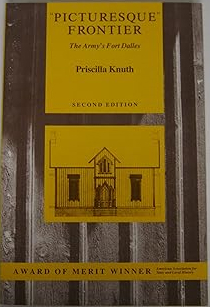
"Picturesque" frontier the Army's Fort Dalles by Priscilla Knuth
|
1987 |
|
Owning it all essays by William Kittredge 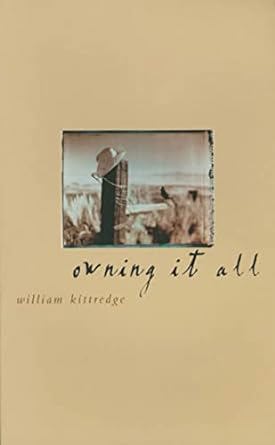
14 autobiographical essays on the "myths of land, manhood, and manifest destiny on which ... American culture was founded. This is a deeply felt and highly informed essay collection about life in the American west by one of the finest writers ever to emerge from that region. As the Seattle Times has said of Owning It All: "You may never again see the American west in quite the same way if you take the time to view it through the eyes of William Kittredge. [This is a] stunning book." Having grown up on his family's cattle ranch in eastern Oregon, Kittredge directly confronts the contradictions and myths that lie at the heart of the Western experience: male freedom and female domesticity, the wild and the tame, self-interest and love of the land. 182 pages ; 22 cm CIRC [ 1 ]
|
1987 |
|
In and around Port Ludlow yesterday and today by Pat Thompson, Port Ludlow Garden Club
|
1987 |
|
The Wilkes expedition Puget Sound and the Oregon Country by Frances B. Barkan
|
1987 |
|
The Mount Adams country forgotten corner of the Columbia River Gorge by Keith McCoy, David A. James
|
1987 |
|
West Side story by Clay Eals
|
1987 |
|
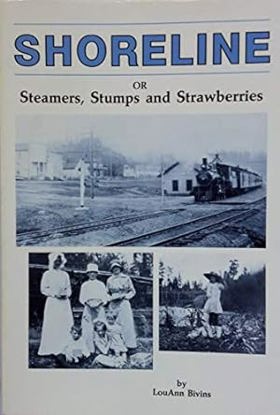
Shoreline, or, Steamers, stumps and strawberries by LouAnn Bivins, Shoreline Historical Museum
|
1987 |
|
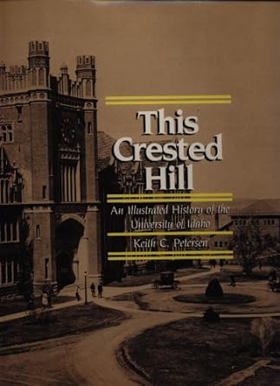
This crested hill an illustrated history of the University of Idaho by Keith Petersen
|
1987 |
|
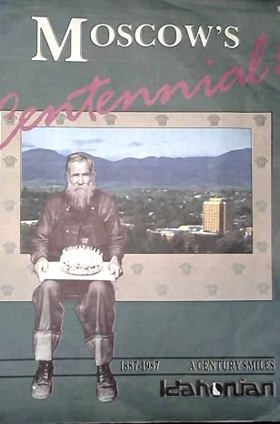
Moscow's centennial, 1887-1987 a century smiles by Idahonian
|
1987 |
|
Mushrooms of Idaho and the Pacific Northwest by Edmund E. Tylutki 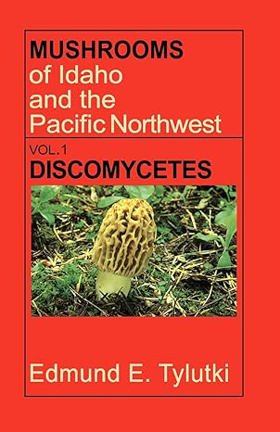
This volume is the culmination of over two decades of study of Pacific Northwest mushrooms. You will find this guide an essential for your mushroom collection kit. Mushroom enthusiasts are advised on when and where to collect, how to distinguish from toadstools and on the development and parts of the mushroom. Valuable and complete information is provided for 354 species of non-gilled mushrooms in the Northwest, including 119 species of boletes, 119 coral fungi, 12 chanterelles, 121 polypores, and 50 spine fungi. Field and technical keys for the determination of species, along with descriptions and black & white photographs. --Publisher volumes <1-2> : illustrations (some color) ; 21 cm. CIRC [ 0 ]
|
1987 |
|
Mushrooms of Idaho and the Pacific Northwest. Vol 2, Non-gilled hymenomycetes by Edmond E. Tylutki 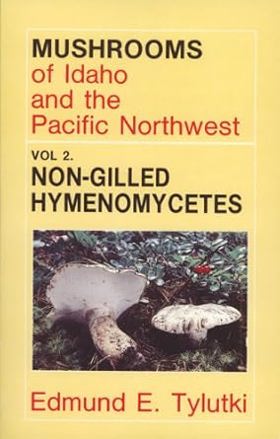
Valuable and complete information is provided for 354 species of non-gilled mushrooms in the Northwest, including 119 species of boletes, 119 coral fungi, 12 chanterelles, 121 polypores, and 50 spine fungi. Field and technical keys for the determination of species, along with descriptions and black & white photographs. CIRC [ 0 ]
|
1987 |
|
Early Oregon days by Edwin D. Culp 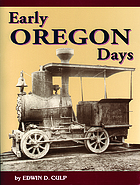
How did people travel in the good old days? Ed Culp traces the history of transportation in the West, particularly into Oregon. Old photos, maps, drawings, advertisements, and transporation schedules illustrate how improvements were made, with emphasis on the development of the railroads. The large majority of the photos were acquired during Culp's forty years in public relations work for one of the large railroads. viii, 185 pages : illustrations, map ; 28 cm CIRC [ 0 ]
|
1987 |
|
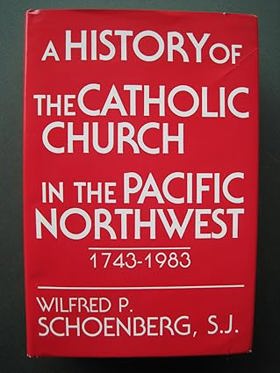
A history of the Catholic Church in the Pacific Northwest, 1743-1983 by Wilfred P. Schoenberg
|
1987 |
|
Land-use planning in Oregon a no-nonsense handbook in plain English by Mitch Rohse 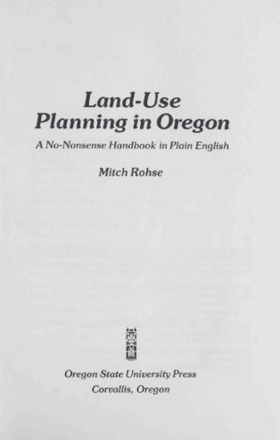
Oregon has the most extensive land-use planning program of any state in this country. Every acre of privately owned land in this state is zoned. Every acre is subject to a comprehensive plan. Planning affects the cost of your home, the distance you drive to work or shop, your property taxes, your schools, your police. But in spite of the significant effects of land-use planning, many Oregonians don't know much about ii. There are several reasons for this. First, Oregon has a relatively new program. Even those who developed it or who administer it are still learning just how it works. Second, the program is complicated. It combines law, ecology, economics, engineering, and politics. Any one of these fields is difficult to know and understand well. Small wonder, then, that the combination of all five is hard to grasp. Finally, even though "citizen involvement" is the first among Oregon's planning goals, not much has been written to explain Oregon's planning program to its citizens. Most planners and lawyers have been writing for other planners and lawyers. Their jargon-laden prose isn't comprehensible to those who are not in the field of planning. Come to think of it, some of that prose isn't comprehensible to those of us who are! The reasons described above have prompted me to write this book. This is a no-nonsense, plain-English guide to land-use planning in Oregon. It is intended mainly for lay persons-for elected officials, real estate salespersons, developers, planning commissioners, students, permit applicants, and the active, involved citizens that are so important to the program. Because so many lay persons have their first encounter with planning when they apply for some kind of permit, the book pays particular attention to the process of applying for permits. It offers many suggestions on how to make that process as painless as possible. The first chapter provides a brief overview of Oregon's program, that unique combination of state and local planning. The second discusses the permit process that results from that combination. Chapter 3 tells you the "dos" and "don'ts" of getting a permit. The fourth chapter is a glossary of planning terms-a concise encyclopedia with more than 600 entries, from "abate" to "zoning ordinance." The Appendix contains Oregon's statewide planning goals. As you read the book and encounter unfamiliar terms, turn to the glossary for an explanation. The glossary entries define the terms; many of those entries also discuss key concepts and issues and direct you to related subjects. I hope you will find this book to be helpful in understanding a program that so strongly affects us all. 286 pages : illustrations ; 22 cm ONLINE CIRC [ 1 ]
|
1987 |
|
San Juan the powder-keg island : the settlers' own stories by Jo Bailey, Al Cummings , Beach Combers, Inc (Publisher) 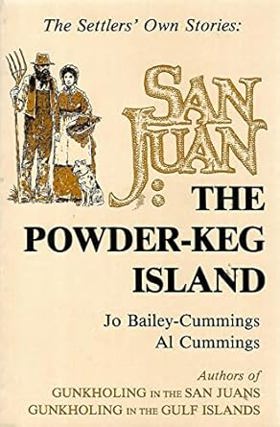
This book tells the history of San Juan Island mostly through the diaries and letters of the original settlers plus newspaper accounts of various newsworthy events that happened on the island. x, 194 pages : illustrations, portraits ; 22 cm CIRC [ 1 ]
|
1987 |
|
The Nootka scenes and studies of savage life by Gilbert Malcolm Sproat , Charles Lillard
|
1987 |