Catalog of British Columbiana and Pacific Northwest Americana
Encyclopedia Cascadia Catalog contains book titles of mostly non-fiction Pacific Northwest Coast of North America Titles (primarially British Columbia, Idaho, Oregon and Washington State) in an easy-to-understand title catalog. If you see a link with this badge ONLINE CIRC it means that there is an online institution that provides free access to that title. In some cases there may be more than one institution hosting the title digitally.
| Catalog Title | Published |
|---|---|
|
Reporting the Oregon story how activists and visionaries transformed a state by Floyd J. McKay 
"Oregon entered a new era in 1964 with the election of Tom McCall as Secretary of State and Bob Straub as State Treasurer. Their political rivalry formed the backdrop for two of Oregon's most transformative decades, as they successively fought for, lost, and won the governorship. Veteran Oregon journalist Floyd McKay had a front-row seat. As a political reporter for The Oregon Statesman in Salem, and then as news analyst for KGW-TV in Portland, McKay was known for asking tough questions and pulling no punches. His reporting and commentaries ranged from analysis of the "Tom and Bob" rivalry, to the Vietnam War's impact on Senators Wayne Morse and Mark Hatfield and the emergence of a new generation of Portland activists in the 1970s. McKay and his colleagues were on the beaches as Oregon crafted its landmark Beach Bill, ensuring the protection of beaches for public use. They watched as activists turned back efforts to build a highway on the sand at Pacific City. Pitched battles over Oregon's Bottle Bill, and the panic-inducing excitement of "Vortex"--The nation's only state-sponsored rock festival--characterized the period. Covering the period from 1964-1986, McKay remembers the action, the players and the consequences, in this compelling and personal account. As major actors fade from the scene and new leaders emerge, McKay casts a backwards glance at enduring Oregon legends. Half a century later, amid today's cynicism and disillusionment with media, politics, and politicians, Reporting the Oregon Story serves as a timely reminder that charged politics and bitter rivalries can also come hand-in-hand with lasting social progress. Reporting the Oregon Story will be relished by those who lived the history, and it will serve as a worthy introduction to Oregonians young and old who want a first-hand account of Oregon's mid- twentieth-century political history and legislative legacy"-- Provided by publisher xiv, 270 pages : illustrations ; 23 cm CIRC [ 0 ]
|
2016 |
|
Report upon the Pacific wagon roads by Albert H. Campbell, United States Department of the Interior
|
1969 |
|
Report of the Commission appointed to delimit the boundary between the provinces of Alberta and British Columbia by Alberta and British Columbia Boundary Commission 
Published in multiple parts during the early twentieth century by a joint provincial and federal effort, the Report of the Commission Appointed to Delimit the Boundary Between the Provinces of Alberta and British Columbia documents the grueling topographical expedition tasked with permanently mapping the region's legal borders. The exhaustive technical volumes detail the surveying of the treacherous Rocky Mountain Continental Divide and the 120th meridian, translating high-altitude wilderness into precise trigonometric data, contour maps, and physically erected boundary monuments. Beyond a mere geographic catalog, the commission's multi-year undertaking established the absolute jurisdictional clarity required by both provinces to manage lucrative natural resources, timber rights, and emerging alpine tourism. A keen insight drawn from the work is how the rigorous application of topographical science functioned as a profound mechanism of state enclosure; by mathematically carving a rigid, artificial political barrier across the natural landscape, the Boundary Commission successfully overwrote fluid Indigenous territorial networks with an absolute, permanent geometry of colonial jurisdiction. volumes : illustrations ; 26 cm ONLINE CIRC [ 4 ]
|
1917 |
|
Report of an expedition from Fort Colville to Puget Sound, Washington Territory, by way of Lake Chelan & Skagit River by United States, Henry Hubbard Pierce
|
1973 |
|
Report from Grimes Creek after a hard winter by Nancy Stringfellow 
Authored by Nancy Stringfellow, Report from Grimes Creek After a Hard Winter captures the isolated, rugged reality of pioneer life and gold-mining culture in the mountainous backcountry of Boise County, Idaho. The book reflects on the punishing aftermath of a brutal winter season, detailing how local homesteaders, miners, and families endured freezing isolation, scarce supplies, and the grueling physical toll of sub-zero mountain living. Through evocative prose and regional historical anecdotes, the text preserves a snapshot of resilient community survival along a historic Idaho creek. A keen insight drawn from the work is how seasonal extremes served as the ultimate equalizer on the mining frontier; by demonstrating how a severe winter instantly stripped away the speculative hype of the gold rush and reduced all residents to a shared struggle for basic warmth and sustenance, the narrative reveals that true frontier survival relied far more on stubborn endurance against nature than on mineral wealth. 34 pages : illustrations ; 23 cm CIRC [ 1 ]
|
1990 |
|
Renton, where the water took wing an illustrated history by David M. Buerge, Cynthia Barker, Nada Oakley
|
1989 |
|
Renton from coal to jets by Morda C. Slauson , Ethel Telban , Clark Petersen (Designer), Joann Morgan (Contributor), Renton Historical Society (Publisher, Contributor) 
An American Revolution Bicentennial Project [6], 183, [4] pages, 31 unnumbered pages of plates : illustrations, maps, portraits ; 23 cm CIRC [ 1 ]
|
1976 |
|
Renewing Salmon Nation's food traditions a RAFT list of food species and heirloom varieties, with traditions at risk and in need of recovery in the greater Pacific Northwest by Gary Paul Nabhan, Renewing America's Food Traditions (Consortium), Ecotrust 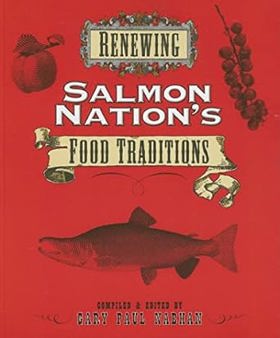
Among all the "food nations" of North America, ranging from Clambake Nation to Chile Pepper Nation, Salmon Nation is the richest in mushrooms, berries, wild roots, fish, and shellfish. Native American traditions are at its core, but other culinary accents — from Spanish to Japanese — have added to the mix. A project of the Renewing America's Food Traditions (RAFT) consortium, this book describes over 180 species of local plants and animals — many now at risk, others recovering, and all deserving of recognition — that have formed the basis of food traditions in the Pacific Northwest. To identify the traditional foods of Salmon Nation, RAFT brought together farmers, chefs, fisherfolk, food historians, orchardists, ethnobotanists, conservation activists, nutrition educators, and wild foragers in an unprecedented effort to assess the current state of foods unique to the Pacific Northwest. The result is, for the first ever, a comprehensive list of the foods that have nurtured the cultures of Salmon Nation over the centuries. Renewing Salmon Nation's Food Traditions encourages readers and eaters to familiarize themselves with the rich histories, ecologies, and recipes of these local foods. This beautifully illustrated handbook describes the appearance and taste of each species, as well as its origin and history, geographic range, and culinary uses. Foods on the list range from domesticated crops such as the Bing cherry, Hood strawberry, and Nez Perce bean to sea foods such as Chinook salmon, candlefish smelt, and geoduck, and wild foods such as Oregon black truffle, wapato, and blackcap raspberry. A resource list at the back of the book identifies nurseries, seed companies, and suppliers working to safeguard and revitalize the heritage foods of Salmon Nation. v, 66 pages : illustrations, color map ; 22 cm CIRC [ 0 ]
|
2006 |
|
Renegade tribe the Palouse Indians and the invasion of the inland Pacific Northwest by Clifford E. Trafzer, Richard D. Scheuerman
|
1986 |
|
Remote finding home in the Bitterroots by Debbie Lee 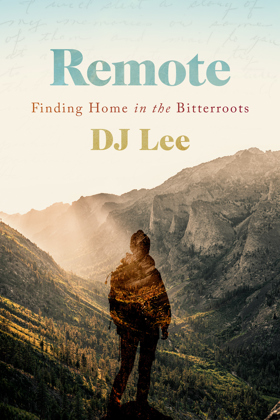
"When DJ Lee's dear friend vanishes in the vast Selway-Bitterroot Wilderness of Idaho and Montana, she travels there to seek answers. The journey unexpectedly brings to an end her fifteen-year quest to uncover the buried history of her family in this remote place. Although Lee doesn't find all the answers, she comes away with a penetrating memoir that weaves her present-day story with past excursions into the region, wilderness history, and family secrets. As she grapples with wild animal stand-offs, bush plane flights in dense fog, raging forest fires, and strange characters who have come to the wilderness to seek or hide, Lee learns how she can survive emotionally and how the wilderness survives as an ecosystem. Her growing knowledge of the life cycles of salmon and wolverine, the regenerative role of fire, and Nimíipuu land practices helps her find intimacy in this remote landscape. Skillfully intertwining history, outdoor adventure, and mystery, Lee's memoir is an engaging contribution to the growing body of literature on women and wilderness and a lyrical tribute to the spiritual connection between people and the natural world"-- Provided by publisher 204 pages : illustrations ; 23 cm CIRC [ 0 ]
|
2020 |
|
Reminiscences of Washington Territory by Charles Prosch
|
1969 |
|
Remembering the power of words the life of an Oregon activist, legislator, and community leader by Avel Louise Gordly, Patricia Ann Schechter 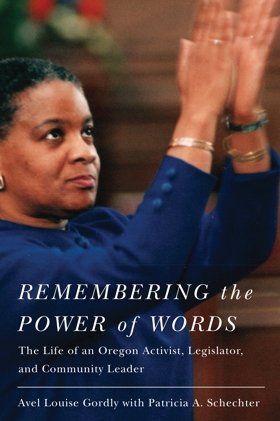
Remembering the Power of Words recounts the personal and professional journey of Avel Gordly, the first African-American woman elected to the Oregon State Senate. The book is a brave and honest telling of Gordly’s life. She shares the challenges and struggles she faced growing up black in Portland in the 1950s and 1960s, as well as her determination to attend college, the dedication to activism that took her from Portland to Africa, and her eventual decision to run for a seat in the state legislature. That words have power is a constant undercurrent in Gordly’s account and a truth she learned early in life. “Growing up, finding my own voice,” she writes, “was tied up with denying my voice or having it forcefully rejected and in all of that the memory of my father is very strong. To this day—and I am today a very experienced public speaker—preparation to speak takes a great deal of energy.” That this memoir has its origins as an oral history is fitting since Gordly has used her voice, out loud, to teach and inspire others for so many years. Important as a biographical account of one significant Oregonian’s story, the book also contributes “broader narratives touching on Black history (and Oregon’s place within it), and most particularly the politics associated with being an African American woman,” according to series editor Melody Rose. 176 pages : illustrations ; 23 cm. CIRC [ 0 ]
|
2011 |
|
Remembered drums a history of the Puget Sound Indian War by J. A. Eckrom
|
1989 |
|
Religion at the edge nature, spirituality, and secularity in the Pacific Northwest by Paul Bramadat , Patricia O'Connell Killen , Sarah Wilkins-Laflamme 
"The Cascadia bioregion-- British Columbia, Washington, and Oregon-- has long been at the forefront of cultural shifts occurring throughout North America, in particular regarding religious institutions, ideas, and practices. Religion at the Edge explores the rise of religious "nones," the decline of mainstream Christian denominations, spiritual and environmental innovation, increasing religious pluralism, and the growth of smaller, more traditional faith groups. The first research-driven book to address religion, spirituality, and irreligion in the Pacific Northwest, Religion at the Edge expands our understanding of the nature, scale, and implications of socioreligious changes in North America, and the relevance of regionalism to that discussion."-- Provided by publisher viii, 266 pages : illustrations, maps, charts ; 24 cm CIRC [ 0 ]
|
2022 |
|
Reisebilder und Skizzen aus Amerika by Theodor Kirchhoff 
Published in 1875, Theodor Kirchhoff's Reisebilder und Skizzen aus Amerika offers a rich, descriptive travelogue of the American West as observed by a German immigrant, poet, and former Pacific Northwest shopkeeper. The narrative vividly captures the rapid economic and infrastructural transformation of the frontier, documenting early transit oddities like the primitive Walla Walla and Columbia River Railroad alongside the bustling, chaotic atmosphere of regional gold rush boomtowns like The Dalles. A keen insight drawn from the text is how Kirchhoff's position as a European intellectual provides a refreshing outsider's perspective on American expansion; unburdened by the nationalistic mythology of Manifest Destiny, he documents the eccentricities, raw commercialism, and unvarnished realities of the Pacific Northwest with a critical, cosmopolitan detachment often completely absent from domestic colonial boosterism. 2 volumes 19 cm ONLINE CIRC [ 2 ]
|
1875 |
|
Regionalism and the Pacific Northwest by William G. Robbins , Robert J. Frank , Richard E. Ross
|
1983 |
|
Reflections on early Cannon Beach by John Delbert Griffin
|
1977 |
|
Reflections mostly true stories and occasional poems by Shaw Island Writers Group (Wash) , Judith Laurel Harkness (Illustrator) 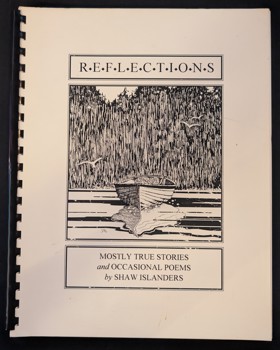
Authored by the Shaw Island Writers Group with illustrations by Judith Laurel Harkness, Reflections: Mostly True Stories and Occasional Poems captures the intimate, quirky rhythms of life on one of San Juan County's smallest and most isolated inhabited islands. The collection weaves together personal essays, local folklore, and evocative poetry penned by residents who navigate ferry schedules, one-lane dirt roads, and a profound sense of insular community. Through these unvarnished community chronicles, the text preserves the quiet humor and daily resilience required to thrive away from mainland conveniences. A keen insight drawn from the work is how collective island storytelling acts as an essential psychological buffer against isolation; by transforming everyday domestic mishaps and environmental encounters into shared literature, small island communities forge a resilient internal culture that celebrates their deliberate detachment from the fast-paced modern world. 115 pages : illustrations ; 28 cm CIRC [ 1 ]
|
1994 |
|
Reflections Thompson Valley histories by Wayne R. Norton, Wilf Schmidt 
Covers Kamloops and the following localities and areas in Thompson- Nicola Regional District: Lytton, Spences Bridge, Ashcroft, Cache Creek, Walhachin, Savona, Monte Creek, Pritchard, Chase, Heffley Creek, Barriere, Clearwater, Birch Island, and North Thompson. From Chase to Lytton and from Blue River to Kamloops, the communities of the Thomson Valley are linked by a magnificent river. But they are also linked by a common past that is largely overlooked in the general histories of British Columbia. This collection of new writing explores the neglected post-settlement history shared by the communities of the Thompson Valley. Supporting the text are seventy-two photographs - many published for the first time. x, 198 pages : illustrations ; 23 cm CIRC [ 0 ]
|
1994 |
|
Rediscovering Vardis Fisher centennial essays by Joseph M. Flora 
Vardis Fisher was one of Idaho's most accomplished writers. His attention to western landscape and rural culture left a lasting, albeit controversial, legacy. These twelve evocative essays explore the impact and achievement of Fisher s work and life. xiii, 254 pages : illustrations ; 24 cm CIRC [ 0 ]
|
2000 |
|
Red light neon a history of Vancouver's sex trade by Daniel Francis 
"This book is a history of hypocrisy." So begins Daniel Francis, BC's leading popular historian, as he explores the colourful and ultimately tragic story of prostitution in Vancouver. He writes: "The city's political and social leaders consistently have treated prostitutes as pariahs whose presence was tolerated, sometimes exploited, but never approved. All the while, the authorities collected millions of dollars in fines and licence fees from businesses that everyone knew were, and are, fronts for the sex trade." 192 pages, 8 unnumbered pages of plates : illustrations ; 23 cm CIRC [ 0 ]
|
2006 |
|
Red Harbor Radical Workers and Community Struggle in the PacificNorthwest : Radical Workers and Community Struggle in the Pacific Northwest by Aaron Goings 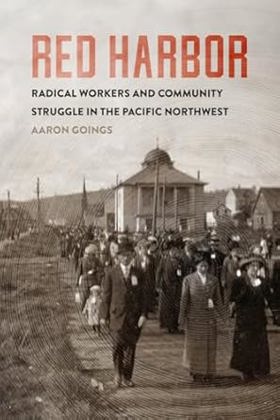
In the early decades of the twentieth century, Grays Harbor was the Lumber Capital of the World. While thousands of lumber and maritime workers fought for higher wages and decent conditions, employers unified to protect their interests, often through violent and corrupt means. They spied on unionists, expelled them from their own towns, vilified them in the press, and physically assaulted labor activists. But with deep roots in their communities, radical workers continued to meet in their halls and immigrant neighborhoods—and to influence the wider labor movement well into the 1930s. In Red Harbor, Aaron Goings resurrects the forgotten history of lumber workers in a bastion of labor radicalism, examining the conflict as workers faced down an alliance of employers, police, and violent anti-radicals, including the Ku Klux Klan. But he goes beyond these clashes to illuminate the vital roles of families, immigrants, and working-class women in the labor movement, revealing how people fought not only for labor rights but also for the good of their communities. The Industrial Workers of the World (or Wobblies) in particular adopted views and tactics from socialist Finnish immigrants while authoring programs responsive to local needs and supported by the people—radical and otherwise. Vivid and revealing, Red Harbor shines a light on lumber workers and the pursuit of justice in the Pacific Northwest. 360 Pages, 6 x 9 in, 19 b&w illus CIRC [ 0 ]
|
2025 |
|
Recording their story James Teit and the Tahltan by Judy Thompson 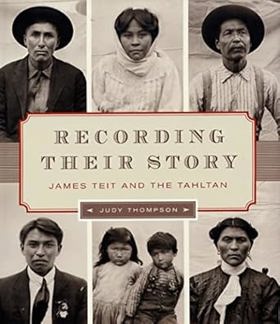
Recording Their Story describes the life of James Teit, one of Canada's earliest ethnographers, and his work among the Tahltan people of northern British Columbia almost a century ago. Teit's work collecting artifacts, taking photographs, recording songs, transcribing myths, and gathering information about social organization, ceremonial life, customs, and beliefs has proved invaluable. Today, this collection is the most important extant assemblage of the Tahltan's heritage. James Teit emigrated from the Shetland Islands to British Columbia in 1884, at the age of nineteen. He reveled in the outdoor life and became, among other things, a hunting guide, a linguist who spoke several aboriginal languages fluently, and an activist for Native rights. Teit's connection to the Canadian Museum of Civilization and his ethnographic work among the Tahltan began in 1911, when he was invited to join the staff of the new Anthropology Division of the Geological Survey of Canada. Teit then worked among the Tahltan, at their request and with the participation of many within the community, in both 1912 and 1915. Judy Thompson's examination of Teit's extensive correspondence, fieldwork notebooks, diaries, and manuscripts illustrates how James Teit's life and work impacted his major ethnographic studies. Recording Their Story is part biography and part catalog of the Tahltan ethnographic collection. The book is richly illustrated throughout with 71 rare historic photographs, 51 beautiful color images of ethnographic artifacts, six line drawings, and three maps. xi, 207 pages : illustrations (some color), maps (some color) ; 29 cm CIRC [ 0 ]
|
2007 |
|
Reasons to go outside a Seattle parks project by James Mitchell , Jackson Quall (Author, Photographer) 
A collection of photographs taken at each of Seattle's 334 parks. Includes a brief history of Seattle parks, location and size of each park, and comments on the photographs. Our names are James and Jackson. In October of 2009 we made the decision to visit and take a photograph at every park in our hometown of Seattle, Washington; a city known for its natural beauty best observed through its exceptional park system. The basic idea was to include ourselves and the rainbow colored park sign that welcomes you to each park in each photograph to more or less "prove" we were there. It ended up taking us 3 years and 8 months to visit every one. We rode our bicycles to 207 of the parks and were able to include 187 different people in the project: some old friends, new friends, acquaintances, strangers, animals and even the Mayor of Seattle. 255 pages : color illustrations ; 23 x 31 cm CIRC [ 1 ]
|
2014 |
|
Reading the diaries of Henry Trent the everyday life of a Canadian Englishman, 1842-1898 by J. I. Little , Henry Trent 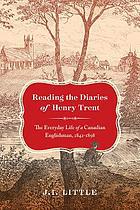
"The personal journals examined in Reading the Diaries of Henry Trent are not the witty, erudite, and gracefully written exercises that have drawn the attention of most biographers and literary scholars. Prosaic, ungrammatical, and poorly spelled, the fifteen surviving volumes of Henry Trent's hitherto unexamined diaries are nevertheless a treasure for the social and cultural historian. Henry Trent was born in England in 1826, the son of a British naval officer. When he was still a boy, his father decided to begin a new life as a landed gentleman and moved the family to Lower Canada. At the age of sixteen Trent began writing in a diary which he maintained, intermittently, for more than fifty years. As a lonely youth he narrates days spent hunting and trapping in the woods owned by his father. On the threshold of manhood and in search of a vocation, he writes about his experiences in London and then on Vancouver Island during the gold rush. And finally, as the father of a large family, he describes the daily struggle to make ends meet on the farm he inherited in Quebec's lower St Francis valley. As it follows Trent through the different stages of his long life, Reading the Diaries of Henry Trent explores the complexities of class and colonialism, gender roles within the rural family, and the transition from youth to manhood to old age. The diaries provide a rare opportunity to read the thoughts and follow the experiences of a man who who, like many Victorian-era immigrants of the privileged class, struggled to adapt to the Canadian environment during the rise of the industrial age."-- Provided by publisher 1 online resource. CIRC [ 0 ]
|
2021 |