Catalog of British Columbiana and Pacific Northwest Americana
Encyclopedia Cascadia Catalog contains book titles of mostly non-fiction Pacific Northwest Coast of North America Titles (primarially British Columbia, Idaho, Oregon and Washington State) in an easy-to-understand title catalog. If you see a link with this badge ONLINE CIRC it means that there is an online institution that provides free access to that title. In some cases there may be more than one institution hosting the title digitally.
| Catalog Title | Published |
|---|---|
|
Exploring Vancouver Island's west coast a cruising guide by Don Douglass 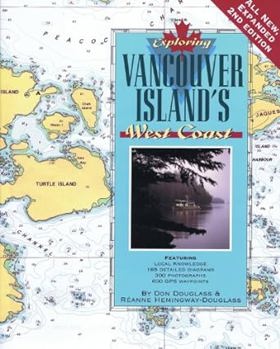
Nowhere does the tourist motto Super, National British Columbia! come more alive than on Vancouver Island's West Coast. With five great sounds, sixteen major inlets, and an abundance of spectacular wildlife, the largest island on the west coast of North America is a cruising paradise. The Douglasses consider their voyages along this coast to be among their most satisfying adventures. In this guide they give small craft skippers the kind of local knowledge they need to circumnavigate the island and drop hook in an abundance of intimate coves. 287 pages : illustrations, maps ; 26 cm CIRC [ 1 ]
|
1994 |
|
Squamish the shining valley by Kevin McLane 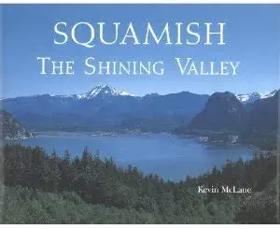
Published by mountaineer and author Kevin McLane, Squamish: The Shining Valley chronicles the dramatic geographic, cultural, and recreational evolution of British Columbia's famous fjord-side corridor. The book traces the region's transformation from an ancestral indigenous territory and a rugged 19th-century logging outpost into a world-renowned mecca for rock climbing, mountaineering, and outdoor recreation. Through striking photography and detailed historical accounts, the text captures the tenacity of the working-class communities who first carved railways and mills out of the imposing granite wilderness. A keen insight drawn from the work is how modern outdoor recreation alters the meaning of peripheral landscapes; the transition of Squamish from an extractive mill town into an elite adventure capital demonstrates that post-industrial mountain valleys are increasingly valued not for the timber they yield, but for the untamed verticality that allows modern seekers to escape urban containment. 96 pages : illustrations (some color), portraits ; 23 x 28 cm CIRC [ 1 ]
|
1994 |
|
Dr. John McLoughlin master of Fort Vancouver, father of Oregon by Nancy Wilson, Bert Webber 
Curator Nancy Wilson of the McLoughlin House National Historic Site in Oregon City, has labored for years to bring together the details of the life of Dr. John McLoughlin. She has written about this Hudson's Bay Company Chief Factor, who also founded Oregon City, in a gracious yet telling way. This book covers, and a singular popular volume, everything that could be discovered about Mr. McLoughlin from his earliest years until the day he died. McLoughlin got into trouble with this British employers because he was a compassionate man who did his best to help sick, hungry and broke American pioneers freshly arrived over the Oregon Trail. But he insisted that Americans settled south of the Columbia River as he believed when the International boundary was settled the Columbia River would be the dividing line. To protect the interests of the Hudson's Bay Company, McLoughlin put up the first building at Wilmette Falls (Oregon City) then platted the city. On his retirement he moved permanently to Oregon City and became an American citizen. Here is the story recorded with library reference quality but is narrated in a easy-to-read language. The Editor, Bert Weber, Master Librarian (retired) and research photojournalist, is author of many books about Oregon. --- from book's back cover 205 pages : illustrations, maps ; 22 cm CIRC [ 1 ]
|
1994 |
|
This bloody deed the Magruder incident by Ladd Hamilton 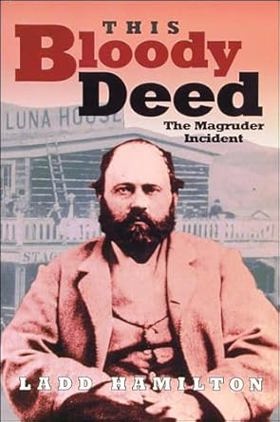
The infamous murder and robbery of Lewiston merchant Lloyd Magruder and his companions during the 1860s gold rush is legendary in Idaho, Montana, and Washington. Ladd Hamilton constructs a compelling account of the destruction of Magruder’s pack train while traveling on the Southern Nez Perce Trail in the Bitterroot Mountains, and the subsequent quest by Magruder’s friend Hill Beachey to track his killers to San Francisco, escort them back to Lewiston, and then protect them from mob justice until they could be tried in court. By appraising written evidence and community lore, Hamilton has created an intriguing account based on fact and documentation. But he also blends in historical fiction when required to complement the narrative in those places where events are known to have occurred but the historical sources are sparse or virtually nonexistent. Underlying Hamilton’s work is his exact and familiar knowledge of early Idaho Territory, which in 1863 stretched hundreds of miles from Lewiston at the Snake-Clearwater confluence to the gold camps of Virginia City, Bannack, and beyond in what is now Montana. Hamilton’s imaginative characterizations of Magruder, Beachey, outlaw sheriff Henry Plummer, and large cast of other historical figures in Idaho, Montana, and California is based on his years of knowing the many and varied peoples of the West. Also underlying Hamilton's work is his insightful knowledge of the early gold camps in Idaho and Montana territories. xviii, 253 pages, 8 unnumbered pages of plates : illustrations, portrait ; 23 cm CIRC [ 0 ]
|
1994 |
|
A history of Moscow First United Methodist Church a century on the Palouse by Moscow First United Methodist Church (Moscow, Idaho) 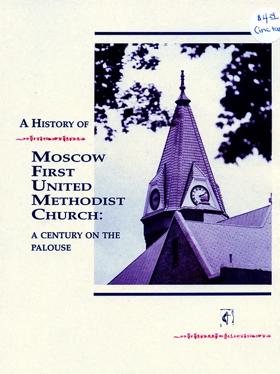
Perhaps one of the most recognizable buildings in Moscow, the United Methodist Church was added to the National Register of Historic Places in 1978. This book explores the life and evolution of the church from its very beginning in 1876. i, 97 pages : illustrations ; 28 cm CIRC [ 0 ]
|
1994 |
|
Pocket girdles and other confessions of a Northwest farm girl by Marianne Love 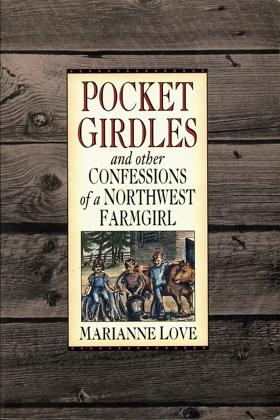
What's a pocket girdle? Find out in this hilarious collection of stories about rural childhood. "Marianne's writings catch the true and comic flavor of what it's like to grow up in rural Idaho". -- Patrick McManus 213 pages : illustrations ; 23 cm CIRC [ 0 ]
|
1994 |
|
An archival and oral history inventory of the White Salmon and Klickitat Rivers by Daniel L. Boxberger, Lynn Arnold Robbins 
Published by researchers Daniel L. Boxberger and Lynn Arnold Robbins, An Archival and Oral History Inventory of the White Salmon and Klickitat Rivers compiles extensive documentary research and personal interviews to map the human and ecological history of these two vital Washington watersheds. The book catalogs indigenous resource use, early Euro-American settlement, and the complex socioeconomic impacts of logging, fishing, and hydro-electric development along the Columbia River's dramatic northern tributaries. By blending rigorous archival records with direct oral accounts from local residents and tribal members, the authors preserve the shifting lifeways tied directly to these rushing alpine waters. A keen insight drawn from the work is how oral history inventories disrupt purely technocratic resource management; by centering the lived memories of those displaced or altered by industrial river modification, the text exposes the deep cultural amnesia inherent in viewing dynamic watersheds as mere power sources. 204 pages : maps ; 28 cm CIRC [ 0 ]
|
1994 |
|
Talking on paper an anthology of Oregon letters and diaries by Shannon Applegate , Terence O'Donnell 
Contributors to this anthology of Oregon letters and diaries include a missionary and a gambler, a prisoner and a judge, a clown and a civil servant, a housewife and a homesteader, a cowboy, a schoolgirl, a nun, and many others. Few would consider themselves writers. Yet all took the time to commit words to paper, providing us today with a unique sense of their lives and times. Letters and diaries are among the most intimate of literary expressions. Seldom written for an intended audience of more than one (if that), they provide a private forum for feelings, concerns, and interests. Yet letters and diaries also benefit a wider audience. They afford us a special knowledge of the past, for they are commonly filled with the concrete details of everyday life, details which biography and history tend to disregard. A summer holiday, fur trapping, a sea voyage, courtship and war, travel and homesteading, the Depression, the Japanese internment, hope despair, and joy--the writings collected in Talking on Paper bring an impressive immediacy to these experiences. In gathering material for this book, the editors traveled thousands of miles and researched thousands of documents. Selections span a period of a century and a half and reflect the wide cultural and ethnic diversity of Oregon. From the lyric-laced diaries of Greek emigrant and itinerant railroad worker Haralambos Kambouris to the poignant letter by 10-year-old Julia Wilson of Mitchell describing the loss of her family in a flash flood, these private expressions of literacy and imagination reveal an intimate aspect of Oregon literature. xviii, 324 pages : illustrations ; 28 cm. CIRC [ 0 ]
|
1994 |
|
The Biology and management of red alder by David E. Hibbs, Dean S. DeBell, Robert F. Tarrant 
Only a few years ago, red alder, the major hardwood species in the Northwest, was regarded as a weed to be eradicated with herbicides. Today, red alder provides the raw material for a thriving industry, producing fine furniture, specialized veneers and plywoods, and paper products. In addition to its economic values, red alder has unique biological values that are proving vital in efforts to improve forest management. This timely study presents a synthesis of current knowledge about the biology and management of red alder. The first section covers topics in the basic biology of alder, while the second section offers principles and practices of alder management. The book's 34 contributors provide current and comprehensive information that will allow forest managers to weave red alder into the improved forest management systems demanded by an increasingly well-informed public. xi, 256 pages : illustrations ; 29 cm CIRC [ 0 ]
|
1994 |
|
Haida monumental art villages of the Queen Charlotte Islands by George F. MacDonald, Richard J. Huyda 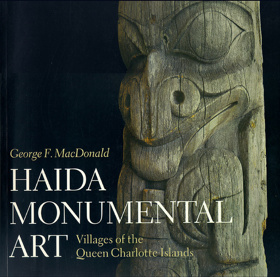
"The Haida of the Queen Charlotte Islands in British Columbia constructed some of the most magnificent houses and erected some of the most beautifully carved totem poles on the Northwest Coast. During the last quarter of the nineteenth century, images of the Haida's immense cedar houses and soaring totem poles were captured, first on glass plates and later on film, by photographers who travelled to then-remote villages such as Masset and Skidegate to marvel at, and record, what they saw there." "Haida Monumental Art ... includes a large number of these remarkable photographs, selected from a collection of over 10,000 original prints and photographic plates. They depict the Haida villages at the height of their glory and record their tragic deterioration only a few decades later. ... By combining archaeology and ethnohistory, George MacDonald presents an integrated framework for understanding the physical structure of a Haida village. He explains how the houses and poles are part of a fascinating web of myth, family history, and Haida cosmology, which provides a unique insight into Haida culture."--Back cover 218 pages : illustrations (some color), maps ; 31 cm CIRC [ 0 ]
|
1994 |
|
To Tacoma by trolley the Puget Sound Electric Railway by Warren W. Wing 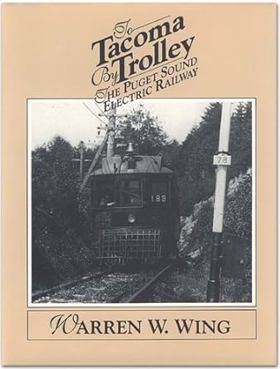
Wonderful history of the Puget Sound Electric Railway, part of Stone & Webster's empire of west coast interurbans. With beautiful black and white photos on almost every page plus 8 pages in color. Includes 200 photos, maps and complete equipment roster. 144 pages. 144 pages : illustrations (some color), maps ; 29 cm CIRC [ 1 ]
|
1995 |
|
Magic islands a treasure-trove of San Juan Islands lore by David Richardson 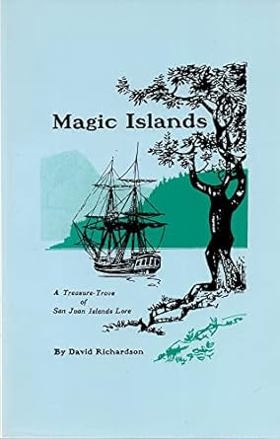
Since its first appearance in 1964 this delightful little book on the magic San Juan Islands has gone through several editions and numerous reprintings to become a real classic. Newly revised and up-to-date for today's generation of readers, this affectionate survey of the San Juans - replete with the legends and romance that make the Islands such a special place - is still the very best book of its kind. Magic Islands will add to the fun of every visitor and island-dweller. It contains descriptions of the San Juan as they are today, adds a bit of the Islands' history for flavor and hazards a peek at what the future may hold for this special place many call "paradise." 95 pages : illustrations, map ; 22 cm CIRC [ 1 ]
|
1995 |
|
The land that slept late the Olympic Mountains in legend and history by Robert L. Wood 
As stated, "When the first group of pioneers explored the rugged Olympic mountain range during the harsh winter of 1889, they encountered both breathtaking beauty and cruel acts of nature. In subsesuent years, numeruous expeditions followed, and with the gripping tales of these trailblazers, collected here for the first time". This book includes never-before published historical photos and features detailed maps of explorers' routes. 175 pages : illustrations, maps ; 16 x 23 cm CIRC [ 1 ]
|
1995 |
|
Rogue River War speech of Dr. A.G. Henry, of Yamhill, delivered before the citizens of Corvallis, on the evening of Dec. 3d, 1855 by Anson G. Henry
Delivered by pioneer physician and politician Anson G. Henry, Rogue River War Speech captures a fiery public address given in Corvallis, Oregon, in December 1855 to rally support for military action against Indigenous tribes during the height of the Rogue River Wars. The speech plays upon frontier anxieties, detailing alleged atrocities and framing the violent subjugation of local native populations as an urgent, righteous defense of American settlers. Through contemporary rhetorical appeals, the text preserves the raw, unmasked political panic and racial animosity that drove territorial policy during the Pacific Northwest's Indian wars. A keen insight drawn from the work is how wartime rhetoric deliberately inverted the roles of aggressor and victim; by casting preemptive military campaigns of displacement as defensive humanitarian rescue missions, pro-war leaders successfully mobilized civilian volunteers and legitimized state-sanctioned violence under the banner of civic protection. 41 pages : illustrations ; 19 cm CIRC [ 1 ]
|
1995 |
|
The story of Eugene by Lucia W. Moore, Nina W. McCornack, Gladys W. McCready 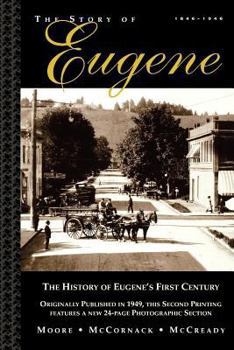
Authored by Lucia W. Moore, Nina W. McCornack, and Gladys W. McCready, The Story of Eugene chronicles the founding and growth of Oregon’s third-largest city from its humble beginnings as a remote Willamette Valley settlement in the mid-19th century. The book draws on pioneer diaries, local records, and oral histories to trace the community's evolution from a muddy river crossing named after Eugene Skinner into a bustling agricultural and educational hub anchored by the University of Oregon. Through its detailed civic narrative, the text highlights the entrepreneurial drive and social institutions that transformed a fragile frontier outpost into a thriving urban center. A keen insight drawn from the work is how the intentional integration of higher education served as a vital urban survival strategy; by aggressively lobbying to secure the state university, early town leaders successfully insulated Eugene from the boom-and-bust cycles of purely resource-dependent timber and rail economies, cementing the city's long-term cultural and economic resilience. 277 pages : illustrations ; 23 cm CIRC [ 1 ]
|
1995 |
|
An early history of Spirit Lake & the Toutle River Valley by Leland G. Jackson, Trudy Howarth 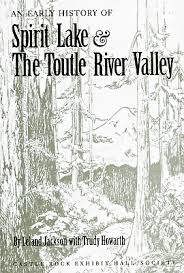
Authored by Leland G. Jackson and Trudy Howarth, An Early History of Spirit Lake & the Toutle River Valley chronicles the pioneer settlement, timber extraction, and rugged recreation that defined the remote wilderness surrounding Mount St. Helens before the 1980 cataclysmic eruption. The book draws on historical photographs, diaries, and local records to document the daring homesteaders, early cabin builders, and resilient loggers who carved out a living in the shadow of the active volcano. Through these preserved vignettes, the text captures the idyllic, rustic era of lakeside resorts and mountain trails that existed prior to the mountain's dramatic reconfiguration. A keen insight drawn from the work is how human history in volcanic zones is defined by a collective, deliberate amnesia regarding natural hazards; by building permanent communities and thriving tourist hubs directly beneath a dormant geological giant, early settlers demonstrated an irrepressible human tendency to mistake temporary mountain stability for a permanent guarantee. v, 113 pages : illustrations, maps ; 23 cm CIRC [ 1 ]
|
1995 |
|
The Great North Road and other stories by Ann Briley 
Authored by Pacific Northwest writer Ann Briley, The Great North Road and Other Stories presents a evocative collection of regional fiction exploring the emotional landscapes and quiet struggles of individuals living along the rugged northern fringes of Washington State. The book weaves together poignant narratives of isolation, family dynamics, and community ties against the backdrop of dense evergreen forests, misty coastlines, and remote rural highways. Through sensitive character studies, the text captures the nuanced human experiences that unfold far away from bustling urban centers. A keen insight drawn from the work is how geographical isolation acts as a magnifying glass for personal conflict; by setting her character-driven dramas along quiet frontier routes where escape is physically difficult, Briley reveals how regional remoteness forces individuals to confront their deepest emotional truths rather than outrun them. 182 pages : illustrations ; 24 cm CIRC [ 1 ]
|
1995 |
|
Darrington, mining town/timber town by Elizabeth S. Poehlman 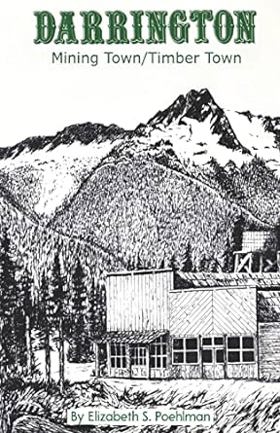
The cast of characters in Elizabeth Poehlman’s book, Darrington: Mining Town/Timber Town reads like a Wild West novel set in Paul Bunyan country. But this is no novel – Poehlman has written a memorable small-town history. The book starts in the late 1800s with the struggles of Chief Wawetkin and the Sauk-Suiattle Indians to deal with the onset of miners and settlers throughout their homelands deep in what would soon be renamed the North Cascades mountains in the new state of Washington. Subsequent chapters feature gold-fevered miners (and a revenge murder); a hotel owner who asked to be deputized for a half hour to deal with a knife-wielding drunk the sheriff couldn’t handle; the town doctor who kept a bear cub as a pet; the “sky pilot” minister who was too scared to preach in the rough railroad logging camps, opting to show slides instead; the Tarheels who followed the timber industry from North Carolina and brought their love of bluegrass and moonshine; the Depression-era housewife who distrusted banks and stashed her family’s savings around her waist in a hidden money belt – enough to almost pay off their land and house. Darrington, as Poehlman learned while living there, may be backwoods, but never boring. 176 pages : illustrations ; 21 cm CIRC [ 1 ]
|
1995 |
|
Utopias on Puget Sound, 1885-1915 by Charles Pierce LeWarne 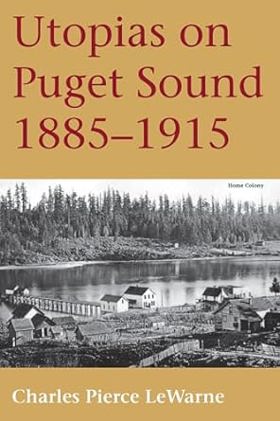
Postmaster General James A Farley's famous toast "to the forty-seven states and the soviet of Washington" introduces and sets the tone for this study of Washington State radicalism. The state's colorful reputation for radical movements was established in the 1920s and 1930s by free speech fights, strikes, strong labor organizations, and woman suffrage reforms. Charles LeWarne finds the roots of this radicalism in the communitarian experiments of the late nineteenth century. Through analyses of several of these experiments, LeWarne demonstrates that the influence of a coterie of liberals and radicals centered on Puget Sound in such communities as Home, Burley, Freeland, Equality, and Port Angeles was felt in the state long after the "utopias" they came to colonize had ceased to exist. Probably the most famous of the experiments was Home Colony on Joe's Bay near Tacoma. From a nucleus of three families, Home grew to over two hundred residents and lasted for more than twenty years. Its reputation for anarchism and flamboyance contributed to a jail sentence conviction for one editor of the Home newspaper for publishing an editorial called "The Nude and the Prudes." Readers interested in current social movements and lifestyles will find many enlightening parallels with recent communal attempts, particularly the rejection of traditional values and the belief in a perfectible world. Whatever the differences within individual colonies, the communitarian ideal has certain general characteristics that find their way into each of these attempts to form a perfect society. Historians will welcome this treatment of an important part of the social and cultural history of the area. The book contains a mine of previously scattered information on the subject. It is a delightful footnote to the history of the Puget Sound region. XXIV, 325 Seiten Illustrationen, Karten 23 cm CIRC [ 1 ]
|
1995 |
|
Rufus Woods, the Columbia River & the building of modern Washington by Robert E. Ficken 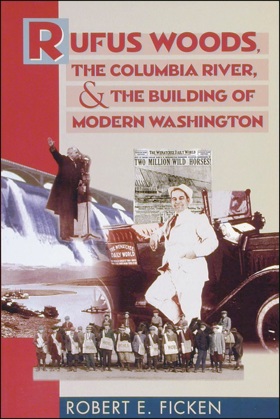
Rufus Woods, for more than forty years the publisher of the Wenatchee Daily World, has often been called the "High Priest of the Columbia River." No person deserves the title more. From the editorial platform of the World, Woods tirelessly promoted Wenatchee and north central Washington. For decades he pegged his brightest hopes for the region's future on a huge Columbia River dam in the isolated Grand Coulee region. From 1918 through Grand Coulee's completion in 1941, Woods enthusiastically promoted the largest dam-building project in American history xvi, 312 pages, 16 unnumbered pages of plates : illustrations, map portraits ; 24 cm CIRC [ 1 ]
|
1995 |
|
Roaring days Rossland's mines and the history of British Columbia by Jeremy Mouat 
In the 1890s, the name of Rossland was on every investor’s lips. Known at one time as the new Johannesburg, this small town in southeastern British Columbia was the most important mining centre in the region. Apparently possessed of vast quantities of ore, the town’s mines seemed to promise wealth for all, and Rossland grew dramatically throughout the decade. By the early 1900s, it was the province’s fourth largest centre. During that time, hard rock mining changed from a loosely structured pioneer activity to a fully fledged industry that relied on sophisticated technology, a complex corporate infrastructure, and economies of scale. Despite these advances, Rossland’s success was shortlived. A bitter strike in 1901 signalled the beginning of the Golden City’s slow decline. Nearby Trail, originally a subsidiary of Rossland’s mining industry, soon surpassed its neighbour in size and importance.. Roaring Days explores the history of the mining industry in British Columbia. Mouat examines the many different aspects of mining, from work underground to corporate strategies, and he also brings to life the unique individuals who were a part of this history--the miners who toiled long hours in semi-darkness, the hardy citizens who built a bustling town out of the wilderness, and the wealthy mine owners and corporate entrepreneurs whose wealth exceeded all expectations. --From publisher's description xviii, 236 pages : illustrations, maps ; 23 cm CIRC [ 0 ]
|
1995 |
|
A municipal mother Portland's Lola Greene Baldwin, America's first policewoman by Gloria E. Myers 
On April 1, 1908, Lola G. Baldwin, aged forty-eight, was sworn in "to perform Police Service" for the city of Portland, Oregon. She was the first woman hired by an American municipality to carry out regular enforcement duties. In telling Lola Baldwin's story, Gloria Myers examines the social and cultural impulses that gave rise to the policewoman idea. The Progressive Era redefined the role of women in society; Baldwin's career benefited from the Progressive belief that women could ameliorate urban evil as they had earlier civilized the household. The need for the urban policewoman arose out of concern for the moral and physical welfare of families, single working women, and children living in the cities. Supported by socially active women's organizations and informed by the ideals of "social hygiene," the first policewoman led a crusade against urban vice, deviance, and corruption in the Rose City. Preventive policing strategies developed by "municipal mothers" like Baldwin aid and influence policing policies to this day viii, 232 pages : illustrations ; 24 cm CIRC [ 0 ]
|
1995 |
|
The politics of righteousness Idaho Christian patriotism by James A. Aho 
From their home bases in Idaho and neighboring areas of the Northwest, organizations such as the Order, the Aryan Nations Church, the Posse Comitatus, and the Golden Mean Society have drawn national attention and spread the gospel of a “constitutionally pure, Christian homeland.” For the reader who knows these groups only from a selection of inflammatory quotes and violent deeds, this compelling work presents the first disciplined exploration of the backgrounds and belief systems of the Christian patriot movement. Using information gathered from interviews and direct observation of patriot gatherings, Aho replaces the stereotype of solitary crazies from the fringes of society with more complex and disturbing realities. x, 323 pages : illustrations ; 25 cm CIRC [ 0 ]
|
1995 |
|
Rites of passage a memoir of the sixties in Seattle by Walt Crowley 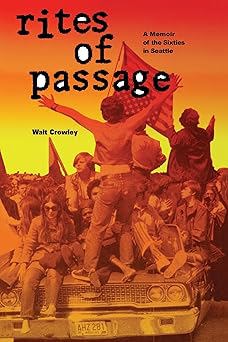
On a hot summer night in 1963, a teenager named Walt Crowley hopped off a bus in Seattle’s University District, and began his own personal journey through the 1960s. Four years later at age 19, he was installed as “rapidograph in residence” at the Helix, the region’s leading underground newspaper. His cartoons, cover art, and political essays helped define his generation’s experience during that tumultuous decade. Rites of Passage: A Memoir of the Sixties in Seattle weaves Crowley’s personal experience with the strands of international, intellectual, and political history that shaped the decade. As both a member and in-house critic of the New Left and counter-culture, the author offers a unique perspective in explaining why the experiments and excess of the period “made sense at the time.” Anti-war marches, human be-ins, rock festivals, psychedelic drugs, underground newspapers, free universities, light shows, inner-city riots, radical skirmishes, and hippie antics are chronicled with personal anecdotes, contemporary accounts, and historical insights. In the pages of Rites of Passage, the reader will encounter Black (and White) Panthers, the Seattle and Chicago Seven, Weathermen and Radical Women, and many more remarkable characters. As an engaging blend of history and personal reminiscence, Rites of Passage places the sixties in a context unavailable to its participants at the time. In addition to his text, Crowley has assembled a chronology of the decade beginning with its harbingers in the forties and fifties and continuing through its aftermath. This compilation covers political, social, and cultural events, and provides the most complete synopsis of sixties history now in print. xiv, 351 pages : illustrations ; 25 cm CIRC [ 0 ]
|
1995 |
|
Digging Duvall's past by Allen Miller, Duvall Historical Society (Wash) 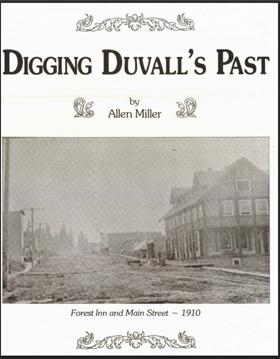
52 pages of great newspaper articles written by Allen Miller, many vintage black and white photos covering logging, new buildings in town, schools and more. iv, 52 pages : illustrations, portraits ; 28 cm CIRC [ 0 ]
|
1995 |