Catalog of British Columbiana and Pacific Northwest Americana
Encyclopedia Cascadia Catalog contains book titles of mostly non-fiction Pacific Northwest Coast of North America Titles (primarially British Columbia, Idaho, Oregon and Washington State) in an easy-to-understand title catalog. If you see a link with this badge ONLINE CIRC it means that there is an online institution that provides free access to that title. In some cases there may be more than one institution hosting the title digitally.
| Catalog Title | Published |
|---|---|
|
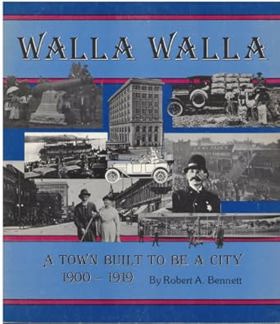
Walla Walla, a town built to be a city, 1900-1919 by Robert Allen Bennett
|
1982 |
|
Walking the High Desert encounters with rural America along the Oregon Desert Trail by Ellen Waterston 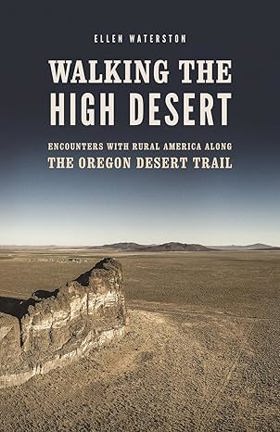
Former high desert rancher Ellen Waterston writes of a wild, essentially roadless, starkly beautiful part of the American West. Following the recently created 750-mile Oregon Desert Trail, she embarks on a creative and inquisitive exploration, introducing readers to a “trusting, naïve, earnest, stubbly, grumpy old man of a desert” that is grappling with issues at the forefront of national, if not global, concern: public land use, grazing rights for livestock, protection of sacred Indigenous ground, water rights, and protection of habitat for endangered species. Blending travel writing with memoir and history, Waterston profiles a wide range of people who call the high desert home and offers fresh perspectives on nationally reported regional conflicts such as the Malheur Wildlife Refuge occupation. Walking the High Desert invites readers—wherever they may be—to consider their own beliefs, identities, and surroundings through the optic of the high desert of southeastern Oregon. xiii, 231 pages : map ; 22 cm CIRC [ 0 ]
|
2020 |
|
Waitsburg "one of a kind." by Vance Orchard
|
1976 |
|
Wagon road north the saga of the Cariboo Gold Rush by Art Downs 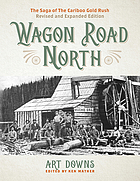
"A newly revised and updated edition of the classic pictorial account of the Cariboo Gold Rush trail. First published in 1960, Wagon Road North is the quintessential popular history book chronicling gold-rush-era BC. Focusing on the Cariboo Wagon Road--the crucial transportation route stretching from Fort Yale to Barkerville that made it possible for tens of thousands of prospectors to make their way to the Cariboo goldfields in the 1860s--this newly updated, expanded, and re-designed edition brings to life the adventures, hardships, and blind ambitions of the men and women who risked everything in the quest for gold. Packed with more than one hundred archival photos, many of them rarely seen, as well as maps and contemporary images of historical sites, this fascinating book is a visual celebration of a pivotal chapter in early BC history."-- Provided by publisher 154 pages : illustrations, maps, portraits ; 28 cm CIRC [ 0 ]
|
2021 |
|
Voyages of the Columbia to the northwest coast, 1787-1790 and 1790-1793 Columbia Rediviva (Ship) by F. W. Howay, Robert Haswell, John Box Hoskins, John Boit, Massachusetts Historical Society
|
1969 |
|
Voyages of enlightenment Malaspina on the Northwest coast, 1791-1792 by Thomas Vaughan, E. A. P. Crownhart-Vaughan , Mercedes Palau Baquero 
A concise narrative describing the remarkable scientific and artistic achievements of Alejandro Malaspina's expedition to the Northwest Coast viii, 61 pages : illustrations ; 23 cm. CIRC [ 1 ]
|
1977 |
|
Voyages of delusion the quest for the Northwest Passage by Glyndwr Williams 
The eighteenth century--the Age of Reason--was characterized by determined attempts by philosophers, scientists, and political theorists to dispel myth, superstition, and ignorance. But the Age of Reason also witnessed some of the most irrational and vainglorious attempts by sailors and speculators to find a navigable Northwest Passage that would lead through the icy seas of the Arctic from Hudson Bay to the wealth of the Pacific Ocean. Lured by the promise of fame and riches, men endured paralyzing cold, malnutrition, and terrifying storms. Many lives and fortunes were lost in the quest for the elusive "maritime philosopher's stone." Glyn Williams describes the adventures and mishaps of these misguided expeditions xx, 467 pages : illustrations, maps ; 23 cm CIRC [ 1 ]
|
2003 |
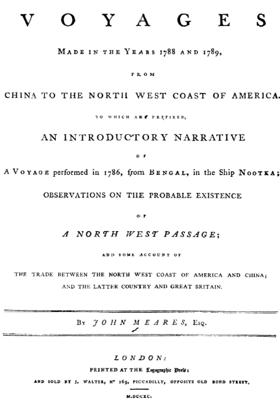
"Some copies issued on larger paper with coloured plates. Streeter noted variations in copies and describes one with an extra plate on the Philippines. Meares commanded the Felice Adventurer and Iphigenia, Captain Douglas, on a trading voyage for the Associated Merchants. The seizure of his ships by the Spanish at Nootka led to an international crisis, eventually resolved by the Nootka Convention of 1790. His exaggerated claims concerning his exploits and hardships were strongly attacked by George Dixon (no. I48). The account of voyages was edited by William Combe from Meares's papers, ref. D.N.B. The appendices contain the official instructions for the voyage, and various documents concerning the seizure, including Meares's Memorial to the House of Commons which was also published separately (no.363)." -- Strathern, G. M., & Edwards, M. H. (1970). Navigations, traffiques & discoveries, 1774-1848: A guide to publications relating to the area now British Columbia. Victoria, BC: U viii, [12], xcv, [1], 372, [108] pages, 26 unnumbered leaves of plates (some folded) : illustrations, maps ; 30 cm ONLINE CIRC [ 1 ]
|
1790 |
|
Voyage to the Northwest Coast of America, 1792 Juan Francisco de la Bodega y Quadra and the Nootka Sound controversy by Juan de la Bodega y Cuadra, Freeman Tovell, Robin Inglis, Iris Wilson Engstrand 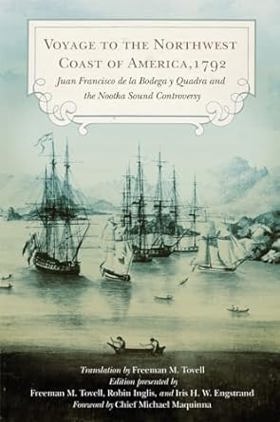
In 1792, Spanish naval officer and explorer Juan Francisco de la Bodega y Quadra sailed from San Blas, Mexico, to Nootka Sound, on the west coast of present-day Vancouver Island. For nearly three years, he had been immersed in the aftermath of the Nootka Crisis of 1789, a dispute between Britain and Spain over sovereignty in the North Pacific. He was journeying north as his government’s commissioner to hand over Spanish-occupied territory at Nootka. This book offers the first published English translation of Bodega’s journal, a remarkable account of his travels along the Northwest Coast of America, encounters with Native peoples—most notably, Chief Maquinna—and the friendship that developed between Bodega and his British counterpart, George Vancouver. Until now, Bodega’s journal has been available only in Spanish publications or in manuscript form. This much-needed English-language edition results from the collaboration of three preeminent scholars of the Pacific Northwest, who provide an in-depth introduction and extensive footnotes that make the translation accessible to a contemporary audience. Also included in this edition is a generous selection of Bodega’s original charts and illustrations created by the artists who worked with José Mariano Moziño and José Maldonado, two scientists who—at Bodega’s insistence—accompanied him on his expedition to Nootka. 196 pages : illustrations. CIRC [ 1 ]
|
2012 |
|
Voyage of a summer sun canoeing the Columbia River by Robin Cody 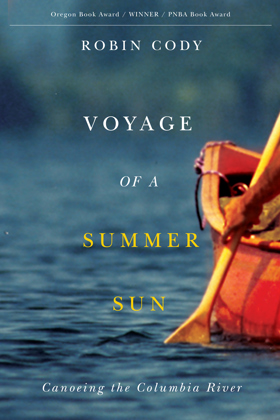
An Oregon State Library choice for “150 Books for the Oregon Sesquicentennial.” The story is the Columbia River, not the canoe and me, but I’ve learned that friends can’t hear me tell about the river until they know why I was out there. This is not an adventure story, though some adventure was unavoidable, and I didn’t set out to find myself if I could help it. Nor did I launch the trip with a large point to prove. It was a voyage of discovery, and its telling is the uncovering of surprise on a river I thought I knew… —Robin Cody, from the Prologue. On a June morning in 1990, high up in the Canadian Rockies, Robin Cody pushed his sixteen-foot Kevlar canoe through tall grass and mud to launch it on peaceful Columbia Lake, the nominal source of the river that heaves more water into the Pacific ocean than any other in North or South America. For the next eighty-two days, Cody would portage massive dams and revel in the rapids as the great river plunges 2,700 feet in 1,200 miles before reaching the river’s mouth in Astoria. Cody's canoe sneaks up on the bear and moose and raptors and beavers who make a living on the Columbia. He drops in on riverpeople: the trapper, the wind surfer, the archeologist, the lock operator, the native woman who grew up at riverside in a dwelling of tule reeds. With a generous and infectious spirit, Cody draws us into the mysteries of a much-altered and regulated river that is still, at heart, a life-giving place. 308 pages : illustrations, maps ; 23 cm CIRC [ 0 ]
|
2012 |
|
Voodoo vintners Oregon's astonishing biodynamic winegrowers by Katherine Cole 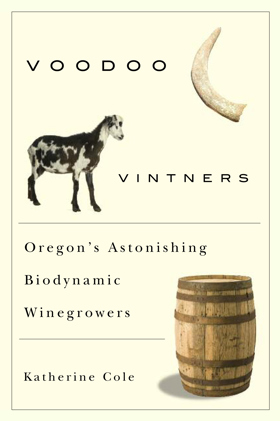
Could cow horns, vortexes, and the words of a prophet named Rudolf Steiner hold the key to producing the most alluring wines in the world—and to saving the planet? In Voodoo Vintners, wine writer Katherine Cole reveals the mysteries of biodynamic winegrowing, tracing its practice from Paleolithic times to the finest domaines in Burgundy today. At the epicenter of the American biodynamic revolution are the Oregon winemakers who believe that this spiritual style of farming results in the truest translations of terroir and the purest pinot noirs possible. Cole introduces these “voodoo vintners,” examining their motivations and rationalizations and explaining why the need to farm biodynamically courses through their blood. Her engaging narrative answers the call of oenophiles everywhere for more information about this “beyond organic” style of winemaking. x, 182 pages ; 23 cm CIRC [ 0 ]
|
2011 |
|
Voices of the elders Huu-ay-aht histories and legends by Kathryn Bridge , Kevin Neary 
"There is a special place on the southeastern shores of Barkley Sound, on the west coast of Vancouver Island. It is a magnificent landscape of rocky cliffs fronting onto the wild Pacific Ocean, sheltered beaches, lakes, mountains and forests. Since the beginning of time, it has been the ancestral home of the Huu-ay-aht First Nation. Drawing directly from oral history passed down by generations of Huu-ay-aht chiefs and elders, Kathryn Bridge and Kevin Neary tell the compelling stories of the Huu-ay-aht people from their perspective. This is a fascinating glimpse into the complex and rich history of a West Coast First Nation, from creation tales and accounts of their traditional ways to the recent Maanulth treaty." -- from Amazon.com 143 pages : illustrations, 1 map, portraits ; 22 cm. CIRC [ 1 ]
|
2013 |
|
Voices from two rivers harnessing the power of the Peace and Columbia by Meg Stanley , BC Hydro Power Pioneers 
Stories of those who lived and worked around the building of large dams and powerhouses that would turn the "Two Rivers Policy" into megawatts vii, 312 pages : illustrations (some color) ; 29 cm CIRC [ 0 ]
|
2010 |
|
Voices from the Sound chronicles of Clayoquot Sound and Tofino, 1899-1929 by Margaret Horsfield 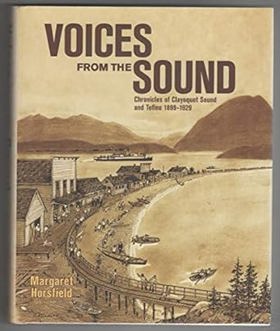
"Remarkable characters from Clayoquot Sound jostle for attention in Voices from the Sound. Storekeepers and sealers, prospectors and priests, schoolchildren, settlers and native people - in the early decades of the twentieth century, their lives intersected in the small world and vast distances of Vancouver Island's remote west coast. Now the voices of these people can be heard once again, in chatty and revealing detail. They come alive, just as cantankerous or eccentric, pitiable or brave as they were in their own lifetimes 365 pages : illustrations, maps, portraits ; 27 cm CIRC [ 1 ]
|
2008 |
|
Voices from the islands true stories about Washington State's fabulous San Juan Islands and those who inhabit them by Gordon Keith 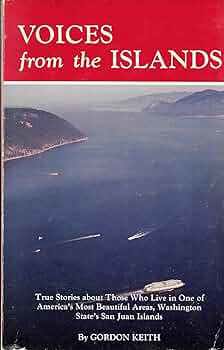
'Voices from the Islands' is must reading for anyone who has ever secretly or openly expressed a desire to live on a small island accessible only by boat or plane. In this potpourri of island stories, articles and interviews with old-timers as well as new-comers, you will meet such diverse individuals as Little Wolf, the Stuart Island Indian who was ‘raised with the wolves’; and a cartoonist who moved to an island to retire, but is presently syndicating his own cartoons nationally. You’ll meet an old-time individualist named Roger Purdue, who refused to let Orcas Island’s volunteer Fire Fighters on the roof of his house when the chimney burst into flames, because he didn’t want them walking around on his roof. There is also an interview with a former Hollywood script writer who gave up his lucrative assignments and moved to an island to live closer to nature. On the lighter side, there is an account of some Islanders who dumped an entire shipment of Seattle Post Intelligencers into the bay because of an article calling their town ‘the armpit of the San Juans.’ And, you’ll enjoy reading about the residents of a small island community who got their dander up when a 42-foot, state-owned cabin cruiser went aground and was left with no one aboard. Outraged at what seemed sheer negligence by the state, several islanders towed the vessel to the Olga dock, intending to hold it for salvage. “How to Win a Political Campaign with the Help of Your Opponent” is a humorous incident from Henry Jackson’s early days as an aspiring senator. Besides the thirty-three articles and interviews - illustrated by more than fifty photographs—-the author tells why he moved to the San Juans and why it took him and his family seven years, after they had purchased their Orcas Island home, before they could move into it. Whether you read Voices from the Islands for an intimate look at island life, or just to while away a few pleasant hours, you will find your time well spent. xvii, 278 pages : illustrations ; 22 cm CIRC [ 1 ]
|
1982 |
|
Voices from Everett's first century by Snohomish County Museum and Historical Association 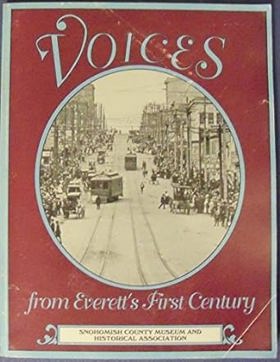
Oversize softbound social history of Everett, WA 1892-1994. 217 pages; illustrated with b/w historical photos of Everett and Snohomish County vii, 217 pages : illustrations ; 28 cm CIRC [ 1 ]
|
1994 |
|
Voices for the islands thirty years of nature conservation by the Salish Sea by Sheila Harrington 
"A fascinating compendium of stories chronicling the history of local conservation movements that evolved on seventeen islands in the Salish Sea from the 1980s to the present day. Saving the Islands chronicles the history and evolution of the conservation movement across eighteen islands in the Salish Sea. Narratively linked by author Sheila Harrington's two-year sailing journey to the islands to gather over fifty interviews with veteran conservationists, the book provides an in-depth view of conservation land trusts, from their emergence forty years ago through multiple legal battles, organizational challenges, hard lessons, case studies, and human-interest stories. Beginning in the 1980s, when logging and development threatened the fragile ecosystems and natural spaces of this region, and culminating in the creation of the Gulf Island National Park Reserve, this book will inspire readers to turn apathy to action and support the cause of conservation in an era of species extinction and climate change. Full of colour photos, maps, and fascinating first-hand stories by conservationists--many of whom are now elders--it reveals how grassroots movements have the power to transform the future of a natural environment."-- Provided by publisher xi, 273 pages : color illustrations, maps ; 26 cm CIRC [ 0 ]
|
2024 |
|
Visible bones journeys across time in the Columbia River country by Jack Nisbet 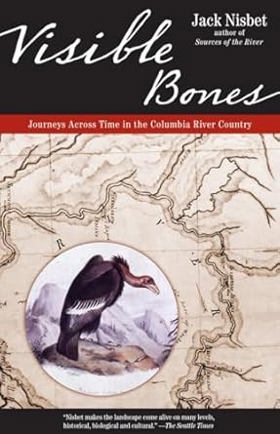
How can you know a place? Historian and naturalist Jack Nisbet—author of Sources of the River: Tracking David Thompson Across Western North America—looks to the relics of a region to connect the present moment to the distant past. In the vast Western territory defined by the Columbia River, Nisbet tracks the stories and meaning of relics such as a trilobite fossil that points to a tropical prehistoric ecology; the nearly extinct California condor, once the largest thing in the skies, described with amazement by Meriwether Lewis; the indelible stain of the smallpox pandemic that overcame the native peoples of the West; a rare and socially potent strain of indigenous wild tobacco that reveals the presence of vestigial Indian practices; and the remains of one Jaco Finlay, a mixed-blood trapper and scout who seems to have been everywhere in the region two hundred years ago. All of these relics are the visible bones that show how past is present in the Columbia River Country. Together the stories these bones tell lays out a wholly original, hybrid history that connects nature with human endeavor, geography with the passage of time—all contribute to the biography of a place. The arrow of time travels in one direction, and this is usually how history is told: beginning to end. But Jack Nisbet is up to something else: journeys across time through a place, knitting past to present and back again to assemble a portrait of the land that marked the culmination of Lewis & Clark’s expedition, that saw the sad end of the Indian Wars with the flight of Chief Joseph, that has offered up fossil proof of mammoth species long extinct. In this western territory, the storied past is much in evidence. viii, 246 pages : illustrations, maps ; 23 cm CIRC [ 1 ]
|
2007 |
|
Virgil T. McCroskey giver of mountains by Mary E. Reed, Keith C. Petersen , Washington State University Department of History (Publisher) 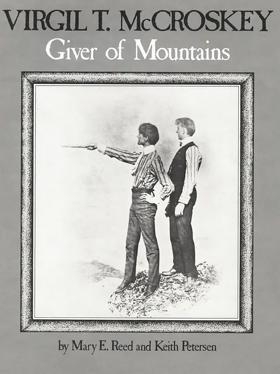
This booklet was produced as part of a traveling exhibit on Virgil McCroskey that toured eastern Washington and northern Idaho between November 1983 and January 1985. McCroskey was instrumental in the permanent conservation of Steptoe Butte State Park in eastern Washington and Mary Minerva McCroskey in north Idaho. 1 preliminary leaf, 14 pages : illustrations, portraits ; 28 cm CIRC [ 0 ]
|
1983 |
|
Vigilante newspapers a tale of sex, religion, and murder in the Northwest by Gerald J. Baldasty 
A powerful and instructive story of how intolerant and sensational newspapers in Corvallis and Seattle encouraged vigilante violence, murder, and lawlessness toward and Oregon religious cult viii, 189 pages : illustrations ; 23 cm CIRC [ 0 ]
|
2005 |
|
Views of the Salish Sea one hundred and fifty years of change around the Strait of Georgia by Howard Macdonald Stewart 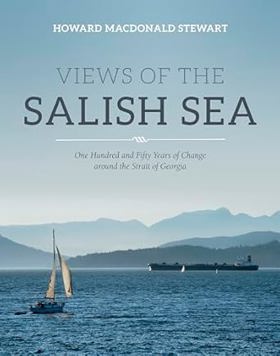
It is not mere coincidence that two-thirds of the population of British Columbia occupies lands bordering its great inland sea, the Strait of Georgia, and connected waterways collectively known as the North Salish Sea. Averaging forty kilometres in width and stretching some three hundred kilometres from Vancouver and Victoria in the south to Powell River and Campbell River in the north, the North Salish Sea has long sheltered a bounty of habitable lands and rich maritime resources ideal for human settlement. While the region's intricate shoreline of peninsulas, promontories, estuaries and plains has been occupied by human communities for millennia, the last century and a half has been an unprecedented age of rapid colonization, industrialization and globalization. Many books have been written about individual communities and industries around the great waterway, but none have examined the region as a geographical unit with its own dynamic systems, which can best be understood as an interrelated whole. The Strait of Georgia has influenced human affairs, even as people have changed the Strait, in a complex relationship that continues today. British colonization and the commodification of the Strait's resources launched a resource rush around the sea that began in earnest in the decades before the First World War, often at the expense of Indigenous populations. Coal mining developed earliest and grew rapidly. Fishing, lumbering and metal mining were also established by the 1880s and soon experienced exponential growth. From the earliest salmon canneries to today's cruise ship industry, all have depended on the Strait to ensure economic prosperity and the easy movement of people and goods. As competition for space and resources increases, and as the effects of climate change are amplified, the pressure on this ecologically vulnerable area will only intensify. If this precious sea is to be passed to future generations with any semblance of its inherent richness and diversity intact, then it will need to be effectively managed and vigorously defended. The first step is to understand the complex story of the region, making this essential reading not only for history buffs but anyone with an interest in the future of British Columbia. 288 pages : illustrations, maps ; 29 cm CIRC [ 0 ]
|
2017 |
|
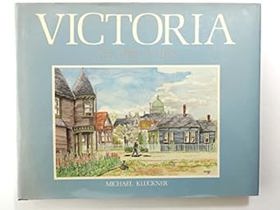
Victoria, the way it was by Michael Kluckner
|
1986 |
|
Victoria unbuttoned a red-light history of BC's capital city by Linda J. Eversole 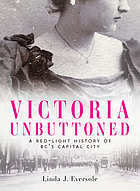
"From the establishment of Fort Victoria, BC's capital city has had a long history of prostitution. But little has been written on the lives of the women themselves--some of the most enterprising women in Victoria's past. Instead, these women's stories have been relegated to judgmental newspaper headlines. Now historian Linda J. Eversole takes a deeper look at their lives, from the mid-nineteenth century to the First World War and the Moral Reform movement. Story by story, from the fur trade, through confederation, waves of immigration, and attempts at reform and legislation, Eversole uncovers the histories of the women who made a living, and in some cases a fortune, from the world's oldest profession. With accompanying maps and historical photos, new research, and the support of the descendants of some of her subjects, Eversole presents a nuanced, human series of portraits that enhances our understanding of this important strand of the city's history."-- Provided by publisher 210 pages : illustrations ; 20 cm CIRC [ 0 ]
|
2021 |
|
Victoria then & now postcards from the past by Nick Russell 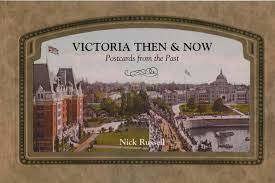
Published in 2014 by heritage researcher and photographer Nick Russell, Victoria Then & Now: Postcards from the Past pairs vintage turn-of-the-century postcards with contemporary photographs to document the physical transformation of British Columbia’s capital city. The volume features side-by-side visual comparisons of prominent local landmarks alongside meticulous historical research detailing the changing streetscapes, businesses, and architecture of early Victoria. Beyond architectural changes, Russell digs into the personal micro-histories of the original senders and recipients inscribed on the cards, transforming a standard visual history into an intimate narrative of everyday human connection. A keen insight drawn from the text is how early postcards functioned as the social media and tourism marketing engines of their day; by intentionally packaging sanitized, picturesque views of colonial progress for cheap postal circulation, these historical artifacts actively manufactured a romanticized civic identity for an expanding Pacific Northwest 80 pages : colour illustrations, 1 colour map ; 14 x 22 cm CIRC [ 0 ]
|
2014 |
|
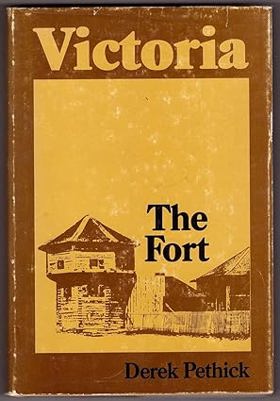
Victoria the fort by Derek Pethick
|
1968 |