Catalog of British Columbiana and Pacific Northwest Americana
Encyclopedia Cascadia Catalog contains book titles of mostly non-fiction Pacific Northwest Coast of North America Titles (primarially British Columbia, Idaho, Oregon and Washington State) in an easy-to-understand title catalog. If you see a link with this badge ONLINE CIRC it means that there is an online institution that provides free access to that title. In some cases there may be more than one institution hosting the title digitally.
| Catalog Title | Published |
|---|---|
|
Lewis and Clark's bittersweet crossing by Carol Lynn MacGregor, Gaye Hoopes (Illustrator) 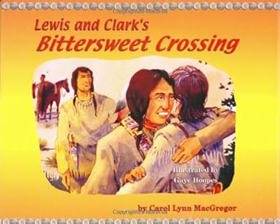
Describes the Lewis and Clark Expedition to explore the American West in the early 1800s, focusing particularly on the time the group spent with the Shoshoni and Nez Perce Indians in Idaho 32 pages : color illustrations, color maps ; 23 x 28 cm CIRC [ 0 ]
|
2004 |
|
Lewis and Clark meet Oregon's forests lessons from dynamic nature by Gail Wells, Dawn Anzinger 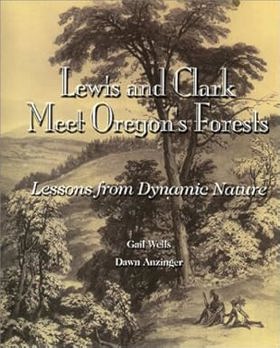
As Lewis and Clark's Corps of Discovery steered their canoes down the tumultuous narrows and rapids of the lower Columbia River, they were propelled out of the virtually treeless desert east of the Cascades into a vastly different landscape--one of thick and diverse forests. The forests the explorers encountered had been continuously shaped by many factors. Floods, windstorms, volcano-induced mud flows, landslides and fire, both naturally occurring and deliberately set by the Indians as part of their cultural practice: all had been working over many millennia to create the Oregon landscape of 1805. Recreating that landscape with the help of Clark's journal entries and those of early European explorers to the region, the authors examine the natural and human-caused influences that shaped and continue to shape the landscape in three different northwestern Oregon locations: the area around Tillamook Head, the lower Willamette Valley and the west slopes of the Cascades, and the Alsea River country of the central Coast Range. Concluding with a discussion of the lessons we can learn from the land's history, Wells and Anzinger assert that Northwest citizens need to be aware of the landscape, shaping it and being shaped by it, in a manner that sustains both its vital processes and our own. An excellent and engaging resource for anyone interested in the historic and future role of forests in the Northwest, the book includes more than 100 photographs and maps, many in full color. 223 pages : illustrations (some color), maps ; 23 cm CIRC [ 0 ]
|
2001 |
|
Lewis and Clark down and up the Columbia River a unique fold-out guide, mapping day-by-day Lewis and Clark's journey from the Rocky Mountains to the Pacific Ocean-- and back by Rex Ziak (Cartographer) 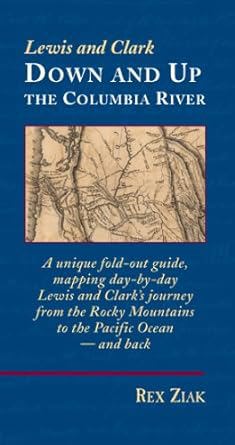
Published in 2005 by cartographer and historian Rex Ziak, Lewis and Clark Down and Up the Columbia River is an innovative, double-sided fold-out guide that meticulously maps the Corps of Discovery's day-by-day journey from the Rocky Mountains to the Pacific Ocean and back. The unique format functions as both a portable pocket book and a sprawling seven-foot map, charting every single campsite and chronicling the dual phases of the voyage using precise historical journal excerpts. By allowing readers to trace the westbound expedition on one side and flip it to follow the eastbound return, the guide transforms historical cartography into an interactive landscape experience. A keen insight drawn from the work is how spatial format alters historical comprehension; by physically separating the outward struggle against the current from the swift return journey on a continuous timeline, the map highlights the profound geographical and psychological shifts the explorers experienced upon reaching the tidal mouth of the Columbia 1 volume (folded map) : color maps ; 19 cm CIRC [ 1 ]
|
2005 |
|
Lewis and Clark at Fort Clatsop by Lancaster Pollard
|
1962 |
|
Lewis and Clark among the Nez Perce strangers in the Land of the Nimiipuu by Allen Pinkham, Steven Ross Evans , Frederick E. Hoxie 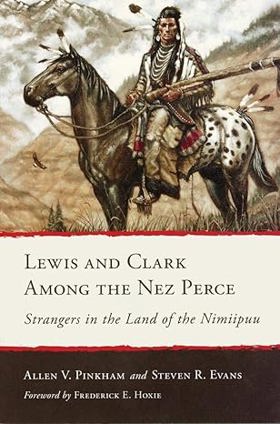
"Lewis and Clark Among the Nez Perce is a generous and careful re-evaluation of what we all thought we knew about Lewis and Clark west of the Bitterroot Mountains. It is also a template for a series of tribal histories of the Lewis and Clark expedition that will be inspired by this book. Incidents we thought we knew backwards and forwards suddenly take on a new light when the historical lens is reversed, and the reader begins to understand what the extended visit of Lewis and Clark meant to their hosts--approximately four months of daily interchange with a community of Indians the white visitors regarded as especially friendly, hospitable, and helpful to the success of the expedition"-- Publisher's description xx, 299 pages : illustrations, maps ; 24 cm CIRC [ 0 ]
|
2013 |
|
Lewis and Clark among the Indians by James P. Ronda 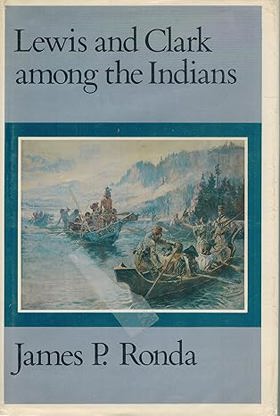
A retelling of the familiar story of the expedition of Lewis and Clark, but told as a complex human story -- the story of a diverse human community moving through the lands and lives of other communities, where pilgrims made their way by the kindness of strangers xv, 310 pages, 1 unnumbered leaf of plates : illustrations, maps, portraits ; 24 cm CIRC [ 0 ]
|
1984 |
|
|
1967 |
|
Lewis & Clark reframed examining ties to Cook, Vancouver, and Mackenzie by David L. Nicandri , Clay Jenkinson 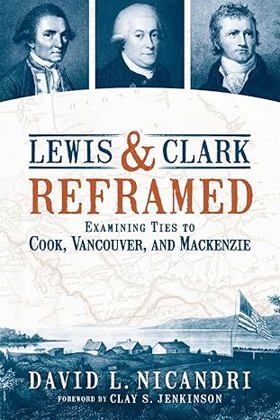
Spanish, British, and French explorers reached the Pacific Northwest before Meriwether Lewis and William Clark. The American captains benefited from those predecessors, even carrying with them copies of their published accounts. James Cook, George Vancouver, and Alexander Mackenzie--and to a lesser extent fur traders John Meares and Robert Gray--directly and indirectly influenced the expedition. Based on new material as well as revised essays from popular history journals, "Lewis and Clark Reframed" examines several curious and seemingly inexplicable aspects of the journey after the Corps of Discovery crossed the Rocky Mountains. The captains' journals demonstrate that they relied on Mackenzie's 1801 "Voyages from Montreal" as a trail guide. They borrowed field techniques and favorite literary expressions--at times plagiarizing entire paragraphs. Cook's literature also informed the pair, and his naming conventions evoke fresh ideas about an enduring expedition mystery--the identity of the two or three journalists whose records are now missing. Additional journal text analysis dispels the notion that the captains were equals, despite expedition lore. Lewis claimed all the epochal discoveries for himself, and in one of his more memorable passages, drew on Mackenzie for inspiration. Parallels between Cook's and other exploratory accounts offer evidence that like many long-distance voyagers, Lewis grappled with homesickness. His friendship with Mahlon Dickerson lends insights into Lewis's shortcomings and eventual undoing. As secretary of the navy, Dickerson drew from Lewis's troubled past to impede the 1840s ocean expedition set to emulate Cook and solidify America's claim, through Lewis and Clark, to the region. xxvii, 156 pages : illustrations (some color), maps ; 23 cm CIRC [ 0 ]
|
2020 |
|
Lewis & Clark in Lemhi County, Idaho August 12-September 4, 1805 by Richard R. Smith 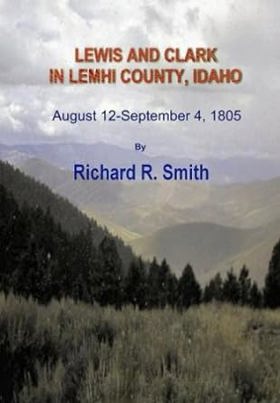
Published by historian Richard R. Smith, Lewis & Clark in Lemhi County, Idaho: August 12-September 4, 1805 meticulously chronicles the Corps of Discovery's harrowing and pivotal traverse through the rugged continental divide. The book details the expedition's difficult encounters with the geography and the Agaidika (Salmon Eater) Shoshone people, highlighting the critical diplomatic negotiations and horse trades that ultimately enabled their passage over the Bitterroot Mountains. Drawing on journal entries, cartographic records, and local terrain analysis, the text traces the exact footpaths and campsites used during this grueling three-week window. A keen insight drawn from the work is how the expedition’s survival in the Salmon River country completely inverted the explorers' geographic expectations; instead of discovering an easy water route across the continent, Lewis and Clark were forced to humble themselves before indigenous mountain pathways, realizing that the West could only be crossed through collaborative reliance on native survival expertise. v, 56, xi pages : color illustrations, maps ; 28 cm CIRC [ 1 ]
|
2003 |
|
Leveraging an empire settler colonialism and the legalities of citizenship in the Pacific Northwest by Jacki Hedlund Tyler 
"Leveraging an Empire examines the process of settler colonialism in the developing region of Oregon through an evaluation of Oregon's exclusionary laws between the years 1841 and 1859"-- Provided by publisher xxx, 382 pages : illustrations ; 24 cm CIRC [ 0 ]
|
2021 |
|
Levant F. Thompson hop king, banker, senator, Pierce County, Washington pioneer by Jack R. Evans 
Authored by local historian Jack R. Evans, Levant F. Thompson: Hop King, Banker, Senator, Pierce County, Washington Pioneer chronicles the extraordinary life and rapid rise of a defining 19th-century Pacific Northwest entrepreneur. The book traces Thompson’s multifaceted career from an ambitious agrarian settler into a dominant agricultural baron controlling vast hop-growing empires, before pivoting into banking and state politics. Through extensive archival records and biographical details, the text illuminates the volatile economic forces and speculative fortunes that built the infrastructure of early Pierce County. A keen insight drawn from the work is how regional agricultural monopolies served as the foundational launchpad for political power; by converting massive windfalls from the speculative hop boom into banking capital and legislative influence, pioneers like Thompson demonstrated that early Washington state politics were directly engineered by those who could successfully weather the boom-and-bust cycles of single-crop commodity markets. ii, i, 49 pages : illustrations ; 21 cm. CIRC [ 1 ]
|
1992 |
|
Letters of Dr. John McLoughlin written at Fort Vancouver 1829-1832 by John McLoughlin, Burt Brown Barker
|
1948 |
|
Letters from Kik-I-allus a farmer's perspective by Glen Johnson 
Published in local editions by Glen Johnson, Letters from Kik-I-allus: A Farmer's Perspective collects insightful essays and correspondence reflecting on rural life, environmental stewardship, and local history near the Skagit River delta. Written from the perspective of a working farmer tied to the ancestral homeland known as Kik-I-allus, the book chronicles the daily rhythms of agriculture, the seasonal cycles of the Pacific Northwest, and the mounting pressures of modern development on traditional farmlands. Through evocative prose, Johnson bridges personal agronomic experience with a deep-seated reverence for the surrounding watershed and its indigenous legacy. A keen insight drawn from the text is how the traditional agrarian viewpoint acts as an acute ecological barometer; by documenting the subtle, creeping degradation of local soils and water tables firsthand, the author reveals that the survival of family farming is inextricably bound to the broader health of the regional ecosystem. 246 pages : illustrations, map ; 18 cm CIRC [ 1 ]
|
2005 |
|
Let the mountains remember campaign against the Northern Paiute Eastern Oregon 1861-1869 by D. J. Lesniak 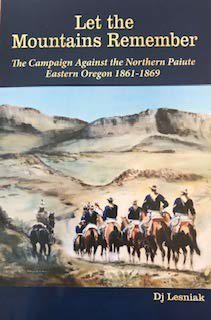
"The mountains and prairies remember Eastern Oregon's tumultuous beginnings, but history does not. Apart from the rush for gold, little has been written about the events leading to the settlement of Eastern Oregon between 1861 and 1869. Charged with protecting travel on the roads leading to the mines east of the Cascade Mountains, the military campaign which initially promised to be not much more than a policing operation against an unorganized tribe of hunters and gatherers turned into an eight-year struggle against a skillful and relentless foe"--Back cover 309 pages : illustrations ; 23 cm CIRC [ 1 ]
|
2014 |
|
Let right be done Aboriginal title, the Calder case, and the future of Indigenous rights by Hamar Foster, Jeremy H. A. Webber, Heather Raven 
"In the early 1970s, many questioned whether Aboriginal title existed in Canada and rejected the notion that Aboriginal peoples should have rights different from those of other citizens. But in 1973 the Supreme Court of Canada issued a landmark decision in the Calder case, confirming that Aboriginal title constituted a right within Canadian law. Let Right Be Done examines the doctrine of Aboriginal title thirty years later and puts the Calder case in its legal, historical, and political context, both nationally and internationally. With its innovative blend of scholarly analysis and input from many of those intimately involved in the case, this book should be essential reading for anyone interested in Aboriginal law, treaty negotiations. and the history of the "BC Indian land question.""--Jacket viii, 337 pages : illustrations, map ; 24 cm CIRC [ 0 ]
|
2007 |
|
Leschi of the Nisquallies by Della Gould Emmons
|
1965 |
|
Lelooska the life of a northwest coast artist by Chris Friday 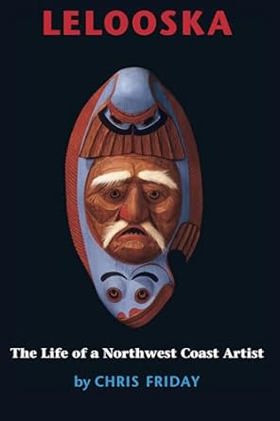
Don Smith - or Lelooska, as he was usually called - was a prominent Native American artist and storyteller in the Pacific Northwest. Born in 1933 of “mixed blood” Cherokee heritage, he was adopted as an adult by the prestigious Kwakiutl Sewid clan and had relationships with elders from a wide range of tribal backgrounds. Initially producing curio items for sale to tourists and regalia for Oregon Indians, Lelooska emerged in the late 1950s as one of a handful of artists who proved crucial to the renaissance of Northwest Coast Indian art. He also developed into a supreme performer and educator, staging shows of dances, songs, and storytelling. During the peak years, from the 1970s to the early 1990s, the family shows with Lelooska as the centerpiece attracted as many as 30,000 people annually. In this book, historian and family friend Chris Friday shares and annotates interviews that he conducted with Lelooska, between 1993 and ending shortly before the artist's death, in 1996. This is the story of a man who reached, quite literally, a million or more people in his lifetime and whose life was at once exceptional and emblematic. xvii, 283 pages : illustrations ; 23 cm CIRC [ 0 ]
|
2003 |
|
Legends of Vancouver by E. Pauline Johnson, Laura Wee Láy Láq 
First published in 1911, Legends of Vancouver was an immediate sensation, introducing young readers to the fascinating customs and rich cultural life of the Pacific Coast Salish. Retold by Canada's best known native storyteller, E. Pauline Johnson-Teka- hionwake, these tales of romantic heroism, mystic enchantment, and magical transformations still have the power to captivate. Vibrant and charming, authentic and enduring, Legends of Vancouver has become a classic of Canadian children's and native literature 141 pages : illustrations ; 21 cm. CIRC [ 1 ]
|
1991 |
|
Legends of the Northern Paiute by Wilson Wewa , James A. Gardner (Compiler, Editor) 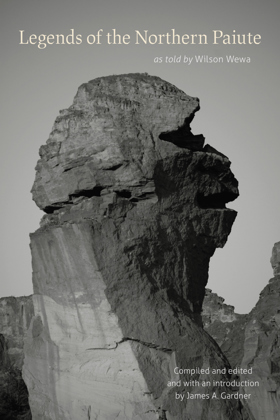
"Legends of the Northern Paiute shares and preserves twenty-one original and previously unpublished Northern Paiute legends, as told by Wilson Wewa, a spiritual leader and oral historian of the Warm Springs Paiute. These legends were originally told around the fires of Paiute camps and villages during the 'story-telling season' of winter in the Great Basin of the American West. They were shared with Paiute communities as a way to pass on tribal visions of the 'animal people' and the 'human people, ' their origins and values, their spiritual and natural environment, and their culture and daily lives. The legends in this volume were recorded, transcribed, reviewed, and edited by Wilson Wewa and James Gardner. Each legend was recorded, then read and edited out loud, to respect the creativity, warmth, and flow of Paiute storytelling. The stories selected for inclusion include familiar characters from native legends, such as Coyote, as well as intriguing characters unique to the Northern Paiute, such as the creature embodied in the Smith Rock pinnacle, now known as Monkey Face, but known to the Paiutes in Central Oregon as Nuwuzoho the Cannibal. Wewa's apprenticeship to Northern Paiute culture began when he was about six years old. These legends were passed on to him by his grandmother and other tribal elders. They are now made available to future generations of tribal members, and to students, scholars, and readers interested in Wewa's fresh and authentic voice. These legends are best read and appreciated as they were told--out loud, shared with others, and delivered with all of the verve, cadence, creativity, and humor of original Paiute storytellers on those clear, cold winter nights in the high desert."--Provided by publisher xliv, 127 pages : portrait ; 23 cm CIRC [ 0 ]
|
2017 |
|
Legends of the Klickitats a Klickitat version of the story of the bridge of the gods by Clarence Orvel Bunnell 
Published in 1933 by Clarence Orvel Bunnell, Legends of the Klickitats: A Klickitat Version of the Story of the Bridge of the Gods presents an adaptation of regional Native oral traditions concerning the great landslide and natural stone arch that once spanned the Columbia River Gorge. Written as a dramatic, quasi-mythological narrative, Bunnell frames the text as a faithful preservation of tribal lore passed down through the Klickitat people, detailing the titanic mythological battles of the creator spirit Tyee Sahale and the cataclysmic destruction of the land bridge. Rather than an academic transcription, the work is heavily stylized for a popular white readership, blending Euro-American literary conventions with romanticized Indigenous motifs to capture the dramatic antiquity of the Pacific Northwest landscape. A keen insight drawn from the work is how the cultural appropriation of Indigenous oral tradition functioned to safely domesticate and re-conquer the landscape for the settler-colonial imagination. By filtering Native creation narratives through a heavily romanticized, melodramatic literary lens, Bunnell effectively stripped the local tribes of their living political sovereignty and contemporary existence, reducing them to legendary phantoms tethered exclusively to geological deep time. This historiographical and literary maneuver allowed white settlers to emotionally colonize the Columbia River Gorge; by absorbing local Indigenous mythology into the regional folklore of the American frontier, the settler state could claim a deep, quasi-spiritual ancestry in the territory while simultaneously erasing the actual, displaced descendants who continued to inhabit the landscape. 48 pages, 1 unnumbered leaf of plates : illustrations ; 23 cm CIRC [ 1 ]
|
1935 |
|
Legends of the Cowlitz Indian tribe by Roy I. Wilson 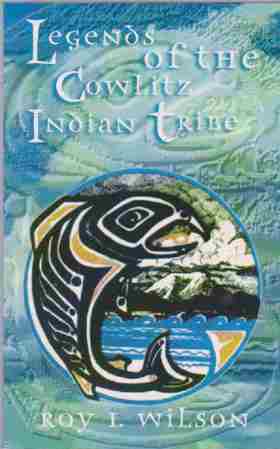
Authored by tribal elder and historian Roy I. Wilson, Legends of the Cowlitz Indian Tribe preserves the sacred oral literature, historical memory, and traditional values of the Cowlitz people of southwest Washington. The volume compiles foundational creation narratives, animal fables, and cultural teachings that explain the spiritual and physical geography of the river valleys and mountain passes sacred to the tribe. Through these transcribed stories, the text honors an ancient literary heritage that connects contemporary generations to their ancestral homelands and customary laws. A keen insight drawn from the work is how indigenous oral narratives function as enduring frameworks for tribal sovereignty; by binding specific geographical landmarks to moral and historical laws, the legends established an unwritten title to the land that colonial mapping could neither erase nor replace. 401 pages ; 21 cm CIRC [ 1 ]
|
1998 |
|
Legendary Lake Pend Oreille Idaho's wilderness of water by Jane Fritz, Kevin Davis, Hazel Hall, Francis Cullooyah 
Experience Lake Pend Oreille, Idaho's wilderness of water. Sprawling 43 miles long with 111 miles of shoreline, Idaho's largest natural lake is truly awe-inspiring. At more than 1,100 feet deep, it's the fifth-deepest lake in the nation. During the last ice age, it was the nexus of the most cataclysmic floods ever to scour the planet. For the native Kalispel Indians, it was the cradle of creation. It was the site of the first trading post in Idaho, built in 1809 by vayageur David Thompson. The lake has also yielded the world-record Kamloops trout. Add the lake's spectacular setting amid three major ranges of the Rocky Mountains, and it's no wonder Lake Pend Oreille inspires such awe. This book captures the lake's incredible features with comprehensive guides to: - All public recreations sites for swimming, picnicking, camping and watercraft access - Resources and advice for boaters and sailors - Complete guide to over 30 hiking trails - Paddle routes for kayakers and canoeists Legendary Lake Pend Oreille is far more than a recreationist's directory. Rich with sketches about biology and botany, loaded with fascinating historical lore, and abundantly illustrated, this is a bible for Lake Pend Oreille ix, 406 pages : illustrations (some color), maps (1 folded color), portraits ; 23 cm CIRC [ 1 ]
|
2010 |
|
Legacy of trees purposeful wandering in Vancouver's Stanley Park by Nina Shoroplova 
"An engaging, informative, and visually stunning tour of the numerous native, introduced, and ornamental tree species found in Vancouver's Stanley Park, combining a wealth of botanical knowledge with a fascinating social history of the city's most celebrated landmark"-- Provided by publisher x, 278 pages : illustrations (chiefly colour), colour map ; 23 cm CIRC [ 0 ]
|
2020 |
|
Legacy history of nursing education at the University of British Columbia, 1919-1994 by Glennis Zilm, Ethel Warbinek, University of British Columbia School of Nursing 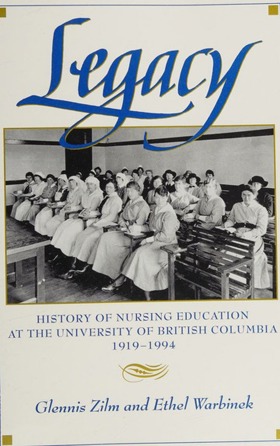
In February 1919 Dr. M.T. McEachern, VGH administrator, and Dr. McKechnie, UBC Chancellor, wrote the UBC Senate to request the establishment of a nursing department at UBC. In October a Department of Nursing was established within the Faculty of Applied Science, making UBC the first university in the British Empire to offer a degree course in nursing. Ethel Johns received a joint appointment as Superintendent of Nurses at VGH and the first Director of the Department of Nursing at UBC, where she implemented a strong, science-based liberal education. xx, 314 p. : ill. ; 23 cm. CIRC [ 0 ]
|
1994 |
|
Leaving paradise Indigenous Hawaiians in the Pacific Northwest, 1787-1898 by Jean Barman, Bruce McIntyre Watson 
"Native Hawaiians arrived in the Pacific Northwest as early as 1787. Some went out of curiosity; many others were recruited as seamen or as workers in the fur trade. By the end of the nineteenth century more than a thousand men and women had journeyed across the Pacific, but the stories of these extraordinary individuals have gone largely unrecorded in Hawaiian or Western sources. Through archival work in British Columbia, Oregon, California, and Hawaii, Jean Barman and Bruce Watson pieced together what is known about these sailors, laborers, and settlers from 1787 to 1898, the year the Hawaiian Islands were annexed to the United States." "Scholars and others interested in a number of fields - Hawaiian history, Pacific Islander studies, Western U.S. and Western Canadian history, diaspora studies - will find Leaving Paradise an indispensable work."--BOOK JACKET xiii, 512 pages : illustrations, maps ; 24 cm CIRC [ 0 ]
|
2006 |