Catalog of British Columbiana and Pacific Northwest Americana
Encyclopedia Cascadia Catalog contains book titles of mostly non-fiction Pacific Northwest Coast of North America Titles (primarially British Columbia, Idaho, Oregon and Washington State) in an easy-to-understand title catalog. If you see a link with this badge ONLINE CIRC it means that there is an online institution that provides free access to that title. In some cases there may be more than one institution hosting the title digitally.
| Catalog Title | Published |
|---|---|
|
L.V. Rogers the man behind the name, 1886-1946 by Patricia Malcolmson , Robert W. Malcolmson 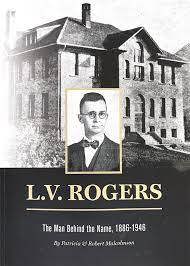
"L.V. Rogers, after whom Nelson's Secondary School is named, was born in England in 1886 and sent on his own to Canada at the age of five. This booklet tells the story of his remarkable life." - back cover 31 pages : illustrations (some colour) ; 21 cm CIRC [ 0 ]
|
2023 |
|
L.D. Mayor Louis Taylor and the rise of Vancouver by Daniel Francis 
LD is the colourful biography of Louis Taylor, the longest-serving mayor in Vancouver's history; he was first elected mayor in 1910, and served off and on until 1934, for a total of eleven years. Taylor's story is also the story of Vancouver in the early decades of the 20th century, a young city experiencing a turbulent adolescence. Louis Taylor, or LD as he was known, arrived in Vancouver from Chicago in 1896 at the age of 39. He got involved in the newspaper business, first as an executive with The Daily Province, then as proprietor of The World, during which time he built the World Tower, which remains one of Vancouver's landmark buildings (now better known as the Sun Tower). He launched his political career in 1902 when he ran successfully for licence commissioner; it was the first of 26 civic elections in which he ran, including 20 for mayor. In his early political life he was considered "the workers' friend" and was opposed by the city's business elite, who portrayed him as corrupt. He also had a reputation for being soft on crime, and was implicated in a 1928 police investigation that lost him an election. But his achievements included the establishment of the airport, a town planning commission, and the water board. His private life, however, was another story, a virtual soap opera that mirrored the ups and downs of his political career; his wife was addicted to opium, and he found himself mired in bigamy and divorce scandals. As Vancouver grew from small frontier town to a major international port city, LD saw the city through the Depression, and in a sense Vancouver grew up under his tutelage. LD: Mayor Louis Taylor and The Rise of Vancouver vividly documents the life of a man who dominated the city for years, and the integral role he played in shaping the Vancouver of today. Winner of the City of Vancouver Book Prize 239 pages : illustrations ; 23 cm CIRC [ 0 ]
|
2004 |
|
Kwakwa̲ka̲'wakw settlements, 1775-1920 a geographical analysis and gazetteer by Robert Galois 
This book provides a geographic overview of the demography and settlement patterns of the Kwakwa̲ka̲'wakw, who lived in northern Vancouver Island and the adjacent mainland of British Columbia. xvii, 465 pages : illustrations, maps ; 23 cm. CIRC [ 0 ]
|
2012 |
|
Koom of the Tillamooks by Margaret Watt Edwards, Roger Cooke (Illustrator) 
Koom of the Tillamooks, written by Margaret Watt Edwards and illustrated by Roger Cooke, is a historical fiction story aimed at middle-grade readers. The narrative centers on the title character, Koom, who finds himself unable to remain with the last few surviving Tillamook Native Americans living along Oregon's Tillamook Bay. Feeling equally alienated and uncomfortable in the encroaching white man's world, Koom makes the difficult decision to forge his own path. The plot follows his journey as he prepares to isolate himself and spend the upcoming winter surviving entirely off the land. 178 pages : illustrations ; 24 cm CIRC [ 1 ]
|
1996 |
|
Koma Kulshan the story of Mount Baker by John C. Miles 
Publisher description: Rising above the northern part of the Cascades is the magnificent bulk of Mt. Baker - "Koma Kulshan" (the steep white mountain) to the early Nooksack Indians. Long a focal point of human interest, this slumbering volcano has been seen in many different lights - as a sacred object (Indians), a great challenge (mountaineers, explorers), a stimulus for creativity (poets, painters, photographers), a playground (marathon runners, skiers), and as a resource (entrepreneurs, loggers, miners, developers, park administrators). Yet, despite all human actions and aspirations over the years, the mountain retains its majesty, power and mystery. This is the story of man and Mt. Baker, complete with engaging first-hand tales and a wealth of rare historic photos 232 pages : illustrations, maps, portraits ; 23 cm CIRC [ 1 ]
|
1984 |
|
Know your town Pocatello, Idaho gate city to the great Northwest by League of Women Voters of Pocatello
|
1976 |
|
Knappton the first 50 years, Pacific County, Washington by Carlton E. Appelo
|
1975 |
|
Klamath heartlands a guide to the Klamath Reservation forest plan : vision, history, restoration, reconnection by Edward C. Wolf 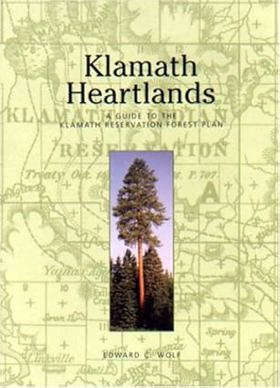
Klamath Heartlands introduces the unique-in-the-nation plan by the Klamath Tribes of southern Oregon to restore the "remembered forest" of their former reservation, an area that Oregon governor Tom McCall called "the greatest single stand of ponderosa pines to be found anywhere in the West." Part of the Tribes' effort to regain lands they lost in 1954, the Klamath Reservation Forest Plan offers a vision of ecological and cultural restoration that will change the way we think about Western forests. Klamath Heartlands combines photographs, maps, and text in a sturdy and engaging field guide. A series of fold-out and fold-up map pages leads each reader into the forest itself to discover the Tribes' vision and the significance of achieving it. [20] folded pages : illustrations (some color), color maps ; 20 cm CIRC [ 0 ]
|
2004 |
|
Kittitas frontiersmen by Earl T. Glauert , Merle H. Kunze
|
1976 |
|
Kittitas County historic photo album by Pediment Publishing 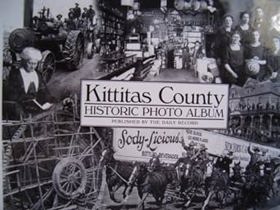
Published by Pediment Publishing in cooperation with regional archives, Kittitas County Historic Photo Album compiles a rich visual chronicle of central Washington's transition from an indigenous homeland and rugged frontier corridor into an organized agricultural and mining hub. The volume showcases rare vintage photographs documenting the rise of towns like Ellensburg, the punishing construction of railroads through mountain passes, and the daily lives of ranchers, homesteaders, and coal miners. Through its expansive visual catalog, the text captures the stark beauty of the high desert and river valleys alongside the relentless human labor required to harness the arid landscape. A keen insight drawn from the work is how photographic collections of inland Washington reveal the profound visual tension between monumental geography and fragile human enterprise; the stark, towering backdrops of the Cascade foothills dwarf the modest wooden storefronts and rail lines, underscoring how precarious early settlement truly was against the vast scale of the high desert. 128 pages : chiefly illustrations ; 20 x 27 cm CIRC [ 1 ]
|
1999 |
|
Kitsap County history a story of Kitsap County and its pioneers by Kitsap County Historical Society Book Committee
|
1977 |
|
Kirtland Cutter architect in the land of promise by Henry Matthews, Kirtland Kelsey Cutter 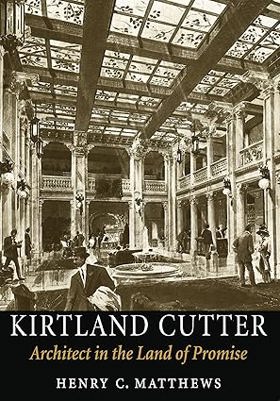
In the early years of the twentieth century, Spokane was singled out for praise in the West for the quality of its architecture and the impressive way it had rebuilt after the devastating fire of 1889. Major credit for the city's distinctive character was extended to Kirtland Kelsey Cutter for his "rare architectural force and genius for design." His remarkable career, stretching from the Gilded Age to the Great Depression, allows a fascinating study of the evolution of an eclectic form of architecture that was an inevitable response to rich regional and historical influences during a time of transition from frontier settlements to modern city. Cutter's influence was felt beyond Spokane--in Seattle, other areas of Washington, and in Oregon, Idaho, and Montana. He was also responsible for buildings in the East and even for one in England. After financial problems ended his career in the Northwest, he began anew at age sixty-three in southern California, and worked there as an architect until his death in 1939 at age seventy-nine. Henry Matthews presents a comprehensive study of the whole body of Cutter's work, with ample photographs and illustrations. The book is based on exhaustive research in both the Northwest and California, revealing the influences on Cutter and his associates, the processes at work in the design and construction of the buildings, and the relations between the architect and the many people who commissioned his work. Particularly useful to Matthews's research was a collection of 290 sets of drawings, as well as office accounts, letters, and books from Cutter's library--materials acquired by the Eastern Washington State Historical Society. He also was able to interview former assistants and clients, who provided valuable insights on the architect and the way Cutter worked. In addition, many of the architect's residences, hotels, clubs, and commercial buildings are still standing. This book adds significantly to an understanding of Western urban and regional history. But Cutter's experimentation in many styles and the imaginative nature of his work make for a study that goes beyond regional limits and sheds light on national trends. x, 438 pages : illustrations, plans, portraits ; 26 cm CIRC [ 0 ]
|
1998 |
|
Kin-i-wak, Kenewick, Tehe, Kennewick by Martha Berry Parker 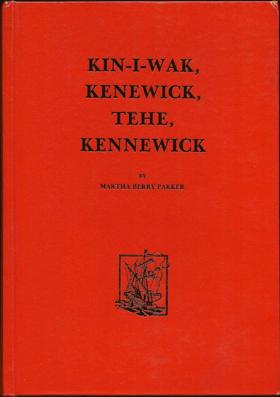
Kin-i-wak, Kenewick, Tehe, Kennewick by Martha Berry Parker is a localized historical compilation primarily focused on the origins and development of Kennewick, Washington, and its surrounding region. The book originated as a series of historical chapters and articles previously published in local columns or regional issues of The Courier. It details the transition of the area from its early indigenous roots through the trials of early settlement, homesteading, local infrastructure challenges, and community milestones. 414 pages : illustrations, maps ; 27 cm CIRC [ 1 ]
|
1986 |
|
Kid on the river by Dean Nichols 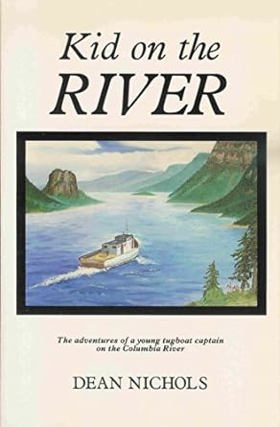
Narrow escapes, hilarious predicaments, and grim disasters are all part of the rich and varied experiences of a young tugboat captain on the Columbia River during the era between the grand old sternwheelers and the multi-thousand horsepower tugboats of today. The author had captured the excitement o this episode in his life and presented it in and informal manner that will appeal to a wide audience. 5 1/2 x 8 1/2. 128 pages. Map. x, 118 pages : illustrations ; 22 cm CIRC [ 1 ]
|
1988 |
|
Kenmore by the lake a community history by Priscilla Droge, Terri Malinowski, Kenmore Heritage Society (Kenmore, Wash)
|
2003 |
|
Keeping Oregon green livability, stewardship, and the challenges of growth, 1960-1980 by Derek R. Larson 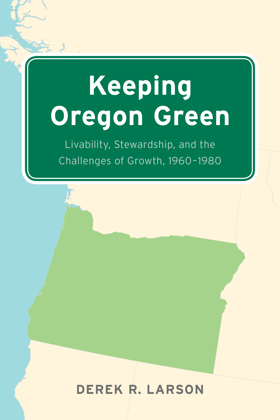
"Keeping Oregon Green is a new history of the signature accomplishments of Oregon's environmental era: the revitalization of the polluted Willamette River, the Beach Bill that preserved public access to the entire coastline, the Bottle Bill that set the national standard for reducing roadside litter, and the nation's first comprehensive land use zoning law. To these case studies is added the largely forgotten tale of what would have been Oregon's second national park, intended to preserve the Oregon Dunes as one of the country's first National Seashores. Through the detailed study of the historical, political, and cultural contexts of these environmental conflicts, Derek Larson uncovers new dimensions in familiar stories linked to the concepts of 'livability' and environmental stewardship. Connecting events in Oregon to the national environmental awakening of the 1960s and 1970s, the innovative policies that carried Oregon to a position of national leadership are shown to be products of place and culture as much as politics. While political leaders such as Tom McCall and Bob Straub played critical roles in framing new laws, the advocacy of ordinary citizens--farmers, students, ranchers, business leaders, and factory workers--drove a movement that crossed partisan, geographic, and class lines to make Oregon the nation's environmental showcase of the 1970s. Drawing on extensive archival research and source materials, ranging from poetry to congressional hearings, Larson's compelling study is firmly rooted in the cultural, economic, and political history of the Pacific Northwest. Essential reading for students of environmental history and Oregon politics, Keeping Oregon Green argues that the state's environmental legacy is not just the product of visionary leadership, but rather a complex confluence of events, trends, and personalities that could only have happened when and where it did"-- Provided by publisher ix, 307 pages ; 23 cm CIRC [ 0 ]
|
2016 |
|
Keeping it living traditions of plant use and cultivation on the Northwest Coast of North America by Douglas Deur, Nancy J. Turner 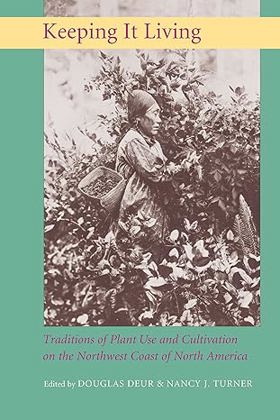
The European explorers who first visited the Northwest Coast of North America assumed that the entire region was virtually untouched wilderness whose occupants used the land only minimally, hunting and gathering shoots, roots, and berries that were peripheral to a diet and culture focused on salmon. Colonizers who followed the explorers used these claims to justify the displacement of Native groups from their lands. Scholars now understand, however, that Northwest Coast peoples were actively cultivating plants well before their first contact with Europeans. This book is the first comprehensive overview of how Northwest Coast Native Americans managed the landscape and cared for the plant communities on which they depended. Bringing together some of the world's most prominent specialists on Northwest Coast cultures, Keeping It Living tells the story of traditional plant cultivation practices found from the Oregon coast to Southeast Alaska. It explores tobacco gardens among the Haida and Tlingit, managed camas plots among the Coast Salish of Puget Sound and the Strait of Georgia, estuarine root gardens along the central coast of British Columbia, wapato maintenance on the Columbia and Fraser Rivers, and tended berry plots up and down the entire coast. With contributions from ethnobotanists, archaeologists, anthropologists, geographers, ecologists, and Native American scholars and elders, Keeping It Living documents practices, many unknown to European peoples, that involve manipulating plants as well as their environments in ways that enhanced culturally preferred plants and plant communities. It describes how indigenous peoples of this region used and cared for over 300 different species of plants, from the lofty red cedar to diminutive plants of backwater bogs. xi, 404 pages : illustrations, 1 map ; 25 cm CIRC [ 0 ]
|
2005 |
|
Keepers at the gates by Vladimir J. Gregory 
Polk's cry of 54-40 hastened the survey of military forts. The Olympic Peninsula was recognized as a key point in the national structure. Three forts were established within Admiralty Inlet. Fifty years of armed insurance by the Coast Artillery guns held the peace ... Book jacket 367, [1]pages : illustrations, maps, portraits ; 23 cm CIRC [ 1 ]
|
1976 |
|
Kathlamet texts by Franz Boas 
Published in 1901 by pioneering anthropologist Franz Boas, Kathlamet Texts is a foundational ethnographic compilation of the myths, legends, and cultural narratives of the Kathlamet Chinookan people of the lower Columbia River. Working closely with Charles Cultee, one of the final fluent speakers of the nearly extinct language, Boas meticulously recorded these oral traditions using rigorous phonetic transcriptions alongside literal English translations. A keen insight drawn from the work is how the complex syntax and untranslatable idioms preserved in these bilingual texts vividly demonstrate Boas's foundational theory of linguistic relativity, proving that the nuanced Kathlamet worldview was inextricably bound to the specific structure of their language. Consequently, the book stands not merely as a collection of folklore, but as a critical act of linguistic salvage that permanently secured the grammatical and cultural heritage of a vanishing Pacific Northwest civilization. 261 pages : portraits ; 30 cm ONLINE CIRC [ 1 ]
|
1901 |
|
Kashpar the saga of the Basque immigrants to North America by Joseph Eiguren, Basque Museum and Cultural Center of the Basques in Idaho and the West 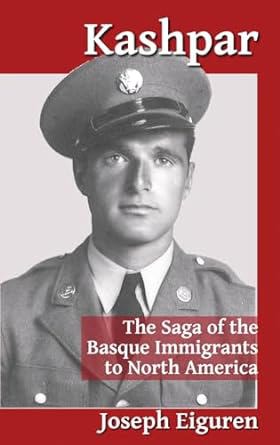
Joe “Kashpar” Eiguren was raised in the Basque Country during very difficult times. During his childhood he experienced the dictatorship of King Alfonso XII, who persecuted Basque (as many Spanish leaders had done before and did afterward as well). Joe felt strongly about the Basque cause, and when he came to the United States in 1934 it remained very much part of his life. And he continued to fight totalitarianism by serving in combat in the American army in World War II. After the war, together with Pete Cenarrusa and Pat Bieter, Joe advocated for the Basques, and supported Basque freedom and independence. Joe, though never formally educated, loved to write when he found something of interest to him. That was how he began writing Kashpar. Joe was very knowledgeable about Basque history, the Basque language, and Basque politics as well as a terrific storyteller. He belonged to a generation of the Basque immigrants who were very fluent in the Basque language and had undergone the political and socioeconomic crises provoked by long-lasting dictatorships in his homeland. Here, in his own words, Joe writes about leaving his home, coming to a foreign land, making a full life, serving his new country selflessly, and becoming a community leader and energetic promoter of Basque culture. viii, 186 pages : illustrations ; 23 cm CIRC [ 1 ]
|
1988 |
|
Kamloops cattlemen one hundred years of trail dust by T. Alex Bulman
|
1972 |
|
Kamloops one hundred years of community, 1893-1993 by Wilf Schmidt, Wayne R. Norton 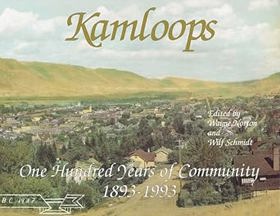
In this unique collection of writing and photography, nineteen skilled individuals have explored various facets of Kamloops' colorful past, present and future. Through their eyes, we see the landscapes, the city scenes and the people who made life in this southwestern B.C. community interesting and exciting. Kamloops: One Hundred Years of Community has an historic hand-tinted 1937 photograph as a four-color wrap-around cover. It also contains 87 black and white photographs, many previously unpublished. Soft cover, 8 1/2" x 11" horizontal format. 148 p. : ill. ; 22 x 28 cm. CIRC [ 1 ]
|
1992 |
|
Kamloops meeting of the waters : an illustrated history by Ken Favrholdt, Lynne Schuyler Bracewell, Greater Kamloops Chamber of Commerce
|
1989 |
|
Kamloops a history of the district up to 1914 by Ruth Balf
|
1983 |
|
Kamiakin Country Washington Territory in turmoil, 1855-1858 by Jo N. Miles 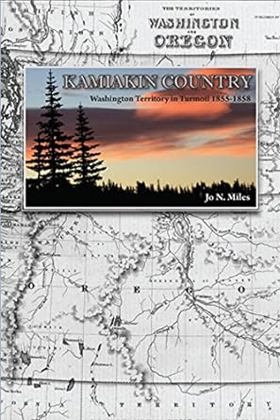
"Kamiakin Country is the story of Yakama Chief Kamiakin. Kamiakin was a highly-respected Native American leader. He led the tribes of the Pacific Northwest in an attempt stem the flow of Euro Americans into that region in the mid 19th century by peaceful means and by force of arms. Writer Jo N. Miles takes a close look at the events during that period and the leaders on both sides in the conflict"--Provided by publisher xx, 192 pages : illustrations, maps ; 23 cm CIRC [ 1 ]
|
2016 |