Catalog of British Columbiana and Pacific Northwest Americana
Encyclopedia Cascadia Catalog contains book titles of mostly non-fiction Pacific Northwest Coast of North America Titles (primarially British Columbia, Idaho, Oregon and Washington State) in an easy-to-understand title catalog. If you see a link with this badge ONLINE CIRC it means that there is an online institution that provides free access to that title. In some cases there may be more than one institution hosting the title digitally.
| Catalog Title | Published |
|---|---|
|
Distant neighbors a comparative history of Seattle & Vancouver by Norbert MacDonald
|
1987 |
|
Company town Potlatch, Idaho, and the Potlatch Lumber Company by Keith Petersen, Latah County Historical Society (Publisher) 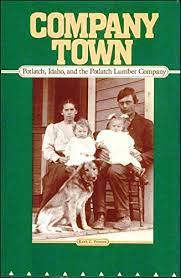
Potlatch, Idaho, was a company town -- a community completely owned by a large lumber company. Its story is the story of the Pacific Northwest in microcosm: the exploitation of natural resources; the impact of big business on the development of a rural area; of ordinary people making a place their home xix, 284 pages, 32 unnumbered pages of plates : illustrations ; 24 cm CIRC [ 1 ]
|
1987 |
|
|
1987 |
|
The Chilliwacks and their neighbors by Oliver Wells, Ralph Maud, Brent Douglas Galloway, Marie Weeden 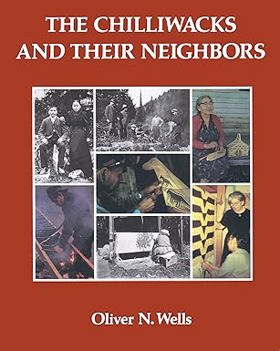
Oliver Wells, naturalist, writer, ethnographer, farmer, and stock breeder, was born in 1907 at the pioneer farm established by his family three generations before in the valley of the Chilliwack River. The name of this farm, Edenbank, echoes the rich heritage and idealist aspirations of the pioneer family who came to the valley to establish a new way of life in this new land. Their neighbors were the Chilliwacks, the native Canadians who live in the area. In the 1950s, sensing that the people with whom his family had shared the land for generations were on the threshold of losing their culture and traditions in the face of ever-growing pressure of settlement in the area, he began work on preserving, with the Native community, their way of life and their history. While Wells was not a trained ethnographer, he brought to his work a vitality possible only for a man who can draw on generations of intimacy and wide-ranging friendships within the community. With tape recorder, notebook, and sketch pad, he began recording the lives and memories of his friends in exhaustive detail. He did not record this information as an outsider―he took an active part in an attempt to actually revitalize the culture and traditions of his friends. He is credited, for example, with reviving the Salish weaving techniques of the community which are now famous throughout the world. 226 pages : illustrations ; 26 cm CIRC [ 1 ]
|
1987 |
|
Spilsbury's coast pioneer years in the wet West by Howard White, Jim Spilsbury 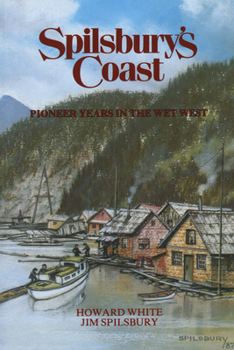
Spilsbury's Coast is that part of the Inside Passage between the Fraser River and the top end of Vancouver Island -- a place of small boats, countless islands and whole towns on floats. When Jim Spilsbury, B.C's most famous pioneer entrepreneur, teams up with master storyteller and literary craftsman Howard White, the result is a spell-binding romp up and down British Columbia's rugged coast; eighty years of fascinating anecdotes and memories distilled into 190 pages. Jim Spilsbury grew up in a tent on Savary Island, squatting on crown land. His story is one of the classic "rags-to-riches" stories in Canadian history. As well as being as brilliant inventor and an ambitious, astute businessman, he had the intangible gift of being in the right place at the right time. In 1923, at the age of 18, primed with a correspondence course in electrical engineering, Jim Spilsbury began building sophisticated radio telephones. Fishermen bought them, loggers bought them, and eventually homesteaders, explorers and even governments bought them. "Radio boomed," Spilsbury recalls, "and it carried me with it." As we follow Spilsbury in his adventures, we meet Frank Osborne, the genius engine-builder; Emil Gordon, the obsessive flamboyant Powell River salesman who sold everything from refrigerators to cows; Red Mahone, the obstreperous Boathouse cook and Spilsbury's own bizarre family, including his rifle-toting mother who cut her hair like a man's and golfed on the beaches at low tide. Howard White, himself a child of BC's backwaters, brings the voice of authority to Spilsbury's amazing tale. A rare gem of authentic storytelling - it flows fast and bright, like a mountain stream. iii, 190 pages, 64 unnumbered pages of plates : illustrations, maps, portraits ; 24 cm CIRC [ 1 ]
|
1987 |
|
The adventures and sufferings of John R. Jewitt, captive of Maquinna by John R. Jewitt, Hilary Stewart
|
1987 |
|
Vanport by Manly Maben 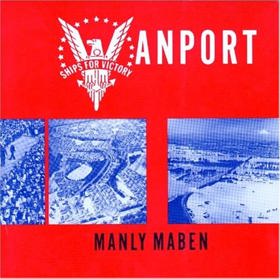
"Vanport City, Oregon, was conceived in 1942 as a temporary housing project for the families of men and women who came to the Pacific Northwest to work in the Kaiser shipyards and further the war effort (World War II). Situated on a flood plain between Vancouver, Washington, and Portland, Oregon, the Columbia River reclaimed the city for its own in a flood on Memorial Day, 1948. In its brief but vital lifetime, Vanport pushed the Portland area into a new era of change and development, leaving a legacy that is felt even today. During its time, Vanport was the largest housing project in the United States, (perhaps the world) and the second largest city in Oregon"--Cover xiv, 151 pages : illustrations ; 23 cm CIRC [ 1 ]
|
1987 |
|
"Picturesque" frontier the Army's Fort Dalles by Priscilla Knuth
|
1987 |
|
To the Columbia gateway the Oregon Railway and the Northern Pacific, 1879-1884 by Peter J. Lewty 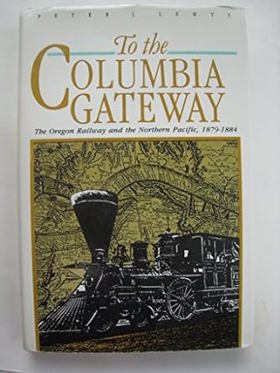
Fascinating history of the construction of the competitive transportation system in the inland Columbia River basin in the 19th century that linked the Pacific Northwest to eastern markets and provided easier access to the Orient. This volume covers the origins of the Northern Pacific Railroad and the Oregon Railway and Navigation Co., the rise and fall of Henry Villard's first empire, and the completion of overland railways converging on the Columbia Gateway. The author successfully conveys the excitement as well as the enormous amount of time, money and hard work required to build the Pacific Northwest rail lines. Illustrated with black and white photos. With maps. 202 pages with index. xxv, [1], 202 pages, 16 unnumbered pages of plates : illustrations, maps, portraits ; 24 cm CIRC [ 1 ]
|
1987 |
|
Reach of tide, ring of history a Columbia River voyage by Sam McKinney 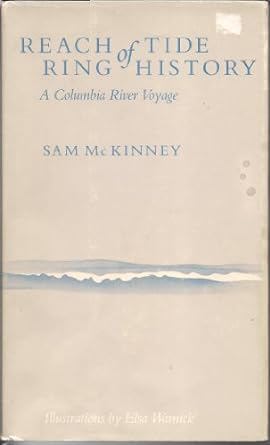
Aboard a small handmade boat, Sam McKinney set out to rediscover the Columbia River of his youth. The story of his voyage offers an intimate history of the great river and of the people who have lived and worked along its shores. McKinney, a seasoned explorer, historian, and riverman, begins his voyage on the sea. Following the path of Robert Gray's ship Columbia Rediviva across the treacherous Columbia River bar, he embarks on an upriver journey that leads beyond urban Portland to the barrier of Bonneville Dam. Along the way, he visits the sites of old Indian villages, the camps of the Lewis and Clark expedition, the rotting piers of early river communities, and the islands of the lower river. Walking out along the jetty at the mouth of the Columbia, McKinney recounts how this infamous bar was formed, and how it was tamed by turn-of-the-century marine engineering. He sloshes through Astoria's rainy streets, recalling its origins as the first American outpost on the Pacific Slope and its lusty past as a working waterfront. His voyage takes him to ghost towns and abandoned villages — Chinookville, Frankfort, Knappton. He describes the development of the river's fishing industry and the harsh conditions faced by fishers during the industry's peak years. He remembers his own boyhood, working on the river as a gillnet fisherman and as a deckhand aboard one of the last sternwheelers. Combining the river's storied history, rich personal memories, and observations gleaned from the deck of the 16-foot Gander, McKinney gives us a sensitive portrait of the Columbia river, a book that reflects the rhythms of tides that the author knows so well. "Two weeks on the river and I was only fifty miles upstream," writes McKinney, grounded on a hidden sandbar. "My wake, had it been recorded, would have revealed a slow, wandering track of curiosity — islands explored, old townsites discovered, and unnamed channels followed." Sam McKinney is a founder of the Lewis and Clark Columbia River Water Trail and the author of Bligh: A True Account of the Mutiny Aboard HMS Bounty. In the late 1980's he completed a 4-year, 5000-mile journey across North America through the inland waterways of the continent. He lives in Vancouver, British Columbia, and is a research associate at the Vancouver maritime Museum. xi, 172 pages : illustrations ; 26 cm CIRC [ 1 ]
|
1987 |
|
West Side story by Clay Eals
|
1987 |
|
Shoreline, or, Steamers, stumps and strawberries by LouAnn Bivins, Shoreline Historical Museum
|
1987 |
|
Indian affairs in Oregon and Washington territories, &c. message from the President of the United States by United States, James Buchanan, United States Army Division of the Pacific
|
1987 |
|
Moscow's centennial, 1887-1987 a century smiles by Idahonian
|
1987 |
|
Riverside remembers books I, II & III by Greater Riverside Organization (Everett, Wash)
|
1987 |
|
Land-use planning in Oregon a no-nonsense handbook in plain English by Mitch Rohse 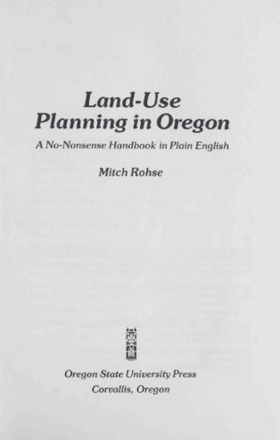
Oregon has the most extensive land-use planning program of any state in this country. Every acre of privately owned land in this state is zoned. Every acre is subject to a comprehensive plan. Planning affects the cost of your home, the distance you drive to work or shop, your property taxes, your schools, your police. But in spite of the significant effects of land-use planning, many Oregonians don't know much about ii. There are several reasons for this. First, Oregon has a relatively new program. Even those who developed it or who administer it are still learning just how it works. Second, the program is complicated. It combines law, ecology, economics, engineering, and politics. Any one of these fields is difficult to know and understand well. Small wonder, then, that the combination of all five is hard to grasp. Finally, even though "citizen involvement" is the first among Oregon's planning goals, not much has been written to explain Oregon's planning program to its citizens. Most planners and lawyers have been writing for other planners and lawyers. Their jargon-laden prose isn't comprehensible to those who are not in the field of planning. Come to think of it, some of that prose isn't comprehensible to those of us who are! The reasons described above have prompted me to write this book. This is a no-nonsense, plain-English guide to land-use planning in Oregon. It is intended mainly for lay persons-for elected officials, real estate salespersons, developers, planning commissioners, students, permit applicants, and the active, involved citizens that are so important to the program. Because so many lay persons have their first encounter with planning when they apply for some kind of permit, the book pays particular attention to the process of applying for permits. It offers many suggestions on how to make that process as painless as possible. The first chapter provides a brief overview of Oregon's program, that unique combination of state and local planning. The second discusses the permit process that results from that combination. Chapter 3 tells you the "dos" and "don'ts" of getting a permit. The fourth chapter is a glossary of planning terms-a concise encyclopedia with more than 600 entries, from "abate" to "zoning ordinance." The Appendix contains Oregon's statewide planning goals. As you read the book and encounter unfamiliar terms, turn to the glossary for an explanation. The glossary entries define the terms; many of those entries also discuss key concepts and issues and direct you to related subjects. I hope you will find this book to be helpful in understanding a program that so strongly affects us all. 286 pages : illustrations ; 22 cm ONLINE CIRC [ 1 ]
|
1987 |
|
Handbook of North American Indians Volume 11, Great Basin by William C. Sturtevant, Warren L. d'. Azevedo 
Volume 11 covers the history and culture of the original inhabitants of the area which is now Nevada, Utah, western Colorado, portions of southern Oregon, Idaho, Wyoming, eastern California, Arizona and New Mexico. xvi, 852 pages CIRC [ 1 ]
|
1986 |
|
South Whidbey and its people Volume 3: Langley, The Village by the Sea by Lorna Cherry, South Whidbey Historical Society 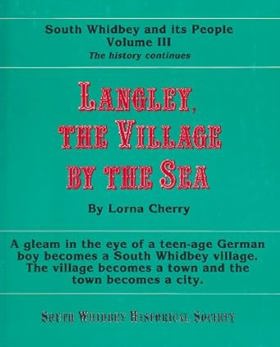
Langley, The Village by the Sea: A gleam in the eye of a teen-age German boy becomes a South Whidbey village. The village becomes a town and the town becomes a city volumes : illustrations ; 26 cm CIRC [ 1 ]
|
1986 |
|
Land of the Umpqua a history of Douglas County, Oregon by Stephen Dow Beckham
|
1986 |
|
Vancouver on the Columbia an illustrated history by Ted Van Arsdol, Sheila Guenther, Greater Vancouver Chamber of Commerce (Wash)
|
1986 |
|
As the anvil rings by Geneva Bair Wilson
|
1986 |
|
The Jesuits and the Indian wars of the Northwest by Robert Ignatius Burns
|
1986 |
|
Coal towns in the Cascades a centennial history of Roslyn and Cle Elum, Washington by John C. Shideler 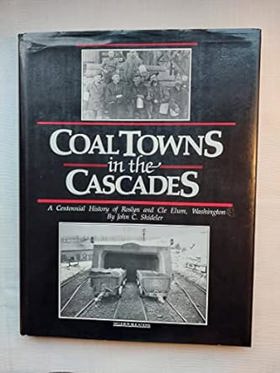
From Coal Mine to Recreational In the early 1880s, the Northern Pacific Railroad discovered coal in Roslyn, Washington. By 1886, mining coal in Roslyn became the company's top priority. The coal mines attracted a diverse workforce from across America and Europe. Each group, along with their hopes and dreams for a better life, brought their own culture, cuisine and customs, many of which are still in evidence today.Coal mining operations ceased in 1963. After more than 63 million tons of coal had been mind from the Roslyn coal field, Roslyn became a town with no industry. Over time, Seattlites, seeking sunny skies and fresh mountain air stimulated an increased demand for recreational property. As people began to discover the great natural beauty of the areas close to Seattle, tourism began to grow. People became enchanted with the area's history and its four-season recreational opportunities.The resort community of Suncadia was created on a 6,300-acre piece of property, southwest of Roslyn, which includes Mines No. 9 and No. 10. Suncadia is owned by subsidiaries of JELD-WEN, PacTrust and Lowe Enterprises. The goal of Suncadia LLC was to develop a four-season destination resort, while preserving the beauty and history of the land. An important component of the resort is the Rope Rider golf course, so named as a tribute to the coal miners, who precariously balanced themselves on the coal cars that maneuvered the steep slopes of the mine shafts. The enduring legacy of the Rope Riders is woven into the design, architecture and personality of the Roper Rider Clubhouse. [8], 151 pages : illustrations, chart, portraits; 29 cm CIRC [ 1 ]
|
1986 |
|
Seattle in the 1880s by David M. Buerge, Stuart R. Grover , Historical Society of Seattle and King County (Publisher)
|
1986 |
|
Victoria, the way it was by Michael Kluckner
|
1986 |