Catalog of British Columbiana and Pacific Northwest Americana
Encyclopedia Cascadia Catalog contains book titles of mostly non-fiction Pacific Northwest Coast of North America Titles (primarially British Columbia, Idaho, Oregon and Washington State) in an easy-to-understand title catalog. If you see a link with this badge ONLINE CIRC it means that there is an online institution that provides free access to that title. In some cases there may be more than one institution hosting the title digitally.
| Catalog Title | Published |
|---|---|
|
How Coupeville grew a short history of town development : excerpts from the Town of Coupeville's Historic Preservation Plan by Mimi Sheridan , McConnell/Burke, United States National Park Service, Ebey's Landing National Historical Reserve (Wash) 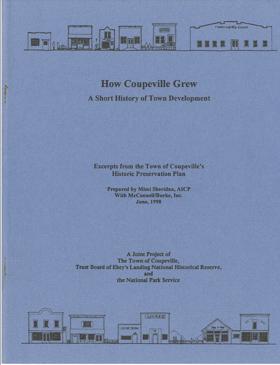
Authored by preservation planner Mimi Sheridan in collaboration with McConnell/Burke, the National Park Service, and Ebey's Landing National Historical Reserve, How Coupeville Grew: A Short History of Town Development charts the architectural and spatial evolution of Washington’s second-oldest European settlement. Excerpted from the town's Historic Preservation Plan, the work traces Coupeville's transformation from a mid-19th-century maritime trading post and donation land claim into a preserved historic district defined by 19th-century New England-style architecture. Through municipal records, planning documents, and spatial analysis, the text details how maritime commerce and geographic isolation shaped the town's compact, pedestrian-oriented urban fabric. A keen insight drawn from the work is how modern historic preservation can intentionally weaponize municipal planning against suburban sprawl; by codifying vernacular architecture and historic spatial layouts into law, Coupeville successfully turned its historic isolation into an economic and cultural asset that safeguards its 19th-century character from modern erasure. 58 pages : illustrations ; 28 cm CIRC [ 1 ]
|
2002 |
|
Horse Heaven Hills their lengthening shadows by Harry Stanley Ganders
|
1977 |
|
Hops historic photographs of the Oregon hopscape by Kenneth I. Helphand 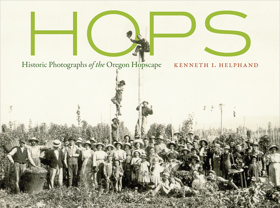
"Hops: Historic Photographs of the Oregon Hopscape is a visual dive into the physical presence of a plant that many people discuss but few could identify. Oregon was once the leading producer of hops in the United States (a title now held by Washington). Kenny Helphand has scoured archives across the state to bring together historic photos of hop pickers in the late nineteenth and early twentieth centuries. Hops brings to life pickers of all backgrounds, through different eras of agricultural practice. Here are children, nuns, families, immigrants, and college students in fields, hop driers, and tent camps. The photos range from the candid to the highly professional - including five images from Dorothea Lange's iconic Farm Service Administration work. The 85 high quality photos are accompanied by captions that provide, variously, historical background, selections from oral histories, and visual guidance. A historical essay gives interested readers a short overview of the plant's history and the world of hop growing and picking"-- Provided by publisher x, 181 pages : illustrations (some color), map ; 21 x 26 cm CIRC [ 0 ]
|
2020 |
|
Hood Canal--splendor at risk by Jeff Brody , Christopher Dunagan 
Will people be able to rescue an ecosystem teetering on the brink of destruction? -- front cover viii, 264 pages : illustrations ; 28 cm CIRC [ 1 ]
|
1991 |
|
Honey in the horn by H. L. Davis 
H.L. Davis' earthy and humorous look at a young man learning self-reliance in the Oregon wilderness after family complications and problems from a jailhouse delivery push him out on his own among horse traders, jail breakers, fortune hunters, suspected murderers, and wide-eyed innocents. His tale of regional history is the story of our American culture. Set in Oregon in the early years of the twentieth century, H. L. Davis’s Honey in the Horn chronicles the struggles faced by homesteaders as they attempted to settle down and eke out subsistence from a still-wild land. With sly humor and keenly observed detail, Davis pays homage to the indomitable character of Oregon’s restless people and dramatic landscapes without romanticizing or burnishing the myths. Clay Calvert, an orphan, works as a hand on a sheep ranch until he stumbles into trouble and is forced to flee. Journeying throughout the state, from the lush coastal forests, to the Columbia Gorge, to the golden wheat fields east of the Cascades, he encounters a cast of characters as rich and diverse as the land, including a native Tunne boy and a beautiful girl named Luce. Originally published in 1935, Honey in the Horn reveals as much about the prevailing attitudes and beliefs during H. L. Davis’s lifetime as it does about the earlier era in which it is set. It transcends the limitations of its time through the sheer power and beauty of Davis’s prose. Full of humor and humanity, Davis’s first novel displays a vast knowledge of Pacific Northwest history, lore, and landscape. The only Oregon book that has ever won a Pulitzer Prize for fiction, this classic coming-of-age novel has been called the “Huckleberry Finn of the West.” With a new introduction by Richard W. Etulain, this important work from one of Oregon’s premier authors is once again available for a new generation. 380 pages ; 22 cm CIRC [ 0 ]
|
1935 |
|
Homewaters a human and natural history of Puget Sound by David B. Williams 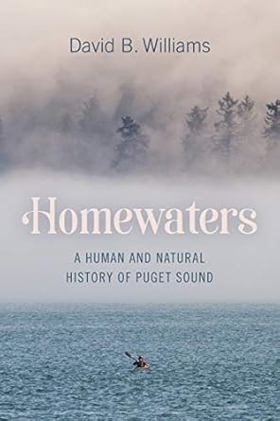
"Not far from Seattle skyscrapers live 150-year-old clams, more than 250 species of fish, and underwater kelp forests as complex as any terrestrial ecosystem. For millennia, vibrant Coast Salish communities have lived beside these waters dense with nutrient-rich foods, with cultures intertwined through exchanges across the waterways. Transformed by settlement and resource extraction, Puget Sound and its future health now depend on a better understanding of the region's ecological complexities. Focusing on the area south of Port Townsend and between the Cascade and Olympic mountains, Williams uncovers human and natural histories in, on, and around the Sound. In conversations with archaeologists, biologists, and tribal authorities, Williams traces how generations of humans have interacted with such species as geoducks, salmon, orcas, rockfish, and herring. He sheds light on how warfare shaped development and how people have moved across this maritime highway, in canoes, the mosquito fleet, and today's ferry system. The book also takes an unflinching look at how the Sound's ecosystems have suffered from human behavior, including pollution, habitat destruction, and the effects of climate change. Witty, graceful, and deeply informed, Homewaters weaves history and science into a fascinating and hopeful narrative, one that will introduce newcomers to the astonishing life that inhabits the Sound and offers longtime residents new insight into and appreciation of the waters they call home"-- Provided by publisher xiv, 245 pages : illustrations (black and white), maps (black and white) ; 23 cm CIRC [ 0 ]
|
2022 |
|
Homesteads and snug harbours the Gulf Islands by Peter Murray 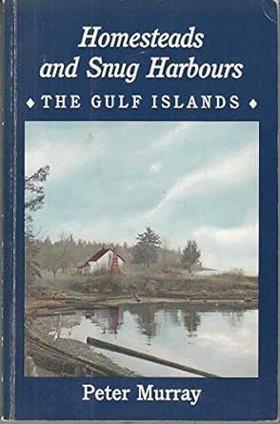
Authored by regional historian Peter Murray, Homesteads and Snug Harbours: The Gulf Islands chronicles the colorful pioneering history, maritime isolation, and rugged settlement of British Columbia's picturesque Strait of Georgia archipelago. The book explores how eccentric pioneers, fishermen, farmers, and self-reliant families carved out sustainable lives across islands defined by sheltered anchorages, rocky terrain, and a remarkably mild maritime climate. Drawing on extensive archival research and local oral histories, the text preserves the vanishing stories of an independent coastal community that lived at the mercy of wind, tide, and steamboat schedules. A keen insight drawn from the work is how the geography of island life fostered an intense culture of self-reliance juxtaposed with deep community interdependence; because these isolated maritime havens lacked roads and mainland infrastructure, early Gulf Islanders relied entirely on mutual aid and maritime mobility to survive the very isolation that drew them to the frontier. 213 pages : illustrations, maps ; 22 cm CIRC [ 1 ]
|
1991 |
|
Homesteads and heritages a history of Morrow County, Oregon by Giles French 
History of Morrow County, Oregon. The homesteads, list of people 127 pages illustrations 29 cm CIRC [ 1 ]
|
1971 |
|
Home port Victoria a collection of true stories of men and ships that sailed from this port, told by seamen at meetings of the Thermopylae Club, Victoria, B.C., including short sketches of their narrators, articles on relevant history of the Port of Victoria, and two maps by Ursula Jupp, Thermopylae Club 
Home Port Victoria, compiled by Ursula Jupp in collaboration with Victoria's maritime-focused Thermopylae Club in 1967, is a rich anthology of authentic nautical history and personal seafaring narratives. The book preserves the firsthand accounts of veteran seamen, detailing the rugged voyages of the men and ships that sailed out of British Columbia's capital city. Alongside these captivating true stories, the volume features biographical sketches of the narrators, historical essays on the port's development, and detailed maps that anchor the region's proud maritime legacy. 168 pages illustrations, maps, portraits 24 cm CIRC [ 1 ]
|
1967 |
|
Home mountains reflections from a Western middle age by Susan H. Swetnam 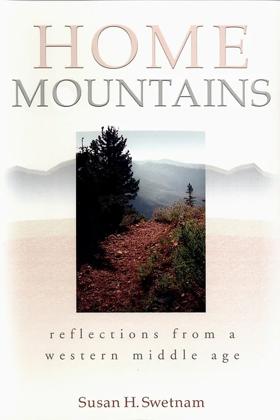
A collection of personal essays from the author's middle-age surprise of finding herself at home in the intermountain region of southeastern Idaho [6], 119, [2] pages : illustrations ; 21 cm. CIRC [ 0 ]
|
2000 |
|
Home below Hell's Canyon by Grace Edgington Jordan 
During the depression days of the early 1930s the Jordan family – Len Jordan (later governor of Idaho and a United States senator), his wife Grace, and their three small children – moved to an Idaho sheep ranch in the Snake River gorge just below Hell’s Canyon, deepest scratch on the face of North America. “Cut off from the world for months at a time, the Jordans became virtually self-sufficient. Short of cash but long on courage, they raised and preserved their food, made their own soap, and educated their children” (Sterling North, New York World-Telegram). 243 pages illustrations 21 cm CIRC [ 1 ]
|
1954 |
|
Holy rollers murder and madness in Oregon's love cult by T. McCracken, Robert B. Blodgett 
The story of a religious cult in Corvallis, Oregon which made headlines in 1903 xv, 295 pages : illustrations ; 23 cm CIRC [ 0 ]
|
2002 |
|
History vs. the Whitman saved Oregon story : three essays towards a true history of the acquisition of the old Oregon Territory by William Isaac Marshall
Published in the early 20th century, William Isaac Marshall’s collection of essays meticulously dismantles the highly romanticized myth that missionary Marcus Whitman single-handedly saved the Oregon Territory from British control through a heroic cross-country winter ride in 1842. Relying heavily on primary source documents, Marshall proves that the United States government was already fully committed to retaining Oregon, and that Whitman’s arduous journey was actually undertaken to prevent the closure of his own struggling mission by its governing board. A keen insight drawn from the text is how the enduring popularity of the "Whitman saved Oregon" legend exposes the vulnerability of historical narratives to religious and nationalist propaganda, demonstrating how early writers eagerly embraced a fabricated, providential savior figure to retroactively justify America's westward expansion. By prioritizing rigorous archival evidence over emotional storytelling, Marshall's work fundamentally corrected the historical record and set a new standard for historiography regarding the acquisition of the Pacific Northwest. 236 pages ; 24 cm ONLINE CIRC [ 1 ]
|
1904 |
|
History of Weston, Idaho by Jay D. Schvaneveldt 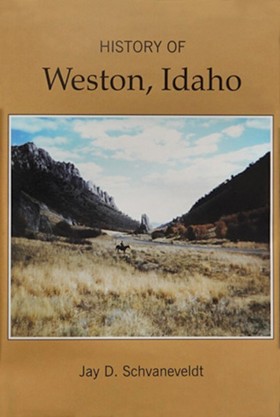
Published in 2010, Jay D. Schvaneveldt’s History of Weston, Idaho chronicles the founding and evolution of one of the Gem State’s oldest permanent European-American settlements, established by Mormon pioneers in the mid-1860s. The book meticulously documents the community's early trials—ranging from harsh frontier winters and tense resource management to its strategic growth as an agricultural and freighting hub along the route to northern mining camps. Drawing on rich local lore, diaries, and genealogical records, Schvaneveldt captures the grit and resilience required to transform a rugged southeastern Idaho wilderness into a tightly knit farming community. A keen insight drawn from the text is how it illuminates the profound, everyday impact of religious and familial cohesion on frontier survival, demonstrating that tight kinship networks and shared communal values were just as vital to subduing the rural West as physical labor and infrastructure. xvi, 702 pages : illustrations ; 24 cm CIRC [ 1 ]
|
2011 |
|
History of Washington, Idaho, and Montana 1845-1889 by Hubert Howe Bancroft
Published in 1890 as the thirty-first volume of his exhaustive western history series, Hubert Howe Bancroft’s History of Washington, Idaho, and Montana 1845-1889 chronicles the violent transition of the Pacific Northwest's rugged interior from indigenous homelands to industrialized American states. The narrative meticulously documents the chaotic influx of prospectors during the inland gold rushes, the establishment of early territorial governments, and the brutal succession of regional Indian Wars that systematically cleared the land for transcontinental railroads. A keen insight drawn from the volume is how its rigorous documentation of these conflicts—painstakingly researched and written by the uncredited historian Frances Fuller Victor—serves as a surprisingly sharp indictment of federal incompetence and broken treaty promises. Yet, despite explicitly exposing the government's corrupt mismanagement of indigenous affairs, the text ultimately rationalizes this systemic violence as the tragic but inevitable cost of securing the inland frontier for capitalist expansion. xxvi, 836 pages : illustrations, maps ; 24 cm. ONLINE CIRC [ 1 ]
|
1890 |
|
History of Washington the rise and progress of an American state by Clinton A. Snowden, C. H. Hanford , Miles C. Moore , William D. Tyler , Stephen James Chadwick
Authored by Clinton A. Snowden and overseen by a prominent advisory board of early political leaders, History of Washington: The Rise and Progress of an American State is a sweeping, multi-volume chronicle of the region's transition from indigenous territory to an industrialized modern commonwealth. The expansive work traces the narrative arc of maritime exploration, the fur trade, and grueling pioneer settlement, framing the political and economic development of the Pacific Northwest as an inevitable triumph of American enterprise. Drawing upon early archival records and the firsthand accounts of territorial founders, the text serves as a definitive, progressive-era monument to the state’s founding generation. A keen insight drawn from the work is how the overt involvement of powerful civic figures on the book's advisory board functioned to canonize a highly curated, top-down historical narrative; by having former governors and judges directly steer the project, the publication operated less as objective history and more as a state-sponsored ideological tool to legitimize the political authority and territorial conquests of Washington's pioneer elite. 6 volumes : illustrations, maps, portraits ; 25 cm ONLINE CIRC [ 5 ] CIRC [ 4 ]
|
1909 |
|
History of Vashon-Maury Islands by O. S. Van Olinda
|
1978 |
|
History of the Yakima Valley, Washington; comprising Yakima, Kittitas, and Benton Counties by W. D. Lyman
Authored in 1919 by Whitman College professor William Denison Lyman, History of the Yakima Valley, Washington is an expansive, subscription-based chronicle detailing the rapid agricultural and industrial transformation of the region's arid interior. The multi-volume text traces the development of Yakima, Kittitas, and Benton counties, emphasizing the shift from the violent frontier conflicts of the Yakima War to the systematic implementation of massive irrigation projects that turned sagebrush plains into highly profitable orchards. Heavily subsidized by the inclusion of flattering biographical sketches of prominent local ranchers, politicians, and businessmen, the work serves as a triumphant civic monument celebrating Anglo-American engineering and agrarian capitalism. A keen insight drawn from the work is how the narrative weaponizes the rhetoric of ecological transformation to justify colonial occupation; by framing the irrigation and agricultural cultivation of the valley as the heroic redemption of a "useless" desert, Lyman’s text morally validates the dispossession of the Yakama Nation by equating legitimate land ownership exclusively with capitalist, industrial-scale agricultural productivity. 2 volumes : illustrations, portraits ; 27 cm ONLINE CIRC [ 2 ]
|
1919 |
|
History of the Willamette Valley by Herbert O. Lang
being a description of the valley and its resources, with an account of its discovery and settlement by white men, and its subsequent history : together with personal reminiscences of its early pioneers xiv, [17]-902, xiii pages, 8 unnumbered leaves of plates : illustrations, facsimiles, portrait ; 25 cm ONLINE CIRC [ 1 ]
|
1885 |
|
History of the state of Washington by Edmond S. Meany
|
1946 |
|
History of the state of Washington by Harold E. Barto , Catharine Bullard
|
1953 |
Also containing a description of the Hudson's Bay Company from its formation in 1670, down to the present time; biography of Captain McNeill; the narrative of a Fraser River prospector of 1859; historical momentoes of the Beaver's copper remains; the sad ending of the author's last trip in search of old-time naval relics; important developments in steam since its introduction in 1769, etc." -- Lowther, B. J., & Laing, M. (1968). A bibliography of British Columbia: Laying the foundations, 1849-1899. Victoria, BC: University of Victoria, p. 124. 99 pages : photographs, illustration ; 17 cm ONLINE CIRC [ 2 ]
|
1894 |
|
History of the Provisional Government of Oregon by J. Quinn Thorton
Written by former Provisional Supreme Judge J. Quinn Thornton, this historical account chronicles the 1843 establishment of Oregon's Provisional Government at Champoeg and its subsequent legislative evolution. The narrative details the transition of the Willamette Valley from a loosely governed frontier outpost into an organized American political entity, emphasizing the drafting of its organic laws and the urgent lobbying for official U.S. territorial recognition. A keen insight drawn from the text is how Thornton’s intense personal vanity and staunchly anti-British prejudices transform this administrative history into a highly subjective, partisan autobiography. By actively framing himself as the indispensable architect of the 1848 Territorial Act and the primary crusader responsible for explicitly banning slavery in the region, Thornton weaponizes the historical record to settle old political vendettas and artificially inflate his own legacy in Pacific Northwest statecraft. 54 p. ONLINE CIRC [ 1 ]
|
1873 |
|
Having been articled to the Hudson's Bay Company, I left my father's home in London, in their ship, the Ganymede, for their settlements on the Pacific. It is needless for me to give any account of our outward voyage (though I met with some strange adventures) to the Sandwich Islands — at which we stopped for a short time ; and thence to the Columbia river. Having arrived at the western head-quarters of the Company — Fort Vancouver ; on the northern shore of the river, ninety miles from its mouth— I was placed in the fort, in the situation of assistant store-keeper. After remaining in the fort nearly a year, I was commissioned to proceed northward, in the company's ships, on trading and exploring expeditions ; threading, in our various courses, the whole of the vast labyrinth of gulphs, sounds, straits, bays, and inlets, that interlace the whole of the Pacific fiuore, for many hundred miles inland, and along many degrees of latitude Viii, 359 P. : Ill., Map ONLINE CIRC [ 1 ]
|
1844 |
|
History of the Northwest Coast by Hubert Howe Bancroft
Published in 1884 as a two-volume installment of his monumental thirty-nine-volume series on western North America, Hubert Howe Bancroft’s History of the Northwest Coast provides an exhaustive chronicle of the region from initial maritime exploration through the 1846 Oregon Treaty. The sweeping narrative details the intense imperial competition among Spain, Russia, Great Britain, and the United States, meticulously tracking the evolution of the lucrative fur trade from early coastal shipping to the vast overland monopolies of the North West and Hudson's Bay Companies. By aggressively collecting and synthesizing thousands of primary manuscripts, pioneer diaries, and oral histories, the publication effectively centralized the region's scattered historical memory into a single authoritative archive. A keen insight drawn from the text is that while it famously bears Bancroft's sole authorship, the volume was actually researched and written by a stable of uncredited assistants—most notably the pioneering historian Frances Fuller Victor—revealing how the foundational historiography of the Pacific Northwest was constructed through a highly industrialized, corporate approach to scholarship. 2 volumes : illustrations, maps. ONLINE CIRC [ 2 ]
|
1884 |