Catalog of British Columbiana and Pacific Northwest Americana
Encyclopedia Cascadia Catalog contains book titles of mostly non-fiction Pacific Northwest Coast of North America Titles (primarially British Columbia, Idaho, Oregon and Washington State) in an easy-to-understand title catalog. If you see a link with this badge ONLINE CIRC it means that there is an online institution that provides free access to that title. In some cases there may be more than one institution hosting the title digitally.
| Catalog Title | Published |
|---|---|
|
Oregon 1859 a snapshot in time by Janice Marschner 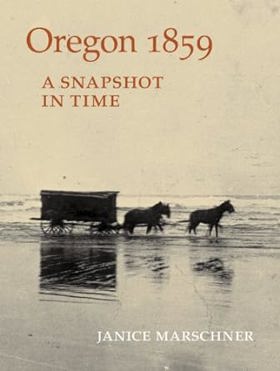
Offers information needed to travel through Oregon's 19 original counties at the moment of statehood. This book includes: a map showing each county's 1859 place names; the history of native peoples and settlers; and early roads and bridges. It includes historical photographs. Oregon became the 33d state in the Union on February 14, 1859. Portland had wooden sidewalks, and gold glittered in southern Oregon streams. Towns like Lookingglass, Needy, and Sodaville were springing up all around. It is a time to remember—and to revisit—today, 150 years later, with this detailed and lively guide. Janice Marschner provides all you need to travel through each of Oregon's 19 original counties at the moment of statehood: a map showing each county's 1859 place names and current reference points; the history of native peoples and settlers; early roads and bridges; the first homes, schools, stores, hotels, and churches; biographical sketches of notable individuals throughout the state; lists of family names from Applegate and Lovejoy to McLoughlin, Reed, and Zumwalt; and sites to see. Historical photographs show the determined faces of natives and settlers; their oxen and wagons on wide, rough roads; their rafts and ferries on the rivers; and their towns under development. 295 pages : illustrations, maps (chiefly color) ; 24 cm CIRC [ 1 ]
|
2008 |
|
Historical dictionary of the discovery and exploration of the Northwest Coast of America by Robin Inglis 
The Northwest Coast of America, ranging from northern California through Oregon, Washington, and British Columbia, all the way up to Alaska, was the last temperate coastline to be placed on the world map. First visited by Russians in 1741 and thought to contain a navigable passage between the Pacific and the Atlantic, it was systematically revealed during an intense period of exploratory and commercial activity from the 1770s to the 1790s. Subsequently, the imperial ambitions of Russia, Spain, and Britain, and an assumption of manifest destiny by the United States led to further exploration and ensured that the region would become disputed territory before national boundaries were determined in the mid-19th century. The Historical Dictionary of the Discovery and Exploration of the Northwest Coast of America tells of the heroic endeavors and remarkable achievements, the endless speculation about a northwest passage, and the fighting and manipulation for commercial advantage that surrounded this terrain. This is done through an introductory essay, a detailed chronology, an extensive bibliography, modern maps and selected historical maps and drawings, and over 400 cross-referenced dictionary entries. Entries cover the native people encountered; the scientists and artists who left an invaluable documentary and visual record of people, places, flora, and fauna; the numerous voyages taken by men such as Vitus Bering, James Cook, Juan Francisco de la Bodega y Quadra, and George Vancouver; overland expeditions like those of Alexander Mackenzie, Simon Fraser, Meriwether Lewis and William Clark, and David Thompson; and maritime fur traders, including George Dixon, Grigorii Shelikhov, Robert Gray and William Sturgis. No other dictionary exists that is dedicated solely to the coverage of this region. lxxv, 429 pages : illustrations, maps ; 23 cm. CIRC [ 1 ]
|
2008 |
|
Wild beauty photographs of the Columbia River Gorge, 1867-1957 by Terry Toedtemeier , John Laursen , Northwest Photography Archive (Publisher) 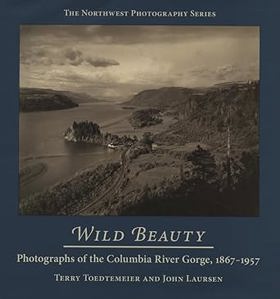
The inaugural volume in the Northwest Photography Series, Wild Beauty chronicles the rich photographic history of the spectacular Columbia River Gorge. This exquisitely produced large-format book features more than 130 images—most of them previously unpublished and many never before available for public view—by some three dozen photographers, including Carleton Watkins, Benjamin Gifford, Lily White, Sarah Ladd, Fred Kizer, Alfred Monner, and Ray Atkeson. Wild Beauty represents, in the words of one reviewer, “a culmination of decades of research, exhibition, and total immersion in the geology, history, and photography of the Columbia River Gorge.” The Columbia River Gorge exerts a powerful influence on the lives and imaginations of the inhabitants of the Pacific Northwest. For people who live here today, just as for those Native Americans and European settlers who preceded us, this dramatic natural landform is a source of awe. Since the 1860s it has inspired superb photographers who have framed and interpreted the way we see the Gorge, and who have in turn had their artistic vision shaped by this compelling landscape. The ninety-year period covered in Wild Beauty was a critical period in the river’s history. Over thousands of years the wild, free-flowing torrent of the Columbia River carved a passage – the Columbia River Gorge – through the Cascade Mountain Range. In the 1860s, when the first photographers arrived, the Gorge still looked much the same as it had when Lewis and Clark made their way down the river in 1805, and indeed as it had for centuries before that, when the native peoples’ culture of fishing and trade thrived along the river’s banks. In the mid twentieth century, the character of the river was fundamentally altered by the construction of hydroelectric dams. Wild Beauty begins in 1867 with images by the legendary Carleton Watkins, creator of some of the greatest landscape photographs of the nineteenth century. The volume ends in 1957 with the completion of The Dalles Dam, which drowned Celilo Falls and with it the historic site where Indians had fished for millennia. The images in this beautifully designed volume are presented one to a spread, with captions on the facing pages. The book is organized into five chronological sections, each with a brief introduction; a map shows the locations where the photographs were made. The photographs have been meticulously restored and are exquisitely reproduced in four-color process to capture the subtle coloration and nuanced tonal values of albumen prints, gelatin silver prints, platinum prints, hand-colored photographs, and early Kodachromes. The photography of Watkins and his successors is a significant piece of the cultural heritage of the Pacific Northwest. Readers interested in the history of the Columbia River and the photography of the developing American West will be enthralled by the book’s scope and artistry. And those who love the Gorge’s stunning beauty will welcome how this volume has captured its grandeur. Wild Beauty is the inaugural volume in a new series initiated by the Northwest Photography Archive. For 150 years, photographers have chronicled the landscape, people, and events of the Pacific Northwest. The Archive’s mission is to gather the finest and most significant of these images, from both private and public collections, and publish them in book form to make them widely available. All volumes in the series will be printed and bound in Oregon. 345 pages : illustrations (some color), color maps ; 32 cm. CIRC [ 1 ]
|
2008 |
|
The Robson Valley story a century of dreams by Marilyn J. Wheeler 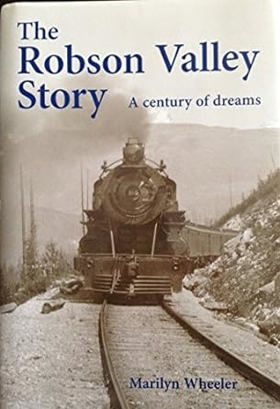
Marilyn Wheeler has authored and compiled a fascinating look at a a rural community in the wilds of British Columbia. She has found some of the best and most important stories from a very interesting part of the world. While her first edition of the Robson Valley Story was exceptionally popular, this new book is even more important. In a very deep way, Marilyn Wheeler has shown the essence of what it is to live in rural Canada-to live in community. It is a history of the valley to be sure, but one that mines the depth of our most important experiences, both good and bad. A remarkable new addition is the story of a Second World War veteran's struggle to reintegrate with his community. A story which would likely be lost or untold in a larger community gets its due here. The story of how people rallied together to bring in electricity is an amazing testament to their tenacity, their ability not just to adapt, but to seek out change. Matthew Wheeler's encyclopedic knowledge of the photographs of the Robson Valley will make this one of the best illustrated history books you have ever seen. -Andru McCracken, former editor of, The Robson Valley Times ix, 710 pages : illustrations, maps ; 26 cm CIRC [ 1 ]
|
2008 |
|
Voices from the Sound chronicles of Clayoquot Sound and Tofino, 1899-1929 by Margaret Horsfield 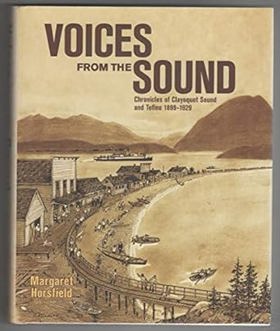
"Remarkable characters from Clayoquot Sound jostle for attention in Voices from the Sound. Storekeepers and sealers, prospectors and priests, schoolchildren, settlers and native people - in the early decades of the twentieth century, their lives intersected in the small world and vast distances of Vancouver Island's remote west coast. Now the voices of these people can be heard once again, in chatty and revealing detail. They come alive, just as cantankerous or eccentric, pitiable or brave as they were in their own lifetimes 365 pages : illustrations, maps, portraits ; 27 cm CIRC [ 1 ]
|
2008 |
|
Lake County history the first 100 years, 1876-1976 by Lake County Historical Society (Or) 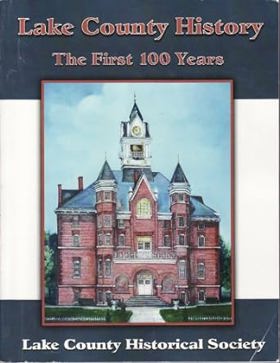
History of Lake County, Oregon from 1876-1976, compiled by the local historical society. Includes black and white historical photographs. viii, 250 pages : illustrations, maps ; 28 cm CIRC [ 1 ]
|
2008 |
|
Oregon ferries a history of Oregon ferries since 1826 by Charles Floyd Query 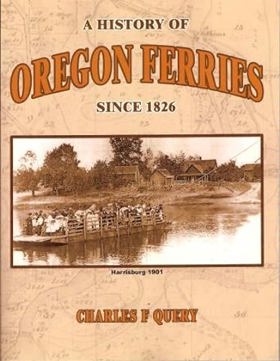
" ... history of over five hundred ferries that have plied Oregon's rivers and bays. This book contains the location of each ferry, the dates of operation and owners, historical notes and over thirty photographs. A complete source list and a copy of the 1846 laws governing ferry licenses ..."--Page 4 of cover xii, 133 pages : illustrations ; 28 cm CIRC [ 1 ]
|
2008 |
|
Seattle & King County. Volume III gateway to the Pacific Northwest by Troy Wolff 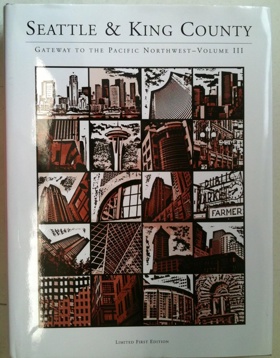
Published in 2008 and edited by Judith Gouldthorpe, Troy Wolff’s Seattle & King County: Gateway to the Pacific Northwest—Volume III offers a richly illustrated local history chronicling the modern development, neighborhoods, and civic milestones of Washington's most populous region. The volume combines historical overviews with localized profiles of communities, businesses, and prominent figures who shaped the greater Puget Sound area at the turn of the 21st century. Through its extensive photographic archives and narrative vignettes, the book documents how a timber-and-shipping outpost evolved into a major global metropolitan hub. A keen insight drawn from the text is how contemporary regional histories often function as curated civic time capsules, consciously celebrating corporate and community achievements while neatly glossing over the socio-economic tensions and gentrification pressures accompanying rapid urban expansion. 296 pages : illustrations (some color) ; 31 cm CIRC [ 1 ]
|
2008 |
|
Mosquito fleet of South Puget Sound by Jean Cammon Findlay, Robin Paterson 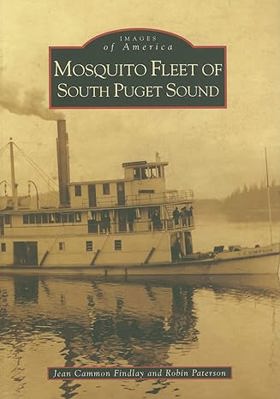
"Before the advent of roads in western Washington, steamboats of the Mosquito Fleet swarmed all over Puget Sound. Sidewheelers, stern-wheelers, and propeller-driven, they ranged from the tiny 40-foot Marie to the huge 282-foot Yosemite, and from the famous Flyer to the unknown Leota. Floating stores like the Vaughn and shrimpers like the Violet sailed the same waters as the elegant Great Lakes lady, the Chippewa, and the homely Willie. A few, like the Bob Irving and Blue Star, died spectacularly or, like Major Tompkins, shipwrecked after a short time, while others began new lives as tugboats or auto ferries; some even survive today as excursion boats like the Virginia V. From 1853 to modern car ferries in the 1920s, this volume chronicles the heyday of steamboating a unique segment of maritime history from modest launch to sleek liner."--Back cover 127 pages : illustrations, maps ; 24 cm. CIRC [ 1 ]
|
2008 |
|
The Beer Baron of Boise the life of John Lemp, millionaire brewer of frontier Idaho by Herman W. Ronnenberg 
Although he arrived in America penniless, John Lemp became the most successful brewer in the history of Idaho. As befits a business leader of the Gem state, he cut a multitude of other facets into his personal and professional identity. As an early Idaho businessmen, his story gives insights into the early development of the state and, particularly, of Boise. This biography could be interpreted as fitting into the literature of various individual businessmen in the West. xxv, 436 pages : illustrations, maps ; 24 cm CIRC [ 0 ]
|
2008 |
|
Makúk a new history of Aboriginal-white relations by John S. Lutz 
"The history of Aboriginal-settler interactions in Canada continues to haunt the national imagination. Despite billions of dollars spent on the "Indian problem," Aboriginal people remain the poorest in the country. Because the stereotype of the "lazy Indian" is never far from the surface, many Canadians wonder if the problem lay with "Indians" themselves. John Lutz traces Aboriginal people's involvement in the new economy, and their displacement from it, from the first arrival of Europeans to the 1970s. Drawing upon oral histories, manuscripts, newspaper accounts, biographies, and statistical analysis, Lutz shows that Aboriginal people flocked to the workforce and prospered in the late 19th century. The roots of today's wide-spread unemployment and "welfare dependency" date only from the 1950s, when deliberate and inadvertent policy choices--what Lutz terms the "white problem"--Drove Aboriginal people out of the capitalist, wage, and subsistence economies, offering them welfare as "compensation." Makuk invites readers into a dialogue with the past with visual imagery and an engaging narrative that gives a voice to Aboriginal peoples and other historical figures. Students, scholars, policy-makers (Aboriginal and non-Aboriginal), and a wide public (who care to bring the spectres of the past into the light of the present) will find the book insightful and invaluable."--Jacket xii, 431 pages : illustrations, maps, portraits ; 27 cm CIRC [ 0 ]
|
2008 |
|
Salish myths and legends one people's stories by M. Terry Thompson , Steven M. Egesdal 
The storytelling traditions of Salish-speaking peoples in the Pacific Northwest of North America are showcased in this anthology of story, legend, song, and oratory. From the Bitterroot Mountains to the Pacific Ocean, Salish-speaking communities such as the Bella Coola, Shuswap, Tillamook, Quinault, Colville-Okanagan, Coeur d'Alene, and Flathead have always been guided and inspired by the stories of previous generations. Many of the most influential and powerful of those tales appear in this volume. Salish Myths and Legends features an array of Trickster stories centered on Coyote, Mink, and other memorable characters, as well as stories of the frightening Basket Ogress, accounts of otherworldly journeys, epic cycles such as South Wind's Journeys and the Bluejay Cycle, tales of such legendary animals as Beaver and Lady Louse from the beginning of time, and stories that explain why things are the way they are. The anthology also includes humorous traditional tales, speeches, and stories of encounters with whites. --From publisher's description xlviii, 445 pages : maps ; 23 cm CIRC [ 0 ]
|
2008 |
|
Stubborn twig three generations in the life of a Japanese American family by Lauren Kessler, Ted Kulongoski 
To celebrate Oregon's 150th birthday, the Oregon Library Association has chosen one book for all Oregonians to read: Stubborn Twig. Lauren Kessler's award-winning book, the selection for the statewide Oregon Reads program, is a classic story of immigrants making their way in a new land. It is a living work of social history that rings with the power of truth and the drama of fiction, a moving saga about the challenges of becoming an American. Masuo Yasui traveled from Japan across the other Oregon Trail — the one that spanned the Pacific Ocean — in 1903. Like most immigrants, he came with big dreams and empty pockets. Working on the railroads, in a cannery, and as a houseboy before settling in Hood River, Oregon, he opened a store, raised a large family, and became one of the area's most successful orchardists. As Masuo broke the race barrier in the local business community, his American-born children broke it in school, scouts and sports, excelling in most everything they tried. For the Yasuis' first-born son, the constraints and contradictions of being both Japanese and American led to tragedy. But his seven brothers and sisters prevailed, becoming doctors, lawyers, teachers, and farmers. It was a classic tale of the American dream come true — until December 7, 1941, changed their lives forever. The Yasuis were among the 120,000 people of Japanese ancestry along the West Coast who were forced from their homes and interned in vast inland "relocation camps." Masuo was arrested as a spy and imprisoned for the rest of the war; his family was shamed and broken. Yet the Yasuis endured, as succeeding generations took up the challenge of finding their identity as Americans. Stubborn Twig is their story — a story at once tragic and triumphant, one that bears eloquent witness to both the promise and the peril of America. xvi, 308 pages : illustrations, portraits ; 23 cm CIRC [ 0 ]
|
2008 |
|
Massacre at Bear River first, worst, forgotten by Rod Miller 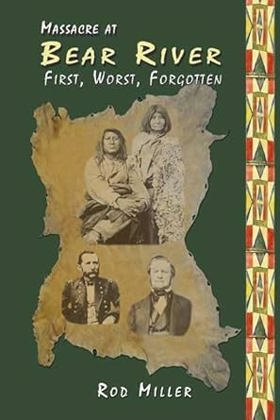
"Rod Miller tells the story of the West's worst, but least remembered attack on Native Americans. Although they have been largely ignored by historians, it was the war waged against the Shoshoni tribe that opened the book on Indian massacres in the West. The Shoshoni were victims of a bloodbath more extreme than that at Wounded Knee, and more deadly than the more famous slaughter at Sand Creek. The Bear River Massacre, on January 29, 1863, claimed at least 250 Shoshoni lives. And it changed the culture of the natives who lived in the area along what later became the Utah-Idaho border. The author provides a compelling narrative account of the Bear River Massacre and the events leading up to the bloody clash on a frozen riverbank in the foothills of the Rocky Mountains. He gives historical context to three major players in the massacre -- the Shoshoni, the military, and the Mormon settlers and their leaders -- and the interplay among those groups"--Page 4 of cover xix, 193 pages : illustrations, maps ; 23 cm CIRC [ 0 ]
|
2008 |
|
Massacre Rocks and City of Rocks 1862 attacks on emigrant trains by Donald H. Shannon 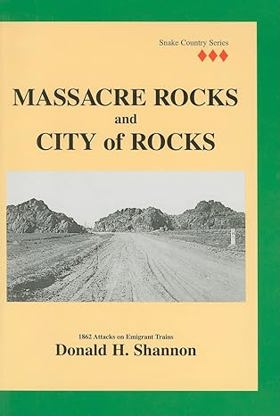
Donald Shannon presents the third in his series of books on Indian attacks on emigrant trans on the Oregoni Trail west of the Rocky Mountains. Massacre Rocks and City of Rocks details attacks that took place in 1862 at those two sites in what is now southeast Idaho. xii, 240 pages : illustrations, maps, portrait ; 23 cm. CIRC [ 0 ]
|
2008 |
|
Modoc the tribe that wouldn't die by Cheewa James 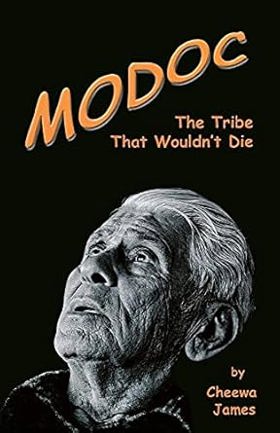
In Modoc: The Tribe That Wouldn't Die, Cheewa James, a direct descendent Modoc War hero Shkeitko, aka "Shacknasty Jim", recounts the explosive and personal story of her ancestors in a richly documented, non-fiction narrative that occasionally incorporates fictionalized inserts to help bring the story to life-an asset for school and family reading. Covering Modoc history from ancestral times to the present, this unique book includes over 100 rare black and white photographs of the Modoc War, historic Modoc men, women and children--many handed down through Cheewa's family--and life from times past. There are 40 color photographs of Modocs and their activities in current times. The book contains accounts from the letters of soldiers and eye-witnesses never before published. The six-month long Modoc War, fought in 1872-73, pitted some fifty-five Modoc warriors against 1,000 U.S. soldiers in the jagged, hostile terrain of today's Lava Beds National Monument, where both warriors and families held out in Captain Jack's Stronghold, a massive lava-cave maze named after the Modoc leader. The surviving Modocs were exiled to Oklahoma Indian Territory, where they faced the added trauma of disease and corrupt officials. Some later returned to the Klamath Reservation in Oregon, where Cheewa was born. x, 335 pages, 8 unnumbered pages of plates : illustrations (some color), maps, portraits ; 22 cm CIRC [ 0 ]
|
2008 |
|
With grit and by grace breaking trails in politics and law, a memoir by Betty Roberts , Gail Wells 
"In the 1950s, Betty Roberts did what most of her contemporaries considered audacious and inappropriate when she returned to college as a 32-year-old wife and mother. This was only the start of Roberts' lifetime commitment to overcoming obstacles to women's equality. With Grit and By Grace follows Betty Roberts' rise from a Depressionera childhood on the Texas plains to become a teacher, lawyer, state legislator, candidate for governor, and eventually Oregon's first woman Supreme Court Justice. In this memoir, Justice Roberts reflects on her role as a mother, wife, and political trailblazer. Her story is important to the history of women's struggles to challenge prevailing stereotypes, but it is also a deeply personal story of a life sometimes stark, sometimes humorous, often exhausting, and always brightened with friendships and family. Her story is a vivid reminder of times too quickly forgotten, when a woman could not keep her own name or stay at a motel alone. Justice Roberts began her career during a politically complex time: the Civil Rights Movement was in full swing, sentiment against the Vietnam War was growing, and the nascent women's movement would soon burst on the scene. During her 13 years as a legislator, she was instrumental in the passage of Oregon's first legalized right to abortion and the state's ratification of the Equal Rights Amendment, as well as pathbreaking environmental and land-use legislation. Roberts tells her engrossing story with honesty and warmth. With Grit and By Grace is about life's disappointments and promises, its rejections and rewards, and its demand for the determination and commitment that bring success. Politicians, civic leaders, feminists, and anyone interested in Oregon's twentieth-century political history will be fascinated by this recounting of events that influenced the political and social landscape of Oregon and beyond"--Publisher xii, 276 pages : illustrations ; 23 cm CIRC [ 0 ]
|
2008 |
|
Strand an odyssey of Pacific Ocean debris by Bonnie Henderson 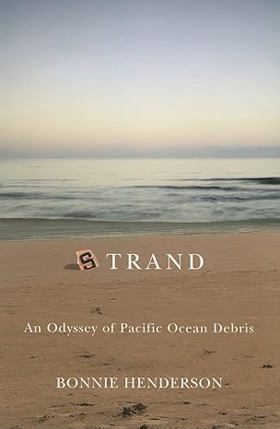
"In Strand, travel writer and amateur naturalist Bonnie Henderson traces the stories of wrack washed up on the mile-long stretch of Oregon beach she walked has regularly for more than a decade." "Henderson's writing conveys both a keen attention to the specifics of place and an expansive field of vision. The burned hull of a long-abandoned fishing boat, a glass fishing float, the egg case of a skate, a beached minke whale, an unusual number of dead murres, and an athletic shoe are the starting points for essays that reach across the globe. Henderson takes readers from Coos Bay, Oregon, to Vancouver, B.C.; from the currents circulating through the North Pacific to the "Eastern Garbage Patch" between Hawaii and California; from China's Shenzhen Special Economic Zone to fishing villages on the coast of Hokkaido, Japan." "As Henderson uncovers these odysseys, she meditates on current issues, events, and phenomena - oil spills, the proliferation of ocean debris, international trade, the evolution of sharks, and the survival prospects of whales. The characters that emerge range from the world's leading minke whale researchers to the crew of a Coast Guard airbase to a small-town salvager of wrecked fishing boats, glued to the radio and praying for disaster." "Strand offers a thoughtful look at the surprisingly far-ranging journeys of what washes up on our Pacific shores."--Jacket 216 pages : maps ; 23 cm CIRC [ 0 ]
|
2008 |
|
In the blast zone catastrophe and renewal on Mount St. Helens by Charles Goodrich, Kathleen Dean Moore, Frederick J. Swanson 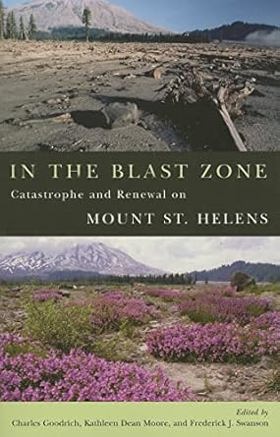
As it erupted in 1980, Mount St. Helens captured the attention of the region, nation, and world, and it continues to fascinate us today: a constant reminder that we live in volcano country. In lucid prose and poetry by some of America's leading writers and scientists, In the Blast Zone explores this story of destruction and renewal in all its human, geological, and ecological dimensions. Most popular accounts of the momentous eruption have focused on the devastation it caused. More recent scientific work on Mount St. Helens tells a story of unexpectedly rapid and varied ecological and geological change. In the Blast Zone is the first book to present a cross-pollination of literary and scientific perspectives on the mountain's history of cataclysm and renewal. Most of the contributors to this volume camped together on Mount St. Helens for four days, hiking, observing, and sharing ideas. They asked the question: What can this radically altered landscape tell us about nature and how to live our lives? In the Blast Zone collects some of their answers. While introducing ecological and geological insights, it also tells compelling stories about how science and literature inform our lives and our relationship to nature. These writings will startle readers with new recognition of the matchless gifts of Mount St. Helens: the gifts of beauty, of illumination, of hope. xix, 124 pages : illustrations, maps ; 22 cm CIRC [ 0 ]
|
2008 |
|
Beauty of the city A.E. Doyle, Portland's architect by Philip Niles 
The Central Library, Benson Hotel, Reed College, the Meier & Frank building, the U.S. National Bank—these are just a few of the grand Portland icons designed by Albert E. Doyle. During a period of rapid growth in Portland, Oregon, after the Lewis & Clark Centennial Exposition and before the Great Depression, Doyle (1877-1928) was the city’s most important architect. Beauty of the City is the first biography of this celebrated architect. Doyle’s career was short, just twenty-one years. Yet everywhere Portland retains his imprint. Many of Doyle’s classical, often white terra-cotta buildings became venerable city landmarks. He also designed Portland residences, Neahkahnie beach cottages, and houses and banks in Oregon and Washington. Using A. E. Doyle’s own diaries and letters and his firm’s records, historian Philip Niles traces the architect’s life and times in the context of the burgeoning cityscape. As Portland expanded beyond its frontier origins and provincialism, Doyle helped introduce Eastern and European sophistication. Indeed, his refined sensibility influenced the development of the Northwest Regional Style by Pietro Belluschi and John Yeon, among others. Doyle set the standard for elegance and proportion that later architects adapted to more modern styles—his standard defines Portland’s vibrant core and contributes to the city’s beauty as much today as it did 80 years ago. Readers interested in Northwest history and culture will appreciate this compelling and richly illustrated biography of “Portland’s architect.” Likewise, architectural historians and those seeking to better understand Portland’s architectural heritage will enjoy reading of Doyle’s contributions to this celebrated cityscape. “All new things built with the idea of preserving the beauty of the city and adding to it." -A. E. Doyle xvi, 278 pages : illustrations, map ; 26 cm CIRC [ 0 ]
|
2008 |
|
Skeena River fish and their habitat by Allen Gottesfeld, Ken A. Rabnett, Ecotrust, Skeena Fisheries Commission 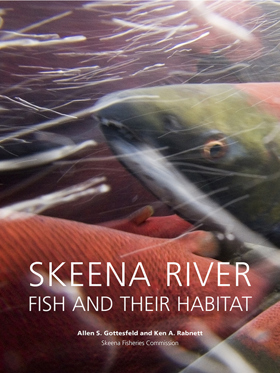
British Columbia's Skeena River is one of the great salmon rivers of the North Pacific. The river and its fish have supported indigenous peoples for thousands of years. More recently, the Skeena has earned world renown for its recreational fishery and magnificent wilderness setting. Yet, over the last century, fish populations have declined from overfishing, habitat alteration and, to an unknown degree, climate change. Development of mining as well as oil and gas resources may also pose threats to fish populations. This book presents the first thorough review of the salmon stocks and freshwater species of the Skeena River. Initial chapters summarize the river's environment, fish, and fisheries. The book then examines the physical geography, development history, indigenous use, and major salmon stocks of each of the watershed's sub-basins. This volume makes available for the first time – to researchers, field biologists, fishermen and natural history enthusiasts – both the published, and largely unpublished, literature on this productive salmon ecosystem. 341 pages : illustrations, maps ; 26 cm CIRC [ 0 ]
|
2008 |
|
Child of Steens Mountain by Eileen O'Keeffe McVicker, Barbara J. Scot 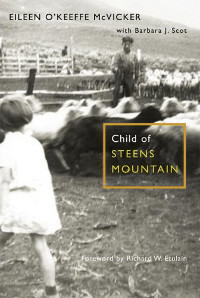
"For Eileen O'Keeffe McVicker, born in 1927 to an Irish immigrant sheep rancher and a schoolteacher, growing up on a homestead made for "a hard, happy life with layers of riches." In her memoir of a childhood spent on the southern slope of Steens Mountain, McVicker offers an appealing, personal account of eastern Oregon history." "An "outdoor child" who never knew boredom, McVicker recounts the everyday adventures of life on the high desert. Images of Steens country-rugged vistas of startling beauty in every direction - are woven throughout her recollections. While vividly describing ranch life, Child of Steens Mountain also explores universal issues of parenting, making a living, and coming of age. The homesteading life built a child's character and confidence, and as she reaches adulthood, McVicker, raised to be independent and responsible, ultimately defies her parents to follow her own path." "In an afterword, McVicker's friend and neighbor, author Barbara J. Scot, who edited and organized the narration, describes the collaborative process - including a visit to the old homestead site - that led to this book. Historian Richard Etulain, whose own childhood was spent on a sheep ranch in the West, provides an overview of ranching and homesteading in Steens country in his foreword."--Jacket xix, 139 pages : illustrations ; 23 cm CIRC [ 0 ]
|
2008 |
|
Whidbey Island's special places and the people who love them by Dan Pedersen 
Through ten people, Pedersen tells the stories of 10 different places. The names are recognizable to many: Ranger Rick Blank at Deception Pass State Park, Roger Sherman on Central Whidbey, and Elliott Menasche, an authority on South Whidbey State Park, for example. In simple feature stories he smoothly describes the places and the people who treasure them. It’s an easy read, but surprisingly informative even for long-time islanders. You may not have known, for example, that the oldest tree on the island, located in Deception Pass State Park, recently celebrated its 860th birthday. 63 pages : color illustrations, color map ; 22 x 28 cm CIRC [ 1 ]
|
2009 |
|
Backcountry roads--Idaho by Lynna Howard, Leland Howard 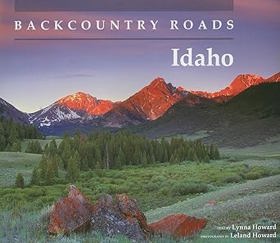
Backcountry Roads- Idaho is a beautiful, informative and practical guide to the Gem State's hidden treasure of roadways. Enhanced by 140 photos from award-winning photographer Leland Howard, Backcountry Roads-Idaho is a rarity, a guidebook that is also a work of art. Award-winning outdoor writer Lynna Howard provides GPS coordinates, expedition maps, and detailed descriptions for would be explorers. Her creative flair brings backcountry travel to life with an immediacy that engages all the senses. This is an indispensable tool for anyone who wishes to experience firsthand the rugged beauty of scenic Idaho 240 pages : color illustrations, color maps ; 22 x 28 cm CIRC [ 0 ]
|
2009 |
|
Murder, morality and madness women criminals in early Oregon by Diane L. Goeres-Gardner 
The Victorians who settled the Oregon Territory were adept at keeping immoral or bad behavior a secret. Goeres-Gardner uncovers the secret past of abuse, neglect, and double standards that existed for women criminals. Discover what drove proper Victorian women to murder. You ll learn about women s trials and their all-male jurors and the horrid conditions they faced in all-male prisons. xix, 199 pages : illustrations ; 23 cm CIRC [ 0 ]
|
2009 |