Catalog of British Columbiana and Pacific Northwest Americana
Encyclopedia Cascadia Catalog contains book titles of mostly non-fiction Pacific Northwest Coast of North America Titles (primarially British Columbia, Idaho, Oregon and Washington State) in an easy-to-understand title catalog. If you see a link with this badge ONLINE CIRC it means that there is an online institution that provides free access to that title. In some cases there may be more than one institution hosting the title digitally.
| Catalog Title | Published |
|---|---|
|
The best loved boat The Princess Maquinna by Ian Kennedy 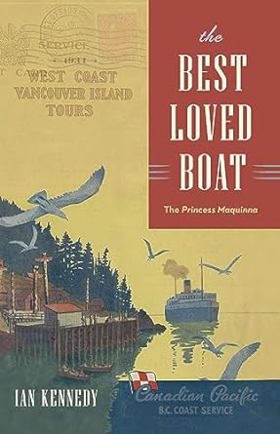
"Built in 1913, the Canadian Pacific Railway's ship Princess Maquinna steamed up and down the rugged west coast of Vancouver Island in summer and winter, calm weather and storms, for over forty years, and has become one of the most beloved boats in BC's maritime history. Princess Maquinna, sometimes referred to as the "Ugly Princess" but most often "Old Faithful," transported Indigenous people, settlers, missionaries, loggers, cannery workers, prospectors and travellers of all kinds up and down Vancouver Island's rugged and dangerous west coast, stopping at up to forty ports of call on her seven-day run. The Princess Maquinna faithfully served as the lifeline for all those who lived on the west coast of Vancouver Island before it became accessible by roads. Because of this strong connection she became the "Best Loved Boat" in BC's maritime history. Kennedy recounts battles through eighty-knot gales along the exposed coastline sailors called "The Graveyard of the Pacific," and reveals the bigotry that forced Indigenous and Chinese passengers to remain on the foredeck of the ship while other passengers sheltered from the elements inside. He brings the history of this beloved ship to life with rich detail, recalling a time when this remote part of British Columbia was alive with mines, canneries and now-forgotten settlements."-- Provided by publisher viii, 239 pages : illustrations, map ; 24 cm CIRC [ 0 ]
|
2023 |
|
The Jackson County Rebellion a populist uprising in Depression-era Oregon by Jeffrey M. LaLande , Oregon State University Press (Publisher) 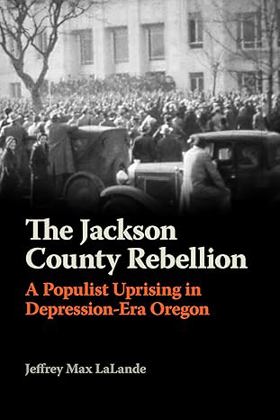
"The Jackson County Rebellion explores a dramatic if little-known populist insurgency in the American West. Author Jeff LaLande takes a deep dive into a tumultuous uprising that captured national attention as it played out in rural Oregon. First tracing its roots back to the area's tradition of protest, including the Ku Klux Klan of the 1920s, he focuses on Jackson County's politics of upheaval during the worst days of the Great Depression. The broad strokes of the episode may be familiar to contemporary readers: Demagogues fanning rage - relentlessly accusing an elite of corruption and conspiracy. The strife-torn episode featured nativist and anti-Semitic elements. The local press played a key role in the events. Two inflammatory newspapers, one owned by wealthy orchardist Llewellyn Banks and the other by politician Earl Fehl, became the vehicles by which these men won the loyalty of rural and working-class residents. Partners in demagoguery, Banks and Fehl created a movement - dubbed the "Good Government Congress" that very nearly took over county government through direct action, ballot theft, and threats of violence. Among those opposing the two men was Harvard-educated Robert Ruhl, owner/editor of the Medford Mail-Tribune, who faced off against Banks and Fehl. Despite boycotts and threats of sabotage. Ruhl ran a resolute editorial campaign against the populist threat in his Mail-Tribune, which won a Pulitzer Prize for its reporting on the uprising. The rebellion blazed hotly but not for long. Its end was marked by the arrest of its leaders after the fiercely contested 1932 election and by Banks's murder of the police officer sent to arrest him. Placing the Jackson County Rebellion squarely within America's long tradition of populist uprisings against the perceived sins of an allegedly corrupt, affluent local elite, LaLande argues that this little-remembered episode is part of a long history of violent conflict in the West that continues today."-- Provided by publisher xiv, 206 pages : illustrations, map, portraits ; 23 cm CIRC [ 0 ]
|
2023 |
|
Shipyard short histories of Whatcom County's boatbuilders & shipyards, with remembrances from those who worked them by Todd Warger 
For over 120 years, Whatcom County has been at the forefront of boatbuilding and ship construction. Its shipwrights, carpenters, and manufacturers have led the way in marine technology and innovation, never afraid of embracing the use of new building materials, methods--and at time, pioneering the industry itself xv, 282 pages : illustrations ; 20 x 26 cm CIRC [ 0 ]
|
2023 |
|
Power lines giant hydroelectric power in the Pacific Northwest, an era and a career by Russell McCormmach , Palimpsest Books (Publisher) 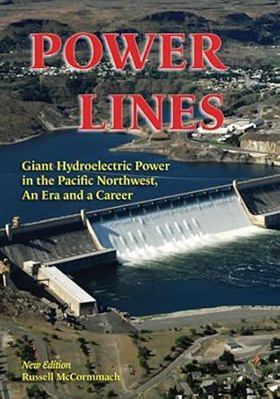
"The Columbia River and its tributaries hold the greatest hydroelectric power potential of any river system in America. The systematic development of the potential began with a survey of the Columbia River Basin by the US Army Corps of Engineers. Its subsequent report to Congress in 1931 recommended construction of a system of multipurpose dams of unprecedented size, difficulty, and expense. During the Great Depression, as part of President Roosevelt's efforts to remove men from relief roles, the federal government undertook to build two dams on the Columbia River following the Corp's master plan. They were completed in time to aid to the production of weaponry in World War II. Through the postwar economic boom, the government built more dams, distributing giant blocks of power to industry in a region whose economy until then had been mainly extractive. With a focus on the Pacific Northwest, this book treats of federal power in the dam-building era in America. The legacy of that era is conflicted. The hydroelectric development of the Columbia River Basin is incontrovertibly both one of the great technological achievements of the twentieth century and a massive incursion into nature. In keeping, this book discusses the development both from the side of engineering, the source of problems in the dam-building era, and from the side of nature, the source of problems in the era that succeeded it, the environmental. The Columbia River Basin is home to the country's greatest salmon runs, and dams have threatened their survival, even as nowhere else has so much effort and expense been directed to preserving them. Problems of power and of the environment have an urgency in today's world, and measures that address them are often contradictory. This book considers the measures and the place of hydroelectricity among alternative sources of energy."--page 4 of cover xii, 244 pages : illustrations (some color), maps ; 26 cm CIRC [ 0 ]
|
2023 |
|
Bayocean Atlantis of Oregon by Jerry Sutherland 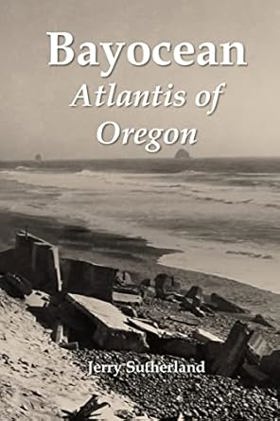
Like Plato's fictional island kingdom, most of Bayocean sank below the sea long ago. The rest lies buried beneath the shore pine, salal, and beach grass covering the four-mile-long spit that protects Tillamook Bay from the Pacific Ocean. This book chronicles the half-century this Oregon resort town existed, tells the stories of people who lived there, and explains its demise. Starting in 1907, urbanites in Oregon's Willamette Valley and across the Pacific Northwest were promised a grand resort where they could enjoy cool, ocean breezes during hot summers. Lots sold quickly at first, especially those along Bayocean's one-hundred-foot-high ridgeline where bay and ocean views were breathtaking. But Tillamook's remote location, an economic downturn, and insufficient financial reserves led to delays, litigation, and receivership. Though never grand, at one point or another Bayocean featured a massive natatorium, three hotels, forty-two rental cabins, a two-story mercantile, two restaurants, three dance halls, an amusement pavilion, and fifty-nine homes. Reed College students ran the resort one summer; a military academy for boys tried but failed another. A commune invigorated the town for a couple of years during the Great Depression, as did Coast Guard war dogs during World War II. These and other episodes in Bayocean's history make it more interesting than most, but the fact that nothing remains makes it matter. Erosion began pulling homes into the sea in the late 1920s and undercut the oceanside natatorium in 1932. As the spit's foredune continued to recede, more homes fell. In November 1952 a storm surge blew its narrow southern section into Tillamook Bay. Four years later, the Army Corps of Engineers built a breakwater to reconnect the island to Cape Meares, destroying what remained of the town in the process. It took geologists, geographers, and oceanographers two decades to figure out that the erosion had been caused by faulty jetty planning rather than natural forces. Their work prevented similar environmental disasters from occurring elsewhere. When Jerry Sutherland heard about Bayocean in 2014, he first read everything written about it. He then searched for additional information, traveling across the United States to look through personal and institutional archives. Along the way, he shared some of his discoveries with the public at www.bayocean.net and with the producers of television documentaries. But in his book, Sutherland shares it all.--Publisher 282 pages : illustration, maps, portraits ; 23 cm CIRC [ 0 ]
|
2023 |
|
Astoria by Chelsea K. Vaughn 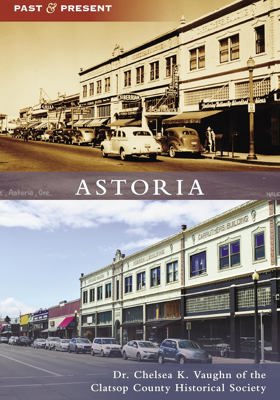
Established in 1811, Astoria, Oregon, holds claim to being the oldest US settlement west of the Rockies. After surviving devastating fires and severe economic downturns, modern Astoria--with its well-preserved historic homes and bustling downtown--is a beacon on the scenic Columbia River. Comparing our present to our past is how we understand our history. Books in this series offer a special view of American life by placing historical images side by side with contemporary photographs.--From back cover x, 95 pages : illustrations (some color) ; 24 cm. CIRC [ 0 ]
|
2023 |
|
Unbroken my fight for survival, hope, and justice for Indigenous women and girls by Angela Sterritt 
As a Gitxsan teenager navigating life on the streets, Angela Sterritt wrote in her journal to help her survive and find her place in the world. Now an acclaimed journalist, she writes for major news outlets to push for justice and to light a path for Indigenous women, girls, and survivors. In her brilliant debut, Sterritt shares her memoir alongside investigative reporting into cases of missing and murdered Indigenous women in Canada, showing how colonialism and racism led to a society where Sterritt struggled to survive as a young person, and where the lives of Indigenous women and girls are ignored and devalued. 'She could have been me,' Sterritt acknowledges today, and her empathy for victims, survivors, and families drives her present-day investigations into the lives of missing and murdered Indigenous women. In the end, Sterritt steps into a place of power, demanding accountability from the media and the public, exposing racism, and showing that there is much work to do on the path towards understanding the truth. But most importantly, she proves that the strength and brilliance of Indigenous women is unbroken, and that together, they can build lives of joy and abundance." -Inside front cover xv, 279 pages ; 24 cm CIRC [ 0 ]
|
2023 |
|
The ballad of Ginger Goodwin & Kitimat two plays for workers by Elaine Ávila 
"Two epic labour plays, based on true events, by the acclaimed author of Fado: The Saddest Music in the World. In The Ballad of Ginger Goodwin, discover how Canada got the eight-hour day - and in Kitimat, visit the fastest declining town in Canada, whose residents are suddenly offered a deal by Big Oil. The plays, performed from Los Angeles, California, to Lisbon, Portugal, are the recipient of many awards, including the Mellon Foundation Environment Arts Commission, and Best New Play, Audience Favourite, Best Production Awards from the Victoria Fringe and Victoria Critics Circle. The Ballad of Ginger Goodwin With a cast playing everyone from a radical socialist to an Italian laundress to a scientist-industrialist, The Ballad of Ginger Goodwin is about the dreams of immigrants, coal and smelter workers in Canada and the Pacific Northwest, and the battle for workers' rights. Featuring music of the period, including a new ballad by composer/activist Earle Peach, the play recreates the events surrounding the mysterious death of Albert "Ginger" Goodwin, who, through a strike at a Canadian zinc smelter in Trail, BC, brought the WWI British war machine to a halt. Kitimat Kitimat, British Columbia: an industry town in glorious wilderness finds itself the centre of international controversy when the town is asked to vote no or yes on an upcoming oil pipeline project. As election day approaches, the residents of Kitimat struggle to decide between economic prosperity or protection of the natural world. The Ballad of Ginger Goodwin: Cast of 2 women and 3 men Kitimat: Flexible, between 6 and 16 actors"-- Provided by publisher xi, 161 pages : illustrations ; 22 cm CIRC [ 0 ]
|
2023 |
|
The best loved boat The Princess Maquinna by Ian Kennedy 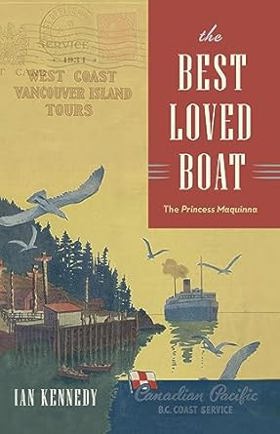
"Built in 1913, the Canadian Pacific Railway's ship Princess Maquinna steamed up and down the rugged west coast of Vancouver Island in summer and winter, calm weather and storms, for over forty years, and has become one of the most beloved boats in BC's maritime history. Princess Maquinna, sometimes referred to as the "Ugly Princess" but most often "Old Faithful," transported Indigenous people, settlers, missionaries, loggers, cannery workers, prospectors and travellers of all kinds up and down Vancouver Island's rugged and dangerous west coast, stopping at up to forty ports of call on her seven-day run. The Princess Maquinna faithfully served as the lifeline for all those who lived on the west coast of Vancouver Island before it became accessible by roads. Because of this strong connection she became the "Best Loved Boat" in BC's maritime history. Kennedy recounts battles through eighty-knot gales along the exposed coastline sailors called "The Graveyard of the Pacific," and reveals the bigotry that forced Indigenous and Chinese passengers to remain on the foredeck of the ship while other passengers sheltered from the elements inside. He brings the history of this beloved ship to life with rich detail, recalling a time when this remote part of British Columbia was alive with mines, canneries and now-forgotten settlements."-- Provided by publisher 1 online resource (viii, 239 pages) : illustrations, map CIRC [ 0 ]
|
2023 |
|
Burning sage poems from the Lytton fire by Meghan Fandrich 
"On the day that Lytton, BC burned to the ground, Meghan Fandrich ran from the flames. She saw the village turn into a black pillar of smoke, and went home after a month-long evacuation to its ashes. Her house, on the edge of the fire, was saved; her community and her small business were not. Life as she knew it was gone, and somehow, in spite of the trauma and the ongoing onslaught of natural disasters, she had to keep going. Living. Surviving. Burning Sage shares Meghan's deeply personal story of the fire, the ensuing trauma, and the path out of it. But it is also a human story, a universal story, of loneliness, fragility and beauty. The poems follow the arc of shock, fear, and anger, and the impossibility of single parenting in a burned-up town. They tell of a connection, a love, and the way that feeling understood can help us understand ourselves. The poems in Burning Sage share a vivid portrait of grief and heartbreak and, ultimately, of healing."-- Provided by publisher 88 pages : illustrations ; 21 cm CIRC [ 0 ]
|
2023 |
|
Chinese opium in America, 1850-1920 by Bennet Bronson , Chuimei Ho 
"Many Chinese-American historians have tended to shy away from the subject of Chinese opium use in 19th century North America entirely and so have their counterparts in Asia. Opium use among Chinese immigrants was widespread, economically important, and -- until 1908-9 -- perfectly legal in most parts of the United States and Canada. Opium made hard lives more bearable and, perhaps due to easy availability and modest prices, seems not to have caused nearly as much violent crime as alcohol did then or as opioid drugs like heroin and fentanyl do nowadays. Our discussion focused on the abundant texts and artifacts relating to opium found at Chinese sites on this continent. As of now, more hard data on Chinese opium use is available at those sites than anywhere else in the world, including China itself. We have made several important discoveries when summarizing that data. For one thing, opium was not a profitable commodity in the U.S. and Canada during the 19th century. For another, as has not been previously recognized, the containers and equipment associated with the drug can quite easily be traced to their sources. Historians and archaeologists will find such information essential to their work"-- Provided by publisher xiv, 199 pages : illustrations, maps ; 26 cm CIRC [ 0 ]
|
2023 |
|
Douglas Lake Ranch empire of grass by Donna Yoshitake Wuest , Joe W. Gardner 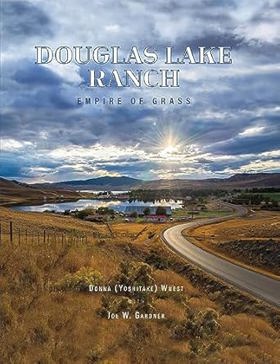
"Explore the rich history of Canada's largest ranch. Douglas Lake is the largest ranch in Canada, encompassing over one million acres of BC's south-central interior, and thousands of people have worked there since it was founded in the mid 1880s. Douglas Lake now includes BC's first cattle ranch, Alkali Lake Ranch, as well as Circle S Ranch, Quilchena Ranch, Riske Creek Ranching and the infamous Gang Ranch. It has had a succession of wealthy owners including Charles "Chunky" Woodward of Woodward's Stores and current owner, US real estate and sports mogul Stan Kroenke. It has recreational facilities and is known for hosting celebrity guests like Prince Philip, billionaire media mogul Malcolm Forbes and others but, as this book shows, it is a serious working cattle ranch. Having grown up on a BC ranch, author Donna Yoshitake Wuest brings an insider's understanding to the subject. Working closely with the ranch's long-time manager, Joe Gardner, she provides a detailed history from its founding by John Douglas 140 years ago, through innovations in quarter horse breeding and deer farming to helicopter cowboying. Together, Wuest and Gardner provide a fascinating account of the day-to-day operations of a large modern ranch as it faces the challenges of running an integrated cattle, forestry and recreational business. The book is rich with stories about the ranch's wealthy owners, celebrity guests and hard-working cowhands."-- Provided by publisher 192 pages : illustrations (chiefly colour), colour maps ; 27 cm CIRC [ 0 ]
|
2023 |
|
It's always uphill from the dock the story of the Puget Sound islands by Ann B. Irish 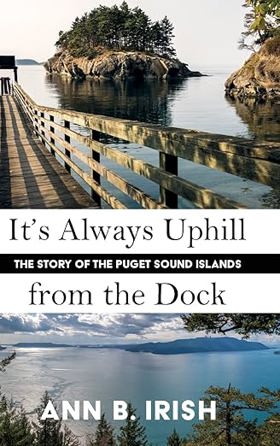
"Here is a look at the Puget Sound islands throughout history -- the San Juan Islands, Whidbey Island, Bainbridge and Vashon Islands, and many others. Featured are the people who have come to the islands: Native Americans, explorers, entrepreneurs, settlers and visitors. We learn of the Native peoples' traditional ways of life and the changes that the new settlers brought. The islands saw small pioneer farms and, later, very successful strawberry fields. Industries emerged, from lumber mills large and small to boat construction and even ski design and production. National defense installations have also been on the islands, and wartime policies have had a strong impact on Bainbridge and Vashon. Yet the islands have also hosted many summer camps, resorts and the parks that islanders and visitors today enjoy. We learn about the boats that brought people to the islands before the age of motor vehicles. More recently, how have automobile ferries and bridges impacted the islands? Here, too, is the story of the bridges to the islands that have not been built. Finally, what are the challenges these islands may face in the future?" -- Publisher description xv, 349 pages : illustrations, maps ; 24 cm CIRC [ 0 ]
|
2023 |
|
Gumboot guys nautical adventures on British Columbia's North Coast by Lou Allison , Jane Wilde 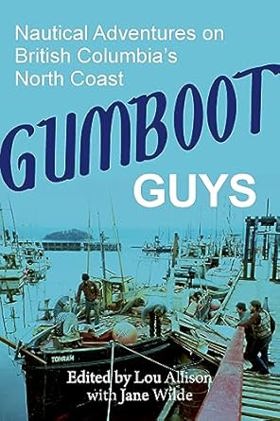
"Gumboot Girls and Dancing in Gumboots chronicled the fascinating and inspiring stories of the 1970's migration of women seeking a new way of life on BC's West Coast, from Prince Rupert and Haida Gwaii to the Comox Valley on Vancouver Island. But what about the men who came in search of their own adventure, who became smitten with boats and the smell of salty air? Now, Gumboot Guys joins the two previous collections in chronicling this exciting decade, when all seemed possible. Stories of buying, fixing, building and running boats; learning to navigate the ocean's many moods; describing the abundance, and subsequent decline, of salmon stocks; and many, many tales of the unpredictable nature of life on the sea paint a vivid picture of the thrilling, adventurous and occasionally dangerous world awaiting these men. The constant current running through each of these stories is community--the guidance of experienced mentors, the encouragement from fellow adventure-seekers and the generous support of partners and families. These stories serve as a time capsule commemorating an era of hope, fortitude and freedom."-- Provided by publisher 191 pages : illustrations, map ; 23 cm CIRC [ 0 ]
|
2023 |
|
Lha yudit'ih = We always find a way bringing the Tŝilhqot'in title case home by Lorraine Weir , Roger William , Mabel Solomon (Contributor), Cecile William (Contributor), Martin Quilt (Contributor), Ivor Deneway Myers (Contributor), Xeni Gwet'ins (Contributor), Tŝilhqot'ins (Contributor) 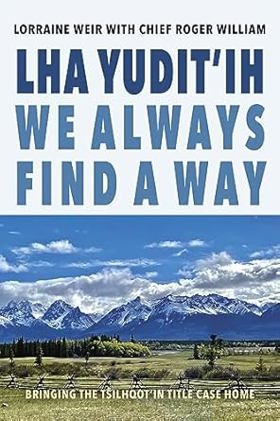
"Eight years in the making, Lha yudit'ih We Always Find a Way is a community oral history of Tsilhqot'in Nation v. British Columbia, the first case in Canada to result in a declaration of Aboriginal Rights and Title to a specific piece of land. Told from the perspective of the Plaintiff, Chief Roger William, joined by fifty Xeni Gwet'ins, Tŝilhqot'ins, and allies, this book encompasses ancient stories of creation, modern stories of genocide through smallpox and residential school, and stories of resistance including the Tŝilhqot'in War, direct actions against logging and mining, and the twenty-five-year battle in Canadian courts to win recognition of what Tŝilhqot'ins never gave up and have always known. "We are the land," as Chief Roger says. After the violence of colonialism, he understands the court case as "bringing our sight back." This book witnesses the power of that vision, its continuity with the Tŝilhqot'in world before the arrival of colonizers two centuries ago, and its potential for a future of freedom and self-determination for the Tŝilhqot'in People."-- Provided by publisher xxxix, 455 pages, a-p pages of plates : illustrations (some color), maps ; 24 cm CIRC [ 0 ]
|
2023 |
|
Rooted Chinese Canadian stories in Burnaby by Burnaby Village Museum (Publisher) 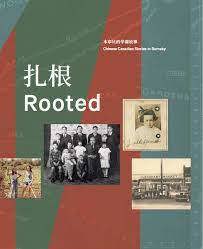
"From the late 1800s to the present day, Chinese Canadians have made Burnaby into a more vibrant and livable city. Rooted: Chinese Canadian Stories in Burnaby brings together a collection of diverse stories and photographs from the community, celebrating the legacy and contributions of Burnaby’s Chinese Canadian community spanning over a century. This coffee-table book features oral histories and interviews with descendants of multigenerational family farms, green grocers, corner stores, restaurants, and places of worship. Also included are archival research and community perspectives on anti-Asian racism, community activism, courage, and resilience."-- Provided by publisher pages cm CIRC [ 0 ]
|
2023 |
|
Snuneymuxw mulstimuxw sacred place names, their travels, and stories by Geraldine Manson 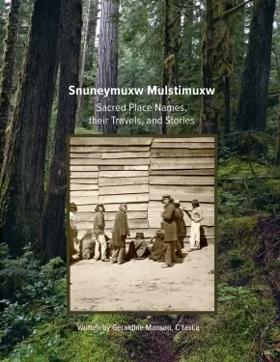
"Throughout Snuneymuxw lands, there are sites recognized by place names given by their Ancestors; several are considered sacred grounds. There are well over 75 given place names that mark or tell a story of the land. Many of these place names’ meanings shared that over time oral history goes with the Elder who holds it, as Elders did before their time. Several areas are also recorded as archeological or sites of significance and are being guarded by Snuneymuxw."-- Provided by publisher pages cm CIRC [ 1 ]
|
2023 |
|
The summer Canada burned the wildfire season that shocked the world by Monica Zurowski 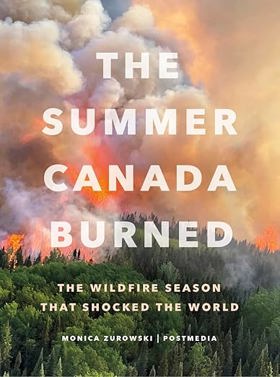
"The Summer Canada Burned tells the dramatic story of Canada's wildfires in 2023--a story that provides a case study of the changing climate and its impacts on our environment. It reflects evolving attitudes about approaches to wildfires and the role all people can play in prevention. Most importantly, however, the story of Canada's wildfires is a story of loss and of survival. From the ashes, people rise, communities rebuild and seeds of new growth sprout."-- Provided by publisher 183 pages : color illustrations ; 23 cm CIRC [ 0 ]
|
2023 |
|
Transpacific reform and revolution the Chinese in North America, 1898-1918 by Zhongping Chen 
"The late nineteenth and early twentieth centuries saw the turbulent end of China's imperial system, violent national revolution, and the fraught establishment of a republican government. During these decades of revolution and reform, millions of far-flung 'overseas Chinese' remained connected to Chinese domestic movements. This book uses rich archival sources and a new network approach to examine how political transformations taking place in China impacted and were influenced by Chinese communities on the west coast of the U.S. and Canada. In these North American Chinatowns, individuals participated in Chinese reformist and revolutionary movements in a variety of ways: they raised money, circulated ideas, housed exiled and traveling political dissidents and revolutionaries, and influenced the views of 'host' governments and societies. Focusing on the transpacific Chinese political reforms under Kang Youwei's leadership in 1899-1909 and the revolutionary activities of the 'father of Republican China' Sun Yat-sen in the years before and after the 1911 Revolution, Zhongping Chen tells the story of these and other Chinese reformers and revolutionaries as well as their personal ties, political parties, and collective actions in the Pacific Rim. Through its broad examination of the origins, interrelations, and influences of Chinese reform and revolution in North America, Chen's work makes a significant contribution to modern Chinese history, migration studies, and Asian American history."-- Provided by publisher xxiv, 374 pages : illustrations, maps ; 24 cm. CIRC [ 0 ]
|
2023 |
|
L.V. Rogers the man behind the name, 1886-1946 by Patricia Malcolmson , Robert W. Malcolmson 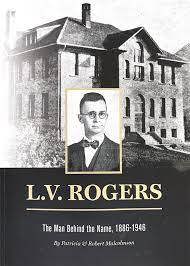
"L.V. Rogers, after whom Nelson's Secondary School is named, was born in England in 1886 and sent on his own to Canada at the age of five. This booklet tells the story of his remarkable life." - back cover 31 pages : illustrations (some colour) ; 21 cm CIRC [ 0 ]
|
2023 |
|
The Soo Line's famous trains to Canada by Terry Gainer 
"A brief history of a small and unique Class 1 railway and its famous Canada-USA tourist trains. Initially chartered in 1883 to serve the needs of local millers in Minneapolis, the Soo would eventually come to join the Canadian Pacific line at Sault Ste. Marie, Ontario, with service to Montreal. In 1888, Canadian Pacific assumed controlling interest in the Soo Line, providing entry into the lucrative US market and levelling the playing field for the CPR to face the onslaught of ferocious competition from James J. Hill, the infamous American railway baron. The 'little railway that could' grew to attain giant-killer status, launching famous passenger trains from Minneapolis and St. Paul, meeting head-on the western expansion of the Great Northern Railway and viable, competitive routes to the Atlantic seaboard. Over the years, the Soo Line introduced thousands of Americans to Montreal and Quebec City, the famous Canadian Rockies resorts, and the city of Vancouver, the home port for CP's Pacific steamship services. The Soo also successfully competed on the Spokane and Portland routes from Minneapolis to the Pacific Northwest. In 1923 the 'Soo Mountaineer' was launched, becoming the most famous and longest 'two-nation' train journey in North America."-- Publisher xviii, 87 pages : illustrations (some color), color maps ; 23 cm CIRC [ 0 ]
|
2023 |
|
Idaho madams by Milana Marsenich 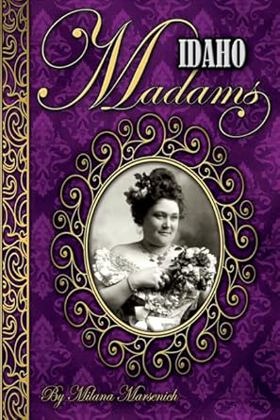
Fur, silver, and gold first lured men to Idaho Territory. Women soon followed. And what women they were! Molly B'Damn, Peg Leg Annie, Spanish Belle, Lou Beevers, Diamond Tooth Lil—the names alone promised excitement and intrigue. In fact, these madams led complex, turbulent lives. Meet Maggie Hall, a devout Catholic whose husband used her to pay off his gambling debts. Working as a prostitute, Maggie made her way west and, as Molly B'Damn, became the guardian angel of an Idaho mining camp. Or Annie McIntyre, a young girl among the prospectors and ne'er do wells of Rocky Bar who amassed a small fortune as the local madam only to lose it all—along with both her legs. Idaho Madams uncovers the enigmatic and salacious lives of 30 women who ran brothels in the Gem State from the 1850s to the 1980s. Here are the hedonistic and sometimes heroic exploits of Effie Rogan, Jennie Girard, Nettie Bowen, Ginger Murphy, Dixie Colton, and Dot Allen, but also the unsung sagas of Carrie Young, Grace Freeman, Willow Herman, Hattie Carlton, and many more. As told by author Milana Marsenich, the stories of these women come alive with voluptuous detail, historical photographs, and the social context of the times. xvi, 139 pages : illustrations, portraits ; 23 cm CIRC [ 0 ]
|
2023 |
|
Continental reckoning the American West in the age of expansion by Elliott West 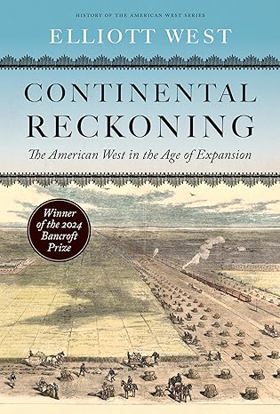
"Elliott West lays out the main events and developments that together describe and explain the emergence of the American West and situates the birth of the West in the broader narrative of American history between 1848 and 1880"-- Provided by publisher xxxiii, 628 pages, 38 unnumbered pages of plates : illustrations, maps ; 24 cm. CIRC [ 0 ]
|
2023 |
|
Edible and medicinal flora of the West Coast the Pacific Northwest and British Columbia by Collin Varner 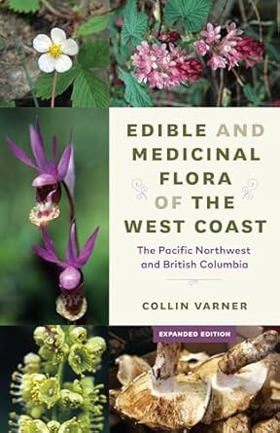
"The coastal Pacific Northwest of North America is home to a multitude of edible and medicinal plant species, edible mushrooms, and marine plants--from Black Gooseberry to Western Tea-Berry, from Golden Chanterelle to Yellow Morel Mushroom, and from Sea Asparagus to Winged Kelp. Now revised and updated with additional species and recipes, this compact, full-color forager's guide offers clear photography, descriptions, safety tips, and warnings, as well as culinary and medicinal uses from Indigenous Peoples and settlers, for more than 150 wild-growing flora species in the region. Practical, user-friendly, and safe, Edible and Medicinal Flora of the West Coast is an indispensable guide for beginner and experienced foragers alike"-- Provided by publisher 264 pages : color illustrations, color maps ; 22 cm CIRC [ 0 ]
|
2023 |
|
Heaven on the half shell the story of the oyster in the Pacific Northwest by David G. Gordon , Samantha Larson , MaryAnn Barron Wagner 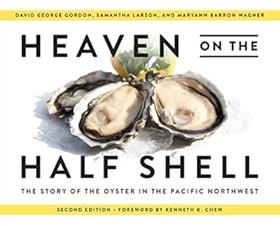
Heaven on the Half Shell offers a thoroughly researched and richly illustrated history of the Pacific Northwest’s beloved bivalve, the oyster. Starting with the earliest evidence of sea gardens and clam beds from 11,500 years ago, this book covers the history of oyster cultivation through contemporary aquaculture in coastal Washington, Oregon, British Columbia, northern California, and southeastern Alaska. Generations of oyster farmers, Native and non-Native, have weathered many challenges to continue the harvest. Their vivid individual accounts are braided together with significant history, such as the major contributions of Japanese immigrants prior to World War II and the 1994 Rafeedie decision that affirmed shellfish harvesting rights held by Northwest tribes. The book also sheds light on the innovations that made oysters an enduringly popular food, from the creation of so-called sexless oysters that could be consumed year-round to breakthroughs in contemporary oyster cuisine. Now fully updated and expanded—and chock-full of “oysterabilia”—this classic text shares new insights on emerging challenges to the oyster farmer’s life as well as increased coverage of the roles of women and contemporary tribes in building this cultural tradition, past and present. Newcomers and aficionados alike will also be delighted by the carefully selected recipes, both historic and contemporary, from the region’s top chefs. As the old saying goes, when the tide is out, the table is set. xiii, 228 pages : illustrations (chiefly color), maps, 19 x 23 cm CIRC [ 0 ]
|
2023 |