Catalog of British Columbiana and Pacific Northwest Americana
Encyclopedia Cascadia Catalog contains book titles of mostly non-fiction Pacific Northwest Coast of North America Titles (primarially British Columbia, Idaho, Oregon and Washington State) in an easy-to-understand title catalog. If you see a link with this badge ONLINE CIRC it means that there is an online institution that provides free access to that title. In some cases there may be more than one institution hosting the title digitally.
| Catalog Title | Published |
|---|---|
|
The hub of Eastern Idaho a history of Rigby, Idaho, 1885-1976 by Patricia Lyn Scott
|
1976 |
|
The hope of another spring Takuichi Fujii, artist and wartime witness by Barbara Johns , Roger Daniels, Sandy Kita (Writer of introduction) 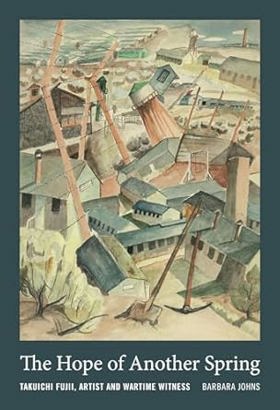
Takuichi Fujii (1891-1964) left Japan in 1906 to make his home in Seattle, where he established a business, started a family, and began his artistic practice. When war broke out between the United States and Japan, he and his family were incarcerated along with the more than 100,000 ethnic Japanese located on the West Coast. Sent to detention camps at Puyallup, Washington, and then Minidoka in Idaho, Fujii documented his daily experiences in words and art. "The Hope of Another Spring" reveals the rare find of a large and heretofore unknown collection of art produced during World War II. The centerpiece of the collection is Fujiis illustrated diary that historian Roger Daniels has called the most remarkable document created by a Japanese American prisoner during the wartime incarceration. Barbara Johns presents Takuichi Fujiis life story and his artistic achievements within the social and political context of the time. Sandy Kita, the artists grandson, provides translations and an introduction to the diary. This is a significant contribution to Asian American studies, American and regional history, and art history xi, 334 pages : illustrations (some color) ; 26 cm. CIRC [ 0 ]
|
2017 |
|
The history of the Portland District Corps of Engineers, 1871-1969 by Henry R. Richmond , Robert Bangert, Pacific Northwest History Collection
|
1970 |
|
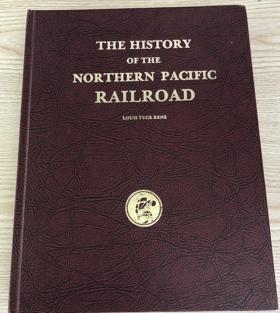
The history of the Northern Pacific Railroad by Louis T. Renz
|
1980 |
|
The history of Terrace by Nadine Asante
|
1972 |
|
The history of Stuart Island by James Bergquist 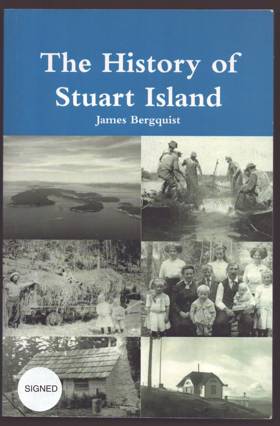
James Bergquist is telecommunications a living on Stuart Island. married to retired engineer He is Linda Ericksen Bergquist, a descendent of an early Stuart Island family. Jim and Linda have spent many years compiling historical information on Stuart Island and its people. Stuart Island is a favorite destination for boaters. They visit the marine state park and walk the roads to the lighthouse without experiencing the rich history of this remote island. This book documents the early settlers arriving on the island and their struggles to live in this remote corner of the United States. Stuart Islanders were farmers, fishermen, loggers, lighthouse keepers, and school teachers. Each has a story to tell. This book is a work in progress as there is much more history hidden in descendents' closets just waiting to be discovered. James Bergquist: August 22, 1943 - November 26, 2024 183 pages : illustrations ; 24 cm CIRC [ 1 ]
|
2012 |

The following pages are devoted, principally, to the description and history of the portion of North America bordering on the Pacific Ocean, between the 40th and the 54th parallels of latitude, wisich is traversed and in a great iueasure drained, by the River Columbia, and to which the name of OREGON is now usually applied. xviii, 492, 7 pages ONLINE CIRC [ 1 ]
|
1844 |
|
The text is divided into 2 parts, the first presents a concise history of the Oregon territory and an impassioned argument for the United States to lay claim to the region. Part II of the text contains the first person narrative account of Peter H. Burnett (unnamed) of the 1843 emigration. Burnett later became the first civil governor of California. An Appendix on pp. 114-127 contains the diplomatic correspondence, letters, and treaties between Russia, Spain, Great Britain and the United States relevant to Part I. 127 pages, [1] folded leaf : map ; 22 cm ONLINE CIRC [ 1 ]
|
1845 |
|
The history of Montpelier, Idaho from 1864 to 1925 by McKay A. Rich 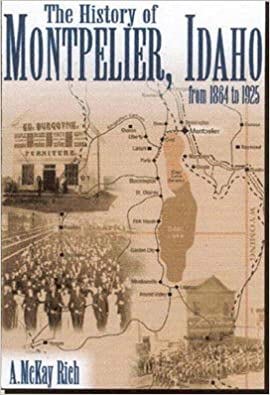
There have been many histories written on the great movements of American History and most states have had their histories, but almost endless localities have been neglected. Yet it is in the localities that we find the great stories and problems of the states, nations, and world in their embryonic stages. There is no better place to begin a realization of the heritage of America than in the story of one's own locality. It is for these reasons that I have chosen to write this paper upon the history of Montpelier, Idaho. i, 187 pages : illustrations ; 23 cm CIRC [ 1 ]
|
2003 |
|
The history of Bannock County, Idaho by Arthur C. Saunders 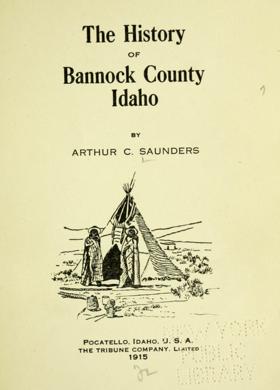
Published in 1915 by Arthur C. Saunders, The History of Bannock County, Idaho provides a localized chronicle of southeastern Idaho’s transition from a vital fur-trading crossroads to a booming agricultural and railroad hub. The volume traces the evolution of the region from the early days of the historic Fort Hall outpost through the aggressive expansion of the Oregon Short Line Railroad, which cemented the city of Pocatello as the undisputed commercial gateway of the state. Typical of early twentieth-century civic literature, the text meticulously documents the commercial achievements of white pioneers while framing the systematic reduction of the Fort Hall Indian Reservation as a necessary, triumphant precondition for modern progress. A keen insight drawn from the work is how the narrative explicitly weds regional prosperity to the legal dispossession of Indigenous lands; by celebrating the federal government's opening of Shoshone-Bannock reservation tracts to white settlement as the county’s crowning economic victory, Saunders illustrates how early frontier boosterism actively conflated the bureaucratic erasure of Native sovereignty with righteous industrial destiny. 143 pages 20 cm ONLINE CIRC [ 1 ]
|
1915 |
|
The History of Baker County, Oregon by Baker County Historical Society (Or)
|
1986 |
|
The hidden Northwest by Robert Cantwell
|
1972 |
|
The hidden forest the biography of an ecosystem by Jon R. Luoma 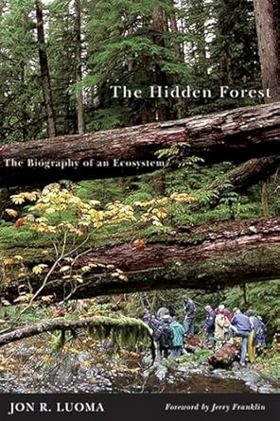
The tallest species of spruce, hemlock, fir, cedar, and pine trees on earth coexist in the old growth of the H. J. Andrews Experimental Forest in Oregon’s Cascade Range. Set aside as a living laboratory by the U.S. Forest Service in 1948, the 16,000 acres represent a vital scientific endeavor: the long-term study of a single contained ecosystem. Here, for the first time, researchers from an enormous range of disciplines—forest scientists, botanists, entomologists, wildlife ecologists, soil biologists, and others—have assembled to examine the role of every working element in the life of a forest. In The Hidden Forest, veteran science writer Jon Luoma offers an absorbing account of how these scientists came to recognize the importance of natural forest ecosystems and how their research is revolutionizing forest management. Luoma takes readers into the hidden forest where researchers have discovered a host of species previously unknown to science, and interactions in the forest ecosystem that no one previously imagined. He describes projects dealing with the forest canopy, rotting logs, insects, fungi, wildlife, streams, and the effects of flood, fire, clear cutting, and volcanic eruption. And he tells the human story behind the research, capturing the shared excitement and wonder of scientific discovery. Along the way, Luoma provides a short course in such complex issues as forest succession, biodiversity, and the politics of forestry. In a new foreword, Jerry Franklin discusses the importance of dedicated, long-term research sites and comments on new discoveries that have emerged from forest ecosystem research since The Hidden Forest was first published. x, 228 pages : illustrations ; 25 cm CIRC [ 0 ]
|
1999 |
|
The HBC fur brigade-First Nations trail of 1848-49 by Charles Hou 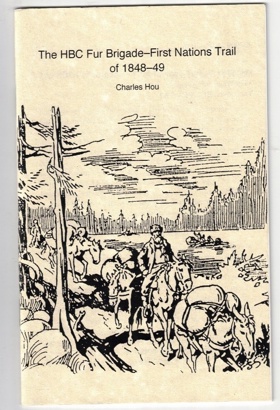
Published in 2009, Charles Hou’s The HBC Fur Brigade-First Nations Trail of 1848-49 examines the historic development and geography of the Hudson's Bay Company's vital trade route connecting the interior of British Columbia to the Pacific coast. The illustrated account details how chief trader Alexander Caulfield Anderson and company men mapped out new pathways between Fort Kamloops and Fort Langley to bypass the treacherous, impassable canyons of the lower Fraser River. Drawing heavily on archival records, the book maps the physical layout of these pack-horse routes and the immense logistical challenges required to sustain them. A keen insight drawn from the text is how it powerfully subverts the traditional corporate narrative of the fur trade; by foregrounding the indispensable geographic knowledge and guidance provided by local First Nations, Hou reveals that the survival and success of these imperial commercial arteries relied entirely on indigenous expertise rather than autonomous European exploration. 32 p. : ill. (some col.), maps ; 22 cm. CIRC [ 0 ]
|
2009 |
|
The HBC brigades culture, conflict and perilous journeys of the fur trade by Nancy Marguerite Anderson 
"A lively recounting of the tough men and heroic but overworked packhorses who broke open BC to the big business of the 19th century fur trade. Facing a grueling thousand-mile trail, the brigades of the Hudson Bay Company (HBC) pushed onward over mountains and through ferocious river crossings to reach the isolated fur-trading posts. But it wasn’t just the landscape the brigades faced, as First Nations people struggled with the desire to resist, or assist, the fur company’s attempts to build their brigade trails over the Aboriginal trails that led between Indigenous communities, which surrounded the trading posts. Nancy Marguerite Anderson recounts how the devastating Cayuse War of 1847, forced the HBC men over a newly-explored overland trail to Fort Langley. The journey was a disaster-in-waiting."-- Provided by publisher ix, 316 pages ; 23 cm CIRC [ 0 ]
|
2024 |
|
The Hanford Reach a land of contrasts by Susan Zwinger, Stamford D. Smith 
"The Hanford Reach is the last free stretch of the river between the McNary and Priest Rapids Dams, a place boasting a varied landscape of floodplains, wetlands, deserts, orchards - and nuclear reactors." "This is not a place that people think to visit. Known primarily for hosting the country's most toxic nuclear outpost, it is public land that barely exists in public consciousness. But because the Reach has been posted off-limits by the military since 1943, this book offers readers a little-seen glimpse into what the Pacific Northwest's arid east was like before the postwar boom." "Zwinger's text, enhanced by Skip Smith's photos, captures the subtleties of the contrasting vistas, just as it makes clear the depth of the radioactive poisoning within the soil and wildlife."--BOOK JACKET xii, 79 pages : illustrations ; 17 cm. CIRC [ 1 ]
|
2004 |
|
The H.W. McCurdy marine history of the Pacific Northwest, 1966-1976 by H. W. McCurdy, Gordon R. Newell, Seattle Historical Society
|
1977 |
|
The ground at my feet sustaining a family and a forest by Ann Stinson 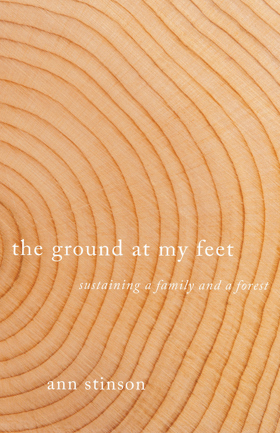
"Ann Stinson grew up on her family's tree farm in southwestern Washington state, on a ridge above the Cowlitz River. After building a life in New York and Portland, she returned home at the age of fifty, when her brother's death from cancer left her manager and co-owner of three hundred acres planted in Douglas fir, western red cedar, and ponderosa pine. The Ground at My Feet is a memoir about loss and grief as well as a portrait of a family, a region, and an industry. Combining personal story and research, Stinson weaves essays, poems, history, and science into a rich and layered account of life in a family forest in the Pacific Northwest. She maps interactions between the land and its people over two centuries: the Cowlitz peoples, homesteaders, and several generations of logging families who have worked the property. She follows her family's logs as they become lumber for fence boards and suburban homes, touring a local cedar mill and traveling with her father to visit mills in Japan. Stinson adds a landowner's voice to conversations about the human tendency to demand more of the land than it can sustain. With its uniquely personal view of the Pacific Northwest's timber and forestry heritage, The Ground at My Feet is an engaging addition to the literature of the landscape and ecology of the West"-- Provided by publisher 152 pages : illustrations ; 22 cm CIRC [ 0 ]
|
2021 |
|
|
1969 |
|
The Greater Vancouver book an urban encyclopedia by Chuck Davis 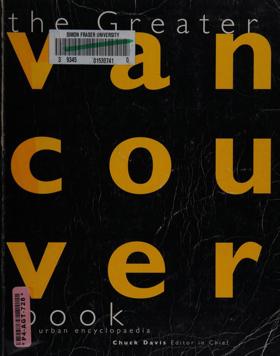
Covers the city of Vancouver and the surrounding metropolitan area primarily located in the Greater Vancouver Regional District xiii, 882 pages, 8 unnumbered pages of plates : illustrations (some color), color map ; 27 cm CIRC [ 1 ]
|
1997 |
|
The great Northwest the search for regional identity by William G. Robbins 
For more than 150 years, Pacific Northwest writers have sought out the region's shared stories and traditions in an attempt to explain the common features of its places and people. A key element in the study of place and region is the relationship between human experience and the natural world. This newest volume in the acclaimed Culture and Environment in the Pacific West series offers a compelling blend of ideas and perspectives on region identity in the Pacific Northwest. In The Great Northwest, historian William G. Robbins gathers writings that explore the idea and reality of the Pacific Northwest from a surprising variety of viewpoints. Descriptions of and stories about such distinct places as Celilo Falls on the Columbia river, Alaska, interior British Columbia, and the reforested Tillamook Burn in Oregon show why the search for regional identity is a complex but ultimately rewarding endeavor. "The business of understanding the Pacific Northwest is messy but important," writes series editor William Lang. "Knowing what we think about our place and our region offers opportunities to understand ourselves our communities, and our relationships to the larger world." x, 190 pages : illustrations ; 23 cm. CIRC [ 1 ]
|
2001 |
|
The Great Northern Railway a pictorial study by Charles R. Wood, Dorothy Wood 
A complete pictorial history of the Great Northern Railway, which ran from the upper Mississippi River valley to Puget Sound, 1856-1916 560 pages : illustrations ; 29 cm CIRC [ 1 ]
|
1979 |
|
The Great North Road and other stories by Ann Briley 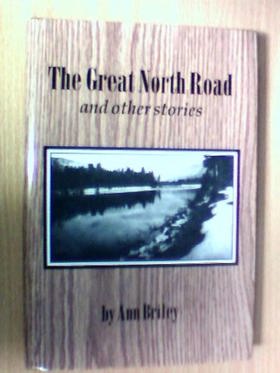
Authored by Pacific Northwest writer Ann Briley, The Great North Road and Other Stories presents a evocative collection of regional fiction exploring the emotional landscapes and quiet struggles of individuals living along the rugged northern fringes of Washington State. The book weaves together poignant narratives of isolation, family dynamics, and community ties against the backdrop of dense evergreen forests, misty coastlines, and remote rural highways. Through sensitive character studies, the text captures the nuanced human experiences that unfold far away from bustling urban centers. A keen insight drawn from the work is how geographical isolation acts as a magnifying glass for personal conflict; by setting her character-driven dramas along quiet frontier routes where escape is physically difficult, Briley reveals how regional remoteness forces individuals to confront their deepest emotional truths rather than outrun them. 182 pages : illustrations ; 24 cm CIRC [ 1 ]
|
1995 |
|
The Great Columbia Plain a historical geography, 1805-1910 by D. W. Meinig 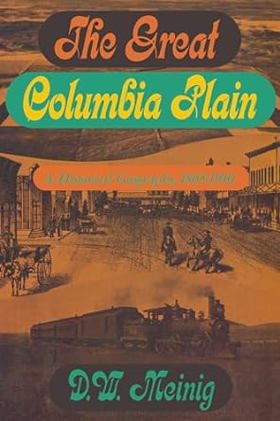
Dismissed in early years as a wasteland, the rolling open country that covers the interior parts of Washington, Oregon, and Idaho is today one of the richest farmlands in the nation. This work is the story of its transformation. Meinig traces all of the aspects of its development by combining geographic description with historical narrative xxiv, 576 pages, [1] folded leaf : illustrations, maps ; 24 cm. CIRC [ 1 ]
|
1995 |
|
The graveyard of the Pacific shipwreck tales from the depths of history by Anthony Dalton 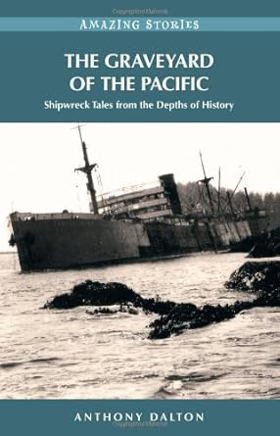
On January 22, 1906, the passenger ship Valencia lost her way in heavy fog and rain and rammed into the deadly rocks at Pachena Point on the west coast of Vancouver Island. As the wreck was shattered by the pounding waves, the survivors clung desperately to the rigging. Few made it the short distance to shore through the frigid and turbulent waves—117 of the 164 souls aboard perished. A year earlier, the King David had been wrecked on Bajo Reef near Nootka Sound. The fate of her sailors was much more mysterious. Today, the magnificent Pacific coastline of Vancouver Island draws hikers, surfers and storm-watchers to marvel at its natural splendour. But the ghosts of the Valencia, King David, Janet Cowan, Pacific, Soquel and dozens of other lost ships still haunt the rugged shores of the Graveyard of the Pacific. Anthony Dalton tells the incredible stories of many of these ships and their courageous crews, who often discovered that their nightmares had only begun once they made it ashore. These true tales of disaster and daring rescues are a fascinating adventure into British Columbia maritime history. 124 pages : illustrations ; 22 cm CIRC [ 0 ]
|
2010 |