Catalog of British Columbiana and Pacific Northwest Americana
Encyclopedia Cascadia Catalog contains book titles of mostly non-fiction Pacific Northwest Coast of North America Titles (primarially British Columbia, Idaho, Oregon and Washington State) in an easy-to-understand title catalog. If you see a link with this badge ONLINE CIRC it means that there is an online institution that provides free access to that title. In some cases there may be more than one institution hosting the title digitally.
| Catalog Title | Published |
|---|---|
|
Chasing Clayoquot a wilderness almanac by David Pitt-Brooke 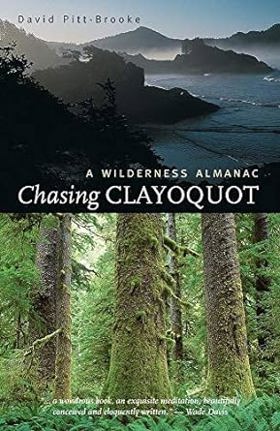
In the manner of Thoreau, naturalist David Pitt-Brooke meditates on one of Earth’s last untouched places Vancouver Island’s fabled Clayoquot Sound. This area came to prominence during Clayoquot Summer,” a 1993 protest that resulted in 800 arrests but also halted the region's destruction by logging. Clayoquot Sound encompasses every imaginable landscape, from alpine tundra to old-growth temperate rain forest. Like Barry Lopez did with the north inArctic Dreams, Pitt-Brooke approaches this wild, magical place by taking readers on an unforgettable journey for each month of the year.Chasing Clayoquot is a profound and political trip through an extraordinary environment 287 pages : illustrations, maps, portrait ; 23 cm CIRC [ 1 ]
|
2004 |
|
The wild edge Clayoquot, Long Beach & Barkley Sound by Jacqueline Windh 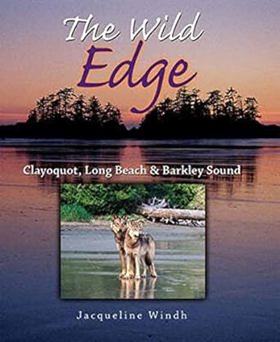
"The Pacific Rim region of Vancouver Island - including the Clayoquot wilderness, Long Beach, Barkley Sound and the communities of Tofino, Ucluelet and Port Alberni - has become one of western Canada's prime tourist destinations, drawing over a million visitors a year." "This photographic study of the region will go far toward revealing its legendary charms both to actual visitors and armchair travellers. Author Jacqueline Windh has spent ten years photographing the Clayoquot-Pacific Rim area in all its seasons and moods, studying its history and getting to know its people. In The Wild Edge: Clayoquot, Long Beach & Barkley Sound, she shares her findings in images and words, supplementing her unforgettable scenic photographs with a light-hearted but informative text that blends history and science with essential visitor guidance."--BOOK JACKET 167 pages : color illustrations, map ; 29 cm CIRC [ 1 ]
|
2004 |
|
Haida Gwaii journeys through the Queen Charlotte Islands by Ian Gill, David Nunuk 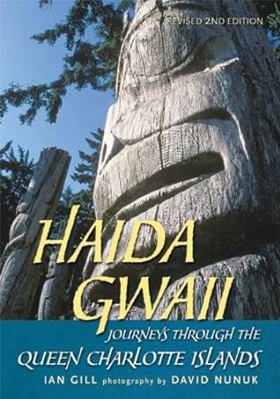
Native artist Bill Reid once called Haida Gwaii, home to the Haida people, the "Shining Islands." This revised edition in Raincoast's popular Journeys series shows why. Known also as "Canada’s Galápagos," these islands are a natural marvel, featuring awesome vistas and a rich ecosystem. The islands also offer more than 400 cultural sites, including the UNESCO World Heritage village of Ninstints. Ian Gill's lively text and David Nunuk's dramatic photographs celebrate this unique, still relatively unspoiled place. vii, 149 pages : illustrations (chiefly color), map ; 26 cm CIRC [ 1 ]
|
2004 |
|
Travels on the Pacific coast a report from California, Oregon, and Alaska in 1841 by Eugène Duflot de Mofras, Marguerite Eyer Wilbur 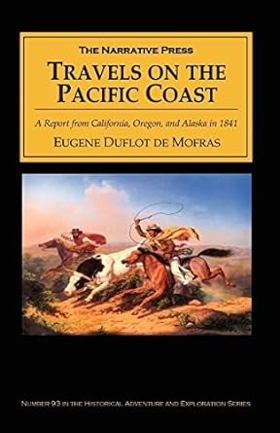
In 1839 Eugene Duflot de Mofras was dispatched by the French government to investigate the commercial possibilities (and political and military realities) of the northwest provinces of Mexico and the British, American, and Russian settlements farther north. Along the way he visited most of the California missions. His report was tremendously influential at the time, and remains one of the best portraits of the Pacific coast before the American occupation 304 pages ; 22 cm. CIRC [ 1 ]
|
2004 |
|
Life on "Clatsop" by Inez Stafford Hanson 
Published in local editions by Inez Stafford Hanson, Life on "Clatsop" offers an evocative, intimate glimpse into early pioneering existence along the rugged, wind-swept coast of northwestern Oregon. The book captures the daily hardships, quiet triumphs, and resourceful self-reliance of families who carved homesteads out of the dense timber and tidal flats near the mouth of the Columbia River. Through personal recollections and historical anecdotes, the author preserves the vanishing rhythms of isolated rural schooling, seasonal fishing, and coastal community-building. A keen insight drawn from the text is how maritime frontier memoirs highlight the profound psychological duality of coastal living; the very ocean and river currents that provided isolation and existential peril were simultaneously the lifeline connecting isolated settlers to the wider world. 85 pages : illustrations ; 28 cm CIRC [ 1 ]
|
2004 |
|
Oregon wild endangered forest wilderness by Andy Kerr 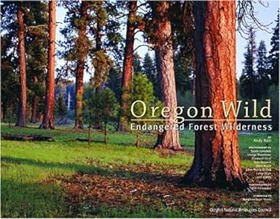
Published by Oregon Natural Resources Council (now Oregon Wild) and authored by conservationist Andy Kerr, Oregon Wild: Endangered Forest Wilderness serves as both an impassioned manifesto and a comprehensive ecological inventory of the state's remaining ancient old-growth forests. The book details the irreplaceable biodiversity, watershed value, and recreational majesty of Oregon’s unprotected wildlands while fiercely critiquing federal timber management policies that prioritized clear-cutting over preservation. Through striking photographs and rigorous geographic documentation, the text exposes the rapid, systematic destruction of primeval ecosystems across the Cascade and Coast ranges. A keen insight drawn from the work is how environmental advocacy literature weaponizes cartography and aesthetics; by meticulously mapping unprotected tracts and framing them as endangered cultural treasures, the book successfully shifted the conservation paradigm from abstract forest management to a moral defense of regional heritage against industrial liquidation. xvii, 238 pages : color illustrations, color maps ; 23 x 30 cm CIRC [ 1 ]
|
2004 |
|
The Hanford Reach a land of contrasts by Susan Zwinger, Stamford D. Smith 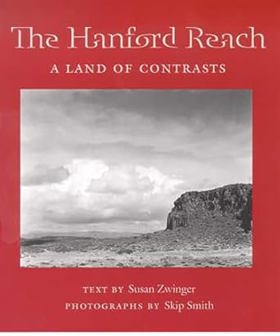
"The Hanford Reach is the last free stretch of the river between the McNary and Priest Rapids Dams, a place boasting a varied landscape of floodplains, wetlands, deserts, orchards - and nuclear reactors." "This is not a place that people think to visit. Known primarily for hosting the country's most toxic nuclear outpost, it is public land that barely exists in public consciousness. But because the Reach has been posted off-limits by the military since 1943, this book offers readers a little-seen glimpse into what the Pacific Northwest's arid east was like before the postwar boom." "Zwinger's text, enhanced by Skip Smith's photos, captures the subtleties of the contrasting vistas, just as it makes clear the depth of the radioactive poisoning within the soil and wildlife."--BOOK JACKET xii, 79 pages : illustrations ; 17 cm. CIRC [ 1 ]
|
2004 |
|
An excellent little bay A history of Gig Harbor Peninsula by J. A. Eckrom , Gig Harbor Peninsula Historical Society & Museum (Publisher) 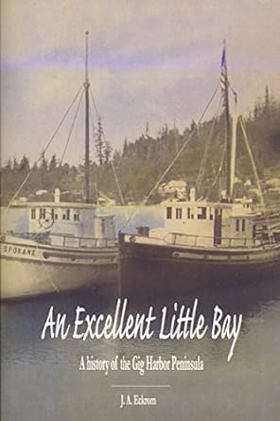
An Excellent Little Bay covers the history of the Gig Harbor peninsula up to 1967, one hundred years after the first non-native settlers arrived in the harbor. In 1867, three fishermen rowed their way into the calm waters of Gig Harbor, Washington, in search of salmon. They decided to stay and call the harbor home. Living alongside the resident Nisqually Indians, these white settlers, and those that soon followed, established roots of what would become a thriving commercial fishing and agricultural community. From the early steamboats of the Mosquito Fleet that moved residents and cargo back and forth across Puget Sound, to one of the largest fishing fleets on the west coast, this book tells the story of the people and events that made the Gig Harbor Peninsula what it is today. Author Jerry Eckrom weaves this history into an entertaining and enlightening read while documenting the important milestones through in-depth research and personal interviews. 2 volumes : illustrations, map ; 23 cm CIRC [ 1 ]
|
2004 |
|
Wenatchee Valley images of North Central Washington. Volume II by Nancy Barnhart
This is a photographic history of North Central Washington. Hundreds of people from the region brought photographs and the history behind the photograph. The best photos were compiled to represent the history of the region. The photographs start in the 1880s and continue until about 1969 iv, 155 pages : illustrations ; 19 x 26 cm CIRC [ 1 ]
|
2004 |
|
A San Juan Islands journal by Jo Ann Ridley, Mary Randlett, Jo Ann Morse 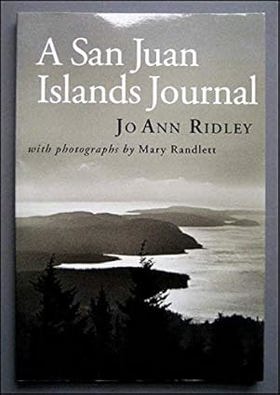
A collection of essays on the San Juan Islands by writer and former writer of San Juan Island articles for the Washington State Ferries publication Enetai. viii, 85 pages : illustrations, map ; 24 cm CIRC [ 0 ]
|
2004 |
|
The best of Chief Dan George by Dan George, Helmut Hirnschall 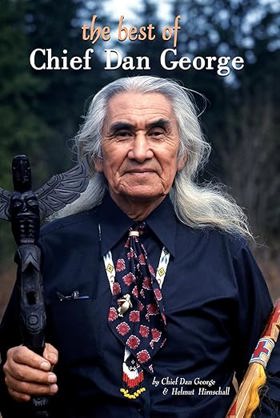
This book combines the two best sellers My Heart Soars & My Spirit Soars in one volume, 63 poems fully illustrated, eloquently illustrated throughout by Helmut Hirnschall. Included in this edition is the Lament for Confederation by Chief Dan George. Poetic and spiritual, this book has a universal message to all people. Chief Dan George was an accomplished performer, poet, philosopher, champion of Native peoples and loving patriarch of a large family. Chief Dan George was an accomplished performer, poet, philosopher, champion of first Nations peoples, loving patriarch of a large family, was born in 1899 on a Salish Band reserve on Burrard Inlet, in North Vancouver, one of twelve children of the chief. His given name was Teswahno, meaning thunder coming up over the land from the water. Like most native children at that time, under the influence of the Catholic Church, and in need of white culture's education, he went to a residential school at the age of five, so as not to be separated from his cherished older brother Harry. The next eleven years were difficult ones, being distanced from family, culture, language and customs. Schooling ended at sixteen, and he went immediately into the forest to harvest trees. At nineteen, in an arranged marriage, he and sixteen year old Squamish girl, Amy, entered into a devoted union of fifty-two years duration. They had eight children, six of whom survived into adulthood. Dan worked as a long-shoreman off and on for the next twenty-seven years, during frequent strikes supplementing his income with hunting and lumbering, until he had a serious accident on the docks in 1947, which damaged a hip and leg. In the forties, with his children and a cousin, who billed themselves as Dan George and His Indian Entertainers, he played for dances three or four nights a week throughout British Columbia. Traveling and sleeping in a covered truck, they would spend the summers picking hops and performing country and western music, with the kids doing special requests for extra money. Dan's instrument was the bass fiddle. He always remembered those years as the happiest times in his life. During the fifties, he was occupied with the duties of chief for his band. In the early 1960s, CBC TV was producing a series called Caribou Country. When an actor fell ill, the search was on to find a replacement for a character called Ol' Antoine. Through a fateful series of connections, Chief Dan tested for, and won, the part. With no formal training, he slipped into an instinctive way of acting that won him much acclaim, though initially he had to overcome a measure of hesitation and doubt. Having his two sons in the acting world was a major support, as was Amy's whole-hearted encouragement. Chief Dan gained further national recognition in 1967 with his now famous speech, The Lament for Confederation, which he read at the Centennial celebration in Vancouver. That same year, he came to the attention of the playwright, George Ryga, who was working on his powerful drama, The Ecstasy of Rita Joe. Their meeting resulted in the full development of the character of Rita Joe's father, which Chief Dan played, first at the Playhouse in Vancouver, and then two years later at the National Arts Centre in Ottawa, to glowing reviews. He also appeared in the Royal Winnipeg Ballet production based on the play. In 1973, he would recreate the part in Washington, D.C. for overflow audiences. When an episode of Paul St. Pierre's Caribou Country was brought by a Hollywood studio, Chief Dan got a call to test for the character Ol' Antoine in the Walt Disney movie, Smith. He easily got the part, and so began a film career that reached its peak with his legendary performance of the role of Old Lodgeskins, in Arthur Penn's film Little Big Man, with Dustin Hoffman, in 1970. For the first time, natives were seen without the stereotypical bias that the film industry had reflected for the first seventy years of its history. Chief Dan received the New York Film Critic's Award and the National Society of Film Critic's Award, as well as an Oscar nomination for the depth and sincerity of that characterization. For the last ten years of his life, he was in demand as a spokesperson for native people, and as an actor, musician, writer, speechmaker. He even toured for a year with the rock bank, Fireweed. Many awards came to him, including an honorary Doctor of Laws from Simon Fraser University. His highest aim was always for better understanding by white people of his culture and his people, and he pursued this with determination, wisdom and courage. He died in Vancouver in 1981. 126 pages : illustrations ; 22 cm CIRC [ 0 ]
|
2004 |
|
The ghost ships of Royston by Rick James, Underwater Archaeological Society of British Columbia 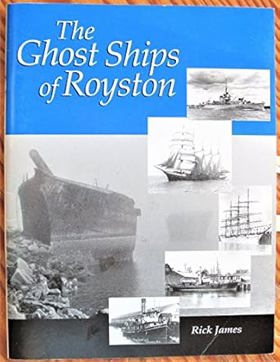
This UASBC report was so popular it had to be reprinted. The report documents the histories and present status of 14 ships beached as a hulk breakwater on Vancouver Island. Frigates, steam tugs, auxiliary schooners, whalers and other classic vessels lie partly submerged in this densely concentrated ships' graveyard. 2004, 8.5" x 11", 64 pages 61 pages : illustrations, maps ; 28 cm CIRC [ 0 ]
|
2004 |
|
L.D. Mayor Louis Taylor and the rise of Vancouver by Daniel Francis 
LD is the colourful biography of Louis Taylor, the longest-serving mayor in Vancouver's history; he was first elected mayor in 1910, and served off and on until 1934, for a total of eleven years. Taylor's story is also the story of Vancouver in the early decades of the 20th century, a young city experiencing a turbulent adolescence. Louis Taylor, or LD as he was known, arrived in Vancouver from Chicago in 1896 at the age of 39. He got involved in the newspaper business, first as an executive with The Daily Province, then as proprietor of The World, during which time he built the World Tower, which remains one of Vancouver's landmark buildings (now better known as the Sun Tower). He launched his political career in 1902 when he ran successfully for licence commissioner; it was the first of 26 civic elections in which he ran, including 20 for mayor. In his early political life he was considered "the workers' friend" and was opposed by the city's business elite, who portrayed him as corrupt. He also had a reputation for being soft on crime, and was implicated in a 1928 police investigation that lost him an election. But his achievements included the establishment of the airport, a town planning commission, and the water board. His private life, however, was another story, a virtual soap opera that mirrored the ups and downs of his political career; his wife was addicted to opium, and he found himself mired in bigamy and divorce scandals. As Vancouver grew from small frontier town to a major international port city, LD saw the city through the Depression, and in a sense Vancouver grew up under his tutelage. LD: Mayor Louis Taylor and The Rise of Vancouver vividly documents the life of a man who dominated the city for years, and the integral role he played in shaping the Vancouver of today. Winner of the City of Vancouver Book Prize 239 pages : illustrations ; 23 cm CIRC [ 0 ]
|
2004 |
|
Klamath heartlands a guide to the Klamath Reservation forest plan : vision, history, restoration, reconnection by Edward C. Wolf 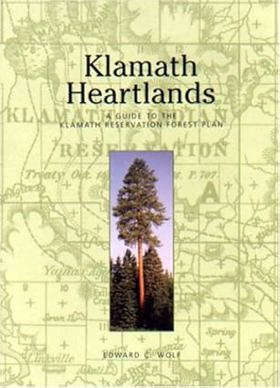
Klamath Heartlands introduces the unique-in-the-nation plan by the Klamath Tribes of southern Oregon to restore the "remembered forest" of their former reservation, an area that Oregon governor Tom McCall called "the greatest single stand of ponderosa pines to be found anywhere in the West." Part of the Tribes' effort to regain lands they lost in 1954, the Klamath Reservation Forest Plan offers a vision of ecological and cultural restoration that will change the way we think about Western forests. Klamath Heartlands combines photographs, maps, and text in a sturdy and engaging field guide. A series of fold-out and fold-up map pages leads each reader into the forest itself to discover the Tribes' vision and the significance of achieving it. [20] folded pages : illustrations (some color), color maps ; 20 cm CIRC [ 0 ]
|
2004 |
|
Now go home wilderness, belonging, and the crosscut saw by Ana Maria Spagna 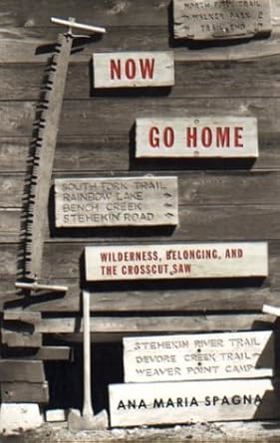
Now Go Home tells the story of how a quintessential California girl ended up earning her living in the Pacific Northwest with a crosscut saw. Ana Maria Spagna came of age in southern California in the "hot-pink eighties." By the time she turned 19, she had visited Disneyland 37 times and was ready to hit the road. In these finely edged essays, she takes her readers along. With candor, wit, and hard-earned wisdom, Spagna reflects on the journey that took her from a childhood in the suburbs of LA to a trail crew in the North Cascades, where she falls in love with a place and, unexpectedly, with a woman. With days spent laboring as the only woman on a trail crew and evenings in a cabin no larger than Thoreau's, she has world enough and time to wrestle with the compromises and contradictions of making "a life in the woods." From the work she does and the people she meets, she comes to see the nuances, and occasionally the humor, of big ideas like wilderness and environmentalism. And she decides this is the place she must call home. About the author: Ana Maria Spagna lives in Stehekin, Washington, where she works on a National Park Service trail crew. Her essays have appeared in Orion, Utne Reader, Open Spaces, Backpacker, and Best Essays NW. 166 pages ; 22 cm CIRC [ 0 ]
|
2004 |
|
To build a ship by Don Berry 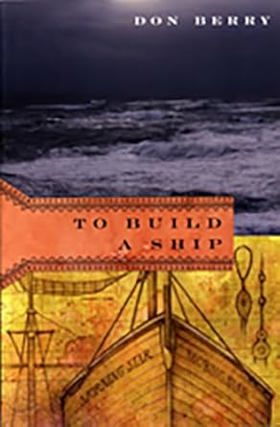
In To Build a Ship, Don Berry explores the extent to which a man can betray himself and his morality for a dream or an obsession. It's the story of a handful of settlers who take up land in the fertile Tillamook Bay Valley in the early 1850s-defiant dreamers battling the wilderness. With impenetrable mountains at their backs and the open sea as their sole road to trade, they are suddenly isolated from the outside world when the only captain willing to enter their harbor dies. With the survival of their new settlement threatened, they decide to build their own schooner. At first the challenge brings out the best in the men, but soon the tensions inherent in this monumental task engulf them. Obstacles accumulate and complications mount: a death, a murder trial, trouble with restive Indians, and finally a travesty of justice. Excitement, shock, and gripping drama mark this story of men pushed to the point of madness as they see the Morning Star of Tillamook slowly take shape on the wild Pacific shore. Don Berry's three novels about the Oregon Territory — Trask, Moontrap, and To Build a Ship — are as rich and compelling today as when they were first published more than 40 years ago. The new OSU Press editions of these books include an introduction by Jeff Baker, book critic for The Oregonian. 203 pages ; 23 cm CIRC [ 0 ]
|
2004 |
|
Troubled intimacies a life in the interior West by David Axelrod 
Having grown up amid the ravaged coalfields of Ohio, David Axelrod felt oddly at home when, twenty years ago, he moved west and saw his first clear-cut forest. In Troubled Intimacies, Axelrod explores his life in the rural interior West and the way in which surroundings, visible and invisible, shape our emotional and intellectual lives. In describing his life and the lives of his neighbors in eastern Oregon's Grande Ronde Valley, Axelrod raises hard questions about the relationship between humans and the western landscape-a relationship too often predicated on disastrous violence. Axelrod reveals the dissonance that exists between the mythical American West and the far more complex, troubled relations we actually experience as individuals and communities in the western U.S. In these powerful and provocative essays, he shows the challenges and rewards of piecing together a meaningful life in the rural West. 186 pages ; 22 cm CIRC [ 0 ]
|
2004 |
|
Eva Emery Dye romance with the West by Sheri Bartlett Browne 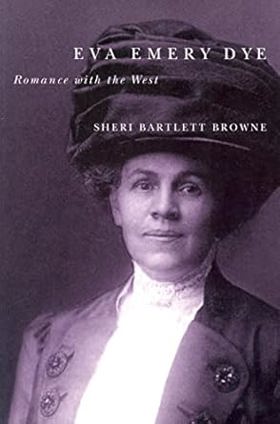
Writing in the early years of the 20th century, novelist Eva Emery Dye captured the imagination of American readers with her epic accounts of the Lewis and Clark Expedition, the Oregon Trail, and the conquest of the American West. Brimming with adventure, drama, and romance, her books helped to shape an entire generation's understanding of American history and Manifest Destiny. In this first biography of Dye, Sheri Bartlett Browne chronicles the life of one of Oregon's most successful early writers. Drawing on previously unknown letters and diaries, Browne examines Dye's determination to write historical fiction, the history of her involvement in the suffrage movement, and her lifelong promotion of education through the Chautauqua movement. Dye is best remembered for The Conquest, one of the first fictional works to popularize (and romanticize) the Lewis and Clark Expedition, in which she introduced a new American heroine, Sacagawea. Although the book's portrayal enhanced the young Shoshone's role, it was Dye's later efforts to memorialize her with statues and speeches that turned Sacagawea into an American icon. Dye's most extensive project was a historical novel recounting the achievements of 19th century American missionaries in Hawaii. Completed in the 1920s but never published, her manuscript promoted a controversial view of American influence in Hawaii. Dye wrote one last book, The Soul of America, which examined the accomplishments and perseverance of pioneer women. Eva Emery Dye: Romance with the West offers a fascinating look at a figure once prominent in literary and suffrage circles in the Pacific Northwest, and highlights the significance of family and education in women's lives at the turn of the twentieth century. vi, 186 pages ; 23 cm CIRC [ 0 ]
|
2004 |
|
Living with earthquakes in the Pacific Northwest by Robert S. Yeats 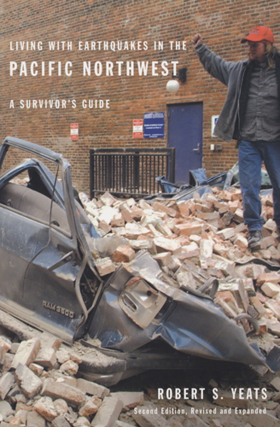
"In this expanded new edition of Living with Earthquakes, Robert Yeats, a leading authority on earthquakes in California and the Pacific Northwest, describes the threat posed by a great earthquake fault - the Cascadia Subduction Zone - which runs for hundreds of miles offshore from British Columbia to northern California. New research reveals subtle movements on the deepest part of this fault every fourteen to fifteen months - building up strain toward the next major earthquake." "A guide for anyone interested in understanding earthquake science or in preparing for the next earthquake, this book is also a call to action. Vivid descriptions of recent disasters - including the great tsunami that swept down the Northwest coast in 1964, the 1993 Oregon earthquakes, and the 2001 Nisqually earthquake - underscore the urgent need for better earthquake planning and awareness."--Jacket x, 390 pages : illustrations, maps ; 23 cm CIRC [ 0 ]
|
2004 |
|
Seattle's women teachers of the interwar years shapers of a livable city by Doris Hinson Pieroth 
In Seattle’s Women Teachers of the Interwar Years, Doris Pieroth describes the contributions of a remarkable group of women who dominated the Seattle public school system in the early years of the twentieth century and helped to produce well-educated citizens who were responsible for the widespread philanthropic, volunteer, and municipal activities that came to characterize the city. While most publications on the history of education have emphasized theory or administration, Pieroth focuses on individual teachers. Set against the backdrop of a developing city, the book provides vivid portraits of educated, strong, ambitious women making successful careers at a time when job opportunities for women were very limited. Pieroth interviewed as many of these women as she could find, and quotes from the interviews enhance her lively, well-written narrative. Using details drawn from local newspapers and school publications, she demonstrates that the influence of this cohort of women made modern Seattle the livable place that it remains today. Seattle’s Women Teachers of the Interwar Years is a significant contribution to the history of Seattle and the region, to women’s history, and to the history of education. 283 pages : illustrations, maps ; 24 cm CIRC [ 0 ]
|
2004 |
|
Neighbor power building community the Seattle way by Jim Diers 
Building on the lessons of early labor leaders, civil rights volunteers, and political activists, Jim Diers has developed his own models and successful strategies for community development. Neighbor Power chronicles his involvement with Seattle’s communities. This book not only gives hope that participatory democracy is possible, but it offers practical applications and invaluable lessons for ordinary, caring citizens who want to make a difference. It also provides government officials with inspiring stories and proven programs to help them embrace citizen activists as true partners. Diers’s experience is extensive. He began as a community organizer in 1976, then moved on to help establish and staff a system of consumer-elected medical center councils. This led him to Seattle city government, where he served under three mayors as the first director of the Department of Neighborhoods, recognized as the national leader in such efforts. In the 1990s, Jim Diers helped Seattle neighborhoods face challenges ranging from gang violence to urban growth. The Neighborhood Matching Fund grew to support over 400 community self-help projects each year while a community-driven planning process involved 30,000 people. Diers provides evidence that productive community life is thriving, not just in Seattle, Washington, but in towns and cities across the globe. Both practical and inspiring, Neighbor Power offers real-life examples of how to build active, creative neighborhoods and enjoy the rich results of community empowerment. x, 202 pages : illustrations, maps ; 23 cm CIRC [ 0 ]
|
2004 |
|
Landscapes of conflict the Oregon story, 1940-2000 by William G. Robbins 
Post-World War II Oregon was a place of optimism and growth, a spectacular natural region from ocean to high desert that seemingly provided opportunity in abundance. With the passing of time, however, Oregon’s citizens — rural and urban — would find themselves entangled in issues that they had little experience in resolving. The same trees that provided income to timber corporations, small mill owners, loggers, and many small towns in Oregon, also provided a dramatic landscape and a home to creatures at risk. The rivers whose harnessing created power for industries that helped sustain Oregon’s growth — and were dumping grounds for municipal and industrial wastes — also provided passageways to spawning grounds for fish, domestic water sources, and recreational space for everyday Oregonians. The story of Oregon’s accommodation to these divergent interests is a divisive story between those interested in economic growth and perceived stability and citizens concerned with exercising good stewardship towards the state’s natural resources and preserving the state’s livability. In his second volume of Oregon’s environmental history, William Robbins addresses efforts by individuals and groups within and outside the state to resolve these conflicts. Among the people who have had roles in this process, journalists and politicians Richard Neuberger and Tom McCall left substantial legacies and demonstrated the ambiguities inherent in the issues they confronted. xxiii, 414 pages, 16 unnumbered pages of plates : illustrations, maps ; 24 cm. CIRC [ 0 ]
|
2004 |
|
Sweet cakes, long journey the Chinatowns of Portland, Oregon by Marie Rose Wong 
Around the turn of the twentieth century, and for decades thereafter, Oregon had the second largest Chinese population in the United States. In terms of geographical coverage, Portland’s two Chinatowns (one an urban area of brick commercial structures, one a vegetable-gardening community of shanty dwellings) were the largest in all of North America. Marie Rose Wong chronicles the history of Portland’s Chinatowns from their early beginnings in the 1850s until the repeal of the Chinese Exclusion Act in the 1940s, drawing on exhaustive primary material from the National Archives, including more than six thousand individual immigration files, census manuscripts, letters, and newspaper accounts. She examines both the enforcement of Exclusion Laws in the United States and the means by which Chinese immigrants gained illegal entry into the country. The spatial and ethnic makeup of the combined "Old Chinatown" afforded much more contact and accommodation between Chinese and non-Chinese people than is usually assumed to have occurred in Portland, and than actually may have occurred elsewhere. Sweet Cakes, Long Journey explores the contributions that Oregon’s leaders and laws had on the development of Chinese American community life, and the role that the early Chinese immigrants played in determining their own community destiny and the development of their Chinatown in its urban form and vernacular architectural expression. xx, 337 pages : illustrations, maps ; 23 cm. CIRC [ 0 ]
|
2004 |
|
Jack Ward Thomas the journals of a Forest Service chief by Jack Ward Thomas, Harold K. Steen 
Jack Ward Thomas, an eminent wildlife biologist and U.S. Forest Service career scientist, was drafted in the late 1980s to head teams of scientists developing strategies for managing the habitat of the northern spotted owl. That assignment led to his selection as Forest Service chief during the early years of the Clinton administration. It is history’s good fortune that Thomas kept journals of his thoughts and daily experiences, and that he is a superb writer able to capture the moment with clarity and grace. The issues Thomas dealt with in office and noted in his journals lie at the heart of recent Forest Service policy and controversy, starting with President Clinton’s Timber Summit in Portland, Oregon, dealing with the spotted owl issue, and the 1994 loss of fourteen firefighters in the Storm King Mountain fire in Colorado. Against a constant backdrop of partisan politics in the White House and Congress, Thomas discusses issues ranging from grazing in the national forests, long-term pulp timber sales in Alaska, and the Forest Service Law Enforcement Division to the New World Mine near Yellowstone National Park. He considers the timber salvage rider and its linkage to forest health, the Department of Justice and Counsel on Environmental Quality influence on Forest Service policies, and interagency management for the Columbia River Basin. Woven throughout these excerpts from his diary is Thomas’s conviction that the effective, ethical management of wildlife depends on how the management effort is situated within the broader human context, with all its intransigence and unpredictability. Writing in 1995, Thomas says, "Things simply don’t work the way that students are taught in natural resources policy classes--not even close. . . .There is simply no way that scholars of the subject can understand the ad hoc processes that go on within only loosely defined boundaries.” Wildlife management, he says, is "90 percent about people and 10 percent about animals," and when it comes to learning about people, wildlife managers are on their own. This book is the record of how one man met that challenge. 417 pages : illustrations ; 24 cm CIRC [ 0 ]
|
2004 |
|
Surveying Northern British Columbia a photojournal of Frank Swannell by Jay Sherwood, F. C. Swannell 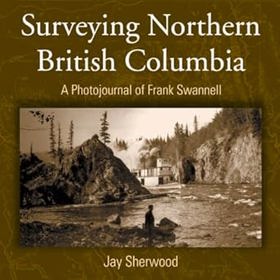
"Frank Swannell surveyed much of northern British Columbia in the early part of the 20th century. As well as keeping a journal of what he saw and what his survey crews did, he also kept a photographic record of his seven trips through the North." "This book includes both well-known photographs and others previously unpublished. As the 100th year of the Corporation of Land Surveyors of British Columbia approaches, Surveying Northern British Columbia is finally being produced and acknowledges the contributions of a man, a surveyor, a photographer, and a journalist."--BOOK JACKET vii, 166 p. : ill., maps, ports ; 27 cm. CIRC [ 0 ]
|
2004 |