Catalog of British Columbiana and Pacific Northwest Americana
Encyclopedia Cascadia Catalog contains book titles of mostly non-fiction Pacific Northwest Coast of North America Titles (primarially British Columbia, Idaho, Oregon and Washington State) in an easy-to-understand title catalog. If you see a link with this badge ONLINE CIRC it means that there is an online institution that provides free access to that title. In some cases there may be more than one institution hosting the title digitally.
| Catalog Title | Published |
|---|---|
|
Lewis & Clark in Lemhi County, Idaho August 12-September 4, 1805 by Richard R. Smith 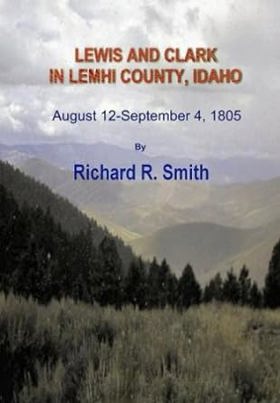
Published by historian Richard R. Smith, Lewis & Clark in Lemhi County, Idaho: August 12-September 4, 1805 meticulously chronicles the Corps of Discovery's harrowing and pivotal traverse through the rugged continental divide. The book details the expedition's difficult encounters with the geography and the Agaidika (Salmon Eater) Shoshone people, highlighting the critical diplomatic negotiations and horse trades that ultimately enabled their passage over the Bitterroot Mountains. Drawing on journal entries, cartographic records, and local terrain analysis, the text traces the exact footpaths and campsites used during this grueling three-week window. A keen insight drawn from the work is how the expedition’s survival in the Salmon River country completely inverted the explorers' geographic expectations; instead of discovering an easy water route across the continent, Lewis and Clark were forced to humble themselves before indigenous mountain pathways, realizing that the West could only be crossed through collaborative reliance on native survival expertise. v, 56, xi pages : color illustrations, maps ; 28 cm CIRC [ 1 ]
|
2003 |
|
Fort Limhi the Mormon adventure in Oregon territory, 1855-1858 by David L. Bigler 
Published by Utah State University Press, Fort Limhi: The Mormon Adventure in Oregon Territory, 1855–1858 by David L. Bigler chronicles the dramatic and ultimately ill-fated attempt by Brigham Young to establish an outlying Latter-day Saint mission in the remote wilderness of present-day Idaho. The book details the missionaries' grueling efforts to construct a fortified settlement along the Salmon River, cultivate relations with the local Bannock and Shoshone tribes, and build an expansive intermountain empire. Through meticulous archival research and pioneer journals, the text reconstructs the compounding pressures of geopolitical tension, cross-cultural friction, and a violent 1858 raid that forced the colony's sudden abandonment. A keen insight drawn from the work is how the mission exposes the friction between utopian religious expansion and indigenous territorial sovereignty; the enterprise failed not merely due to logistical isolation, but because Mormon colonizers fundamentally underestimated native resistance to having their ancestral homelands converted into a foreign ecclesiastical buffer zone. 372 pages : illustrations, maps ; 25 cm. CIRC [ 1 ]
|
2003 |
|
Portland people, politics, and power, 1851-2001 by Jewel Beck Lansing 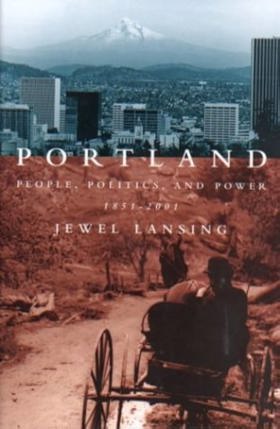
This is the definitive book on Portland's political history, beginning in 1845 when a 16-lot townsite was laid out on the bank of the Willamette River and continuing through the sesquicentennial of Portland city government. Jewel Lansing has amassed a treasure trove of information on Portland's civic and political life, which she presents in a lively volume, organized around accounts of the successive reigns of Portland's mayors. The story is rich in anecdotes that bring to life the unique individuals and controversial issues of Portland's distant and more recent past. Lansing shows that Portland's path to its present place as the 28th largest city in the United States, with a deserved reputation as one of the nation's most livable cities, has not always been smooth. Corruption, profiteering, and wide-open vice characterized the City of Roses at the turn of the 20th century, and every era has had its own controversies and rivalries: disputes over railroad franchises and rights-of-way, women's suffrage, public versus private power, the Chinese Exclusion Act, Prohibition, and the siting of freeways, to name just a few. Anyone with an interest in Portland, and in learning more about the individuals, events, and issues that have shaped it, will find this comprehensive history fascinating and informative. About the author: Jewel Lansing served as the elected City of Portland Auditor from 1983 to 1986 and as Multnomah County Auditor from 1975 to 1982. She was the author of eight books, including two about women and politics, and a murder mystery set in Portland City Hall. She is honored on Portland's Walk of the Heroines for her pioneering role as a woman in government and politics and her outstanding civic contributions. xii, 576 pages : illustrations, map ; 24 cm CIRC [ 1 ]
|
2003 |
|
James Swan, cha-tic of the Northwest Coast drawings and watercolors from the Franz & Kathryn Stenzel collection of western American art by George A. Miles, James G. Swan, Franz Stenzel, Kathryn M. Stenzel 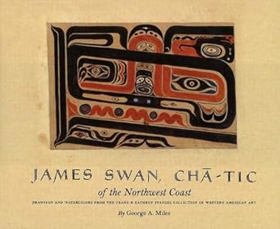
"In November 1852 James Swan moved to the Olympic Peninsula of Washington Territory. Fascinated by the Indian communities he encountered, Swan spent the remainder of his life studying their art, material culture, and history. The author of several books, he became the Smithsonian Institution's principal agent in the Northwest, collecting natural history and ethnographic objects from Gray's Harbor through the Alaskan panhandle 160 pages : color illustrations, maps ; 25 x 32 cm CIRC [ 1 ]
|
2003 |
|
Voyages of delusion the quest for the Northwest Passage by Glyndwr Williams 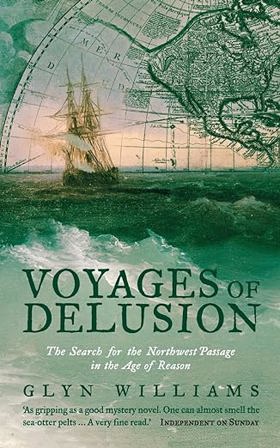
The eighteenth century--the Age of Reason--was characterized by determined attempts by philosophers, scientists, and political theorists to dispel myth, superstition, and ignorance. But the Age of Reason also witnessed some of the most irrational and vainglorious attempts by sailors and speculators to find a navigable Northwest Passage that would lead through the icy seas of the Arctic from Hudson Bay to the wealth of the Pacific Ocean. Lured by the promise of fame and riches, men endured paralyzing cold, malnutrition, and terrifying storms. Many lives and fortunes were lost in the quest for the elusive "maritime philosopher's stone." Glyn Williams describes the adventures and mishaps of these misguided expeditions xx, 467 pages : illustrations, maps ; 23 cm CIRC [ 1 ]
|
2003 |
|
Oregon viticulture by Edward W. Hellman 
Oregon Viticulture is a comprehensive, easy-to-use guide to successful strategies and methods for commercial vineyards in Oregon that will be extremely valuable both for current winegrape growers and for prospective growers. It is unique in its approach of combining the expertise and experience of university researchers with that of professional grape growers and winemakers--most chapters were written by at least two authors with different perspectives. Oregon Viticulture is the successor to the popular Oregon Winegrape Growers Guide, with both broader coverage of more topics and greater depth of coverage than the earlier book. It emphasizes the importance of understanding the characteristics of a vineyard site, matching grape varieties to the site, and selecting and adjusting the most appropriate management practices for each unique site. The structure and physiology of grapevines is concisely summarized, and viticulture principles are introduced throughout the book. Standard production practices are described, and separate chapters discuss sustainable viticulture practices and organic grape growing. In addition, Oregon Viticulture addresses important business management topics not usually found in similar books, including economics, marketing and contracts, compliance with government regulations, and labor management. Commercial winegrape growers, students, researchers, serious home viticulturists, and individuals with a strong interest in Northwest wines and the wine industry will find Oregon Viticulture to be a valuable reference and easy-to-use textbook and guide. viii, 264 pages : illustrations (some color), color maps ; 28 cm CIRC [ 0 ]
|
2003 |
|
Lelooska the life of a northwest coast artist by Chris Friday 
Don Smith - or Lelooska, as he was usually called - was a prominent Native American artist and storyteller in the Pacific Northwest. Born in 1933 of “mixed blood” Cherokee heritage, he was adopted as an adult by the prestigious Kwakiutl Sewid clan and had relationships with elders from a wide range of tribal backgrounds. Initially producing curio items for sale to tourists and regalia for Oregon Indians, Lelooska emerged in the late 1950s as one of a handful of artists who proved crucial to the renaissance of Northwest Coast Indian art. He also developed into a supreme performer and educator, staging shows of dances, songs, and storytelling. During the peak years, from the 1970s to the early 1990s, the family shows with Lelooska as the centerpiece attracted as many as 30,000 people annually. In this book, historian and family friend Chris Friday shares and annotates interviews that he conducted with Lelooska, between 1993 and ending shortly before the artist's death, in 1996. This is the story of a man who reached, quite literally, a million or more people in his lifetime and whose life was at once exceptional and emblematic. xvii, 283 pages : illustrations ; 23 cm CIRC [ 0 ]
|
2003 |
|
Where land & water meet a Western landscape transformed by Nancy Langston 
Water and land interrelate in surprising and ambiguous ways, and riparian zones, where land and water meet, have effects far outside their boundaries. Using the Malheur Basin in southeastern Oregon as a case study, this intriguing and nuanced book explores the ways people have envisioned boundaries between water and land, the ways they have altered these places, and the often unintended results. The Malheur Basin, once home to the largest cattle empires in the world, experienced unintended widespread environmental degradation in the late nineteenth and early twentieth centuries. After establishment in 1908 of Malheur National Wildlife Refuge as a protected breeding ground for migratory birds, and its expansion in the 1930s and 1940s, the area experienced equally extreme intended modifications aimed at restoring riparian habitat. Refuge managers ditched wetlands, channelized rivers, applied Agent Orange and rotenone to waterways, killed beaver, and cut down willows. Where Land and Water Meet examines the reasoning behind and effects of these interventions, gleaning lessons from their successes and failures. Although remote and specific, the Malheur Basin has myriad ecological and political connections to much larger places. This detailed look at one tangled history of riparian restoration shows how—through appreciation of the complexity of environmental and social influences on land use, and through effective handling of conflict—people can learn to practice a style of pragmatic adaptive resource management that avoids rigid adherence to single agendas and fosters improved relationships with the land. xiv, 230 pages : illustrations, maps ; 24 cm. CIRC [ 0 ]
|
2003 |
|
Bittersweet oasis a history of Ashcroft and district, 1885-2002 by Brian Belton 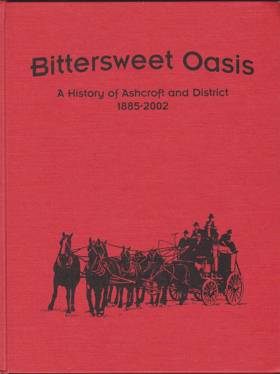
Bittersweet Oasis: A History of Ashcroft and District, 1885-2002, originally authored by Brian Belton, provides a comprehensive historical account of the development of the village of Ashcroft in British Columbia's Thompson region. The book chronicles Ashcroft's foundational years as the bustling "Gateway to the Cariboo," detailing how its position at the intersection of the Canadian Pacific Railway and the Cariboo Wagon Road fueled its early economic boom. It further explores the community's cultural and economic evolution, highlighting the vital contributions of early pioneers, Chinese laborers, and a thriving agricultural sector famous for its tomatoes and potatoes. Ultimately, the narrative captures the enduring resilience of the district's residents as they successfully navigated devastating fires, shifts in regional transportation routes, and changing industries over more than a century. 160 pages : illustrations, facsimiles, portraits ; 29 cm CIRC [ 1 ]
|
2002 |
|
Guide to ferryboats of Puget Sound past and present by Patricia Lander 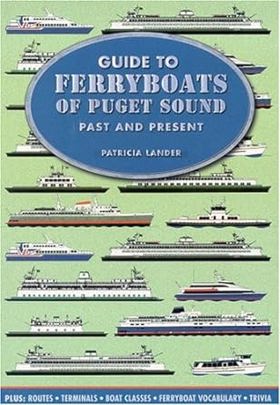
Published in local editions by Patricia Lander, Guide to Ferryboats of Puget Sound: Past and Present provides a comprehensive historical and structural inventory of the iconic vessels that have navigated the inland waters of Washington State. The book catalogs a diverse fleet ranging from the early mosquito fleet steamers to the modern auto-ferries that form an indispensable maritime highway across the Salish Sea. Through detailed vessel histories, operational timelines, and archival photographs, the text captures how these floating bridges shaped regional commerce, commuting, and coastal community-building. A keen insight drawn from the work is how Puget Sound ferries function as floating public town squares; by forcing diverse commuters, tourists, and islanders into shared, slow-paced transit, the ferry system preserves a unique communal culture that directly resists the anonymous speed of modern mainland highways. 145 pages : illustrations, maps ; 26 cm CIRC [ 1 ]
|
2002 |
|
Washington Territory by Robert E. Ficken 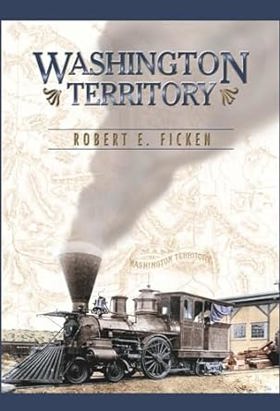
Established in 1853, Washington remained a Territory until admitted into the Union thirty-six years later in 1889. Few other territories in the American West languished longer in dependent status. Because of a dividing geographical barrier (the Cascade Range) and the lack of an adequate internal transportation system, Washington Territory made little practical sense as a social and economic entity. Western Washington actually was a satellite of San Francisco and Eastern Washington at Portland, until railroads were completed along the Columbia River and, especially, over the Cascades in the mid-1880s. Essentially, Washington was not qualified for statehood until very late in its territorial period when railway tracks finally unified the region. --From publisher's description [8], 288 pages, 8 unnumbered pages of plates : illustrations, map, portraits ; 24 cm CIRC [ 1 ]
|
2002 |
|
Uncertain encounters Indians and whites at peace and war in southern Oregon, 1820s-1860s by Nathan Douthit 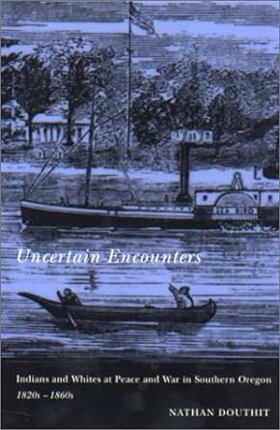
A major contribution to the study of Indian-white relations in the Pacific Northwest, Uncertain Encounters provides a comprehensive view of relations in southern Oregon over a 50-year period beginning in the fur-trade era and ending with the Rogue River War and its aftermath. Nathan Douthit's meticulously researched study offers a complex view of Indian-white relations in the region. Rather than focus mainly on well-documented incidents of conflict and federal Indian policy as other historians have done, Douthit directs attention to peaceful interactions as well. He shows that in the years leading up to the Rogue River War, Indians and whites interacted with uncertainty, alternating between acts of friendship and hostility. Uncertain Encounters begins with a critical investigation of the Hudson's Bay Company's fur-trade relations with southern Oregon Indians, emphasizing its responsibility for Indian hostility. It turns next to exploration of the region by white Americans and to early encounters between Indians and white miners and settlers. It re-examines the tragic Rogue River War, providing the first detailed picture of Indian casualties and the war's impact on the Indian population. Finally, it describes the removal of Indians to the Siletz and Grand Ronde reservations as told from the perspective of Indian oral narratives as well as white accounts. As a major aspect of the story, Douthit highlights the development of a little-known middle ground of relationships between Indian women and white men during and after removal. viii, 248 pages : illustrations, maps ; 23 cm CIRC [ 1 ]
|
2002 |
|
Contested empire Peter Skene Ogden and the Snake River expeditions by John Phillip Reid 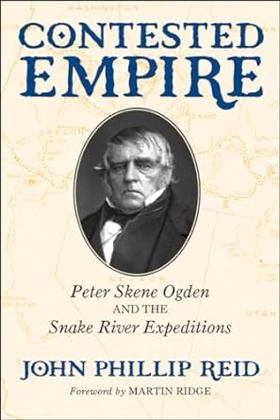
"Do law and legal procedures exist only so long as there is an official authority to enforce them? Or do we have an unspoken sense of law and ethics?" "To answer these questions, John Phillip Reid's Contested Empire explores the implicit notions of law shared by American and British fur traders in the Snake River country of Idaho and surrounding areas in the early nineteenth century. Both the United States and Great Britain had claimed this region, and passions were intense. Focusing mainly on Canadian explorer and trader Peter Skene Ogden, Reid finds that both sides largely avoided violence and other difficulties because they held the same definitions of property, contract, conversion, and possession." "In 1824, the Hudson's Bay Company directed Ogden to decimate the fur-bearing animal population of the Snake River country, thus making the region a "fur desert." With this mandate, Great Britain hoped to neutralize any interest American furtrappers could have in the area. Such a mandate set British and American fur men on a collision course, but Ogden and his American counter-parts implicity followed a kind of law and procedure and observed a mutual sense of property and rights even as the two sides vied for control of the fur trade." "Failing to take legal culture into consideration, some previous accounts have depicted these conflicts as mere episodes of lawless frontier violence. Reid expands our understanding of the West by considering the unspoken sense of law that existed, despite the lack of any formalized authorities, in what has otherwise been considered a "lawless" time."--Jacket xiii, 258 pages : illustrations, maps ; 24 cm CIRC [ 1 ]
|
2002 |
|
History of Kellogg, Idaho, 1885-2002 by Ray Chapman 
History of Kellogg, Idaho, 1885-2002 by Ray Chapman provides a localized account of a legendary Silver Valley mining town, drawing on the author's decades of firsthand experience working for the prominent Bunker Hill Company. The narrative traces the community's origins back to the famous 1885 "Jackass Legend," when prospector Noah Kellogg and his wandering burro purportedly discovered the ore deposits that sparked the region's massive boom. Chapman details the profound social and economic evolution of the Coeur d'Alene Mining District, exploring the growth of its prolific lead, zinc, and silver industries through the twentieth century. Ultimately, the book captures how this isolated Idaho enclave navigated over a century of economic triumphs, industry closures, and complex environmental legacies tied to one of the nation's largest mining operations. 59 pages : illustrations, map ; 28 cm CIRC [ 1 ]
|
2002 |
|
En la costa de la niebla el paisaje y el discurso etnográfico ilustrado de la expedición Malaspina en el Pacífico by Fernando Monge 
Published by Fernando Monge, En la costa de la niebla: el paisaje y el discurso etnográfico ilustrado de la expedición Malaspina en el Pacífico examines the late 18th-century scientific voyage led by Alejandro Malaspina along the fog-shrouded Pacific Northwest coast. The book analyzes the intricate intersection of Enlightenment-era exploration, landscape representation, and the visual ethnography captured by artists and naturalists documenting indigenous societies from Alaska down to the Spanish colonial outposts. Through a close reading of historical journals and newly contextualized illustrations, the text reveals how imperial ambition sought to categorize and control remote foreign geographies through the dual lens of science and art. A keen insight drawn from the work is how Enlightenment science in the Pacific was never truly neutral; rather, the detailed cataloging of local native cultures and misty coastlines served as an aesthetic tool of Spanish territorial claim-making, transforming indigenous homelands into legible imperial commodities. 238 pages ; 24 cm CIRC [ 1 ]
|
2002 |
|
The smiling country a history of the Methow Valley by Sally Portman
Published by local presses, Sally Portman’s The Smiling Country: A History of the Methow Valley chronicles the colorful evolution of north-central Washington's dramatic river valley from its indigenous roots to its modern incarnation as a recreational haven. The book details the arduous lives of early homesteaders, gold miners, stockmen, and orchardists who carved a living out of a geographically isolated landscape defined by scorching summers and brutal winters. Through extensive oral histories and rich archival imagery, the text preserves the rugged character of communities like Winthrop and Twisp as they transitioned from extractive resource economies to tourism. A keen insight drawn from the work is how the valley's iconic moniker, "the smiling country," serves as a historical mask for the harsh economic realities of frontier survival; it reflects an enduring human impulse to romanticize an unforgiving high-desert ecosystem that frequently tested the limits of those who tried to tame it. 381 pages : illustrations ; 22 cm CIRC [ 1 ]
|
2002 |
|
Mapping the West America's westward movement 1524-1890 by Paul E. Cohen , David Rumsey (Writer of introduction) 
This collection chronicles the cartographic history of the western United States from 1524 to 1890. The book begins with a look at the European powers' (Spain, France, England) efforts to comprehend their far-flung colonies, then directs our attention toward U.S. Government and military maps made by such notables as Lewis and Clark, Robert E. Lee, and C.T. Beauregard. Also included are maps by American Indians, maps that highlight the epicenter of the California gold rush, and maps that delineate the proposed and final courses of the transcontinental railroad, to mention only a few of the areas discussed. Many maps are here shown for the first time, most for the first time in color. Filled with fascinating historical anecdote and detailed scholarship, this is a work for map lovers and history buffs alike.--From publisher description 208 pages : illustrations, maps (chiefly color) ; 28 cm CIRC [ 1 ]
|
2002 |
|
How Coupeville grew a short history of town development : excerpts from the Town of Coupeville's Historic Preservation Plan by Mimi Sheridan , McConnell/Burke, United States National Park Service, Ebey's Landing National Historical Reserve (Wash) 
Authored by preservation planner Mimi Sheridan in collaboration with McConnell/Burke, the National Park Service, and Ebey's Landing National Historical Reserve, How Coupeville Grew: A Short History of Town Development charts the architectural and spatial evolution of Washington’s second-oldest European settlement. Excerpted from the town's Historic Preservation Plan, the work traces Coupeville's transformation from a mid-19th-century maritime trading post and donation land claim into a preserved historic district defined by 19th-century New England-style architecture. Through municipal records, planning documents, and spatial analysis, the text details how maritime commerce and geographic isolation shaped the town's compact, pedestrian-oriented urban fabric. A keen insight drawn from the work is how modern historic preservation can intentionally weaponize municipal planning against suburban sprawl; by codifying vernacular architecture and historic spatial layouts into law, Coupeville successfully turned its historic isolation into an economic and cultural asset that safeguards its 19th-century character from modern erasure. 58 pages : illustrations ; 28 cm CIRC [ 1 ]
|
2002 |
|
Boom towns & relic hunters of northeastern Washington a comprehensive guide to ghost towns in six historic counties by Jerry Smith 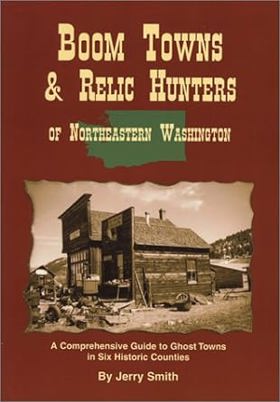
Hold on to your hats! Jerry's second edition of Boom Towns & Relic Hunters of Washington State has hit the news stands and book shelves. Interested in reading about long-lost forgotten ghost towns, million-dollar mines, boomtown mining camps and historical sites in Washington State? Find out more about these histories and mysteries in this second edition book, Boom Towns & Relic Hunters of Washington State....Exploring Washington's Historic Ghost Towns & Mining Camps, your complete guide to ghost towns and historical sites in Washington State by noted local author, tour guide, historian and famed ghost town and treasure hunter Jerry Smith. Jerry's book is a comprehensive and detailed history of ghost towns, mining camps and picturesque locations in six historic counties, which include: Okanogan, Chelan, Ferry, Kittitas, Pend-Oreille, and Stevens. The book s author transports one back in time to the boomtown days of yesteryear, bringing back to life the ageless Old West mining-era days of prosperous boomtowns, miners, prospectors, pioneers and million-dollar gold and silver mines. Here is a literary work chalked full of rich concentrates of history. Jerry has prospected and sluiced out the hardships and tragedies of those early pioneering and prospecting days, literally filling one s reading cache with hours of high-grade pleasure and fascinating relics from his well-researched and personal treasure trove. Don t miss out! This second edition book is back by popular demand and provides over one hundred ghost town and mining camp locations, 137 of Jerry s rare and historic award-winning photographs, 23 rare and one-of-a-kind historic mining documents, 32 new adventure stories, 250 pages, and is complete with exact GPS coordinates. In one reader s words, This is a must for ghost town and gold prospecting buffs. In addition, the book, loaded with information and directions, makes a great self-guided ghost town tour book to carry in one s automobile. For those planning a trip to Washington State, the guide will provide advanced information for a greater appreciation of the historic sites and their relics which one can experience upon arrival. The book also serves as a wonderful educational tool for students and teachers prospecting the history of this unique part of Washington State. The chapter, Information on Metal Detecting and Relic Hunting, is an added bonus. The chapter includes several chapters on how to search out and locate long-lost, valuable treasures from the past. In the literal sense of the word, arming one s self with a little knowledge about using a metal detector, one s research can actually lead to pay-dirt. As a reader, if you re not looking to strike it rich, but would like to visit those colorful Old West days and relive some of Washington State's history, excitement is awaiting you in Jerry s new book. xi, 124 pages : illustrations, maps ; 26 cm CIRC [ 1 ]
|
2002 |
|
Northwest native arts basic forms by Robert E. Stanley 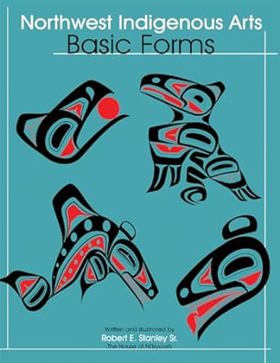
Learn how to draw the Wolf, the Eagle, the Killer Whale and other powerful illustrations of the native arts with help from this step-by-step guide. The second coloring book in the Northwest Indigenous Arts Series. Learn about some of the real and legendary creatures revered by the natives of the West Coast by using these templates to create spectacular pictures. Over 80 instructional drawings of indigenous art. Learn to draw indigenous art! First Nations artist Robert E. Stanley Sr. shares his knowledge and technique in rendering classic northwest native drawings. Now you too, can learn to draw some of the legendary animals of the First Nations tribes, by learning Robert's techniques passed down to him from generation to generation. 64 pages : illustrations (some color) ; 28 cm CIRC [ 1 ]
|
2002 |
|
Cool North wind Morley Nelson's life with birds of prey by Stephen Stuebner 
A freelance wildlife writer offers a biography of the life and work of Morley Nelson, a passionate defender of American birds of prey whose advocacy for conservation laws, as well as his achievements in the field of falconry, nature films, raptor rehabilitation, and related work are covered in the book, along with his years of WWII service as a company commander in the elite 10th Mountain Division in the Italian Alps. B & w photos, with a few in color xx, 429 pages : illustrations (some color) ; 24 cm CIRC [ 0 ]
|
2002 |
|
Chinatown, Boise, Idaho, 1870-1970 by Arthur A. Hart 
Boise's Chinatown was a rich and colorful part of community life for more than a century. Arthur A. Hart has devoted more than thirty years to researching Chinese people in Idaho, including Boise s Chinatown. You will learn why the Chinese came here, the prejudice and hardships they faced, and their important contributions to the city and the state. xiv, 144 pages : illustrations, maps, portraits ; 28 cm CIRC [ 0 ]
|
2002 |
|
The story of Idaho by Virgil M. Young 
A fourth-grade textbook presenting the history, geography, resources, government, traditions, and ethnology of Idaho 257 pages : illustrations, maps ; 29 cm CIRC [ 0 ]
|
2002 |
|
Lewis and Clark's mountain wilds a site guide to the plants and animals they encountered in the Bitterroots by Sharon A. Ritter 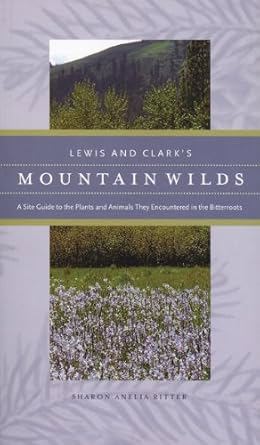
An indispensable and colorful site guide that any modern-day traveler can use to identify more than 100 species of native plants and animals first recorded by Lewis and Clark. Wildlife ecologist Sharon A. Ritter takes the reader from high on the Lolo Pass through the Bitterroot Mountains. xiii, 315 pages : illustrations (some color) ; 23 cm CIRC [ 0 ]
|
2002 |
|
Holy rollers murder and madness in Oregon's love cult by T. McCracken, Robert B. Blodgett 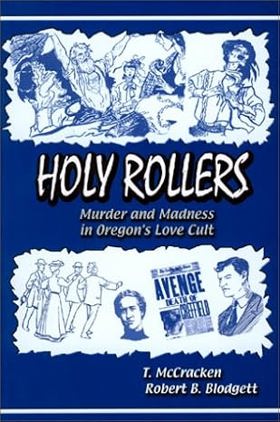
The story of a religious cult in Corvallis, Oregon which made headlines in 1903 xv, 295 pages : illustrations ; 23 cm CIRC [ 0 ]
|
2002 |